
Last Updated on July 27, 2026 by Daniel Globe
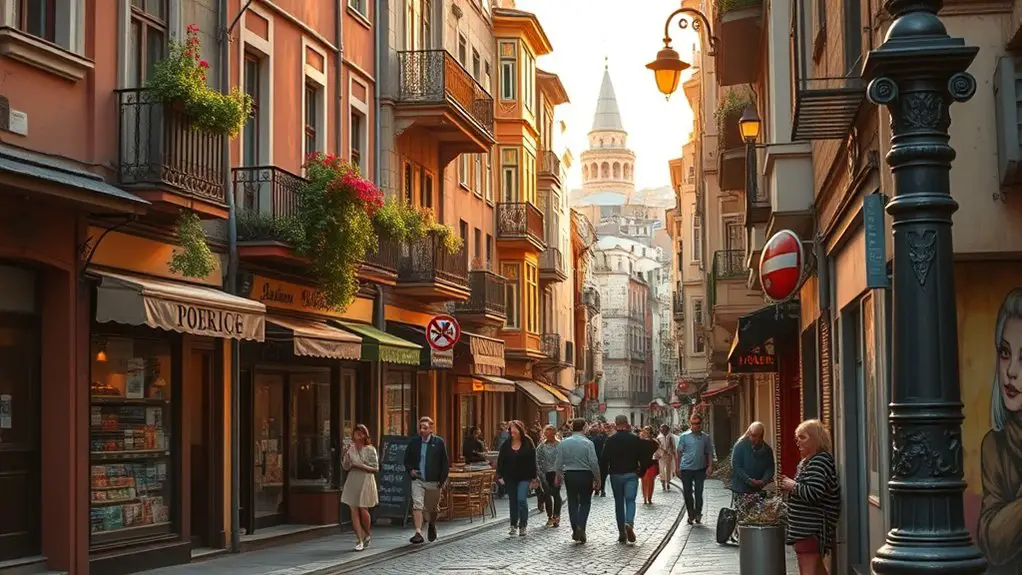
Beyoğlu is one of Istanbul’s easiest districts to explore on foot because many of its best-known sights sit along or just off the Taksim–İstiklal–Galata corridor. A good self-guided route starts at Taksim Square, follows İstiklal Avenue through historic passages and cultural stops, then continues downhill toward Galata Tower. Add cafés, museums, side streets, and an evening stop to turn the walk into a half-day or full-day experience.
Quick Answer
For a self-guided Beyoğlu walking tour, start at Taksim Square, walk down İstiklal Avenue, stop at Çiçek Pasajı and a cultural venue such as Salt Beyoğlu, continue through the Pera area, and finish at Galata Tower. Allow about 3–5 hours for a relaxed walk with food and sightseeing stops.
Key Takeaways
- Walk from Taksim toward Galata so much of the main route trends downhill, though cobblestones and steep side streets still require care.
- Use İstiklal Avenue as the spine of the tour, then make short detours for passages, churches, galleries, cafés, and Pera-era architecture.
- Treat Galata Tower as the main historic finale; it operates as a museum and viewing terrace, so check current admission details before you go.
- For art, Salt Beyoğlu is directly on İstiklal Avenue, while Istanbul Modern is an optional extension toward the Karaköy waterfront.
- Stay alert in crowded tourist areas, protect valuables, and avoid demonstrations or large political gatherings if they develop.
At a Glance
| Time Required | About 3–5 hours; longer with museums, a full meal, or nightlife |
| Difficulty | Easy to moderate; expect crowds, cobblestones, slopes, and some steep side streets |
| Tools Needed | Comfortable shoes, water, phone or map, portable charger; Istanbulkart is useful for transit |
| Cost | Free to walk; budget extra for food, drinks, transit, and paid attractions |
Disclosure: As an Amazon Associate I earn from qualifying purchases. Some links on this page are affiliate links, at no extra cost to you.
Beyoğlu Walking Tour Route
The simplest route runs north to south from Taksim Square toward Galata. It is easy to shorten, and Metro Istanbul lists both Taksim and Şişhane on the M2 line, making either point a practical entry or exit. The T2 heritage tram also connects the Taksim and Tünel ends of İstiklal Avenue.
- Taksim Square: Start near the north end of İstiklal Avenue.
- İstiklal Avenue: Walk the pedestrian avenue slowly, stopping at historic passages, shops, and side streets.
- Çiçek Pasajı and the Balık Pazarı area: Pause for architecture, snacks, meze, or a meal.
- Salt Beyoğlu: Add a contemporary culture stop directly on İstiklal Avenue; check the official program before visiting.
- Pera and Tepebaşı: Detour toward Pera Palace Hotel and nearby late-Ottoman streetscapes.
- Tünel and Şişhane: Continue toward the south end of İstiklal Avenue.
- Galata Tower: Finish the core walk at the tower and surrounding lanes.
- Optional Karaköy extension: Continue downhill toward the waterfront and Istanbul Modern if you still have time and energy.
Pro Tip: Starting at Taksim and finishing near Galata is usually more comfortable than doing the route in reverse. You still need good footwear because Galata’s side streets can be steep, uneven, and slippery when wet.
Exploring Istiklal Avenue
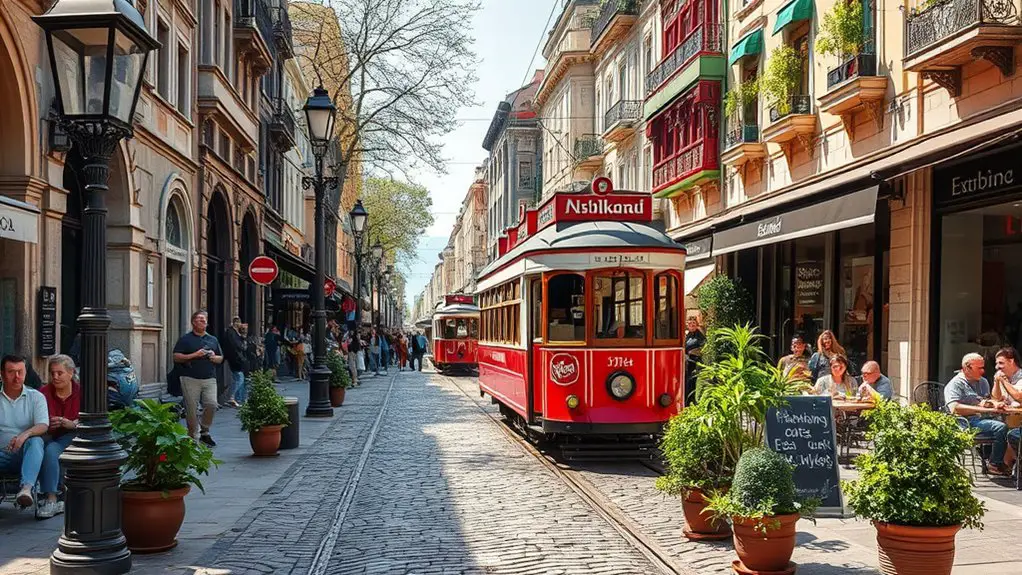
İstiklal Avenue is the natural backbone of a Beyoğlu walking tour. The broad pedestrian street mixes chain stores, independent shops, historic buildings, cafés, cultural institutions, religious sites, and side passages in one busy corridor.
Street musicians and other performers are common, but the experience changes by hour and day. Mornings can feel calmer, while afternoons and evenings tend to be livelier. The red T2 heritage tram shares part of the avenue, so stay aware even in pedestrian-heavy areas.
Instead of trying to see every storefront, choose a few detours. Çiçek Pasajı, the nearby Balık Pazarı area, St. Anthony of Padua Church, and Salt Beyoğlu can all fit naturally into the walk without turning it into a complicated route.
Discovering Historical Landmarks
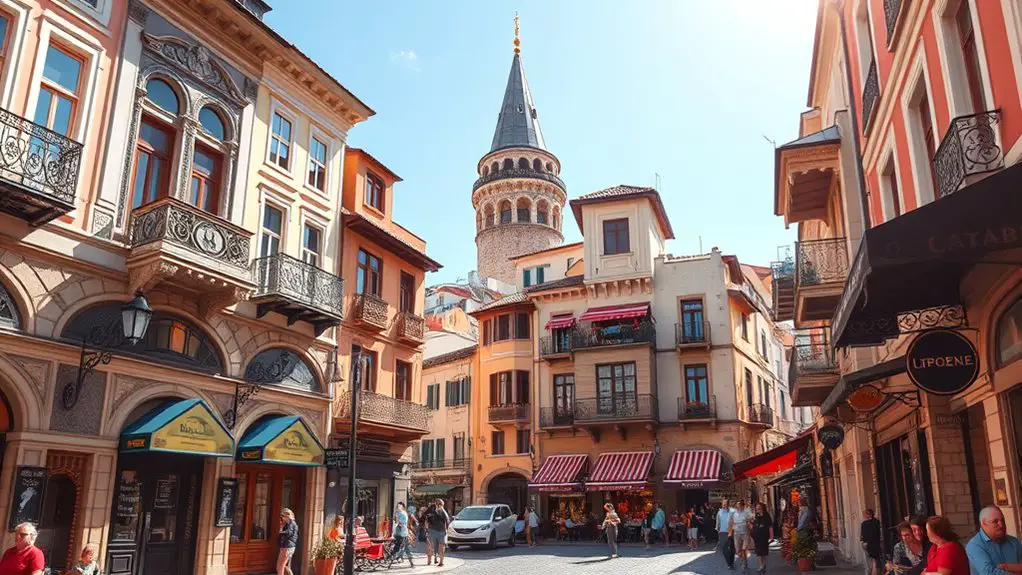
Beyoğlu’s architecture reflects layers of Genoese, Ottoman, European, and modern Istanbul history. The district is best understood by looking closely at its towers, passages, hotels, apartment façades, churches, consular buildings, and public squares rather than treating it as a single-period neighborhood.
Architectural Marvels of Beyoglu
The Galata Tower Museum is the route’s most recognizable landmark. The Turkish Ministry of Culture and Tourism describes the present tower as part of the medieval Galata fortifications and notes that it now functions as both a museum and viewing terrace.
Farther north in the Pera area, Pera Palace Hotel represents another side of Beyoğlu’s late-Ottoman urban history. Its own historical account says construction began in 1892 and the hotel opened in 1895 to serve passengers associated with the Orient Express era.
Look beyond the headline sights, too. Ornamental apartment buildings, arcades, passages, and restored commercial façades are part of what makes a walking tour here rewarding. Small architectural details are often easier to appreciate on foot than from a vehicle.
Cultural Heritage Sites
Çiçek Pasajı is one of İstiklal Avenue’s best-known historic passages, while Galata Tower anchors the older Galata quarter farther downhill. Both make useful stops because they combine architecture with active street life rather than feeling detached from the neighborhood around them.
Beyoğlu also has religious and civic landmarks from different communities and periods. When entering an active place of worship, check posted visitor rules, dress respectfully, and avoid disrupting services or private ceremonies.
Seasonal festivals, exhibitions, concerts, and screenings can add depth to the route, but schedules change. Check the official calendar of the venue or organizer rather than assuming a festival is running during your dates.
Notable Historical Events
Taksim Square and the surrounding streets have repeatedly served as important public gathering places. One of the best-known recent examples is the 2013 Gezi Park protest movement, which began around plans affecting Gezi Park and expanded into nationwide anti-government demonstrations.
That history makes the area culturally significant, but it also has a practical travel implication: demonstrations can still affect access to Taksim, İstiklal Avenue, and nearby transit stations. Check local updates on the day of your walk and avoid active demonstrations.
Galatasaray High School and other long-standing institutions along İstiklal Avenue also reflect Beyoğlu’s role in education, culture, and public life. The value of this section of the walk is not one isolated event but the way civic, commercial, and cultural history overlap in the same streets.
Indulging in Local Cuisine
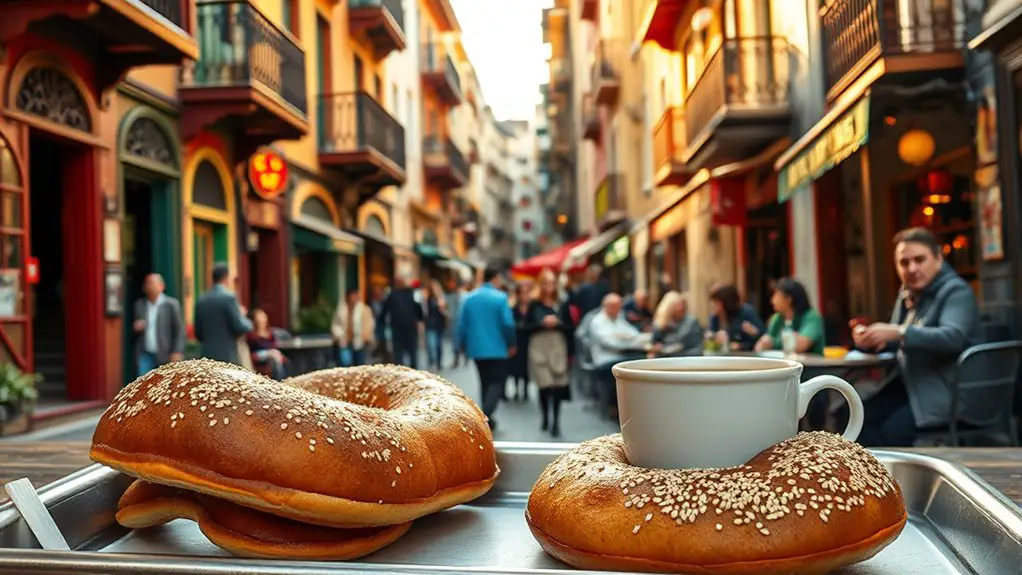
Food is one of the easiest ways to break up the walk. Beyoğlu offers everything from quick street snacks to bakeries, lokantas, meyhanes, coffee shops, and full-service restaurants. Rather than chasing one supposedly “best” venue, choose places that are busy, display prices clearly, and fit your route.
Must-Try Local Dishes
Not every famous Turkish dish is specifically from Beyoğlu, so think of this list as a practical introduction to foods you can look for while walking through the district.
| Dish | What It Is | Good Time to Try It |
|---|---|---|
| Meze | Small shared dishes that may include vegetables, yogurt-based plates, seafood, or legumes | A sit-down lunch or evening meyhane meal |
| İskender Kebab | Sliced döner served with bread, tomato sauce, butter, and yogurt; it is associated with Bursa rather than Beyoğlu | A substantial lunch or dinner |
| Baklava | Layered pastry with nuts and syrup | Dessert or a sweet break with tea or coffee |
| Simit | A sesame-coated ring bread sold by bakeries and street vendors | Breakfast or a quick walking snack |
Street Food Highlights
Beyoğlu’s street-food scene works best as a series of small stops rather than one large meal. Common options include:
- Simit: A sesame-coated bread ring that is easy to eat on the go.
- Köfte: Seasoned meatballs, often served with bread, vegetables, or simple sides.
- Börek: Flaky or layered pastry with fillings such as cheese, spinach, potato, or minced meat.
- Balık ekmek: A fish sandwich more strongly associated with waterfront areas such as Karaköy and Eminönü, so it fits best if you extend the walk downhill toward the water.
For street food, favor stalls with high turnover and food that is cooked and served hot. If you have allergies or dietary restrictions, ask about ingredients before ordering because fillings, sauces, and shared cooking surfaces vary.
Cozy Cafés and Bistros
Beyoğlu has a dense café culture, and a coffee stop is useful before the steeper Galata section. Turkish coffee, tea, pastries, and light savory dishes are widely available, but there is no need to commit to a single “must-visit” café.
Side streets around Asmalımescit, Galata, Cihangir, and Çukurcuma offer different atmospheres, from busy modern coffee shops to quieter neighborhood cafés. Check the menu and prices before ordering, especially in heavily touristed locations.
Uncovering Art and Culture
Contemporary art is a major reason to slow down in Beyoğlu. For a stop directly on the walking route, Salt Beyoğlu occupies a six-floor building on İstiklal Avenue and hosts exhibitions, screenings, talks, workshops, and other programs. Its official site currently lists free admission, but always confirm hours before visiting.
Beyoğlu works best as a layered walk: historic architecture, contemporary culture, street life, food, and public space all sit within a compact corridor.
- Art and exhibitions: Use Salt Beyoğlu as a dependable central stop, then check smaller galleries in Pera, Galata, and nearby side streets for current shows.
- Street art: Look along side streets rather than expecting one fixed mural district; works can change or disappear.
- Istanbul Modern: The Istanbul Museum of Modern Art is on the Karaköy waterfront in Beyoğlu and works well as an optional extension after Galata.
- Festivals: Do not assume the Istanbul Biennial is running every year. İKSV announced that the 18th edition ended after its 2025 first leg; the 19th is scheduled for September 18–November 14, 2027.
- Performing arts and film: Check current programs at established cultural venues before your visit because event dates and locations change.
Note: Galata Greek School is an important cultural building and has hosted major art events, but it should not be treated as a guaranteed everyday gallery stop. Check the event schedule before making a special detour.
Strolling Through Charming Side Streets
The side streets are where Beyoğlu feels most personal. Around Galata, Pera, Cihangir, and Çukurcuma, you can find antique shops, bookstores, cafés, small galleries, workshops, and residential architecture only a few minutes from the main avenue.
Give yourself permission to make short detours, but keep a map handy. Streets can be steep and winding, and a “quick” shortcut may involve stairs or a sharp climb. If mobility is a concern, stay closer to İstiklal Avenue and major transit stations, then use public transportation to bypass the steepest sections.
Photograph respectfully. Some colorful façades and doorways are private homes or businesses, not public sets. Avoid blocking entrances or photographing people at close range without permission.
Experiencing Beyoglu’s Nightlife
Beyoğlu remains active after dark, with restaurants, meyhanes, bars, live-music venues, and clubs spread across İstiklal Avenue and surrounding streets. A walking tour can easily transition into an evening out, but it is better to choose one or two areas than wander aimlessly late at night.
- Rooftop venues: Good for skyline views, but check current hours, reservations, dress rules, and menu prices.
- Live music: Programs change frequently, so confirm the performer and start time on the venue’s official channel.
- Food: Keep a late snack stop flexible; busy streets around İstiklal, Nevizade, and Galata offer many options.
- Clubs and bars: Use licensed, established venues and confirm prices before ordering.
Plan your route back before the evening gets late. Taksim and Şişhane connect to the M2 metro, while Taksim also connects to the F1 funicular toward Kabataş. Service hours and temporary closures can change, so verify them on Metro Istanbul on the day you travel.
Warning: Crowded tourist areas can attract pickpocketing and purse snatching, and demonstrations may cause sudden street or transit restrictions. Keep valuables secure, stay aware of your surroundings, and avoid protests or large political gatherings. Check your government’s current Türkiye travel guidance before departure.
Tips for a Memorable Walking Tour
Wear shoes with good grip. Beyoğlu mixes smooth pedestrian paving with cobblestones, curbs, slopes, and uneven side streets. A reusable water bottle, small power bank, and offline map are also useful.
Start earlier if you want calmer streets and easier photography. If nightlife matters more, begin later and plan to finish near an area with straightforward transit back to your accommodation.
Do not over-schedule. A realistic plan is to choose one paid attraction, one cultural venue, one meal, and several short street stops. That leaves enough time for the unexpected café, bookstore, passage, or view that makes a self-guided walk worthwhile.
For Galata Tower, check the current official visitor information before arrival. The Ministry’s museum page notes that the tower includes an elevator to the sixth floor, while upper levels involve stairs, so travelers with mobility limitations should review access details in advance.
Transport, Hills, and Accessibility
The M2 metro serves both Taksim and Şişhane, making it easy to enter or leave the route without retracing the full walk. Metro Istanbul also lists connections from Taksim to the F1 funicular toward Kabataş and from Şişhane toward the historic Tünel area.
The route is not fully step-free. İstiklal Avenue itself is relatively straightforward, but Galata’s slopes, cobbles, and stairs can be difficult for wheelchairs, strollers, or anyone with limited mobility. Use major streets and transit where possible, and treat Galata Tower’s upper-level stair access as a separate accessibility consideration.
Temporary station or street closures can happen during major events and demonstrations, especially around Taksim. Check same-day transit notices before setting out.
Frequently Asked Questions
What is the best time of year to visit Beyoğlu?
Spring and autumn are often the most comfortable seasons for a long walking day because temperatures are generally milder than in peak summer or winter. April–May and September–October are popular choices, but weather varies, so check the forecast and bring rain protection when needed.
Are there guided tour options available?
Yes. Beyoğlu is a common area for history, architecture, food, and private walking tours. Compare the current itinerary, group size, language, cancellation terms, and recent reviews before booking. A guide is especially useful if you want deeper historical context rather than simple navigation.
Is Beyoğlu safe for solo travelers?
Many solo visitors walk Beyoğlu, but no busy city district is risk-free. Use normal urban precautions, protect phones and wallets in crowds, avoid isolated streets late at night, use established transport, and stay away from demonstrations. Review current official travel advice before your trip.
How long does the walking tour typically take?
A brisk Taksim-to-Galata walk can be done in roughly 2–3 hours if you keep stops short. For a more enjoyable self-guided tour with food, photography, cultural stops, and time around Galata Tower, plan about 3–5 hours. Museums or nightlife can turn it into a full-day outing.
Are there public restrooms available along the route?
Restroom access varies, so do not depend on finding a stand-alone public toilet exactly when you need one. Museums, cultural venues, restaurants, cafés, shopping areas, and some transport facilities may have restrooms for visitors or customers. Use facilities when you have the opportunity.
Where should I start and end the route?
Start at Taksim Square and finish at Galata Tower for the easiest classic route. From Galata, you can continue downhill to Karaköy and Istanbul Modern, or walk back toward Şişhane for the M2 metro.
Is the Beyoğlu walking route wheelchair- or stroller-friendly?
Only partly. İstiklal Avenue is the easiest portion, but the Galata area includes steep grades, cobbles, curbs, and stairs. Travelers using wheelchairs or strollers should favor major streets, use metro or funicular connections to bypass difficult slopes, and check accessibility at individual attractions before visiting.
Sources
- Turkish Museums — Galata Tower Museum — museum use, history, viewing terrace, and internal access details.
- Metro Istanbul — M2 Line — Taksim and Şişhane connections and route planning.
- Istanbul Modern — current museum location, exhibitions, and visitor information.
- Salt Beyoğlu — venue location, programming, and visitor information.
- Istanbul Foundation for Culture and Arts — Istanbul Biennial update — status of the 18th Biennial; the official 19th Biennial announcement provides the 2027 dates.
- U.S. Department of State — Türkiye Travel Advisory — current safety, demonstrations, and street-crime guidance.
Conclusion
A self-guided Beyoğlu walking tour is most rewarding when you treat the district as a sequence of connected neighborhoods rather than a checklist. Start at Taksim, use İstiklal Avenue as your main route, make a few thoughtful detours for food and culture, then finish around Galata Tower. Leave room for side streets and spontaneous stops, but keep transit, hills, and current safety conditions in mind so the day stays flexible and enjoyable.
