
Last Updated on July 30, 2026 by Daniel Globe
The Overlook Hotel is one of horror fiction’s most recognizable settings, but it is not a real hotel with a documented record of murders, disappearances, or ghost investigations. Stephen King created it for his 1977 novel The Shining, while Stanley Kubrick’s 1980 film turned it into a different visual landmark assembled from real buildings, studio sets, and fictional history.
Quick Answer
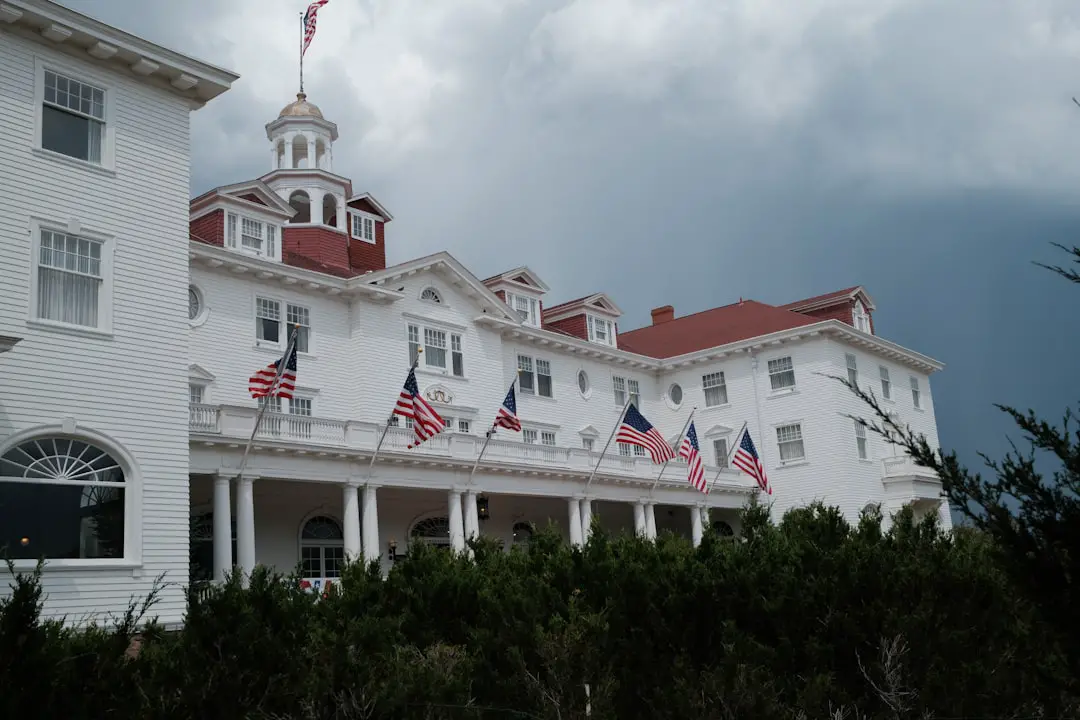
The hotel in The Shining is called the Overlook Hotel. It is fictional. Stephen King drew inspiration from the Stanley Hotel in Colorado, while Stanley Kubrick used Oregon’s Timberline Lodge for exterior shots and built most of the film’s interiors on studio sets in England.
Key Takeaways
- The Overlook Hotel is a fictional Colorado resort created by Stephen King for his 1977 novel The Shining.
- King developed the idea after a September 1974 stay in Room 217 at the Stanley Hotel in Estes Park, Colorado.
- Timberline Lodge in Oregon appears in selected exterior shots of Stanley Kubrick’s 1980 film, but its interiors were not used as the Overlook’s interiors.
- Most interior scenes were filmed on constructed sets at Elstree Studios in England, with some design details influenced by The Ahwahnee in Yosemite.
- The novel, Kubrick film, and 1997 miniseries differ in their room numbers, grounds, characters, major events, and endings.
Disclosure: As an Amazon Associate I earn from qualifying purchases. Some links on this page are affiliate links, at no extra cost to you.
Is the Overlook Hotel a Real Place?
No. The Overlook Hotel does not exist as a single real property. It is a fictional resort in the Colorado Rockies where Jack Torrance accepts a job as winter caretaker and moves in with his wife, Wendy, and their son, Danny.
According to Stephen King’s official account of the novel, the hotel’s supernatural forces exploit Jack’s anger, alcoholism, isolation, and frustration while attempting to claim Danny because of his psychic ability, known as “the shining.”
Note: The Stanley Hotel and Timberline Lodge are real hotels connected to The Shining, but neither is literally the Overlook. The fictional hotel changes depending on whether you are reading the novel, watching Kubrick’s film, or viewing the 1997 miniseries.
How the Stanley Hotel Inspired Stephen King
Stephen King and his wife, Tabitha King, stayed at the Stanley Hotel in Estes Park, Colorado, in late September 1974. King later recalled that they were the hotel’s only overnight guests because the property was preparing to close for the winter.
The nearly empty corridors and quiet dining room gave King an ideal setting for a ghost story. That night, he dreamed that his three-year-old son was running through the hotel’s corridors while being chased by a fire hose. King woke suddenly and began developing the story that became The Shining.
The Kings stayed in Room 217, which remains closely associated with the novel. The Stanley now describes it as the room where King found his inspiration and offers it as a bookable guest room. The hotel also runs a dedicated Shining Tour explaining the differences among the book, Kubrick’s movie, and the later television miniseries.
The Stanley Hotel inspired the idea for the Overlook, but the fictional hotel developed into a place with its own layout, history, characters, and supernatural rules.
The Novel, Film, and Miniseries at a Glance
| Detail | 1977 Novel | 1980 Film | 1997 Miniseries |
|---|---|---|---|
| Primary creator | Stephen King | Directed and co-written by Stanley Kubrick | Teleplay written by Stephen King |
| Haunted room | Room 217 | Room 237 | Room 217 |
| Hotel grounds | Animal-shaped topiary figures | A large hedge maze | Topiary animals closer to the novel |
| Jack Torrance | A troubled father whose remaining humanity briefly resurfaces | Presented as menacing much earlier in the story | Characterization follows the novel more closely |
| Hotel’s fate | Destroyed after its neglected boiler explodes | Still standing at the end of the film | Uses the boiler ending from the novel |
| Main real-world hotel connection | Inspired by the Stanley Hotel | Timberline exteriors and English studio interiors | Filmed at the Stanley Hotel |
The Architecture and Design of the Overlook Hotel
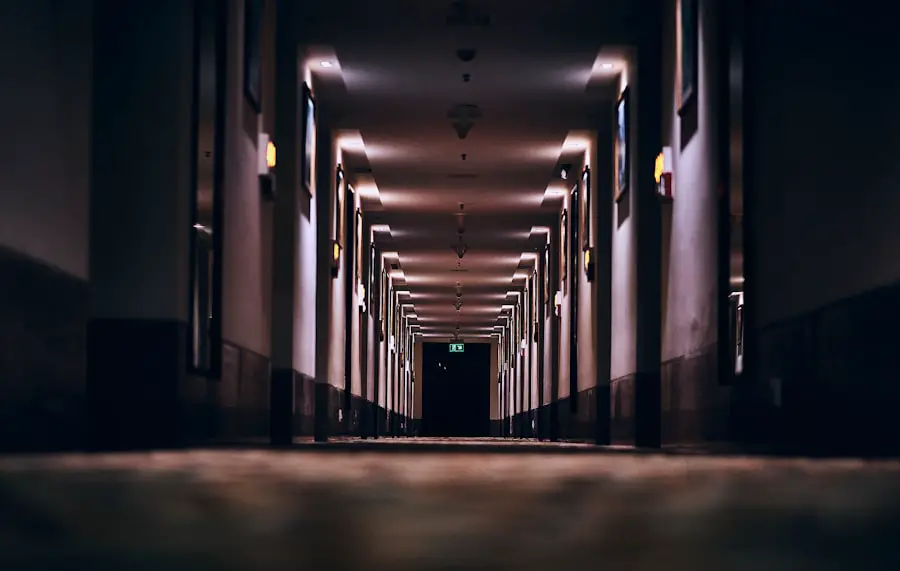
The Overlook’s architecture is intentionally difficult to define because no single building supplied every part of it. King imagined a grand, isolated Colorado resort after staying at the Stanley, but Kubrick’s production team assembled the film version from several visual sources.
Timberline Lodge and the Film’s Exterior
Selected exterior establishing shots in Kubrick’s film show Timberline Lodge on Mount Hood in Oregon. Built in 1937, Timberline is a real mountain lodge and National Historic Landmark that continues to operate as a hotel and ski destination.
The hedge maze seen in the film was not part of Timberline Lodge. It was created for the production and replaced the moving topiary animals that appear in King’s novel.
Elstree Studios and the Interior Sets
The Overlook’s hallways, ballroom, kitchen, Colorado Lounge, apartment, and other major interiors were constructed primarily at Elstree Studios in England. These sets allowed Kubrick to create spaces that feel enormous, repetitive, and sometimes geographically impossible.
The official Stanley Kubrick documentary Shine On: The Forgotten Shining Location revisits the English production locations and explores how the film’s physical environments were built.
The Ahwahnee’s Design Influence
Elements of the film’s interior design were influenced by The Ahwahnee in Yosemite National Park, particularly its grand public rooms, large fireplaces, timber details, and geometric decorative patterns. The result was a fictional interior that did not need to match Timberline’s real floor plan.
Pro Tip: When identifying a photograph labeled “the real Overlook Hotel,” check whether it shows the Stanley Hotel, Timberline Lodge, or The Ahwahnee. Each has a different connection to The Shining.
Room 217 Versus Room 237
The haunted room is Room 217 in King’s novel. It is also the number of the room where King stayed at the Stanley Hotel.
Kubrick changed the number to Room 237 for the 1980 film. According to Timberline Lodge’s history, lodge representatives were concerned that viewers might become afraid to book its real Room 217. The production therefore used Room 237, a number that did not correspond to a guest room at Timberline.
The feared effect did not become a lasting problem. Room 217 instead became one of the rooms most closely associated with the story.
The Overlook’s Ghosts and Haunting Legends
The Overlook contains a large cast of supernatural figures, but their identities and roles change between the novel and film. They are fictional characters rather than documented guests haunting a real property.
Grady and His Family
In Kubrick’s film, hotel manager Stuart Ullman tells Jack that a former winter caretaker named Charles Grady murdered his wife and two daughters before killing himself. Later, Jack meets a ghostly waiter who calls himself Delbert Grady and denies ever having served as caretaker.
The Charles-versus-Delbert discrepancy has generated extensive debate. It may suggest that the hotel absorbs people into repeating roles rather than preserving a simple, consistent historical record. It should not be treated as the biography of a real hotel employee.
The Girls in the Hallway
The matching girls who appear before Danny are among the film’s most famous images. They are linked visually to the Grady family, although Ullman’s dialogue describes daughters of different ages rather than twins. Their identical appearance is part of Kubrick’s unsettling visual design.
The Woman in the Bathtub
The figure in Room 217 in the novel and Room 237 in the film first appears attractive before becoming a decaying corpse. The encounter demonstrates how the hotel uses desire, curiosity, and fear to manipulate its victims.
The Ballroom Guests
The Gold Room appears to return to life with music, drinks, formally dressed guests, and staff members from an earlier era. These scenes blur the boundary between ghosts, visions, memory, and the hotel’s control over Jack.
Warning: Online accounts often mix fictional Overlook characters with paranormal stories associated with the Stanley Hotel. These are separate categories: one belongs to a novel and its adaptations, while the other consists of folklore and personal claims about a real hotel.
Major Events in the Overlook’s Fictional History
| Event | Version | What Happens | Why It Matters |
|---|---|---|---|
| The Grady family tragedy | Novel and film, with different details | A previous caretaker kills his family and himself after becoming unstable inside the hotel. | It foreshadows the danger facing the Torrance family. |
| Danny enters the forbidden room | Room 217 in the novel; Room 237 in the film | Danny encounters the supernatural presence associated with the bathtub. | The hotel’s danger becomes physical rather than merely visionary. |
| Jack attacks his family | Novel, film, and miniseries | The hotel exploits Jack’s weaknesses until he turns violently against Wendy and Danny. | It completes the Overlook’s attempt to repeat its earlier family tragedy. |
| The final chase | Different in each adaptation | The novel uses the hotel and its grounds differently, while the film places the climax inside the hedge maze. | The changes produce sharply different outcomes for Jack and the hotel. |
| The Overlook’s destruction | Novel and 1997 miniseries | The neglected boiler explodes and destroys the hotel. | The hotel’s demand that Jack protect it ultimately causes its destruction. |
There is no canonical “Great Party of 1945” that ends in a mysterious fire, no verified July 4, 1921 murder date for the Grady daughters, and no real police record listing Jack Torrance as a missing hotel guest. Such claims should be treated as fan-created lore unless they can be traced to a specific authorized version of the story.
Mysterious Images and Unanswered Questions
Kubrick’s film leaves several questions unresolved. Its unusual geography, sudden apparitions, conflicting names, and final ballroom photograph invite viewers to decide how literally they should interpret the hotel’s power.
The last photograph appears to place Jack at an Overlook party dated July 4, 1921. The film does not provide one universally accepted explanation. Jack may have been absorbed into the hotel, trapped in a repeating role, reincarnated, or symbolically revealed as someone who has “always” belonged there.
The Overlook’s mysteries work because the story does not reduce every ghost, room, photograph, and spatial contradiction to one confirmed explanation.
These deliberate ambiguities have encouraged decades of essays, documentaries, fan theories, visual maps, and close readings. They do not, however, turn the Overlook into a real location with an unsolved law-enforcement case.
Paranormal Claims and Investigations
Because the Overlook is fictional, no paranormal team can investigate the hotel itself. Ghost hunters and visitors instead focus on real properties associated with the story, especially the Stanley Hotel.
The Stanley promotes historical and paranormal-themed tours that discuss hotel folklore, architecture, notable guests, and its connection to Stephen King. Visitors sometimes report unexplained sounds, unusual photographs, or personal sensations, but these accounts are anecdotal. Devices such as electromagnetic-field meters, electronic voice recorders, infrared cameras, and spirit boxes do not by themselves prove that a supernatural presence exists.
It is therefore more accurate to describe the Stanley as a center of Shining-related folklore and paranormal tourism than as scientific evidence that the fictional Overlook is real.
The Overlook Hotel in Popular Culture
The Overlook has become a shorthand for isolation, repeating violence, distorted memory, and the fear that a building can influence the people inside it. Kubrick’s imagery helped make the setting recognizable even to people who have never read King’s novel.
The patterned carpets, elevator doors, hedge maze, Room 237, Gold Room, typewriter pages, and girls in the hallway are regularly referenced or parodied in television, film, games, advertisements, art, and themed events.
King later returned to Danny Torrance in the 2013 novel Doctor Sleep. The sequel follows an adult Dan who remains haunted by what happened during his childhood at the Overlook. A film adaptation released in 2019 connected elements of King’s books with the visual world established by Kubrick’s film.
Real Hotels and Locations Connected to The Shining
The Stanley Hotel in Estes Park, Colorado
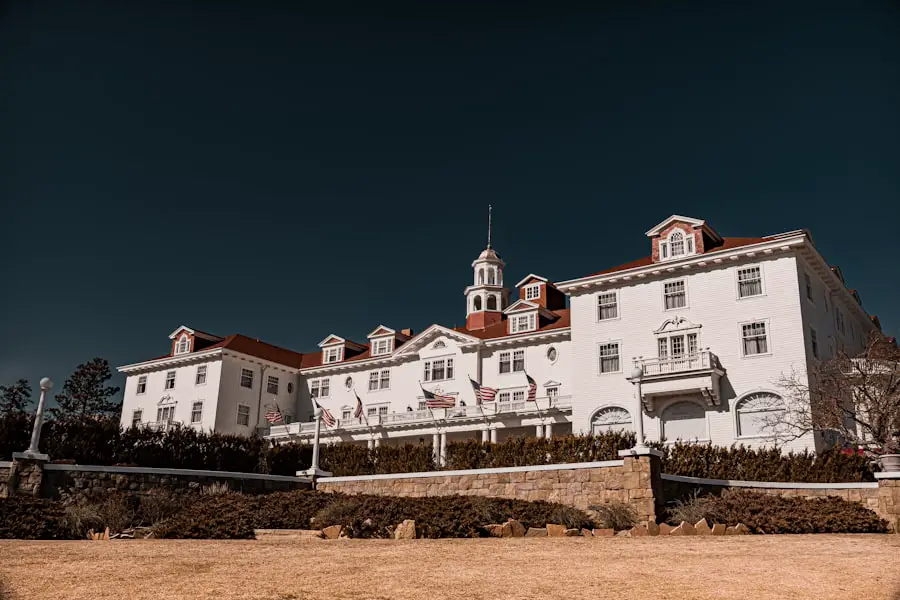
The Stanley is the most important literary inspiration for the Overlook. Visitors can stay at the property, request Room 217 when available, and take official tours covering its history and its relationship with the novel and adaptations.
The Stanley was not used as the Overlook in Kubrick’s 1980 film. It was, however, a filming location for Stephen King’s 1997 television miniseries, which follows the novel more closely.
Timberline Lodge on Mount Hood, Oregon
Timberline supplied selected exterior views for Kubrick’s film. It is a real operating lodge, but visitors will not find Kubrick’s Overlook corridors, Gold Room, Room 237, or hedge maze inside it.
The Ahwahnee in Yosemite National Park, California
The Ahwahnee influenced portions of the film’s interior design. Its grand scale, timber construction, fireplaces, and decorative details helped shape the visual language of Kubrick’s sets, but the movie’s main interiors were not filmed there.
Elstree Studios in England
The film’s main interior spaces were studio constructions rather than rooms inside an operating American hotel. Their scale and intentionally disorienting layout are central to the film’s atmosphere.
Note: Fans sometimes call the Stanley or Timberline “the real Overlook,” but each phrase describes only one part of the story’s creation. The most accurate answer is that the Overlook is a fictional composite.
The Shining’s Influence on Hotel Tourism
The story has created long-running fan interest in the real hotels associated with it. The Stanley offers themed tours, events, and rooms connected to King’s visit, while Timberline attracts movie fans who recognize its exterior.
This interest supports lodging, tours, dining, souvenirs, and local visitor activity, but it should not be described with specific economic claims unless reliable tourism or revenue data are available.
Travelers planning a literary or film-location trip should confirm current tour schedules, room availability, age restrictions, and property rules directly with each hotel. It may also help to review these tips on how to choose the best travel guidebook for your next trip.
Frequently Asked Questions
What is the name of the hotel in The Shining?
The hotel is called the Overlook Hotel. It is a fictional luxury resort in the Colorado Rockies.
Is the Overlook Hotel a real place?
No. The Overlook Hotel was created by Stephen King. Several real properties influenced or represented parts of it, but no single real building is the Overlook.
Which hotel inspired Stephen King to write The Shining?
The Stanley Hotel in Estes Park, Colorado, inspired King after he and his wife stayed there in September 1974. They stayed in Room 217 as the hotel prepared to close for the winter.
Where was the 1980 movie The Shining filmed?
Timberline Lodge in Oregon appears in selected exterior shots. Most major interior scenes were filmed on constructed sets at Elstree Studios in England. Some design elements were influenced by The Ahwahnee in Yosemite.
Is Timberline Lodge the real Overlook Hotel?
No. Timberline Lodge is a real hotel used for exterior imagery in Kubrick’s film. The fictional interiors, Room 237, and hedge maze were not ordinary guest areas inside Timberline.
Why is it Room 217 in the book but Room 237 in the movie?
Room 217 is used in King’s novel. Timberline Lodge had a real Room 217 and asked the film production not to associate that number with the movie’s terrifying events, so Kubrick used the fictional Room 237 instead.
Does the Stanley Hotel appear in The Shining?
The Stanley inspired King’s novel and was used for the 1997 television miniseries. It was not the exterior hotel shown in Kubrick’s 1980 film.
Was the real hotel built on an Indigenous burial ground?
No verified history establishes that claim for the Stanley Hotel or Timberline Lodge. A burial-ground reference appears in Kubrick’s fictional film dialogue and should not be treated as the history of either real property.
Sources
- Stephen King — The Shining — official synopsis, January 1977 publication information, and King’s account of his Stanley Hotel inspiration.
- The Stanley Hotel — Room 217 — the room’s connection to Stephen King’s stay and inspiration.
- The Stanley Hotel — The Shining Tour — differences among the novel, 1980 film, and 1997 miniseries.
- Timberline Lodge — History — exterior filming connection and the Room 217-to-237 change.
- Warner Bros. — The Shining — official information about Stanley Kubrick’s 1980 adaptation.
- British Film Institute — Stanley Kubrick’s Britain — production context and the film’s use of Elstree Studios.
