
Last Updated on July 31, 2026 by Daniel Globe
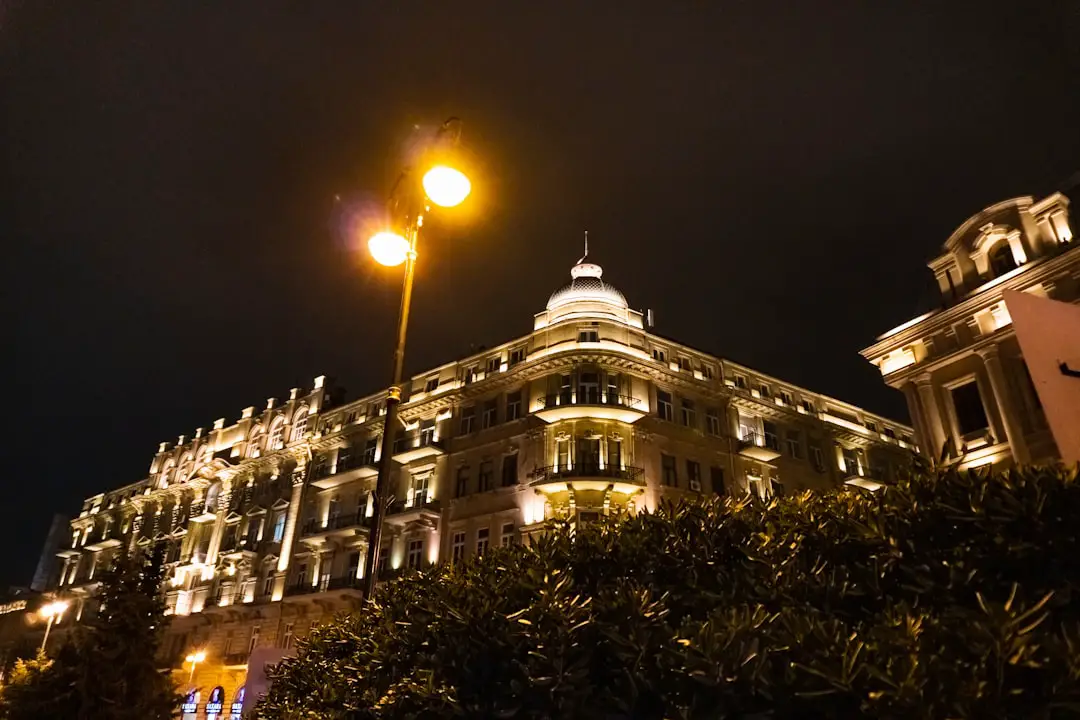
The 1886 Crescent Hotel & Spa sits above Eureka Springs, Arkansas, with two stories running side by side: a documented history of resort tourism, education, medical fraud, fire, and restoration, and a folklore tradition filled with apparitions, footsteps, and haunted-room reports. Separating those tracks makes the hotel’s past more interesting—and more accurate.
Quick Answer
The Crescent Hotel is a real 1886 landmark with a documented past as a luxury resort, women’s college, and Norman Baker’s fraudulent cancer hospital. Its ghosts, including Michael and Theodora, belong to hotel folklore and visitor reports rather than proven history, but guided tours still present those stories today.
Key Takeaways
- St. Louis architect Isaac Stockton Taylor designed the Crescent Hotel, which opened on May 20, 1886.
- The building later housed Crescent College and Conservatory for Young Women before Norman Baker acquired it in 1937.
- Baker was not a legitimate cancer specialist. His hospital closed after his 1940 mail-fraud conviction.
- Michael, Theodora, the morgue ghost, and the hotel’s other spirits are part of paranormal lore, not verified historical evidence.
- The hotel remains open for overnight stays and offers several types of ghost tours and paranormal programs.
Disclosure: As an Amazon Associate I earn from qualifying purchases. Some links on this page are affiliate links, at no extra cost to you.
Crescent Hotel History: A Documented Timeline
Construction of the Crescent Hotel began in 1884 on the crest of West Mountain. The Eureka Springs Improvement Company selected St. Louis architect Isaac Stockton Taylor to design the large stone resort. Its grand opening took place on May 20, 1886, drawing hundreds of guests to what promoters presented as one of the country’s finest resort hotels.
The hotel did not close in 1888, as some retellings claim. It remained part of Eureka Springs’ tourism economy for years, although business became increasingly seasonal as travel habits and interest in the city’s healing springs changed.
- 1884–1886: The stone hotel was constructed and opened as an upscale Ozark resort.
- 1908–1924: Crescent College and Conservatory for Young Women operated in the building during the school year, while hotel operations continued during summer.
- 1930–1934: The educational institution briefly returned as Crescent Junior College.
- 1937–1940: Norman Baker acquired the property and operated the Baker Hospital and Health Resort.
- 1946: New owners renovated the property and reopened it as a hotel.
- 1967–1980: A fourth-floor fire caused major damage, followed by reopening and additional restoration projects.
- 1997 onward: Extensive renovation restored historic architectural details while adding modern hotel and spa facilities.
- 2016: The Crescent Hotel was individually listed on the National Register of Historic Places.
Note: Dates, ownership records, architectural details, and court outcomes can be checked against historical sources. Apparitions, voices, cold spots, and similar experiences are personal reports or folklore and cannot be verified in the same way.
Why Is the Crescent Hotel Considered Haunted?
The Crescent Hotel promotes itself as “America’s Most Haunted Hotel,” a nickname built around its long institutional history and decades of guest stories. The property’s official paranormal material highlights several supposed resident spirits, including Michael, Theodora, and a figure associated with the former morgue.
The building naturally provides a dramatic setting for those stories. It is large, old, and filled with stone corridors, period furnishings, changing temperatures, mechanical sounds, and spaces connected to the Baker hospital. These features can make ordinary noises and shadows feel unusual, especially during a nighttime tour.
The hotel’s haunted reputation is a documented part of its tourism history, but the supernatural explanations remain matters of belief and personal interpretation.
Theodora
According to hotel lore, Theodora was a patient during the Baker hospital era. She is commonly associated with Room 419 and nearby hallways, where stories describe a woman searching for her keys or tidying the room. There is no widely available archival record confirming the exact circumstances of her life or death, so the account should be understood as a tour legend rather than a settled biography.
Michael
The hotel’s best-known Room 218 story concerns Michael, described in its folklore as an Irish stonemason who died in a construction accident. Historical documentation confirms that skilled Irish stoneworkers participated in the hotel’s construction, but the specific identity, accident, and haunting have not been independently established.
Other Reported Experiences
Visitors and staff have described footsteps, voices, moving objects, flickering lights, cold areas, and human-shaped figures. Such reports are central to the hotel’s reputation, but they are anecdotal. Sounds from plumbing, elevators, neighboring rooms, settling materials, outdoor weather, and normal electrical activity can also produce unusual experiences in an old building.
Norman Baker and the Baker Hospital Era
Norman Baker is the most notorious documented figure connected with the Crescent Hotel, but he was an owner and operator rather than a hotel guest. Baker purchased the property in 1937 and turned it into a hospital that promoted an alleged cancer cure.
Baker presented himself as a medical authority despite lacking legitimate medical qualifications. He advertised heavily, attacked established medicine, and attracted seriously ill patients who were searching for hope. The Encyclopedia of Arkansas records that he was convicted of mail fraud in 1940, bringing the hospital period to an end.
Warning: Baker’s supposed cancer treatment was fraudulent and should not be confused with evidence-based medical care. Anyone facing cancer or another serious illness should seek guidance from qualified, licensed health professionals.
Physical evidence from this period resurfaced in 2019. After workers discovered buried bottles on the property, personnel from the Arkansas Archeological Survey helped examine a trench containing medicine bottles and suspected preserved medical materials. The University of Arkansas described the find as material believed to be associated with Baker’s 1930s hospital operation.
The discovery supports the historical reality of Baker’s activities at the property. It does not, by itself, provide evidence of supernatural activity or prove every story told about the hospital years.
Haunted Rooms and Areas of the Crescent Hotel
The following locations are frequently mentioned in hotel tours and paranormal accounts. The historical descriptions and ghost claims should be read separately.
| Room or Area | History and Reported Legend |
|---|---|
| Room 218 | Associated in hotel folklore with Michael, an alleged construction-era stonemason. Reports include unexplained sounds, lights, movement, and figures. The legend is not independently verified. |
| Room 419 and Hallway | Linked to Theodora in hotel storytelling. Accounts describe a woman with keys or signs that the room has been tidied. |
| The Morgue | A hospital-era area now included on ghost tours. Visitors have reported cold sensations, voices, and figures, but those experiences remain anecdotal. |
| The Conservatory | Some visitors describe apparitions, music, or sudden temperature changes. Details differ among retellings, and no single account is historically confirmed. |
| The Rooftop | Stories describe phantom footsteps or distant figures. These are folklore reports, and visitors should never enter restricted rooftop or maintenance areas. |
Room 218 is therefore associated with Michael in the hotel’s standard legend, not with an unnamed former guest who died inside the room. Keeping that distinction removes a common contradiction in online retellings.
Ghost Tours and Paranormal Investigations
The Crescent Hotel has made its paranormal reputation part of the guest experience. Its official haunted-hotel page lists a standard Crescent Hotel Ghost Tour, a children’s tour, an Expert & Expanded Ghost Tour, and a Midnight Investigation.
The standard tour presents stories in locations connected to the legends and ends in the former morgue area. The children’s version is promoted as a shorter, age-appropriate experience. Specialized tours and investigations offer more time with the stories or paranormal equipment.
Pro Tip: Tour formats, schedules, age requirements, ticket rules, and accessible routes can change. Check the official booking page before visiting, especially when traveling with children or anyone who may have difficulty with stairs, darkness, or extended standing.
Paranormal investigators commonly use electromagnetic-field meters, audio recorders, motion sensors, and infrared cameras. These devices can record changes in the environment, but a reading does not automatically identify a ghost. Electrical wiring, phones, radios, temperature shifts, reflective surfaces, and human movement can all affect the results.
A thoughtful investigation records the conditions, checks ordinary explanations, and avoids treating every sound or meter spike as supernatural proof. Visitors should also respect hotel guests, staff instructions, locked doors, and restricted spaces.
Legends and Myths Surrounding the Crescent Hotel
Beyond Michael and Theodora, stories connected with the Crescent Hotel include nurses, former patients, children, women in white, and shadowy figures. Some versions describe a bride searching for a lost love, while others connect almost every unexplained event to the Baker hospital.
The ghostly-bride story is difficult to trace to a reliable historical record. A woman in white is also a common figure in folklore at hotels, theaters, roads, and old homes across the United States. Without names, dates, documents, or contemporary reporting, the tale should not be presented as a confirmed Crescent Hotel tragedy.
The same caution applies to claims that Norman Baker’s spirit walks the property or that every hospital patient who died there became a ghost. Baker’s fraud, conviction, and hospital operation are documented. Claims about his spirit remain part of the hotel’s paranormal tradition.
Documented History Versus Folklore
- Documented: The hotel opened in 1886, housed a women’s college, became Baker’s hospital, suffered a major fire, underwent restoration, and remains an operating hotel.
- Supported by physical evidence: Hospital-era bottles and suspected medical materials were uncovered during a 2019 archaeological investigation.
- Reported but unproven: Apparitions, voices, footsteps, moving objects, cold spots, and paranormal equipment readings.
- Folklore with limited documentation: The exact biographies and deaths attributed to Michael, Theodora, the bride, and several other named spirits.
Restoration and Preservation of the Crescent Hotel
The Crescent Hotel has survived changes that could have ended the life of the building. After the Baker hospital closed, the property remained in poor condition until new owners renovated and reopened it in 1946.
A fire damaged the fourth floor in 1967. Restoration work followed, and the hotel was again open to the public in 1973. Additional renovations in 1980 sought to recover more of its original resort character.
After Marty and Elise Roenigk purchased the property in 1997, extensive work restored architectural features, improved guest rooms, returned the roofline closer to its historic appearance, and developed the basement-level spa. The hotel was added to the National Register of Historic Places on January 26, 2016, recognizing its architectural and historical importance.
Preservation does not mean that every surface is original or that the building has remained unchanged since 1886. It means that significant materials, design features, and historical associations are maintained while the property continues functioning as a modern hotel.
Why the Haunted Reputation Continues
The Crescent Hotel’s reputation remains strong because its setting, documented history, and organized storytelling reinforce one another. Guests arrive knowing that the building is supposed to be haunted, tour guides introduce named spirits, and visitors later share unusual experiences online.
Television programs, paranormal investigators, podcasts, and social media have expanded the audience for those stories. New recording devices also give visitors more ways to document sounds, images, and environmental readings, even when the cause of a recording is uncertain.
None of this proves or disproves a supernatural explanation. It does show that the hotel’s ghost tradition has become part of its cultural identity and tourism appeal. Skeptics can appreciate the architecture and history, while believers can explore the legends in the places where they are told.
For long walking days in Eureka Springs, comfortable socks can make touring easier. See our guide to odor-resistant Merino wool travel socks for a practical travel-gear option.
Frequently Asked Questions
What is the Crescent Hotel?
The 1886 Crescent Hotel & Spa is a historic operating hotel in Eureka Springs, Arkansas. It began as a luxury resort and later served as a women’s college and Norman Baker’s hospital before returning to hotel use.
Where is the Crescent Hotel located?
The hotel is located at 75 Prospect Avenue, Eureka Springs, Arkansas 72632, on West Mountain above the city’s historic district.
Is the Crescent Hotel really haunted?
The hotel has a long reputation for hauntings and many guests report unexplained experiences. However, ghosts have not been scientifically verified. The safest description is that the Crescent is a historic hotel with a well-developed paranormal folklore tradition.
Who is said to haunt Room 218?
Hotel folklore associates Room 218 with Michael, an alleged Irish stonemason who died during construction. Irish stoneworkers did help build the hotel, but the named accident and haunting have not been independently confirmed.
Who was Norman Baker?
Norman Baker was a promoter who purchased the Crescent Hotel in 1937 and operated a hospital that advertised an alleged cancer cure. He lacked legitimate medical qualifications and was convicted of mail fraud in 1940.
Does the Crescent Hotel offer ghost tours?
Yes. The hotel advertises standard, children’s, expanded, and late-night paranormal experiences. Offerings and schedules can change, so visitors should confirm current details through the official hotel website.
Can visitors stay overnight at the Crescent Hotel?
Yes. The Crescent is a fully operational hotel with rooms, suites, cottages, dining, spa services, event facilities, and historic grounds. Guests should check current room descriptions and policies before booking.
What historical evidence from the Baker hospital has been found?
In 2019, workers uncovered a buried collection of bottles and suspected medical materials. Arkansas Archeological Survey personnel helped investigate the site, linking the materials to the property’s hospital period.
Sources
- Arkansas Heritage — Crescent Hotel National Register Registration Form — architecture, historic significance, and property documentation.
- Encyclopedia of Arkansas — Crescent Hotel — operating timeline, Baker period, fire, restoration, and historic listing.
- Encyclopedia of Arkansas — Crescent College and Conservatory — verified dates for the women’s college and junior college.
- Encyclopedia of Arkansas — Norman Baker — Baker’s background, hotel acquisition, promotions, and legal history.
- University of Arkansas — Crescent Hotel Archaeological Discovery — the 2019 excavation and hospital-era materials.
- 1886 Crescent Hotel & Spa — Ghost Tours — current tour formats and the hotel’s official paranormal stories.
