
Last Updated on August 26, 2026 by Daniel Globe
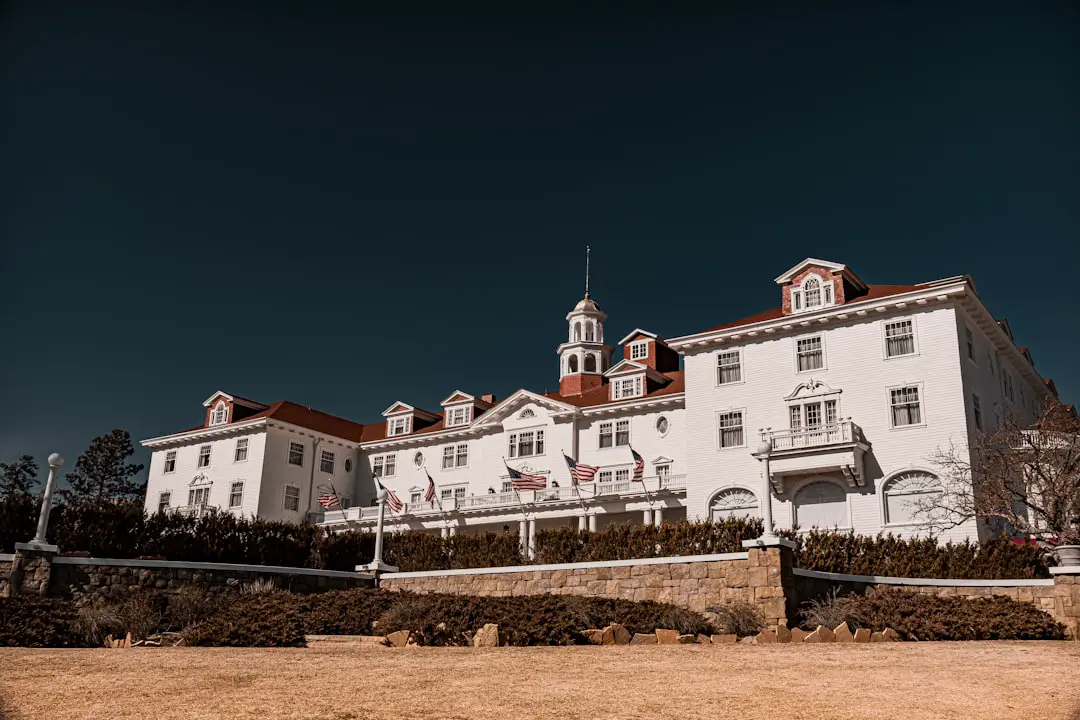
The Stanley Hotel in Estes Park, Colorado, has been part of the town’s story since 1909. Built by inventor and entrepreneur Freelan Oscar Stanley as an upscale mountain resort, the property became known for its early modern amenities, distinctive historic architecture, famous visitors, reported ghost stories, and its lasting connection to Stephen King’s The Shining.
Quick Answer
The Stanley Hotel is a historic 1909 resort in Estes Park best known for its Georgian-influenced classical architecture, reported paranormal lore, and Stephen King’s 1974 stay that inspired The Shining. Its ghost stories are folklore and guest reports rather than proven supernatural events, while its architectural and literary history is well documented.
Key Takeaways
- F.O. Stanley began developing the resort after coming to Estes Park for his health; construction began in 1907 and the hotel opened in 1909.
- The historic main hotel is a four-story building with a full basement, an H-shaped plan, a hipped roof, a central cupola, verandas, and strong Georgian and classical-revival influences.
- Room 217 is connected to a documented 1911 accident involving housekeeper Elizabeth Wilson and later became part of the hotel’s paranormal folklore.
- Stephen King stayed at the Stanley in late September 1974, and the experience helped inspire his 1977 novel The Shining.
- The Stanley’s haunting reputation comes from legends and reported experiences; supernatural explanations have not been established as fact.
Disclosure: As an Amazon Associate I earn from qualifying purchases. Some links on this page are affiliate links, at no extra cost to you.
A Brief History of the Stanley Hotel
F.O. Stanley arrived in the Estes Park area in the early 1900s after suffering from tuberculosis. According to the Stanley Hotel’s official history, his health improved during his time in the mountain climate, and he and his wife, Flora, eventually decided to create a sophisticated resort that would offer the comforts they knew from the East Coast.
Construction began in 1907, and the main hotel opened in 1909. Guests encountered amenities that were unusually advanced for a mountain resort of the era, including electric lights, telephones, bathrooms, automobiles, and an electrically equipped kitchen.
The property was not simply one building with later wings. The historic complex developed as a collection of buildings that included the main Stanley Hotel, the Manor House, Stanley Hall, the Carriage House, and service structures. The Manor House, now associated with The Lodge at the Stanley, was completed after the main hotel.
The hotel also became important to the growth of Estes Park. Historic documentation describes F.O. Stanley’s involvement in local water and electrical infrastructure, roads, civic development, and tourism. The Stanley Hotel was placed on the National Register of Historic Places in 1977, and the larger Stanley Hotel District received expanded National Register recognition in 1985.
- 1903: F.O. Stanley came to the Estes Park area while dealing with tuberculosis.
- 1907: Construction of the resort began.
- 1909: The main Stanley Hotel and several related buildings were completed and the hotel opened.
- 1911: Housekeeper Elizabeth Wilson survived an explosion that later became part of Room 217 lore.
- 1912: The Manor House was completed.
- 1974: Stephen King and Tabitha King spent a night at the hotel.
- 1977: The Stanley Hotel received National Register recognition.
- 1985: The recognized historic district was expanded.
The Haunting Legends and Ghost Stories
The Stanley Hotel is widely known for paranormal folklore, but its documented history and its supernatural stories should be kept separate. Guests, tour participants, employees, and television programs have reported unexplained sounds, movement, apparitions, cold spots, unusual smells, and other experiences over the years. These reports are part of the hotel’s cultural identity, but they do not establish a supernatural cause.
One recurring story involves F.O. Stanley himself, whose apparition has reportedly been associated with parts of the property. Another body of folklore centers on Flora Stanley. The hotel currently markets a Flora-themed “spirited” room above the historic Music Room and says guests have reported soft footsteps, rustling fabric, floral scents, and faint piano music.
Those accounts are best understood as reported experiences rather than confirmed events. The hotel itself mixes history, storytelling, and paranormal entertainment in its tours and investigation programs.
Note: A documented event can later become part of a ghost story without proving the ghost story itself. At the Stanley, the historical records and the paranormal folklore often overlap, especially in the stories surrounding Room 217.
The Famous Guests and Events
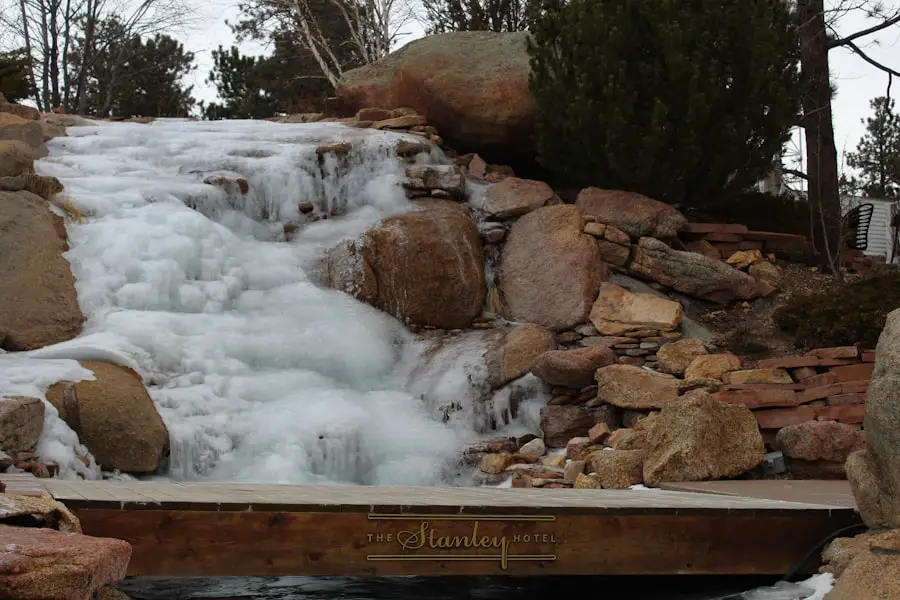
The Stanley Hotel attracted prominent visitors from well beyond Colorado. National Register documentation notes that many early guest records were lost, but it identifies notable guests including John Philip Sousa, Theodore Roosevelt, Margaret “Molly” Brown, Enrico Caruso, George Eastman, Lawrence Welk, Joan Baez, and Bob Dylan.
The hotel also became a destination for concerts, gatherings, weddings, meetings, and cultural events. That tradition continues today through live performances, themed events, tours, dining, and private functions.
The most consequential literary visit came in 1974, when Stephen King and his wife, Tabitha, stayed at the hotel shortly before its seasonal closure. King later described walking through the nearly empty corridors and having a disturbing dream that helped give him the basic framework for The Shining.
The Architecture and Design of the Hotel
The original table in this article described the building as a 10-story “Modern” structure with an open atrium and sustainable materials. Those details do not match the historic record. The National Register documentation for the Stanley Hotel District provides a much clearer description of the building.
| Historic Feature | Verified Detail |
| Construction | Construction began in 1907; the main hotel opened in 1909. |
| Main Building Height | Four stories with a full basement. |
| Building Plan | H-shaped plan on a cut-stone foundation. |
| Roof and Centerpiece | Hipped roof with a centrally positioned cupola and dome. |
| Architectural Character | A twentieth-century expression of Georgian architecture with strong classical-revival details and ornamentation. |
| Notable Exterior Details | Strong symmetry, dormers, classical pediments, verandas, columns, Palladian windows, and balanced wings. |
| Historic Recognition | The hotel was listed on the National Register in 1977; the broader Stanley Hotel District was recognized in expanded form in 1985. |
The front of the building is particularly notable for its formal symmetry. A broad verandah visually connects the two main wings, while the central cupola, dormers, pediments, columns, windows, and decorative elements reinforce the balanced design.
Inside, the hotel combines surviving historic character with modern guest-room amenities. The grand staircase, public rooms, woodwork, period references, and views toward the surrounding mountains remain important parts of the visitor experience.
The Most Haunted Rooms and Areas
Room 217 is the best-known room connected to the Stanley’s ghost lore. Its history includes a real accident involving housekeeper Elizabeth Wilson. According to the hotel, Wilson entered a guest room during a power outage in 1911 without realizing gas had leaked into the room. When she lit a lantern, an explosion threw her through the floor below. She survived and later returned to work at the hotel.
Later stories associated Wilson with unexplained activity in Room 217, including guests finding personal belongings moved or neatly arranged. The hotel itself repeats some of these reports in its current description of the room, but they remain anecdotal paranormal accounts rather than independently proven events.
The fourth floor also has a strong place in Stanley folklore. The hotel currently describes certain fourth-floor accommodations as “spirited” rooms and notes that guests frequently report unexplained phenomena there.
The historic Concert Hall and other areas of the property appear in paranormal stories as well. Visitors have reported voices, shadows, movement, cold spots, or unexplained sounds. These accounts contribute to the hotel’s reputation, but they should be understood as folklore and personal experiences rather than verified supernatural findings.
Warning: Do not enter restricted hotel areas or disturb overnight guests while looking for paranormal activity. Official tours follow designated routes, and standard tours do not enter occupied guest rooms.
The Ghost Tours and Paranormal Investigations
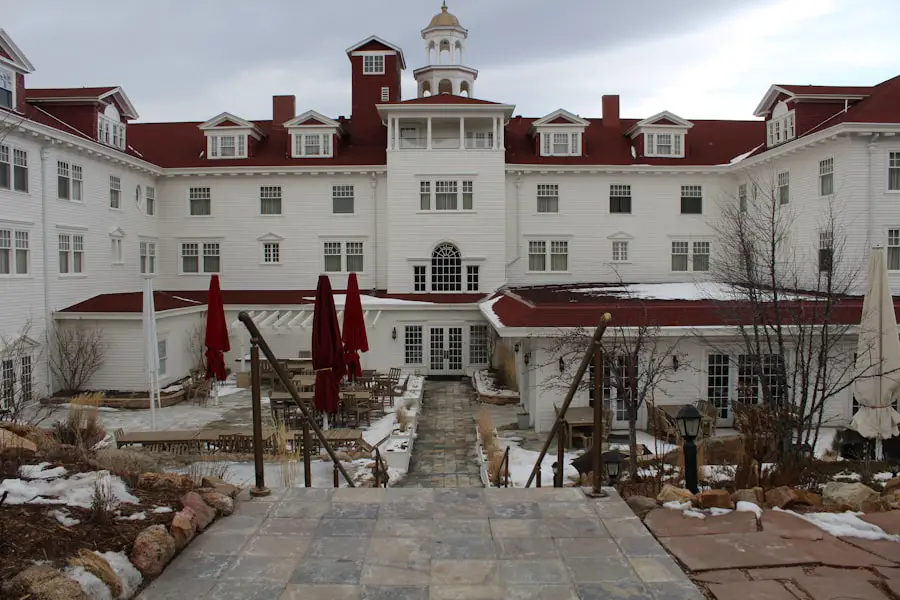
The Stanley currently offers several separate experiences for people interested in history, ghost stories, and The Shining. These programs are more clearly defined than the article’s earlier description suggested.
| Experience | What It Covers | Current Basics, August 2026 |
| Historic Day Tour | Hotel history, architecture, F.O. and Flora Stanley, Stephen King, folklore, and notable visitors. | About 60 minutes; ages 8+; standard adult ticket listed at $25; wheelchair accessible. |
| Stanley Ghost Tour | Reported hauntings, folklore, and historically “spirited” locations after dark. | About 60 minutes; ages 8+; standard ticket listed at $30; wheelchair accessible; does not enter guest rooms or guest floors. |
| The Shining Tour | Stephen King’s novel, Stanley Kubrick’s movie, the 1997 miniseries, and the Stanley’s connection to all three. | About 60 minutes; ages 8+; standard ticket listed at $30; not wheelchair accessible. |
| Overlook Project Paranormal Investigation | Hands-on paranormal investigation using investigative equipment and a deliberately skeptical approach. | About 3 hours; ages 13+. |
Current schedules and prices can change, so visitors should confirm details through the Stanley Hotel’s official tour information before traveling.
The hotel also operates the Overlook Project paranormal investigation, which is notable for explicitly describing the program as a skeptical inquiry rather than presenting supernatural conclusions as established fact.
The Influence on Pop Culture and Literature
The Stanley Hotel’s strongest pop-culture connection is Stephen King’s The Shining, but the relationship is sometimes oversimplified. King’s experience at the Stanley helped inspire the fictional Overlook Hotel in his novel, which was published in 1977.
Stanley Kubrick’s famous 1980 film adaptation was not filmed at the Stanley Hotel. The Stanley’s current Shining Tour specifically explains the differences between King’s novel, Kubrick’s movie, and Stephen King’s 1997 television miniseries. The 1997 miniseries, unlike Kubrick’s film, did use the Stanley Hotel.
Beyond The Shining, the hotel’s reputation has made it a recurring subject in paranormal television, travel media, documentaries, live events, and horror-related tourism. Its combination of authentic architectural history and supernatural folklore gives it an unusual place in American popular culture.
The Hotel’s Role in the Community
The Stanley Hotel’s influence on Estes Park predates its ghost-tour reputation. National Register records describe F.O. Stanley as an important figure in the development of the town’s tourism economy and local infrastructure. He was involved in water and electrical systems, road improvements, civic projects, and other efforts that helped Estes Park grow as a destination.
The hotel itself brought affluent travelers into the area at a time when reaching Estes Park required considerably more effort than it does today. Guests could arrive by train in communities such as Lyons or Loveland and continue into Estes Park in automobiles, including specially modified Stanley vehicles.
Today, the property continues to function as a major visitor destination and venue for concerts, meetings, weddings, dining, tours, and special events. That traffic supports the broader tourism economy of Estes Park while keeping the historic property in active use.
The Hotel’s Connection to Stephen King and “The Shining”
Stephen King’s connection to the Stanley is unusually well documented because King has described the experience himself. On his official website, he recalls that he and his wife, Tabitha, spent a night at the Stanley in late September 1974. The hotel was preparing to close for the winter, and they were effectively alone among the guest rooms.
King wandered through the empty corridors and felt that the hotel was an ideal setting for a ghost story. That night, he dreamed that his young son was running through the hallways while being chased by a fire hose. After waking, King said he already had the basic structure of the story forming in his mind.
The Stanley’s importance to The Shining comes from Stephen King’s 1974 stay and creative inspiration—not from serving as the filming location for Stanley Kubrick’s 1980 movie.
The novel was published in 1977 and became one of King’s defining works. Kubrick’s adaptation followed in 1980, but the Stanley was not its filming location. Stephen King’s 1997 television adaptation later used the hotel, creating a more direct on-screen connection between the Stanley and the fictional Overlook.
Tips for Visiting and Experiencing the Haunted Stanley Hotel
If the hotel’s history or paranormal reputation is the main reason for your visit, booking an official tour is more useful than simply walking through public areas. The Historic Day Tour focuses more heavily on architecture and documented history, while the Ghost Tour emphasizes reported hauntings and folklore. The Shining Tour is the better choice for visitors primarily interested in Stephen King and the screen adaptations.
- Reserve tours ahead: The hotel strongly recommends advance purchases because availability is limited.
- Check age limits: Standard hotel tours generally require guests to be at least 8 years old. The current paranormal investigation program is for ages 13 and older.
- Do not expect to enter Room 217: Standard tours do not enter guest rooms.
- Plan for walking: The hotel says some tour routes can involve substantial walking and stairs.
- Prepare for altitude: Estes Park sits at high elevation. The hotel advises tour participants to stay hydrated.
- Check parking rules: As of August 2026, the hotel lists $10 parking from May through October, with card-only payment.
- Verify current policies: Routes, prices, accessibility, parking, and schedules can change with venue availability and season.
Pro Tip: If you want both the real history and the ghost lore, take the Historic Day Tour before the Ghost Tour. Knowing what is documented makes it easier to distinguish historical events from later legends.
Rocky Mountain National Park is another major reason travelers stay in Estes Park. In 2026, the National Park Service requires timed-entry reservations during specified daytime hours from late May into mid-October. Visitors planning a park day should check the current Rocky Mountain National Park timed-entry rules before leaving for the park.
The Future of the Stanley Hotel and its Haunted Reputation
The Stanley continues to preserve its historic identity while adding new attractions and upgrading parts of the property. Its management has leaned into the hotel’s history, Stephen King connection, live entertainment, and paranormal reputation rather than treating those stories as side attractions.
As of August 2026, the hotel says enhancements are underway around portions of the property in preparation for the planned Stanley Film Center, which it expects to open in early 2028. Guests may therefore encounter construction fencing or temporary route changes while visiting.
The development gives the hotel another way to build on its long association with film and storytelling. At the same time, its National Register history, architecture, mountain setting, tours, and continuing use as a working hotel remain central to its identity.
If you are combining a Stanley Hotel visit with an overnight backpacking or camping trip elsewhere in the Rockies, choosing the right sleep system matters more than it does for a normal hotel stay. This guide to the best sleeping bag for backpacking travel can help you compare options for the outdoor portion of your trip.
Frequently Asked Questions
What is the Stanley Hotel?
The Stanley Hotel is a historic resort in Estes Park, Colorado, established by F.O. Stanley and opened in 1909. It is known for its early-20th-century architecture, mountain setting, ghost folklore, and connection to Stephen King’s The Shining.
Where is the Stanley Hotel located?
The Stanley Hotel is located at 333 E Wonderview Avenue in Estes Park, Colorado 80517, close to the eastern side of Rocky Mountain National Park.
How do I get to the Stanley Hotel?
Most visitors reach the Stanley Hotel by car through Estes Park. Allow extra travel time during busy summer weekends and holidays because traffic into Estes Park can be heavy. If you are attending a scheduled tour, the hotel recommends arriving early enough to park and check in before the tour begins.
What attractions are near the Stanley Hotel?
Rocky Mountain National Park is the major nearby attraction, with scenic drives, hiking, lakes, wildlife viewing, and mountain landscapes. Downtown Estes Park also offers restaurants, shops, galleries, and seasonal events. During the 2026 peak season, check National Park Service timed-entry requirements before driving into Rocky Mountain National Park.
Can I visit the Stanley Hotel if I am not staying there?
Yes. Day visitors can book official hotel tours and use public dining, entertainment, and other visitor facilities subject to the hotel’s current operating policies, event restrictions, and parking rules.
Is the Stanley Hotel really haunted?
The Stanley has a long-running reputation for paranormal activity, and guests have reported unexplained sounds, movement, apparitions, and other experiences. Those accounts are part of the hotel’s folklore, but there is no established evidence proving that supernatural activity causes them.
Did Stephen King stay in Room 217?
Yes. Stephen King’s stay at the Stanley in 1974 is associated with Room 217, and the hotel continues to market the room for its literary and paranormal history. King has said the nearly empty hotel and a disturbing dream during his visit helped inspire The Shining.
Was Stanley Kubrick’s The Shining filmed at the Stanley Hotel?
No. Stanley Kubrick’s 1980 film was not filmed at the Stanley Hotel. The hotel was, however, used for Stephen King’s 1997 television miniseries adaptation of The Shining.
Can a Stanley Hotel tour take me inside Room 217?
No. The hotel states that its regular tours do not enter guest rooms. Room 217 is an active hotel accommodation, so staying there requires a separate room reservation when availability allows.
Can children take the Stanley Hotel ghost tour?
The Stanley’s standard Historic, Ghost, and Shining tours currently require participants to be at least 8 years old. The Overlook Project paranormal investigation is currently restricted to ages 13 and older.
Sources
- The Stanley Hotel — About and History — opening, F.O. Stanley, early amenities, and the hotel’s historical background.
- National Park Service — Stanley Hotel District National Register documentation — architecture, historic complex, prominent guests, and significance.
- Stephen King — The Shining — King’s first-person account of the 1974 Stanley Hotel stay that inspired the novel.
- The Stanley Hotel — Official Tours — current tour options, visitor policies, ages, parking, and restrictions.
- The Stanley Hotel — Paranormal Investigations — current Overlook Project investigation program.
- National Park Service — Rocky Mountain National Park Timed Entry — current 2026 timed-entry planning requirements.
