

Last Updated on August 26, 2026 by Daniel Globe
Hospitality is at the heart of the hotel industry because a hotel stay is more than a room for the night. Guests judge the complete experience: how easily they can book, how they are greeted, whether the room is clean and comfortable, how staff respond to requests, and how problems are handled. Strong hospitality combines reliable operations with genuine human care, helping guests feel welcome, respected, and confident in the hotel.
Quick Answer
Hospitality in the hotel industry means creating a welcoming, reliable, and respectful guest experience from booking through checkout. It includes attentive staff, clean and comfortable facilities, personalized service, quick problem resolution, accessibility, and clear communication. Good hospitality can strengthen guest satisfaction, repeat-booking intent, reviews, and long-term brand loyalty.
Key Takeaways
- Hospitality covers the entire guest journey, not just front-desk service.
- Cleanliness, room quality, staff service, facilities, communication, and value all shape hotel satisfaction.
- Personalization works best when hotels learn genuine preferences without making assumptions or collecting unnecessary personal data.
- Fast, empathetic service recovery can prevent a small problem from defining the entire stay.
- Accessibility, cultural respect, staff training, and consistent operating standards are essential parts of excellent hospitality.
Disclosure: As an Amazon Associate I earn from qualifying purchases. Some links on this page are affiliate links, at no extra cost to you.
What Hospitality Means in the Hotel Industry
Hospitality is the combination of service, care, comfort, and attention that shapes how a guest feels throughout a hotel stay. It includes tangible elements such as room condition, cleanliness, food, facilities, and amenities, but it also includes less tangible elements such as courtesy, empathy, responsiveness, trust, and recognition.
This distinction matters because a hotel can complete every transaction correctly and still deliver an impersonal experience. A guest may receive the right room key and an accurate bill but remember the stay poorly if staff appear indifferent when a problem occurs. In contrast, thoughtful communication and genuine concern can make an otherwise routine stay memorable.
Hospitality vs. Customer Service
Customer service is one part of hospitality. Customer service usually focuses on completing a specific task, such as checking in a guest, replacing towels, changing a reservation, or answering a question. Hospitality is broader. It considers how those interactions fit together and how the guest feels before, during, and after them.
For example, providing an extra pillow after a guest asks for one is good customer service. Remembering that preference on a later stay, confirming that the pillow arrived, and making the guest feel comfortable asking for additional help are examples of hospitality.
Why Hospitality Matters to Hotels
Hospitality affects both the immediate guest experience and the way people perceive a hotel brand. Guests increasingly encounter hotels through booking platforms, review sites, social media, loyalty programs, and hotel apps before they ever reach the property. Each interaction contributes to expectations about the stay.
Current J.D. Power hotel guest satisfaction research evaluates the experience across areas including reservation and pre-stay communication, check-in, guest rooms, staff service, facilities, food and beverage, technology and connectivity, and value. That broader framework illustrates why hospitality cannot be assigned to a single department.
J.D. Power reported in July 2026 that North American hotel guest satisfaction improved year over year across every hotel segment, with guest rooms and hotel upkeep among the areas highlighted in the latest study.
A hotel that consistently provides a comfortable room, accurate information, responsive staff, and respectful treatment has a stronger foundation for satisfaction and loyalty. Strong experiences can also influence repeat-booking intent, recommendations, reviews, and guests’ willingness to continue using a brand.
Creating a Welcoming Atmosphere for Guests
Creating a welcoming atmosphere starts before a guest speaks to an employee. Lighting, cleanliness, noise, scent, signage, temperature, furniture, and the condition of public spaces all influence first impressions. A lobby does not need to be luxurious to feel hospitable; it needs to feel clean, intentional, comfortable, and easy to navigate.
Lighting, decor, cleanliness, sound, scent, seating, and wayfinding all contribute to how comfortable and confident guests feel when entering a hotel.
Local art and regional design elements can also give a property a stronger sense of place when they are presented authentically and respectfully. At the same time, the emotional tone created by employees is just as important as the physical environment.
A genuine greeting, clear directions, eye contact when appropriate, and an offer of help can reassure a guest after a tiring trip. Small touches such as explaining breakfast hours without being asked or pointing out the easiest route to the elevator reduce friction and make the arrival feel more personal.
Communal areas can further support a welcoming atmosphere when they match the needs of the property. Comfortable seating, coworking areas, social spaces, or organized activities can encourage interaction without forcing it on guests who prefer privacy.
Products Worth Considering

CLEAR DIRECTIONAL MESSAGING – Clearly marks elevator locations for improved guest and customer experience.

Made from durable, long-lasting plastic

Made from durable, long-lasting plastic
The Role of Staff in Providing Excellent Hospitality
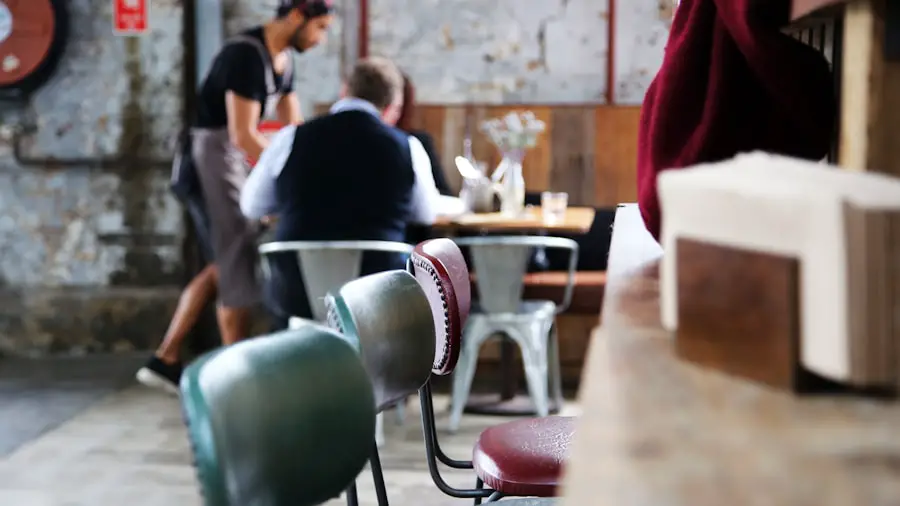
Hotel employees are often the most visible part of the guest experience. Front-desk agents, housekeepers, restaurant teams, bell staff, maintenance employees, security personnel, and managers all influence whether guests feel cared for.
Training should therefore go beyond memorizing scripts. Employees need to understand service standards, communication, accessibility, safety, conflict resolution, privacy, and when they are authorized to solve a problem without waiting for several layers of approval. The American Hotel & Lodging Association identifies employee training, career advancement, guest protection, and improvements to the guest experience as important industry priorities.
Empowerment is especially valuable during service recovery. If a guest reports that a room is unsuitable, for example, the employee should understand which remedies are available and how quickly each can be offered. Depending on the situation, that might mean arranging housekeeping, calling maintenance, changing rooms, correcting a charge, or involving a manager.
Pro Tip: Give frontline employees a clear service-recovery framework: listen without interrupting, acknowledge the concern, explain what can be done, act within an agreed time, and follow up after the fix.
Products Worth Considering

Personalizing the Guest Experience
Personalization can make a stay feel thoughtful when it is based on information a guest has willingly provided or preferences learned through legitimate previous interactions. Useful examples include room-location preferences, pillow requests, accessibility requirements, preferred communication channels, or a note that a returning guest usually requests a late checkout.
Personalization should not become surveillance. Hotels should collect only information they genuinely need, protect the information they retain, restrict access appropriately, and dispose of data when it is no longer required. The Federal Trade Commission’s data-security guidance recommends minimizing unnecessary data collection and protecting sensitive customer information.
Special occasions can also create opportunities for thoughtful service. A handwritten note, an appropriate room amenity, or a helpful recommendation for a birthday or anniversary can be memorable when the guest has disclosed the occasion. Hotels should avoid guessing personal information or making assumptions about what a guest wants.
Hospitality Metrics Hotels Can Track
The original article used unsourced 2019–2021 percentages and counts for guest satisfaction, repeat guests, and personalized recommendations. A more useful approach is to track each property’s own performance consistently rather than treating unsupported figures as industry benchmarks.
| Metric | What It Shows | How to Use It |
| Guest Satisfaction | How guests rate the overall stay or individual touchpoints | Compare by department, room type, stay purpose, and recurring complaint theme |
| Repeat Guests | The share of guests who return to the property or brand | Track alongside rate, loyalty membership, stay purpose, and satisfaction |
| Personalized Recommendations | How often relevant, permission-based recommendations or preferences are used | Measure usefulness and guest response rather than simply counting messages |
| Problem Resolution | How effectively service failures are corrected | Track response time, resolution time, repeat complaints, and follow-up satisfaction |
Anticipating and Meeting Guest Needs
Anticipating needs does not mean guessing what every guest wants. It means noticing useful information, communicating clearly, and removing predictable sources of friction.
For example, a family arriving with a stroller may appreciate clear directions to an elevator. A business traveler arriving before check-in may need luggage storage and a quiet place to work. A guest who has already reported a maintenance problem should not need to explain the same issue to three different employees.
Active listening is particularly useful. Staff can pay attention to what guests actually say, confirm the request, and avoid assumptions. If someone asks for extra towels every evening, the team may ask whether the guest would like them delivered automatically for the remainder of the stay.
Technology can help with this coordination. Hotel apps, messaging systems, customer profiles, and internal task-management tools can make requests easier to record and route. Technology is most effective when it reduces friction rather than forcing guests into a channel they do not want to use.
Note: Offer choices when possible. Some guests prefer an app or text message; others want to speak with a person. Convenience should not come at the cost of human assistance.
Service Recovery When Something Goes Wrong
No hotel can prevent every delayed room, maintenance issue, noise complaint, billing error, or housekeeping problem. What often separates strong hospitality from weak hospitality is the response after the problem appears.
J.D. Power’s 2025 North America Hotel Guest Satisfaction Index reported that problems occurred in a minority of the stays it evaluated, but satisfaction fell sharply among guests who experienced one. That makes problem prevention and fast recovery important parts of the guest experience.
A practical recovery process includes five steps:
- Listen: Let the guest explain the problem without immediately becoming defensive.
- Acknowledge: Confirm that you understand what went wrong and how it affected the stay.
- Offer a realistic solution: Explain the available options and expected timing.
- Act: Assign responsibility so the request does not disappear between departments.
- Follow up: Check that the solution worked instead of assuming the issue is closed.
Compensation may be appropriate in some situations, but money or points should not replace fixing the underlying problem. A guest whose air conditioning is broken needs a workable room solution first.
The Impact of Hospitality on Guest Satisfaction and Loyalty

The connection between hospitality and guest satisfaction is strong because guests experience a hotel through many connected touchpoints. Clean rooms, reliable facilities, thoughtful staff interactions, accurate information, and perceived value all contribute to the overall judgment of a stay.
High satisfaction is also associated with outcomes hotels care about, including guest retention, incremental spending, advocacy, and brand loyalty. These relationships should be treated as correlations rather than guarantees: a single friendly interaction cannot overcome consistently poor room condition, and a beautiful property cannot fully compensate for repeated service failures.
Consistency is therefore essential. Guests do not experience the front desk, housekeeping, maintenance, and food service as separate businesses. To them, every interaction represents the same hotel.
Incorporating Cultural Sensitivity in Hospitality
Hotels regularly serve people with different languages, customs, dietary preferences, communication styles, and cultural expectations. Cultural sensitivity means responding respectfully to those differences without stereotyping guests based on nationality, appearance, name, or religion.
A guest may request vegetarian food, halal options, allergen information, privacy accommodations, or another dietary or cultural consideration. The best practice is to ask what the guest needs and explain accurately what the hotel can provide rather than assuming that every member of a cultural or religious group follows the same practice.
Language access can also improve communication. Multilingual employees, translated information, interpretation resources, clear signage, and digital translation tools may help international guests understand hotel services and emergency information.
UN Tourism guidance on tourism and cultural interaction emphasizes mutual respect, dialogue, and understanding among people from different backgrounds. Hotels can support that principle while also celebrating local culture through responsible recommendations, regional food, art, and experiences.
Accessibility Is Part of Hospitality
Inclusive hospitality also means making hotel services usable by guests with disabilities. In the United States, hotels and many other places of lodging are public accommodations covered by Title III of the Americans with Disabilities Act.
ADA.gov’s guidance for places of lodging explains that hotels may need accessible facilities, reasonable policy modifications, effective communication, and appropriate assistance so guests with disabilities have an equal opportunity to use hotel services.
Good practice includes describing accessible room features accurately, communicating directly with the guest, asking before providing physical assistance, keeping accessible routes usable, and training employees on service-animal and communication requirements.
Warning: Staff should not assume what assistance a guest with a disability needs. Offer help when appropriate, listen to the guest’s request, and follow applicable accessibility requirements and hotel procedures.
Hospitality Across the Guest Journey
The strongest hotels treat hospitality as a continuous process rather than something that begins at the reception desk.
Before Arrival
Provide accurate room descriptions, transparent policies, useful pre-arrival information, and a straightforward way to communicate special requests. Confirming important details reduces surprises at check-in.
Arrival and Check-In
Acknowledge the guest promptly, explain delays honestly, protect room-number and payment information, and provide the essential details needed to settle in.
During the Stay
Maintain cleanliness and facilities, respond to requests, coordinate between departments, respect privacy, and make it easy for guests to ask for help.
Checkout
Review charges clearly, correct errors without unnecessary friction, ask about unresolved issues, and make departure convenient.
After the Stay
Post-stay communication can include a receipt, feedback request, or relevant loyalty information. Hotels should avoid excessive marketing and respect the guest’s communication preferences.
Training and Development for Hospitality Excellence
Training is essential because hospitality standards are difficult to maintain when employees receive only a brief orientation and are then expected to improvise. A practical program should combine initial training, role-specific instruction, coaching, observation, refresher sessions, and feedback from real guest situations.
Core topics can include:
- welcoming and professional communication;
- property knowledge and local recommendations;
- service-recovery procedures;
- accessibility and inclusive guest service;
- cultural awareness;
- privacy and handling of guest information;
- safety and emergency procedures;
- department-to-department handoffs;
- use of hotel technology and guest-request systems; and
- the limits of each employee’s decision-making authority.
Managers should also coach employees using real examples. If several guests complain that requests disappear between the front desk and housekeeping, the problem may be a workflow issue rather than an individual employee issue. Good hospitality management looks for the root cause and improves the system.
Products Worth Considering

STAY COMPLIANT: The Hazardous Materials Regulations (HMR) require every hazmat employer to train, test, and certify every hazmat employee within 90 days of employment, within 90 days of any change in job function, and every three years as a refresher. Covers regulations 49 CFR Parts 107-180 and 49 CFR Part 397.


A Simple Continuous-Improvement Cycle
- Collect feedback: Use surveys, reviews, direct comments, complaint records, and staff observations.
- Find patterns: Separate one-off complaints from repeated operational problems.
- Prioritize: Focus first on issues affecting safety, cleanliness, room function, accessibility, and high-volume guest friction.
- Fix the process: Update staffing, training, technology, maintenance, communication, or procedures as needed.
- Measure again: Check whether satisfaction, complaints, resolution time, or repeat problems improve.
Hospitality From the Traveler’s Perspective
Guests also shape their own comfort while traveling. Useful travel accessories cannot replace good hotel hospitality, but items such as an organized carry-on suitcase, a supportive travel pillow for a long flight, or comfortable merino-wool travel socks can make the journey to and from a hotel easier.
Travelers who want to compare luggage features such as built-in charging access can read this guide to the best carry-on suitcases with USB chargers. Ultimately, however, the hotel remains responsible for the quality of the stay itself: a guest should not need personal travel gear to compensate for poor cleanliness, weak communication, or unresponsive service.
Sources
- J.D. Power North America Hotel Guest Satisfaction Study — current hotel guest-experience dimensions and satisfaction research.
- U.S. Department of Justice — ADA Guide for Places of Lodging — accessibility and equal-service guidance for hotels.
- Federal Trade Commission — Data Security Guidance — responsible collection and protection of customer information.
- American Hotel & Lodging Association — hotel-industry priorities including guest experience, employee development, safety, and training.
- UN Tourism — Tourism and Cultural Understanding — respect, dialogue, and cultural awareness in tourism.
Frequently Asked Questions
What is hospitality in the hotel industry?
Hospitality in the hotel industry is the care, service, comfort, communication, and attention provided throughout a guest’s experience. It covers everything from booking and check-in to room condition, staff interactions, problem resolution, checkout, and post-stay communication.
Why is hospitality important in the hotel industry?
Hospitality is important because guests judge the hotel through the complete experience rather than the room alone. Reliable facilities, cleanliness, staff service, value, communication, and effective problem resolution can influence satisfaction, recommendations, repeat-booking intent, and loyalty.
What are the key elements of hospitality in hotels?
Key elements include a welcoming atmosphere, clean and functional rooms, attentive employees, clear communication, responsive service, personalization, accessibility, cultural respect, privacy, service recovery, and consistent standards across departments.
How do hotels ensure good hospitality for guests?
Hotels can establish clear service standards, train employees, maintain rooms and facilities, track guest feedback, give staff appropriate authority to resolve problems, coordinate requests between departments, protect guest information, meet accessibility requirements, and continuously improve recurring problem areas.
What are examples of hospitality in a hotel?
Examples include greeting a guest warmly, explaining hotel facilities clearly, remembering a requested pillow preference, helping with an accessibility need, providing accurate local recommendations, correcting a billing error quickly, replacing a malfunctioning room item, and following up after resolving a complaint.
What is the difference between hospitality and customer service?
Customer service usually describes a specific interaction or task, such as checking in a guest or delivering towels. Hospitality is the broader experience created by all of those interactions and focuses on whether guests feel welcome, respected, comfortable, and cared for throughout their stay.
How can technology improve hotel hospitality?
Technology can make requests easier to submit, help departments coordinate tasks, record useful guest preferences, provide digital check-in options, and improve communication. It works best when it supports employees and gives guests choices rather than eliminating human assistance.
How can hotels personalize service while respecting guest privacy?
Hotels should use relevant information that guests have provided legitimately, collect only what is necessary, protect stored data, restrict employee access, respect communication preferences, and avoid making sensitive assumptions. Personalization should make the stay easier without becoming intrusive.
