
Last Updated on July 27, 2026 by Daniel Globe
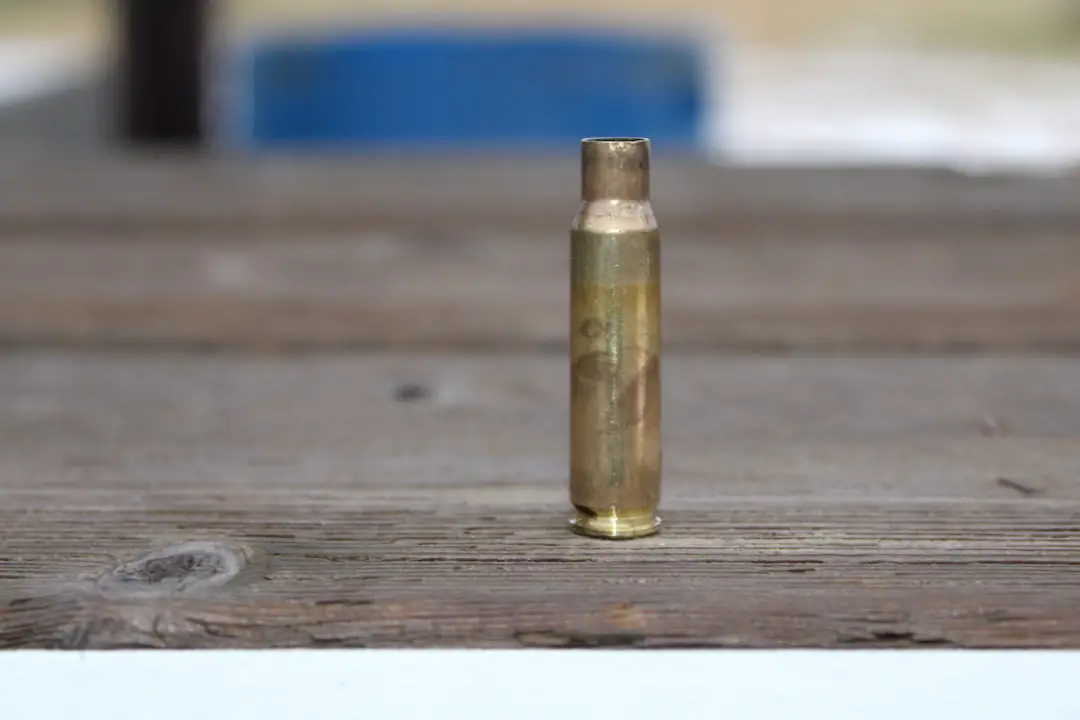
A .40 caliber handgun bullet can travel much farther than the distance at which most people could place an accurate shot. This article focuses specifically on the .40 Smith & Wesson cartridge, usually written as .40 S&W, and explains its possible travel distance, practical trajectory, and the safety factors that matter most.
Quick Answer
A .40 S&W bullet can potentially travel on the order of a mile in unobstructed, high-angle flight. There is no single universal maximum because the ammunition, firearm, barrel, bullet shape, launch angle, weather, and terrain all affect the result. Never use an estimated distance as a safety boundary.
Key Takeaways
- Maximum bullet travel is different from practical handgun accuracy or an ammunition maker’s published trajectory range.
- A fixed figure such as 1,500 yards is only a rough estimate, not a guaranteed maximum or a safe exclusion distance.
- Common .40 S&W loads leave a four-inch test barrel at roughly 1,000 to 1,150 feet per second, depending on the load.
- Bullet design, velocity, firing angle, wind, air density, barrel length, and obstacles all change the flight path.
- A proper backstop and knowledge of the target and everything beyond it are essential for every shot.
Disclosure: As an Amazon Associate I earn from qualifying purchases. Some links on this page are affiliate links, at no extra cost to you.
What Does “.40 Caliber” Mean?
The term “.40 caliber” describes a bullet with a diameter close to four-tenths of an inch. Several cartridges use bullets in this general diameter range, so the term does not identify one cartridge by itself. In most modern handgun discussions, however, “.40 caliber” refers to the .40 S&W cartridge.
The Sporting Arms and Ammunition Manufacturers’ Institute standard specifies a nominal .4005-inch bullet diameter for .40 S&W, subject to its listed manufacturing tolerance. Smith & Wesson introduced the cartridge with the Model 4006 pistol in 1990 after developing it with Winchester in the context of FBI ammunition requirements.
Common factory bullet weights include 155, 165, and 180 grains. Full-metal-jacket or total-metal-jacket loads are widely used for training, while expanding bullets are produced for uses permitted by applicable law. Bullet construction affects drag, stability, penetration, expansion, and retained velocity, so two loads of the same weight may not perform identically.
Factors Affecting How Far a .40 S&W Bullet Travels
No single specification determines bullet travel. Maximum distance results from the interaction of the firearm, ammunition, launch conditions, atmosphere, and terrain.
Muzzle Velocity and Barrel Length
Muzzle velocity is the bullet’s speed as it exits the barrel. A faster initial velocity normally produces a flatter early trajectory, but it does not by itself determine the maximum range. Bullet shape and aerodynamic drag control how quickly that velocity is lost.
Barrel length can change velocity because it changes how long expanding propellant gases act on the bullet. The result is not perfectly predictable across all loads and firearms. SAAMI also cautions that velocities measured in standardized test barrels should not be expected to match every production firearm.
Bullet Weight and Shape
A lighter bullet may begin faster, while a heavier bullet may begin more slowly. That does not mean the lighter bullet will always travel farther or that the heavier one will always retain more energy. The bullet’s shape, sectional density, construction, stability, and ballistic coefficient also influence drag.
For example, two 165-grain bullets with different nose shapes or construction can lose speed at different rates. A well-stabilized bullet may remain point-forward for much of its flight, while an unstable or damaged bullet can yaw or tumble and lose speed more quickly.
Firing Angle
A bullet fired nearly level reaches the ground sooner than one fired upward at a moderate angle, assuming open and level terrain. However, the simple classroom rule that a vacuum projectile travels farthest at 45 degrees does not transfer neatly to real bullets. Air resistance, changing bullet stability, launch height, wind, and terrain alter the result.
Forensic researchers have tested .40 S&W and other cartridges at several high departure angles using Doppler radar. The measured maximum ranges fell below some ranges predicted by exterior-ballistics software, showing why a calculated figure should not be treated as an exact boundary.
Atmospheric Conditions
Wind can push a bullet sideways, while air density changes how quickly drag slows it. Lower pressure, higher altitude, and warmer air generally reduce density. Humid air is also slightly less dense than dry air at the same temperature and pressure, although the practical effect is normally small compared with major changes in altitude, pressure, or wind.
These factors become more noticeable as distance and flight time increase. For ordinary handgun target distances, variations in the firearm, ammunition, sights, and shooter often matter more than small humidity changes.
Terrain, Obstacles, and Ricochets
A bullet may strike soil, vegetation, a structure, or another object long before reaching its theoretical maximum range. It may also deflect or ricochet after hitting water, rock, steel, concrete, or another hard surface. The deflected path can be difficult to predict.
Warning: Never fire into the air, toward an unknown area, at water, or at a hard surface that may cause a ricochet. Use an established range with a suitable backstop, and know the target, its surroundings, and everything beyond it.
Maximum Range of a .40 S&W Bullet
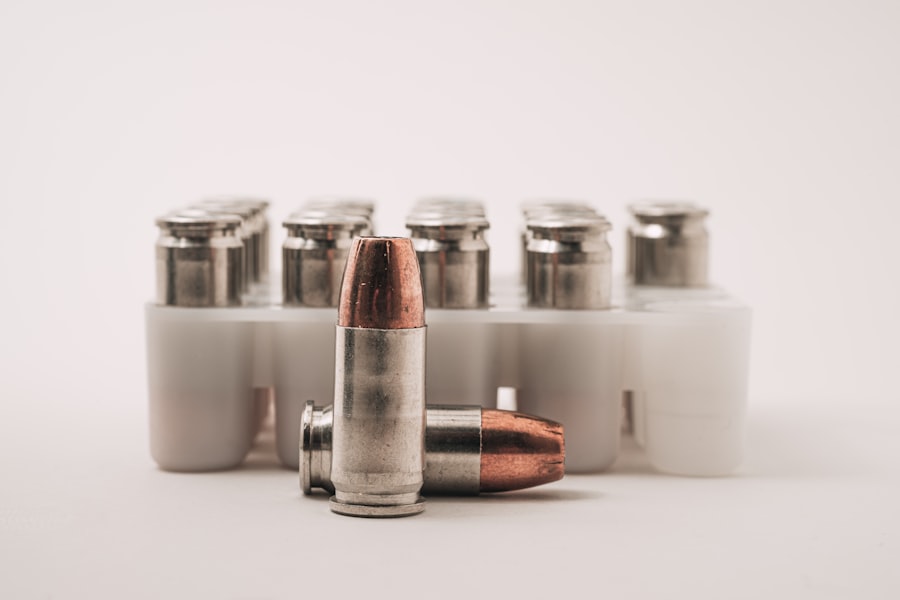
A commonly repeated estimate places the maximum travel of a .40 S&W handgun bullet somewhere around a mile, with figures often expressed in the general range of 1,500 to 1,800 yards. That estimate should be treated only as a broad scale of possible travel, not as a universal specification.
The exact result depends on the particular bullet, muzzle velocity, firearm, departure angle, altitude, atmospheric conditions, launch height, bullet stability, and ground elevation. A bullet may travel less than an estimate, but a different combination may travel farther. Manufacturer trajectory charts that end at 50 or 100 yards do not identify the distance at which the bullet becomes harmless.
Note: “Maximum range” means the total distance a projectile may cover before reaching the ground. It does not mean the distance at which a shooter can reliably hit a target, the distance at which the bullet is harmless, or the minimum size of a safe firing area.
Maximum Travel Versus Practical Range
Practical handgun range is much shorter than maximum travel. It depends on the firearm, ammunition, sights, target size, shooter, and conditions. Many handgun ranges are designed around relatively short firing distances because small aiming errors become much larger as distance increases.
A bullet can remain in flight and retain potentially dangerous energy long after accurate shot placement has become difficult. For that reason, missing a target or shooting beyond the backstop presents a serious risk even when the target is close.
Real-World .40 S&W Ballistics Example
The following manufacturer data shows how ordinary .40 S&W loads behave through 100 yards. It is not a maximum-range table. Speer produced the figures with four-inch test barrels, and individual firearms may produce different results.
| Example Load | Muzzle Velocity | Velocity at 50 Yards | Velocity at 100 Yards | Approximate Drop at 100 Yards |
|---|---|---|---|---|
| Speer Lawman 165-grain TMJ | 1,050 fps | 971 fps | 911 fps | 10.8 inches below line of sight with a 25-yard sight-in |
| Speer Lawman 180-grain TMJ | 1,000 fps | 937 fps | 885 fps | 11.8 inches below line of sight with a 25-yard sight-in |
The table shows two important points. First, real .40 S&W velocities are much lower than the 2,000- to 3,000-fps figures sometimes found in inaccurate online tables. Second, the bullets are still moving at substantial speed at 100 yards even though their paths have dropped well below the original line of sight.
Loss of practical accuracy does not mean loss of danger. A bullet that passes over, through, or beside the intended target continues until it strikes something or reaches the ground.
Effects of Bullet Weight and Velocity on Distance
Velocity determines how quickly a bullet initially covers distance and influences the early shape of its trajectory. Weight affects momentum and energy, but weight cannot predict range without information about bullet shape, drag, stability, and muzzle velocity.
A lighter load may have a flatter path at ordinary target distances because it starts faster. A heavier load may retain a greater percentage of its original speed if its shape and ballistic coefficient reduce drag. Either load may have more drop than expected when fired from a shorter barrel or when the sights are set for a different distance.
Bullet construction also matters. Full-metal-jacket, total-metal-jacket, and expanding bullets may have different nose profiles. Expansion is a terminal event that occurs after impact under suitable conditions; it does not make a bullet safe in open flight. Before impact, its aerodynamic shape and stability are the more relevant travel factors.
Environmental Conditions and Bullet Travel
A crosswind changes the bullet’s horizontal position during flight. The longer the bullet remains airborne, the more time the wind has to move it. Wind may also vary in speed and direction between the firearm and the point of impact.
Temperature, barometric pressure, altitude, and humidity affect air density. Lower-density air normally produces less drag, allowing a bullet to retain velocity slightly better. Higher-density air creates more drag. These effects are considered in advanced ballistic calculations, but they do not turn a generic maximum-range estimate into a dependable safety measurement.
Rain and other weather can also affect visibility, grip, footing, target identification, and safe operation. Those practical safety concerns may be more important than the small direct effect of individual raindrops on a handgun bullet.
Accuracy and Precision of .40 S&W Bullets
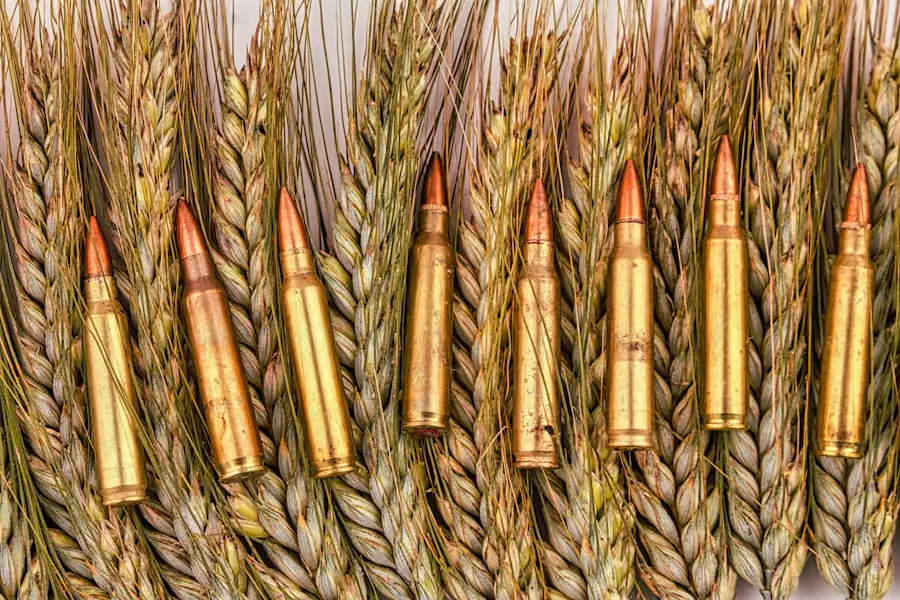
Accuracy describes how close shots land to the intended point. Precision describes how closely repeated shots group together. A precise group can still be inaccurate if it forms away from the intended point.
The ammunition is only one part of the system. Accuracy also depends on barrel condition, sights, sight radius, trigger control, grip, firearm fit, mechanical lockup, and the consistency of the ammunition. A longer barrel may change velocity and may provide a longer sight radius on some handguns, but it does not automatically guarantee better accuracy.
Manufacturer trajectory data illustrates why distance matters. In the Speer examples above, a 25-yard sight-in produces roughly 11 inches of drop by 100 yards. Small errors in sight alignment and trigger movement add to that trajectory difference.
Pro Tip: Use the trajectory information published for the exact factory load as a starting point, then confirm point of impact only at an authorized range that can safely contain every shot.
Safety Concerns and Legal Regulations
The fact that a handgun bullet can travel far beyond a normal target makes safe handling essential. An earthen berm or professionally designed bullet trap stops bullets; distance alone does not.
Know the Target and What Is Beyond It
Before firing, identify the target, the area around it, and the complete path behind it. A target should be placed in front of a backstop designed to capture the ammunition being used. Do not assume trees, thin walls, fences, vehicles, water, or open land will stop a bullet safely.
Hard or shallow-angle surfaces can cause ricochets. Water may appear soft, but a bullet striking it at a low angle can deflect instead of stopping immediately. Damaged steel targets, rocks, concrete, and other hard surfaces can also send bullets or fragments in unexpected directions.
Never Fire Into the Air
A bullet fired upward eventually returns to the ground unless it strikes another object. Its return path, orientation, and impact speed depend on the firing angle, bullet shape, stability, wind, and whether the bullet tumbles. It can still cause serious injury or death. Celebratory gunfire is unsafe and may also violate criminal law.
Basic Handling and Storage
- Treat every firearm as if it is loaded.
- Keep the muzzle pointed in the safest available direction.
- Keep your finger outside the trigger guard until you are ready to fire.
- Use only ammunition identified by the firearm manufacturer as appropriate for that firearm.
- Secure firearms against access by children and other unauthorized users.
- Follow the firearm manufacturer’s manual and the rules of the range where you are shooting.
Legal Requirements
Firearm, ammunition, magazine, possession, transport, storage, and discharge laws vary by country, state, province, county, and city. They also change over time. Do not rely on a general article to determine whether a firearm, ammunition type, shooting location, or activity is legal.
Note: This article provides general educational and safety information, not legal advice. Check the current law published by your jurisdiction and contact the appropriate government authority or a qualified local attorney when necessary.
Conclusion and Recommendations
A .40 S&W bullet may travel on the order of a mile in open, high-angle conditions, but no single yardage applies to every firearm and load. Maximum travel is also very different from useful accuracy. Manufacturer data shows that ordinary .40 S&W bullets retain substantial velocity at 100 yards even while their trajectories drop noticeably.
The safest recommendation is simple: never use a maximum-range estimate to decide where shooting is safe. Fire only at an authorized location with a suitable backstop, follow the firearm and ammunition manufacturers’ instructions, and know exactly what lies around and beyond the target.
Frequently Asked Questions
How far can a .40 S&W bullet travel?
A broad safety-oriented estimate is on the order of a mile in unobstructed, high-angle flight. The exact distance depends on the load, bullet design, firearm, barrel, departure angle, atmosphere, terrain, and bullet stability. No estimate should be treated as a safe boundary.
Is maximum range the same as effective or practical range?
No. Maximum range is the total distance a bullet may travel before reaching the ground. Practical range concerns controlled shot placement on a defined target. A bullet can remain dangerous far beyond the distance at which accurate handgun shooting becomes difficult.
Can a .40 S&W bullet travel 1,500 yards?
That distance is possible as a rough high-angle estimate for some combinations, but it is not a universal specification. The actual result may be shorter or longer. It should never be used to determine whether an area is safe for shooting.
Will a carbine make a .40 S&W bullet travel farther?
A longer barrel may produce a different muzzle velocity, which can change trajectory and total travel. The effect depends on the ammunition and firearm. A blanket claim that every .40 S&W carbine reaches a particular distance is not reliable.
Can a .40 S&W handgun be accurate at 100 yards?
Some firearms and skilled shooters can hit suitable targets at 100 yards under controlled range conditions. However, trajectory drop and aiming errors are significant. Speer’s four-inch test-barrel examples show about 10.8 to 11.8 inches of drop at 100 yards with a 25-yard sight-in.
Does a heavier .40 S&W bullet always travel farther?
No. Weight is only one factor. Muzzle velocity, bullet shape, ballistic coefficient, stability, launch angle, and atmospheric conditions also affect travel. A lighter bullet may start faster, while a heavier or more aerodynamic bullet may lose speed at a different rate.
Is a bullet harmless after it passes its practical range?
No. Practical range describes the ability to place a controlled shot, not whether the bullet can injure someone. A missed bullet may remain dangerous for a long distance, which is why every shot requires a suitable backstop.
What is the most important safety rule when considering bullet travel?
Know the target, its surroundings, and everything beyond it. Fire only where a backstop designed for the ammunition can safely contain every bullet, including a missed shot.
Sources
- SAAMI Z299.3-2022 Centerfire Pistol and Revolver Standard — .40 S&W cartridge dimensions, test-barrel specifications, and standardized technical information.
- Smith & Wesson Company History — the cartridge’s 1990 introduction and development history.
- Speer Lawman .40 S&W 165-Grain Ballistics — verified muzzle, 50-yard, and 100-yard velocity and trajectory data.
- Speer Ammunition Catalog — manufacturer trajectory and velocity data for common 165- and 180-grain .40 S&W loads.
- Interpol Review of Forensic Firearm Examination 2016–2019 — high-angle Doppler-radar testing and the limits of calculated maximum-range predictions.
- California Department of Justice Firearm Safety Rules — target identification, safe direction, secure storage, ricochet, and celebratory-gunfire guidance.
