Last Updated on August 2, 2026 by Daniel Globe
Texas is home to two of the best-known airlines in the United States: American Airlines and Southwest Airlines. However, they do not belong to the same airline category. American is generally classified as a legacy network carrier, while Southwest is normally classified as a low-cost carrier.
Quick Answer
American Airlines is the only airline headquartered in Texas that is commonly classified as a U.S. legacy network carrier. It is based in Fort Worth. Southwest Airlines is headquartered in Dallas, but government and industry sources generally place Southwest in the low-cost carrier category rather than the legacy-airline category.
Key Takeaways
- American Airlines is the Texas-headquartered airline normally classified as a legacy network carrier.
- American’s corporate headquarters is at 1 Skyview Drive in Fort Worth, Texas.
- Southwest Airlines is headquartered at 2702 Love Field Drive in Dallas, but it is generally classified as a low-cost carrier.
- At the end of 2025, American reported 1,013 mainline aircraft and another 567 aircraft operated through its regional network.
- American serves more than 350 destinations in more than 60 countries through its own flights and wider network.
Disclosure: As an Amazon Associate I earn from qualifying purchases. Some links on this page are affiliate links, at no extra cost to you.
Which Legacy Airlines Are Headquartered in Texas?
Under the standard U.S. airline categories used by the Bureau of Transportation Statistics, American Airlines is a legacy carrier and Southwest Airlines is a low-cost carrier. That makes American the only major Texas-headquartered airline normally included in the legacy category.
| Airline | Texas Headquarters | Common Classification | Business Model |
|---|---|---|---|
| American Airlines | Fort Worth | Legacy network carrier | Large hub-and-spoke network, multiple cabin classes, international alliances, lounges, and regional feeder service |
| Southwest Airlines | Dallas | Low-cost carrier | Primarily domestic and short-haul service built around a simplified Boeing 737 fleet and a historically low-cost operating model |
Note: “Legacy airline” is an industry description rather than a legal license or official status awarded to an airline. Definitions can vary slightly, but American, Delta, and United are the three airlines most often described as the current large U.S. legacy network carriers. Neither Delta nor United is headquartered in Texas — Delta is based in Atlanta and United in Chicago — which is part of why American stands alone as Texas’s legacy carrier.
What Is a Legacy Airline?
A legacy airline is an established full-service carrier with a large route network, major connecting hubs, several ticket classes, international partnerships, and a long operating history. In the United States, the label has traditionally been applied to large airlines that operated before airline deregulation in 1978 and later absorbed other historic carriers.
Legacy airlines commonly provide:
- Hub-and-spoke route networks
- Domestic and long-haul international flights
- Economy, premium economy, business, and first-class products on selected routes
- Airport lounges and priority airport services
- Large loyalty programs and co-branded credit cards
- Codeshare, joint-business, and global-alliance partnerships
- Regional airline connections feeding passengers into major hubs
The label is descriptive, not a ranking. A low-cost carrier like Southwest can be highly profitable and well regarded by travelers while still falling outside the legacy category, since the classification is based on network structure and service model rather than quality or size.
American Airlines fits the legacy-carrier model because it combines a long operating history with major hubs, regional feeder airlines, premium cabins, global partnerships, lounges, and an extensive international network.
American Airlines History
American Airlines traces its roots to an airmail flight operated by Robertson Aircraft Corporation in 1926. Robertson and more than 80 other small aviation companies were consolidated during 1929 and 1930 into the organization that became American Airways. The company was reorganized as American Airlines, Inc. in 1934.
American began using flight attendants, then commonly called stewardesses, in 1933. However, it was not the first airline to employ female flight attendants. According to the Smithsonian National Air and Space Museum, Ellen Church became the first female airline stewardess when she joined Boeing Air Transport in 1930.
Several verified milestones shaped American’s development:
- 1936: American became the first airline to place the Douglas DC-3 into commercial service.
- 1953: It introduced nonstop transcontinental service with the Douglas DC-7.
- 1959: It launched scheduled transcontinental passenger jet service between Los Angeles and New York using the Boeing 707.
- 1981: It introduced the AAdvantage frequent-flyer program.
- 2001: American acquired most of Trans World Airlines’ assets.
- 2011: American’s parent company entered Chapter 11 bankruptcy protection.
- 2013: American and US Airways completed their merger, creating the present American Airlines Group.
- 2026: American marked its centennial year, tracing a century of operation back to its 1926 roots.
American’s official company history provides a longer timeline of its aircraft, routes, mergers, and industry milestones.
Headquarters and Texas Connection
American Airlines Group and American Airlines have their principal executive offices at 1 Skyview Drive, Fort Worth, Texas 76155. The campus is close to Dallas Fort Worth International Airport, which is American’s largest hub.
The location sometimes causes confusion because the airport serves both Dallas and Fort Worth. American is officially headquartered in Fort Worth, not Dallas. Its corporate address is listed on both its corporate structure page and its filings with the U.S. Securities and Exchange Commission.
Southwest Airlines is headquartered separately at 2702 Love Field Drive in Dallas. Southwest began scheduled service in 1971 and built its identity around low-cost air travel. Its Dallas location makes it a Texas-headquartered major airline, but not a legacy carrier under the classification commonly used for American.
Fleet and Destinations
American operates one of the largest airline fleets in the world. Its 2025 Form 10-K reported 1,013 mainline aircraft at December 31, 2025. Wholly owned and third-party regional airlines operated another 567 aircraft, bringing the reported year-end total to 1,580 aircraft.
The mainline fleet includes several Airbus and Boeing families:
- Airbus A319, A320, A321, A321neo, and A321XLR aircraft
- Boeing 737-800 and 737 MAX 8 aircraft
- Boeing 777-200ER and 777-300ER aircraft
- Boeing 787-8 and 787-9 Dreamliners
American Eagle regional service is operated with aircraft that include Embraer E170 and E175 jets and Bombardier CRJ700 and CRJ900 aircraft. Fleet totals change as aircraft are delivered, retired, stored, or transferred, so dated figures are more reliable than an undated fleet estimate.
Current company information describes a network of more than 6,000 daily flights to more than 350 destinations in more than 60 countries. American’s nine primary hubs are:
- Charlotte
- Chicago O’Hare
- Dallas Fort Worth
- Los Angeles
- Miami
- New York
- Philadelphia
- Phoenix
- Washington National
Dallas Fort Worth is the center of American’s system. It connects domestic, Latin American, transatlantic, and transpacific routes while handling a large share of the airline’s connecting passengers and checked baggage.
Alliances and Partnerships
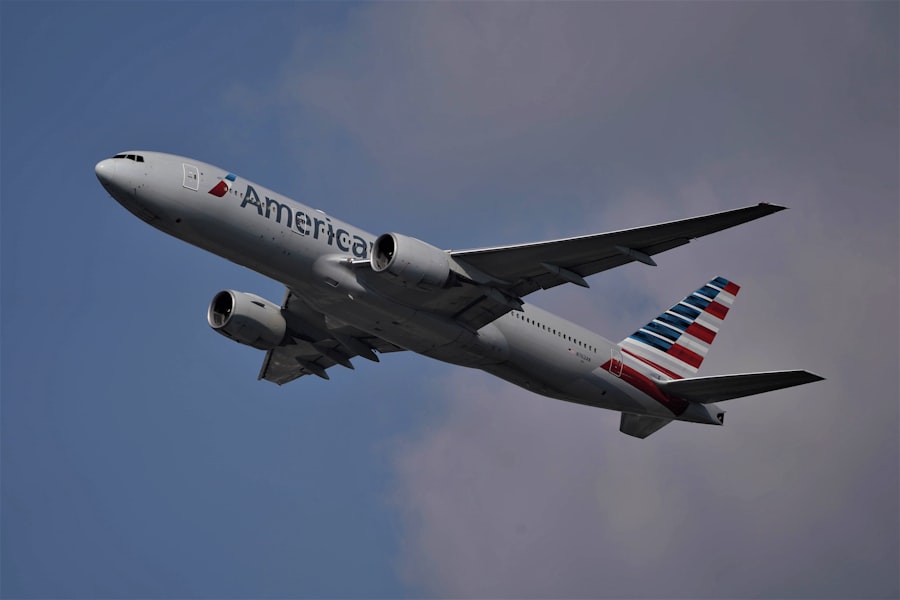
American Airlines is a founding member of the oneworld alliance, which began operations in 1999. The alliance allows participating airlines to coordinate benefits such as through-ticketing, baggage handling, selected lounge access, and reciprocal frequent-flyer privileges.
American’s current published oneworld partner list includes Alaska Airlines, British Airways, Cathay Pacific, Fiji Airways, Finnair, Hawaiian Airlines, Iberia, Japan Airlines, Malaysia Airlines, Oman Air, Qantas, Qatar Airways, Royal Air Maroc, Royal Jordanian, and SriLankan Airlines.
American also participates in deeper joint businesses and strategic partnerships. Its major cooperative arrangements include:
- A transatlantic joint business with British Airways, Iberia, and Finnair
- A transpacific partnership with Japan Airlines
- Strategic relationships with Alaska Airlines and Qatar Airways
- Mileage, marketing, or codeshare relationships with several airlines outside oneworld
The airline’s current partners and benefits are listed on its official airline partnerships page.
Important correction: American’s Northeast Alliance with JetBlue is no longer active. Codeshare sales ended in July 2023 after a federal court ruled that the arrangement violated U.S. antitrust law. Travelers should not rely on old articles describing JetBlue as a current American Airlines codeshare partner.
Frequent Flyer Program
American launched AAdvantage in 1981. Members can earn redeemable miles and, on eligible activity, Loyalty Points through American flights, partner-airline travel, co-branded credit cards, hotels, car rentals, dining, shopping, cruises, and other participating businesses.
| AAdvantage Metric | Current Verified Information |
|---|---|
| Program launched | 1981 |
| Published elite tiers | 4: Gold, Platinum, Platinum Pro, and Executive Platinum |
| 2026 status thresholds | 40,000; 75,000; 125,000; and 200,000 Loyalty Points — unchanged for the third consecutive year |
| Non-flight partners | More than 1,000, according to American’s 2025 annual filing |
| Awards redeemed in 2025 | Approximately 18 million awards |
AAdvantage miles and Loyalty Points serve different purposes. Miles are primarily a redemption currency, while Loyalty Points determine elite status and unlock selected rewards. Eligible members can use miles for flights, upgrades, lounge access, hotels, rental cars, and other available awards.
Published status benefits can include free checked baggage, priority airport services, preferred seating, Main Cabin Extra seats, and complimentary upgrade eligibility. Benefits differ by tier, route, operating airline, and availability.
Pro Tip: Check the current earning rules before buying a fare solely to earn miles or status. Fare restrictions and partner-airline earning rates can change, and some deeply discounted tickets may earn fewer rewards or no rewards.
American publishes current thresholds and benefits on its Loyalty Points and status page.
Premium Services and Amenities
American offers several premium products, but the exact cabin depends on the aircraft and route. Domestic First is available on many U.S. and short-haul international flights. Premium Economy, Flagship Business, Flagship First, and the newer Flagship Suite product are available on selected long-distance or premium transcontinental routes.
Flagship Suite seats debuted on premium-configured Boeing 787-9 aircraft in June 2025 and later on the Airbus A321XLR, which entered revenue service on a JFK–LAX flight in December 2025. Depending on the aircraft, these seats can include:
- A fully lie-flat bed
- Direct aisle access
- A privacy door
- Additional personal storage
- Wireless charging
- Bluetooth-enabled entertainment
Flagship First remains available on selected Boeing 777-300ER and Airbus A321T services while American updates its long-haul and transcontinental fleet. Travelers should check the seat map and aircraft type before booking because products can differ even within the same cabin name.
American also operates two main lounge brands:
- Admirals Club: Membership-based lounges with seating, Wi-Fi, food, drinks, and work areas.
- Flagship Lounge: Premium lounges for qualifying international, transcontinental, elite-status, and other eligible customers.
Access is not automatically included with every First or Business ticket. Eligibility depends on the route, cabin, membership, credit card, or qualifying status.
Since January 2026, American has provided free high-speed Wi-Fi sponsored by AT&T to all logged-in AAdvantage members on narrowbody and dual-class regional aircraft, with availability continuing to expand as more aircraft are equipped.
Corporate Citizenship and Sustainability
American Airlines states that it aims to reach net-zero greenhouse-gas emissions by 2050. Its intermediate science-based target calls for a 45% reduction in greenhouse-gas emissions intensity by 2035 compared with a 2019 baseline.
The airline’s environmental strategy focuses on several areas:
- Replacing older aircraft with more fuel-efficient models
- Improving flight planning, taxi procedures, weight, and operational efficiency
- Purchasing and helping expand sustainable aviation fuel
- Supporting next-generation aircraft and propulsion technology
- Improving energy use at airports, offices, maintenance facilities, and lounges
Sustainable aviation fuel, often shortened to SAF, can be blended with conventional jet fuel and may lower life-cycle emissions depending on its feedstock and production method. However, global SAF supplies remain limited and more expensive than conventional fuel. American acknowledges that reaching its long-term goals will depend on wider production, supportive policies, technology advances, and investment across the aviation industry.
In 2026, American and Google announced a three-year sustainable aviation fuel certificate agreement associated with 35 million gallons of SAF. American also reports that its mainline fuel efficiency has improved by about 6.7% since 2019.
Outside environmental programs, American supports nonprofit organizations, military and veteran initiatives, disaster-response efforts, employee volunteer projects, education, and community programs. Its current targets and progress are available through the airline’s sustainability reporting center.
Financial Performance and Challenges
American Airlines’ financial history includes periods of rapid growth, bankruptcy restructuring, pandemic-era losses, and later recovery. The company emerged from bankruptcy and completed its merger with US Airways in 2013, but it continues to face the high fixed costs and narrow profit margins common in commercial aviation.
For the full 2025 calendar year, American Airlines Group reported:
- $54.6 billion in record total operating revenue
- $111 million in GAAP net income
- 224 million passengers boarded
- 1,580 aircraft at year-end, including regional aircraft operated under capacity-purchase agreements
American’s momentum continued into 2026. Second-quarter 2026 results, reported in July 2026, showed record quarterly revenue of $16.7 billion, up 16.3% from the same period a year earlier, and GAAP net income of $71 million. Year-over-year fuel expense rose by more than $2.2 billion, or roughly 83%, during the quarter, and stronger fares and demand offset only about half of that increase.
Fuel-price volatility remains a major risk because ticket prices cannot always rise fast enough to offset sudden increases in operating costs. For the third quarter of 2026, American has guided to year-over-year revenue growth of 16.0% to 19.0%, alongside continued fuel-cost pressure.
Other continuing challenges include:
- Debt and aircraft-financing obligations
- Labor and maintenance costs
- Weather and air-traffic-control disruption
- Aircraft and engine delivery delays
- Competition from other network, low-cost, and international airlines
- Changing demand from business and leisure travelers
- Geopolitical events that affect routes and fuel prices
Note: Airline revenue can be very high while net profit remains comparatively small. Aircraft, fuel, labor, airport operations, maintenance, technology, and debt create substantial operating expenses.
Future Outlook and Expansion
American’s near-term plans focus more on improving its network, cabins, technology, and profitability than on uncontrolled fleet growth. The airline continues to take delivery of Airbus A321neo, Airbus A321XLR, Boeing 787-9, and Embraer E175 aircraft while preparing for additional aircraft ordered for future years.
Its product investments include refreshed Airbus A319 and A320 interiors, larger overhead bins, more premium seats, power at more seats, updated lounges, and a broader rollout of Flagship Suite cabins. American expects the number of lie-flat seats on its international aircraft to grow by more than 50% by the end of the decade as new aircraft arrive and Boeing 777 cabins are updated.
Technology is another major focus. Mobile-app improvements, automated rebooking, baggage tracking, biometric tools, faster Wi-Fi, and self-service airport features can reduce lines and give passengers more control when flights are disrupted.
American is also adding selected routes where demand supports sustainable service. Its large Dallas Fort Worth hub gives the airline a strong base for connecting passengers between smaller U.S. cities and destinations in Latin America, Europe, Asia, Australia, and the Middle East.
Long-term success will depend on balancing four priorities:
- Operating flights safely and reliably
- Improving customer service and premium products
- Controlling fuel, labor, maintenance, and financing costs
- Making measurable progress toward lower-emission aviation
Sources
- U.S. Bureau of Transportation Statistics: Legacy and Low-Cost Carriers — supports the classification of American as a legacy carrier and Southwest as a low-cost carrier.
- American Airlines History — supports the company timeline, early consolidation, aircraft milestones, and mergers.
- American Airlines Group 2025 Form 10-K — supports headquarters, fleet, hubs, passengers, loyalty, and full-year financial figures.
- American Airlines Second-Quarter 2026 Financial Results — supports the Q2 2026 revenue, net income, and fuel-expense figures.
- American Airlines Partner and Alliance Information — supports current oneworld membership and strategic partnerships.
- American Airlines AAdvantage Status Information — supports current elite tiers, Loyalty Point thresholds, and published benefits.
- American Airlines Pathway to Net Zero — supports the 2035 emissions-intensity target and 2050 net-zero goal.
Frequently Asked Questions
What legacy airlines are headquartered in Texas?
American Airlines is the only major Texas-headquartered airline commonly classified as a legacy network carrier. Its headquarters is in Fort Worth, near Dallas Fort Worth International Airport. The other two carriers usually grouped with it as U.S. legacy airlines, Delta and United, are headquartered in Atlanta and Chicago, respectively.
Is Southwest Airlines a legacy airline?
Southwest is a long-established major airline, but it is generally classified as a low-cost carrier rather than a legacy network carrier. The Bureau of Transportation Statistics has historically placed Southwest in its low-cost carrier group.
Where is American Airlines headquartered?
American Airlines Group and American Airlines are headquartered at 1 Skyview Drive, Fort Worth, Texas 76155.
Where is Southwest Airlines headquartered?
Southwest Airlines is headquartered at 2702 Love Field Drive in Dallas, Texas.
What is a legacy airline?
A legacy airline is a long-established full-service carrier that usually operates major hubs, regional feeder flights, several cabin classes, international routes, airport lounges, and broad alliance partnerships. The term is an industry description rather than a formal legal status.
Why is American Airlines considered a legacy carrier?
American operated before U.S. airline deregulation, absorbed several historic airlines, and now runs a large hub-and-spoke network with regional affiliates, international partnerships, premium cabins, lounges, and a global loyalty program.