Last Updated on July 27, 2026 by Daniel Globe
Hiking boots can do much more than carry you over a rocky trail. With the right color, shape, and outfit, they can also work as comfortable everyday footwear. The key is to balance their rugged look with the rest of your clothes while still choosing a boot that fits properly and matches the terrain when you actually hike.
Quick Answer
To style hiking boots, treat them as the rugged anchor of the outfit. Pair chunky boots with cleaner or softer pieces such as straight-leg jeans, relaxed trousers, knitwear, or a midi dress. Keep colors coordinated, show a little of the boot instead of hiding it under long hems, and always prioritize proper fit and trail-ready traction when hiking.
Key Takeaways
- Choose hiking boots for the terrain first, then use color, material, and silhouette to match your personal style.
- Straight-leg jeans, cargos, leggings, relaxed trousers, midi skirts, and casual dresses can all work with hiking boots.
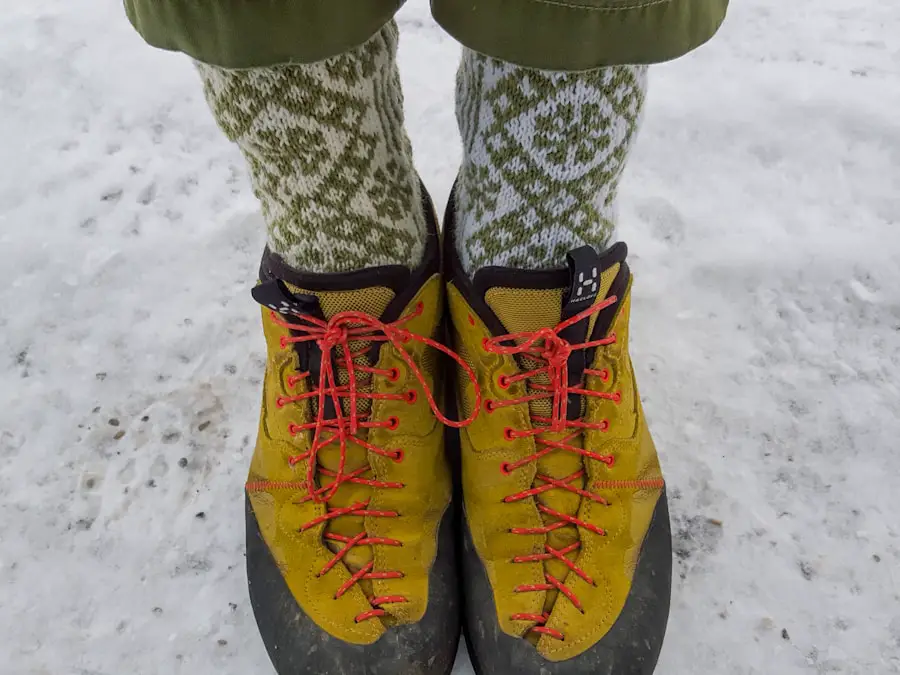
- Colorful laces, patterned hiking socks, and a visible sock cuff are easy ways to add personality without changing the whole outfit.
- Balance chunky boots with clean lines, softer fabrics, or a streamlined top layer so the outfit does not feel too heavy.
- Choose waterproofing and insulation for the actual weather rather than assuming every winter outfit needs both.
- Clean boots according to their material, dry them away from direct heat, and reapply water-repellent treatment only when appropriate.
At a Glance
| Time Required | About 5–10 minutes to build an outfit |
| Difficulty | Easy |
| Tools Needed | No special tools; a full-length mirror is useful |
| Cost | $0 when styling boots with clothes you already own |
Disclosure: As an Amazon Associate I earn from qualifying purchases. Some links on this page are affiliate links, at no extra cost to you.
Choose Hiking Boots That Fit Your Style and Activity
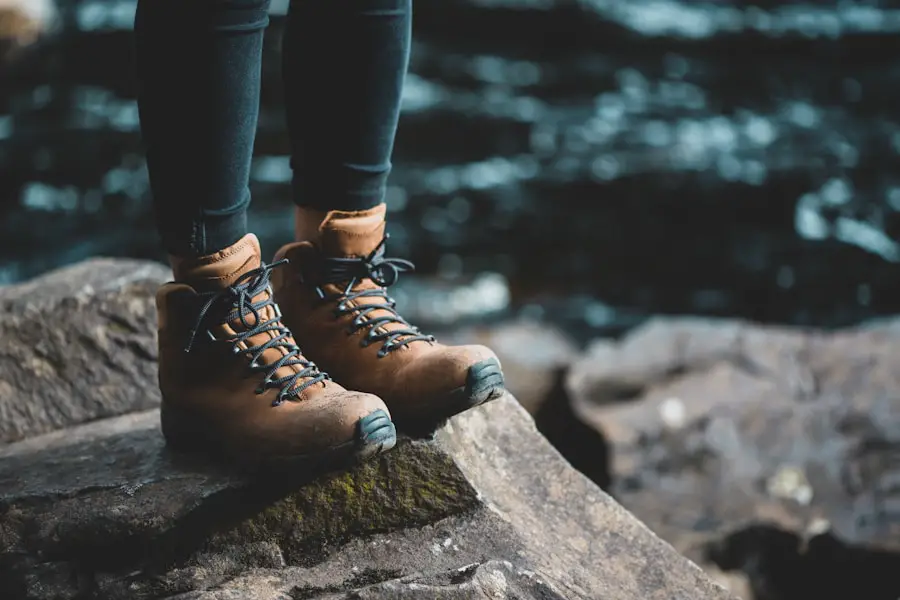
Before planning an outfit, make sure the boots suit what you will actually do in them. For rugged trails, look for an outsole with a tread and rubber compound designed for traction. For example, Vibram Megagrip is designed to provide grip on both wet and dry terrain. A casual city walk, groomed path, or easy park trail may allow you to wear a lighter and more flexible hiking shoe.
Boot height can change both the look and feel of the footwear. Low-cut hiking shoes look closest to sneakers and are easy to wear with casual outfits. Mid-cut boots create a more traditional hiking silhouette and add coverage around the ankle. Taller, more structured footwear may make sense for rugged terrain or demanding conditions, but do not assume that a higher collar by itself guarantees protection from ankle sprains. Research summarized in a British Journal of Sports Medicine clinical guideline found no clear injury-prevention advantage between low- and high-cut footwear.
Material also affects both appearance and performance. Full-grain leather has a classic look, strong abrasion resistance, and good water resistance, although it is generally heavier and less breathable than many synthetic options. Synthetic hiking uppers made with materials such as nylon or polyester are commonly lighter, dry faster, and require less break-in time. The current REI hiking footwear guide recommends choosing materials, stiffness, and footwear type according to terrain, trip length, and the load you plan to carry.
Get the Fit Right Before You Style Them
A stylish hiking boot is not useful if it rubs, crushes your toes, or lets your heel slide. Hiking footwear should feel snug without feeling tight. You should be able to wiggle your toes, and your heel should sit securely in the heel cup without excessive lifting.
Try boots with the same thickness of socks you expect to wear. Because feet can swell during the day and while walking, trying footwear later in the day can also give you a more realistic idea of fit. Walk on an incline if possible and make sure your toes do not strike the front when moving downhill.
Note: For a real hike, terrain, fit, traction, and weather matter more than fashion. Build the outfit around suitable footwear rather than choosing a stylish boot that is wrong for the route.
Pairing Hiking Boots with Different Outfits
Hiking boots work best in everyday outfits when their rugged shape looks intentional. You can either lean into the outdoorsy character with denim, cargos, fleece, and technical fabrics or create contrast with tailored trousers, soft knits, skirts, and dresses.
Hiking Boots with Jeans and Trousers
Straight-leg jeans are one of the easiest choices because the hem can fall neatly over the top of a mid-cut boot without hiding the whole shoe. A small cuff also works when you want the boot and sock to become part of the outfit.
Slim or tapered jeans can be worn over a narrow boot shaft or tucked neatly into a taller boot when the proportions look balanced. With wide-leg trousers, avoid a hem that bunches heavily over the laces. A slightly cropped length usually gives chunky footwear more definition.
Cargo pants and hiking boots naturally create a utility-inspired look. Keep the top simple with a T-shirt, fitted knit, overshirt, or casual jacket so the outfit does not become overly bulky.
Hiking Boots with Dresses and Skirts
Hiking boots can also work with a casual midi dress, sweater dress, denim skirt, or utility-style shirt dress. The contrast between a soft or flowing fabric and a sturdy boot makes the combination look deliberate rather than accidental.
For an easy outfit, pair neutral brown or black hiking boots with a simple cotton or linen midi dress and add a denim jacket, overshirt, or relaxed cardigan. In cooler weather, tights or tall socks can help connect the dress visually to the heavier footwear.
Smart-Casual Ensembles
For a more polished appearance, hiking boots can be integrated into smart-casual outfits. A tailored blazer over a fitted turtleneck with straight-leg trousers can create a sharp contrast when combined with clean, understated hiking boots. The combination works best when the boots are relatively sleek, well maintained, and free of dried mud or obvious trail damage.
Elevating the Look
To dress up the combination, add one structured accessory rather than several competing statement pieces. A clean handbag, leather belt, simple watch, or restrained jewelry can make the rugged footwear feel more intentional.
A useful rule is to repeat one detail from the boots somewhere else in the outfit. Brown leather boots can echo a brown belt or bag, while black boots can connect with a black jacket, watch strap, or other small accessory.
Incorporating Accessories with Hiking Boots
Accessories can change the tone of a hiking-boot outfit without making it complicated. A leather belt can give definition to looser clothing and visually connect with brown or black leather boots. Matching the belt and boots creates a coordinated look, while a contrasting belt adds more personality.
Hats can move the outfit in different directions. A wide-brimmed outdoor hat feels practical and trail-inspired, while a simple cap, beanie, or felt hat can make the same boots look more urban.
Jewelry works best when it does not compete with the visual weight of the footwear. Simple gold or silver pieces can contrast nicely with rugged leather. A backpack or crossbody bag is another useful choice because it can reinforce either the outdoor or city side of the outfit while remaining practical.
Mixing and Matching Colors and Textures
| Color Combination | Texture Combination |
|---|---|
| Monochromatic: one color family in different shades | Smooth + rough: a smooth knit or silk-like fabric with denim and rugged leather boots |
| Analogous: neighboring colors such as olive, green, and blue | Soft + hard: cashmere, fleece, or soft knitwear with leather boots |
| Complementary: restrained use of colors opposite each other on the color wheel | Matte + shine: matte nubuck or suede with subtle metal jewelry or hardware |
| Triadic: three balanced accent colors spaced around the color wheel | Light + heavy: chiffon, linen, or a light dress with visibly chunky hiking boots |
Earth tones are an easy starting point for hiking-boot outfits. Deep green, brown, tan, cream, charcoal, and muted blue naturally suit the outdoorsy character of the footwear and are easy to combine with everyday clothes.
For example, olive hiking boots can work with beige chinos and a cream sweater. Brown leather boots pair easily with dark denim, corduroy, wool, or navy. Black hiking boots can create a cleaner city look with charcoal trousers, blue jeans, or a monochromatic black outfit.
Texture is just as useful as color. Rugged leather next to soft cotton, linen, wool, or knitwear creates depth without requiring loud patterns. A chunky cardigan over denim adds warmth and texture, while smooth leather boots can sharpen an otherwise relaxed outfit.
Use Socks and Laces to Change the Look
Socks are one of the simplest ways to make hiking boots look intentionally styled. Let a small cuff of a hiking sock show above a mid-cut boot when wearing cropped jeans, leggings, shorts, or a skirt. Neutral gray, cream, brown, or black keeps the look understated, while stripes or brighter colors can become a controlled accent.
Laces can do the same job. Replacing worn laces with a clean pair immediately freshens the boots. A contrasting lace can add color, while matching the lace more closely to the upper creates a cleaner look.
Pro Tip: When the boots are already chunky or brightly colored, keep the socks and laces simple. When the boots are plain and neutral, socks or laces are a safer place to add pattern or color.
Styling Hiking Boots for Different Seasons
Spring and Summer
For warm weather, pair hiking footwear with lighter fabrics such as cotton, linen, technical nylon, or other breathable materials. Shorts, cropped trousers, or a casual dress can keep the outfit visually lighter even when the footwear has a substantial sole.
Do not assume waterproof is always better. Waterproof membranes help keep outside moisture from reaching your feet, but they also reduce breathability compared with highly ventilated non-waterproof footwear. In hot, mostly dry conditions, a lighter non-waterproof hiking shoe may be more comfortable.
Autumn
Autumn is one of the easiest seasons for hiking-boot outfits. Combine the boots with straight jeans, leggings, corduroy, cargos, knit sweaters, flannel shirts, denim jackets, or light insulated layers. Brown, olive, rust, navy, and cream all work naturally with the rugged footwear.
Winter
In genuinely cold, snowy, or slushy conditions, waterproof footwear and additional insulation can be useful. However, insulation should match the temperature and activity level rather than being treated as a requirement for every winter day. For casual cold-weather outfits, pair the boots with thermal leggings, fleece-lined pants, denim, wool trousers, knitwear, or a parka.
Warning: A fashionable hiking-boot outfit is not automatically suitable for a technical trail. For real hikes, choose clothing and footwear for the weather, terrain, traction needs, route difficulty, and exposure first.
Tips for Wearing Hiking Boots in Urban Settings
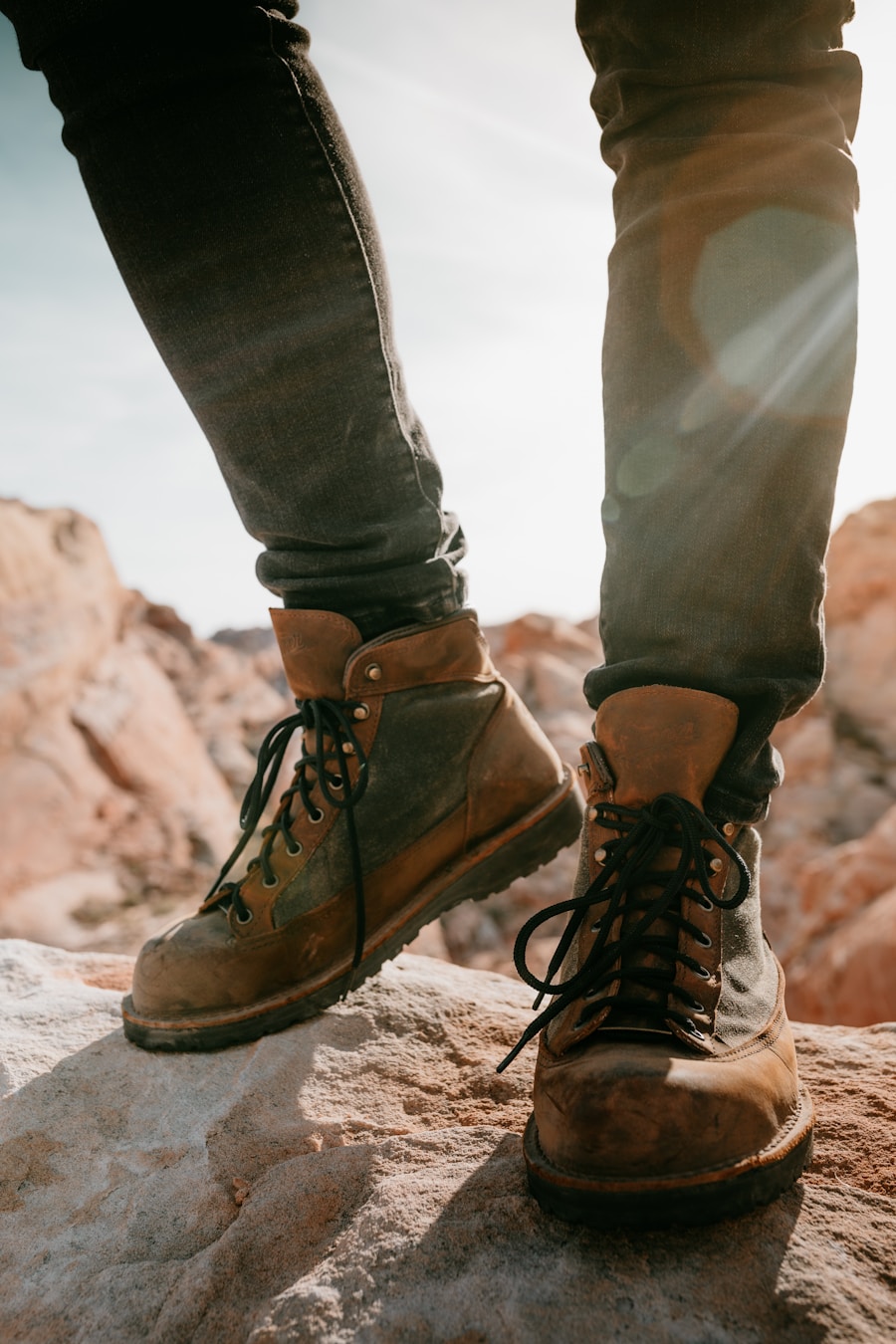
Hiking boots can move easily into an urban wardrobe when you control the proportions. One approach is to balance a chunky boot with cleaner pieces such as tailored trousers, straight jeans, a fitted skirt, or a simple knit.
You can also lean into the bulkier silhouette. Oversized outerwear, including a denim jacket, barn jacket, puffer, or relaxed coat, can make substantial boots feel intentional. Keep the lower half cleaner or slightly more fitted if both the jacket and footwear are oversized.
For an easy city outfit, try straight jeans, hiking boots, a plain T-shirt or sweater, and an overshirt. A crossbody bag or simple sunglasses can finish the look without making it feel overstyled.
Common Styling Mistakes to Avoid
- Hiding the entire boot under excess fabric: Adjust or cuff the trouser hem so the footwear still has a clear shape.
- Making every piece oversized: Balance a chunky boot or large coat with at least one cleaner, more controlled silhouette.
- Using too many outdoor pieces at once: Mix technical clothing with ordinary wardrobe staples unless you deliberately want a full trail-inspired look.
- Ignoring condition: Muddy boots may suit a trail but usually weaken a polished city or smart-casual outfit.
- Choosing fashion before function on a trail: Grip, fit, and weather suitability should always come first outdoors.
Incorporating Hiking Boots into Professional Attire
Hiking boots can work in some casual or creative workplaces, but the office dress code comes first. Traditional technical boots with bright panels, deep lugs, and bulky hardware may be too casual for a formal workplace.
For a more polished option, choose ankle-height hiking boots in black, dark brown, or another neutral shade with relatively simple detailing. Pair them with tailored trousers, a crisp button-up shirt, fine knitwear, or a fitted blazer.
A pencil skirt or other structured skirt can also work with a clean, understated boot when the workplace allows rugged footwear. Keep accessories restrained with choices such as stud earrings, a simple belt, or a classic watch.
Maintaining and Caring for Your Stylish Hiking Boots
Keeping hiking boots clean helps preserve both their appearance and their performance, but care should match the materials. Do not treat full-grain leather, nubuck, synthetic fabric, and waterproof membranes as though they are identical.
1. Remove Dirt and Debris
After a muddy hike, remove the laces and use a soft brush to clear dirt from the upper, seams, and outsole. Cleaning the tread also helps restore the outsole’s ability to make proper contact with the ground.
2. Clean According to the Material
Follow the footwear manufacturer’s instructions whenever possible. For GORE-TEX footwear, GORE-TEX care guidance recommends brushing away loose dirt, cleaning with lukewarm water and a small amount of suitable liquid detergent, and avoiding bleach and machine washing.
Leather footwear may require a cleaner designed specifically for its type of leather. A treatment intended for smooth full-grain leather may not be appropriate for nubuck or suede.
3. Dry Boots at Moderate Temperature
Let wet boots dry naturally in a ventilated area at normal room temperature. Avoid radiators, fireplaces, campfires, heaters, and other strong heat sources because high heat can damage leather and weaken footwear adhesives.
Removing the insoles can speed drying. Paper placed loosely inside can absorb moisture, but replace it when it becomes wet.
4. Condition Full-Grain Leather Only When Needed
Full-grain leather can dry and crack over time. A suitable conditioner can help when the leather actually appears dry, but more is not always better. REI’s leather hiking-boot care guidance warns that excessive conditioning can make hiking boots too soft and reduce support. Nubuck and suede generally need different care rather than routine leather conditioning.
5. Restore Water Repellency When Necessary
New waterproof hiking boots generally do not need an immediate aftermarket waterproofing treatment. Reapply an appropriate durable water-repellent treatment when water stops beading on the outer material and starts soaking into it. Use a treatment designed for the specific upper and membrane.
For GORE-TEX footwear, avoid waterproofing waxes or greases that can interfere with breathability unless the footwear manufacturer specifically recommends them.
6. Store Boots Properly
Store clean, dry hiking boots in a cool, ventilated location with stable temperatures. Avoid leaving them for long periods in a hot car trunk, damp garage, or other place where excess heat and moisture can damage the materials.
Using boot trees or lightly stuffing the boots can help them retain their shape during storage. Proper cleaning, drying, and material-specific care will do more for the footwear than applying unnecessary treatments after every outing.
If you’re looking to elevate your outdoor fashion game beyond just hiking boots, you may want to check out this article on the best solar-powered camping lanterns. These lanterns provide practical lighting during outdoor adventures and can also complement a well-organized camping setup. Pairing functional footwear and dependable camp gear can make an outdoor trip feel more coordinated and prepared.
Love travel? Join Our Facebook Community For More Tips.
Frequently Asked Questions
What are hiking boots?
Hiking boots are outdoor footwear designed to provide traction, protection, and stability on trails and uneven ground. Designs range from flexible hiking shoes to structured backpacking and mountaineering boots, so the right type depends on terrain, weather, trip length, and the load you plan to carry.
How should hiking boots fit?
Hiking boots should feel snug but not tight. Your toes should have room to move, and your heel should stay secure without excessive lifting. Try them with the hiking socks you plan to wear and walk uphill and downhill if possible before deciding on the fit.
How do you style hiking boots for fashion?
Pair hiking boots with straight jeans, cargos, leggings, relaxed trousers, or a casual dress or skirt. Use neutral colors for easy outfits, balance bulky boots with cleaner silhouettes, and let a small amount of sock show when you want the footwear to become a stronger part of the look.
Can hiking boots be worn with dresses and skirts?
Yes. Chunky hiking boots can create an intentional contrast with midi dresses, sweater dresses, utility dresses, and casual skirts. Neutral boots are easiest to coordinate, while tights or visible socks can help connect the heavier footwear to the rest of a cool-weather outfit.
What pants look best with hiking boots?
Straight-leg jeans, tapered cargos, leggings, and slightly cropped trousers are easy choices because they show the shape of the boot without creating too much fabric around the ankle. Wide-leg pants can also work when the hem is short enough to avoid heavy bunching over the laces.
Can hiking boots be worn for everyday use?
Yes. Hiking boots can be comfortable everyday footwear, especially in cool or wet weather. For frequent city wear, lighter and less aggressive hiking shoes may feel easier than stiff backpacking boots. Keep in mind that very deep trail lugs and heavy boots can feel excessive on smooth indoor surfaces.
How do you care for hiking boots?
Brush off dirt, clean the upper with products suitable for its material, and let the boots dry naturally away from strong heat. Condition smooth full-grain leather only when needed, treat nubuck and suede according to their own care instructions, and restore water repellency when water stops beading on the outer surface.
Sources
- REI — How to Choose Hiking Boots and Shoes — boot types, terrain, upper materials, waterproof membranes, fit, and insulation.
- Vibram — Megagrip Technology — wet- and dry-surface outsole grip characteristics.
- British Journal of Sports Medicine — Ankle Sprain Clinical Guideline — evidence concerning footwear height and ankle-sprain prevention.
- GORE-TEX — Footwear Care Instructions — cleaning, drying, and restoring durable water repellency.
- REI — How to Care for Leather Hiking Boots — leather cleaning, conditioning, waterproofing, drying, and storage.