
Last Updated on September 10, 2026 by Daniel Globe
Hiking works far more than your legs. Every climb, descent, step over a rock, and change in footing asks your lower body to produce or absorb force while your core keeps your trunk steady. The quadriceps, glutes, hamstrings, and calves do most of the work, while the hips, ankles, abdominals, and back help with balance and control.
Quick Answer
Hiking mainly works your quadriceps, glutes, hamstrings, calves, hip muscles, and core. Uphill hiking puts more demand on the glutes, hamstrings, and lower-leg muscles, while downhill hiking makes the quadriceps work hard to control your descent. Trekking poles and a backpack can also involve the shoulders, arms, and upper back.
Key Takeaways
- The quadriceps, glutes, hamstrings, and calves provide most of the power and control during hiking.
- Your abdominals, obliques, lower back, hips, ankles, and feet stabilize your body on uneven ground.
- Uphill and downhill hiking stress the muscles differently; descents place especially high braking demands on the quadriceps.
- Trekking poles can increase upper-body involvement and may reduce some lower-body loading on steep descents or when carrying a pack.
- Hiking improves muscular endurance, but dedicated strength training is still useful if your goal is maximum strength or muscle growth.
Disclosure: As an Amazon Associate I earn from qualifying purchases. Some links on this page are affiliate links, at no extra cost to you.
What Muscles Does Hiking Work?
Hiking is primarily a lower-body activity, but the exact workload changes with trail grade, footing, speed, and the weight you carry. Research on walking on slopes shows that different muscle groups take on more or less work as the grade changes.
Quadriceps
The quadriceps on the front of your thighs extend the knee. They help you step upward, but they become especially important on descents. When you walk downhill, the quads help control knee flexion and slow your body rather than simply letting gravity pull you down the trail.
This braking action is one reason a long descent can leave your thighs sorer than the climb.
Glutes
The gluteus maximus helps extend the hip and drive your body forward and upward. Its contribution becomes more noticeable on steep climbs, large step-ups, and trails where you repeatedly lift your body to a higher level.
The gluteus medius and other muscles around the hip also help keep the pelvis controlled when you stand on one leg, step around rocks, or cross uneven ground.
Hamstrings
Your hamstrings help extend the hip and flex the knee. They work with the glutes during climbing and help coordinate each stride. They also contribute to control and stability around the hip and knee as the trail changes underneath you.
Calves
The gastrocnemius and soleus help push the foot into the ground and move your body forward. They work repeatedly during climbs and when you rise onto the forefoot to negotiate steps, rocks, or steep grades.
The soleus is particularly important during sustained walking because it contributes heavily to propulsion at the ankle.
Hip Stabilizers
The muscles around the hips, including the abductors and adductors, help control side-to-side motion. Their stabilizing role becomes more noticeable on narrow, slanted, rocky, or irregular trails.
Ankles, Feet, and Tibialis Anterior
The muscles around the ankle continuously adjust your foot position as the ground changes. The tibialis anterior on the front of the lower leg helps lift the foot during the swing phase and control foot placement, while smaller stabilizers help you respond to uneven surfaces.
Core and Lower Back
Your abdominals, obliques, deep trunk muscles, and spinal extensors help control the pelvis and trunk. They do not need to be clenched as hard as possible. Instead, they provide ongoing, low-level stability while your arms and legs move around your center of mass.
A backpack increases this stabilization demand because your trunk must control both your body and the external load.
Shoulders, Arms, and Upper Back
Ordinary hiking uses the upper body less than the legs, but carrying a backpack adds work for the shoulders and upper back. Using trekking poles increases arm and shoulder involvement further. A review of trekking-pole research found that poles can shift some work toward the upper body and may improve stability or reduce lower-extremity loading in some hiking conditions.
Uphill hiking is largely about producing force against gravity; downhill hiking is largely about controlling gravity. That difference is why the same trail can challenge your muscles in two very different ways.
How Terrain Changes the Leg and Core Workout
Trail selection has a major effect on which muscles feel the most work. A flat path can still provide useful aerobic exercise, but elevation changes and uneven surfaces demand more from the muscles that produce force and maintain balance.
| Terrain or Technique | Main Muscular Demand |
| Uphill hiking | Glutes, hamstrings, quadriceps, calves, and cardiovascular system |
| Downhill hiking | Quadriceps and other muscles that control braking, balance, and foot placement |
| Uneven or rocky terrain | Hip, ankle, foot, and core stabilizers |
| Using trekking poles | Adds arm, shoulder, and upper-back involvement while assisting balance |
| Carrying a backpack | Increases total load on the legs and demand on trunk and shoulder stabilizers |
Longer hikes also increase muscular endurance demands. This does not mean you should automatically choose the steepest or roughest trail. The best training stimulus is one you can complete with controlled movement and enough reserve to return safely.
Pro Tip: Train for the type of hike you plan to do. A trip with 3,000 feet of descending requires more downhill preparation than a flat 10-mile path, even if the total distance is similar.
Essential Hiking Gear for Leg and Core Support
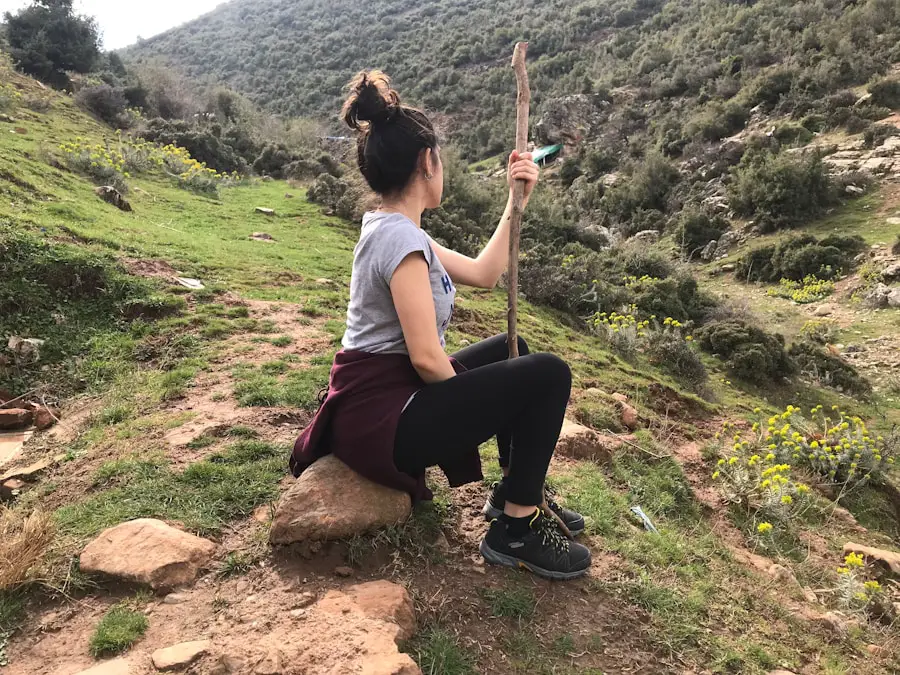
Start with footwear that fits well, provides appropriate traction, and matches the trail conditions. The National Park Service recommends planning for the route and terrain rather than relying on one type of footwear or gear for every hike.
Trekking poles are optional, but they can be useful on steep descents, loose surfaces, stream crossings, or long hikes with a pack. Research does not show that poles reduce knee loading in every walking situation, but studies of downhill hiking and a broader review of trekking poles support benefits in some terrain and load-carrying conditions.
A backpack should fit securely enough that the load does not swing with every step. Pack what the trip actually requires instead of adding unnecessary weight simply to make the hike harder. More pack weight increases the muscular and metabolic cost of walking, but it also increases stress on the body.
Compression clothing is optional. Some hikers find it comfortable, but it is not required to strengthen the legs or core and should not be treated as a substitute for conditioning, appropriate pacing, or recovery.
Note: The National Park Service recommends carrying the Ten Essentials, including navigation, sun protection, insulation, illumination, first aid, fire, repair supplies, food, water/water-treatment supplies, and emergency shelter.
Techniques for Maximizing Leg and Core Engagement While Hiking
Good hiking technique is less about deliberately squeezing individual muscles and more about staying controlled while the terrain changes.
Use a Gentle Core Brace
Keep your trunk stable without holding your breath. Think of lightly tightening the muscles around your midsection while keeping your ribs stacked over your pelvis. This gives your arms and legs a stable base from which to move.
Keep a Controlled Posture
Stay tall through the trunk and look ahead toward the trail rather than staring straight down. On an uphill grade, a small forward lean from the ankles may occur naturally. Avoid folding excessively at the waist under a backpack.
Shorten Your Steps on Difficult Descents
Use shorter, deliberate steps when a downhill section is steep, loose, wet, or rocky. Keep the knees soft and place each foot under control. The quadriceps already absorb substantial energy during downhill walking, so there is little benefit in deliberately reaching farther forward to make the descent harder.
Step Over Obstacles Deliberately
Roots, rocks, and logs increase hip and core demand because you briefly support your body on one leg while moving the other. Lift the foot high enough to clear the obstacle and place it on stable ground rather than turning an ordinary trail into an agility drill.
Use Trekking Poles Correctly
Plant poles where they improve balance without forcing an awkward reach. On descents, they can provide additional points of contact and allow the upper body to share some of the work.
Warning: Do not deliberately lengthen your downhill stride, race steep technical descents, or add lateral exercise drills where footing is uncertain. Training value is not worth increasing your chance of a fall.
Preparing Your Body for Hiking to Avoid Injury and Build Strength
A few minutes of easy walking and controlled movement can help you transition into a hike. Leg swings, ankle circles, bodyweight squats, and easy step-ups are reasonable warm-up choices. You do not need a long or exhausting warm-up before you begin.
For bigger hiking goals, build strength away from the trail. Useful exercises include:
- Squats or sit-to-stands for the quadriceps and glutes
- Step-ups for climbing strength
- Slow step-downs for downhill control
- Lunges or split squats for single-leg strength
- Hip hinges or deadlift variations for the glutes and hamstrings
- Calf raises for the gastrocnemius and soleus
- Bridges for hip-extension strength
- Planks, carries, or other controlled core exercises
- Single-leg balance exercises for ankle and hip control
Downhill preparation deserves special attention. Your quadriceps must lengthen while producing force to control your descent. Slow step-downs and slow lowering phases during squats can train this type of eccentric control.
Progress gradually. The current Physical Activity Guidelines for Americans recommend 150 to 300 minutes of moderate aerobic activity per week for adults, along with muscle-strengthening activity on at least two days. Hiking can contribute to the aerobic portion and, depending on terrain and load, also challenge muscular endurance.
Note: Hiking can make your legs stronger, especially when you are new to hills, but it is not a complete replacement for progressive resistance training if maximum strength or muscle growth is your goal.
Incorporating Interval Training and Resistance Exercises into Your Hiking Routine
Improving Aerobic Capacity and Leg Strength
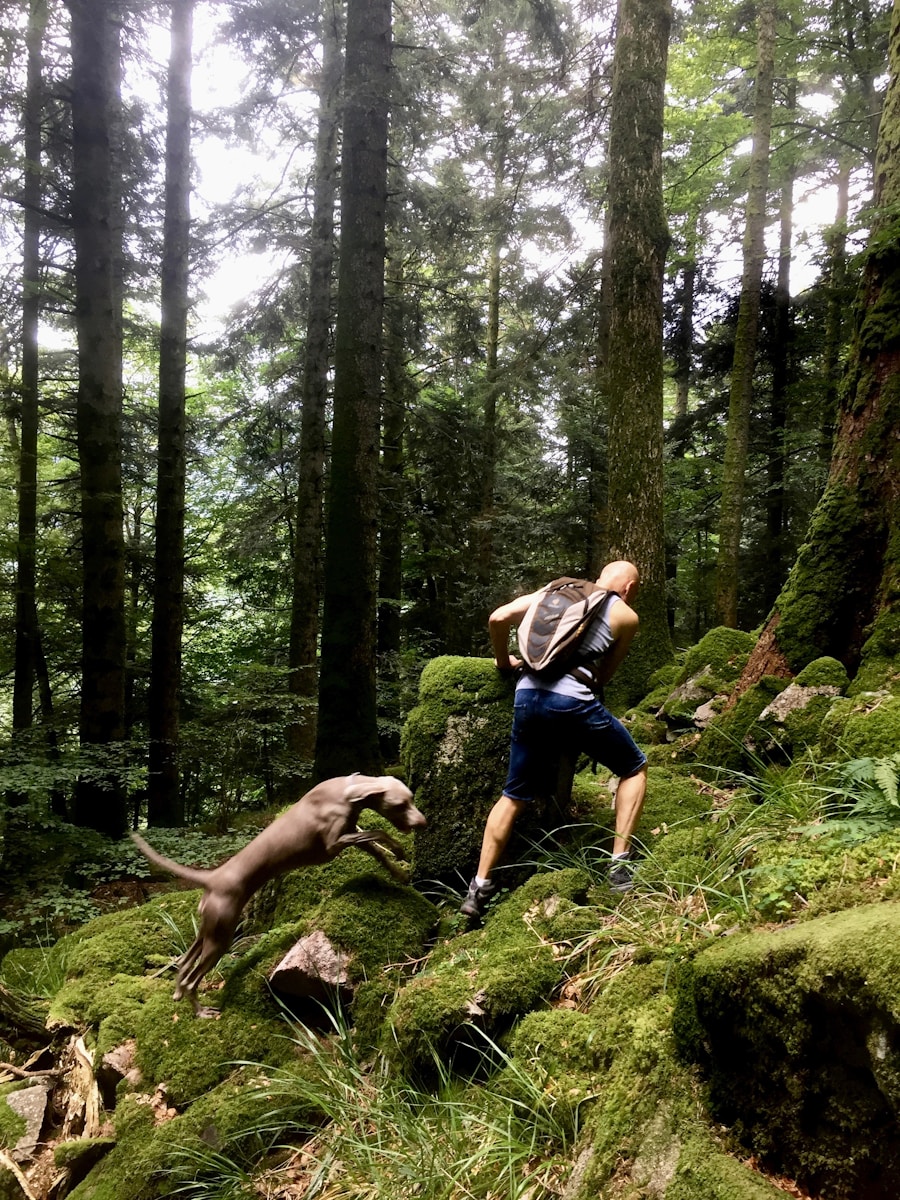
Intervals can make an ordinary hike more challenging without requiring an all-out sprint. On a safe, nontechnical climb, increase your pace for 30 seconds to a few minutes, then return to an easier pace until your breathing settles. Repeat only while you can maintain good footing and posture.
This approach raises cardiovascular demand and makes the climbing muscles work harder. Keep true sprinting off steep, loose, crowded, or technical trails.
Incorporating Resistance Exercises
Resistance work is better performed in a controlled setting than improvised on difficult terrain. Squats, lunges, step-ups, step-downs, calf raises, and hip hinges let you progressively load the muscles that matter most for hiking.
If you are preparing to carry a backpack, practice with a pack and gradually work toward the load you will actually need. Do not add excessive weight simply to make every hike harder.
Avoid wearing ankle weights during hikes. Walking with ankle weights can alter normal muscle use and mechanics; Harvard Health advises against using them during walking or aerobic exercise.
Breaking Up the Monotony
You can combine hiking with strength work without doing exercises in the middle of a technical trail. For example, perform a short strength session before another easy training day, or stop at a safe exercise area after the hike for a few controlled sets of squats, step-ups, or lunges.
The goal is consistent training, not turning every outdoor trip into a maximum-effort workout.
Nutrition and Hydration Tips for Hiking
Your muscles need enough energy to keep producing force for the length of the hike. Carbohydrate-rich foods are useful before and during longer outings because they provide readily available energy. Protein supports normal muscle repair afterward, while dietary fats can contribute energy during longer days.
Practical foods include fruit, sandwiches, whole grains, nuts, nut butter, yogurt where refrigeration is practical, trail mix, and other portable foods that you already tolerate well.
Hydration needs vary with temperature, altitude, body size, pace, sweat rate, and hike duration, so there is no single fluid amount that works for every person. Start reasonably hydrated, carry enough water for the route, and drink regularly. Hot weather and long outings may require substantially more fluid.
For long, hot, or very sweaty hikes, food or drinks containing electrolytes can help replace sodium and other minerals lost through sweat. For a short, easy hike in mild weather, plain water and normal meals may be sufficient.
Pro Tip: Test your food, drink, footwear, and backpack on shorter outings before relying on them for an all-day hike. A long trail is a poor place to discover that a snack upsets your stomach or a pack rubs your shoulders.
Recovery and Stretching Strategies for Hikers
After a demanding hike, prioritize food, fluid, sleep, and enough time before your next hard session. Mild muscle soreness after an unfamiliar climb or descent is common, but increasing pain, major swelling, instability, or pain that changes the way you walk deserves more caution.
Gentle stretching can feel good and may help you work on flexibility, but it should not be sold as a cure for post-hike soreness. A 2025 meta-analysis found no significant standalone benefit of post-exercise stretching for soreness, strength recovery, performance, or flexibility compared with no stretching.
Foam rolling is optional. Research suggests that it may produce modest improvements in soreness or range of motion for some people, but you do not need to foam roll after every hike to recover properly.
Most importantly, increase hiking distance, elevation, pack weight, and technical difficulty gradually. Repeatedly making several of those variables harder at the same time is an easy way to overload muscles and connective tissues before they have adapted.
Warning: Stop or turn around for severe or worsening pain, dizziness, faintness, chest pain, unusual shortness of breath, confusion, or loss of coordination. People returning from injury or managing significant heart, joint, balance, or mobility problems should get individualized medical or rehabilitation advice before attempting steep or heavily loaded hikes.
Does Hiking Build Muscle?
Hiking can improve leg and core strength, especially if you are moving from flat walking to hills or carrying a normal hiking pack. It is also excellent for muscular endurance because the same muscles repeat thousands of low-to-moderate-force contractions over a long outing.
However, muscle growth depends on progressive overload, recovery, nutrition, and individual training status. Once you adapt to your usual hiking route, the muscle-building stimulus may become relatively small. Dedicated resistance training makes it easier to progressively increase the load in a controlled way.
Hiking also contributes to overall physical activity and energy expenditure. That can support body-weight management when combined with an appropriate diet, but a hike by itself does not guarantee fat loss or visible muscle definition.
Hiking Safety Matters as Much as the Workout
A stronger workout is useful only if you can finish the route safely. Before leaving, check the weather, trail conditions, distance, elevation, daylight, and any local hazards or closures. Tell someone your route and expected return time when appropriate.
The National Park Service recommends carrying the Ten Essentials and adjusting your equipment, food, and water to the route and conditions. Turn around when conditions, fatigue, injury, or remaining daylight make continuing a poor decision.
Hiking is a fantastic way to stay active and engage multiple muscle groups in the body. The quadriceps, hamstrings, glutes, calves, hips, and core all contribute to moving and stabilizing you across changing terrain. And when part of the fun is spotting wildlife or distant scenery, a pair of compact binoculars for hiking can be a useful addition to your trail kit.
Love travel? Join Our Facebook Community For More Tips.
Frequently Asked Questions
What muscles does hiking work?
Hiking mainly works the quadriceps, glutes, hamstrings, calves, hip stabilizers, and muscles around the ankles and feet. Your abdominals, obliques, and lower-back muscles stabilize your trunk. Trekking poles and backpacks can also involve the shoulders, arms, and upper back.
How does hiking work the quadriceps?
The quadriceps extend the knee during each step and help lift the body during climbs. They work particularly hard on descents because they must control knee flexion and slow your body as gravity pulls you downhill.
What role do the hamstrings play in hiking?
The hamstrings assist hip extension and knee flexion. They work with the glutes to move the body forward and upward and help coordinate movement around the hip and knee as the terrain changes.
How are the glutes engaged during hiking?
The gluteus maximus extends the hip and contributes strongly when climbing. The gluteus medius and other hip muscles help stabilize the pelvis during single-leg support, uneven steps, and side-to-side changes in footing.
What impact does hiking have on the calves?
The gastrocnemius and soleus help push the body forward and support the ankle throughout the stride. Steep climbs, repeated step-ups, and long distances can make the calves work especially hard.
How does hiking engage the core muscles?
The abdominals, obliques, deep trunk muscles, and spinal extensors help control your torso and pelvis as your legs move over uneven ground. Carrying a backpack can increase this stabilization demand.
What upper-body muscles are engaged during hiking?
Ordinary hiking places relatively little demand on the upper body compared with the legs. Carrying a backpack recruits the shoulders and upper back, while using trekking poles adds more work for the arms, shoulders, and upper-back muscles.
Why do my quadriceps get sore after hiking downhill?
Descending requires the quadriceps to produce force while lengthening, an eccentric action that controls your speed and prevents the knee from collapsing with each step. If you are not accustomed to long descents, that repeated braking work can cause substantial next-day soreness.
Does hiking build leg muscle?
It can, particularly for beginners or people who begin hiking steeper terrain. Hiking is especially effective for muscular endurance. For continued strength and muscle growth, progressive resistance exercises such as squats, step-ups, lunges, calf raises, and hip hinges are more controllable.
Are trekking poles good for working the upper body?
Trekking poles increase arm and shoulder involvement compared with walking without poles. They can also provide additional stability and may shift some load away from the lower extremities in certain downhill or backpacking situations.
Sources
- U.S. Department of Health and Human Services — Physical Activity Guidelines — current adult aerobic and muscle-strengthening recommendations.
- National Park Service — Hike Smart — trail planning, food, water, weather, pacing, and hiking-safety guidance.
- National Park Service — Ten Essentials — recommended emergency and hiking-safety equipment.
- Journal of Biomechanics — The Functional Roles of Muscles During Sloped Walking — uphill and downhill muscle demands.
- Wilderness & Environmental Medicine — Trekking Poles Review — effects of trekking poles on loading, stability, and physiological demand.
- Frontiers in Physiology — 2025 Post-Exercise Stretching Meta-analysis — evidence on stretching and exercise recovery.

