

Last Updated on September 11, 2026 by Daniel Globe
“Stealing the Crayon” is both a childhood story and a practical look at the marks crayons can leave behind. A crayon taken from a classroom or store may become a lasting lesson about honesty, while a forgotten crayon in a pocket can become a stubborn laundry problem. Here is how those two sides of the story fit together—and how to handle the waxy mess safely when it happens.
Quick Answer
A stolen or pocketed crayon can become both a childhood lesson and a household mess. Regular crayons contain wax and pigment, so stains often need surface-specific treatment. Scrape away excess wax, use the cleaner recommended for the material, avoid applying heat until fabric stains are gone, and treat a child who takes crayons with correction rather than humiliation.
Key Takeaways
- Regular Crayola crayons are made primarily from paraffin wax and color pigment, which helps explain their greasy, persistent marks.
- For washable clothing, remove excess crayon, pretreat with liquid dish soap, wash in the hottest water allowed by the care label, and air-dry before checking the stain.
- Painted walls, finished wood, unfinished wood, and upholstery require different cleaning methods; always test a cleaner in a hidden area first.
- Young children may take appealing objects before fully understanding ownership, while older children should be calmly required to return or replace what they took.
- Children’s crayons marked as non-toxic are generally not expected to cause poisoning if a small piece is swallowed, but any crayon piece can still present a choking or aspiration hazard.
At a Glance
| Time Required | About 10–30 minutes of active cleaning, plus washing or drying time when needed |
| Difficulty | Easy to moderate, depending on the material and whether the crayon has been heat-set |
| Tools Needed | Dull knife or spoon, soft cloth or paper towels, dish soap, laundry detergent, and a surface-appropriate cleaner |
| Cost | Usually low because most methods use ordinary household cleaning supplies |
Warning: Always read the item’s care label and the cleaner’s directions before treatment. Test cleaners on an inconspicuous area first, never mix household cleaning chemicals, keep cleaning products away from children, and stop if a treatment changes the color or finish of the material.
Disclosure: As an Amazon Associate I earn from qualifying purchases. Some links on this page are affiliate links, at no extra cost to you.
Why Crayon Stains Happen So Easily
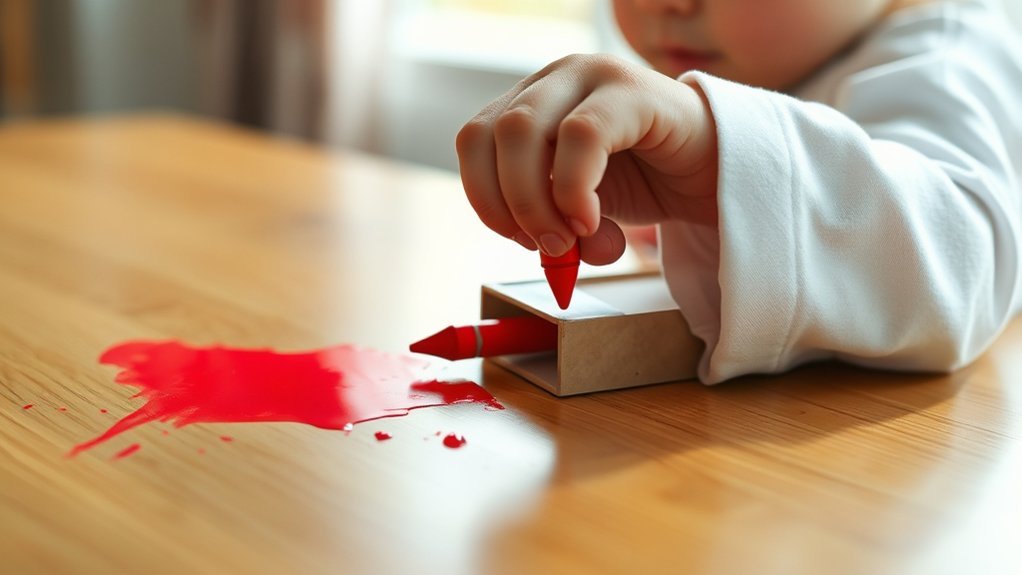
Crayon marks can be stubborn because an ordinary crayon combines wax with concentrated color pigment. Crayola says its regular crayons are made primarily from paraffin wax and color pigment. The wax can cling to fibers and surface textures while the pigment leaves visible color behind.
Heat makes the problem worse when a crayon is forgotten in clothing and passes through a hot dryer. Instead of remaining a small mark, softened or melted wax can spread over fabric and even transfer to the dryer drum. That is why checking pockets before laundry and inspecting a treated stain before machine drying are two of the simplest forms of stain prevention.
The best cleaning method depends on the material. What works on washable cotton may be inappropriate for upholstery, unfinished wood, delicate paint, or a dry-clean-only garment. Quick action helps, but using the correct method matters more than scrubbing aggressively.
The Story Behind the Crayon Title
The phrase “Stealing the Crayon” carries more weight here than the value of a single art supply. It represents a kind of childhood moment in which wanting something—especially a color or drawing tool that feels important—can temporarily outrun a child’s understanding of ownership and consequences.
The memory described in this article includes embarrassment after taking crayons and the realization that creative expression does not justify taking something that belongs to someone else. That lesson becomes more useful when it is remembered without turning a childhood mistake into a permanent label.
The distinction matters. Taking a crayon was wrong, but the useful lesson is not “I was a thief.” It is “I made something right after I took something that was not mine.” That allows honesty, restitution, and empathy to become the lasting part of the memory rather than shame.
How to Remove Crayon From Clothes
For washable clothing, start by removing as much solid crayon as you can without damaging the fibers. Crayola’s current guidance for regular crayon on washable fabric recommends scraping away excess crayon, pretreating the stain with liquid dish soap, rinsing or working the fabric under warm water, then machine washing with the hottest water the fabric safely allows.
- Check the care label. Do not use a hot wash on fabric that requires cool water or professional cleaning.
- Scrape away excess wax. Use a dull knife or metal spoon. Work gently so you do not cut or stretch the fabric.
- Pretreat with liquid dish soap. Work a small amount into the stained area and allow it to sit for a few minutes.
- Rinse or work the area under warm water. This helps loosen wax and pigment before washing.
- Machine wash. Use laundry detergent and the hottest water permitted by the garment’s care label. A color-safe oxygen cleaner may be used when the fabric and product directions allow it.
- Air-dry first. Inspect the garment before using a machine dryer. If a stain remains, repeat the treatment rather than applying more heat.
Pro Tip: Empty every pocket before loading the washer. A single overlooked crayon can melt in the dryer and create many stains instead of one.
How to Clean Crayon Off Walls and Furniture
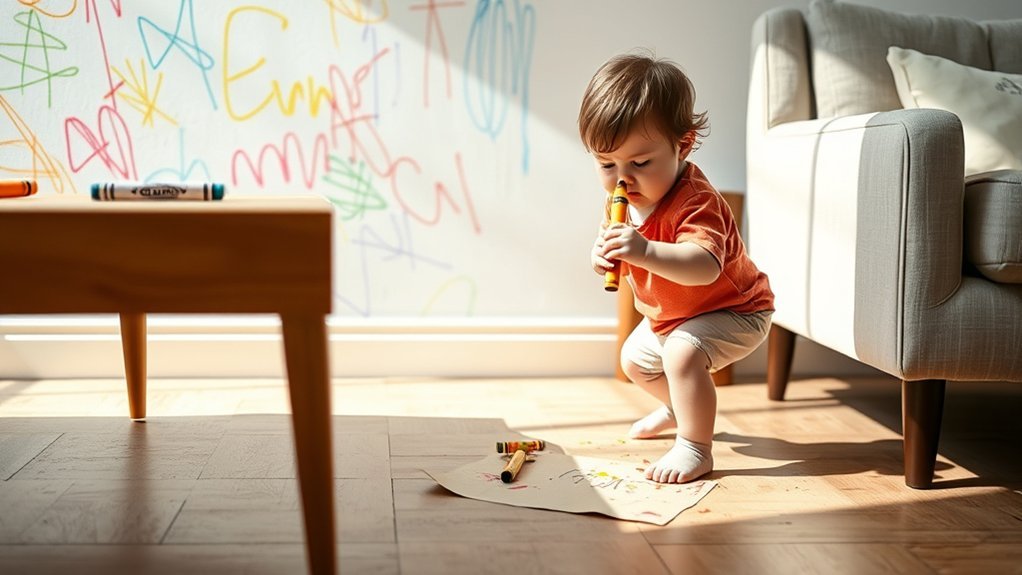
Walls and furniture need gentler handling because a cleaner that removes crayon can also dull paint, lift dye, or change a furniture finish. Test the method in a hidden area before cleaning a visible spot.
| Surface | Best first move | Caution |
| Painted walls | All-purpose cleaner or warm water with liquid dish soap, following surface and product directions | Test first; excessive rubbing may alter some paint finishes |
| Finished wood | Soft cloth with a finish-safe cleaner; Crayola also lists all-purpose cleaner and dish soap for regular crayon | Avoid abrasive scrubbing that could damage the finish |
| Unfinished wood | Crayola recommends rubbing alcohol applied to a soft cloth | Test first because raw wood can discolor |
| Upholstery | Scrape away excess wax, then use an upholstery/carpet cleaner approved for the material | Check the furniture care code and hidden-test the cleaner |
| Washable fabric | Scrape, pretreat with dish soap, wash according to the care label | Air-dry until you know the stain is gone |
The earlier idea of using a vinegar-and-water mix on every piece of upholstery is too broad. Some fabrics tolerate diluted vinegar, while others may react poorly to moisture or acidic cleaners. Follow the upholstery manufacturer’s care instructions instead of treating vinegar as a universal crayon remover.
Why Crayons End Up Hidden in Pockets
A crayon in a child’s pocket may be accidental, or it may have been placed there deliberately because the child liked the color, wanted to keep drawing, wanted an object another child had, or simply acted before thinking through the ownership issue.
Age matters. The American Academy of Child & Adolescent Psychiatry explains that very young children can take appealing objects before they are old enough to fully understand that taking another person’s property is wrong. As children mature, adults should teach property rights, honesty, and consideration for others.
Pocket Theft Moments
When a child deliberately slips a crayon into a pocket, the moment can include excitement, curiosity, peer influence, or a simple wish to continue using the color later. Those motives can explain the behavior, but they do not make taking the crayon acceptable.
The most constructive response is usually simple: identify what happened, explain that the crayon belongs to someone else, and have the child return or replace it. AACAP specifically recommends helping a child return or pay for a stolen item and avoiding labels that define the child as a “thief” or permanently bad person.
Hidden Crayon Motives
Children do not all take things for the same reason. One child may be fascinated by a particular color. Another may want something a friend has. An older child may be influenced by peers or may test a boundary. A younger child may still be developing a clear understanding of ownership.
That is why it is better to ask what happened than to assume a dramatic motive. Correct the action, require restitution, and then allow the child to move forward. If taking things becomes persistent or occurs alongside other serious behavioral problems, AACAP recommends considering professional evaluation rather than treating every episode as ordinary mischief.
The Cas Walker Crayon Memory
The Cas Walker episode in this article is best understood as a personal childhood recollection. The remembered details are that, at about six years old, a small box of crayons was taken from a Cas Walker store, carried home under a jacket, discovered by a mother, and then returned with an apology. Those personal details cannot be independently verified decades later, so they should remain framed as memory rather than documented history.
The setting itself is real. The University of Tennessee’s Cas Walker Stories Project documents Cas Walker as one of twentieth-century Knoxville’s best-known grocers and public figures and preserves oral histories and local stories associated with him and his stores. Period Cas Walker supermarket advertisements also promoted CR Green Stamps.
That historical setting gives the memory context without turning every remembered detail into a historical claim. What matters personally is the sequence: wanting the crayons, taking them, being required to return them, and learning that wanting something does not create a right to take it.
What Childhood Crayon Mistakes Teach Us
A stolen crayon is a small object, but correcting the act can teach several large ideas: ownership, honesty, restitution, empathy, and the possibility of recovering trust after making a mistake.
| Moment | Useful lesson |
| You take the crayon | A boundary has been crossed |
| You return it or make restitution | Actions can be corrected |
| You apologize | Other people’s rights and feelings matter |
| You reflect later | A small mistake can become a lasting guide for future choices |
For parents, the goal is accountability without humiliation. Tell the child that taking something without permission is wrong, have the item returned or replaced, make sure the child does not benefit from taking it, and avoid repeatedly bringing up the event after it has been corrected. That approach closely follows guidance from child and adolescent psychiatrists.
A useful childhood correction teaches, “Make it right,” rather than, “This mistake is who you are.”
Why Crayon Stains Linger in Memory
A crayon stain may disappear faster than the memory connected to it. Childhood incidents involving secrecy, correction, embarrassment, and apology can remain vivid because they are tied to strong feelings and a clear before-and-after lesson.
The important part is not to turn that memory into proof that a child’s character was permanently flawed. A missing crayon may have started with desire or impulsiveness, but returning it can become the stronger memory: someone explained the boundary, the mistake was repaired, and the child learned what honesty required.
Years later, the scene may also carry nostalgia—the color of the crayons, the familiar store, the embarrassment of walking back, or the relief after apologizing. Memory often holds both the mistake and the correction at the same time.
How to Deal With Crayon Stains at Home
The safest household strategy is to match the cleaning method to the surface rather than reaching for the strongest available solvent. Start gently, remove solid wax first when possible, and increase cleaning strength only when the surface and product instructions allow it.
Clothing Stain Removal
If a washable garment still shows crayon after the first treatment, repeat the scrape, pretreat, wash, and air-dry process. A stain that has already passed through the dryer may require more than one treatment because melted wax and pigment can spread deeper into the fibers.
| Step | Why it matters |
| Scrape | Removes solid wax before it is worked deeper into the fibers |
| Pretreat | Dish soap helps loosen greasy wax residue |
| Wash | Laundry detergent and fabric-safe water temperature remove loosened residue |
| Air-dry and check | Avoids adding dryer heat before you know the stain is gone |
If the care label says “dry clean only,” or if the material is delicate and non-washable, avoid experimenting with repeated home treatments. Crayola advises carefully removing excess material and consulting a professional dry cleaner for unwashable fabrics.
Furniture And Upholstery
For carpet and upholstery affected by regular crayon, Crayola recommends scraping away as much crayon as possible with a dull knife or spoon and then using an appropriate carpet or upholstery cleaner according to that cleaner’s directions.
- Remove solid wax gently instead of forcing it deeper into the fabric.
- Check the manufacturer’s upholstery care label or cleaning code.
- Test the cleaner on a hidden area first.
- Blot where appropriate instead of aggressively rubbing the stain outward.
- Use only as much moisture as the upholstery material safely allows.
- For valuable, delicate, vintage, or uncertain materials, use a professional cleaner.
A vinegar-and-water mixture is sometimes suggested as a general home-cleaning remedy, but it is not appropriate for every upholstery fiber, dye, or protective coating. Treat it as material-specific advice only when the furniture manufacturer permits it—not as a universal crayon solution.
Walls And Wood Care
For regular crayon on painted walls, Crayola recommends an all-purpose cleaner followed, if needed, by warm water and liquid dish soap. The area is then rinsed and dried. A melamine cleaning sponge such as a Magic Eraser is listed as another option, but because such products can affect some paint finishes, test first and rub gently.
Finished wood requires similar caution. Avoid abrasive pads that might scratch varnish, paint, or stain. For unfinished or untreated wood, Crayola specifically lists rubbing alcohol applied to a soft cloth. Even then, test the alcohol first because raw wood can absorb liquids and change color.
Note: “Wood” is not one cleaning category. Painted wood, varnished wood, stained wood, laminate, veneer, and unfinished wood can react differently to the same cleaner.
If a crayon melted inside the dryer, clean the appliance before drying another load. Crayola recommends wiping away residue with paper towels, using a Magic Eraser according to its directions, running clean dry rags through a cycle to collect remaining residue, and wiping any final film with a cloth and a few drops of dish soap diluted in water.
Frequently Asked Questions
What Is the Crayon Trick?
“Crayon trick” is an ambiguous phrase, but it does not normally mean secretly taking crayons. One common use is a simple magic trick in which a spectator selects a crayon while the performer looks away; the performer secretly transfers a little crayon color to a fingertip and glimpses it before correctly naming the selected color.
Why Keep Crayons in Your Wallet?
There is no single proven “wallet crayon” reason. A small crayon can simply be useful for doodling or entertaining a child when paper is available. Internet posts also circulate more dramatic wallet-crayon claims, but many are unsupported. If you carry one, protect the wallet from wax and avoid leaving it in high heat, where a crayon can soften or melt.
What Dissolves a Crayon?
There is no one household solvent that is safe for every crayon stain and every surface. Dish soap, laundry products, all-purpose cleaners, upholstery cleaners, and rubbing alcohol are used for different materials. Crayola specifically recommends rubbing alcohol for regular crayon on untreated wood, but not as a universal treatment. Follow surface-specific instructions instead of automatically using strong solvents such as mineral spirits.
What if My Child Eats the Tip of a Crayon?
A small amount of a certified non-toxic children’s crayon is generally not expected to cause poisoning. Crayola states that its products bearing the ACMI AP seal are evaluated for safety. However, a crayon piece can still become a choking or aspiration hazard. If the child is choking, cannot breathe normally, turns blue, or has severe breathing difficulty, seek emergency help immediately. For a swallowed or inhaled art product when you are unsure what to do, contact Poison Control in the United States at 1-800-222-1222 or use webPOISONCONTROL.
Can a Dryer Make a Crayon Stain Worse?
Yes. Dryer heat can soften or melt crayon wax and spread it across fabric and the dryer drum. After treating stained clothing, air-dry it until you have confirmed that the mark is gone. If a crayon has melted in the dryer, clean the drum before drying another load.
Can I Use a Magic Eraser on Crayon Marks?
Crayola lists a Magic Eraser as an option for regular crayon on several hard surfaces, including painted walls and finished wood. Use it according to the product directions and test a hidden area first because melamine foam can change the sheen or appearance of some painted and finished surfaces.
Sources
- Crayola — Regular Crayons Stain Tips — surface-specific guidance for clothing, upholstery, walls, wood, and dryer drums.
- Crayola — Science of Crayola Crayons — supports the paraffin-wax and color-pigment composition information.
- Crayola — Product Safety FAQ — explains non-toxic evaluation and the ACMI AP seal.
- Poison Control — Non-toxic Substances and Children — supports the distinction between low toxicity and choking/airway hazards.
- American Academy of Child & Adolescent Psychiatry — Stealing in Children and Adolescents — supports age-appropriate guidance about ownership, restitution, and avoiding stigmatizing labels.
- University of Tennessee — Cas Walker Stories Project — supports the historical context surrounding Cas Walker and his Knoxville grocery stores.
Conclusion
A crayon can leave two kinds of marks. One is physical: wax and pigment on a sleeve, wall, piece of furniture, or dryer drum. The other is the memory attached to what happened. Both are easier to handle when the response is practical rather than dramatic. Clean the surface with the method appropriate for the material, and when a child takes something that does not belong to them, correct the behavior, make it right, and let the lesson—not the label—be what lasts.

