
Last Updated on August 26, 2026 by Daniel Globe
Lower gears are specialized transmission ratios designed to multiply engine torque while limiting road wheel speed. By forcing the engine to turn at higher revolutions relative to axle rotation, selecting a lower gear delivers the maximum mechanical advantage needed for high-load demands—such as climbing steep grades, hauling heavy cargo, and safely descending mountain roads using engine braking.
Quick Answer
You should use lower gears (L, 1, 2, or 3) when descending steep hills to prevent brake overheating via engine braking, when climbing steep inclines or towing heavy loads to maximize torque, and when navigating low-traction surfaces like mud, sand, or snow to maintain steady wheel traction without spinning.
Key Takeaways
- Engine Braking Over Mechanical Braking: Downshifting creates engine vacuum and mechanical resistance that controls downhill speed, preventing dangerous brake fade and fluid boiling.
- Shift Before the Grade: Always select a lower gear before starting down a steep descent or climbing a major incline, rather than shifting halfway through when the transmission is under load.
- Maximum Traction on Slippery Surfaces: Lower gear control prevents uncontrolled wheel spin when starting from a standstill in mud, ice, or loose gravel.
- Transmission Longevity: Using Tow/Haul or manual lower gear selections prevents automatic transmissions from “gear hunting,” reducing excessive heat and clutch wear.
At a Glance
| Primary Functions | Engine braking, high torque multiplication, traction control, heavy payload towing |
| Vehicle Compatibility | Manuals (Gears 1–3), Automatics (L, 3, 2, 1, M/Sport), Hybrids/EVs (B-Mode) |
| Primary Safety Risk | Brake fade and thermal failure caused by riding friction brakes on long downgrades |
| Operating Principle | High gear ratio (higher engine RPM relative to wheel speed) creating intake vacuum resistance |
Disclosure: As an Amazon Associate I earn from qualifying purchases. Some links on this page are affiliate links, at no extra cost to you.
Understanding Lower Gears: Mechanics and Power Delivery
In any internal combustion drivetrain, the transmission acts as a mechanical intermediary between the engine’s crankshaft and the drive wheels. Lower gears (such as 1st, 2nd, and 3rd gear in a manual transmission, or “L”, “2”, and “1” on an automatic selector) feature high gear ratios. A high gear ratio causes the engine crankshaft to turn multiple times for every single revolution of the road wheels.
This mechanical reduction multiplies engine torque at low road speeds. When starting from a dead stop or ascending a steep grade, the vehicle must overcome immense inertia and rolling resistance. Operating in a lower gear keeps the engine running in its optimal powerband—where it produces peak torque without stalling or lugging the internal engine components.
Conversely, shifting to a lower gear when slowing down or descending introduces mechanical resistance known as engine braking. When the driver releases the throttle while in a lower gear, the closed throttle valve restricts airflow to the cylinders, creating an internal vacuum. The energy required for the engine pistons to fight this vacuum naturally retards wheel rotation, allowing the driver to control downhill vehicle speed without relying solely on friction brakes.
How Lower Gears Maintain Traction and Vehicle Control
Improved Low-Speed Torque Modulation
Engaging a lower gear provides the exact wheel speed control required to prevent wheel spin in difficult driving environments such as deep mud, wet grass, unpaved logging roads, or loose gravel. Because power is transferred with higher resistance against sudden speed surges, the driver can modulate the accelerator pedal smoothly to maintain forward momentum without breaking tire adhesion.
Enhanced Stability in Urban Traffic and Sharp Maneuvers
In congested city driving featuring frequent stop-and-go cycles, holding a lower gear provides immediate engine response. It eliminates the transmission lag that occurs when an automatic gearbox hunts through higher overdrive gears before downshifting. This immediate throttle response allows drivers to match traffic speeds seamlessly and maneuver safely around road hazards and tight intersections.
Predictable Weight Transfer and Handling
Downshifting into a lower gear prior to cornering helps stabilize the vehicle chassis. By balancing the vehicle’s weight across the front and rear axles under slight engine drag, the car remains planted throughout the apex of the turn, avoiding the unsettling body roll that occurs when coasting in neutral or riding high overdrive gears.
The Physics of Engine Braking on Steep Downhill Descents
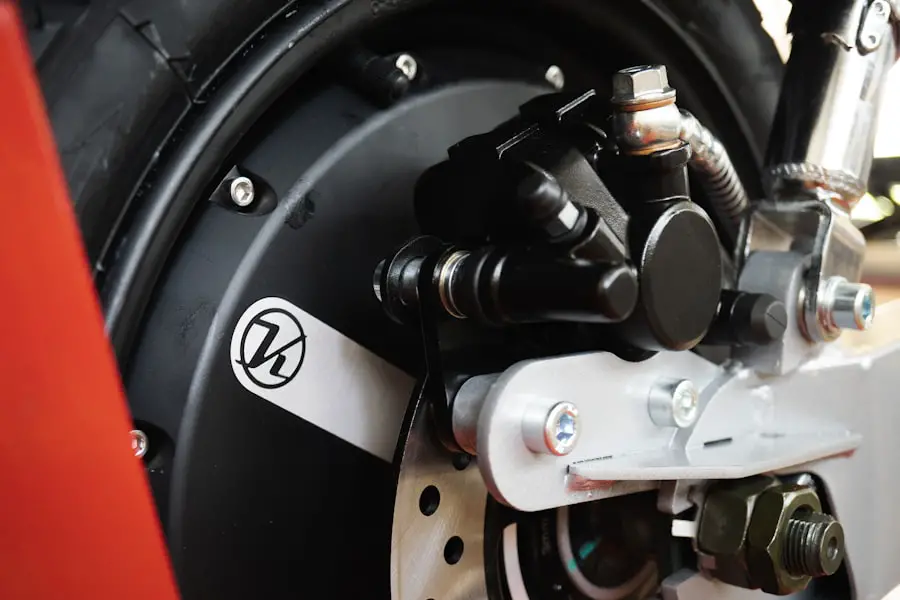
When descending steep mountain passes, gravitational acceleration constantly pulls the vehicle downward. Relying strictly on service brakes (the foot pedal) forces the brake pads and rotors to absorb enormous kinetic energy, converting it directly into heat.
Warning: Continuous braking on long downhill grades causes thermal brake fade. Temperatures exceeding 600°C (1,100°F) can boil hydraulic brake fluid (causing vapor lock and a spongy pedal) or glaze brake friction linings, leading to total loss of stopping capability.
By engaging a lower gear (such as 2nd or 3rd gear, or “Low” on an automatic transmission), the transmission forces the drive wheels to turn the engine against its own compression resistance. This dissipates gravitational potential energy through the vehicle’s powertrain cooling system rather than cooking the friction brakes.
“According to federal highway safety standards, commercial and passenger drivers must select a lower gear before starting down a grade that is steep enough to require frequent or continuous braking.”
When traveling down a long downgrade, you should always ensure your vehicle’s mechanical systems are fully operational. As highlighted in related trailering safety guides on TakeTravelInfo, maintaining reliable auxiliary systems and brake controllers is critical when towing heavy loads down steep declines in hilly or mountainous terrain.
Climbing Steep Inclines and Towing Heavy Loads
Ascending steep mountain grades places extreme thermodynamic loads on an engine and transmission. In standard drive modes, automatic transmissions frequently attempt to shift up into overdrive gears to conserve fuel. However, when the engine cannot produce enough power at low RPM to maintain that higher gear, the transmission drops back down, creating a continuous, damaging cycle known as “gear hunting.”
Pro Tip: When towing a travel trailer, boat, or heavy payload uphill, lock out overdrive gears or engage Tow/Haul Mode. This recalibrates the transmission shift points, keeping the engine operating in its peak torque band and circulating transmission fluid at higher flow rates for superior cooling.
Operating in a lower gear while climbing ensures that the water pump and engine cooling fan rotate at higher speeds, moving more coolant through the radiator to prevent engine overheating during sustained hill climbs.
How to Select Lower Gears in Different Transmissions
Modern vehicles offer several mechanisms to control gear selection manually depending on the transmission configuration:
- Conventional Automatic Transmissions (PRNDL / PRND321): Move the shifter out of “D” (Drive) into “3”, “2”, or “L” (Low). Selecting “L” restricts the transmission to 1st or 2nd gear, maximizing engine braking.
- Manumatic / Sport Mode (+ / -): Shift the main selector into “M” or “S” and tap the lever toward the minus (
-) sign to downshift sequentially to the desired gear ratio. - Steering Wheel Paddle Shifters: Pull the left paddle marked with a minus sign (
-) while descending to manually downshift without moving your hands from the steering wheel. - Manual Transmissions: Depress the clutch pedal, blip the accelerator to rev-match engine speed to the lower gear, and smoothly release the clutch to engage the ratio without shocking the driveline.
- Hybrid & Electric Vehicles (B-Mode): Shift into “B” (Brake) mode on the gear selector to maximize regenerative braking drag, capturing kinetic energy back into the high-voltage battery pack while providing deceleration equivalent to low gear engine braking.
Tips for Using Lower Gears Effectively
| Action | Best Practice Technique |
|---|---|
| Steep Descents | Downshift before cresting the hill to establish a controlled baseline speed without riding the brakes. |
| Tachometer Monitoring | Ensure downshifting does not push engine RPM past the redline, which can cause severe valve-train damage. |
| Heavy Towing | Lock out upper overdrive gears to prevent torque converter slippage and fluid overheating. |
| Low Traction Starts | In deep snow or mud, select 2nd gear manually if wheel spin is excessive in 1st gear to reduce wheel torque. |
The Dangers of Not Using Lower Gears
Failing to utilize lower gears in critical driving conditions exposes both the vehicle and its occupants to severe safety hazards:
- Catastrophic Brake Failure: Overheating brake pads causes outgassing, creating a barrier between the pad and rotor that makes the vehicle impossible to stop.
- Transmission Overheating: Allowing an automatic transmission to shift continuously between high gears while climbing steep grades generates extreme internal friction, burning the transmission fluid.
- Loss of Steering Authority: Over-relying on friction brakes during sharp downhill corners can induce front-wheel lockup or trigger aggressive anti-lock braking (ABS) interventions, reducing steering control.
- Engine Lugging & Detonation: Climbing hills in too high a gear places severe structural stress on engine bearings, connecting rods, and pistons.
Driver Alertness and Grade Anticipation
Reading Mountain Warning Signs
Situational awareness is critical when navigating mountainous terrain. Drivers must watch for yellow grade warning signs indicating steep percentage declines (e.g., “6% Grade Next 7 Miles”, “Steep Hill: Trucks Use Lower Gear”). Noticing these warnings early allows you to slow the vehicle down and downshift into lower gear before gravity builds uncontrollable speed.
Monitoring Vehicle Temperature Gauges
An attentive driver frequently monitors the engine coolant temperature gauge and transmission temperature display while driving in lower gears. While running at higher RPM is normal and safe in low gear, prolonged heavy loads on warm days can cause temperatures to rise, requiring periodic rest stops to allow fluids to cool.
Identifying Runaway Truck Ramps
On major mountain passes, highway departments build gravel-filled runaway truck ramps. Staying alert to the location of these escape routes ensures you have an emergency contingency plan if your primary braking system ever suffers complete mechanical failure.
The Importance of Regular Transmission Maintenance
Note: Transmission fluid serves three critical functions: lubricating planetary gears, cooling internal components, and transmitting hydraulic pressure across clutch packs. Extreme heat is the leading cause of premature transmission failure.
Regular maintenance of your vehicle’s transmission ensures that lower gears engage promptly and operate reliably under high load:
- Fluid Level and Quality Checks: Inspect automatic transmission fluid (ATF) regularly. Healthy fluid is translucent pink or red; dark brown or burnt-smelling fluid indicates thermal breakdown and requires immediate replacement.
- Severe Duty Service Intervals: Vehicles frequently used for towing travel trailers, navigating mountain passes, or off-roading should follow the manufacturer’s “Severe Duty” maintenance schedule, typically requiring fluid flushes every 30,000 to 45,000 miles.
- Cooling System Care: Ensure external transmission auxiliary coolers are clean and free of road debris, bent fins, or fluid leaks to guarantee adequate heat dissipation during heavy low-gear climbs.
Frequently Asked Questions
What should you always do when traveling down a long downgrade?
Always downshift your transmission into a lower gear (such as 2nd, 3rd, or “L”) before starting the descent. This engages engine braking, which regulates your vehicle’s speed and protects your primary brakes from overheating and failing.
Why is it important to use a lower gear when traveling down a long downgrade?
Using a lower gear forces the wheels to turn the engine against internal cylinder vacuum and compression. This natural resistance slows the vehicle without creating friction heat on the brake pads and rotors, preventing brake fade and fluid boil.
What are the dangers of not using a lower gear when traveling down a long downgrade?
Relying exclusively on the foot brake can overheat the braking system within miles, leading to glazed brake pads, boiled brake fluid (vapor lock), complete loss of stopping power, and high-speed runaway crashes.
How does using a lower gear help control speed when traveling down a long downgrade?
Because a lower gear ratio requires the engine to spin faster for every wheel turn, the engine’s closed throttle creates significant intake vacuum resistance. This mechanical drag acts like an internal speed governor on the drive axle.
Are there any other precautions to take when traveling down a long downgrade?
Yes. Inspect your brake pad thickness and fluid condition before mountain trips, maintain a safe following distance of at least 4 to 6 seconds, use brief “snub braking” pulses rather than riding the pedal continuously, and identify runaway truck ramps along the route.
Sources
- Federal Motor Carrier Safety Administration (FMCSA) — Commercial Vehicle Mountain Driving and Downgrade Speed Control Standards
- National Highway Traffic Safety Administration (NHTSA) — Brake Safety, Thermal Fade Prevention, and Vehicle Maintenance Guidelines
- Edmunds Automotive Engineering Guides — How Engine Braking and Transmission Gear Ratios Function in Modern Vehicles
