
Last Updated on July 27, 2026 by Daniel Globe
Sore feet after hiking are usually the result of hours of weight-bearing, uneven terrain, friction, moisture, and repeated loading of the arches, heels, toes, and ankles. Mild, general aching often improves with rest and simple home care. Sharp or highly localized pain, major swelling, numbness, an inability to bear weight, or worsening redness deserves more attention because it can signal an injury rather than ordinary trail fatigue.
Quick Answer
To treat sore feet after hiking, remove your shoes and socks, inspect your feet, gently wash and dry them, elevate them if they are swollen, and use a wrapped cold pack for painful swelling. Protect blisters, rest from aggravating activity, and return to hiking gradually once normal walking is comfortable.
Key Takeaways
- General aching after a long hike can be normal, but sharp, focal, worsening, or weight-bearing pain may indicate an injury.
- For swollen or painful feet, rest, elevation, and a wrapped cold pack are better first choices than a hot soak.
- Keep blisters clean and protected, and address hot spots before they develop into larger blisters.
- Well-fitting footwear and dry socks reduce friction problems; change wet socks during long hikes.
- Warm or Epsom-salt soaks can be used for comfort when appropriate, but they should not be presented as a proven way to deliver magnesium through the skin.
- Seek medical care for severe swelling, deformity, inability to bear weight, numb or discolored toes, signs of infection, or persistent focal pain.
At a Glance
| Time Required | About 15–30 minutes for immediate foot care, followed by recovery time as needed |
| Difficulty | Easy for ordinary post-hike soreness; injuries require appropriate medical evaluation |
| Tools Needed | Clean water, towel, blister bandage or moleskin, wrapped cold pack, and optional tennis or massage ball |
| Cost | Usually $0–$25 for basic home-care supplies |
Medical note: This article provides general educational information, not a diagnosis. People with diabetes, neuropathy, poor circulation, significant immune problems, or slow-healing foot wounds should be especially cautious with blisters, hot or warm soaks, and self-treatment.
Disclosure: As an Amazon Associate I earn from qualifying purchases. Some links on this page are affiliate links, at no extra cost to you.
Why Your Feet Hurt After Hiking
Hiking exposes the feet to far more stress than ordinary indoor walking. Uneven ground forces the small muscles around the foot and ankle to make constant adjustments, while long climbs and descents repeatedly load the heels, arches, forefeet, toes, and Achilles area.
Backpack weight adds to that demand. A 2026 study of long-distance hikers found that increasing backpack load progressively increased plantar force and pressure. That does not mean every heavy pack will cause an injury, but it helps explain why your feet may feel different after carrying more weight or walking farther than usual.
Common hiking-related problems include:
- General muscle and soft-tissue fatigue: a broad ache or tired feeling that usually settles with recovery.
- Friction blisters and hot spots: caused by repeated rubbing, especially when footwear or socks are wet.
- Bruised or irritated toes: often worse on long descents when the foot slides forward.
- Heel or arch irritation: which can occur when activity suddenly increases.
- Ankle or tendon irritation: often felt as more localized pain rather than simple whole-foot fatigue.
- Bone stress injury: more concerning when pain is sharply localized and repeatedly worsens with weight-bearing.
AAOS notes that plantar fasciitis is associated with factors such as new or increased activity, tight calf muscles, foot anatomy, and prolonged repetitive loading. A classic pattern is heel pain with the first steps after rest rather than ordinary all-over soreness.
Choosing the Right Footwear for Hiking
Footwear is one of the strongest tools you have for reducing avoidable friction and pressure. There is no single hiking shoe or boot that works for every trail or every foot, so start with fit rather than brand.
Your toes should have room to move without your heel sliding excessively. Feet often swell during long walks, so footwear that feels barely large enough in the store may feel tight several hours into a hike. At the same time, an overly loose shoe can allow repeated rubbing and forward sliding.
Look for:
- A secure heel fit with enough toe-box room for swelling.
- Traction suitable for the terrain you plan to hike.
- Cushioning and underfoot protection appropriate for the distance and surface.
- Socks that manage moisture and do not bunch inside the shoe.
- A lacing setup that holds the heel without crushing the toes or top of the foot.
The National Park Service recommends proper footwear for the route along with wool or synthetic moisture-wicking socks on longer hikes. Bringing a spare pair is useful when your socks become soaked.
Moisture matters: research in long-distance hikers found that finishing the day in wet socks was associated with a higher risk of foot blisters.
Pro Tip: The moment you feel a burning “hot spot,” stop and check it. Dry the skin and sock if needed, then protect the rubbing area with moleskin or another suitable dressing. Waiting until it becomes a fluid-filled blister makes the rest of the hike harder.
Waterproof footwear can be useful in rain, wet grass, mud, or snow, but waterproofing is not automatically the best choice in every climate. In hot conditions, moisture from sweat can also build up inside footwear. The practical goal is to keep your feet as dry as conditions allow.
Post-Hike Foot Care: Tips for Soothing Sore Feet
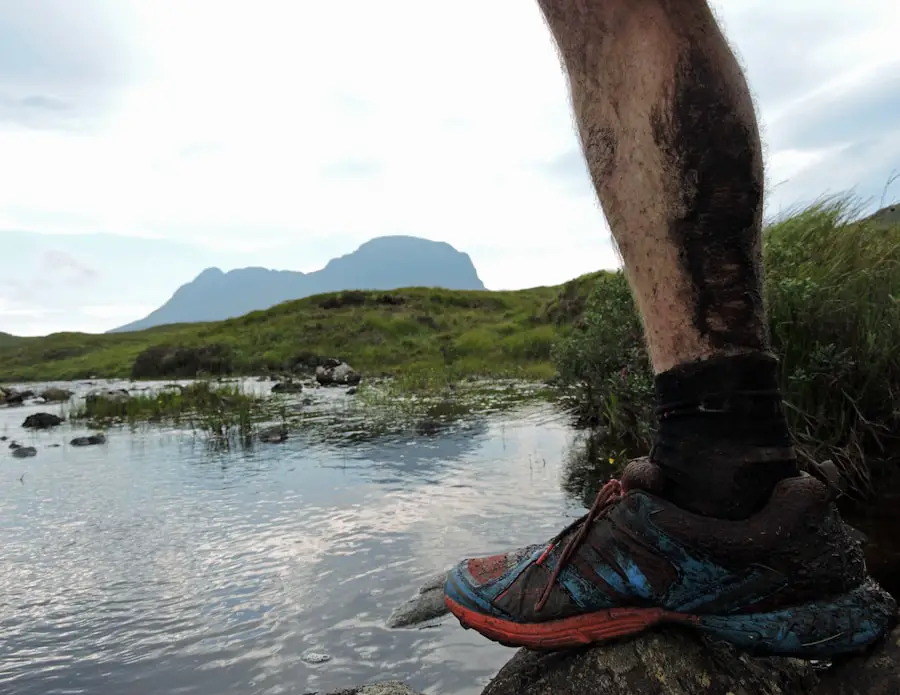
After a demanding hike, use a simple routine instead of immediately treating every ache as an injury.
1. Take Off Your Shoes and Inspect Your Feet
Remove your shoes and socks and look at both feet in good light. Check your heels, toes, balls of the feet, arches, nail edges, and spaces between the toes.
Look for blisters, hot spots, cuts, splinters, unusual bruising, localized swelling, nail damage, or areas that are much more painful than the rest of the foot.
2. Wash and Dry Your Feet
Wash dirty or sweaty feet with clean water and mild soap, then dry them carefully. Pay particular attention between the toes. Keeping feet clean and dry also helps reduce problems associated with prolonged dampness.
3. Elevate Swollen Feet
For ordinary post-activity swelling, lie down and prop your feet comfortably on pillows. Elevation is a standard home-care measure for painful or swollen feet and ankles.
If swelling is accompanied by severe pain, major bruising, deformity, numbness, or an inability to bear weight, do not assume it is routine hiking fatigue.
4. Use Cold for Painful Swelling
A wrapped cold pack can help with pain and swelling. Keep a cloth or towel between the cold source and your skin rather than applying ice directly.
MedlinePlus foot-pain guidance includes ice, elevation, activity reduction, and appropriate footwear among common home-care measures.
5. Treat Blisters Carefully
The American Academy of Dermatology recommends leaving most blisters intact when possible and loosely covering them with a bandage. For a blister on a pressure point, donut-shaped padding can protect the blister from direct pressure.
If a blister has opened, wash it gently with soap and water, keep the remaining skin over the area when possible, apply petroleum jelly, and cover it with a clean bandage. Watch for increasing redness, pus, swelling, warmth, or pain.
6. Rest From Whatever Reproduces the Pain
You do not necessarily need complete bed rest for mild soreness. Normal gentle movement is often comfortable. However, avoid another long hike, run, or other activity that clearly reproduces the pain until ordinary walking feels normal again.
Warning: Seek prompt medical evaluation if you cannot bear weight, the foot looks deformed, pain is severe even at rest, swelling is substantial, your toes become numb, cold, or discolored, or you suspect a fracture. Increasing redness, warmth, pus, red streaking, or fever can indicate infection.
The Importance of Rest and Recovery for Your Feet
| What You Notice | Reasonable Next Step |
| Mild, general aching in both feet | Reduce load, elevate if swollen, recover, and resume activity gradually when walking is comfortable. |
| Blister or hot spot | Remove the source of friction and protect the skin before returning to the trail. |
| Localized pain that returns with each step | Stop aggravating activity and monitor closely; persistent focal pain deserves medical assessment. |
| Severe pain, deformity, major swelling, or inability to bear weight | Seek medical evaluation rather than attempting to “walk it off.” |
Recovery matters because feet, ankles, muscles, tendons, and other tissues need time to adapt to an increase in mileage, elevation, pack weight, or technical terrain. There is no credible universal rule stating that a particular amount of rest prevents a fixed percentage of hiking injuries.
Instead, use symptoms to guide your return. If ordinary walking, stairs, and normal daily activities are comfortable and swelling has settled, you can gradually resume hiking. If pain immediately returns or worsens as distance increases, reduce the workload again.
Low-impact activities such as easy cycling or swimming can be useful on recovery days when they do not reproduce your foot pain.
Utilizing Foot Soaks and Massages for Relief
A foot soak can feel relaxing after a long day, but it should be viewed as a comfort measure rather than a cure for an overuse injury.
If your feet are simply tired and are not markedly swollen, injured, blistered open, or infected, a brief warm-water soak may feel soothing. Epsom salt can be added according to the product label if you enjoy it. However, claims that the magnesium in an Epsom-salt bath readily passes through intact skin and directly reduces post-hike inflammation are not well supported.
A 2026 skin-permeation study found that magnesium movement through intact skin was minimal. Epsom-salt products are nevertheless marketed as soaking aids, so the most accurate expectation is relaxation and comfort rather than proven transdermal-magnesium treatment.
Note: Current Epsom-salt drug labeling warns that people with diabetes should not use hot or warm soaks unless advised by a physician. Do not use prolonged soaking as a substitute for proper wound or blister care.
Skip homemade acidic treatments such as apple cider vinegar on sore, cracked, blistered, or sensitive feet. Dilute vinegar has caused irritation in clinical research, and stronger or prolonged topical vinegar exposure can cause chemical burns.
Gentle massage is reasonable when the problem feels like ordinary muscular tightness rather than a fresh injury. Use your fingers or roll the arch lightly over a tennis ball. Stop if massage produces sharp pain.
The AAOS foot and ankle conditioning program includes a ball roll under the arch as one option for plantar-fascia mobility.
Incorporating Stretching and Strengthening Exercises for Your Feet
Strong feet and ankles cannot prevent every hiking problem, but strength, mobility, and balance help your lower legs tolerate uneven terrain.
Do not force a stretch through sharp pain or begin strengthening an acutely injured foot. For routine conditioning, the AAOS recommends warming up first and stopping exercises that cause pain.
Calf Stretch
Face a wall and place one foot behind you. Keep the heel down and gently lean forward until you feel a stretch through the calf. Hold for about 30 seconds, relax, and repeat without bouncing.
Seated Towel Stretch
Sit with the leg straight, loop a towel around the ball of the foot, and gently pull the towel toward you while keeping the knee straight. This targets the calf and heel-cord area.
Ankle Range of Motion
While seated, lift the foot and slowly trace the alphabet in the air with your big toe. Keep the movement controlled and centered at the ankle.
Calf Raises
Stand beside a stable support and slowly rise onto the balls of your feet, then lower under control. Progress only when the movement is pain-free.
Towel Curls
Place a small towel beneath the foot and use your toes to gather it toward you. This works the smaller muscles of the foot.
Balance Practice
Stand near a counter or another stable support and balance on one leg. As balance improves, gradually make the exercise more challenging while keeping it safe.
Pro Tip: Build hiking distance, elevation gain, and pack weight gradually instead of increasing all three at once. A sudden jump in training load can make it difficult to tell whether soreness is simple adaptation or the beginning of an overuse problem.
Nutrition and Hydration for Foot Recovery
No special food can directly “heal” tired feet after a normal hike. A balanced meal or snack, adequate fluids, and enough total food for the work you performed are more useful than chasing a single anti-inflammatory ingredient.
Foods such as fish, walnuts, flaxseed, fruits, vegetables, whole grains, dairy or alternatives, eggs, beans, and other protein sources can all fit into a normal recovery diet. Omega-3 fats are nutritionally valuable, but eating an omega-3-rich food should not be presented as a specific treatment for an injured foot.
Hydration matters before, during, and after hiking. The CDC notes that water helps prevent dehydration and that fluid needs rise with physical activity and hot conditions.
For ordinary hikes, water plus normal food may be enough. During prolonged heavy sweating or hot-weather exertion, fluids and food containing electrolytes may also be useful. There is no single amount that fits every hiker because temperature, humidity, intensity, body size, acclimatization, and sweat rate vary considerably.
Avoid forcing excessive amounts of plain water in an attempt to “flush out” soreness. Both dehydration and excessive fluid intake can create problems during prolonged exertion.
Seeking Professional Help for Persistent Foot Pain
Most mild post-hike soreness should trend in the right direction with reduced activity and ordinary recovery. Pain that stays sharply localized, repeatedly returns with weight-bearing, or continues to worsen deserves medical evaluation.
A podiatrist, sports-medicine clinician, primary-care professional, physical therapist, or orthopedic specialist can help determine whether the problem is simple overuse, plantar fasciitis, tendinopathy, a sprain, nerve irritation, or a bone stress injury.
AAOS advises medical evaluation for suspected bone stress injuries. Early X-rays can sometimes appear normal, so persistent focal pain should not be dismissed solely because an initial X-ray shows no fracture.
Seek prompt care when you have:
- An inability to bear weight or walk normally.
- Severe pain even when the foot is not loaded.
- A visible deformity or suspected fracture.
- Significant or rapidly increasing swelling.
- Numbness, tingling, coldness, or unusual color in the toes.
- A popping sound followed by immediate severe pain.
- Increasing redness, warmth, pus, red streaking, or fever.
- Focal bone pain that repeatedly returns with walking or hiking.
- Pain that fails to improve or keeps returning despite reducing the activity that causes it.
Custom orthotics may help selected people with specific biomechanical or pressure problems, but they are not automatically necessary for every hiker with sore feet. A professional assessment is more useful than guessing when discomfort is recurrent.
Preventing Sore Feet on Your Next Hike
Post-hike treatment is useful, but prevention starts before your next trail day. Check that your shoes still fit well, choose socks that stay comfortable when damp, trim toenails so they do not strike the front of the shoe on descents, and carry a spare pair of socks on long or wet hikes.
During the hike, respond early to burning, rubbing, numbness, or unusual pressure. Stop, adjust your laces, remove debris from the shoe, dry the foot when possible, and protect developing hot spots. Small corrections made early are much easier to manage than a large blister several miles later.
Also review your distance, elevation, pace, and pack weight. If your feet hurt every time you cross a certain mileage, increasing your conditioning gradually may be more effective than repeatedly treating the soreness afterward.
Sources
- American Academy of Dermatology — How to Prevent and Treat Blisters — blister prevention, protection, drainage, and infection signs.
- MedlinePlus — Foot Pain — home care, ice, elevation, activity modification, footwear, and pain-relief considerations.
- American Academy of Orthopaedic Surgeons — Foot and Ankle Conditioning Program — stretching, strengthening, mobility, and ball-roll exercises.
- American Academy of Orthopaedic Surgeons — Stress Fractures — bone stress injuries, evaluation, and imaging.
- National Park Service — Hike Smart — hiking footwear, moisture-wicking socks, equipment, food, and water.
- Camili V, Stürup S, Heinz A. Does Magnesium Permeate the Skin? (2026) — evidence regarding magnesium penetration through intact skin.
Frequently Asked Questions
What causes sore feet after hiking?
Common causes include long periods of weight-bearing, unfamiliar mileage, steep climbs or descents, uneven terrain, pack weight, friction, wet socks, footwear fit, and fatigue in the muscles and soft tissues of the feet and ankles. Sharp or highly localized pain is less typical of simple fatigue and may need further evaluation.
How can I prevent sore feet while hiking?
Wear properly fitting footwear, use comfortable moisture-managing socks, change wet socks, address hot spots early, adjust lacing when necessary, and increase hiking distance, elevation, and pack weight gradually. Stop to investigate rubbing or unusual pain instead of waiting for it to become severe.
What are the best ways to treat sore feet after hiking?
Inspect and clean your feet, elevate them if swollen, use a wrapped cold pack for painful swelling, protect blisters, and reduce activities that reproduce the pain. Gentle stretching or massage can be appropriate for ordinary tightness, but not for a suspected acute injury.
Should I use ice or warm water for sore feet after hiking?
When pain is accompanied by swelling after an injury or strenuous activity, a wrapped cold pack is generally the more useful first measure. Warm water may feel relaxing later when the feet are simply tired and there is no significant swelling, open wound, or other reason to avoid heat.
Does Epsom salt help sore feet after hiking?
An Epsom-salt soak may feel relaxing and products are sold as soaking aids, but evidence does not show that substantial magnesium passes through normal intact skin. Use it for comfort rather than as a proven anti-inflammatory treatment, follow the product label, and remember that warm or hot soaks may be inappropriate for some people, including those with diabetes unless advised by a clinician.
When should I seek medical attention for sore feet after hiking?
Get medical help for an inability to bear weight, severe or worsening pain, major swelling, deformity, numbness, cold or discolored toes, suspected fracture, or signs of infection such as increasing redness, warmth, pus, or fever. Persistent focal pain should also be evaluated because stress injuries can initially be subtle.

