
Last Updated on July 30, 2026 by Daniel Globe
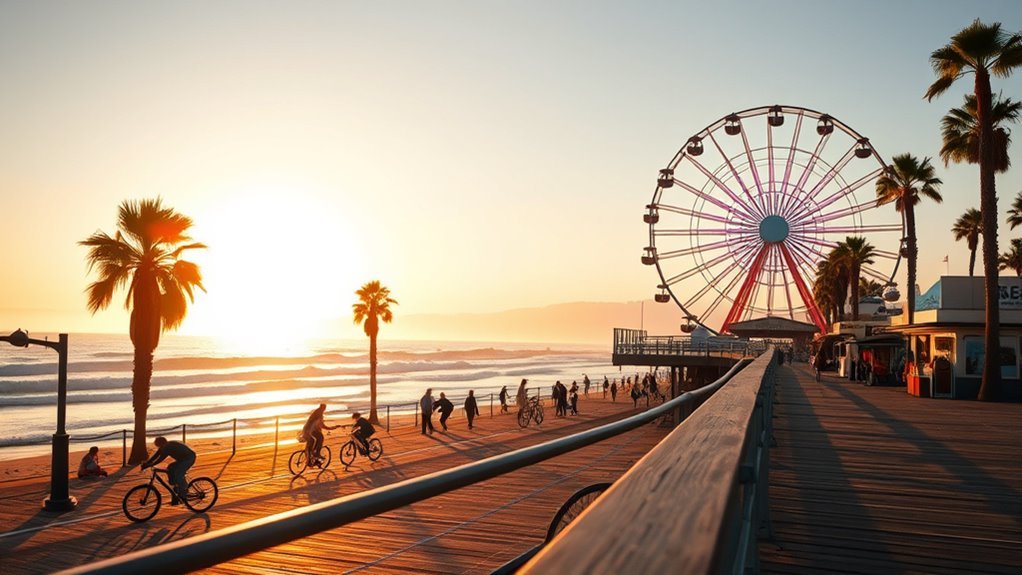
Santa Monica is easiest to enjoy when you plan by neighborhood instead of rushing between scattered attractions. The landmark pier began in 1909 as a municipal utility, while the adjoining pleasure pier brought amusement rides and the historic carousel building in 1916. Today, you can combine the beach, Pacific Park, local markets, galleries, cafés, and walkable shopping districts into a relaxed week by the coast.
Quick Answer
The best way to spend seven days in Santa Monica is to group each day by area: the pier and Downtown, the beach and Annenberg Beach House, Main Street and Ocean Park, Montana Avenue, Bergamot Station, a Malibu day trip, and a final market-and-sunset day. You can complete most of the trip without a car.
Key Takeaways
- Spend your first day around the Santa Monica Pier, Pacific Park, Ocean Avenue, and Downtown so you can get oriented without covering too much ground.
- Match your market visit to the schedule: Downtown markets run Wednesday and Saturday, Pico runs Saturday, and Main Street runs Sunday.
- Use the Metro E Line, Big Blue Bus, walking, and cycling for most local trips; a car is more useful for Malibu than for central Santa Monica.
- Reserve popular restaurants, tasting menus, beach-yoga classes, and seasonal pool sessions before busy weekends.
- Bring sunscreen and water during the day, plus a light layer for cool evenings and ocean breezes.
At a Glance
| Time Required | Seven days for the full plan; two or three days for the main highlights |
| Difficulty | Easy to moderate; expect regular walking, optional cycling, and time outdoors |
| Tools Needed | Comfortable shoes, sunscreen, reusable water bottle, light jacket, contactless payment or TAP card, and the Transit app |
| Cost | Many beaches, parks, murals, galleries, and markets are free; rides, meals, classes, parking, and the Malibu day trip are extra |
Disclosure: As an Amazon Associate I earn from qualifying purchases. Some links on this page are affiliate links, at no extra cost to you.
Best Things to Do in Santa Monica
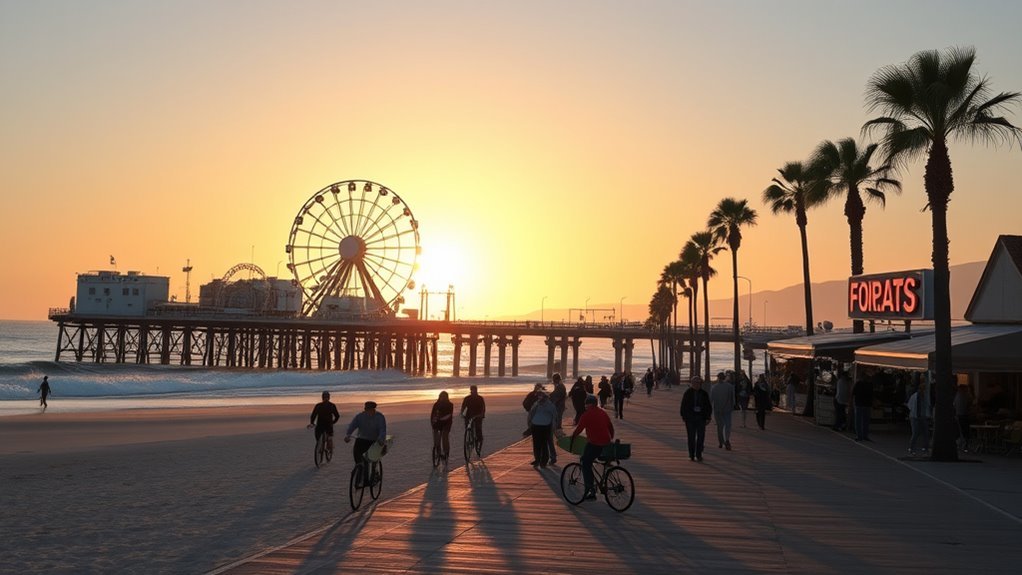
Santa Monica gives you several classic Southern California experiences within a compact coastal area. You can ride the Pacific Wheel, walk the beach, browse an open-air market, follow a mural route, visit galleries, shop without crossing traffic, or settle into a café and let the afternoon unfold slowly.
Santa Monica Pier and Pacific Park
Begin with the Santa Monica Pier, where you can walk above the Pacific, visit the historic Looff Hippodrome carousel building, watch anglers at the pier’s western end, and browse the arcade and food stands. Admission to the pier and Pacific Park is free; you pay separately for rides and games.
The park’s signature attraction is the solar-powered Pacific Wheel. Ride near sunset for changing views of the coastline, Malibu, and the lights around the pier. Hours can vary with weather, maintenance, and special events, so use the park’s current operating calendar rather than relying on a fixed schedule.
Beach, Parks, and Ocean Views
Santa Monica State Beach stretches north and south of the pier, with separate paths for many pedestrians and cyclists. Above the sand, Palisades Park provides benches, lawns, ocean overlooks, and an easy walking route along Ocean Avenue. South of the pier, Tongva Park offers landscaped paths, public art, a playground, restrooms, and shaded places to pause.
Third Street Promenade and Downtown
The Third Street Promenade remains Santa Monica’s best-known pedestrian shopping street. Its mix changes over time, so visit for the car-free setting, restaurants, cinemas, street activity, and access to Santa Monica Place rather than for a fixed store count. Nearby streets add independent restaurants, cafés, bookstores, fitness studios, and services within a few blocks of the beach.
Santa Monica Farmers Markets
The Downtown Farmers Market operates on Wednesday and Saturday from 8 a.m. to 1 p.m., rain or shine, with selected holiday exceptions. The Wednesday market is especially well known for its broad selection of California produce and its popularity with local chefs.
Santa Monica also has a Saturday Pico market and a Sunday Main Street market. These neighborhood options are useful when the Downtown schedule does not fit your itinerary.
Murals, Galleries, and Public Art
Santa Monica Travel & Tourism highlights more than 170 murals across the city. Main Street, Downtown, Pico Boulevard, and the area near the pier all contain works that can be combined with café and shopping stops.
For a more concentrated gallery visit, head to Bergamot Station Arts Center. Individual gallery hours vary, but the complex offers an easy indoor or lower-energy alternative when the beach is windy, overcast, or crowded.
Pro Tip: Visit the pier early in the morning for lighter crowds, then return near sunset for the Pacific Wheel and evening atmosphere. You will experience two very different sides of the same landmark without devoting two full days to it.
Seven-Day Itinerary: Day-by-Day Plan
This seven-day Santa Monica itinerary balances beach time, local neighborhoods, art, shopping, and memorable meals without sending you back and forth across the city. Most days concentrate on one area so you can spend more time exploring and less time in traffic.
Note: Move the market-focused day to Wednesday, Saturday, or Sunday according to your travel dates. The order below is flexible; keep nearby attractions together when you swap days.
Day 1: Pier, Ocean Avenue, and Downtown
Morning: Start with breakfast Downtown, then walk through Palisades Park while you still have fresh legs and clear morning views. Continue toward Colorado Avenue and descend to the pier.
Afternoon: Explore the Santa Monica Pier, ride the Pacific Wheel, see the carousel building, and walk onto the beach. Have a casual seafood lunch at The Albright or choose a quick pier snack.
Evening: Return to Ocean Avenue for sunset, then walk through Third Street Promenade and Santa Monica Place. Keep dinner close to Downtown so your first day stays simple.
Day 2: Beach Yoga, Shopping, and Dumplings
Morning: Book a class with Beach Yoga SoCal, or take a self-guided beach walk if class times do not fit. Bring a towel or mat, sun protection, and an extra layer for the morning breeze.
Afternoon: Return Downtown for Santa Monica Place and the Promenade. Break up the shopping with coffee, a bookstore visit, or a rest in Tongva Park.
Evening: Reserve a table at Din Tai Fung for soup dumplings and Taiwanese dishes. The restaurant is on Level 3 of Santa Monica Place; outdoor views depend on your table and current seating arrangements.
Day 3: Architecture, Murals, and Main Street
Morning: Follow a self-guided architecture walk through Downtown and Ocean Avenue. Look for the contrast between early-20th-century buildings, Art Deco details, modern hotels, and contemporary civic spaces.
Afternoon: Continue south to Main Street and Ocean Park. Follow part of Santa Monica’s mural route, browse independent shops, and stop at Dogtown Coffee or another neighborhood café.
Evening: Eat on or near Main Street. Xuntos works well for Spanish-inspired small plates, while Seline is a much longer tasting-menu experience suited to a special occasion.
Day 4: Annenberg Beach House and North Beach
Morning: Head north to the Annenberg Community Beach House. The site includes restrooms, a playground, splash pad, historic elements, beach access, and accessible facilities. The pool operates seasonally, so use the current pool calendar before planning your day around swimming.
Afternoon: Rent a bicycle or walk a section of the beach path. Continue only as far as your energy and return time allow; coastal headwinds can make the ride back feel longer.
Evening: Change pace with dinner around Montana Avenue or Wilshire Boulevard. Father’s Office offers craft beer and gastropub food, while Rustic Canyon focuses on market-driven California cooking.
Day 5: Bergamot Station, Pico, and Local Cafés
Morning: Visit Bergamot Station Arts Center and explore the galleries that are open that day. This is one of the best itinerary slots for overcast weather or a break from direct sun.
Afternoon: Explore Pico Boulevard or the quieter residential streets east of Downtown. If your visit falls on Saturday, the Pico Farmers Market provides an easy neighborhood lunch and produce stop.
Evening: Choose a meal that matches your energy. Socalo offers casual Mexican-inspired food, while Citrin or Mélisse provides a more formal experience from chef Josiah Citrin.
Day 6: Malibu Day Trip and Wine Experience
Morning: Leave Santa Monica for Malibu, allowing extra travel time because Pacific Coast Highway traffic can change quickly. Choose one main focus: beaches, hiking, the Getty Villa area, or a booked wine experience.
Afternoon: Continue your selected Malibu activity instead of trying to combine every major stop. A slower day leaves room for traffic, coastal walks, and an unhurried lunch.
Evening: Return to Santa Monica before dinner. Keep the evening flexible in case the drive takes longer than expected.
Warning: Do not drive after a wine tasting. Book a tour with transportation, use a designated driver, or arrange a licensed ride in advance. Cell service and ride availability can be less predictable in parts of the Malibu hills.
Day 7: Market, Neighborhood Favorites, and Sunset
Morning: Match your final morning to the market schedule. Use the Wednesday or Saturday Downtown market, the Saturday Pico market, or the Sunday Main Street market. Arrive earlier for the widest produce selection and easier browsing.
Afternoon: Revisit the area you liked most, shop Montana Avenue, browse the Santa Monica Airport Antique & Vintage Market when its event date aligns with your visit, or relax at a café rather than adding another major attraction.
Evening: Reserve a sunset meal at Élephante. Its Santa Monica rooftop serves coastal Italian food, and some seating areas have ocean views. Finish with a final walk along Ocean Avenue or the illuminated pier.
Where to Eat: Local Dining Highlights
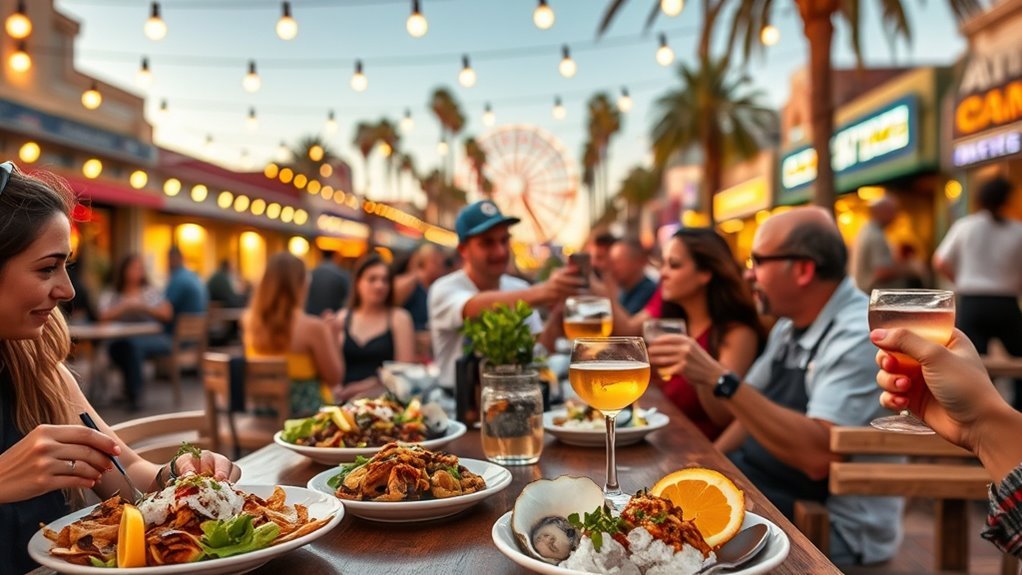
Santa Monica’s dining scene ranges from walk-up pier food to long tasting menus. The best choice depends on where you are spending the day, how much time you have, and whether you want a casual beach meal or a reservation-led evening.
Fresh Seafood Spots
The Albright sits directly on the pier and serves seafood alongside familiar pier classics. Its location makes it the easiest choice when you want oysters, grilled seafood, chowder, or fish without leaving the waterfront.
Ye Olde King’s Head offers a British-pub alternative, including fish and chips, breakfast, bakery items, and afternoon-tea service on selected days. Wally’s is better treated as a wine-and-specialty-food stop than as a dedicated seafood restaurant; visit for wine, cheese, charcuterie, pantry items, and gifts.
Din Tai Fung belongs in the casual-dining category rather than the seafood list. Its best-known dishes are xiao long bao, noodles, wontons, rice dishes, and vegetables.
Casual Local Favorites
Din Tai Fung works well for a polished but approachable lunch or dinner near the Promenade. The Albright is convenient for families and pier visitors. Ye Olde King’s Head suits anyone craving British comfort food, while Socalo offers a casual neighborhood setting with Mexican-inspired dishes.
Rustic Canyon is a stronger choice when you want seasonal California cooking in a neighborhood dining room. Its menu changes with the produce and ingredients available from regional farmers and purveyors.
| Spot | Area and Vibe | Best For |
|---|---|---|
| Din Tai Fung | Santa Monica Place; polished and busy | Soup dumplings and group meals |
| The Albright | Santa Monica Pier; casual waterfront setting | Seafood during a pier visit |
| Socalo | Mid-City; relaxed neighborhood restaurant | Casual Mexican-inspired food |
| Rustic Canyon | Wilshire Boulevard; warm neighborhood dining | Seasonal California cooking |
Special-Occasion Restaurants
Seline on Main Street offers a tasting-menu experience designed around a long, carefully paced meal. Citrin and Mélisse on Wilshire Boulevard provide two distinct formats from chef Josiah Citrin, from modern Californian prix-fixe dining to a more intimate tasting-menu experience.
Book these restaurants well ahead of your preferred night, review cancellation policies, and allow enough time that you do not have to rush from an afternoon activity.
Neighborhood Guides and Hidden Gems
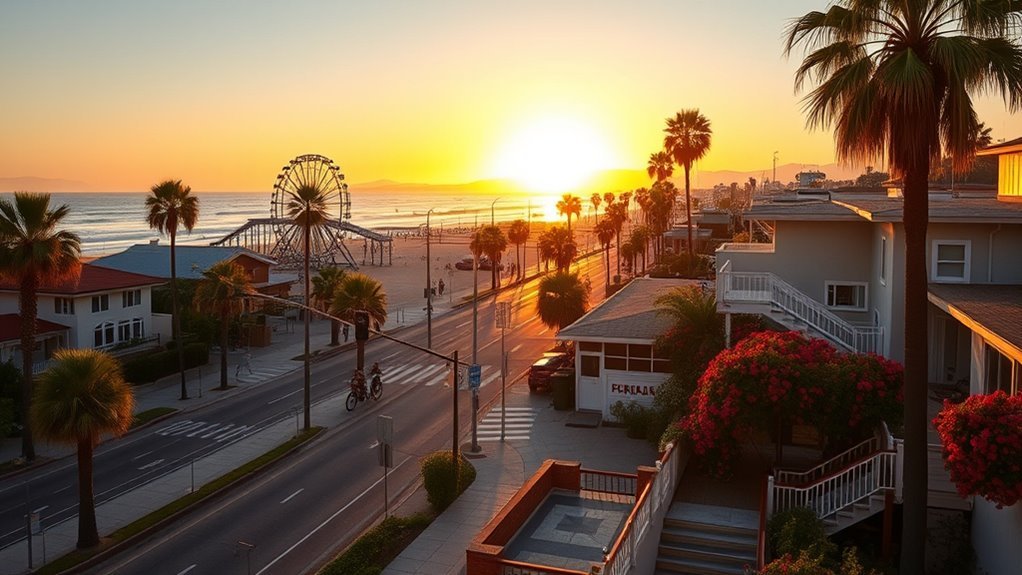
Santa Monica becomes more interesting once you move beyond the pier and treat each district as its own destination. Downtown is best for first-time attractions and transit, Main Street and Ocean Park feel more residential, Montana Avenue is polished and quiet, Pico is locally oriented, and Bergamot Station centers on contemporary art.
Local Eats & Cafés
Xuntos is a Spanish-inspired tapas bar in Downtown, while Seline offers a highly structured tasting menu on Main Street. Rustic Canyon provides seasonal neighborhood dining on Wilshire Boulevard.
Café Bolívar serves coffee and arepas in the Ocean Park area, making it a useful stop when you are exploring away from the busiest beach blocks. Dogtown Coffee on Main Street adds local surf-and-skate history to a casual breakfast or coffee stop.
Din Tai Fung and The Albright remain useful anchors when your day centers on Santa Monica Place or the pier, but they should not replace exploring neighborhood restaurants farther inland.
Street Art Walks
Santa Monica’s murals turn ordinary walls, alleys, and commercial blocks into an open-air gallery. Use the official mural guide to choose a cluster rather than trying to see every work in one outing.
Main Street and Ocean Park pair naturally with independent boutiques and cafés. Downtown murals can be combined with the Promenade and pier, while Pico-area works fit well with Bergamot Station or the Saturday market. Stay on public sidewalks and avoid entering private lots solely to photograph a mural.
Hidden Shopping Streets
For shopping that feels more personal than a major commercial center, spread your time among several distinct areas:
- Montana Avenue — polished boutiques, beauty businesses, cafés, and neighborhood restaurants beneath mature street trees.
- Main Street — independent fashion, surf culture, wellness businesses, vintage-inspired shops, cafés, and easy access to Ocean Park.
- Ocean Park — quieter residential blocks, local restaurants, coffee shops, and community businesses away from the pier crowds.
- Santa Monica Airport Antique & Vintage Market — a recurring outdoor market for furniture, clothing, jewelry, artwork, rugs, and collectible pieces when its event dates match your trip.
- Abbot Kinney Boulevard — a nearby Venice destination rather than a Santa Monica street, known for design shops, restaurants, cafés, and public art.
Choose one or two areas for a single afternoon. Montana Avenue and Main Street are several miles apart, so combining both with the pier can make the day feel unnecessarily rushed.
Outdoor Activities and Beach Essentials
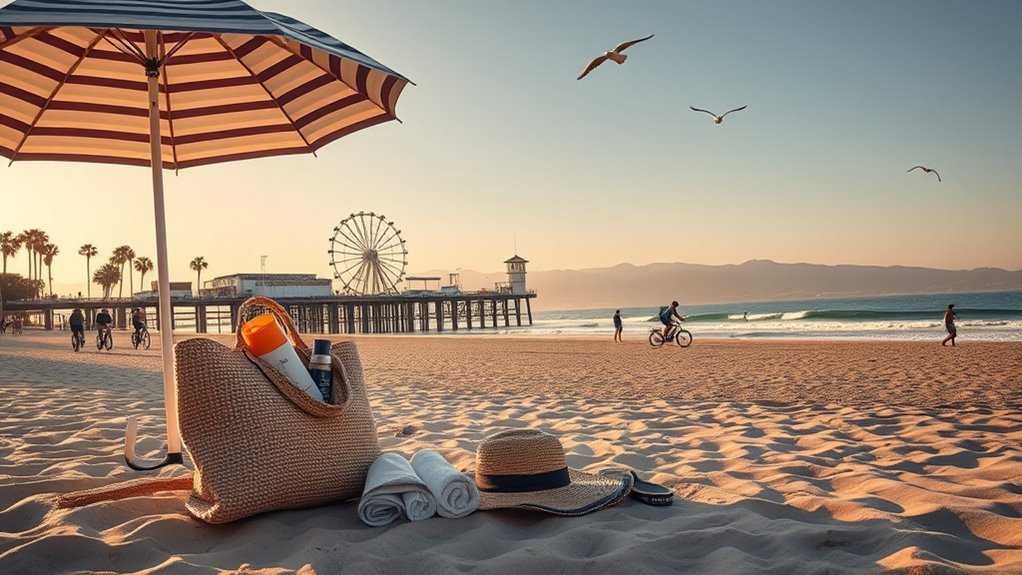
Santa Monica’s outdoor options range from a gentle oceanfront walk to a longer ride along the Marvin Braude Beach Bike Path. The city reports more than 120 lane-miles of bicycle facilities, but that figure describes the broader street network rather than one continuous recreational trail.
Santa Monica has installed more than 120 lane-miles of bicycle facilities, while the beach path continues beyond the city into neighboring coastal communities.
The Santa Monica section of the beach bike path runs for roughly three miles between the Venice boundary and Will Rogers State Beach. Longer riders can continue beyond the city, but should allow for wind, congestion, pedestrian crossings, and the return trip.
| Activity | What to Know |
|---|---|
| Cycling | Use the beach bike path or protected city routes, keep right, pass carefully, and slow near busy crossings. |
| Beach Yoga | Classes take place on the sand and may change with weather; reserve ahead and bring sun protection. |
| Family Time | Annenberg Beach House provides a playground, splash pad, restrooms, beach access, and a seasonal swimming pool. |
| Walking | Combine the sand, pedestrian path, Palisades Park, Tongva Park, and Ocean Avenue for varied scenery. |
What to Bring to the Beach
- Broad-spectrum sunscreen and a hat
- Refillable water bottle
- Light jacket or sweatshirt for the evening
- Sandals plus comfortable walking shoes
- Towel or blanket
- Secure bag for your phone, wallet, and keys
Warning: Ocean conditions can change quickly. Swim near staffed lifeguard areas, follow posted warnings, and ask a lifeguard about rip currents before entering unfamiliar water. Never leave children unattended near the surf.
Dogs are not permitted on Santa Monica State Beach, and motorized scooters are not allowed on the beach bike path. Use the official Santa Monica State Beach page for current facilities, rules, parking lots, and access information.
Markets, Shopping, and Nightlife
Markets and shopping areas give each Santa Monica neighborhood a different rhythm. Downtown is the busiest and easiest to reach by rail, Montana Avenue feels quieter and more polished, Main Street mixes local shopping with restaurants, and the airport antique market rewards visitors who enjoy searching for one-of-a-kind pieces.
Weekly Market Schedule
- Wednesday Downtown Farmers Market: Arizona Avenue, 8 a.m.–1 p.m.
- Saturday Downtown Farmers Market: Arizona Avenue, 8 a.m.–1 p.m.
- Saturday Pico Farmers Market: Virginia Avenue Park, 8 a.m.–1 p.m.
- Sunday Main Street Farmers Market: 8:30 a.m.–1:30 p.m.
Markets operate year-round, rain or shine, but may close for selected holidays or extreme conditions. Bring a reusable bag and arrive earlier if buying produce matters more than prepared food or entertainment.
Shopping Areas
Third Street Promenade and Santa Monica Place offer the broadest Downtown mix. Montana Avenue is better for boutique browsing, while Main Street is stronger for independent businesses and a neighborhood atmosphere. The Santa Monica Airport Antique & Vintage Market is a separate event experience rather than a daily shopping street.
Nightlife
Santa Monica nightlife is generally more relaxed than club-heavy. Father’s Office is known for craft beer and gastropub food on Montana Avenue. Élephante combines coastal Italian food, cocktails, rooftop seating, and late-evening energy near Downtown.
Other options include hotel bars, live music, comedy, cinemas, and casual neighborhood pubs. Bring identification if drinking, plan your return route before the evening begins, and expect weekend reservations or lines at popular rooftops.
Getting Around: Transit, Parking, and Practical Tips
Downtown Santa Monica, the pier, Ocean Avenue, the Promenade, Santa Monica Place, Tongva Park, and the beach are close enough to connect on foot. For longer trips, use the Metro E Line, Big Blue Bus, cycling, or a licensed ride service.
Metro E Line
The Metro E Line connects Downtown Santa Monica with destinations across Los Angeles, including Culver City and Downtown Los Angeles. The Downtown Santa Monica station is at Colorado Avenue and Fourth Street, a short walk from the Promenade and pier.
Pay with a TAP card or accepted contactless payment. Check Metro’s official app or website for current arrival times, service alerts, and transfer information.
Big Blue Bus
Big Blue Bus serves Santa Monica and nearby Westside destinations. Download the Transit app for real-time arrivals, trip planning, service alerts, and mobile fares.
As of July 2026, a regular ride costs $1.25 with a contactless payment or mobile ticket and $1.50 when paying cash. Current fares and passes are listed on the Big Blue Bus fare page.
Route 3 connects Downtown Santa Monica with the LAX/Metro Transit Center, where passengers can transfer to airport connections. Allow extra time for traffic and airport transfers.
Parking
Downtown has municipal parking structures, while the beachfront uses separate beach lots with different hours and rates. Street parking becomes harder near the beach, Main Street, and popular restaurants during weekends and sunset hours.
Read every posted sign, note closing times, and avoid assuming that a rate or restriction applies to the next block. Beach-lot fees and operating hours can vary by location and day.
Bikes and Scooters
Bicycle rentals are available near Downtown and the beach. Some hotels also offer guest bikes, although availability and time limits differ. Use marked bicycle routes and lock rentals securely whenever you stop.
Do not ride motorized scooters on the pier, Third Street Promenade, municipal parks, or the beach bike path. Slow down around pedestrians and walk any device where local signs require it.
Accessibility
Big Blue Bus and Metro provide accessible transit options. The Annenberg Community Beach House includes accessible parking, elevators, restrooms, pathways, and beach facilities. Attraction-specific access and equipment can change, so use official venue accessibility information when planning around mobility needs.
Pro Tip: Stay car-free on your Downtown, pier, Main Street, and beach days. Save a rental car or longer ride for Malibu and other destinations outside Santa Monica, where public transit takes more time.
Frequently Asked Questions
Can you visit Santa Monica on a day trip from Los Angeles?
Yes. Take the Metro E Line to Downtown Santa Monica, walk through Tongva Park to the pier, spend time on the beach, have lunch Downtown, and finish on the Promenade or Ocean Avenue. Starting early gives you enough time for the main sights without a car.
What are the best months for whale watching nearby?
Gray whales generally pass Southern California during their winter southbound and spring northbound migrations. Blue whales and humpbacks may be seen during warmer months, but timing varies with food and ocean conditions. Excursions usually leave from nearby harbors rather than the Santa Monica Pier, and sightings are never guaranteed.
Are there family-friendly hotels with suite options?
Yes. Hotels around Downtown, Ocean Avenue, and Main Street offer a mix of suites, connecting rooms, kitchenettes, pools, and family services. Room layouts and included amenities differ, so compare the exact room category rather than relying only on the hotel’s general amenity list.
Is Santa Monica safe to walk at night?
No city can guarantee safety, but many visitors walk around Downtown, Ocean Avenue, the Promenade, and restaurant districts after dark. Stay on busy, well-lit routes, secure your belongings, avoid isolated beach or park areas late at night, and use a licensed ride when you feel uncomfortable.
Where can I find public restrooms near the beach?
Marked public restrooms are available at several beach facilities, near the pier, at selected beach parking lots, and at the Annenberg Community Beach House. Tongva Park also has restrooms near Downtown. Use the City of Santa Monica’s beach and facility maps for the closest currently open location.
How many days do you need in Santa Monica?
Two or three days cover the pier, beach, Downtown, Main Street, and one market or gallery stop. Five to seven days let you explore the neighborhoods more slowly, add cycling and beach time, and take a Malibu day trip.
Do you need a car in Santa Monica?
Not for the central attractions. The pier, beach, Downtown, Promenade, Tongva Park, and Ocean Avenue are easy to combine on foot. Big Blue Bus and the Metro E Line cover longer urban trips. A car or arranged transportation is more useful for Malibu and other coastal day trips.
What should you wear in Santa Monica?
Wear comfortable walking shoes and sun protection during the day. Carry a light jacket, sweater, or wind-resistant layer because the temperature can feel much cooler after sunset or when the marine layer moves in.
Conclusion
Santa Monica rewards a slower plan. Start with the pier and Downtown, then give the beach, Main Street, Montana Avenue, Bergamot Station, and local markets their own time. Use the E Line, Big Blue Bus, walking, and cycling for most of the week, and save longer transportation for Malibu. With reservations, sun protection, a light evening layer, and realistic travel times, you can enjoy the city’s major sights without turning the trip into a checklist.
Sources
- Santa Monica Pier — official pier history, events, visitor information, and current operations
- Pacific Park: The Pacific Wheel — solar-powered Ferris wheel details and attraction information
- City of Santa Monica Downtown Farmers Market — current market locations, hours, and operating information
- Big Blue Bus Real-Time Trip Planning — official Transit app and arrival-information guidance
- LA Metro Schedules — current E Line schedules, maps, and service information
- City of Santa Monica State Beach — beach facilities, parking, rules, paths, and visitor access
