

Last Updated on July 30, 2026 by Daniel Globe
You can enjoy many of Santa Monica’s best-known sights without paying admission. Walk the Pier, relax on the sand, explore Palisades and Tongva parks, browse the farmers markets, watch street performers, and follow public-art and history stops around downtown. The activities can be free, but parking, food, rides, rentals, reserved courts, and some special amenities may cost extra.
Quick Answer
The best free things to do in Santa Monica include walking the Pier, visiting Santa Monica State Beach, exploring Tongva and Palisades parks, browsing four weekly farmers-market sessions, window-shopping on Montana Avenue, watching performers on Third Street Promenade, and following free public-art and history stops. Transportation and optional purchases may still cost money.
Key Takeaways
- The Pier, beach, public parks, promenades, and most outdoor history stops have no admission charge.
- Pier rides, café orders, market purchases, bike rentals, parking, pool entry, classes, and court reservations are optional paid extras.
- The Pier, Tongva Park, Third Street Promenade, Palisades Park, and the beach can be combined into one walkable outing.
- Farmers-market hours, park facilities, performances, special events, trail access, and closures can change, so check official pages before leaving.
- Swim only near an operating lifeguard and carry more water than you think you need on mountain trails.
Note: “Free” in this guide means that you can enter, walk through, or enjoy the main activity without buying a ticket. Getting there may not be free. Santa Monica beach lots, downtown structures, and most meters charge current posted rates, while normal bus and rail fares may also apply.
Disclosure: As an Amazon Associate I earn from qualifying purchases. Some links on this page are affiliate links, at no extra cost to you.
Plan a Free Day in Santa Monica
The easiest zero-admission route begins downtown. Start at the Wednesday or Saturday Downtown Farmers Market when it is operating, walk west through Third Street Promenade, cross Tongva Park, continue to the Pier and beach, and finish with a sunset walk through Palisades Park. The main stops sit close enough together that you do not need to move your car between them.
- Morning: Browse a farmers market or the public spaces on Third Street Promenade.
- Late morning: Explore Tongva Park’s paths, playground, public art, and observation areas.
- Midday: Walk the Santa Monica Pier and continue onto the beach or parallel pedestrian path.
- Afternoon: Visit Original Muscle Beach, the Annenberg Community Beach House grounds, or Montana Avenue.
- Sunset: Spread a blanket in Palisades Park and watch the light fade over the Pacific.
Pro Tip: Check the City of Santa Monica event calendar before your visit. Free concerts, workshops, cultural programs, open-streets events, and park activities are seasonal rather than guaranteed every day.
Santa Monica Pier Strolls and People-Watching
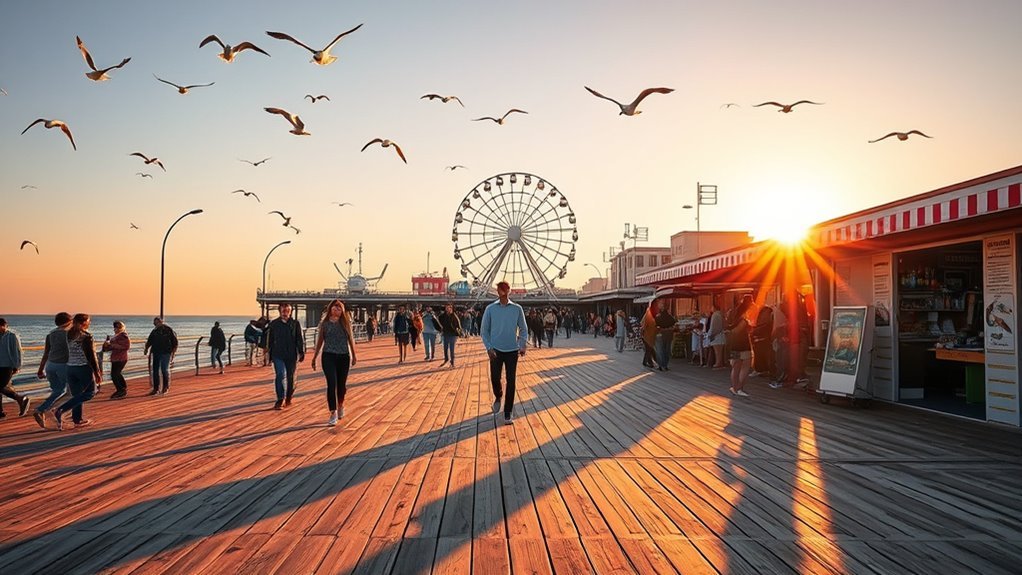
Walking onto the Santa Monica Pier is free. The ocean breeze, open horizon, benches, public art, and changing crowds make it an easy place for a relaxed walk, a sunset date, or unhurried people-watching.
You can watch the Pacific Wheel turn against the horizon without buying a ride ticket. Street performers commonly bring music, juggling, dancing, comedy, and other acts to designated areas, although no particular performer or schedule is guaranteed. Performer tips are welcome but optional.
Vendor carts sell crafts, souvenirs, food, and beachwear. Browsing costs nothing, but purchases do. Free walking tours, wellness sessions, concerts, and community events sometimes take place on or near the Pier; confirm them through the city or Pier calendar instead of assuming they run every day.
- Bring a light layer because temperatures can drop quickly after sunset.
- Use the public benches and restrooms listed on the city’s Pier page.
- Stand clear of active performance spaces and pedestrian traffic.
- Ask before taking close-up photographs or videos of a performer.
- Keep children close near railings and crowded areas.
Relaxing on Santa Monica State Beach
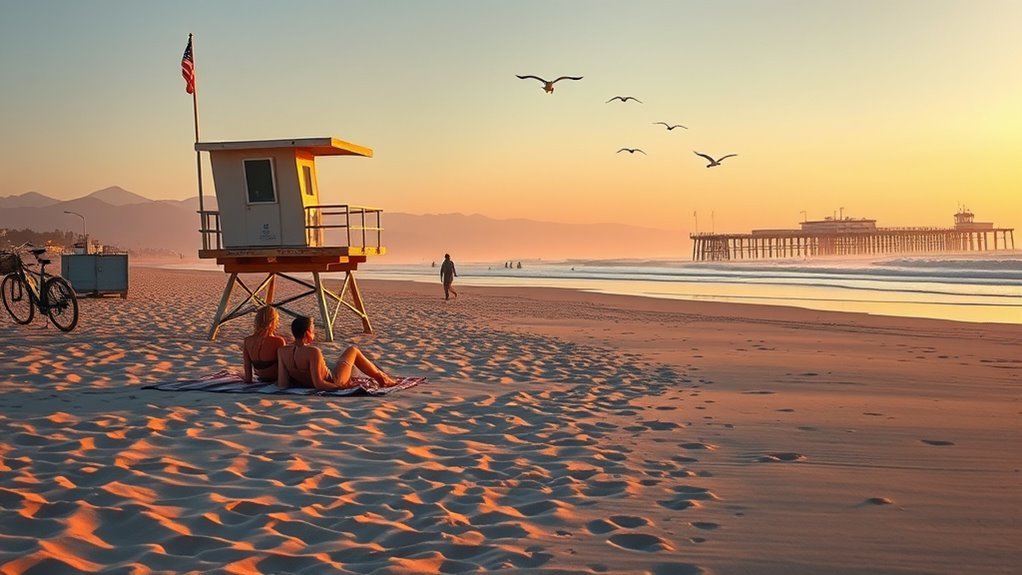
Stretching for more than three miles, Santa Monica State Beach gives you room to walk, spread out a towel, read, picnic, watch the waves, or visit Original Muscle Beach. Beach admission is free, while nearby parking, concessions, rentals, and reserved activities may cost extra.
You can watch acrobats, rings users, slackliners, and fitness enthusiasts near Original Muscle Beach when people are practicing. Volleyball courts are generally available when they are not reserved, and a parallel pedestrian path lets walkers enjoy the coast without entering the bike lane.
The Santa Monica portion of the regional Marvin Braude coastal trail runs for about three miles and connects toward Will Rogers State Beach to the north and Venice to the south. Walking your own bike is free; renting one is not.
A beach day can cost nothing when you bring your own water, food, sun protection, towel, and transportation plan.
- Bring a lightweight blanket, reusable water bottle, hat, sunglasses, and broad-spectrum sunscreen.
- Visit in the morning for cooler temperatures and generally lighter crowds, but never assume the surf will be calm.
- Arrive before sunset so you can choose a safe place and leave the sand before visibility becomes poor.
- Use the pedestrian path rather than walking in the marked bike lane.
- Pack out food wrappers, bottles, and every other item you bring.
Warning: LA County advises visitors to swim near a lifeguard. Rip currents, uneven ocean bottoms, waves, rocks, and Pier pilings can create hazards even on a clear day. Obey posted flags and lifeguard instructions, stay out of the water when guards are not operating, and keep well away from the Pier’s pilings.
Browse the Santa Monica Farmers Market

Browsing the Santa Monica Farmers Markets is free. You can walk among stands of seasonal tomatoes, citrus, stone fruit, greens, flowers, and other California-grown goods, talk with growers, and learn what is in season. Buying produce, prepared food, flowers, or artisan products is optional.
Santa Monica operates four weekly market sessions in three neighborhoods. They generally run year-round, rain or shine, but selected holidays, emergencies, or extreme conditions can cause changes. Samples, musicians, children’s activities, and special programs vary by vendor and date.
Fresh Local Produce
The flagship Downtown Wednesday market began in 1981 and typically brings together more than 60 California farms. Saturday’s Downtown market includes a high proportion of certified organic growers. Pico and Main Street offer smaller neighborhood settings with their own vendor mixes.
- Downtown Wednesday: Arizona Avenue, generally 8 a.m.–1 p.m.
- Downtown Saturday: Arizona Avenue, generally 8 a.m.–1 p.m.
- Pico Saturday: Virginia Avenue Park, generally 8 a.m.–1 p.m.
- Main Street Sunday: 2640 Main Street, generally 8:30 a.m.–1:30 p.m.
Go early for the broadest selection. Ask growers what is at peak ripeness, how to store unfamiliar produce, and which varieties work best for a beach picnic. Do not assume tasting is available; wait until a vendor offers a sample.
Community Vibes & Music
The markets feel like neighborhood gathering places because shoppers can speak directly with farmers and small food businesses. Some dates include music or community programming, but entertainment is not part of every market session.
Bring reusable bags even when you only plan to browse, because a seasonal fruit or loaf of bread can be hard to resist. All four markets accept CalFresh EBT, and the Pico market has offered Market Match benefits; confirm current program details on the official market pages.
Window-Shopping on Montana Avenue
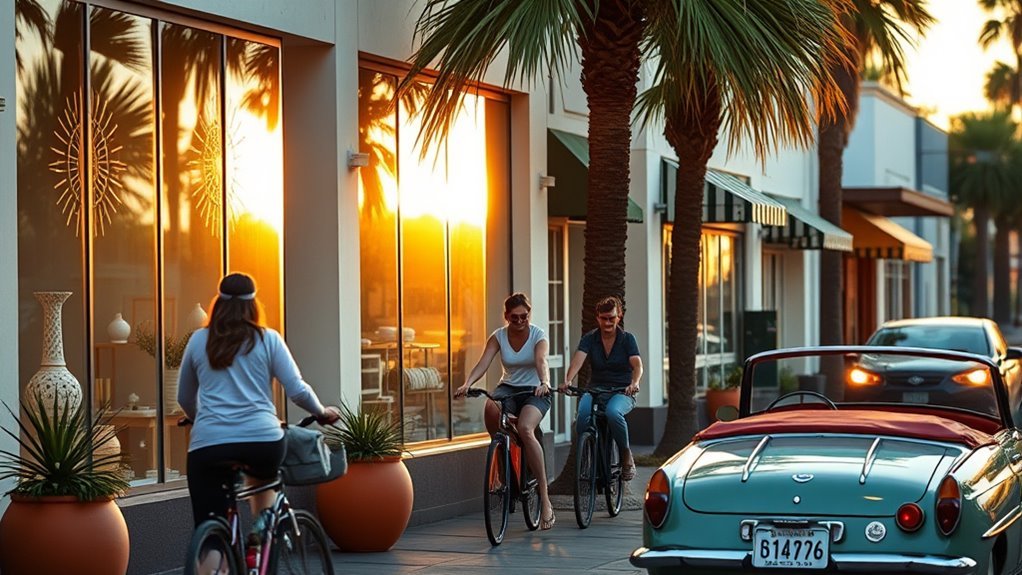
Montana Avenue’s roughly ten-block business district includes about 150 member businesses, including boutiques, restaurants, cafés, salons, wellness studios, and professional services. A slow walk past its windows and landscaped sidewalks is free, even when the merchandise is not.
Use the current Montana Avenue business directory rather than relying on an old list. Businesses can relocate or change hours with little notice.
Boutique Browsing Stroll
Window-shopping works best when you treat each block as a small design tour. Look at how independent shops arrange stationery, clothing, books, home goods, art, and seasonal displays. You can gather gift, outfit, or decorating ideas without buying anything.
- Update old recommendations: Burro previously operated on Montana Avenue but its official site now lists a Venice store, so do not plan your route around its former Santa Monica location.
- Check current bakery hours: Sweet Lady Jane lists a Santa Monica location on Montana Avenue, but hours should still be confirmed before visiting.
- Walk block by block: The district is compact enough to explore without rushing.
- Respect working stores: Browse politely and avoid blocking entrances while studying displays or taking photographs.
The pleasure here comes from looking closely at the small details that make a local shopping street different from a large indoor mall.
Cafe People-Watching
A café patio can be a good people-watching perch, but occupying a business table normally requires a purchase. For a genuinely free break, use a public bench or continue walking along the sidewalk while watching dog walkers, families, cyclists, delivery workers, and shoppers pass.
Bring a pocket notebook if you enjoy sketching storefronts or writing down visual ideas. Avoid drawing or photographing one person in a way that feels intrusive, and ask permission before making someone the clear subject of a close-up image.
| Place | Best View | Cost Note |
|---|---|---|
| Public bench | Passing foot traffic | Free when available |
| Sidewalk stroll | Storefronts and street life | Free |
| Café patio | A steady neighborhood scene | Purchase usually expected |
Window-Display Inspiration
Montana Avenue’s pedestrian-friendly scale makes it easy to pause and study curated displays. Watch for color combinations, product height, lighting, signs, seasonal props, and the way outdoor seating changes the rhythm of a block.
- Study stationery and home-goods shops for minimalist layouts and compact product groupings.
- Notice how bakeries use cakes, pastries, flowers, and seasonal decorations to create a focal point.
- Look for local artwork, handmade signs, and props that tell a story about the business.
- Sketch useful ideas for your own room, display, photograph, or creative project.
Sunset Picnic at Palisades Park

Palisades Park follows the bluff above the beach and offers lawns, paths, gardens, public art, monuments, benches, and broad Pacific views. You can spread out a blanket, bring your own meal, listen to the waves below, and watch the sunset without paying admission.
Arrive about an hour before sunset so you can walk the paths and choose a west-facing place away from crowded edges. Bring simple food, water, and a light jacket. Avoid amplified speakers unless an event or permit specifically allows them; headphones are a more considerate choice in a shared park.
| View | What You May Hear | Practical Tip |
|---|---|---|
| Pacific horizon | Waves and wind | Arrive early |
| Public sculptures | Footsteps and conversation | Do not climb on artwork |
| Gardens | Birds and distant traffic | Stay out of planted beds |
| Open lawn | Shared park activity | Pack out all waste |
| Sunset colors | Seabirds and breeze | Bring a warm layer |
Hike Sections of the Santa Monica Mountains
The Santa Monica Mountains National Recreation Area contains more than 500 miles of public trails, but many trailheads are well outside the City of Santa Monica. A mountain hike is therefore a separate outing rather than a quick walk from the Pier.
National Park Service sites within the recreation area do not require an entrance pass. However, state parks, conservancy properties, and other jurisdictions may charge parking, camping, or day-use fees. Dog rules, operating hours, fire restrictions, and trail closures also vary.
Trailheads and Access
Choose a trail only after checking the managing agency’s current page. Mishe Mokwa Trail to Split Rock is a moderate 3.5-mile round trip through riparian habitat, coastal sage scrub, and chaparral. Solstice Canyon offers a gentler route to a seasonal waterfall area and the ruins of the Roberts Ranch House. The Backbone Trail extends about 67 miles across the mountain range and is better explored in planned day sections than as an improvised outing.
- Confirm the trailhead address, agency, hours, fees, and closure status on the day of your hike.
- Download or carry a map because mobile service can be unreliable.
- Choose a distance that leaves enough daylight for the return trip.
- Carry water, sun protection, food, and an extra layer.
- Stay on the trail and pack out every item.
Warning: Mountain heat, wildfire damage, loose footing, falling rocks, and sudden trail closures can turn a casual plan into a serious problem. Do not rely on beach weather to predict inland trail conditions, and never begin a hike without enough water for the full route.
Scenic Views & Wildlife
Trails cross chaparral, coastal sage scrub, oak woodland, grassland, and rocky ridges. Depending on the route, you may see the Pacific, inland valleys, sandstone and volcanic formations, deer, coyotes, hawks, quail, lizards, and smaller wildlife.
Observe animals from a distance and never feed them. Cultural interpretation also varies by site. Rancho Sierra Vista/Satwiwa is a stronger choice for visitors seeking a route connected to Native American cultural interpretation, while Solstice Canyon is known for its creek corridor and historic ranch-house ruins.
Explore Tongva Park’s Gardens and Play Areas
Tongva Park covers more than six acres within walking distance of the Pier. Its four main areas—Observation Hill, Discovery Hill, Garden Hill, and Gathering Hill—include winding paths, planted terraces, public art, benches, picnic areas, play structures, restrooms, and elevated viewpoints.
Start at Observation Hill for a broad view, then let the paths lead you through native and climate-appropriate plantings. Children can use the playground while adults rest nearby. The splash pad generally operates from Memorial Day through summer, with posted seasonal hours, but closures can occur for maintenance.
Tongva Park gives families a free playground, public art, restrooms, shaded seating, winding paths, and an easy link between downtown and the waterfront.
- Walk Discovery Hill’s winding paths to find benches and textured landscaping.
- Photograph Garden Hill’s terraced plantings and water elements without entering planted beds.
- Supervise children closely around climbing equipment, paths, and water features.
- Use Gathering Hill’s lawn for a picnic and arrive early when you need shade.
- Check the city calendar for free cultural performances and community workshops.
Dogs are allowed on leash, but the city prohibits them in planted areas and water features. Bring waste bags and clean up immediately.
Watch Street Performers at Third Street Promenade
A few blocks east of Tongva Park, Third Street Promenade offers a pedestrian-focused route through downtown. Street performers frequently bring music, dance, acrobatics, comedy, and other acts to the area, but the lineup changes and performances are never guaranteed.
The city requires performance permits during most operating periods on the Promenade and Pier. Visitors do not need a permit to watch. Morning visits can feel calmer, while evenings and scheduled festivals may draw larger audiences. Seasonal programs such as holiday performances or city festivals should be confirmed on the current calendar.
Stand far enough back to keep the walkway open. Move closer only when there is safe room, and tip only when you choose to. A small bill can show appreciation, but watching remains free.
| Sense | Possible Scene |
|---|---|
| Sound | Guitar, drums, singing, comedy, or applause |
| Sight | Costumes, dance, juggling, or acrobatics |
| Feel | Ocean air, pedestrian activity, and changing crowd energy |
| Courtesy | Keep paths open, ask before close-up filming, and tip only if you wish |
Family Time at Annenberg Community Beach House Grounds
The Annenberg Community Beach House combines a playground, splash pad, walking paths, open seating, picnic tables, public art, restrooms, Wi-Fi, volleyball courts, a beach soccer court, and direct beach access.
You can enter many public areas and enjoy the grounds without paying admission. However, parking is paid, the seasonal pool charges admission, café orders cost money, and court reservations, classes, canopies, or special programs may carry fees.
- Walk the landscaped grounds and look for public art and views of the historic Marion Davies Guest House.
- Let children use the playground or seasonal splash pad while staying close enough to supervise.
- Bring a picnic and use an available table, bench, or sandy area.
- Use an unreserved court only when it is available and follow posted rules.
- Check the calendar for free exhibitions, tours, performances, and community programs.
Arrive early when you want easier access to seating or playground space. The site is wheelchair accessible and includes restrooms, elevators, walking paths, and accessible parking, but the parking fee still applies.
Discover Local History at Santa Monica Historical Sites
Santa Monica’s history is visible around the Pier, Palisades Park, Tongva Park, Historic Belmar Park, and downtown. Several outdoor stops are free, although rides, museums, tours, and special programs may charge admission.
The 1916 Looff Hippodrome is the historic carousel building on the Pier. You can admire the building’s exterior and look inside when it is open, but riding the carousel costs money. The building does not mark Route 66’s official historic endpoint.
A separate “End of the Trail” sign on the Pier marks the traditional and photographic endpoint associated with Route 66. The historic highway’s recognized western terminus was at Lincoln and Olympic boulevards, so the Pier sign is best understood as a popular symbolic finish.
The Camera Obscura Art Lab stands in Palisades Park. The historic mechanism is currently closed to the public except during special events, so enjoy the exterior and park setting unless the city calendar confirms access.
Arlington West is a temporary memorial associated with Veterans for Peace that may be installed on the sand near the Pier on Sundays. It depends on volunteers, weather, and current arrangements, so do not treat it as a permanent daily attraction. When present, approach quietly and respectfully.
Tongva Park’s name acknowledges the Tongva people of the Los Angeles Basin. The park is not a complete substitute for Indigenous-led history, so visitors who want deeper context should consult tribal sources and carefully researched local-history materials.
The organization once known as the Santa Monica Historical Society operates today as the Santa Monica History Museum. General admission and event fees vary, although the museum has advertised selected free-admission days. Check its current schedule rather than assuming every talk or visit is free.
Explore Free Public Art and Historic Belmar Park
Santa Monica’s civic art collection gives you another way to explore without buying a ticket. The city publishes information for self-guided public-art visits, with works in parks, civic spaces, downtown, and the waterfront area.
Historic Belmar Park is a particularly useful low-key stop. Its public art and interpretive signs commemorate the African American community that lived in the Belmar neighborhood and contributed to Santa Monica before displacement and redevelopment changed the area. The park has a walking path and no general admission charge.
Bergamot Station Arts Center also hosts galleries, exhibitions, artist programs, and occasional free workshops. Gallery hours and admission policies vary by organization, so check the specific exhibition before traveling across town.
Find Free Seasonal Events
Santa Monica schedules free programs throughout the year, including concerts, public-art workshops, holiday events, open-streets festivals, cultural celebrations, park performances, and family activities. These events can add substantial value to a no-spend day, but their dates and locations change.
- Use the city’s official events calendar and filter by date.
- Read the event listing closely because “free” events may still require advance registration.
- Check whether parking, equipment, food, or optional activities cost extra.
- Confirm weather cancellations and street closures on the day of the event.
- Arrive early for programs with limited seating or supplies.
Getting Around and Parking
Walking is the simplest way to connect the Pier, beach, Tongva Park, Third Street Promenade, Downtown Farmers Market, and Palisades Park. The city also encourages visitors to use Big Blue Bus and the Metro E Line for the Pier and downtown area.
Public transportation is not automatically free. Current fares, transfers, service alerts, and eligibility for discounts should be checked before travel. Children and qualifying riders may have reduced or free options under current agency rules.
Most parking near the Pier and beach is paid. Downtown structures, beach lots, meters, disabled-parking rates, time limits, and holiday pricing can change. Check the official Santa Monica parking page on the day of your visit and read every posted sign.
Pro Tip: When you must drive, park once and complete the downtown-waterfront route on foot. Moving the car between the Pier, Promenade, Tongva Park, and Palisades Park usually adds cost and traffic without saving much walking.
Frequently Asked Questions
Are pets allowed on Santa Monica beaches and parks?
Dogs are not allowed on Santa Monica State Beach. They are welcome on leash in many city parks, including Tongva Park, when owners carry waste bags and follow posted restrictions. Dogs may be prohibited from playgrounds, planted beds, water features, and other designated areas.
Are public restrooms and showers available?
Public restrooms are available at several beach lots, the Pier, Tongva Park, and the Annenberg Community Beach House. Outdoor beach showers are available in selected beachfront areas, but facilities may close for cleaning, repairs, or overnight restrictions. Use the city venue pages and posted signs rather than assuming every access point has the same facilities.
Is parking free near the Pier or beach?
Usually not. Beach lots, downtown structures, and most nearby meters charge posted rates. Limited legal street parking may exist farther away, but restrictions are strict and vary by block. Read all signs, avoid residential permit zones, and check the city’s current parking page before leaving.
Are there accessible paths for wheelchairs and strollers?
Yes. The Pier has ramps and elevators, and Tongva Park, the Annenberg Community Beach House, Palisades Park, and beachfront walking areas include paved or firm paths. Sand access is more variable. Contact the city or Beach House before relying on a beach-access mat or specialized beach wheelchair, because availability can be seasonal or site-specific.
Can I safely swim or surf without a lifeguard on duty?
Do not enter the ocean when lifeguards are absent if you are unfamiliar with the conditions. LA County recommends swimming near a lifeguard. Rip currents, waves, cold water, uneven bottoms, rocks, and Pier pilings can be dangerous. Follow posted flags and speak with a lifeguard before entering when you are unsure.
Are the rides on Santa Monica Pier free?
No. Walking on the Pier and watching the Pacific Wheel are free, but amusement rides, arcade games, food, souvenirs, parking, and most rentals cost money. Prices and operating hours are set by the individual attraction or business.
Do free Santa Monica activities require reservations?
Most ordinary walks through the Pier, beach, parks, Promenade, and shopping districts do not require reservations. Some free workshops, concerts, tours, court times, splash-pad sessions, or special events may require registration or have limited capacity. Read the individual event listing before attending.
What is the best time for free sightseeing in Santa Monica?
Weekday mornings are usually best for cooler weather and easier walking. Late afternoon works well for combining downtown attractions with sunset at Palisades Park. Farmers markets operate only on their scheduled mornings, while performers and seasonal events vary. Check the forecast, venue hours, and event calendar before leaving.
Conclusion
You can experience much of Santa Monica’s coastal character without paying admission. Walk the Pier among millions of annual visits, relax on the broad State Beach, pack a sunset picnic for Palisades Park, explore Tongva Park with children, browse Montana Avenue, and visit a scheduled farmers market.
The best approach is to bring your own food, water, sun protection, and warm layer; park once or arrive by transit; and verify hours, closures, events, and fees before leaving. That planning keeps the genuinely free parts free while avoiding surprises from parking, rides, rentals, café purchases, reservations, or seasonal amenities.
Sources
- City of Santa Monica — Santa Monica State Beach — beach length, amenities, bike path, dog rule, hours, and parking access.
- City of Santa Monica — Farmers Markets — official market locations, sessions, and program information.
- City of Santa Monica — Tongva Park — park sections, playground, splash pad, restrooms, hours, and dog rules.
- City of Santa Monica — Annenberg Community Beach House — grounds, amenities, accessibility, courts, pool, and reservations.
- National Park Service — Hiking in the Santa Monica Mountains — trail mileage, routes, habitats, and planning details.
- Los Angeles County Beaches and Harbors — Beach Rules — lifeguard, rip-current, ocean-bottom, rock, and Pier safety guidance.

