
Last Updated on July 27, 2026 by Daniel Globe
Florida’s open-carry rules changed dramatically in September 2025, so hikers should be careful with older articles that still say openly carrying a firearm is generally illegal. In McDaniels v. State, Florida’s First District Court of Appeal declared the state’s blanket open-carry ban unconstitutional. Florida’s Attorney General then advised law enforcement and prosecutors statewide not to arrest or prosecute ordinary law-abiding citizens merely because a lawfully possessed firearm is visible. Important location, possession, private-property and firearm-use restrictions still remain.
Quick Answer
As of July 2026, a law-abiding adult who may legally possess a firearm can generally open carry while hiking in Florida, but not everywhere. Restricted locations, federal facilities, private-property rules and special public-land regulations still apply, and openly carrying a firearm does not give permission to discharge it or hunt.
Warning: This article provides general legal and safety information, not individualized legal advice. Firearm laws, court rulings and land-management rules can change. Before carrying, verify the current rules for the exact park, trail, wildlife management area or other property you plan to visit.
Key Takeaways
- Florida’s blanket open-carry prohibition was declared unconstitutional in McDaniels v. State on September 10, 2025.
- Open carry is therefore generally lawful for ordinary law-abiding adults who may legally possess firearms, but important location restrictions remain.
- Florida also allows qualifying people to carry concealed without a concealed weapon license, although carrying valid identification is required for permitless concealed carry.
- Possessing a firearm on a trail does not automatically authorize firing it, hunting wildlife or ignoring park-specific regulations.
- Florida State Parks generally follow Chapter 790, but Savannas Preserve State Park has a special firearm-possession restriction.
- Private property owners may require a person carrying a firearm to leave. Refusing to leave can create serious trespass consequences.
Disclosure: As an Amazon Associate I earn from qualifying purchases. Some links on this page are affiliate links, at no extra cost to you.
Florida Open Carry Law in 2026
The most important legal development occurred on September 10, 2025. In McDaniels v. State, Florida’s First District Court of Appeal held that Florida’s blanket prohibition on openly carrying firearms violated the Second Amendment. The court reversed Stanley McDaniels’s conviction and declared Section 790.053 unconstitutional as applied to the statewide ban on ordinary, law-abiding adults openly carrying firearms.
The court’s mandate was issued later that month. Florida Attorney General James Uthmeier also issued statewide guidance advising prosecutors and law-enforcement agencies to refrain from arresting or prosecuting law-abiding citizens simply for carrying a firearm in a manner visible to others.
Note: Section 790.053 still appears in Florida’s published statutory compilation. That can make older articles and simple statute searches confusing. The 2025 appellate decision and subsequent Attorney General guidance are essential to understanding the law’s current enforceability.
The ruling did not create an unlimited right to carry a firearm anywhere or in any manner. Florida’s Attorney General specifically stated that McDaniels did not disturb laws governing prohibited possessors, threatening or careless exhibition, restricted locations or private-property rights.
Florida’s older hunting, fishing and camping exception
Even before McDaniels, Florida Statute 790.25 provided a specific protection for a person engaged in fishing, camping or lawful hunting, or going to or returning from such an expedition. That provision remains relevant, but ordinary lawful open carry in 2026 no longer depends solely on fitting within one of those activities.
A simple recreational hike, however, should not be confused with lawful hunting. Hunting seasons, licenses, permissible methods of take and wildlife-management-area rules are separate legal issues.
Benefits of Open Carry While Hiking
Some hikers prefer visible carry because it can be more comfortable with a backpack, hip belt or hot-weather clothing. A securely retained firearm may also be easier to monitor than equipment buried beneath several layers of clothing.
Open carry can also eliminate concerns about a cover garment riding up while climbing, bending or adjusting a backpack. Since Florida now generally recognizes lawful open carry, an otherwise lawful carrier does not need to treat an accidental exposure of a holstered firearm as automatically unlawful merely because another person can see it.
These practical benefits should not be confused with a guarantee of greater safety. A visible firearm can attract attention, alarm other trail users or create an additional retention concern if the hiker falls, scrambles over obstacles or encounters another person at close range.
The original version of this article also suggested that openly carrying a firearm could deter bears or large cats. That is not a sound wildlife-safety strategy. The Florida Fish and Wildlife Conservation Commission recommends bear spray for people recreating in or near black-bear habitat, and the National Park Service advises that firearms are not a substitute for proper bear-avoidance practices.
For wildlife encounters, prevention, distance and species-specific behavior are more important than simply having a firearm visible.
Potential Risks and Safety Considerations
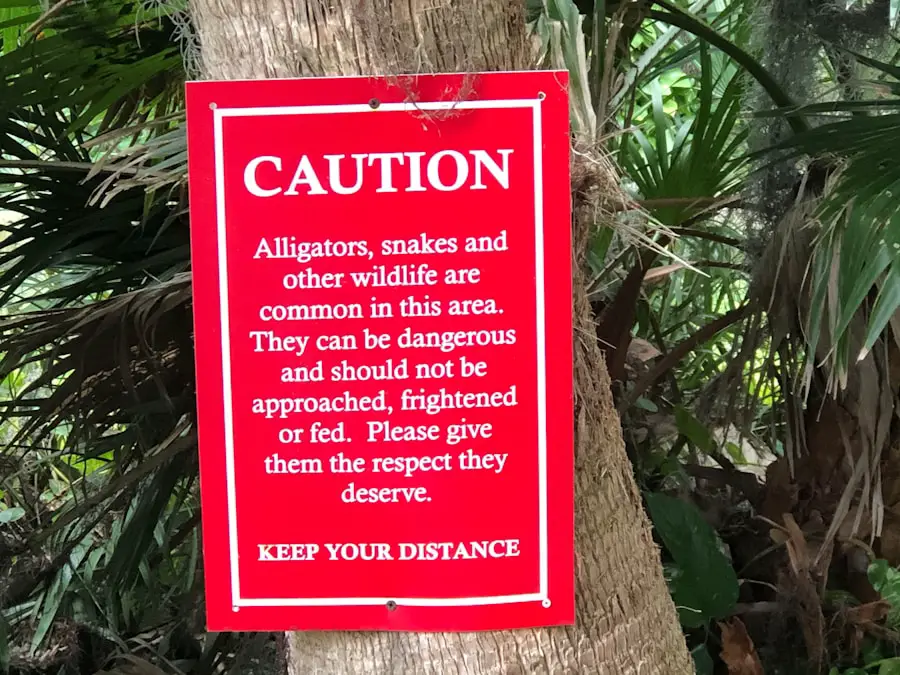
Visible carry may draw attention from other hikers, park visitors or law enforcement, especially because Florida’s legal change is relatively recent. Stay calm and avoid unnecessary firearm handling in public areas.
Florida Statute 790.10 remains important. It prohibits exhibiting a firearm or other dangerous weapon in a rude, careless, angry or threatening manner in the presence of another person when the conduct is not necessary self-defense. Lawful open carry therefore does not authorize waving, displaying, touching or manipulating a firearm to intimidate someone.
Retention is another concern on the trail. Brush, backpack straps, falls and climbing movements can interfere with equipment. A holster should securely retain the firearm and completely protect the trigger guard. The firearm should remain holstered unless there is a lawful and genuine reason to remove it.
Other hikers may also react strongly to seeing a gun. A lawful carrier should avoid arguments or confrontational behavior and should respect requests from property owners or authorized representatives to leave private property.
Pro Tip: Before leaving home, check the exact trail’s land manager. A route can pass from state land to federal land, private property or a wildlife management area, and the applicable rules can change along the way.
Best Practices for Open Carry While Hiking
| Best Practice | Why It Matters |
| Use a secure retention holster | Helps keep the firearm controlled during falls, climbing, brush contact and backpack movement. |
| Maintain safe firearm-handling skills | Training reduces unnecessary handling and helps the carrier understand safe storage, loading and unloading practices. |
| Check the land manager’s current rules | State parks, federal facilities, WMAs and private land can have different restrictions. |
| Avoid unnecessary firearm handling | A holstered firearm is less likely to be mishandled, dropped or perceived as a threatening display. |
| Store and transport firearms lawfully | Vehicle, lodging, private-property and destination rules can differ from trail rules. |
| Respect other hikers and wildlife | Do not handle a firearm merely because another person or an animal is nearby. Follow appropriate de-escalation and wildlife-safety guidance. |
Know the laws that affect both possession and behavior. Florida broadly preempts local firearm regulation under Section 790.33, so cities and counties generally cannot create their own separate system for regulating firearm possession or carry. That does not eliminate federal restrictions, state statutory exceptions, private-property rights or land-management rules authorized by law.
It is also wise to tell hiking companions how you intend to carry and to make sure packs, waist straps and hydration systems do not interfere with the holster. Check the system before a long hike rather than repeatedly adjusting a firearm on the trail.
Recommended Gear for Open Carry While Hiking
A suitable hiking carry setup begins with a holster that fits the specific firearm, fully covers the trigger guard and provides enough retention to prevent the firearm from being dislodged during normal trail movement. A rigid, securely mounted belt or pack-compatible attachment can help keep the holster stable.
Clothing should allow normal walking, climbing and sitting without forcing constant adjustment of the firearm. Tactical clothing is not required. Lightweight hiking pants, a durable belt and a backpack that does not push directly against the holster are often more important than specialized clothing.
Carry the same basic outdoor-safety equipment you would bring on any Florida hike: water, navigation tools, weather protection, a charged communication device when practical and a first-aid kit. Firearm possession should not replace normal hiking preparation.
In black-bear habitat, Florida FWC recommends carrying bear spray. Store it where it is accessible rather than buried inside a pack, and learn the manufacturer’s directions before the hike.
Where You Still Should Not Carry
The restricted-place provisions of Florida Statute 790.06(12)(a) remain important. Florida’s Attorney General specifically stated after McDaniels that the ruling did not decide or invalidate these location restrictions.
Locations identified by the statute include:
- Police, sheriff and highway-patrol stations.
- Detention facilities, prisons and jails.
- Courthouses and courtrooms.
- Polling places.
- Certain government meetings.
- Elementary and secondary school facilities and administration buildings.
- School, college or professional athletic events not related to firearms.
- Career centers and most college or university facilities.
- Areas of establishments primarily devoted to serving alcoholic beverages for consumption on the premises.
- The inside of airport passenger terminals and sterile areas, subject to the statutory checked-baggage exception.
- Places where federal law prohibits firearms.
Other federal and state statutes may impose additional restrictions based on the property or the person carrying the firearm. A person prohibited from possessing firearms does not become eligible simply because open carry is generally lawful.
Private property
Private owners and businesses retain control over their property. Florida’s Attorney General stated that McDaniels does not prevent a property owner from directing someone carrying a firearm to leave. Refusing a lawful demand to depart while armed can lead to serious trespass consequences.
For hikers, this is relevant when a trail crosses private land, a privately operated attraction, lodging property, campground or business. Do not assume that a publicly accessible trail entrance means every adjoining property has the same firearm policy.
How to Obtain a Concealed Weapon License in Florida
A Florida Concealed Weapon or Firearm License is no longer required for every qualifying person who wants to carry concealed in Florida. Since July 1, 2023, Florida has allowed permitless concealed carry for people who satisfy the applicable eligibility requirements. An unlicensed concealed carrier must carry valid identification while actually possessing the concealed weapon or firearm and show that identification when demanded by a law-enforcement officer as provided by Section 790.013.
A Florida license can still be useful, particularly for people who travel and want the benefit of recognition in states that honor Florida licenses. Reciprocity rules vary, so always check the destination state’s current law.
Current Florida license application process
The Florida Department of Agriculture and Consumer Services administers the license program. Applicants generally must:
- Confirm that they satisfy Florida’s eligibility requirements and are not prohibited from possessing firearms.
- Provide acceptable documentation demonstrating competency with a firearm.
- Complete the license application.
- Submit a passport-style photograph when required by the application method.
- Submit a complete set of fingerprints.
- Pay the applicable licensing and fingerprint-processing fees.
- Complete the required state and federal background-review process.
FDACS states that it has up to 90 days after receiving a complete application to issue or deny the license.
2026 Update: On June 17, 2026, Florida’s Fourth District Court of Appeal ruled in Eubanks v. Florida that the statute barring ordinary law-abiding adults ages 18 to 20 from obtaining concealed-carry licenses was facially unconstitutional. FDACS says it is now accepting applications from applicants age 18 and older who satisfy the other requirements. Because this is a recent development, younger adults should check FDACS’s current notice before relying on older age-language still appearing elsewhere.
Public Land Regulations and Restrictions
The type of public land matters. A firearm that may lawfully be possessed on one trail can be subject to a different rule when the route enters a federal building, special preserve or wildlife-management area.
Florida State Parks
Florida State Parks states that concealed and open carry in state parks is governed by Chapter 790, Florida Statutes. The major park-specific exception identified by the state is Savannas Preserve State Park. Section 258.157 generally prohibits firearm possession there except as allowed under the statute and applicable Florida Fish and Wildlife Conservation Commission regulations.
Firearm possession also does not authorize hunting or recreational discharge in an ordinary state park. Florida State Parks states that hunting and pursuit of wildlife are prohibited on state-park property except in reserves where specifically authorized by FWC.
National parks in Florida
National Park Service rules take a different approach. Visitors who may legally possess and carry a firearm under applicable federal, state and local law may generally possess it in a National Park System unit. However, federal law prohibits firearms in many federal facilities, including visitor centers, ranger stations, government offices and similar buildings where federal employees regularly work. These facilities are normally posted at public entrances.
The National Park Service also explains that firearm use or discharge in a park is generally prohibited unless specifically authorized. Carrying a firearm and being permitted to fire it are therefore two separate questions.
National forests and wildlife management areas
Florida’s national forests support hiking, hunting, fishing and designated shooting activities, but federal forest orders, developed recreation-area rules and hunting regulations can apply. Check the National Forests in Florida and the appropriate ranger district before visiting.
Florida Wildlife Management Areas can have even more area-specific requirements. FWC states that permitted recreational activities, access periods, hunting rules and permit requirements vary by WMA. Some areas also restrict access during particular hunts. Review the current WMA brochure for the exact area rather than relying on a statewide hiking rule.
Warning: Do not assume that lawful possession means lawful discharge. Florida law restricts discharging firearms in public places, and parks, WMAs and federal lands can impose additional hunting and shooting rules.
Wildlife Safety While Carrying on Florida Trails
Florida is home to black bears and Florida panthers, but encountering one does not automatically justify drawing or firing a weapon. The safest response depends on the animal and its behavior.
FWC recommends bear spray for people recreating in or near black-bear habitat. It also advises hikers to avoid creating food attractants and to use appropriate bear-encounter techniques. The National Park Service similarly recommends awareness, proper food storage, maintaining distance and bear spray where permitted.
Florida panther encounters are rare. FWC advises people who see a panther to give it space, avoid running, remain standing and face the animal. A firearm should never be used simply because protected wildlife is present nearby.
If an animal creates an imminent threat, self-defense laws and wildlife-protection laws can become fact-specific. Report any defensive shooting involving protected wildlife to the appropriate authorities as soon as it is safe to do so.
Alternatives to Open Carry While Hiking
Open carry is only one option. A qualifying person may prefer concealed carry, which keeps the firearm out of public view. Florida generally permits eligible individuals to carry concealed without a Florida CWL, subject to the state’s eligibility criteria, identification requirement and restricted-place rules.
Non-firearm alternatives may also make sense depending on the concern. Bear spray is recommended by FWC for black-bear habitat. Other lawful defensive tools, such as an appropriate self-defense chemical spray or personal alarm, may be more suitable for some hikers.
Basic hiking precautions remain important regardless of whether a firearm is carried. Tell someone your route, check weather and trail closures, bring adequate water, stay aware of your surroundings and consider hiking with others in remote areas.
Open carry may provide comfort or convenience for some firearm owners, but responsible carry requires more than putting a firearm in a holster. The carrier must know where possession is lawful, respect property rules, avoid threatening exhibition and understand that firearm discharge and wildlife encounters are governed by additional laws.
If you are also planning other outdoor trips, you may be interested in this separate guide to the best time to see the Northern Lights in Iceland.
Frequently Asked Questions
What is open carry?
Open carry means carrying a firearm in a manner visible to ordinary observation, such as a handgun in an uncovered holster. It is different from concealed carry, where the firearm is hidden from ordinary sight.
Is open carry allowed while hiking in Florida?
Generally, yes, for ordinary law-abiding adults who may legally possess firearms and who are hiking in a location where firearm possession is permitted. Florida’s blanket open-carry prohibition was declared unconstitutional in McDaniels v. State in September 2025. Restricted places, private-property rules and special land regulations still apply.
Do I need a concealed weapon license to carry while hiking?
Not necessarily. Florida generally allows qualifying individuals to carry concealed without a Florida license. A person using permitless concealed carry must satisfy Florida’s eligibility rules and carry valid identification while carrying. A Florida CWL can still be useful for reciprocity and other purposes.
Does the camping exception still matter?
Yes. Section 790.25 still specifically protects qualifying possession and use by people engaged in fishing, camping or lawful hunting and those going to or returning from those activities. However, after McDaniels, ordinary lawful open carry is no longer limited only to those historic exceptions.
Can I open carry in a Florida State Park?
Florida State Parks says open and concealed carry are governed by Chapter 790. Savannas Preserve State Park is a notable statutory exception where firearm possession is generally prohibited except as specifically authorized. Carrying a firearm also does not authorize hunting or discharge in an ordinary state park.
Can I carry a firearm in a Florida national park?
A visitor who may legally possess and carry under applicable state and federal law can generally possess a firearm in a National Park System unit. Firearms remain prohibited in many federal facilities such as visitor centers and ranger stations, and discharge is generally prohibited unless specifically authorized.
Can a private campground or landowner prohibit open carry?
Yes. Private property owners retain the right to control access to their property. A person carrying a firearm who is directed to leave should leave promptly. Refusing a lawful demand to depart while armed can create serious trespass consequences.
What are the penalties for carrying in a prohibited location?
The penalty depends on the specific statute and circumstances. Although the blanket open-carry ban was declared unconstitutional, laws governing restricted locations, prohibited possessors, improper exhibition, trespass and unlawful discharge remain enforceable and can involve misdemeanor or felony charges.
Can I carry a firearm for self-defense while hiking in Florida?
A person who may lawfully possess and carry a firearm can generally carry for lawful self-defense while hiking in a location where firearm possession is permitted. Carrying does not authorize threatening exhibition or firing the weapon except where the use of force is otherwise lawful.
Sources
- Florida First District Court of Appeal — McDaniels v. State — September 10, 2025 decision declaring Florida’s blanket open-carry ban unconstitutional.
- Florida Attorney General — Open Carry Guidance — statewide enforcement guidance following McDaniels.
- Florida Senate — Section 790.06 — concealed weapon licensing and restricted locations.
- Florida Department of Agriculture and Consumer Services — Concealed Weapon License — current licensing, eligibility and 2026 age-restriction update.
- Florida State Parks — Firearms FAQ — firearm possession and Savannas Preserve guidance.
- National Park Service — Firearms in National Parks — state-law possession, federal facilities and firearm-use restrictions.

