
Last Updated on July 25, 2026 by Daniel Globe
Measuring luggage for a flight takes only a few minutes, but the details matter. Airlines count the outside of the packed bag, including wheels, handles, side pockets, and other fixed parts. Because carry-on, personal-item, checked-bag, route, fare, and aircraft rules can differ, always compare your measurements with the operating airline’s current baggage policy.
Quick Answer
Pack the bag as you plan to travel, then measure its longest height, width, and depth from the farthest outside points, including wheels and handles. Check each carry-on dimension separately. For checked luggage, add length + width + height when the airline uses a linear-size limit, then weigh the packed bag.
Key Takeaways
- Measure the bag after packing because bulging pockets and expansion zippers can change its size.
- Include wheels, handles, feet, straps, and any other fixed or protruding parts.
- Carry-on limits usually apply to each side of the bag, not only the total linear measurement.
- A common checked-bag limit is 62 linear inches (158 cm), but the airline, route, cabin, and fare determine the actual allowance.
- Check the operating airline’s rules before every trip, especially on connecting or codeshare itineraries.
At a Glance
| Time Required | About 5 minutes |
| Difficulty | Easy |
| Tools Needed | Flexible measuring tape and a luggage scale or bathroom scale |
| Cost | Usually $0 if you already own the tools |
Note: Airlines set baggage size, weight, quantity, and fee rules. Security agencies such as the TSA set screening and prohibited-item rules. Meeting TSA requirements does not mean a bag meets an airline’s dimensions.
How Airlines Measure Luggage
Airlines commonly use two different measurement methods:
- Carry-on and personal-item bags: The airline usually lists a maximum height, width, and depth. Your bag must meet each measurement and fit in the required overhead-bin or under-seat space.
- Checked bags: The airline often uses a linear-size limit. Add the outside length, width, and height to find the bag’s total linear measurement.
For example, a checked suitcase measuring 24 inches high, 16 inches wide, and 10 inches deep has a total size of 50 linear inches:
24 + 16 + 10 = 50 linear inches
That same calculation does not automatically prove a carry-on is acceptable. A carry-on measuring 25 x 11 x 9 inches also totals 45 linear inches, but it would exceed a 22-inch maximum side on an airline that allows only 22 x 14 x 9 inches.
A bag can meet a total linear-inch figure and still fail an airline’s carry-on limit because each outside dimension may be checked separately.
Check the Airline’s Rules Before Measuring
There is no universal luggage allowance. According to the International Air Transport Association, baggage limits can vary by airline, route, cabin class, aircraft type, fare, and frequent-flyer status.
Before packing, open the baggage page for the airline operating each flight and confirm:
- Maximum carry-on dimensions and any weight limit
- Maximum personal-item dimensions
- Checked-bag linear-size and weight limits
- How many bags your fare includes
- Oversize, overweight, or gate-check fees
- Special rules for regional aircraft, international routes, or partner airlines
On a codeshare ticket, the airline name printed most prominently on the booking may not be the airline operating the aircraft. Review the operating carrier’s baggage page and the baggage terms shown on your ticket or confirmation.
Choosing the Right Measurement Tools
A flexible measuring tape is the easiest tool because it can reach around wheels, curved shells, and soft-sided pockets. A rigid ruler can work for a small bag, but it is harder to keep aligned across a large suitcase.
Use a handheld luggage scale to check weight. If you do not have one, step on a bathroom scale while holding the bag, note the combined weight, then subtract your weight without the bag.
Pro Tip: Leave a small margin below the airline’s maximum. Soft bags can bulge after packing, and home measurements may differ slightly from an airport bag sizer.
Products Worth Considering
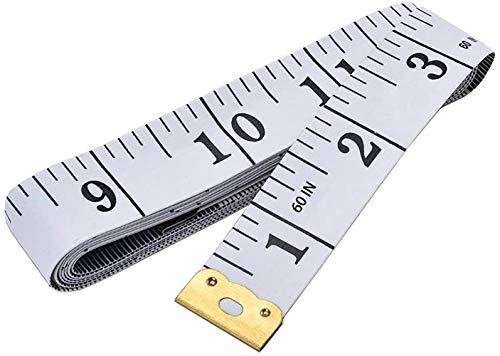
Measuring range: 0 to 60 inches and 0 to 150 centimeters. There is a centimeter scale on the back, which is accurately printed in inches and centimeters. Both sides can be measured according to your requirements. You can put one in your pocket or backpack without taking up too much space
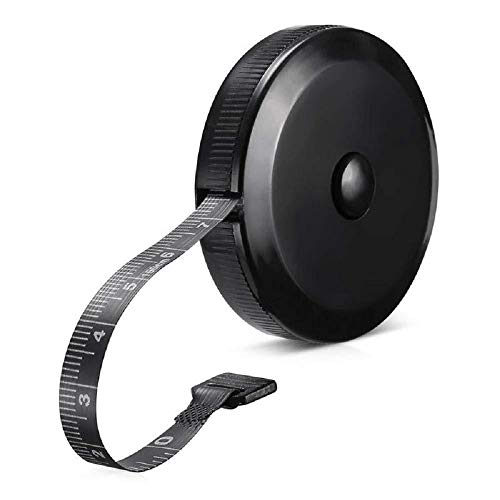
Package Include:1 Pack Soft Retractable Black Dual Sided Tape Measure Body Measuring Tape Set, Dual sided, 150cm/60inch in length, large and clear markings in both Inches and CM for easier reading, Retractable black measuring tape size 2 x 2 x 0.5 inches, weight 0.02 KG/0.7 OZ

2 Pack Soft Fashion Measuring Tape Set. Double sided, 60 inch / 150 cm, portable,durable tape measure. Small and light pocket size measuring tape.
How to Measure Luggage Step by Step
- Confirm the exact limit. Write down the airline’s carry-on, personal-item, or checked-bag dimensions and weight allowance.
- Pack the bag normally. Close every zipper, fill outside pockets as planned, and use the expansion panel only if you will travel with it open.
- Place the bag on a flat floor. Stand wheeled luggage upright in its normal position.
- Measure the height. Measure from the floor to the highest outside point, including wheels and the collapsed top handle.
- Measure the width. Measure across the widest side-to-side points, including side handles or bulging pockets.
- Measure the depth. Measure from the farthest front point to the farthest back point.
- Calculate linear size when required. Add height + width + depth for checked baggage or whenever the airline specifically gives a linear-inch or linear-centimeter limit.
- Weigh the packed bag. Compare the result with the allowance for your route, cabin, fare, and loyalty status.
Measuring Carry-On Luggage
Lay the packed bag flat or stand it upright, whichever makes the outer edges easiest to identify. Measure all three outside dimensions, including wheels, fixed handles, feet, and packed pockets. Retractable handles should be fully collapsed.
Many large U.S. airlines use 22 x 14 x 9 inches (about 56 x 36 x 23 cm) as a carry-on limit. For example, American Airlines and Delta Air Lines publish that size. It is not universal. Southwest, international airlines, low-cost carriers, and smaller aircraft may use different dimensions or weight rules.
| Carry-On Check | What to Verify |
|---|---|
| Outside size | Each listed dimension, including wheels and handles |
| Weight | Airline-specific; some carriers set strict cabin-bag weight limits |
| Allowance | Whether your fare includes a carry-on plus a personal item |
| Aircraft limits | Possible gate-checking on small aircraft or full flights |
The Federal Aviation Administration advises travelers to check the airline’s rules and notes that cabin space can be limited. Even a compliant bag may be gate-checked when overhead bins are full.
Measuring a Personal Item
A personal item is usually a purse, laptop bag, briefcase, or small backpack that fits under the seat in front of you. Measure it the same way as a carry-on, including filled pockets, straps that cannot be tucked away, and rigid bottle holders.
Do not assume that any backpack qualifies. Personal-item dimensions vary by airline, and under-seat space can vary by aircraft and seat location. A bag that fits under one seat may not fit near an entertainment box, support bar, bulkhead, or other equipment.
Measuring Checked Luggage
Place the packed suitcase on a flat surface and measure its longest outside height, width, and depth. Add those numbers when the airline uses a linear-size rule:
Length + width + height = total linear size
A common standard checked-bag limit is 62 linear inches (158 cm). For example, American Airlines lists 62 inches and 50 pounds (23 kg) for a standard checked bag on many routes. Other airlines, routes, and cabin classes may differ.
Measure hard-shell and soft-sided luggage after packing. A soft bag may compress in places, but the airline can assess its largest packed dimensions. An expanded suitcase should be measured with the expansion zipper open if that is how you will check it.
Understanding Weight Restrictions
Size and weight are separate tests. A suitcase can be under 62 linear inches and still be overweight. A common economy checked-bag limit is 50 pounds (23 kg), while some premium allowances and regional maximums reach 70 pounds (32 kg). These figures are common references, not universal entitlements.
Weigh the bag after it is fully packed. If it is close to the limit, move a few items to another allowed bag or remove nonessential items. Airport scales and home scales can differ slightly, so leaving a small weight margin reduces the chance of repacking at check-in.
Warning: If a carry-on is gate-checked, remove spare lithium batteries, power banks, electronic cigarettes, and other items the airline or FAA requires to remain in the cabin. Never assume every electronic item can stay inside a gate-checked bag.
Products Worth Considering
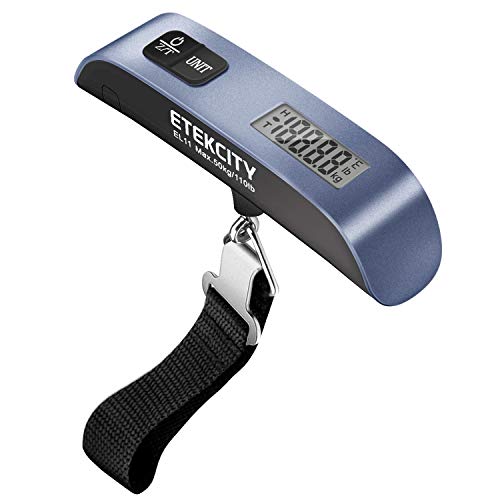
𝑺𝒂𝒚 𝑮𝒐𝒐𝒅𝒃𝒚𝒆 𝒕𝒐 𝑶𝒗𝒆𝒓𝒘𝒆𝒊𝒈𝒉𝒕 𝑪𝒉𝒂𝒓𝒈𝒆𝒔: Avoid surprises at the check-in counter with high-precision measurements that keep your luggage within airline limits—save money and travel stress-free!
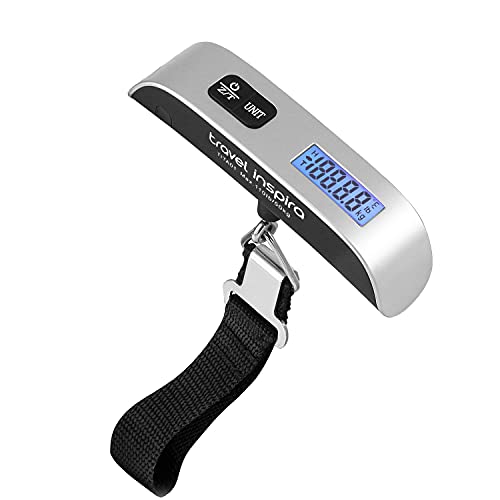
[Travel without stress] This hanging baggage scale easily prevents overweight baggage charges; a must-have for traveling. *The isolation tag must be removed from the battery case before use!

GET RID OF OVERWEIGHT FEES: Luggage scale can withstand a maximum of 110 pounds, support kg/lb unit switching and can accurately measure the weight of luggage, avoiding the cost of overweight luggage, weighing scale for luggage is a great helper for travel
Common Luggage-Measuring Mistakes
- Using the manufacturer’s body dimensions: Product listings may exclude wheels or handles. Measure the actual bag yourself.
- Measuring an empty bag: Soft sides and outside pockets can expand after packing.
- Ignoring the expansion zipper: An expanded carry-on may become too deep for the airline’s sizer.
- Relying only on linear inches: Carry-ons often must meet each side limit.
- Forgetting the personal item: It has its own size and placement rules.
- Checking only the marketing airline: Partner-operated flights can have different baggage conditions.
- Assuming size is the only limit: Weight, quantity, fare, route, and prohibited-item rules also matter.
Tips for Packing Efficiently Within Size Restrictions
Packing cubes can organize clothing and reduce wasted space, but they do not change the airline’s outside measurement. Compression bags may shrink soft contents, yet overfilling can make the suitcase bulge or become overweight.
Rolling clothes can use space efficiently and reduce some wrinkles. Wear bulky footwear or a jacket when practical, and place dense items near the wheel end of a rolling suitcase for better balance.
For U.S. security screening, the TSA 3-1-1 liquids rule generally limits carry-on liquids, aerosols, gels, creams, and pastes to containers of 3.4 ounces (100 milliliters) or less inside one quart-size clear bag, with exceptions for medically necessary liquids and certain other items.
For backpacking trips, compact equipment can reduce both bulk and weight. The existing guide to the best ultralight tent for backpacking explains how lighter shelter choices can help when space is limited.
Avoiding Additional Fees and Gate-Check Problems
- Check the operating airline’s policy shortly before departure because allowances and fees can change.
- Measure and weigh the bag in the same packed condition in which you will present it at the airport.
- Save a screenshot or offline copy of the applicable baggage allowance shown in your booking.
- Leave extra room for items you may add during the trip.
- Keep medicines, travel documents, valuables, keys, and essential electronics in a personal item that can remain with you.
- Be ready to remove restricted cabin-only items if an agent gate-checks your carry-on.
If a bag exceeds the airline’s limit, the carrier may charge an oversize or overweight fee, require the bag to be checked, ask you to repack it, or refuse it when it exceeds the airline’s maximum acceptance limits. Travel insurance may cover some baggage loss, damage, or delay under its policy terms, but it normally does not erase an airline’s oversize or overweight charge.
Products Worth Considering

Handy Option, Loaded with Function - With a 110 lb/50 kg capacity, keep your luggage weight manageable and avoid pesky fees for overweight luggage by using luggage scale for suitcases TSA approved

[Travel without stress] This hanging baggage scale easily prevents overweight baggage charges; a must-have for traveling.

Avoid Overweight Fees: hook your package for instant weight and no more unexpected overweight luggage or baggage fees again.
Frequently Asked Questions
What is the standard luggage measurement for airlines?
There is no universal standard. Many large U.S. airlines use 22 x 14 x 9 inches for carry-ons, while 62 linear inches and 50 pounds are common for standard checked bags. Always verify the operating airline’s current policy for your fare and route.
How do you measure luggage for an airline?
Pack and close the bag, then measure its outside height, width, and depth from the farthest points. Include wheels, handles, feet, and filled pockets. Add the three measurements only when the airline asks for a linear total, as is common with checked baggage.
Do wheels and handles count in luggage measurements?
Yes. Airlines generally measure the full outside size, including wheels, fixed handles, feet, and other protruding parts. Retractable handles should be collapsed before measuring.
Is 45 linear inches enough to prove a bag is carry-on size?
Not always. A bag may total 45 linear inches but exceed one of the airline’s maximum side measurements. Compare the height, width, and depth separately with the published carry-on limit.
Should I measure a soft-sided bag empty or packed?
Measure it packed as you plan to travel. Soft sides, expansion panels, and outside pockets can bulge beyond the bag’s empty or advertised dimensions.
What happens if my luggage exceeds the airline’s size restriction?
The airline may require the bag to be checked, charge an oversize or overweight fee, ask you to repack it, or refuse it if it exceeds the carrier’s maximum acceptance limits.
How can I weigh luggage without a luggage scale?
Use a bathroom scale. Weigh yourself, then weigh yourself while holding the packed bag. Subtract the first number from the second to estimate the bag’s weight.
Which airline’s baggage rules apply on a connecting trip?
Baggage rules can depend on the operating carrier, ticket, route, and interline agreement. Review the baggage allowance shown on your booking and check the operating airline for every segment when partner airlines are involved.
Sources
- IATA Passenger Baggage Rules – airline-specific carry-on and checked-baggage guidance
- FAA Carry-On Baggage Tips – cabin storage, airline checks, and gate-checked battery safety
- TSA Travel Tips – the U.S. 3-1-1 liquids rule and security-screening guidance
- American Airlines Carry-On Bags – a current example of carry-on and personal-item dimensions
- American Airlines Checked Bag Policy – a current example of linear-size and weight limits
- Delta Carry-On Baggage – a second current example of carry-on dimensions and linear measurement
