

Last Updated on July 25, 2026 by Daniel Globe
Measuring luggage before a flight can prevent repacking, baggage fees, gate-checking, and delays at the airport. The process is simple, but you must measure the bag as the airline will see it: fully packed, closed, and including its wheels, handles, feet, straps, and bulging pockets.
Airline baggage allowances are not universal. The permitted dimensions, weight, number of bags, and fees can depend on the operating airline, aircraft, route, cabin, fare, and loyalty benefits. Always compare your measurements with the current policy for every operating carrier on your itinerary.
Quick Answer
Measure luggage when it is fully packed. Record the longest length, widest width, and tallest height, including wheels, feet, handles, and bulging pockets. For checked bags, add the three measurements when the airline uses linear dimensions. Weigh the bag separately, then compare both results with the operating airline’s current policy.
Key Takeaways
- There is no single worldwide or U.S. federal baggage-size standard. The operating airline sets the limit.
- Measure the bag fully packed and include every part that adds to its outside dimensions.
- Carry-on bags usually must meet each stated dimension, while checked bags are often measured using total linear dimensions.
- Use a luggage scale or a bathroom-scale subtraction method to check the packed weight.
- Recheck the policy before departure because allowances and fees can change by route, fare, aircraft, and date.
At a Glance
| Time Required | About 5–10 minutes |
| Difficulty | Easy |
| Tools Needed | Flexible tape measure and a luggage scale or bathroom scale |
| Cost | $0 with tools you already own; otherwise, the cost of a tape measure or luggage scale |
Disclosure: As an Amazon Associate I earn from qualifying purchases. Some links on this page are affiliate links, at no extra cost to you.
Airline Luggage Size and Weight Rules Are Not Universal
Airlines set their own baggage allowances. Limits may vary by airline, cabin, ticket type, aircraft, destination, and whether the bag is a carry-on, personal item, or checked bag. The U.S. Department of Transportation advises travelers to check directly with the airline because there is no single federal carry-on standard.
The International Air Transport Association also notes that baggage rules can vary by airline, cabin class, and aircraft size. On a codeshare itinerary, check the baggage page of the airline actually operating each flight, not only the airline that sold the ticket.
| Bag Type | Common U.S. Example | What You Must Verify |
|---|---|---|
| Carry-on bag | 22 x 14 x 9 inches, including wheels and handles, is used by airlines such as American Airlines and Delta. | Maximum length, width, height, weight, bag count, and whether the fare includes a carry-on |
| Personal item | Usually smaller than a carry-on and required to fit under the seat | Published dimensions, under-seat requirement, and aircraft-specific limits |
| Checked bag | 62 linear inches and 50 pounds are common standard-economy examples among major U.S. airlines. | Linear size, weight, piece allowance, fees, route restrictions, and maximum accepted size |
Note: A total of 45 linear inches does not automatically make a bag an acceptable carry-on. If the airline lists 22 x 14 x 9 inches, the bag normally must meet each of those dimensions and fit the airport sizer.
For broader information about baggage fees and passenger protections, consult the Department of Transportation’s Fly Rights guide. Use the operating airline’s baggage page as the final authority for the dimensions and weight allowed on your flight.
How to Measure Luggage Correctly

Use a flexible tape measure rather than estimating the bag’s size by sight. Measure the suitcase in the same condition in which you plan to travel. That means it should be packed, zipped closed, and expanded if you intend to use its expansion section.
Step 1: Pack and Close the Bag
Pack the luggage with the items you intend to take. Close every zipper and secure loose straps. A soft bag may become wider or deeper after packing, so its empty dimensions may not reflect its airport dimensions.
Step 2: Place It on a Flat Surface
Stand a rolling suitcase upright on a hard, level floor. Make sure the handle is retracted unless a fixed part of the handle still extends beyond the suitcase body.
Step 3: Measure the Tallest Outside Dimension
Measure from the floor to the highest fixed point of the bag. Include wheels, feet, fixed handles, and any material that extends beyond the main shell.
Step 4: Measure the Widest Outside Dimension
Measure from the farthest point on one side to the farthest point on the other. Include side handles, exterior pockets, straps, and bulges caused by packed items.
Step 5: Measure the Deepest Outside Dimension
Measure from the frontmost point to the backmost point. If the bag is expandable and you are using the expansion zipper, measure it while expanded.
Step 6: Record All Three Measurements
Airlines may call the dimensions length, width, height, or depth in a different order. The labels matter less than recording the three maximum outside measurements accurately.
Step 7: Calculate Linear Dimensions When Required
For a checked bag, an airline may state a maximum number of linear inches or centimeters. Use this formula:
Linear dimensions = length + width + height
For example, a suitcase measuring 30 x 20 x 12 inches has a total size of:
30 + 20 + 12 = 62 linear inches
For metric measurements, add the three dimensions in centimeters. One inch equals 2.54 centimeters, so 62 inches is approximately 157.5 centimeters, commonly rounded to 158 centimeters by airlines.
Warning: Do not measure only the fabric or hard shell. Wheels, fixed handles, feet, pockets, and other protruding parts count when the airline checks the bag’s outside dimensions.
How to Weigh Luggage at Home
Size and weight are separate limits. A suitcase can meet the dimensional allowance and still be overweight, or it can be light enough but too large.
Using a Luggage Scale
- Close and secure the fully packed bag.
- Attach the scale to a strong top or side handle.
- Lift the bag until it is completely off the floor.
- Hold it still until the reading settles.
- Repeat the measurement once to confirm the result.
Using a Bathroom Scale
If the suitcase is difficult to balance directly on a bathroom scale, use the subtraction method:
- Weigh yourself without the bag.
- Hold the packed bag and weigh yourself again.
- Subtract your first weight from the combined weight.
For example, if you weigh 160 pounds alone and 207 pounds while holding the suitcase, the suitcase weighs approximately 47 pounds.
Pro Tip: Leave a small weight buffer rather than packing exactly to the airline’s limit. Home and airport scales may read slightly differently, and last-minute items can push the bag over the allowance.
Carry-On, Personal-Item, and Checked-Bag Measurements
Products Worth Considering
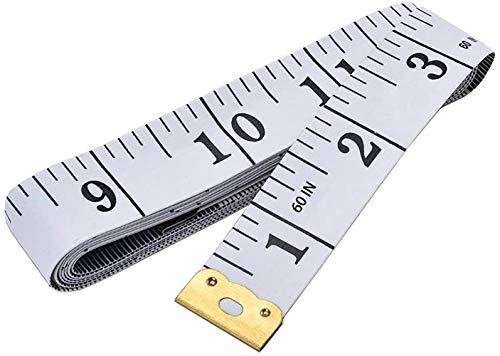
Measuring range: 0 to 60 inches and 0 to 150 centimeters. There is a centimeter scale on the back, which is accurately printed in inches and centimeters. Both sides can be measured according to your requirements. You can put one in your pocket or backpack without taking up too much space

WEIGH LUGGAGE UP TO 80 LB: Check suitcases, travel bags, backpacks, packages and other hookable items before leaving for the airport. The mechanical scale measures weights up to 80 lb or 35 kg.

2 Pack Soft Fashion Measuring Tape Set. Double sided, 60 inch / 150 cm, portable,durable tape measure. Small and light pocket size measuring tape.
Carry-On Bags
A carry-on bag generally must fit in the overhead bin or another approved storage compartment. The Federal Aviation Administration advises passengers to check the airline’s rules because the number and size of cabin bags can vary.
When an airline publishes separate dimensions, compare each side of your bag with the matching maximum. Do not rely only on the total number of linear inches.
Personal Items
A personal item normally must fit completely under the seat in front of you. Examples can include a small backpack, purse, briefcase, or laptop bag, but the exact dimensions and permitted item types depend on the airline.
Measure a personal item while packed. Include stuffed front pockets, bottle holders, fixed handles, and anything else that makes it taller, wider, or deeper.
Checked Bags
Checked baggage is often evaluated by total linear dimensions and weight. However, an airline may also impose a maximum length for one side, destination restrictions, seasonal limits, or different allowances for premium cabins.
For example, the current American Airlines checked-bag policy lists 62 inches and 50 pounds as its standard allowance for many regions, with different allowances in certain cabins and markets. This is an example, not a rule for every airline.
Tips for Choosing the Right Luggage for Air Travel
| Factor to Consider | Why It Matters |
|---|---|
| Outside dimensions | The bag must fit the airline’s size allowance after wheels and handles are included. |
| Empty weight | A lighter empty bag leaves more of the weight allowance available for your belongings. |
| Durability | Strong zippers, seams, handles, wheels, and shells help protect the contents during handling. |
| Wheels | Four-wheel spinners are easy to move on smooth floors, while recessed or two-wheel designs may use less exterior space. |
| Handles | Handles should feel secure and comfortable without adding unnecessary bulk. |
| Expansion zipper | Expansion adds packing space but can make the bag exceed its original advertised dimensions. |
| Compartments | Useful organization can reduce bulging and make important items easier to reach. |
Do not assume that every soft-sided suitcase is lighter than every hard-shell suitcase. Compare the manufacturer’s listed empty weight and outside dimensions for the exact model.
Advertised dimensions may also describe only the suitcase body. Confirm whether the manufacturer’s measurement includes wheels and handles before buying a bag intended to meet a specific airline limit.
Products Worth Considering

CARRY-ON DESIGN: Best for 1-5 day trips without the hassle of checking luggage; measures 14.8 x 10 x 21.7 inches, including wheels

The Perfect Size: The textured, scratch-resistant exterior of this hardshell carry-on luggage is 15 x 10 x 23 inches" with wheels and meets the cabin size restrictions of most airlines.

Light and durable polycarbonate carry-on expandable luggage
Common Mistakes to Avoid When Measuring Luggage
- Measuring the bag while empty: Packed clothing and exterior pockets can change its size.
- Ignoring wheels and handles: Airlines normally measure the full outside dimensions.
- Leaving an expansion zipper closed during measurement: Measure the expanded size if you plan to travel with it expanded.
- Checking only linear inches: Carry-on bags may have a separate maximum for each side.
- Trusting the product label: Verify the packed bag yourself because advertised dimensions may use a different method.
- Estimating by sight: A bag that appears small may still exceed one allowed dimension.
- Forgetting the weight of the suitcase: The empty bag is part of the total packed weight.
- Using the ticketing airline’s policy for every segment: Check the operating carrier on codeshare and connecting flights.
- Assuming a soft bag can be forced into compliance: Measure its natural packed size unless it remains securely compressed.
- Waiting until the airport: Measure and weigh the bag early enough to change your packing plan.
What to Do If Your Luggage Does Not Meet the Requirements

If your luggage is oversized or overweight, deal with it before leaving for the airport whenever possible. Your best option depends on the fare, route, number of bags, and the airline’s current fee structure.
Products Worth Considering
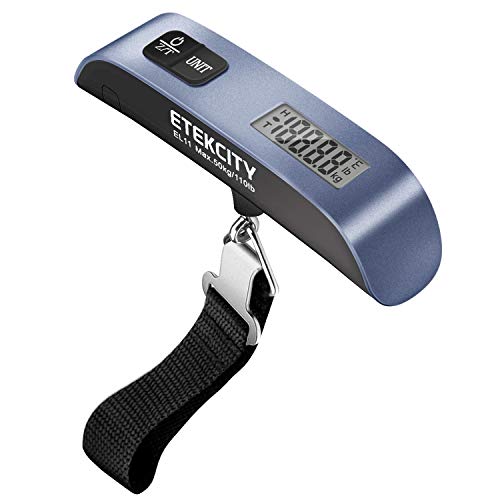
𝑺𝒂𝒚 𝑮𝒐𝒐𝒅𝒃𝒚𝒆 𝒕𝒐 𝑶𝒗𝒆𝒓𝒘𝒆𝒊𝒈𝒉𝒕 𝑪𝒉𝒂𝒓𝒈𝒆𝒔: Avoid surprises at the check-in counter with high-precision measurements that keep your luggage within airline limits—save money and travel stress-free!
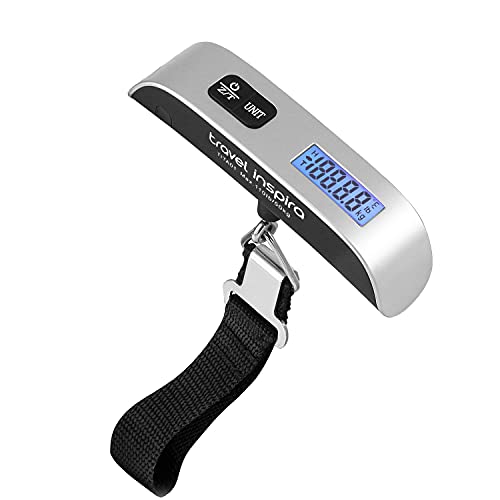
[Travel without stress] This hanging baggage scale easily prevents overweight baggage charges; a must-have for traveling. *The isolation tag must be removed from the battery case before use!

Luggage Weight Scale Avoids Overweight Fees: Weigh your suitcase before check-in and skip airline overweight charges. A nylon strap and steel hook hold bags securely for quick, accurate readings.
Repack the Bag
Remove nonessential items, wear a heavier coat or shoes when practical, and move permitted belongings to another bag that still has available size and weight capacity.
Redistribute Items Carefully
Moving items between bags can solve an overweight problem, but it will not help if the second bag then exceeds its allowance. Make sure restricted items remain in the correct type of baggage.
Check an Additional Bag
Compare the airline’s charge for another checked bag with its overweight or oversize fee. The less expensive option varies by airline and itinerary, so check the current baggage-fee page rather than relying on a general rule.
Ship Suitable Items Separately
Shipping may be practical for bulky, nonurgent belongings. Compare the full shipping cost, delivery time, insurance, packaging requirements, and the value of the contents before choosing this option.
Use a Different Suitcase
A lighter or smaller suitcase can solve the problem without reducing the items you take. This works best when you discover the issue at home rather than at the check-in counter.
Warning: Do not move power banks, spare lithium batteries, or electronic-cigarette batteries into checked luggage to reduce carry-on weight. FAA guidance requires spare lithium batteries and power banks to remain in the cabin.
Special Cases That Need Extra Attention
Expandable Luggage
An expansion zipper changes the bag’s outside depth. Measure the suitcase in the expanded position whenever you intend to use that extra space.
Soft-Sided Bags and Backpacks
Measure the widest natural packed shape, including stuffed pockets. Tightening compression straps may help, but the bag should remain within the allowance without needing constant force.
Odd-Shaped and Special Baggage
Musical instruments, sports equipment, boxes, strollers, mobility aids, and unusually shaped items may follow separate policies. Review the operating airline’s special-baggage page before packing or paying for the item.
Codeshare and Connecting Flights
One itinerary can contain flights operated by different airlines or aircraft with different cabin space. Check each operating carrier and plan around the most restrictive applicable limit.
Smart Luggage and Lithium Batteries
Smart suitcases may contain batteries for tracking, charging, digital weighing, or powered movement. Under current FAA smart-baggage guidance, a battery-equipped bag generally must remain in the cabin unless its battery can be removed. If the bag is checked, remove the battery when required and carry it in the cabin according to the airline’s instructions.
Power banks and other spare lithium batteries must not be placed in checked baggage. Review the FAA PackSafe chart and contact the airline when you are uncertain about a battery-powered item.
How Oversized or Overweight Luggage Affects Your Trip
A bag outside the allowance can lead to an additional charge, repacking, special handling, or refusal if it exceeds the airline’s maximum accepted size or weight. A carry-on that does not fit the sizer or available storage space may need to be checked at the counter or gate.
Large cabin bags can also be harder to lift and stow safely. FAA guidance requires carry-on items to be placed under a seat, in an overhead bin, or in another approved storage area during critical parts of the flight. Properly sized baggage reduces the risk of loose items falling from bins or blocking movement in the cabin.
Checking your luggage at home also gives you time to protect fragile items, remove prohibited contents, and compare your options without the pressure of a boarding deadline.
Before You Leave for the Airport
- Confirm the operating airline for every flight segment.
- Open the airline’s current baggage-policy page.
- Check the allowed number of carry-on, personal, and checked bags.
- Verify each permitted dimension and the weight limit.
- Pack and close the luggage completely.
- Measure the tallest, widest, and deepest outside points.
- Include wheels, feet, fixed handles, pockets, and expansion sections.
- Calculate linear dimensions when the airline requests them.
- Weigh the packed bag and leave a small buffer.
- Review restricted and battery-powered items.
- Measure again after adding last-minute belongings.
Additional Resources for Measuring Luggage for Airlines
Official airline websites should be your final source for size, weight, piece, and fee information. The TSA What Can I Bring tool can help travelers determine whether an item is permitted in carry-on or checked baggage, but TSA screening rules do not replace the airline’s size limits.
A mobile app can help store packing lists, convert inches to centimeters, or open airline policies. Use a physical tape measure and scale for the final dimensions and weight rather than relying only on a phone estimate.
Travelers choosing new cabin luggage can also review this guide to the best carry-on suitcases with USB chargers. Remember that a built-in charger or smart feature may involve a removable battery that must follow airline and FAA rules.
For practical gift ideas, see these travel gifts for women. Small travel accessories should still be packed according to the airline’s baggage and security requirements.
A travel scarf with a hidden pocket may help keep small valuables close during a journey, but passports, identification, medicine, and essential electronics should remain accessible and secure.
Frequently Asked Questions
What is the standard luggage measurement for airlines?
There is no universal airline luggage standard. A carry-on size of 22 x 14 x 9 inches and a checked-bag limit of 62 linear inches and 50 pounds are common examples among major U.S. airlines, but the operating carrier’s current policy controls.
How do you measure luggage for an airline?
Pack and close the bag, then measure its three maximum outside dimensions. Include wheels, handles, feet, pockets, straps, and bulges. Compare each measurement with the airline’s carry-on limits or add all three measurements when the checked-bag policy uses linear dimensions.
Do luggage measurements include wheels and handles?
Yes. Measure the complete outside of the packed bag, including wheels, fixed and folded handles, feet, side grips, and any pocket or section that extends beyond the main body.
Should luggage be measured empty or packed?
Measure it fully packed and closed. Soft sides, exterior pockets, and expansion sections can make a packed suitcase larger than its empty or advertised dimensions.
How are linear inches calculated?
Add the bag’s length, width, and height. A suitcase measuring 30 x 20 x 12 inches equals 62 linear inches. This calculation does not override any separate maximum that the airline places on one side.
How do I measure a personal item?
Pack the personal item, then measure its three widest outside points. Include handles, bottle pockets, and bulges. Compare the results with the airline’s personal-item dimensions and confirm that the bag can fit completely under the seat.
What happens if my luggage exceeds the airline’s limit?
The airline may charge an overweight or oversize fee, require the bag to be checked, ask you to repack it, apply special handling, or refuse it if it exceeds the maximum accepted size or weight.
Can I use a phone app to measure and weigh luggage?
A phone app may help estimate dimensions, convert units, or find an airline policy, but use a physical tape measure for the final size. A packed bag’s weight should be checked with a luggage scale or a bathroom scale.
Sources
- Federal Aviation Administration: Carry-On Baggage Tips — carry-on stowage, airline-specific rules, and cabin safety
- Federal Aviation Administration: PackSafe — batteries, smart luggage, and hazardous-material packing rules
- Transportation Security Administration: What Can I Bring? — carry-on and checked-bag security restrictions
- International Air Transport Association: Passenger Baggage — variation in baggage policies by airline, cabin, and aircraft
- U.S. Department of Transportation: Avoiding Baggage Problems — airline-specific allowances and consumer preparation
- American Airlines: Checked-Bag Policy — current example of standard checked-bag dimensions and weight
