
Last Updated on July 25, 2026 by Daniel Globe
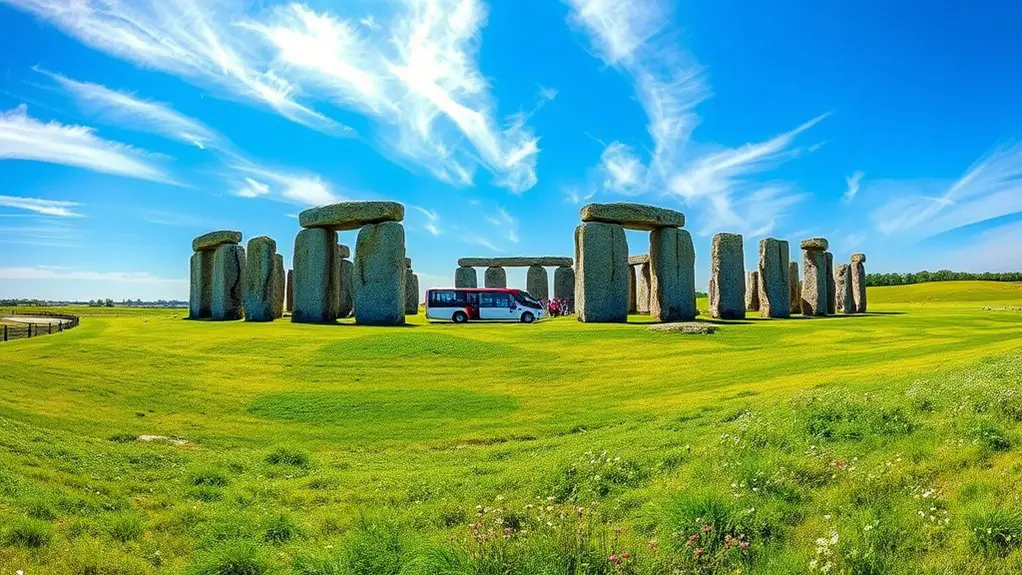
A London to Stonehenge day trip is easy to arrange once you choose the right transport. Independent travelers can take a direct train from London Waterloo to Salisbury and continue by the Stonehenge Tour bus or taxi. Guided coach tours are simpler, while driving gives you the most freedom to add places such as Avebury.
Quick Answer
For most independent travelers, the easiest London to Stonehenge route is a direct train from London Waterloo to Salisbury, followed by the Stonehenge Tour bus or a taxi. Allow a full day from London and about two to three hours at Stonehenge itself. Book admission and transport ahead when possible.
Key Takeaways
- For independent travel, take a direct London Waterloo train to Salisbury, then continue by the Stonehenge Tour bus or taxi.
- Guided coach tours are the lowest-effort option because transport and, depending on the tour, admission are arranged together.
- Driving gives you the most flexibility and works especially well if you want to combine Stonehenge with Avebury or other Wiltshire sights.
- Plan roughly two to three hours for a standard Stonehenge visit, plus travel time from London.
- Book Stonehenge admission in advance, check seasonal opening times, and treat solstice or equinox visits as separate events with different rules.
At a Glance
| Time Required | A full day from London; allow about 2–3 hours at Stonehenge itself |
| Difficulty | Easy by guided coach; easy to moderate independently because of the Salisbury connection |
| Tools Needed | Admission confirmation, transport tickets, charged phone, weather layers and comfortable walking shoes |
| Cost | Varies by rail fare, coach tour or car costs plus Stonehenge admission; advance booking can reduce some costs |
Disclosure: As an Amazon Associate I earn from qualifying purchases. Some links on this page are affiliate links, at no extra cost to you.
How to Get From London to Stonehenge

There is no regular railway station at Stonehenge and no standard public bus that takes you all the way from central London to the monument. The best route depends on whether you value independence, simplicity or flexibility.
Products Worth Considering


Train From London Waterloo to Salisbury
For independent travelers, rail is one of the most practical choices. English Heritage states that Salisbury is the nearest railway station and that the direct journey from London Waterloo takes around 1 hour 30 minutes.
Salisbury station is still about 12 miles (19 km) from Stonehenge. From the station, continue by taxi or use the Stonehenge Tour bus.
The bus leaves from Salisbury railway station and also serves Salisbury city centre. Its timetable changes seasonally, so check the schedule for your exact travel date rather than relying on an old departure time.
This option works especially well if you want to spend part of the day in Salisbury before returning to London.
Guided Coach Tour From London
A guided day tour is the simplest choice when you do not want to coordinate trains, local buses and admission yourself. Numerous companies operate coach or small-group trips from London, and some packages combine Stonehenge with places such as Windsor, Bath or Salisbury.
Check exactly what is included before booking. Some tours include Stonehenge admission and a guide or audio commentary, while cheaper transportation-only products may not.
Do not assume that a tour automatically gives you special access to the inner stone circle or lets you bypass every queue. Standard Stonehenge admission and special Stone Circle Experience access are different products.
Driving From London
Driving offers the most freedom. English Heritage estimates the journey from central London at around two hours in normal conditions, but traffic on the A303 and roads leaving London can make it longer.
Stonehenge is signposted from the A303 near Amesbury. The official Visitor Centre postcode is SP4 7DE.
Driving becomes especially useful if you intend to continue to Avebury or explore rural Wiltshire, where public-transport connections are less convenient.
Pro Tip: Choose Salisbury as your extra stop if you are traveling by train. Choose Avebury if you have a car. Trying to fit Stonehenge, Salisbury and Avebury into the same London day trip can make the day unnecessarily rushed.
Best Time to Visit Stonehenge and Ticket Planning
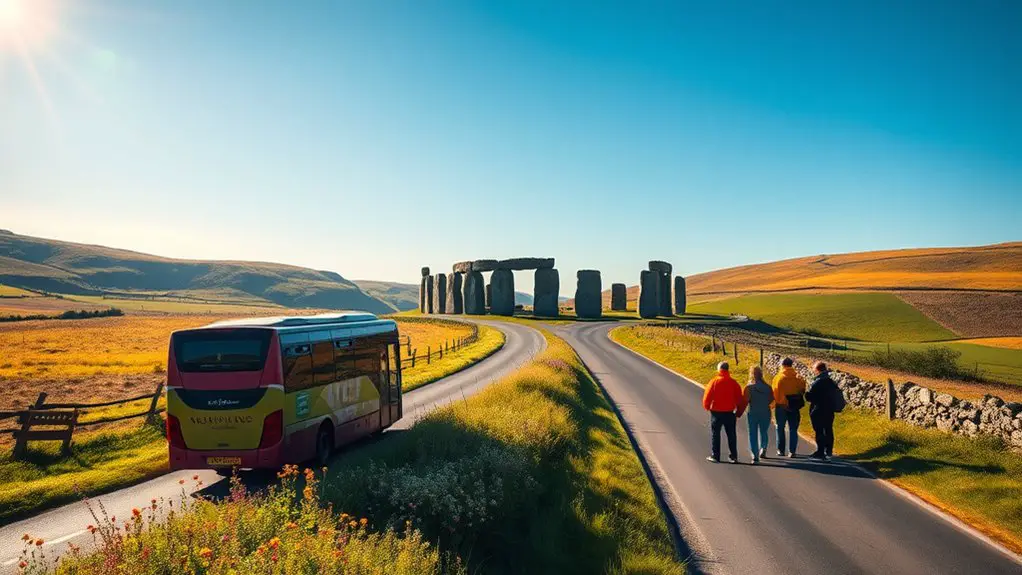
Stonehenge is an exposed outdoor site, so your experience depends as much on the weather and crowds as it does on the season.
The start and end of the normal visitor day can feel calmer than the busiest middle hours. They may also provide softer light for photographs, although opening times do not always coincide with true sunrise or sunset.
Spring and autumn can be pleasant choices if you prefer to avoid the height of the summer holiday season, but Salisbury Plain can be windy, wet and chilly at any time of year.
Products Worth Considering


2000 Green Admit One Single Roll Consecutively Numbered Raffle Tickets--Back of the tickets are blank

2000 Green Star Single Roll Consecutively Numbered Raffle Tickets
Book Stonehenge Admission Before You Travel
Advance booking is recommended. English Heritage uses visitor capacity and arrival slots, and booking online in advance can also be cheaper than buying at the gate. Check the current Stonehenge prices and opening times before you finalize your train or coach plans.
Your Stonehenge booking should not be treated as a guaranteed “skip-the-line” pass. You still need time to arrive, have your booking checked and move through the Visitor Centre area.
Warning: Solstice and equinox events do not follow normal admission arrangements. Managed Open Access can involve special opening hours, transport plans, parking reservations, bag limits and prohibited items. Always read the official event page for that specific date.
How Long Should You Spend at Stonehenge?
For most first-time visitors, two to three hours is a sensible amount of time. English Heritage itself publishes a two-hour itinerary, while travelers who want to explore the wider landscape can easily spend half a day.
A standard visit can include:
- The Visitor Centre exhibition
- The reconstructed Neolithic houses
- The shuttle or walking route to the Stone Circle
- A full circuit of the visitor path around the stones
- Time for photographs
- The café and shop
If you walk rather than take the shuttle for part or all of the route, allow extra time.
Getting From the Visitor Centre to the Stone Circle
The Visitor Centre is not directly beside the stones. The walking route to the monument is roughly 1½ miles (2 km) and takes about 25–30 minutes for many visitors.
Alternatively, English Heritage operates frequent visitor shuttles. The shuttle journey itself takes about 10 minutes, and visitors can also get off partway and walk through part of the prehistoric landscape.
Toilets, most seating, refreshments and the main exhibition are at the Visitor Centre rather than beside the Stone Circle.
Note: Standard admission does not let visitors walk freely inside the stone circle. During ordinary opening hours you follow the visitor path around it. Limited early-morning and evening Stone Circle Experience sessions provide special access inside the circle and must be booked separately.
Sample London to Stonehenge Day Trip Itinerary
For an independent train trip, a relaxed schedule looks like this:
- Early morning: Leave London Waterloo for Salisbury.
- Mid-morning: Arrive in Salisbury and connect with the next Stonehenge Tour bus or a prearranged taxi.
- Late morning to early afternoon: Spend around two to three hours exploring the Visitor Centre, exhibition, Neolithic houses and Stone Circle.
- Afternoon: Return to Salisbury.
- Late afternoon: Explore central Salisbury and Salisbury Cathedral if opening hours allow.
- Evening: Take a train from Salisbury back to London Waterloo.
Build a generous connection between your train and the Salisbury-to-Stonehenge bus. Seasonal timetables, road traffic or railway disruption can affect the plan.
Guided Tours Versus Independent Exploration
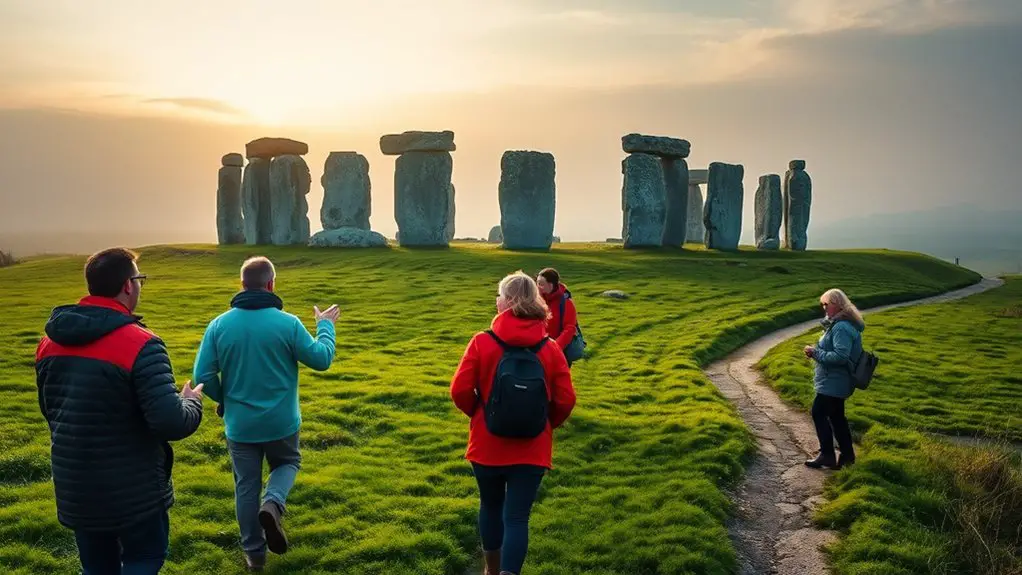
A guided tour is best when convenience matters more than flexibility. An independent trip is better when you want control over your pace and time in Salisbury.
Products Worth Considering


What better way to remember your British vacation than this cool Stonehenge design? It's an awesome Stonehenge souvenir or memento from your English trip! For all those passionate about prehistoric monuments, human history and rocks.

Choose a Guided Tour If You Want
- Transportation arranged from London
- Less concern about train and bus connections
- Commentary from a guide or tour host
- A multi-stop itinerary without driving yourself
Choose an Independent Trip If You Want
- More control over how long you remain at Stonehenge
- Time to explore Salisbury at your own pace
- The ability to choose your own train times
- Freedom from a coach group’s fixed departure schedule
The best option is not automatically the fastest one: a guided coach reduces planning, while the train-and-bus route gives independent travelers far more control over their day.
Highlights and Must-See Sights at Stonehenge
The Stone Circle deserves most of the attention, but understanding what you are looking at makes the visit much more rewarding.
The Sarsen Stones
The large upright stones and lintels are sarsens. According to English Heritage’s Stonehenge research, the sarsens average about 25 tons, while the Heel Stone weighs about 30 tons.
Research has traced most of these huge stones to the West Woods area near Marlborough.
The Bluestones
The smaller bluestones are made from several rock types and were transported from the Preseli Hills of southwest Wales, more than 150 miles away.
The reason prehistoric communities moved these stones such a long distance is still debated. It is better to treat ritual, religious and symbolic explanations as interpretations rather than settled fact.
The Heel Stone and Solstice Alignment
The Heel Stone stands outside the main circle near the north-east approach. Stonehenge’s principal axis is aligned with the solstitial cycle, including the midsummer sunrise and midwinter sunset.
This astronomical relationship is one of the site’s most striking features, but archaeologists still do not know exactly why Stonehenge was created or all the ways it was used.
The Exhibition and Neolithic Houses
Do not rush directly to the stones and leave. The Visitor Centre exhibition explains the monument’s construction, prehistoric landscape and archaeological discoveries. Nearby reconstructed Neolithic houses help put everyday life around Stonehenge into context.
Additional Attractions Near Stonehenge
Stonehenge can fill several hours, but one carefully chosen extra stop can turn the journey from London into a fuller Wiltshire day trip.
Salisbury Cathedral
Salisbury is the easiest addition for rail travelers because you already pass through the city. Salisbury Cathedral is known for Britain’s tallest cathedral spire, the world’s oldest working mechanical clock and its exceptionally well-preserved original 1215 Magna Carta.
Check the Cathedral’s visitor hours before relying on a late-afternoon visit, particularly when services or special events are taking place.
Old Sarum
Old Sarum is an ancient hillfort and the site of Salisbury’s earlier settlement. It is particularly convenient for independent visitors because the Stonehenge Tour bus route includes an Old Sarum stop on many services.
Avebury Stone Circle
Avebury is an excellent addition for travelers with a car. Its enormous henge and stone circles form part of the same wider World Heritage landscape as Stonehenge, but the visitor experience feels very different because the village and roads lie within the prehistoric complex.
Avebury is less convenient to combine with Stonehenge by public transport, so do not add it casually to a tightly timed rail itinerary from London.
Practical Tips for Your Stonehenge Day Trip
A little preparation makes the day considerably easier.
- Wear proper shoes: The wider landscape includes grass and uneven ground that can become muddy after rain.
- Bring layers: The Stone Circle stands in an exposed landscape with little shelter from wind or rain.
- Travel light: Stonehenge does not provide a cloakroom or left-luggage service.
- Charge your phone: You may need it for tickets, rail information, photographs and the Stonehenge audio guide.
- Allow connection time: Do not book a Salisbury train that leaves only minutes after your planned return bus.
- Check live transport: Train engineering works and seasonal Stonehenge Tour timetables can change your journey.
- Bring water: Refreshments are available at the Visitor Centre, but carrying water is useful during warmer weather.
- Do not rely on golden-hour photography: Normal admission times may not match sunrise or sunset. Special-access experiences operate separately.
Accessibility at Stonehenge
Stonehenge has substantial accessible facilities. English Heritage currently lists accessible parking bays near the Visitor Centre, accessible toilets, wheelchair-accessible visitor shuttles and wheelchair access through the main Visitor Centre and Stone Circle areas, subject to ground and weather conditions.
The wider archaeological landscape is more difficult for standard wheelchairs because of uneven natural terrain.
Visitors with specific mobility or access requirements should review the official Stonehenge accessibility information before traveling.
Frequently Asked Questions
Is There Accessible Parking Near Stonehenge for Visitors With Disabilities?
Yes. English Heritage currently lists 22 accessible parking bays, with set-down available close to the Visitor Centre. The visitor shuttle to the stones is also wheelchair accessible. Weather can affect some grass paths, so travelers with specific mobility needs should check the official access guide before visiting.
Are There Any Restrictions on Bringing Food or Drinks Into the Site?
Visitors may bring their own refreshments during a normal visit, and picnic areas are available around the site. Stonehenge also has a café at the Visitor Centre. Special events and special-access sessions can have stricter rules, so check the conditions for your booking if you are attending a solstice, equinox or Stone Circle Experience.
Can I Visit Stonehenge at Night or During Special Events?
Stonehenge is not normally open for unrestricted nighttime visits. English Heritage offers a limited Stone Circle Experience in the early morning or evening outside ordinary opening hours. Solstice and equinox celebrations use separate Managed Open Access arrangements and should be planned using the official event information.
What Are the Security Measures and Prohibited Items at Stonehenge?
For normal visits, travel light because there is no cloakroom or left-luggage facility. English Heritage states that items such as picnic knives and scissors are not permitted. Personal photography is welcome, but recreational drone flying is not permitted from or over English Heritage sites without authorization. Solstice and other managed events can impose much stricter bag, alcohol, glass and security rules.
Are There Any Recommended Local Restaurants or Cafes Nearby?
The simplest option is the Stonehenge Visitor Centre café, which serves hot and cold food, sandwiches, snacks and drinks. Stonehenge itself is a rural site rather than a town-center attraction. If you are traveling through Salisbury, the city has a much wider choice of cafés, pubs and restaurants for a meal before returning to London.
How Long Does It Take to Get From London to Stonehenge?
A direct train from London Waterloo to Salisbury takes around 1½ hours, followed by roughly another half hour or more for the road connection to Stonehenge. Driving from central London takes around two hours in favorable traffic. For a comfortable visit, treat Stonehenge as a full-day excursion from London.
Can You Walk Inside the Stone Circle?
Not with standard daytime admission. Regular visitors follow the path around the monument, which comes close to the stones at several points. Limited Stone Circle Experience sessions take place outside normal opening hours and allow booked groups inside the circle under controlled conditions.
Is a Guided Tour or Independent Trip Better From London?
Choose a guided coach tour for the easiest logistics. Choose an independent train trip if you want more control over your schedule and would like time in Salisbury. Driving is best when you want to explore additional rural sites such as Avebury.
Conclusion
A London to Stonehenge day trip is straightforward once you plan the Salisbury connection or choose a guided coach. Independent travelers get the most flexibility from the London Waterloo–Salisbury route, while tours remove most of the transport planning and driving makes rural add-ons easier.
Give Stonehenge at least two hours, book admission before traveling, check seasonal transport and opening times, and avoid squeezing too many Wiltshire attractions into one day. With those basics in place, you will have enough time to understand the monument rather than simply photograph it and rush back to London.
Sources
- English Heritage — Plan Your Visit — London transport routes, Salisbury connection, driving time and parking information.
- English Heritage — Prices and Opening Times — current admission and seasonal visitor-hour information.
- English Heritage — Stonehenge Questions and Answers — visitor paths, refreshments, luggage, accessibility and prohibited-item information.
- English Heritage — Stone Circle Experience — special early-morning and evening inner-circle access.
- The Stonehenge Tour — Official Bus Timetable — seasonal Salisbury railway station to Stonehenge services.
- National Trust — Avebury — visitor information for the Avebury stone circles and World Heritage landscape.
