
Last Updated on July 28, 2026 by Daniel Globe
Summer in London brings long days, major outdoor events, busy sightseeing areas, green parks, riverside walks and some attractions that are only fully accessible at this time of year. The weather can range from pleasantly mild to very hot, though, so the best trip combines outdoor plans with flexible indoor options, advance booking and a little preparation for rain.
Quick Answer
Summer is one of the best times to explore London for parks, river cruises, outdoor theatre, markets and major events. Expect typical daytime highs around 22–24°C (72–75°F), but pack for rain and occasional heat. Book popular attractions early, use public transport, and leave room in your schedule for weather changes.
Key Takeaways
- June through August usually brings London’s warmest weather, but rain and cool evenings are still possible.
- Summer highlights include outdoor theatre, Royal Parks, Thames cruises, food markets and major events such as Notting Hill Carnival.
- Buckingham Palace’s State Rooms have a seasonal summer opening, making this a particularly good time for royal sightseeing.
- Use contactless payment or Oyster for public transport and check TfL for live disruption before longer journeys.
- Do not treat the central tidal Thames as a casual paddling area; choose an appropriately licensed or guided activity.
Disclosure: As an Amazon Associate I earn from qualifying purchases. Some links on this page are affiliate links, at no extra cost to you.
What Is London Weather Like in Summer?
London’s meteorological summer runs from June through August. Conditions are usually mild to warm rather than constantly hot, and a sunny morning can still turn into a wet afternoon.
At Heathrow, a useful long-term reference point for the London area, Met Office 1991–2020 climate averages show the following:
| Month | Average High | Average Low | Average Rainfall |
|---|---|---|---|
| June | 21.6°C (70.9°F) | 12.0°C (53.7°F) | 47.3 mm |
| July | 23.9°C (75.0°F) | 14.2°C (57.5°F) | 45.8 mm |
| August | 23.4°C (74.1°F) | 14.1°C (57.3°F) | 52.8 mm |
July is typically the warmest of the three meteorological summer months around London, but summer rain remains common enough that a light waterproof layer is worth carrying.
Note: Averages are planning guides, not forecasts. London can experience much hotter spells during heatwaves, so check the Met Office forecast shortly before your trip.
Iconic Landmarks and Outdoor Tours
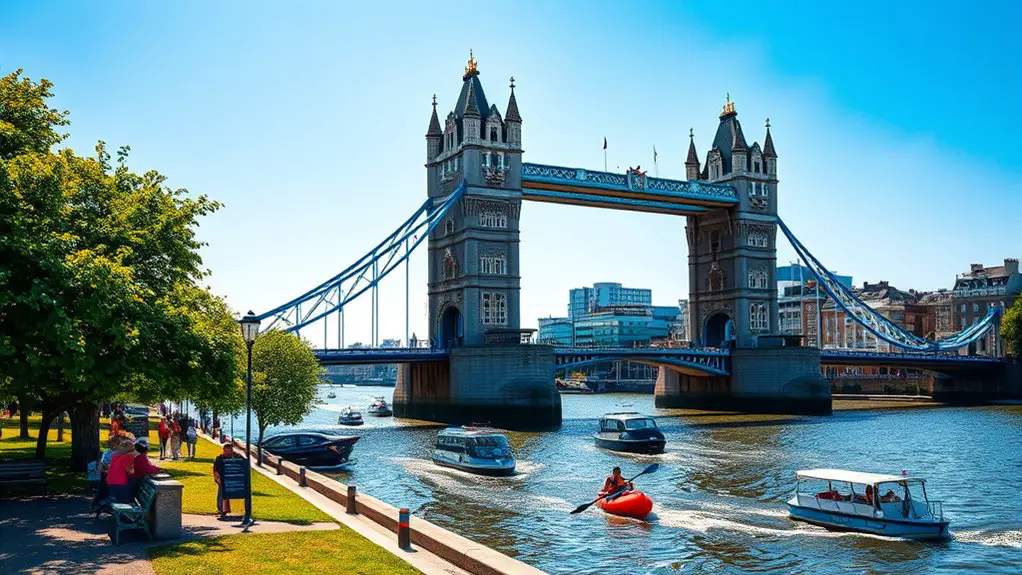
Long daylight hours make summer a convenient time to combine several of London’s best-known landmarks on foot. A Westminster walk can take in the Houses of Parliament and Elizabeth Tower, Westminster Abbey, St James’s Park and Buckingham Palace without requiring much transport between stops.
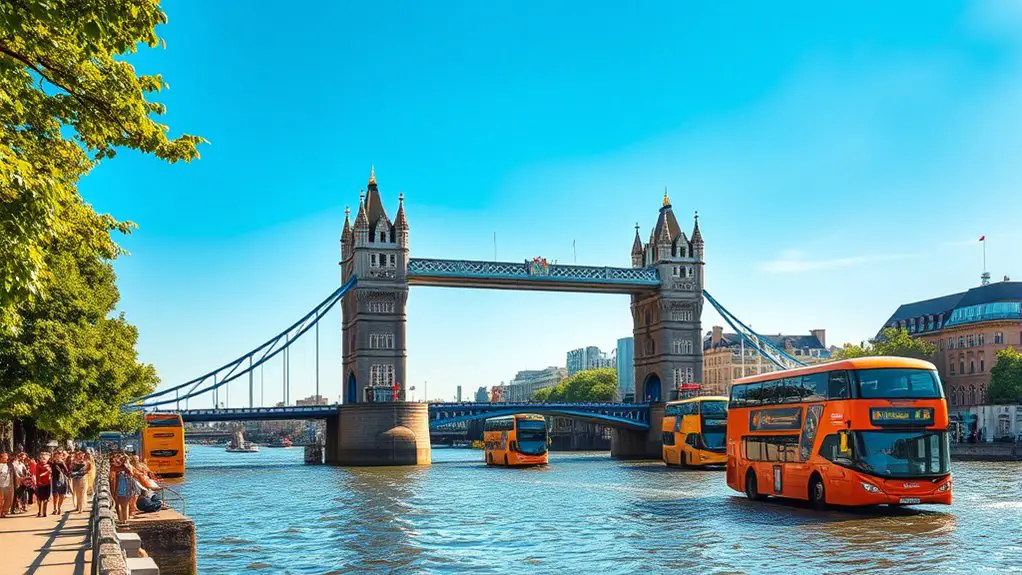
Along the Thames, you can walk between Westminster and the South Bank for views of the London Eye before continuing toward Tate Modern, Shakespeare’s Globe, Borough Market, Tower Bridge and the Tower of London. Instead of “climbing” the London Eye, visitors ride in enclosed observation capsules for elevated views across the city.
Buckingham Palace becomes especially interesting in summer because the State Rooms have a seasonal public opening. In 2026, the Royal Collection Trust lists the State Rooms as open from 9 July through 27 September. Timed tickets are worth arranging in advance on busy dates.
You can also visit St Paul’s Cathedral, explore different areas on a walking tour, or use a bike for part of the day. Hyde Park is cycle-friendly on designated routes, but cycling is not permitted on every path. Follow signs and the Royal Parks cycling rules.
Pro Tip: Put your longest outdoor sightseeing walk in the morning. Streets and attractions often feel easier before the middle of the day, and you retain the afternoon as a backup window if rain changes your plans.
Festivals and Cultural Events
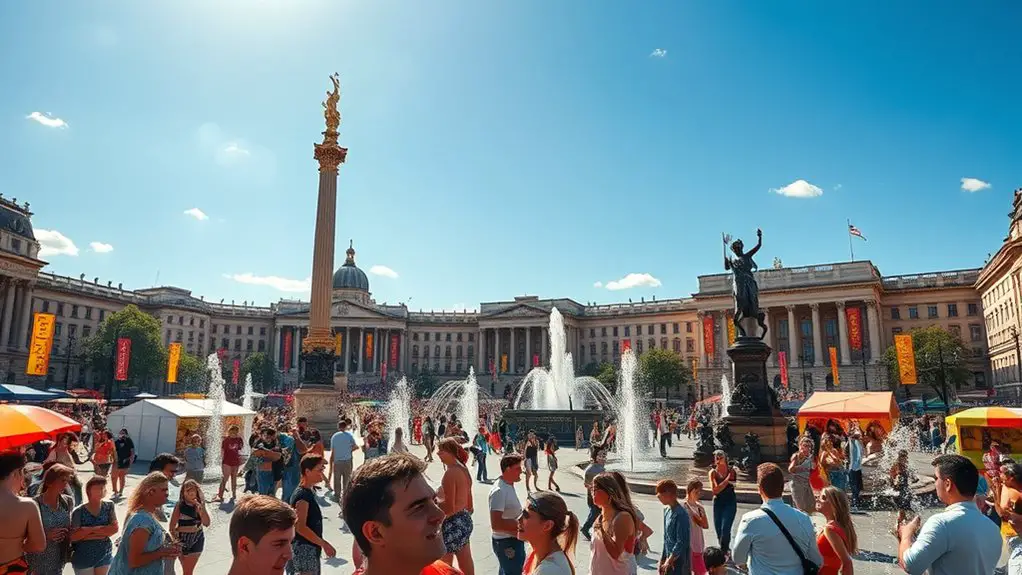
London’s summer calendar combines sport, music, theatre, parades and neighborhood celebrations. Dates change from year to year, so use the table below as a 2026 planning reference and confirm future editions with the organizer.
| 2026 Event | Dates | What to Know |
|---|---|---|
| The Championships, Wimbledon | 29 June–12 July | One of London’s biggest early-summer sporting events. |
| Pride in London | 4 July | Large central-London parade and celebration; expect road closures and very busy transport. |
| BST Hyde Park | 27 June–12 July | Major ticketed open-air concerts in Hyde Park. |
| Notting Hill Carnival | 30–31 August | Caribbean culture, parades, sound systems and food across west London; Panorama takes place on 29 August. |
Summer is also a strong season for theatre. Shakespeare’s Globe stages productions in its open-air Globe Theatre, while other venues across the city run outdoor performances and screenings. Check the official Shakespeare’s Globe programme for current performances and ticket availability.
The former Thames Festival should not be confused with today’s programme. It was replaced by Totally Thames, a month-long programme of river-related arts, heritage, environmental and community events held in September.
Note: Meteorological summer ends on 31 August, so September’s Totally Thames programme is better treated as an early-autumn event even though some visitors may still experience summer-like weather.
Parks and Open Spaces for Relaxation
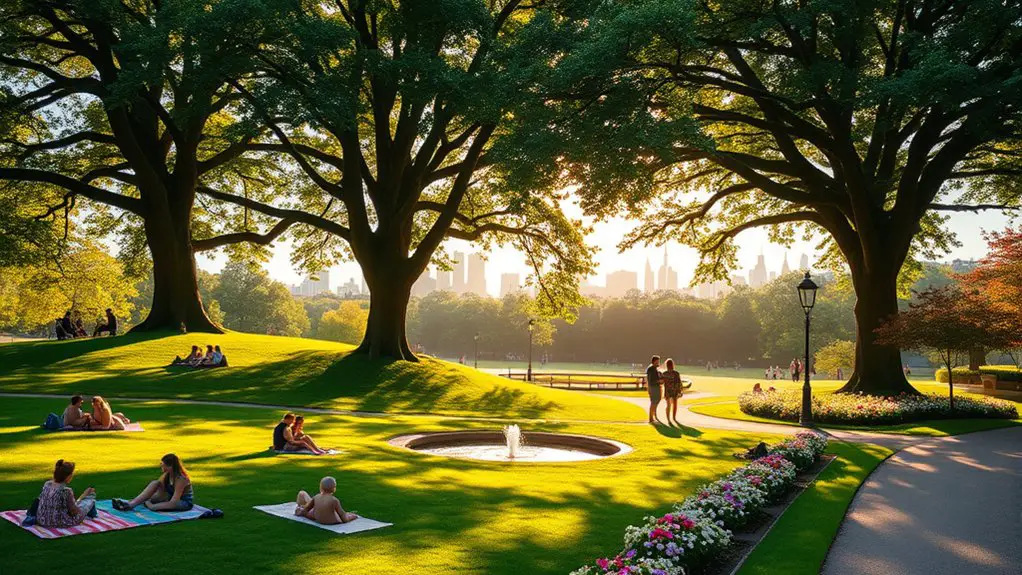
When you need a break from busy streets, London’s parks provide lawns, gardens, ponds, shaded paths and places for a picnic. Rather than choosing a park only because it is nearby, match the space to the kind of day you want.
| Park | Best For | Summer Experience |
|---|---|---|
| Hyde Park | Central location and activities | Large lawns, Serpentine views, seasonal boating and swimming facilities. |
| The Regent’s Park | Gardens and slower walks | Formal gardens, tree-lined paths and seasonal outdoor entertainment nearby. |
| Greenwich Park | Views and history | Elevated city views combined with Greenwich’s museums and historic sites. |
| Richmond Park | A larger natural escape | Extensive grassland and woodland with more room to walk away from central London. |
The Royal Parks also offers seasonal boating in parks including Hyde Park, Regent’s Park and Greenwich Park. Facilities and operating times can change with weather or seasonal conditions, so check before making a special trip.
Riverside Activities and Boat Tours
The Thames gives you a different view of the city and can connect several major attractions without another long walk. You can choose a sightseeing cruise, spend time dining beside the river, or arrange a properly managed water activity.
Scenic River Cruises
A river cruise is one of the easiest ways to see several landmarks from a new angle. Depending on the route, you may pass the Houses of Parliament, London Eye, St Paul’s area, Tower of London, Tower Bridge and Greenwich.
Daytime departures are useful for photography and sightseeing, while later departures give you a chance to see the riverside as the city lights begin to appear. Some cruises include recorded or live commentary, while scheduled river services focus more on transportation.
A cruise can also give your feet a break between long sightseeing walks, which is useful on warm summer afternoons.
Riverside Dining Spots
Dining beside the Thames ranges from casual cafés and pubs to formal restaurants. The South Bank, Bankside, London Bridge and stretches farther east and west all offer places where you can watch river traffic and nearby landmarks while you eat.
Outdoor terraces are popular when the weather is good, so tables with the best views can fill quickly on warm evenings. For a less expensive option, pick up food from a market and eat in an appropriate public space along the riverside instead.
If you’re celebrating a special occasion, booking ahead is sensible. For an unplanned meal, moving one or two streets away from the busiest riverside stretches usually gives you more choices.
Water-Based Activities
Boat tours are straightforward for most visitors, but kayaking, canoeing and stand-up paddleboarding require more care. The tidal Thames through central London carries fast commercial traffic, strong currents and significant wash.
Warning: Do not assume you can simply rent a kayak or paddleboard and explore central London independently. The Port of London Authority describes the tidal Thames as a challenging waterway and advises inexperienced users and non-powered craft to avoid the busy central section. Use an appropriately licensed or guided operator and follow local safety rules.
For a more relaxed self-powered experience, look for organized sessions on waterways or stretches specifically suited to recreational paddling. A guided outing gives you the benefit of local route knowledge, appropriate equipment and safety planning.
Outdoor Markets and Food Experiences
London’s markets make an easy summer lunch stop because you can combine food with sightseeing instead of committing to a long restaurant meal. Borough, Camden and other markets offer a wide range of British and international food, while many also sell clothing, art and handmade goods.
Borough Market Delights
Borough Market, beside London Bridge station, is one of London’s best-known food markets. Stalls and shops sell produce, cheese, baked goods, prepared meals, confectionery and ingredients from Britain and abroad.
The market’s current regular hours are Tuesday through Sunday, with Monday closed, although Bank Holiday and special-event schedules can differ. Checking the official visitor page prevents a wasted journey.
Its location makes it easy to combine lunch with Southwark Cathedral, Shakespeare’s Globe, Tate Modern or a walk toward Tower Bridge. Some traders provide food samples, but sampling depends on the individual stall.
Street Food Adventures
Borough Market is only one option. Camden has a dense mix of prepared-food stalls, while the South Bank frequently hosts food traders and seasonal events. Offerings change, so the appeal is often discovering what is available on the day rather than arriving for one specific dish.
Street-food stops work especially well between attractions: order one dish, find a suitable place to sit, and continue exploring without losing several hours to a formal lunch.
Summer evenings can add outdoor seating, music and performers in busy entertainment areas, but programmes vary by venue and date. Check the location’s current event schedule before travelling specifically for entertainment.
Craft Vendors’ Offerings
London’s markets are also useful for souvenirs that feel less standardized than products in major tourist shops. Depending on the market, you may find jewelry, prints, pottery, clothing, accessories and work from independent designers.
Talk to vendors about where an item was made and how it was produced if local craftsmanship matters to you. Food traders may offer tastes or samples; craft sellers are more likely to let you inspect materials, sizes and finishes.
Browsing slowly can reveal more interesting pieces than rushing through the first souvenir stalls you encounter near major landmarks.
Summer Nightlife and Live Entertainment
Long evenings make it easier to extend a sightseeing day without immediately moving indoors. Depending on your budget and interests, you can choose theatre, concerts, rooftop venues, riverside walks or spontaneous street entertainment.
| Venue Type | Summer Experience |
|---|---|
| Open-Air Concerts | Major ticketed shows and smaller seasonal performances under the summer sky. |
| Rooftop Bars | Drinks and city views; reservations are useful for popular sunset periods. |
| Street Performers | Informal entertainment around high-footfall areas such as Covent Garden and the South Bank. |
| Festivals and Theatre | Seasonal concerts, cultural celebrations and open-air productions that often need advance tickets. |
For a lower-cost evening, walk the South Bank, watch the sunset from a park viewpoint or explore an atmospheric neighborhood after the daytime crowds begin to thin. For theatre, concerts and popular rooftop venues, advance reservations reduce the risk of arriving to find everything sold out.
A Simple One-Day Summer Itinerary
If you have limited time, grouping attractions by area prevents you from spending much of the day crossing London.
| Time | Plan |
|---|---|
| Morning | Start around Westminster, walk through St James’s Park and continue to Buckingham Palace. |
| Late morning | Cross toward the South Bank for river views and the London Eye area. |
| Lunch | Continue east by foot or transport and eat around Borough Market. |
| Afternoon | Explore Bankside and Tower Bridge or take a river cruise to reduce walking. |
| Evening | Choose Shakespeare’s Globe, a West End show, riverside dining or a relaxed evening walk. |
That route is deliberately flexible. On a very hot afternoon, substitute a museum or gallery for the longest walking section. If rain arrives, move an indoor attraction forward and return to the river later.
Tips for Enjoying the Summer Season
What to Pack for London in Summer
Dress in light layers instead of packing only hot-weather clothing. A typical summer day can move from a cool morning to warm sunshine and then rain.
- Comfortable walking shoes.
- Lightweight jacket or sweater for evenings.
- Compact umbrella or light waterproof shell.
- Reusable water bottle.
- Hat, sunglasses and sunscreen.
- Small day bag that closes securely in crowded areas.
The Met Office advises sun protection when UV levels are high, including covering up, seeking shade and using suitable sunscreen.
Getting Around London
Public transport is normally the easiest way to move between areas. According to Transport for London, visitors can use contactless cards or devices, Oyster cards or Visitor Oyster cards for pay-as-you-go travel.
When using contactless, use the same card or device throughout the day so the system can calculate the correct fare and apply any relevant cap. Overseas card fees may still be charged by your bank.
Summer does not automatically mean a reduced London-wide timetable. However, engineering work, major events and unexpected disruption can affect individual services. Check the TfL Go app or TfL status information before longer trips.
Booking and Managing Crowds
Summer is a busy visitor season, especially around Westminster, the South Bank, major museums and event venues. Popular timed attractions, theatre performances and special seasonal openings deserve advance booking when your schedule depends on a particular date.
For flexible sightseeing, start early or visit major outdoor landmarks later in the day. Avoid building an itinerary where every hour depends on a reservation; one delayed Tube journey or rain shower can make that stressful.
Neighborhoods such as Hampstead and Richmond can offer a change of pace from central Westminster, but no London district is guaranteed to be quiet on a sunny summer weekend. Greenwich is especially popular and can become busy around its major attractions.
Prepare for Hot Weather and Rain
During unusually hot weather, carry water, take shade breaks and move strenuous walks to cooler parts of the day. Current UK Health Security Agency hot-weather guidance warns that overheating and dehydration can affect anyone, with some people at greater risk.
Warning: During a heatwave, do not force yourself through a packed outdoor itinerary simply because attractions are prepaid. Take cooling breaks, drink regularly and move indoor activities into the hottest part of the day when necessary.
Rain does not need to ruin the day. Museums, galleries, historic interiors, covered markets, cafés and theatre provide easy backup options, so keep at least one indoor attraction in mind for each day of your trip.
Frequently Asked Questions
What are the best indoor activities during London summer heatwaves?
Museums, galleries, historic interiors, covered markets, theatre and long lunch or café breaks are useful alternatives to walking through the hottest part of the day. Check each venue’s opening hours and cooling facilities rather than assuming every older building will be strongly air-conditioned.
How does summer affect public transportation schedules in London?
There is no general rule that London public transport runs less frequently simply because it is summer. Planned engineering work, large events and live disruption can affect individual routes, so check TfL’s Journey Planner, status updates or TfL Go before travelling.
Are there any summer-specific safety tips for tourists in London?
Carry water, use sun protection, take breaks during very hot weather and keep valuables secure in crowded areas. Around the Thames, stay behind barriers where provided and use properly organized operators for water activities rather than entering the tidal river casually.
Which neighborhoods are less crowded during summer weekends?
No area is guaranteed to be quiet on a sunny weekend. Hampstead and Richmond can feel less compressed than the Westminster and South Bank sightseeing corridors, especially early in the day. Greenwich has excellent parks and historic streets but is itself a major visitor destination and can be busy.
What are the best spots for summer photography in London?
Good options include the Thames around Tower Bridge, Greenwich Park viewpoints, Little Venice, Westminster at quieter times and colorful market streets. Columbia Road Flower Market is particularly photogenic on market days. Early morning and late evening usually provide softer light than the middle of the day.
What is the weather normally like in London in summer?
Long-term Met Office data for Heathrow shows average daytime highs of about 21.6°C in June, 23.9°C in July and 23.4°C in August. Cooler days, rain and much hotter heatwave conditions are all possible, so check the forecast close to your trip.
What should I pack for London in summer?
Pack comfortable walking shoes, light layers, a compact waterproof layer or umbrella, a reusable water bottle, sunglasses, sunscreen and a hat. A light sweater or jacket is useful for cooler mornings and evenings.
Is London crowded in summer?
Popular attractions and central sightseeing areas can be very busy, particularly on weekends, school-holiday dates and major event days. Starting early, booking timed attractions and grouping sights by neighborhood can reduce time spent in queues and transit.
Conclusion
Summer in London rewards a flexible plan. Use the long days for landmark walks, parks, markets and river views, then add seasonal theatre, concerts or festivals that match your dates. Keep a waterproof layer and an indoor backup plan handy, book the attractions that matter most, and check weather and transport updates each day. With that preparation, you can enjoy London’s outdoor side without letting crowds, rain or a heatwave dictate the whole trip.
Sources
- Met Office — Heathrow long-term climate averages — June, July and August temperature, rainfall and climate data.
- Transport for London — Best ways for visitors to pay — contactless, Oyster and pay-as-you-go travel guidance.
- The Royal Parks — Hyde Park visitor information — seasonal park activities and visitor guidance.
- Port of London Authority — Navigational safety — safety and regulation of activities on the tidal Thames.
- Notting Hill Carnival — 2026 official programme — verified 2026 Carnival dates and schedule.
- Royal Collection Trust — Buckingham Palace — official 2026 summer-opening dates and visitor information.
