
Last Updated on July 28, 2026 by Daniel Globe
Spring is one of the most rewarding times to visit London. From March through May, daylight increases, parks fill with daffodils, cherry blossom and tulips, and the city’s outdoor markets and riverside walks become much more inviting. The trade-off is changeable weather, shifting bloom dates and busy holiday weekends, so a little planning makes a big difference.
Quick Answer
Spring in London runs from March through May and is ideal for gardens, blossom walks, parks, markets and Thames sightseeing. April is especially good for cherry blossom and tulips, while May brings warmer weather and major events such as the RHS Chelsea Flower Show. Pack layers and a waterproof outer layer.
Key Takeaways
- March is cooler and quieter; April is prime time for many blossoms and tulips; May is warmer and packed with major events.
- London spring weather changes quickly, so bring layers, comfortable walking shoes and a light waterproof jacket.
- For dependable flowers, prioritize Kew Gardens and the Royal Parks rather than relying on residential streets being in bloom.
- Book major events such as the RHS Chelsea Flower Show well ahead, and expect extra visitors around Easter and May bank-holiday weekends.
- Use contactless or Oyster pay as you go for most London public transport and check live service information before setting out.
Disclosure: As an Amazon Associate I earn from qualifying purchases. Some links on this page are affiliate links, at no extra cost to you.
London Spring Weather: March, April and May
London warms gradually through spring, but the season is famously variable. A sunny afternoon can follow a cold morning, and a brief shower can arrive even when the day begins clear.
The Met Office’s 1991–2020 Heathrow climate averages provide a useful London-area reference:
| Month | Average High | Average Low | Days With 1 mm+ Rain | Best For |
|---|---|---|---|---|
| March | 11.7°C / 53°F | 4.1°C / 39°F | About 8.5 days | Daffodils, early blossom and lighter crowds |
| April | 15.0°C / 59°F | 6.0°C / 43°F | About 8.8 days | Cherry blossom, tulips and long park walks |
| May | 18.4°C / 65°F | 9.1°C / 48°F | About 8 days | Warmer outdoor days, gardens and major events |
Note: Climate averages are not a forecast. Check London’s short-range weather forecast just before your trip because individual spring days can be much warmer, colder, wetter or windier than the monthly average.
Blooms and Gardens: Experiencing London’s Floral Beauty
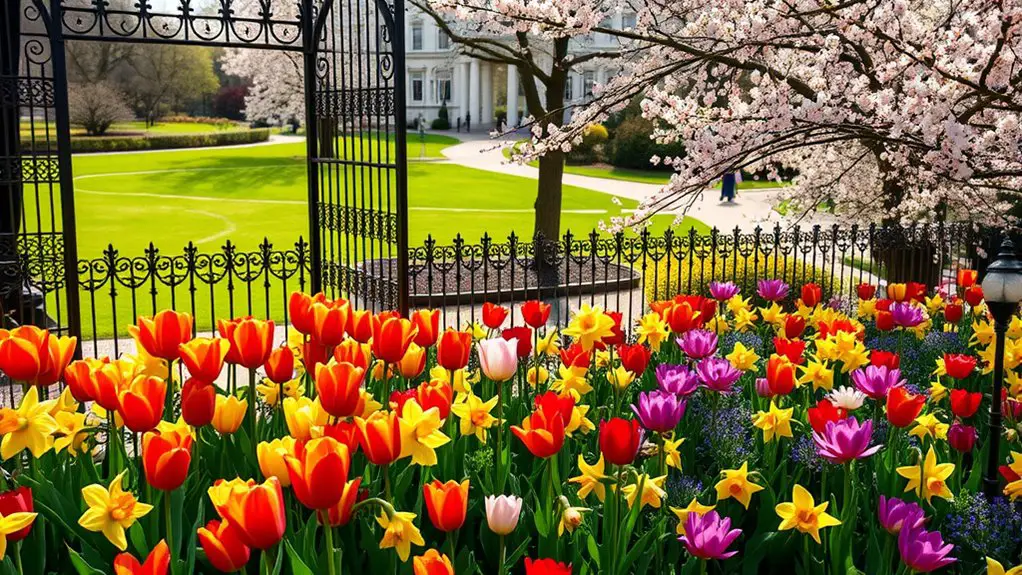
London’s spring flower season unfolds in stages rather than arriving all at once. Daffodils are common in March and April, many cherry trees flower from March into April, tulips become prominent in April and May, and rhododendrons and azaleas add color later in the season.
Kew Gardens is one of the most reliable places to plan a flower-focused day. Different cherry varieties there can bloom from the end of March into early May, while magnolias, tulips, crocuses, rhododendrons and wisteria provide additional spring interest.
The Royal Parks offer another easy way to see seasonal flowers without leaving central London. Their official bloom guide lists daffodils in March and April, cherry blossom in March and April, and tulips in April and May.
Regent’s Park, St. James’s Park, Kensington Gardens, Greenwich Park and Hyde Park all reward slow walks in spring. Remember, however, that flowering dates shift from year to year with temperature and weather.
Pro Tip: For blossom photography, visit early in the morning when paths are quieter and the light is softer. If seeing a specific flower is important, check the garden or park’s current updates a few days before your visit.
Iconic Landmarks in Bloom: Historic London in Spring
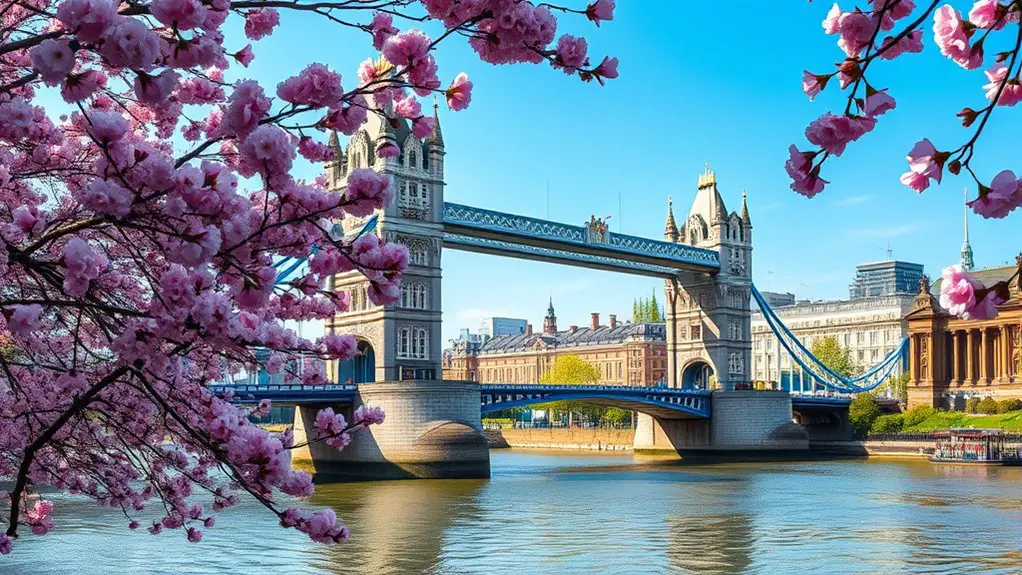
Spring adds greenery and flowers to many of London’s historic settings, but the best experience comes from pairing a landmark with a nearby garden or park rather than expecting every monument to be surrounded by blossom.
Westminster Abbey and College Garden
Westminster Abbey is worth visiting in any season, and spring gives you an extra reason to explore its quieter outdoor spaces. The Abbey’s historic College Garden and cloister gardens offer a peaceful contrast to busy Parliament Square.
College Garden has been cultivated for more than 900 years and includes old London plane trees, lawns, a small rose garden and historic architectural features. Access can depend on Abbey opening arrangements, so check the official visitor information before planning your day around the garden.
Potters Fields Park by Tower Bridge
For greenery beside Tower Bridge, head to Potters Fields Park on the south side of the Thames. This public riverside space has lawns, trees, landscaped planting and clear views of the bridge.
You can combine it with Tower Bridge, the Queen’s Walk, Borough Market and the riverside around London Bridge. It is also a convenient picnic or rest stop when the grass is dry.
Royal Parks Blooms
London’s Royal Parks are among the easiest places to build spring flowers into a sightseeing day. The Royal Parks spring bloom guide identifies seasonal displays across the parks, including daffodils, cherry blossom, bluebells, tulips, azaleas and rhododendrons.
In Regent’s Park, the Avenue Gardens are particularly attractive for spring cherry blossom and tulips. Queen Mary’s Gardens are famous for roses, but their strongest rose display normally comes around early June rather than the middle of spring.
Outdoor Markets and Food Festivals
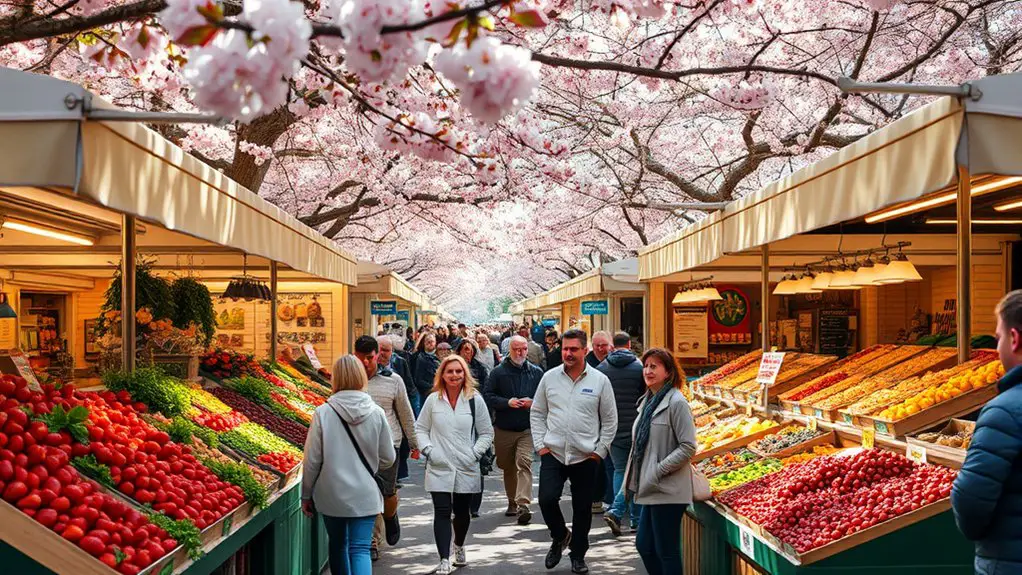
London’s markets are useful in spring because they work in mixed weather. Borough Market combines covered and open-air areas with produce, prepared food and specialist traders, while Camden’s market areas offer street food, clothing, crafts and souvenirs.
Be careful with seasonal festival lists. The London Wine Fair takes place in May, but it is a professional B2B drinks-industry event rather than a general tourist wine festival. Taste of London, meanwhile, normally falls in June, so it is better treated as an early-summer add-on if your trip extends beyond May.
| Market/Festival | Location | Best to Know |
|---|---|---|
| Borough Market | Southwark | Excellent year-round food stop with both covered and open areas |
| Camden Market | Camden | Street food, independent shops, crafts and busy weekend crowds |
| Taste of London | Regent’s Park | Usually held in June; treat it as an early-summer extension rather than a March–May spring event |
Parks and Open Spaces for Spring Picnics
When the weather cooperates, London has no shortage of picnic spots. Hyde Park offers broad lawns and easy access from central London, while Regent’s Park combines open grass with more formal gardens.
St. James’s Park works well when you are sightseeing around Westminster, Buckingham Palace and The Mall. Kensington Gardens offers large lawns and mature trees, while Hampstead Heath is the stronger choice for a more natural landscape and elevated city views.
Check the ground before committing to a picnic after rain, and bring something waterproof to sit on in early spring. Local rules can vary for barbecues, alcohol, cycling and large gatherings, so check park signage rather than assuming every activity is allowed.
Thames River Cruises and Waterfront Walks
The Thames is one of the easiest ways to connect London’s major sights. Depending on the route, a river trip can give you views of the Palace of Westminster, London Eye, St Paul’s area, Tower of London, Tower Bridge and modern riverside districts.
You can choose a sightseeing cruise or use scheduled river services as part of your transport. Always check the operator’s current route and timetable because not every boat serves every pier.
For a free alternative, walk the South Bank between Westminster and Tower Bridge in stages. The route passes cultural venues, restaurants, street performers and several bridges, with plenty of places to stop if spring rain arrives.
The Thames Path also continues far beyond central London, so walkers can choose quieter sections in west London when they want more greenery and fewer major attractions.
Spring Events and Cultural Festivals
London’s spring calendar changes each year, so confirm dates on the organizer’s official site before booking flights or accommodation around a single event. For forward planning, several major 2027 dates have already been announced.
RHS Chelsea Flower Show
The RHS Chelsea Flower Show is one of London’s signature May events. The Royal Horticultural Society has announced the 2027 show for May 18–22, 2027 at Royal Hospital Chelsea.
Expect show gardens, specialist growers, floral displays, garden-design ideas and horticultural exhibits. Tickets are limited, and some days or sessions can sell out well in advance.
| Feature | Highlights | Tips |
|---|---|---|
| Show Gardens | Professional garden design and planting ideas | Allow time to revisit favorites after the first circuit |
| Exhibitors | Nurseries, growers and horticultural specialists | Ask specialists about plants that caught your attention |
| Floral Displays | Seasonal flowers and creative arrangements | Photograph plant labels as well as displays |
| Planning | Different ticket sessions and member/public days | Book through the RHS and check the current entry conditions |
The Boat Race on the Thames
For a real spring river tradition, consider the Oxford–Cambridge Boat Race. The annual races follow the Championship Course on the Thames between Putney and Mortlake.
The 2027 Boat Race is confirmed for Sunday, April 11, 2027. Large crowds watch from the riverbank, so plan your viewing area and transport before race day rather than arriving without a route in mind.
London Coffee Festival
Coffee fans can also build a spring trip around the London Coffee Festival. The official festival site currently lists the next event for May 13–16, 2027 at The Truman Brewery.
The event combines specialty coffee brands, tastings, demonstrations, workshops and barista-focused programming. Some sessions are aimed at the coffee industry while others welcome the wider coffee-loving public, so check the ticket type before booking.
Exploring London’s Neighborhoods in Blossom
Spring also makes London’s residential neighborhoods more photogenic, although street-by-street bloom displays are less predictable than those in managed parks.
Kensington, Chelsea and Notting Hill often provide a mix of flowering trees, magnolias, wisteria, colorful front gardens and distinctive architecture. They are good areas for an unhurried walk, but remember that many of the most attractive plants belong to private homes.
Camden and Shoreditch offer a different kind of spring walk, combining parks, canals, markets and street art. For dependable cherry blossom rather than chance discoveries, prioritize Regent’s Park, Greenwich Park, St. James’s Park, Kensington Gardens or Kew.
Respect private property when taking photographs and avoid blocking doorways, pavements or residential entrances.
Wildlife and Nature Reserves in and Around London
You do not have to travel far from central London to find larger natural spaces. Richmond Park combines ancient trees, grassland, ponds and herds of free-roaming red and fallow deer. Epping Forest provides extensive woodland and walking trails on London’s northeastern edge.
Walthamstow Wetlands is not coastal; it is an urban wetland reserve built around ten reservoirs in northeast London. The site is particularly valuable for birdwatching. The London Wildlife Trust highlights species including grey herons, tufted ducks, little egrets, kingfishers and peregrine falcons.
Warning: Richmond Park’s deer are wild animals. The Royal Parks asks visitors to stay at least 50 metres away and never touch or feed them. Extra care is important during the May–July birthing season.
Shopping and Fashion in the Spring Season
Spring collections begin appearing across London as the weather warms, but practical clothing matters as much as fashion. Lightweight jackets, knit layers and water-resistant outerwear all make sense when morning and afternoon temperatures differ.
Oxford Street offers major retailers, while Covent Garden mixes larger brands with beauty, fashion and specialty shops. Markets and independent districts provide vintage and one-off pieces if you prefer something less standardized.
Do not build your travel wardrobe around the hope of consistently warm afternoons. London can still feel chilly after sunset in April and May, especially on windy or wet days.
Tips for Making the Most of Your Spring Visit
The best spring trips balance outdoor plans with enough flexibility to handle rain, changing bloom dates and busy event weekends.
Embrace Outdoor Activities
Take advantage of good-weather windows rather than saving every outdoor activity for one particular day. Walk the South Bank, explore a Royal Park, use a Santander Cycle on a suitable route, or picnic when the forecast looks favorable.
Hyde Park, Regent’s Park, Hampstead Heath and Battersea Park all work well for active days. Outdoor theatre and seasonal events become more common toward late spring, although schedules vary by year.
Keep one museum, gallery or covered market in reserve for a wet afternoon. That simple backup plan prevents a passing shower from disrupting the whole day.
Visit Blooming Gardens
For the best chance of seeing flowers, match the garden to the stage of spring rather than assuming every location peaks simultaneously. Arriving near opening time also gives you quieter paths and better photography conditions.
| Garden | Spring Highlight |
|---|---|
| Kew Gardens | Cherry blossom, magnolias, tulips, rhododendrons and glasshouses |
| Chelsea Physic Garden | Historic botanical collections and medicinal plants |
| Regent’s Park | Avenue Gardens cherry blossom and tulips; roses become stronger toward early June |
| Holland Park | Woodland walks and the Kyoto Garden |
| Hampton Court Palace Gardens | Formal gardens, historic landscape and a full-day palace-and-garden outing |
Use Public Transportation
London’s Tube, buses, Elizabeth line, London Overground and other rail services make it unnecessary for most visitors to drive in central London.
Transport for London recommends pay as you go using contactless, Oyster or Visitor Oyster as convenient visitor options. Pay-as-you-go travel also benefits from applicable fare caps.
Use the same physical card or the same mobile device to touch in and out throughout a rail journey. On buses and trams, you normally touch in only. Mixing a bank card, phone and smartwatch on the same journey can result in incomplete-journey charges.
Check TfL’s live status and journey planner before major event days and holiday weekends because engineering work and closures can change the fastest route.
Pack for Changeable Spring Weather
A practical London spring packing list includes a lightweight waterproof jacket, layers that can be removed during warmer afternoons, comfortable walking shoes and a compact umbrella. A scarf or light sweater can still be useful in March and on cool evenings.
Choose footwear that can handle wet pavements and park paths. If you expect to spend most of the day outdoors, a small day bag with water, sunscreen and an extra layer is more useful than dressing for only the afternoon forecast.
Plan Around Easter and May Bank Holidays
Easter and the two May bank-holiday weekends can increase demand for accommodation, attractions and intercity travel. Dates move from year to year, so verify them on the UK government’s bank-holiday calendar.
Reserve timed-entry attractions and major events in advance when your dates are fixed. RHS Chelsea in particular deserves early booking. Even for free parks and neighborhoods, starting early can make the experience noticeably calmer.
For the widest mix of blossom, comfortable walking weather and long daylight, April and May are usually the strongest all-around choices—but no single week guarantees peak flowers everywhere in London.
Frequently Asked Questions
When do cherry blossoms typically bloom in London?
March and April are the main cherry-blossom months in many Royal Parks. At Kew, different cherry varieties can flower from the end of March into early May. Exact peak dates shift with winter and early-spring temperatures.
Are there hidden gardens or quieter floral spots in London?
Yes. Consider Westminster Abbey’s College Garden when accessible, Chelsea Physic Garden, St. John’s Lodge Garden in Regent’s Park and smaller garden areas within the Royal Parks. Visiting early on a weekday also makes major gardens feel quieter.
How do spring weather variations affect outdoor plans?
Temperatures rise steadily from March to May, but rain, wind and cool mornings remain possible throughout spring. Keep your schedule flexible, wear layers and pair each outdoor plan with an indoor alternative nearby.
What are the best times to avoid crowds at popular London sites?
Weekday mornings are generally the best starting point for gardens, markets and major attractions. Arrive close to opening time where possible and expect busier conditions around Easter, May bank holidays and major ticketed events.
Are there special spring discounts or events for tourists?
Discounts vary by attraction and year, so there is no universal London spring discount. Many major parks are free, and several national museums have free general admission. Check official attraction and event websites for current ticket offers rather than relying on seasonal promotions advertised elsewhere.
Which spring month is best for visiting London?
March suits travelers who prefer cooler weather and generally lighter spring crowds. April is excellent for blossom and tulips, while May usually offers warmer conditions, longer outdoor days and major events such as the RHS Chelsea Flower Show.
What should I wear in London during spring?
Dress in layers and carry a lightweight waterproof jacket. Comfortable walking shoes are essential, and a compact umbrella, light sweater and small day bag are useful because conditions can change between morning and afternoon.
Conclusion
Spring gives London a useful balance of city sightseeing and time outdoors. March brings early flowers and cooler days, April is one of the strongest months for blossom and tulips, and May combines milder weather with an increasingly busy events calendar. Build your trip around a few dependable gardens and landmarks, leave room for weather changes, and book high-demand events ahead. With those basics covered, parks, Thames walks, markets and neighborhood strolls can fill the spaces in between without turning your visit into an overplanned schedule.
Sources
- Met Office — Heathrow long-term climate averages — spring temperature, rainfall and sunshine context for the London area.
- Royal Botanic Gardens, Kew — Seasons at Kew — cherry blossom and other spring flowering periods.
- The Royal Parks — Spring Blooms in the Royal Parks — bloom timing and locations for daffodils, cherries, tulips and other spring flowers.
- Royal Horticultural Society — RHS Chelsea Flower Show — current show dates and official visitor information.
- Transport for London — Best Ways for Visitors to Pay — Oyster, contactless and pay-as-you-go transport guidance.
- London Wildlife Trust — Birds at Walthamstow Wetlands — wetland status and documented birdlife.
