
Last Updated on July 27, 2026 by Daniel Globe
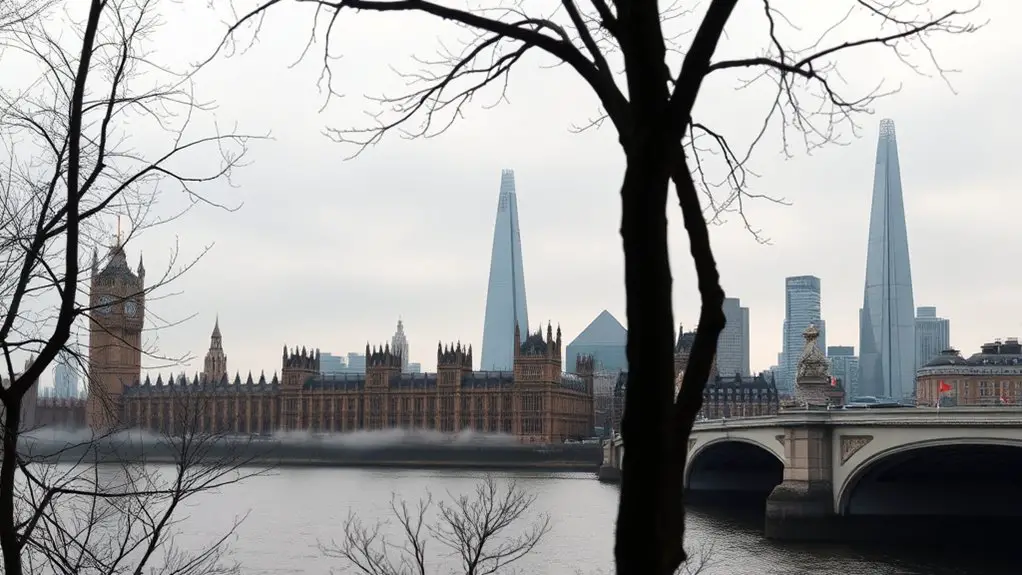
March is a transition month in London, when winter starts to loosen its grip and the first strong signs of spring appear in parks and gardens. Days grow noticeably longer, daffodils and early blossom add color, and the calendar begins filling with cultural events. The weather can still turn cold or wet, but March can be a rewarding time to explore London before the busiest summer period.
Quick Answer
March is a good time to visit London if you want early spring color, longer days, and fewer peak-summer crowds. Expect cool, changeable weather: Heathrow’s 1991–2020 March averages are about 11.7°C (53°F) by day and 4.1°C (39°F) at night. Pack layers and rain protection, and check event dates before you go.
Key Takeaways
- March weather is cool and variable, with average London-area daytime highs around 12°C (54°F).
- Daffodils and some cherry blossoms usually appear during March, while exact bloom dates depend on the weather.
- Major March events change from year to year, so check the current calendar before booking around a festival.
- Daylight increases quickly through March, and UK clocks move forward on the final Sunday of the month.
- Contactless payment or Oyster makes public transport straightforward for most visitors.
Disclosure: As an Amazon Associate I earn from qualifying purchases. Some links on this page are affiliate links, at no extra cost to you.
London Weather in March: What to Expect
March feels more like early spring than deep winter, but you should not expect consistently warm weather. According to the Met Office’s 1991–2020 climate averages for Heathrow, a useful London-area reference, the average March maximum is about 11.7°C (53°F) and the average minimum is about 4.1°C (39°F).
The same climate record shows roughly 39 mm of rain during March and about 8.5 days with at least 1 mm of rainfall. That does not mean rain falls all day on those dates. London often shifts between cloud, sunshine, drizzle and short showers.
Met Office 1991–2020 averages for Heathrow put a typical March at about 11.7°C (53°F) for the daily high and 4.1°C (39°F) for the low.
Daylight in London During March
One of March’s biggest advantages is the rapid increase in daylight. London gets just under 11 hours of daylight near the beginning of the month and almost 13 hours by the end. That gives you considerably more time for parks, riverside walks and outdoor sightseeing than during midwinter.
The UK also switches from Greenwich Mean Time to British Summer Time on the last Sunday in March. According to GOV.UK, the clocks went forward on March 29 in 2026. The exact date changes each year, but the last-Sunday rule remains the same.
Pro Tip: Pack a light waterproof jacket, one warm mid-layer, comfortable water-resistant shoes and a compact umbrella. Layering works better than relying on one heavy winter coat because temperatures can change noticeably between morning and afternoon.
Embracing the Spring Blooms in London’s Gardens and Parks
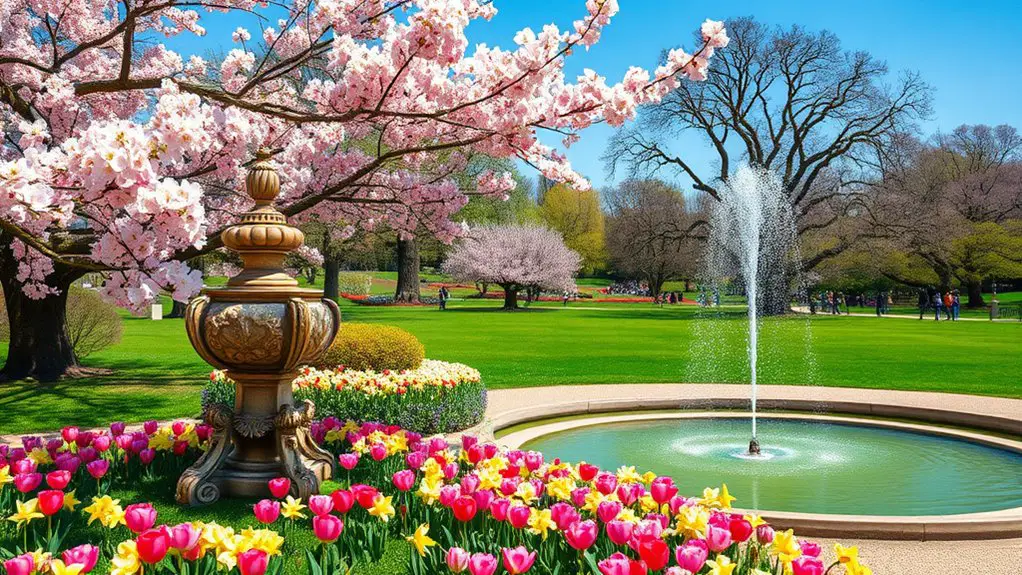
March is when many London parks begin showing clear signs of spring. The Royal Parks lists daffodils and several types of cherry blossom among flowers to look for from March into April.
St James’s Park is especially convenient if you are already sightseeing around Buckingham Palace, while Kensington Gardens, Hyde Park, Regent’s Park and Greenwich Park also reward a slow walk when early spring flowers are appearing.
Daffodils are among the most reliable March sights. Cherry blossom is less predictable because a warm spell can bring trees into bloom earlier, while colder weather can delay them. That means photographs from the same week in different years may look very different.
The Royal Botanic Gardens, Kew is another strong choice for spring color. Magnolias, cherry blossoms and tulips are among its seasonal highlights, alongside plants inside its historic glasshouses.
A picnic can be enjoyable on a dry afternoon, but keep a flexible indoor option nearby in case the temperature drops or rain arrives.
Note: Flowering dates are weather-dependent. If blossom is a major reason for your trip, check current updates from Kew or the Royal Parks shortly before visiting rather than relying on an exact date from a previous year.
Celebrating Cultural Events and Festivals in March
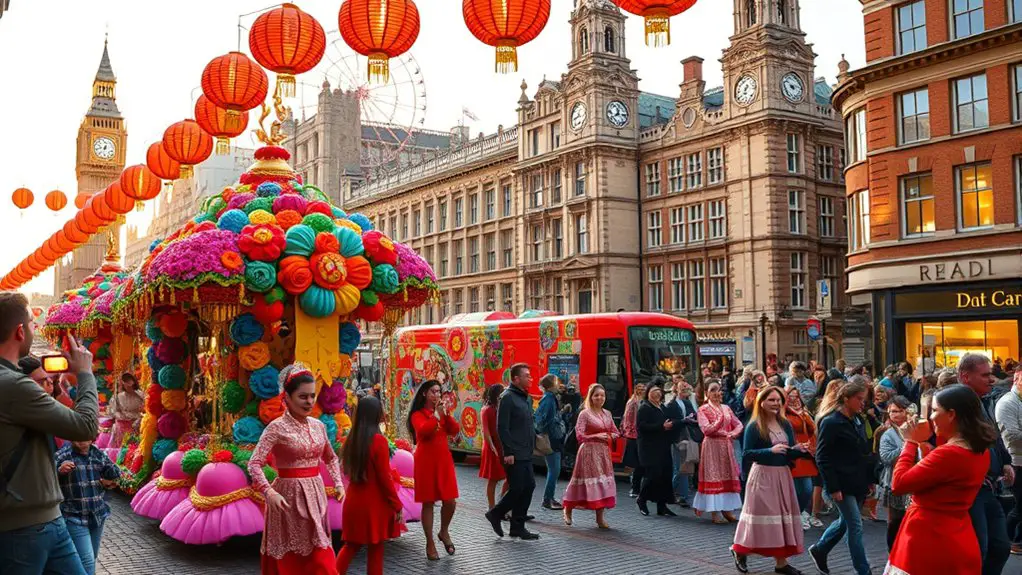
March brings a mixture of annual observances, parades, exhibitions, film events and community celebrations. The important planning point is that London-specific event dates can change each year even when the underlying holiday has a fixed date.
For example, St Patrick’s Day itself is March 17, but the Mayor of London’s main parade and Trafalgar Square celebration took place on March 15 in 2026. The official Visit London events calendar is a useful place to verify the current year before planning around an event.
| Festival/Event | Timing | What to Expect |
|---|---|---|
| International Women’s Day | March 8 | Talks, tours, cultural programs and events across the city. |
| St Patrick’s Day | March 17; London festival date varies | The 2026 parade and Trafalgar Square festival took place March 15 with music, dance and Irish cultural programming. |
| Mothering Sunday | Date varies | In 2026 it fell on March 15, increasing demand for restaurant reservations and special experiences. |
| Nowruz | Around the March equinox | Persian New Year celebrations; individual London programs and venues vary from year to year. |
| BFI Flare | March dates vary | London’s LGBTQIA+ film festival; the 2026 edition ran March 18–29. |
| London Coffee Festival | Not a March event in 2026 | The 2026 festival was scheduled for May 14–17 at the Truman Brewery. |
Because festival calendars can shift, treat year-specific dates as planning aids rather than permanent annual schedules. Check the official organizer before buying non-refundable tickets or booking accommodation around a particular event.
Exploring Historic Landmarks With a Seasonal Twist
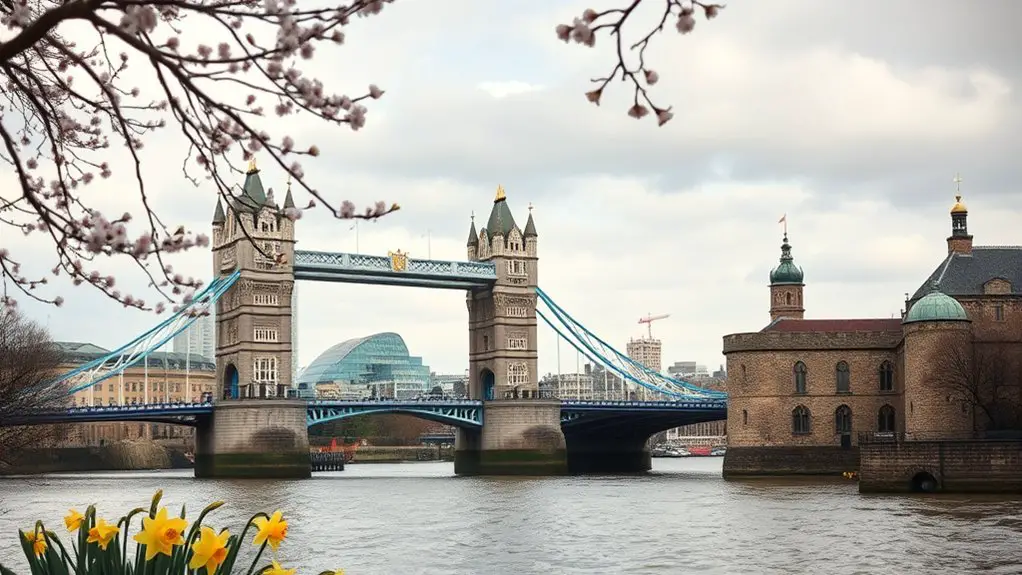
London’s major historic landmarks remain year-round attractions, but longer March days make it easier to combine indoor sightseeing with parks and outdoor walks.
You could visit Westminster Abbey or the Tower of London in the morning, then use a brighter afternoon for St James’s Park, the Thames or another outdoor area. Around Buckingham Palace, March daffodils can add seasonal color to an otherwise classic sightseeing route.
The Changing of the Guard also takes place during the year, but it is not a special spring ceremony. Dates can vary, so check the Household Division’s official Changing of the Guard schedule before making it the centerpiece of your morning.
For elevated views, attractions such as the London Eye can be especially rewarding on a clear March day, but visibility is naturally weather-dependent.
Note: Major attractions, ceremonies and temporary exhibitions can change hours or schedules. Recheck the official attraction page on the day of your visit, especially when weather or public events may affect access.
Enjoying Outdoor Markets and Seasonal Cuisine
March is a good month for mixing sightseeing with London’s food and street markets. Some are open throughout the week, while others operate only on specific weekend days, so timing matters.
| Market | Current Regular Schedule | Highlights |
|---|---|---|
| Borough Market | Tuesday–Sunday; closed Monday under regular hours | Produce, specialty foods, bakeries and prepared dishes. |
| Columbia Road Flower Market | Sunday, roughly 8am–3pm | Flowers, plants and independent shops along Columbia Road. |
| Southbank Centre Food Market | Friday–Sunday | Street food, desserts and drinks beside the South Bank cultural district. |
| Camden Market | Daily | International food, independent retail and eclectic stalls. |
| South Kensington Farmers’ Market | Saturday, 9am–2pm | Fruit, vegetables, fish, cheese, bread, prepared foods and seasonal produce. |
For a more genuinely seasonal March taste, look for rhubarb and wild garlic rather than assuming British asparagus will be available locally. The traditional British asparagus season normally starts around April 23 and runs into June.
Market hours can change for holidays, special events and individual traders, so check the official market website if you are making a special journey.
Best Indoor Activities for Rainy March Days
A wet forecast does not have to disrupt a March visit. London has enough major indoor attractions to build an entire day without depending on the weather.
- British Museum: Its permanent collection is free to enter, although advance timed booking is recommended and special exhibitions may charge admission.
- South Kensington museums: The Natural History Museum, Science Museum and V&A make it easy to move between major indoor attractions in one neighborhood.
- National Gallery and other galleries: Useful choices when outdoor sightseeing becomes uncomfortable.
- West End and fringe theater: Check current listings rather than looking specifically for “March-themed” performances, as productions change continuously.
- Markets and food halls: Borough Market and other partly covered food destinations can work well when showers are intermittent.
A useful March strategy is to pair one ticketed indoor attraction with an outdoor park or neighborhood walk. If the forecast changes, you can reverse the order rather than losing an entire day.
Tips for Visiting London During the March Transition
Visiting London in March rewards flexible planning. Chilly mornings, brighter afternoons and sudden showers can all occur during the same trip.
What to Pack for London in March
- A waterproof or water-resistant outer layer.
- A sweater, fleece or other warm mid-layer.
- Comfortable shoes that handle wet pavements.
- A compact umbrella.
- A small day bag for storing layers when temperatures rise.
You usually do not need full winter expedition clothing, but a light jacket alone may feel inadequate during cold mornings or windy evenings.
Getting Around London in March
The Tube, buses, London Overground, Elizabeth line, DLR and walking cover most visitor needs. Transport for London recommends pay-as-you-go travel using contactless or Oyster as easy visitor options.
When using contactless, use the same card or device consistently so the system can calculate the correct fare and applicable caps. Overseas bank fees may apply to non-UK cards.
Crowds, Hotels and Booking
March is outside the main summer peak, but popular attractions can still be busy, particularly at weekends and around major events. Do not assume every weekday hotel will automatically be cheaper than every weekend stay. London room prices move with demand, events, property availability and booking conditions.
Compare your exact dates across several properties and pay attention to cancellation terms. For major attractions, theater performances and special exhibitions, advance reservations can remove uncertainty even when general visitor numbers feel manageable.
Pro Tip: Build each day around one must-do reservation and keep the rest flexible. March weather changes quickly, so it helps to have both an indoor option and an outdoor option within the same part of London.
Frequently Asked Questions
What are the best indoor activities for rainy March days in London?
Good rainy-day choices include the British Museum, Natural History Museum, V&A, Science Museum, National Gallery, West End theater and covered food destinations. Keeping one indoor attraction in each day’s plan makes it easier to adapt when showers arrive.
How do daylight hours change throughout March in London?
Daylight increases quickly. London has just under 11 hours of daylight near the start of March and almost 13 hours by the end. UK clocks also move forward one hour on the last Sunday in March, creating later evening light.
Are there unique March-themed theater performances or shows?
London does not have a standard March-themed theater season. West End, fringe and limited-run productions change throughout the year, so check current listings for the dates of your trip rather than expecting spring-specific performances.
What transportation options work best during March’s early spring weather?
The Tube, buses, Elizabeth line, London Overground, DLR and walking are practical year-round. Contactless payment or Oyster is convenient for most visitors. On rainy days, combine rail and bus services to reduce long outdoor walks.
How do hotel prices vary across different weeks in March?
There is no reliable rule that one March week or every midweek stay will always be cheaper. Prices respond to events, weekends, school calendars, demand and hotel availability. Compare your exact dates and consider refundable rates if your plans may change.
Is March a good time to visit London?
Yes, especially if you are comfortable with cool, changeable weather. March offers longer days, early spring flowers, a busy cultural calendar and generally less peak-season pressure than summer. The tradeoff is that you need layers and a rain plan.
Does it snow in London in March?
Snow is possible during a cold spell, but it should not be the main condition you plan for. Cool temperatures, cloud, rain and occasional brighter spring weather are more useful expectations. Check the short-range forecast immediately before your trip.
Conclusion
March gives you a balanced version of London: early spring flowers, longer days, major cultural attractions and plenty of indoor backup options without the full pressure of the summer peak. Expect cool and changeable weather, pack layers, and verify current event and attraction schedules before you go. With that flexibility, you can enjoy gardens, landmarks, markets, museums and seasonal celebrations without letting a rainy afternoon derail the trip.
Sources
- Met Office — Heathrow 1991–2020 climate averages — March temperature, rainfall and sunshine data.
- Visit London — Things to do in London in March — current March events and seasonal planning information.
- The Royal Parks — Spring Blooms in the Royal Parks — March daffodils, cherry blossom and other seasonal flowers.
- Royal Botanic Gardens, Kew — Spring highlights — magnolia, cherry blossom and tulip information.
- Transport for London — Best ways for visitors to pay — contactless, Oyster and pay-as-you-go guidance.
- GOV.UK — When do the clocks change? — British Summer Time and the late-March clock change.
