
Last Updated on July 28, 2026 by Daniel Globe
Autumn in London combines colorful parks, major cultural events, cooler walking weather, and plenty of inviting places to escape a rainy afternoon. September can still feel mild, October usually brings stronger autumn color and Halloween events, and November turns noticeably cooler. With a little planning around weather, daylight, and advance bookings, it is one of the most rewarding seasons for exploring the capital.
Quick Answer
Autumn is a great time to visit London for colorful parks, major cultural events, cooler walking weather, and fewer summer crowds. September is usually mild, October brings stronger foliage and festivals, and November is colder and wetter. Pack layers and waterproofs, book headline events early, and plan outdoor sights for daylight.
Key Takeaways
- October into early November is often the strongest period for autumn color, although heat, drought, wind, and rainfall can shift the timing.
- Top foliage locations include Kew Gardens, Richmond Park, Isabella Plantation, Regent’s Park, Hampstead Heath, and St. James’s Park.
- Confirmed 2026 highlights include the BFI London Film Festival from October 7–18 and Halloween at Kew from October 16–November 1.
- London gets noticeably cooler through the season, so bring layers, comfortable waterproof footwear, and a rain-resistant outer layer.
- Keep your distance from Richmond Park’s deer during the autumn rut and never approach them for photographs.
Disclosure: As an Amazon Associate I earn from qualifying purchases. Some links on this page are affiliate links, at no extra cost to you.
London Autumn Weather by Month
London’s autumn weather changes considerably between September and November. For a practical benchmark, the Met Office’s 1991–2020 climate normals for Heathrow show average daytime highs falling from about 20.2°C (68°F) in September to 15.8°C (60°F) in October and 11.5°C (53°F) in November.
| Month | Average High | Average Low | Average Rainfall |
|---|---|---|---|
| September | 20.2°C / 68°F | 11.6°C / 53°F | 49.6 mm |
| October | 15.8°C / 60°F | 8.8°C / 48°F | 65.1 mm |
| November | 11.5°C / 53°F | 5.3°C / 41°F | 66.6 mm |
These figures are long-term averages rather than a forecast, so individual days can be warmer, colder, wetter, or sunnier. Check the Met Office climate data when planning and use a short-range forecast immediately before each day of your trip.
Met Office 1991–2020 normals show London’s average daytime high dropping by almost 9°C between September and November, which is why layers matter more than one heavy coat early in the season.
When Is the Best Time for Autumn Colours in London?
There is no fixed peak-color date. In a typical year, September begins the transition, October brings a broader spread of yellow, orange, and red foliage, and color can continue into November. Different tree species change at different times, so major parks rarely peak everywhere on the same day.
Weather also matters. Warm, dry conditions can cause stressed trees to shed leaves early, while wind and storms can shorten the best viewing period. Kew has specifically documented how heat and drought can alter autumn color and trigger early leaf fall.
Note: If autumn foliage is a major reason for your trip, avoid building the entire itinerary around one predicted “peak” weekend. Choose several parks with different tree collections and leave one outdoor day flexible.
The Best Places to View Autumn Foliage
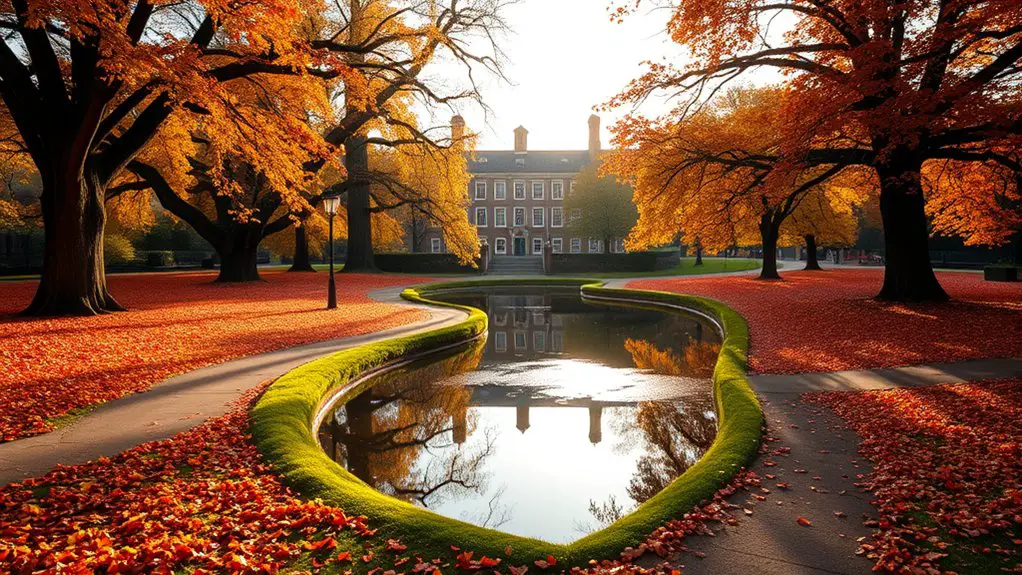
London has an unusually wide range of parks, gardens, woodlands, and riverside paths where you can see the season change without leaving the city.
Kew Gardens is one of the most reliable choices because its large collection contains trees from around the world. Kew highlights its Arboretum and Treetop Walkway as particularly good places for autumn color, with species such as sweet gum, tulip tree, oak, and hickory adding different shades through the season. See the official Kew autumn guide before visiting.
Regent’s Park combines formal landscaping, broad lawns, tree-lined paths, and easy access from central London. It works especially well when you want colorful scenery without committing to a long woodland hike.
Hampstead Heath feels wilder. Its wooded paths, open grassland, ponds, and elevated viewpoints make it a strong choice for mixing autumn foliage with panoramic views of the London skyline.
Richmond Park offers ancient trees, broad grassland, woodland, and large herds of red and fallow deer. Within the park, Isabella Plantation provides winding woodland paths and autumn color from acers. Its famous azaleas, however, reach their main flowering peak in spring rather than autumn. The Royal Parks guide to Richmond’s gardens provides current visitor information.
St. James’s Park is useful when you have limited time. Its lake, mature trees, waterfowl, and views toward Buckingham Palace combine classic London landmarks with seasonal color in a compact walk.
Warning: Autumn overlaps with deer rutting season in Richmond Park. The Royal Parks advises visitors to stay at least 50 metres from deer and at least 100 metres from an active male. Never approach, feed, touch, or crowd deer for a photograph.
Seasonal Events and Festivals in London
Autumn is one of London’s busiest cultural seasons, but event schedules change from year to year. For 2026, several major events already have confirmed dates.
- Totally Thames: scheduled across September, with arts, culture, and activities connected to the River Thames.
- London Design Festival: September 12–20, 2026.
- Open House Festival: September 12–20, 2026, with opportunities to explore architecture and buildings across the capital.
- BFI London Film Festival: October 7–18, 2026. The 70th edition brings films, series, premieres, and events to London and other UK locations. Check the official BFI London Film Festival site as the programme is released.
- Halloween at Kew: October 16–November 1, 2026, with an illuminated trail, performers, themed scenes, and different time slots. See Kew’s official Halloween information.
- London Literature Festival: October 20–November 1, 2026 at the Southbank Centre. See the official festival programme.
- Halloween: October 31 brings themed attractions, performances, family events, and nightlife throughout the city.
- Bonfire Night: fireworks events usually take place on or around November 5, although individual displays set their own dates and ticketing arrangements.
The official Visit London autumn guide is useful for checking newly announced events, exhibitions, and seasonal activities before your trip.
Pro Tip: Treat major October events as book-ahead activities. Keep at least one park walk or neighborhood day flexible so you can move it to the clearest day in the forecast.
Cozy Cafes and Restaurants to Try This Season
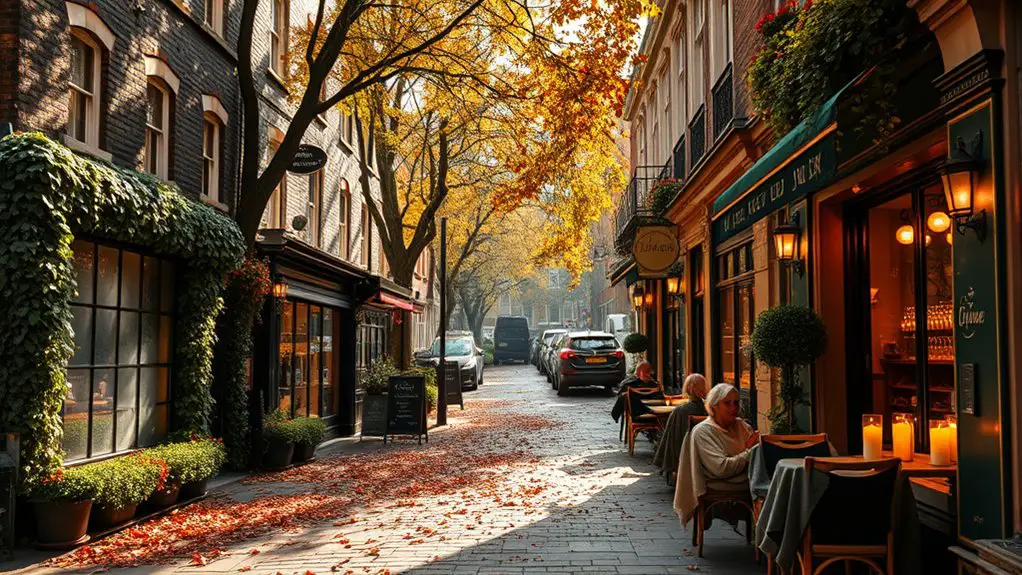
Cooler days make London’s coffee shops, tea rooms, pubs, markets, and restaurants especially appealing. Rather than chasing a particular pumpkin-flavored menu that may disappear from one year to the next, choose places that are worth visiting regardless of seasonal specials.
Warm Beverage Hotspots
Monmouth Coffee remains a dependable stop for coffee in central London. Its Covent Garden shop is at 27 Monmouth Street, making it easy to combine with Covent Garden, Seven Dials, Soho, or a West End afternoon.
For a traditional tea experience, Fortnum & Mason’s Diamond Jubilee Tea Salon on Piccadilly serves afternoon tea in a more formal setting. Reservations are sensible, particularly at weekends.
London’s markets are another useful option because you can choose between hot drinks, baked goods, international food, and indoor or sheltered spaces without committing to a long meal. Borough Market works well alongside a Thames or South Bank walk.
Where to Find a Cozy Atmosphere
For a relaxed autumn break, look beyond cafés alone. Historic pubs, museum cafés, hotel lounges, bookshops with coffee counters, and neighborhood bakeries can all provide a warm stop between outdoor sights.
Areas such as Hampstead, Bloomsbury, Covent Garden, Marylebone, and Notting Hill are especially convenient for combining a neighborhood walk with an indoor break. Instead of crossing London for one café, build your food stops around the places you already plan to visit.
Seasonal Menu Highlights
Autumn menus vary constantly, but common seasonal ingredients include squash, mushrooms, apples, pears, root vegetables, game, warming spices, and richer soups and stews.
British pubs are particularly useful after a long park walk. A pie, roast, soup, or other hot meal can be more satisfying than structuring an itinerary around short-lived branded seasonal drinks.
For afternoon tea or high-demand restaurants, check the current menu and reservation policy before traveling across the city. Seasonal menus and opening hours can change at short notice.
Autumn Walks and Nature Trails
London’s green spaces range from formal gardens to surprisingly wild woodland. Autumn makes walking especially rewarding, but damp leaves, mud, and earlier darkness are good reasons to wear proper footwear and start longer routes earlier in the day.
Leaf-Peeping Excursions
Kew Gardens, Hampstead Heath, Richmond Park, and Regent’s Park all work well for dedicated foliage outings, but each offers a different experience.
Kew is best when you want botanical variety and clearly maintained paths. Hampstead Heath provides more natural woodland and skyline views. Richmond Park gives you the greatest sense of open countryside, while Regent’s Park is easier to combine with central London sightseeing.
Do not worry about finding one supposedly perfect tree or viewpoint. Autumn colors develop unevenly, and a walk through several habitats usually produces better photographs and a more enjoyable day.
Riverside Strolls and Views
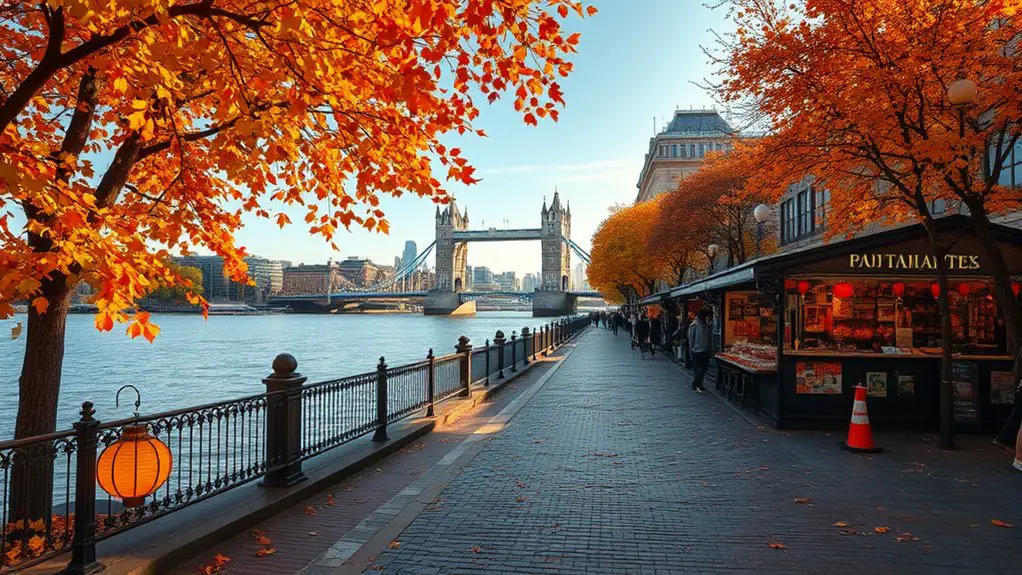
The Thames provides one of the easiest ways to combine autumn scenery with London’s landmarks. The South Bank offers views of the river, bridges, St. Paul’s Cathedral, and the Houses of Parliament, with frequent cafés and indoor attractions when the weather changes.
For a quieter atmosphere, sections of the Thames Path farther west can feel less urban. Around central London, reflections after rain can also make strong photographs, particularly near bridges and illuminated buildings.
The Serpentine in Hyde Park offers another waterside option. Autumn trees, waterfowl, and reflections create a calmer setting than the central Thames.
Woodland and Forest-Style Walks
Hampstead Heath and Richmond Park are the strongest choices when you want woodland rather than manicured flower beds. Fallen leaves, large mature trees, open clearings, and uneven trails create a noticeably different experience from central London parks.
Wear shoes that can handle mud after rain. Paths beneath dense tree cover can remain wet even when paved streets elsewhere in London have dried.
Cultural Attractions With a Fall Twist
Autumn does not require every attraction to have an autumn theme. London’s museums, galleries, historic buildings, and theatres become especially useful because they give you high-quality indoor alternatives when rain interrupts outdoor plans.
The Victoria and Albert Museum, British Museum, National Gallery, Tate Modern, Natural History Museum, Science Museum, Tower of London, and Westminster Abbey can all anchor rainy or colder days. Temporary exhibitions change frequently, so check each venue’s official calendar rather than assuming a seasonal exhibition will be running.
You can also combine indoor culture with nearby foliage. The Natural History Museum and Victoria and Albert Museum pair easily with Kensington Gardens and Hyde Park, while Tate Modern can be combined with a walk along the Thames.
Autumn evenings are a good time to see a West End show, concert, film screening, or literary event once outdoor sightseeing becomes less appealing.
Shopping for Autumn Fashion and Souvenirs
Autumn is a natural time to browse London’s clothing shops for knitwear, jackets, scarves, boots, and waterproof layers. Department stores such as Selfridges and Harrods carry large seasonal ranges, while Covent Garden, Carnaby, Regent Street, and Oxford Street offer a mix of major brands.
Camden Market and other independent shopping areas can be better for unusual accessories, artwork, vintage clothing, and gifts. Covent Garden also makes an easy shopping stop because cafés, theatres, restaurants, and transport links are close together.
For souvenirs, consider items that are actually useful after the trip: tea, coffee, chocolate, books, prints, ceramics, or locally produced food can be more memorable than generic keychains.
Tips for Visiting London in Autumn
What to Pack
Pack in layers rather than relying on one heavy coat. A light base layer, sweater or fleece, and waterproof outer jacket make it easier to adapt between cool parks, heated museums, Underground stations, and restaurants.
Comfortable shoes with decent grip are important if you plan to explore Kew, Hampstead Heath, or Richmond Park after rain. A compact umbrella can help in lighter showers, although a hooded waterproof jacket is often easier in wind.
Plan Around Weather and Daylight
Check the forecast each morning and place parks, viewpoints, and photography sessions into the best-weather windows. Save museums, department stores, afternoon tea, and long meals for rainier periods.
Days shorten noticeably through autumn, particularly by November. Put long park walks and photography stops earlier in the day instead of assuming you will have summer-length evenings.
Book Popular Attractions Ahead
Film screenings, Halloween events, afternoon tea, major exhibitions, and school-holiday family attractions can sell out. Reserve anything that is central to your trip while leaving ordinary park walks and neighborhood exploration flexible.
For museums with free general admission, advance reservations can still be useful. The Natural History Museum, for example, recommends free advance tickets to guarantee entry during busy periods.
Family-Friendly Autumn Activities
London’s parks provide simple family-friendly autumn entertainment without needing a complicated schedule. Hyde Park and Regent’s Park have room for children to move around, while Kew adds botanical displays and seasonal programming.
For 2026, Halloween at Kew runs from October 16 through November 1 and offers different time slots with increasing scare levels. Families should check the recommended session and booking information before choosing tickets.
Rainy weather is easier to handle when you have an indoor backup. The Natural History Museum has free permanent galleries, while the Science Museum offers free general admission alongside paid experiences such as Wonderlab and IMAX screenings.
A ride on the London Eye can provide wide city views when visibility is good, but save it for a clearer day rather than booking solely for an autumn sunset that the weather may hide.
Pumpkin patches and Halloween attractions also appear around Greater London each year, but schedules are highly seasonal. Check the current organizer’s page before traveling, especially during October half-term.
Photography Spots to Capture Autumn’s Beauty
Hampstead Heath is one of the best choices for combining foliage with skyline views. Look for compositions where yellow or red branches frame the more distant city rather than photographing only the trees themselves.
Regent’s Park and St. James’s Park are better for landscaped scenes, water, and formal compositions. St. James’s Park can also place autumn foliage in the same frame as recognizable central London architecture.
Kew Gardens offers the greatest botanical variety, while Richmond Park works well for wider landscapes. Remember that wildlife photography there must be done from a safe distance, especially during the rut.
For urban scenes, Tower Bridge and the South Bank provide reflections, riverside trees, wet pavements, and illuminated landmarks. Immediately after a shower, reflective surfaces can produce more interesting images than a completely clear afternoon.
Morning and late-afternoon light often gives autumn leaves more texture than harsh midday light. In November, however, daylight disappears quickly, so begin photography walks earlier than you would in summer.
Frequently Asked Questions
What are the best travel tips for avoiding autumn crowds in London?
Visit major outdoor attractions early on weekday mornings, avoid school-holiday weekends when possible, and pre-book timed attractions. Parks such as Hampstead Heath and Richmond Park also make it easier to spread out than compact central attractions.
How does London’s weather in autumn affect outdoor sightseeing plans?
Conditions can change quickly, and temperatures fall substantially between September and November. Plan outdoor sights for the best forecast periods, wear layers and waterproof footwear, and keep museums, galleries, cafés, and historic interiors available as rainy-day alternatives.
Are there autumn-themed guided tours available in London?
Yes, seasonal walking, ghost, Halloween, architecture, and river-related tours are often available, especially in September and October. Because operators and schedules change yearly, verify the exact route, dates, accessibility, and cancellation policy before booking.
What are some lesser-known autumn attractions in London?
Try Isabella Plantation’s autumn acers, quieter stretches of the Thames Path, Hampstead’s woodland paths, neighborhood walks around Greenwich or Hampstead, and smaller gardens away from the busiest central sightseeing routes.
How can visitors stay warm while exploring London in cooler weather?
Wear several light layers, add a wind- and rain-resistant outer layer, and bring a scarf or hat later in the season. Alternate long outdoor walks with museums, cafés, markets, pubs, or other heated indoor stops.
Which month is best for autumn colours in London?
October into early November is often the most rewarding period, but there is no guaranteed peak date. Tree species change at different times, and drought, heat, wind, or heavy rain can make leaves turn or fall earlier than expected.
Sources
- Met Office — Heathrow climate averages — 1991–2020 London-area temperature and rainfall normals.
- Visit London — Autumn in London 2026 — current seasonal events and activity planning.
- Royal Botanic Gardens, Kew — Halloween at Kew — confirmed 2026 dates and event information.
- The Royal Parks — Richmond Park FAQs — official deer safety and rutting-season guidance.
- BFI London Film Festival — confirmed 2026 festival dates.
- Southbank Centre — London Literature Festival — official 2026 festival schedule.
Conclusion
Autumn in London rewards a flexible itinerary. Use the clearer days for Kew Gardens, Richmond Park, Hampstead Heath, riverside walks, and photography, then move indoors to museums, galleries, cafés, markets, and cultural events when the weather turns. September offers milder temperatures, October combines foliage with a packed events calendar, and November brings cooler walks and a quieter late-autumn atmosphere. Pack for changing weather, reserve high-demand events in advance, and leave enough flexibility to follow the best conditions once you arrive.
