

Last Updated on July 25, 2026 by Daniel Globe
Getting from London City Airport to Central London is usually simple because the airport has its own Docklands Light Railway (DLR) station in TfL fare Zone 3. For many travelers, the DLR is the best starting point: you can ride directly to Bank in about 20 minutes or change at Canning Town for the Jubilee line to destinations such as London Bridge, Westminster, and Green Park. Taxis, private hire vehicles, and local buses are also available when they better suit your luggage, schedule, or destination.
Quick Answer
The easiest way from London City Airport to Central London is usually the DLR. A direct DLR ride to Bank takes about 20 minutes. For London Bridge, Westminster, or Green Park, take the DLR to Canning Town and change to the Jubilee line. Contactless and Oyster are accepted.
Key Takeaways
- Best overall: The DLR is the main rail connection from London City Airport and reaches Bank in roughly 20 minutes.
- For London Bridge and Westminster: Change from the DLR to the Jubilee line at Canning Town.
- Current adult PAYG fare: A Zone 1–3 Tube/DLR journey costs £3.90 peak or £3.30 off-peak as of July 2026.
- Door-to-door option: Black taxis are available from the airport rank, while private hire and rideshare prices depend on the live app quote.
- No airport shuttle to Central London: Routes 473 and 474 are normal TfL buses serving East London and transport interchanges, not dedicated express shuttles to Bank or Liverpool Street.
At a Glance
| Time Required | About 20 minutes to Bank; roughly 25–40 minutes to many other Zone 1 destinations, depending on the transfer |
| Difficulty | Easy; many trips require no more than one change |
| Tools Needed | Contactless card/device or Oyster card; TfL Journey Planner or TfL Go is useful for live routing |
| Cost | Adult Zone 1–3 PAYG: £3.90 peak / £3.30 off-peak as of July 2026; taxi and private-hire costs vary |
Disclosure: As an Amazon Associate I earn from qualifying purchases. Some links on this page are affiliate links, at no extra cost to you.
Overview of Transportation Options From London City Airport

London City Airport is in the Royal Docks, east of Central London. Its biggest transport advantage is the DLR station connected to the airport terminal. According to London City Airport, the station is in Zone 3 and connects passengers with the wider TfL network.
There is no single journey time for “Central London” because Bank, London Bridge, Westminster, Oxford Circus, and other central districts are several miles apart. Your best route depends on where you are actually staying.
| Option | Typical Use | Approximate Time | Best For |
|---|---|---|---|
| Direct DLR to Bank | No transfer | About 20 minutes | City of London, Bank, Monument |
| DLR + Jubilee line | Change at Canning Town | Often 25–40 minutes | London Bridge, Westminster, Green Park |
| DLR + other TfL rail | Transfer based on destination | Varies | West End, Liverpool Street and Elizabeth line destinations |
| Black taxi | Door to door | Roughly 25–60+ minutes | Heavy luggage, groups, mobility needs |
| Private hire / rideshare | Pre-booked or app booking | Roughly 25–60+ minutes | Door-to-door convenience |
| TfL bus | Local East London connections | Varies | Local trips or backup connections |
Pro Tip: Search for your actual hotel or destination rather than “Central London.” A traveler going to Bank needs a very different route from someone heading to Westminster, Soho, Paddington, or Victoria.
Taking the Docklands Light Railway (DLR) to Central London
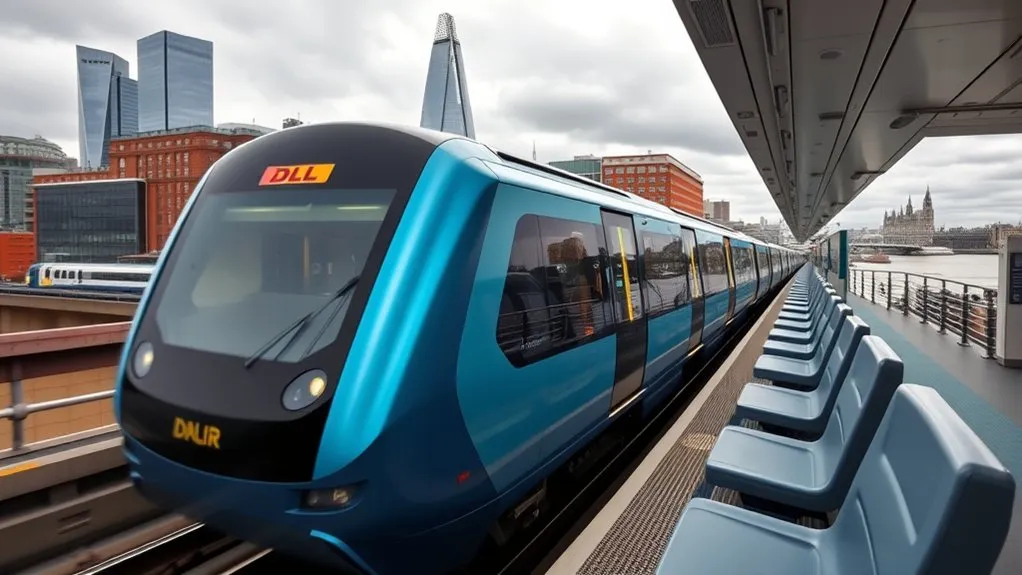
The Docklands Light Railway is the main public-transport link from London City Airport. The station is attached to the airport complex, so you do not need a separate shuttle to reach the railway.
Current departures from London City Airport include DLR services toward destinations such as Bank and Stratford International. Because the exact destination shown on the train can vary, check the platform display before boarding. You can also check live information on the TfL London City Airport DLR station page.
A direct ride to Bank takes about 20 minutes, making it an excellent route for the City of London. From Bank, you can connect with the Central, Northern, and Waterloo & City lines, while the connected Bank/Monument complex also provides access to the Circle and District lines.
For London Bridge, the simplest route for many travelers is to leave the DLR at Canning Town and change to a westbound Jubilee line train. The same interchange works well for Westminster and Green Park.
The DLR also gives you elevated views across the Royal Docks and East London, but its real advantage is speed and predictable journey time compared with road transport during heavy traffic.
London City Airport is in Zone 3, and the DLR reaches Bank in roughly 20 minutes, making rail the strongest default choice for many arrivals.
Accessing the London Underground From London City Airport
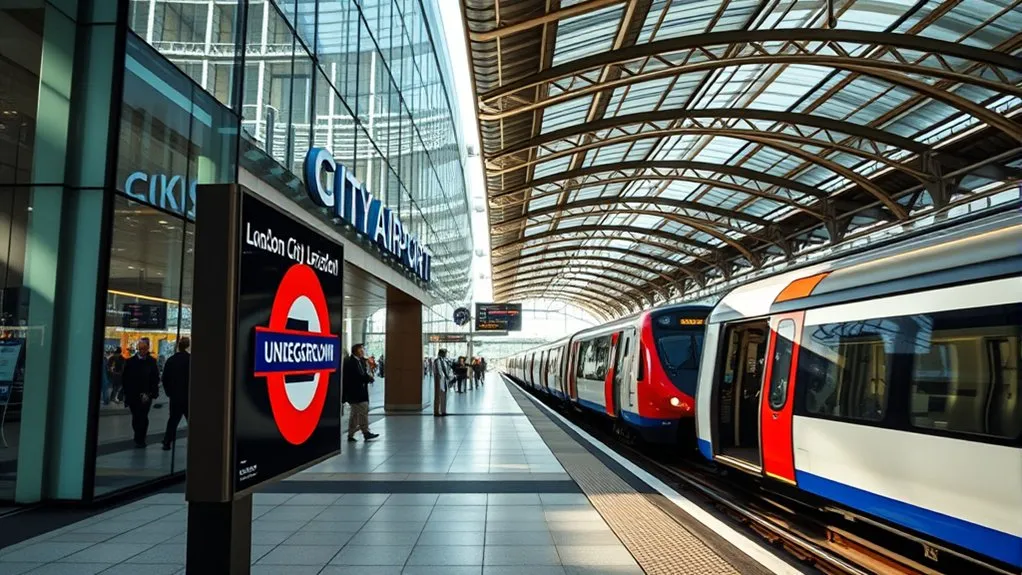
London City Airport does not have a London Underground station. Its airport station is on the DLR, which connects with the Tube and other rail services at several interchange points.
Airport Station Connectivity
For many Central London destinations, Canning Town is the most useful interchange. It is only a short DLR ride from the airport and connects with the Jubilee line.
- Bank and the City: Take a direct Bank-bound DLR service when available.
- London Bridge: DLR to Canning Town, then Jubilee line westbound.
- Westminster: DLR to Canning Town, then Jubilee line to Westminster.
- Green Park: DLR to Canning Town, then Jubilee line to Green Park.
- Liverpool Street: DLR to Bank followed by one stop on the Central line, or walk from Bank if that suits your luggage and destination.
- West End: Depending on the exact destination, connect to the Jubilee, Central, or Elizabeth line using the route recommended by TfL Journey Planner.
The Elizabeth line is also useful for some journeys. London City Airport’s official transport guidance highlights connections between the DLR and Elizabeth line. Because the best interchange depends on current services and your destination, check the TfL Journey Planner before traveling.
Note: Woolwich Arsenal is a DLR and National Rail station, not a London Underground station. The separate Woolwich Elizabeth line station is a short walk away, so do not assume it is a same-platform interchange.
Ticketing and Fare Options
London City Airport is in fare Zone 3. You can use contactless payment or Oyster on the DLR and London Underground.
Under the March 2026 TfL fare schedule, an adult pay-as-you-go journey covering Zones 1–3 costs £3.90 peak or £3.30 off-peak. Fares can vary by route, time, and zones traveled, so use TfL’s fare finder for an exact journey.
Use the same Oyster card, contactless card, or payment device throughout your journey. A physical bank card and the same card loaded into a phone or smartwatch can be treated as different payment methods.
Each fare-paying traveler generally needs their own payment method or ticket. Do not try to tap several adults through using one contactless card.
Navigating the Platform
Check the destination on the departure display before boarding. Depending on the service, trains from London City Airport may be heading toward Bank, Stratford International, or Woolwich Arsenal.
Accessibility is a strong point. London City Airport says a lift connects the main terminal with the DLR platforms, and TfL states that all DLR stations have step-free access.
Travelers with large suitcases should still allow extra time at major interchange stations. Lifts can involve a longer route than escalators, especially at large Central London stations.
Taxi and Rideshare Services for a Direct Journey
Taxis and private hire vehicles can be worth the extra cost when you have several suitcases, are traveling as a group, have mobility needs, or want to reach a hotel without changing trains.
Booking and Availability
Licensed black taxis are available from the official rank outside London City Airport. Black taxis can also be pre-booked, and their fares are regulated by TfL.
Private hire and rideshare vehicles must be booked in advance through an operator or app. Follow the pickup instructions shown by the operator rather than assuming the driver can collect you from the taxi rank.
- Use the official airport taxi rank or a licensed private hire operator.
- For rideshare or private hire, check the live price before confirming because demand can change the quote.
- Allow extra road-travel time during weekday commuter periods and when there are incidents or roadworks.
Cost and Convenience
There is no reliable single taxi price for “London City Airport to Central London” because the area covers many destinations.
Under TfL’s taxi fares effective from April 25, 2026, an illustrative six-mile black-cab journey is around £33–£45 depending on the tariff and journey conditions. A trip from LCY to some Central London destinations can be longer than six miles, and congestion can increase the final metered fare.
| Service Type | How Pricing Works | Convenience |
|---|---|---|
| Black taxi | Metered under TfL tariffs | Official airport rank, wheelchair accessible, door to door |
| Private hire / rideshare | Quoted when booked; can vary with operator and demand | App booking and tracking; pickup location may differ from taxi rank |
| Premium chauffeur | Pre-arranged fixed or quoted price | Meet-and-greet and premium vehicle options |
Warning: Never accept an unsolicited minicab ride from someone approaching you inside or outside the terminal. Private hire vehicles must be booked through a licensed operator. Use the official taxi rank for a black cab.
Bus Services and Connections to Key Transit Hubs
London City Airport does not operate a dedicated public shuttle bus running directly to Bank, Liverpool Street, or Canary Wharf. Instead, normal TfL bus routes serve the airport and surrounding Royal Docks area.
Routes 473 and 474 provide useful local connections, including links toward transport hubs such as Stratford and Canning Town and other parts of East London. Because routes and stopping patterns can change, check TfL’s live journey information before boarding.
As of July 2026, the adult TfL bus fare remains £1.75. The July 2026 fare decision keeps that price through October 31, with an approved increase to £1.85 from November 1, 2026. The Hopper fare allows additional bus and tram journeys within one hour of the first paid journey when you use the same payment method.
Buses are usually better for local destinations or as an alternative during rail disruption than for the fastest trip into the heart of Central London.
Note: If the DLR is disrupted, do not automatically assume a bus will be faster. Enter your exact destination in TfL Journey Planner so it can compare the available bus, rail, and walking combinations.
Private Car Hire and Chauffeur Services
For travelers seeking maximum comfort and door-to-door convenience, a pre-booked private car or chauffeur can remove the need to carry luggage through stations and transfers.
Premium operators may offer meet-and-greet service, larger vehicles, Wi-Fi, bottled water, or extra luggage capacity. These amenities are operator-specific, so confirm what is included before booking rather than assuming every chauffeur service provides them.
| Possible Vehicle Features | Possible Chauffeur Features |
|---|---|
| Premium or executive interior | Meet-and-greet service |
| Wi-Fi or refreshments | Pre-arranged airport pickup |
| Climate control | Assistance with luggage |
| Larger vehicle options | Direct transfer to your hotel or meeting |
Private transfers are particularly useful for families, business travelers with equipment, and groups that can split the fare. Compare the full quoted price with the cost and inconvenience of several individual public-transport fares before deciding.
Walking Routes and Nearby Attractions
Walking all the way from London City Airport to Central London is not a practical airport transfer for most visitors. However, the Royal Docks area around the airport has waterfront routes worth exploring if you have spare time and are not carrying heavy luggage.
The Royal Docks has dockside walking and cycling routes, open-water views, modern development, and industrial heritage. The area’s official visitor site publishes current Royal Docks walks and trails.
The Thames Path can be incorporated into a longer riverside walk, but it does not provide a simple straight walking route from the airport terminal into Central London. Plan the exact riverside access point before setting out.
Trinity Buoy Wharf, farther west toward the Leamouth area, is known for creative spaces, public art, and the area’s maritime and industrial history. It is better treated as a sightseeing destination than as part of an airport-to-hotel transfer.
- Royal Docks: Best for easy waterfront exploration close to the airport area.
- Thames-side routes: Good for a longer planned walk rather than a direct airport transfer.
- Trinity Buoy Wharf: A worthwhile East London cultural stop if your schedule allows it.
Comfortable shoes help, but travelers with suitcases will usually have a much easier time taking the DLR first and walking only after reaching the neighborhood they want to explore.
Tips for Choosing the Best Transport Method for Your Trip
The best route from London City Airport depends more on your exact destination than on a generic idea of Central London.
- Going to Bank or the City? Look for a direct Bank-bound DLR train.
- Going to London Bridge, Westminster, or Green Park? DLR to Canning Town and then the Jubilee line is usually straightforward.
- Going farther into the West End? Compare Jubilee, Central, and Elizabeth line connections in TfL Journey Planner.
- Carrying large or several suitcases? A black taxi or pre-booked private hire may be worth the extra cost.
- Traveling during rush hour? Rail usually gives you a more predictable arrival time than road transport.
- Arriving late or during disruption? Check live service information instead of relying on a normal daytime route.
If price matters most, public transport is normally far cheaper than a taxi. If convenience matters most, a direct vehicle becomes more attractive, particularly when its cost is shared by several travelers.
Pro Tip: Check TfL immediately after collecting your luggage. A disruption on one line can make a normally second-best route the fastest option that day.
Frequently Asked Questions
Are There Luggage Storage Options at London City Airport?
No. London City Airport’s current FAQ states that there is no left-luggage facility at the airport. If you need to store bags, look for a reputable luggage-storage facility near your Central London destination or ask your hotel whether it can hold bags before check-in or after checkout.
What Is the Average Travel Time From the Airport to Central London?
A direct DLR ride from London City Airport to Bank takes about 20 minutes. Allow roughly 25–40 minutes for many other Zone 1 destinations that require a transfer. Taxi and private-hire times vary much more with traffic and can exceed an hour during severe congestion.
Are There Any Discounts for Group or Family Travel?
There is no universal family discount for every journey. Up to four children aged 5–10 can travel free on the DLR, Tube, London Overground, and Elizabeth line when accompanied by a fare-paying adult. Visitors aged 11–15 may qualify for a Young Visitor discount on an Oyster or Visitor Oyster card. Group Day Travelcards are available for groups of 10 or more traveling together, subject to TfL’s current rules.
Is There Wheelchair Accessibility on Transportation From London City Airport?
Yes, several options are accessible. A lift connects the airport terminal with the DLR platforms, and all DLR stations have step-free access. London bus routes use low-floor vehicles with ramps and wheelchair spaces. TfL-licensed black taxis are wheelchair accessible. For private hire, request a wheelchair-accessible vehicle when booking because vehicle designs vary.
What Safety Measures Are in Place on Public Transport From the Airport?
TfL uses CCTV across its transport network and works with the Metropolitan Police, British Transport Police, and enforcement officers. Help points are available across the network, and DLR trains carry a member of staff even though many DLR stations are normally unstaffed. Keep luggage with you and report suspicious or unsafe behavior to staff or the police.
Is There a Direct Tube From London City Airport to Central London?
No. London City Airport has a DLR station rather than an Underground station. You can travel directly by DLR to Bank or change at stations such as Canning Town to continue on the London Underground.
What Is the Cheapest Way From London City Airport to Central London?
For most travelers, DLR and Tube pay-as-you-go travel is the cheapest practical option. London City Airport is in Zone 3, and an adult Zone 1–3 PAYG journey costs £3.90 peak or £3.30 off-peak under the July 2026 fare schedule. Local buses cost £1.75 as of July 2026 but are usually slower for a journey into Central London.
Sources
- London City Airport — Getting to and from — official DLR, Zone 3, taxi, and airport transport information.
- Transport for London — London City Airport DLR Station — station services, destinations, and accessibility information.
- Greater London Authority — March 2026 TfL fare changes — current Tube and DLR pay-as-you-go fares.
- Greater London Authority — July 2026 fare changes — current and scheduled 2026 bus and tram fares.
- Transport for London — 2026 Taxi Fare Card — current regulated black-taxi tariffs and typical fares.
- Transport for London — Wheelchair Access and Avoiding Stairs — DLR, bus, rail, and taxi accessibility information.
Conclusion
For most travelers, the DLR is the best way from London City Airport to Central London. It gets you to Bank in about 20 minutes and provides easy connections to the Jubilee, Central, Northern, Elizabeth, and other TfL services for destinations farther west.
A black taxi or private hire vehicle is worth considering when you have heavy luggage, several people sharing the cost, or a destination that is inconvenient by rail. Local buses can help with East London connections but should not be confused with a dedicated airport express shuttle.
Before leaving the terminal, check your exact destination in TfL Journey Planner and review live service status. That one step will usually give you a faster and more reliable route than choosing a transport mode based only on a generic “Central London” destination.
