
Last Updated on July 27, 2026 by Daniel Globe
A weekend in London works best when you group nearby sights instead of racing across the city. This two-day route starts with Westminster, Buckingham Palace, and South Kensington, then uses the second day for the Tower of London, Tower Bridge, the Thames, and the West End. Build in some flexibility so queues, weather, or transport changes do not derail your plans.
Quick Answer
Spend Day 1 around Westminster, St. James’s Park, Buckingham Palace, and one South Kensington museum. On Day 2, visit the Tower of London and Tower Bridge before choosing The Shard or a Thames cruise, then finish around Covent Garden, Leicester Square, Soho, and the West End.
Key Takeaways
- Group sights geographically: Westminster and South Kensington on Day 1, then the Tower, Thames, and West End on Day 2.
- Book timed attractions such as Parliament tours, Westminster Abbey, the Tower of London, The View from The Shard, and popular West End shows before your trip.
- Choose one major South Kensington museum rather than trying to cover the Natural History Museum, Science Museum, and V&A in one afternoon.
- Do not assume Changing of the Guard will happen during your weekend; always check the official Household Division calendar.
- Use contactless pay-as-you-go or Oyster for public transport and check TfL for weekend engineering work before setting out.
At a Glance
| Time Required | 2 full days |
| Difficulty | Moderate; expect substantial walking plus Tube or bus journeys |
| Tools Needed | Comfortable shoes, phone, contactless card/device or Oyster, and advance attraction bookings |
| Cost | Flexible: parks and major museums can be free, while the Tower, Shard, river cruises, Parliament tours, and theatre tickets increase the budget |
Disclosure: As an Amazon Associate I earn from qualifying purchases. Some links on this page are affiliate links, at no extra cost to you.
Before You Start: Bookings, Transport, and Pacing
London rewards advance planning, especially when you only have two days. Reserve any must-do timed attractions first, then build the rest of the route around those times. UK Parliament recommends advance booking for tours, and the same approach is sensible for other major ticketed attractions.
For transport, Transport for London allows visitors to pay as they go with contactless cards or devices, Oyster cards, or Visitor Oyster cards. Use the same card or device when touching in and out so the system can calculate the correct fare and applicable cap.
Note: Planned Tube and rail work often takes place at weekends. Check TfL’s journey planner or service-status information shortly before you travel rather than assuming your preferred line will operate normally.
Pro Tip: Treat this itinerary as a route, not a checklist. If a museum, the Tower of London, or a theatre performance matters more to you, give it extra time and drop a lower-priority stop.
Day 1: Westminster, Buckingham Palace, and South Kensington
Starting Your Day at Westminster and the Houses of Parliament
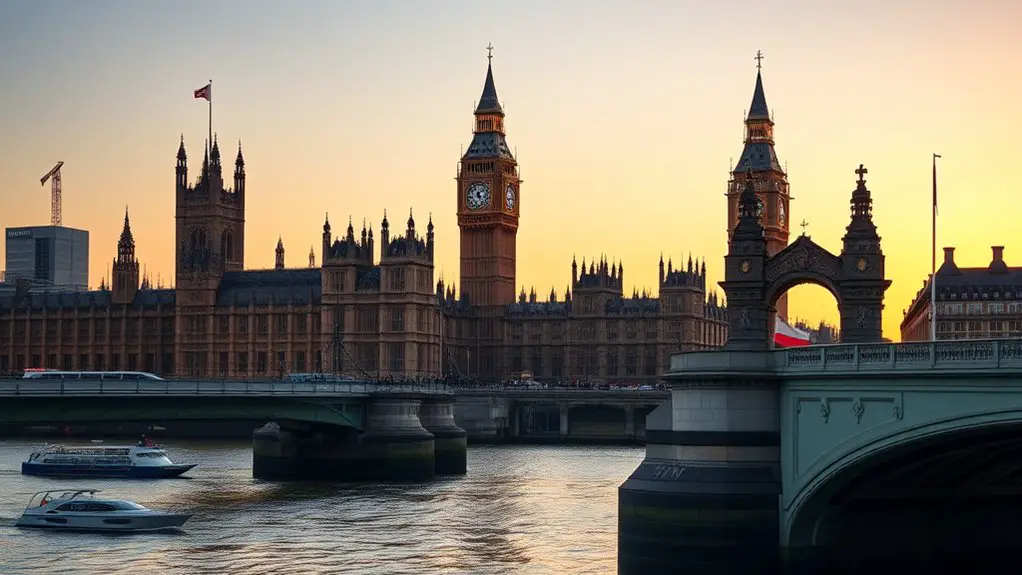
Begin at Westminster, where several of London’s best-known landmarks sit within a compact area. The Palace of Westminster is home to the House of Commons and House of Lords, and its Gothic Revival exterior is worth seeing even if you do not go inside.
If Parliament is one of your priorities, book an official Palace of Westminster tour. Tours can include spaces such as Westminster Hall, the House of Commons, and the House of Lords, subject to the type of visit and parliamentary business.
Beside the Palace stands Elizabeth Tower. The name “Big Ben” technically refers to the Great Bell inside the tower, although the nickname is commonly used for the entire landmark. Official Big Ben tours are also available on selected dates and involve a demanding climb, so they need to be booked separately.
Allow time to walk through Parliament Square and view the statues and surrounding architecture before continuing to Westminster Abbey.
Exploring Westminster Abbey and Nearby Attractions
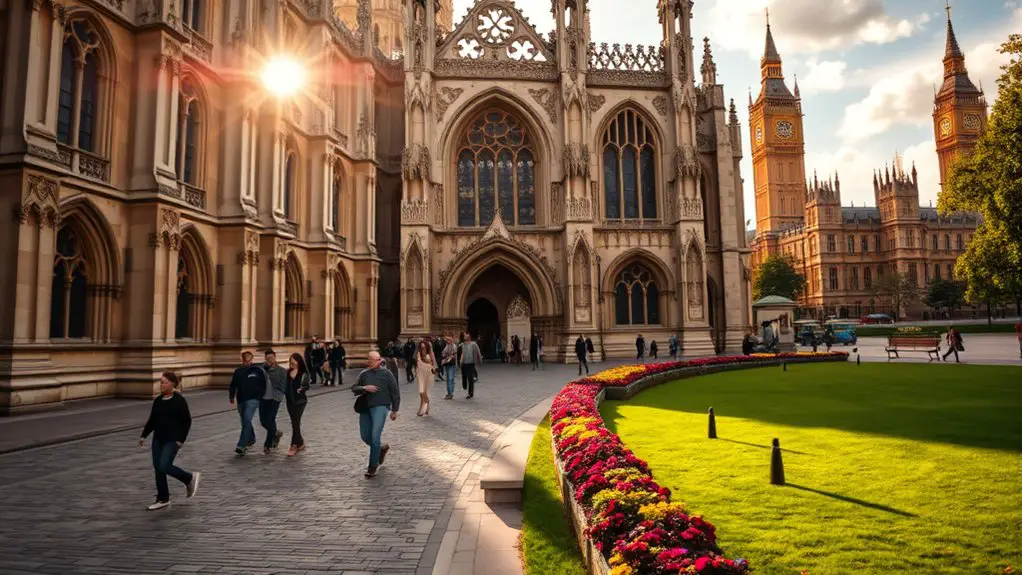
Westminster Abbey is one of the most important historic churches in Britain. Inside, you can see the nave, royal and historic tombs, memorials, stained glass, and the shrine of Edward the Confessor at the heart of the Abbey.
Visitor hours vary because Westminster Abbey remains a working church. Check the official entry calendar for your exact date rather than relying on a generic opening time.
Nearby, Parliament Square provides good exterior views of the Palace of Westminster. Westminster Hall is part of the parliamentary complex rather than a separate street-side attraction, so include it as part of a Parliament visit where available.
The Churchill War Rooms are also a short walk away. They preserve the underground headquarters used by Britain’s wartime government and include the Churchill Museum. This is a substantial museum visit, so it is better treated as an alternative to another major attraction rather than squeezed into an already packed morning.
Pro Tip: For a first weekend, choose Westminster Abbey or a full Churchill War Rooms visit if time is limited. Trying to explore both deeply before Buckingham Palace can make the rest of the day feel rushed.
Strolling Through St. James’s Park to Buckingham Palace
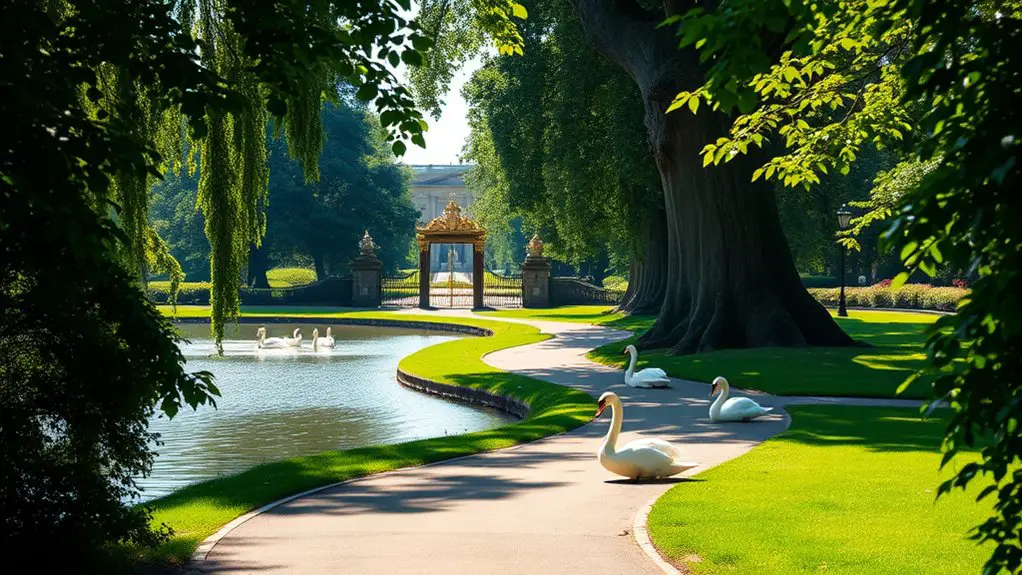
From Westminster, walk through St. James’s Park toward Buckingham Palace. The route gives you a welcome break from indoor sightseeing and avoids an unnecessary Tube journey between two nearby parts of central London.
The park’s lake, flowerbeds, lawns, mature trees, and views toward the surrounding royal buildings make it one of the most pleasant stretches of the itinerary. St. James’s Park is also famous for its pelicans, which have been associated with the park since the 17th century.
Continue toward Buckingham Palace for views of the forecourt, gates, Victoria Memorial, and The Mall. Whether you see a military ceremony depends on the official schedule.
Scenic Garden Views
St. James’s Park combines formal planting with broad lawns and a long lake used by ducks, swans, pelicans, and other waterbirds. Bridges and paths around the lake provide several photogenic views toward Buckingham Palace and Whitehall.
The shaded paths are also useful on a warm day, and benches give you a chance to rest before continuing. Instead of rushing through the park simply to reach the Palace, allow a little time to enjoy the setting.
Changing of the Guard Ceremony
Changing of the Guard is one of London’s best-known royal ceremonies, but it does not simply take place every day. The Household Division publishes an official calendar showing guard changes, inspections, parades, music, and any operational changes.
On a full Buckingham Palace guard-change day, troop movements begin before the main ceremony in the Palace forecourt, with units arriving from St. James’s Palace and Wellington Barracks. The main activity typically runs from around 11:00 until approximately 11:45, although timings and format can change.
At present, the Household Division lists the standard King’s Guard change pattern at Buckingham Palace on Monday, Wednesday, and Friday, so travelers visiting only on Saturday and Sunday should not assume they will see the full ceremony. Check the official Changing of the Guard calendar for your dates.
Warning: Ceremonial events can be altered or cancelled because of operational requirements, major events, or severe weather. Do not build your entire morning around Changing of the Guard without checking the official schedule shortly before your visit.
Discovering the Cultural Gems of South Kensington
After Buckingham Palace, continue to South Kensington for an afternoon museum visit. Three major institutions sit close together, but each can occupy several hours. For a two-day London trip, choose the one that best matches your interests rather than trying to complete all three.
Natural History Museum: Best for dinosaurs, wildlife, geology, and the natural world. General museum admission is free, although special exhibitions and experiences may charge. Check Natural History Museum visitor information before arriving.
Science Museum: Best for space, engineering, technology, transport, and interactive science. General admission is free, but the museum asks visitors to pre-book a free admission ticket. See the Science Museum visitor page.
Victoria and Albert Museum: Best for art, fashion, design, sculpture, ceramics, furniture, and decorative arts. General admission is free and normally does not require a ticket. Check the V&A South Kensington visitor page for current hours and gallery closures.
End Day 1 at an unhurried pace. South Kensington, nearby Knightsbridge, or a short Tube ride into Soho all provide plenty of dinner options without adding another major attraction.
A good London weekend is not the one with the most stops. It is the one that leaves enough time to enjoy the places you came to see.
Day 2: Tower Bridge, the Thames, and the West End
Visiting the Iconic Tower of London and Tower Bridge
Start Day 2 at the Tower of London. Arriving near opening time gives you more room in the day and can make it easier to see major exhibits before the site becomes busier.
The Tower is not a quick photo stop. Historic Royal Palaces recommends allowing roughly two to three hours for a good visit. Highlights include the Crown Jewels, the White Tower, historic arms and armour, ravens, defensive walls, and stories told by the Yeoman Warders.
Book through the official Tower of London visitor page and check for temporary route or building closures before your trip.
Historic Significance and Architecture
The Tower of London developed over many centuries. The famous White Tower was built for William the Conqueror between about 1078 and 1100 and became the architectural heart of the fortress. The complex later served many roles, including royal residence, fortress, prison, armoury, treasury, and home of the Royal Mint.
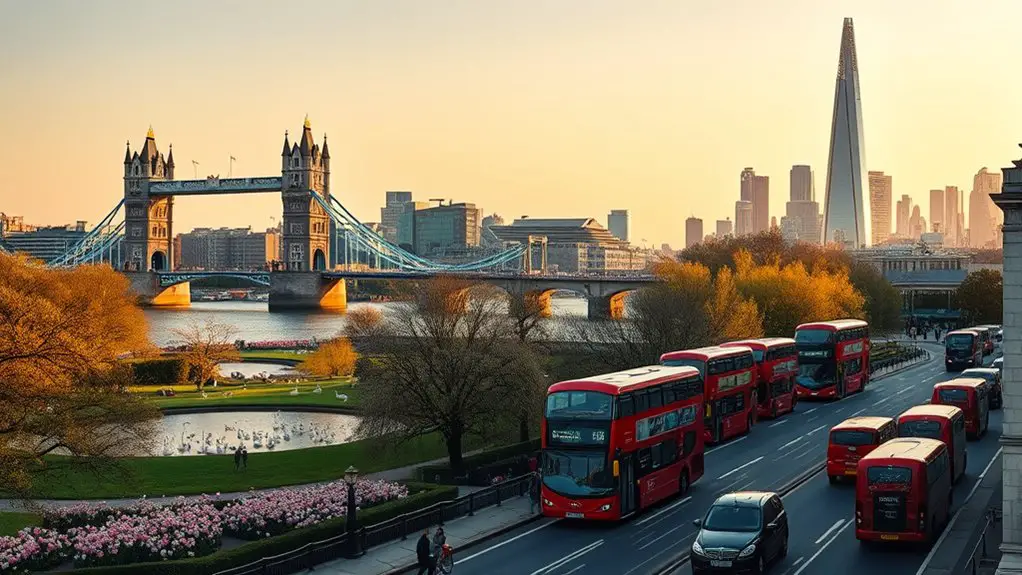
Tower Bridge is much younger. Construction began in 1886, and the bridge officially opened in 1894. Its combination of stone-clad towers, high-level walkways, suspension elements, and opening bascules became one of the defining engineering achievements of Victorian London.
| Landmark | Key Features |
|---|---|
| Tower of London | Medieval fortress, White Tower, Crown Jewels, royal and military history |
| Tower Bridge | Victorian engineering, opening bascules, towers, high-level walkways, glass floors |
| Significance | Two landmarks from very different eras that show London’s royal, defensive, industrial, and engineering history |
Tower of London Exhibits
The Crown Jewels are among the Tower’s best-known attractions, so consider seeing them early in your visit. The White Tower contains historic arms and armour, while other spaces explore imprisonment, royal life, conflict, ceremony, and the development of the fortress.
Yeoman Warders, often called Beefeaters, lead tours and tell stories connected with the Tower’s long history. Their tours can add useful context that is easy to miss if you only walk through the buildings independently.
Because the Tower covers a large site with stairs, cobbles, and historic buildings, check accessibility information before visiting if anyone in your group has limited mobility.
Crossing Tower Bridge
After leaving the Tower, walk to Tower Bridge. Crossing the lower roadway as a pedestrian is free and gives you views along the Thames.
For the full attraction, buy a ticket to enter the towers, high-level walkways, glass floors, and Victorian Engine Rooms. The official Tower Bridge website also publishes scheduled bridge-lift times, so you can check whether the bascules are expected to rise during your visit.
The bridge opened in 1894 after eight years of construction. Its bascules were originally powered by steam-driven hydraulic machinery; modern bridge lifts use a different system, while the preserved Engine Rooms explain the original technology.
Enjoying the Views From the Shard and Thames River Cruise
From the Tower Bridge area, you can continue along the Thames toward London Bridge and The Shard. The View from The Shard includes indoor viewing areas on Levels 68 and 69 and an open-air sky deck on Level 72.
Tickets use timed entry, so reserve a slot if the viewpoint is a priority. Current visitor information is available from The View from The Shard.
A Thames cruise offers a different perspective, passing riverside landmarks rather than viewing them from above. On a tight weekend, you do not need both experiences. Choose The Shard for a skyline panorama or a river trip for moving views of several landmarks.
If you want to do both, keep the rest of the afternoon light and avoid spending too long inside Tower Bridge.
| From The Shard | From a Thames Cruise |
|---|---|
| Panoramic skyline | Tower Bridge and riverside landmarks |
| St. Paul’s Cathedral | Houses of Parliament on routes reaching Westminster |
| Canary Wharf | Shakespeare’s Globe and South Bank |
| London Bridge and the Thames | The Shard and Millennium Bridge |
Experiencing the Buzz of Covent Garden and Leicester Square
In the late afternoon or early evening, head toward Covent Garden and Leicester Square. This puts you in the right part of town for dinner and a West End performance without another long journey later.
Covent Garden combines the historic market buildings with shops, restaurants, street performers, and surrounding lanes. Leicester Square is busier and more entertainment-focused, with cinemas and several major theatres nearby.
Street performances and temporary events vary, so treat them as a bonus rather than something that needs a fixed place in the itinerary. If a theatre performance is your priority, eat early and leave enough time to reach the venue before the stated admission time.
Evening Entertainment at West End Theatres
A West End show is one of the easiest ways to give the second evening a clear finish. London offers long-running musicals, new productions, plays, comedy, dance, and family performances across dozens of theatres.
The Phantom of the Opera remains a current West End example at His Majesty’s Theatre, but your best choice depends on the productions running on your exact dates.
For a specific show or preferred seats, book ahead. If you are flexible, same-day and short-notice ticket options can sometimes be available through official theatre sellers and box offices.
Allow time to find the correct theatre, collect or load your tickets, and pass any bag or security checks. There is no benefit in squeezing another attraction into the final half-hour before curtain time.
Relaxing and Shopping in Soho and Oxford Street
Soho, Carnaby Street, Regent Street, and Oxford Street are close enough to combine on foot, although Oxford Street can be extremely busy. Use this part of the itinerary flexibly: browse before your show, explore after an afternoon attraction, or skip the shopping entirely if you would rather spend longer elsewhere.
Soho is better suited to independent shops, restaurants, bars, cafes, and lively side streets, while Oxford Street focuses on major high-street retailers and department stores. Carnaby Street adds smaller fashion and lifestyle shops, and Regent Street is known for larger stores and its curved historic streetscape.
| Location | Highlights | Best Time to Visit |
|---|---|---|
| Soho | Independent shops, restaurants, cafes, nightlife | Late afternoon or evening |
| Oxford Street | Major brands and department stores | Earlier in the day if you want lighter crowds |
| Carnaby Street | Fashion, lifestyle shops, colorful pedestrian streets | Late afternoon or early evening |
| Regent Street | Large stores and distinctive architecture | Daytime or early evening |
| Soho Square | Small central green space for a short break | Daylight hours |
Frequently Asked Questions
What Are the Best Times to Visit Each Attraction?
Use the first available entry for time-intensive attractions such as the Tower of London when possible. Outdoor areas are flexible, while Westminster Abbey, Parliament, museums, The Shard, and theatres should be planned around their official opening or ticket times. Always check your exact date because hours can change.
Are Guided Tours Available for Major Sights?
Yes. UK Parliament offers official tours, Yeoman Warder tours are available at the Tower of London, and many museums and historic attractions offer guided or audio experiences. Check the attraction’s official site because tour schedules, languages, prices, and booking requirements vary.
How Can I Get Around London Efficiently During the Weekend?
Walk between sights that are close together and use the Tube, Elizabeth line, or buses for longer hops. Contactless pay-as-you-go and Oyster are both convenient options. Use the same payment card or device throughout each journey and check TfL for weekend closures before leaving your hotel.
What Are the Budget-Friendly Options for Dining and Shopping?
Keep costs down with supermarket meal deals, bakeries, casual cafes, Chinatown restaurants, takeaway counters, and markets rather than relying only on sit-down meals in the busiest tourist areas. The Natural History Museum, Science Museum, and V&A also offer free general admission, which can reduce your sightseeing budget substantially.
Are There Any Special Events or Festivals Happening During the Weekend?
London’s event calendar changes every week, so check your exact travel dates rather than relying on a permanent list. Visit London’s current events calendar, individual venue websites, and TfL service information can help you spot festivals, concerts, parades, sporting events, exhibitions, and transport impacts.
Is Two Days Enough for London?
Two days is enough for a strong introduction, but not enough to see everything. Focus on two geographic clusters, choose only a few paid attractions, and leave museums or neighborhoods you miss for a future trip. Trying to complete every famous sight usually means spending more time in queues and transit than enjoying London.
Do I Need an Oyster Card for a Weekend in London?
Not necessarily. TfL accepts contactless cards and compatible mobile devices for pay-as-you-go travel as well as Oyster. Contactless is often the simplest choice for visitors who have a suitable card without expensive foreign transaction charges. Oyster remains useful for travelers who prefer a dedicated transport card or need a fare product available on Oyster.
Conclusion
A weekend in London is long enough to see many of the city’s defining sights when you keep the route focused. Spend your first day around Westminster, Buckingham Palace, and one South Kensington museum, then devote Day 2 to the Tower of London, Tower Bridge, the Thames, and the West End.
Pre-book the attractions that matter most, check changing ceremony and transport schedules shortly before traveling, and give yourself permission to skip a stop when the day starts feeling rushed. London is more enjoyable when you have time to look around instead of simply moving from one landmark to the next.
Sources
- UK Parliament — Visiting and Tours — official information on Palace of Westminster and Big Ben visits.
- The Household Division — Changing the Guard Calendar — current Buckingham Palace ceremonial schedules and changes.
- Transport for London — Best Ways for Visitors to Pay — contactless, Oyster, pay-as-you-go, and fare-capping guidance.
- Historic Royal Palaces — Tower of London — official visitor, opening, ticket, and closure information.
- Tower Bridge — official visitor information, glass walkways, Engine Rooms, and bridge-lift schedules.
- Victoria and Albert Museum — South Kensington — official free-admission, opening-hours, and visitor information.
