
Last Updated on July 25, 2026 by Daniel Globe
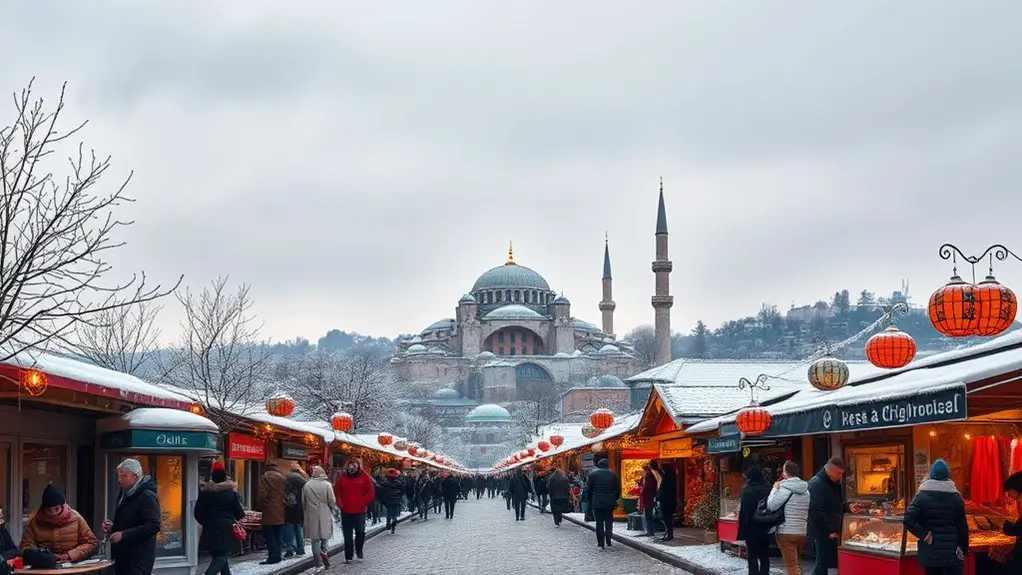
Winter gives Istanbul a quieter, moodier side, with cool days, frequent rain, warming food, and more reasons to linger inside its mosques, palaces, bazaars, museums, and cafés. Pack layers and water-resistant walking shoes, plan outdoor activities around the forecast, and use public transport to avoid spending too much time in traffic. With a flexible itinerary, winter can be one of the most rewarding seasons to explore the city.
Quick Answer
Istanbul is well worth visiting in winter if you are prepared for cool, wet and sometimes windy weather. Spend clear periods at outdoor viewpoints or on the Bosphorus, save rainy hours for mosques, palaces, bazaars, museums and hammams, and pack a warm waterproof layer plus shoes with good grip.
Key Takeaways
- December through February is cool and rainy, with average daytime highs around 9–11°C (48–52°F) in official Istanbul climate normals.
- Hagia Sophia, the Blue Mosque, Basilica Cistern, Grand Bazaar and Topkapı Palace make an excellent winter sightseeing cluster in the Historic Peninsula.
- Keep at least one indoor backup plan for rain or strong wind, such as a museum, covered bazaar or Turkish hammam.
- Use an Istanbulkart for public transport and group each day by neighborhood rather than repeatedly crossing the city.
- Winter can bring lower accommodation demand outside holiday periods, but avoid assuming fixed hotel or shopping discounts.
Disclosure: As an Amazon Associate I earn from qualifying purchases. Some links on this page are affiliate links, at no extra cost to you.
What Is Istanbul Weather Like in Winter?
Istanbul winters are usually chilly rather than severely cold, but damp air, rain and wind from the Bosphorus can make the temperature feel lower. Snow is possible, yet it is not reliable enough to build a trip around.
According to the Turkish State Meteorological Service’s 1991–2020 climate normals, December through February look roughly like this:
| Month | Average High | Average Low | Average Rainy Days |
| December | 11.1°C / 52°F | 5.7°C / 42°F | About 13 |
| January | 9.2°C / 49°F | 3.7°C / 39°F | About 15 |
| February | 9.8°C / 50°F | 3.6°C / 38°F | About 13 |
Official climate normals put Istanbul’s average winter daytime highs at roughly 9–11°C (48–52°F), so rain protection and wind-resistant layers usually matter more than heavy snow gear.
Note: Climate averages are not a forecast. Check the daily weather shortly before each sightseeing day, especially before a Bosphorus trip or a long outdoor walk.
Discover the Best Winter Attractions
Winter suits Istanbul’s Historic Peninsula particularly well because several of the city’s biggest sights sit close together. You can move between indoor and outdoor attractions without committing to a full day in bad weather.
Hagia Sophia and the Blue Mosque
Start at Hagia Sophia, one of Istanbul’s defining landmarks and an active place of worship. Its long history spans Eastern Roman and Ottoman periods, and its huge dome, mosaics and Islamic calligraphy make it worth seeing even on a grey winter day. The official Türkiye tourism portal provides background on the monument.
Restoration work has continued at Hagia Sophia during 2026, so temporary changes to views or visitor circulation are possible. Check current information before your visit rather than relying on an old itinerary.
Across Sultanahmet Square, the Blue Mosque is still an active mosque rather than simply a tourist attraction. Entry for visitors is free, but sightseeing pauses around daily prayers. Visitors should cover shoulders and knees, women should bring or borrow a head covering, and everyone removes shoes before entering the carpeted prayer area. Current visitor guidance is available on the Blue Mosque visitor information page.
Note: Prayer times change throughout the year, and Friday access is more restricted. Check the day’s visitor windows rather than assuming a fixed schedule.
Basilica Cistern, Grand Bazaar and Topkapı Palace
The Basilica Cistern is one of the easiest winter attractions because it is underground and protected from rain. The official Basilica Cistern site confirms that its vast interior contains 336 marble columns, arranged in 12 rows.
The Grand Bazaar is another practical wet-weather stop. Istanbul’s tourism portal describes the historic covered market as containing more than 4,000 shops. It is a good place to browse jewelry, textiles, ceramics and souvenirs, though comparing prices before a larger purchase is wise.
For Ottoman history, allow several hours for Topkapı Palace. Its rooms, collections and courtyards cover far more ground than many first-time visitors expect. The current National Palaces visitor information lists Tuesday as its closed day, although holiday arrangements and opening hours can change.
Take a Bosphorus Cruise on a Clear Winter Day
A Bosphorus cruise is not only a summer activity. On a clear winter day, a ferry or cruise gives you views of waterfront palaces, mosques, bridges and neighborhoods on both the European and Asian sides.
Choose a daytime departure when visibility is good, wear an extra layer for the open deck, and check the operator’s schedule before leaving. Strong wind, fog or severe weather can affect ferry and cruise operations.
Warm Up in a Turkish Hammam
A traditional Turkish bath is one of the most natural winter activities in Istanbul. A hammam gives you several hours indoors while also introducing a bathing tradition closely tied to Ottoman social life.
Experiences range from historic neighborhood baths to elaborate restored hammams. Check whether your booking includes only entry or also a kese scrub, foam wash or massage, since packages differ considerably.
Keep a Rain-Day Backup Plan
When heavy rain makes long walks unpleasant, switch to indoor attractions instead of forcing the original plan. The Istanbul Archaeological Museums, Museum of Turkish and Islamic Arts, Istanbul Modern, covered bazaars, hammams and long café lunches can all anchor a wet day.
Pro Tip: Group sights by neighborhood. A Sultanahmet day, a Beyoğlu/Galata day and a Kadıköy/Asian-side day waste far less time than repeatedly crossing Istanbul in traffic.
Experience Istanbul’s Unique Culinary Delights
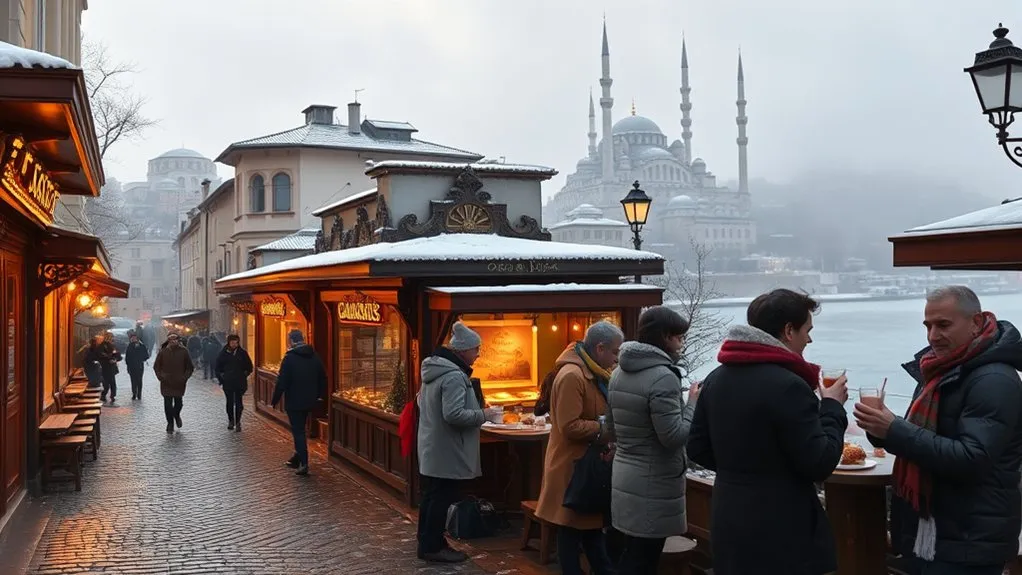
Cold weather is a good excuse to slow down and explore Istanbul’s food culture between sightseeing stops.
Start with a traditional Turkish breakfast of bread, cheese, olives, eggs, tomatoes, preserves and tea. Breakfast can easily turn into a long, relaxed meal, which is especially welcome on a rainy morning.
Street carts selling roasted chestnuts are a familiar sight during the colder months. Simit, soups and other quick snacks also make useful stops when you need something warm between attractions.
Fish dürüm and fish sandwiches are good options around waterfront districts such as Eminönü and Karaköy. They are not exclusively winter foods, but a hot grilled fish wrap followed by tea makes a satisfying cold-weather meal.
Two drinks strongly associated with colder weather are salep, a hot milk-based drink typically dusted with cinnamon, and boza, a thick fermented cereal drink traditionally enjoyed during the cooler season.
Cozy cafés in neighborhoods such as Balat, Karaköy, Cihangir, Kadıköy and Moda are also useful places to warm up with Turkish coffee, tea, pastries or traditional sweets.
Stay Warm and Comfortable: What to Wear
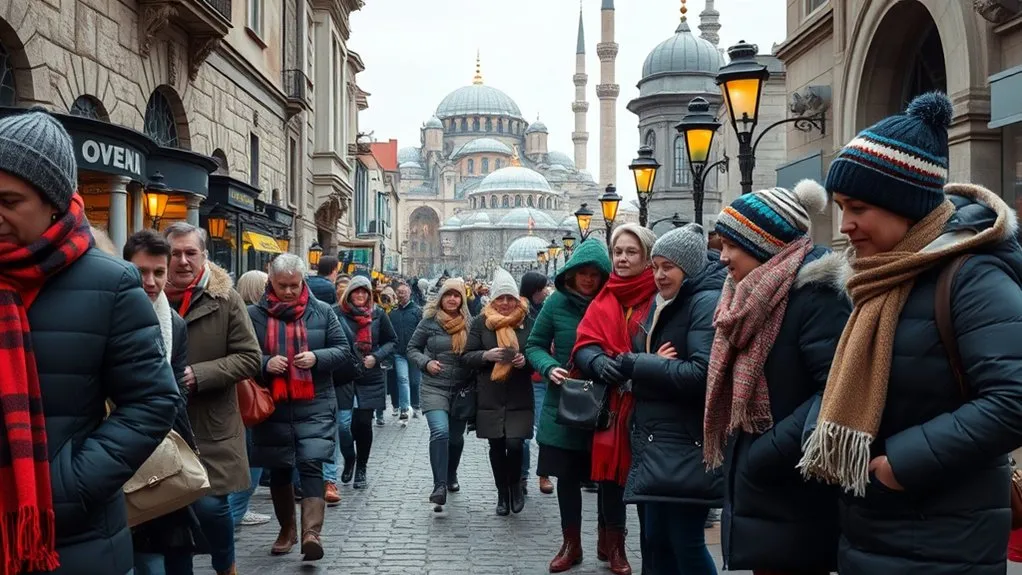
Istanbul’s winter climate is not usually extreme, but the combination of cool temperatures, rain, hills and Bosphorus wind rewards practical clothing.
- Layer your clothing: A base layer, sweater or fleece and medium-weight coat let you adjust between cold streets and heated interiors.
- Choose water-resistant shoes: Comfortable walking shoes or boots with good grip are more useful than dress shoes on wet cobblestones and hills.
- Carry rain protection: A compact umbrella helps, but a hooded waterproof jacket can be easier when the wind picks up.
- Bring a scarf and warm hat: They take little luggage space and make waterfront walks much more comfortable.
- Pack modest clothing for mosques: Shoulders and knees should be covered, and women visiting active mosques should have a head covering available.
Freezing nights and snow can happen during cold spells, but they are not the everyday winter norm. Check the forecast before packing specialist snow clothing.
Navigating Istanbul: Transportation Tips
Istanbul’s trams, metro lines, buses and ferries are particularly useful in winter because they reduce long walks in rain and help you avoid road traffic.
- Istanbulkart: A physical Istanbulkart is a convenient way to pay for public transportation. The official Istanbulkart site lists the available card types, while Istanbulkart Mobile also supports QR transport payments.
- Check weather and service notices: Heavy rain, snow, fog or strong wind can occasionally disrupt transport, particularly ferries.
- Use taxis carefully: Licensed taxis are widely available. The Uber app in Istanbul can also be used to request local taxis and view an estimated cost. Treat an estimate as an estimate rather than a guaranteed final fare.
- Plan by district: Istanbul is enormous. Combining nearby sights usually saves more time than choosing attractions purely by popularity.
- Wear shoes with grip: Wet hills, stone paving and occasional icy patches can become slippery.
Warning: Check your government’s latest Türkiye travel advice before departure. The U.S. State Department currently advises travelers to exercise increased caution in Türkiye and specifically recommends vigilance in crowded public spaces. Avoid demonstrations and keep phones, wallets and bags secure in busy markets and transport hubs.
A Simple Winter Day in Istanbul
A flexible schedule works better than packing every hour with reservations.
Morning: Sultanahmet
Start early with Hagia Sophia and the Blue Mosque, taking prayer times into account. Continue to the Basilica Cistern while you are already in the area.
Lunch and Early Afternoon
Stop for a warm lunch, then visit Topkapı Palace if it is open that day. On a Tuesday or during heavy rain, substitute the Istanbul Archaeological Museums or another nearby indoor attraction.
Late Afternoon
Browse the Grand Bazaar or Spice Bazaar, or take a short Bosphorus ferry trip if skies are clear and the wind is manageable.
Evening
Finish with dinner, a hammam, or a café in Karaköy, Galata, Balat or Kadıköy. Winter is a good season to leave space for long meals rather than rushing between outdoor sights after dark.
Budget-Friendly Travel Strategies
Winter can be a good season for value-conscious travelers, but savings are not automatic.
Hotel rates and availability are often more favorable outside peak travel periods, while New Year, major events and school holidays can increase demand. Compare refundable rates across several dates instead of assuming every winter stay will be heavily discounted.
The official MuseumPass İstanbul currently provides entry to 13 participating museums for five days from first use. Its price, participating attractions and conditions can change, so compare the current pass with the individual sights you actually plan to visit before purchasing it.
Eating well does not require booking expensive restaurants for every meal. Breakfast cafés, lokantas, soup shops, bakeries and street foods such as simit and roasted chestnuts can keep food costs under control.
For shopping, look for retailer-specific seasonal promotions rather than expecting a guaranteed citywide sale beginning in mid-January. Discount timing and percentages vary by store.
Public transportation is usually the most economical way to cover long distances. Ferries can also double as low-cost sightseeing when the weather is suitable.
Is Istanbul Worth Visiting in Winter?
For travelers who value history, food and indoor culture, the answer is often yes. Winter can make Istanbul feel less rushed, and cool weather makes long museum visits, hammams and hearty meals especially appealing.
The trade-off is unpredictability. Rain can interrupt long walks, Bosphorus wind can be uncomfortable, daylight is shorter than in summer, and snow or storms can occasionally affect transport. A winter trip works best when you are happy to rearrange each day around the weather.
Frequently Asked Questions
Is it safe to visit Istanbul during the winter season?
Many travelers visit Istanbul without serious problems, but no city should be described as completely risk-free. Check your government’s current Türkiye travel advisory before departure, avoid demonstrations, remain alert in crowded tourist areas and transport hubs, and protect valuables from pickpocketing. Türkiye’s emergency number is 112.
Are there any special winter festivals in Istanbul?
Istanbul’s winter cultural calendar changes from year to year. New Year markets, concerts, exhibitions, light displays and temporary seasonal events may be scheduled, but they should not be treated as guaranteed annual attractions. Check official city and venue calendars for your exact travel dates.
How can I avoid crowded tourist spots in winter?
Visit major attractions near opening time, travel on weekdays when possible and explore neighborhoods such as Balat, Kuzguncuk, Moda or quieter parts of the Golden Horn between headline sights. Grouping each day by neighborhood also lets you reach popular sites before you lose time crossing the city.
What are some indoor activities in Istanbul during winter?
Try the Basilica Cistern, Istanbul Archaeological Museums, Museum of Turkish and Islamic Arts, Istanbul Modern, a traditional hammam, the Grand Bazaar, a cooking class, a long Turkish breakfast or one of the city’s many galleries and cultural venues.
Are there any specific winter shopping events or sales?
Individual malls, department stores and fashion retailers often run seasonal promotions, but there is no dependable Istanbul-wide mid-January sale offering a fixed 30% to 70% discount. Check the current offers from the shops you plan to visit and compare prices before buying.
Does it snow in Istanbul in winter?
Yes, Istanbul can receive snow during winter cold spells, but snowfall is not guaranteed on a typical December, January or February visit. Pack for cold rain first and check the forecast close to your travel dates rather than planning around snow.
Is a Bosphorus cruise worth doing in winter?
Yes, particularly on a clear day. Winter light and smaller crowds can make the shoreline especially atmospheric. Choose a boat with sheltered indoor seating, bring an extra layer for the deck and check for weather-related service changes before leaving.
Conclusion
Istanbul in winter rewards flexible travelers. Dress in layers, expect rain, use public transport, and plan each day around a mix of indoor and outdoor sights. Hagia Sophia, the Blue Mosque, Topkapı Palace, the Basilica Cistern and the Grand Bazaar provide plenty to do in poor weather, while a clear day opens the door to Bosphorus views and neighborhood walks. Add hot tea, salep, roasted chestnuts and a hammam, and the colder season becomes part of the experience rather than an obstacle.
Sources
- Turkish State Meteorological Service — Istanbul Climate Statistics — official temperature, precipitation and rainy-day normals.
- Istanbulkart / BELBİM — current Istanbulkart transport-payment options.
- Republic of Türkiye Ministry of Culture and Tourism — MuseumPass İstanbul — current pass validity and participating-museum information.
- Republic of Türkiye National Palaces — Topkapı Palace — current visiting information, closure day and ticket conditions.
- Basilica Cistern — official history and architectural details, including its 336 columns.
- U.S. Department of State — Türkiye Travel Advisory — current traveler safety guidance.
