
Last Updated on July 31, 2026 by Daniel Globe
SWISS International Air Lines is generally a good choice for travelers who value a polished full-service experience, strong connections through Zurich, and access to the Star Alliance network. Its strengths are premium cabins, Swiss-focused food and service, and a broad European and long-haul network. Its main weaknesses are uneven punctuality and cabin differences between older and newly refurbished aircraft.
Quick Answer
Yes, SWISS is a good airline for many international travelers. It offers four cabin classes, solid long-haul amenities, free messaging on connected aircraft, and useful Star Alliance benefits. However, delays can be common, Economy fares may exclude checked baggage, and the onboard experience varies by aircraft.
Key Takeaways
- SWISS is a full-service Lufthansa Group airline and a Star Alliance member, with major hubs in Zurich and Geneva.
- The airline offers Economy, Premium Economy, Business, and First Class, although not every cabin is available on every route.
- SWISS reported 69.3% punctuality and 98.0% schedule stability for 2025, so reliability improved but was not consistently excellent.
- The fleet is being modernized with Airbus A350 aircraft and the new SWISS Senses cabin, but older cabins remain in service during the transition.
- Baggage, seat selection, lounge access, and flexibility depend heavily on the fare brand, route, status, and operating carrier.
SWISS at a Glance
| Official name | Swiss International Air Lines (SWISS) |
| Airline type | Full-service network carrier |
| Main hubs | Zurich and Geneva |
| Alliance | Star Alliance |
| Cabin classes | Economy, Premium Economy, Business, and First |
| Owned fleet | 92 aircraft as of March 1, 2026, plus wet-leased aircraft |
| Summer 2026 network | 112 destinations from Zurich and Geneva |
| Independent rating | Skytrax 4-Star Airline |
Note: The airline’s brand is written as “SWISS.” “Swiss Airlines” is commonly used in searches, but it is not the carrier’s official name.
Disclosure: As an Amazon Associate I earn from qualifying purchases. Some links on this page are affiliate links, at no extra cost to you.
Is SWISS a Good Airline?
SWISS earns a positive overall verdict, especially for travelers connecting through Switzerland or using Star Alliance partners. The airline combines a broad route network with full-service features such as checked-baggage options, meals on many flights, long-haul entertainment, premium cabins, lounges, and frequent-flyer benefits.
The experience is not equally strong in every area. Punctuality remains a concern, some lower-priced fares strip out benefits, and the cabin can feel very different depending on whether the flight uses a new Airbus A350, a refurbished aircraft, or an older long-haul jet. A careful traveler should compare the fare rules and operating aircraft rather than judging the airline by its brand alone.
Main advantages
- Strong Zurich hub for one-stop trips across Europe and beyond
- Four cabin classes on eligible long-haul routes
- Star Alliance connectivity and Miles & More earning
- Free messaging on connected aircraft
- Well-regarded premium service and Swiss-inspired catering
- Ongoing fleet and cabin modernization
Main disadvantages
- Punctuality is improving but still inconsistent
- Economy Light and other stripped-down fares may exclude checked baggage or flexibility
- Seat design, privacy, and cabin age vary by aircraft
- Premium Economy and First Class are not offered on every flight
- Zurich can be expensive during a disruption or overnight connection
Safety and Security
SWISS is regulated primarily through Switzerland’s Federal Office of Civil Aviation and the European aviation safety framework. The FAA and TSA affect SWISS when it operates in the United States, but they are not the airline’s main worldwide regulators. Airport screening is also handled by the authorities responsible for each departure airport rather than by the airline alone.
Modern airline safety depends on aircraft certification, maintenance programs, crew training, operational monitoring, airport security, and incident investigation. SWISS operates within that system and publishes fleet and operational information through its corporate channels.
Security also includes digital systems. Online ticketing, mobile check-in, loyalty accounts, and operational networks must be protected against cyberthreats. Switzerland applies aviation information-security requirements through the European Part-IS framework. Passengers should use the official SWISS website or app and treat unexpected payment, login, or rebooking messages with caution.
A balanced safety review should also acknowledge serious events. On December 23, 2024, flight LX1885, an Airbus A220-300 traveling from Bucharest to Zurich, made an emergency landing in Graz after an engine problem and smoke in the cabin. A cabin crew member later died. The official investigation process has examined the technical event and crew protective equipment.
Warning: No airline can be described as risk-free. Review current government advisories, the operating carrier, and any active aircraft or route notices before travel.
On-Time Performance
SWISS does not support a blanket claim of “high” punctuality. The airline reported average punctuality of 69.3% for 2025, an improvement of 4.1 percentage points from 2024. It also reported 98.0% schedule stability, meaning most planned flights operated even when some departed or arrived late.
Those figures show progress, but they also mean that roughly three in ten flights did not meet the airline’s punctuality threshold. Weather, air-traffic restrictions, airport congestion, late inbound aircraft, technical issues, and crew or ground-handling constraints can all affect an individual flight.
SWISS improved its 2025 punctuality to 69.3%, but travelers with a tight connection should still leave a sensible buffer.
Pro Tip: For separate tickets, avoid a short connection. The second airline usually has no duty to protect your onward trip when a delay on the first ticket causes a missed flight.
Fleet and Maintenance
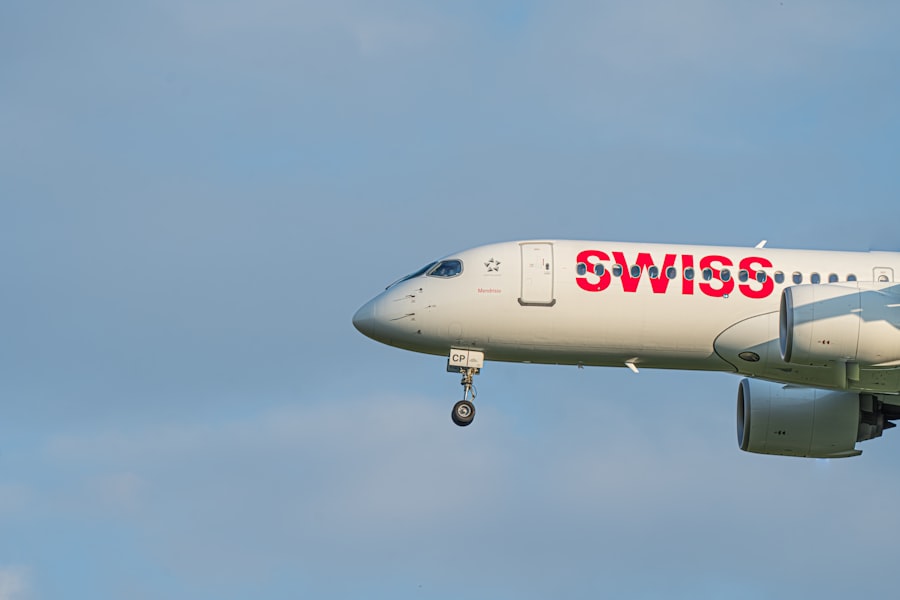
As of March 1, 2026, SWISS reported 92 owned aircraft. Its short- and medium-haul fleet includes Airbus A220, A320, A320neo, A321, and A321neo aircraft. Its long-haul fleet includes Airbus A330-300, A340-300, A350-900, and Boeing 777-300ER aircraft. SWISS also uses wet-leased aircraft operated by partner airlines and crews.
The original claim about the Boeing 787 Dreamliner did not describe the SWISS fleet. SWISS does not list the 787 among its aircraft. The more relevant development is the Airbus A350-900, which is entering service as part of a long-term replacement and modernization program.
The first A350 aircraft feature the new SWISS Senses interior. SWISS has also begun a phased modernization of other long-haul cabins, so passengers may encounter either the new product or an older layout during the transition.
Airline maintenance combines scheduled inspections, repairs, component replacement, and condition monitoring. Sensors and aircraft-health data can help engineers identify abnormal trends, but they do not replace required inspections or regulatory oversight. The Boeing 787 and Airbus A350 are often cited as modern long-haul designs; of those two, only the A350 is part of the SWISS fleet.
Note: An aircraft substitution can change the seat, cabin layout, Wi-Fi system, or Premium Economy availability. Check the operating aircraft again shortly before departure.
Cabin Classes and Onboard Experience
SWISS Economy
Economy is offered throughout the network. Long-haul flights generally include seatback entertainment and meal service, while short European flights use a simpler service model. Seat selection and checked baggage may cost extra, depending on the fare.
SWISS Premium Economy
Premium Economy is a separate long-haul cabin with a wider seat, more recline, more personal space, upgraded dining, and a larger baggage allowance than standard Economy. It is not available on every aircraft. The exact seat also depends on whether the flight uses the established Premium Economy product or the newer SWISS Senses cabin.
SWISS Business
On European routes, Business Class normally uses the same basic seat as Economy but keeps the adjacent seat empty and adds priority services, lounge access, a stronger meal service, and more baggage. On long-haul flights, Business seats convert into flat beds, although privacy and direct aisle access vary by aircraft and seat position. The newest SWISS Senses Business cabin offers a more modern layout.
SWISS First
First Class is available only on selected long-haul aircraft and routes. It includes dedicated airport services, lounge access, a private seat or suite, premium dining, and the airline’s highest baggage allowance. Travelers should confirm that First is offered on the exact flight rather than assuming it is available across the network.
Entertainment and Wi-Fi
All SWISS long-haul aircraft are listed as equipped with SWISS Connect. Free Messaging supports common messaging apps, while paid Premium packages add browsing, social media, audio streaming, and VPN use. First Class passengers and HON Circle members receive complimentary internet when eligible and logged in. Wi-Fi is still being rolled out across the short-haul fleet, so availability can vary.
SWISS has also announced a fleetwide Starlink upgrade program. Rollout details and timing are phased, so travelers should not assume that every flight already has Starlink service.
Meals and special requests
Meal service depends on route, flight length, cabin, and departure market. SWISS offers special meals for dietary or religious needs on long-haul flights and selected European services. Most special meals must be requested at least 24 hours before departure.
Baggage, Fares, and Extra Fees
Baggage is one of the most important details to check before booking. A low headline fare may not include the same services as a higher fare in the same cabin.
- Economy: Standard allowances often include one checked bag up to 23 kg, but Economy Light may include no checked bag. Some newer short-haul fare rules may also affect carry-on baggage.
- Premium Economy: The usual allowance is two checked bags up to 23 kg each; Premium Economy Light may include only one.
- Business: The usual allowance is two checked bags up to 32 kg each; Business Light may include one.
- First: The standard published allowance is three checked bags up to 32 kg each.
Allowances can differ by route, ticket issue, status, and partner airline. Use the official SWISS baggage calculator and rules for the exact itinerary.
Customer Service and Support
SWISS provides online booking management, app-based trip information, online check-in, disruption notifications, a chat assistant, and service-center support. Online check-in normally opens 24 hours before departure. During a cancellation, the airline may automatically rebook the passenger or allow an alternative to be selected through its digital disruption tools.
The original customer-service figures—90% satisfaction, a 30-minute first response, a two-hour resolution time, and an NPS of 8—had no source and should not be treated as real SWISS performance data. Response quality can vary by channel, location, ticket type, elite status, and the scale of a disruption.
Passengers affected by a qualifying cancellation, long delay, or denied boarding may have rights under European passenger-protection rules. Eligibility depends on the itinerary, cause, timing, and operating carrier, so travelers should use the airline’s passenger-rights page or the relevant enforcement body rather than assuming compensation is automatic.
Reputation and Reviews
SWISS is certified as a 4-Star Airline by Skytrax for its airport service, onboard product, and staff service. That is a useful independent benchmark, but it does not guarantee that every passenger will have the same experience.
Online reviews should be read by aircraft, route, cabin, and travel date. A recent A350 Business Class review may have little in common with an older A330 Economy flight or a short-haul service operated by a wet-lease partner. Reviews are most useful when they describe the exact product a traveler is considering. Airline responses to complaints can also show whether a problem was acknowledged and resolved, but a public reply is not proof that the underlying issue was fixed.
The most accurate SWISS review is flight-specific: compare the operating carrier, aircraft, cabin, fare rules, and connection time.
Routes and Destinations
SWISS’s strongest network advantage is its position in Zurich, with Geneva serving as a second major base. The airline’s summer 2026 schedule lists 112 destinations across Europe and the wider world. Its hub-and-spoke model gathers passengers from smaller markets and connects them through Zurich to longer routes. Network planners adjust destinations and frequencies according to demand, competition, aircraft availability, and operating conditions.
Not every flight sold with an LX flight number is operated by a SWISS aircraft and crew. Codeshare and wet-lease arrangements can change the seat, baggage handling, service style, and disruption process. The booking page should identify the operating carrier before payment.
Loyalty Programs and Benefits
SWISS uses Miles & More, not AAdvantage or MileagePlus as its primary loyalty program. Members can earn award miles and status Points on eligible flights, then redeem miles for flights, upgrades, and other rewards. Earning depends on the fare, booking class, operating carrier, and ticketing carrier.
Frequent Traveller, Senator, and HON Circle status can add benefits such as priority check-in, additional baggage, lounge access, and upgrade vouchers. Miles can also be earned or redeemed with eligible hotel, car-rental, shopping, and other program partners. Travelers who normally credit flights to another Star Alliance program may also be able to earn there, but the rate and status credit should be checked before travel.
Partnerships and Alliances
SWISS is part of the Lufthansa Group and a member of Star Alliance. These relationships expand its practical reach through codeshares, coordinated schedules, through-checked baggage on eligible itineraries, and reciprocal loyalty benefits.
A traveler can, for example, combine SWISS with United, Air Canada, Lufthansa, Austrian Airlines, Singapore Airlines, or other partners on one ticket. A single ticket usually provides better missed-connection protection than separate bookings, although baggage and seat rules may still differ between operating airlines.
Pro Tip: When comparing two similar itineraries, choose the one-ticket option and check the operating carrier for every segment. That can matter more than the marketing airline shown at the top of the search result.
Who Should Choose SWISS?
SWISS is a strong fit for travelers who want a full-service carrier, need convenient Zurich connections, value Star Alliance benefits, or are willing to pay for Premium Economy, Business, or First. It can also be a good option when the schedule is better than competing nonstop or one-stop itineraries.
Budget-focused travelers should compare the final price after bags, seats, and ticket flexibility. Travelers with very tight connections should also compare recent operational performance and allow extra time. Those choosing a premium cabin should verify the exact aircraft and seat map before paying a large fare difference.
If you are considering flying with SWISS and want to plan the destination as carefully as the flight, this guide on how to choose the best travel guidebook for your next trip can help you choose a useful resource for your itinerary.
Frequently Asked Questions
What is SWISS known for?
SWISS is known for its Zurich hub, Swiss-inspired service and catering, premium long-haul cabins, and Star Alliance connectivity. Its current reputation is generally stronger for onboard quality than for consistently excellent punctuality.
What aircraft does SWISS operate?
Its owned fleet includes Airbus A220, A320, A320neo, A321, A321neo, A330-300, A340-300, and A350-900 aircraft, plus Boeing 777-300ERs. Partner airlines also operate some wet-leased flights.
Does SWISS offer inflight entertainment and Wi-Fi?
Long-haul aircraft offer inflight entertainment and SWISS Connect. Free Messaging is available, while broader internet access is sold through Premium packages. Short-haul Wi-Fi is being rolled out, so it is not guaranteed on every European flight.
What cabin classes does SWISS offer?
SWISS offers Economy, Premium Economy, Business, and First. Premium Economy and First are limited to selected long-haul aircraft and routes.
Does SWISS provide special meals?
Yes. Special meals for dietary, allergy-related, religious, and age-specific needs are available on long-haul flights and selected European services. Most requests must be made at least 24 hours before departure.
Is SWISS a Star Alliance member?
Yes. SWISS is a Star Alliance member and part of the Lufthansa Group. Eligible travelers can receive reciprocal earning, lounge, baggage, and priority benefits across participating partners.
Is SWISS a safe airline?
SWISS operates under Swiss and European aviation oversight. Like every airline, it has experienced serious incidents, including the fatal outcome following the December 2024 LX1885 smoke event. Safety should be judged through regulatory oversight, official investigations, and current operational information rather than marketing claims alone.
Is SWISS usually on time?
SWISS reported 69.3% punctuality for 2025, up 4.1 percentage points from 2024. Performance varies by airport, season, route, and time of day, so leave extra time for an important connection.
Does SWISS Economy include checked baggage?
It depends on the fare and route. Many standard Economy fares include one 23 kg checked bag, while Economy Light may include none. Always check the baggage line shown for the exact ticket before payment.
Sources
- SWISS company profile — fleet totals, traffic figures, corporate group, and alliance status
- SWISS 2025 operating results — punctuality, schedule stability, passenger volume, and flights operated
- SWISS fleet overview — current short-, medium-, and long-haul aircraft families
- SWISS Connect — Wi-Fi availability, free messaging, paid packages, and eligibility
- SWISS checked baggage rules — class and fare-based baggage allowances
- Swiss Federal Office of Civil Aviation — Swiss civil-aviation oversight and safety responsibilities
