
Last Updated on July 29, 2026 by Daniel Globe
Picking the wrong airline can cost you time, money, and patience. A cheap ticket may become expensive after baggage and seat fees, while a famous carrier may perform poorly on one particular route. The best choice comes from comparing safety oversight, recent reliability, total trip cost, service recovery, cabin comfort, and the operating airline before you book.
Quick Answer
A good airline operates under strong safety oversight, performs reliably on your route, explains its fees clearly, and helps when travel plans go wrong. It should also offer a suitable schedule, comfortable aircraft, fair baggage rules, accessible service, and a total price that matches the experience you receive.
Key Takeaways
- Safety comes first: Check regulatory oversight and credible safety information, but do not rely on one annual ranking.
- Reliability is route-specific: Compare recent performance for the airports, season, and flight you plan to use.
- The lowest fare may not be the lowest cost: Add baggage, seat, food, change, and cancellation costs before comparing.
- Service recovery matters: A good airline communicates clearly and publishes useful commitments for delays and cancellations.
- Check the operating carrier and aircraft: The brand selling the ticket may not provide the plane, crew, seat, or onboard service.
At a Glance
| Time Required | About 10–15 minutes per airline |
| Difficulty | Easy |
| Tools Needed | Official performance data, fare rules, airline app or website, seat map, and recent reviews |
| Cost | Free |
What’s in This Article
- Safety and Regulatory Oversight
- On-Time Performance
- Fleet Age and Maintenance
- Customer Service and Disruption Support
- Accessibility and Family Travel
- Route Network
- Pricing and Total Trip Value
- Alliance Partnerships
- In-Flight Amenities
- Sustainability Efforts
- Financial Stability
- Airline Reviews and Ratings
- How to Check an Airline’s Quality
- Spotlight: LATAM Airlines
- Frequently Asked Questions
Disclosure: As an Amazon Associate I earn from qualifying purchases. Some links on this page are affiliate links, at no extra cost to you.
Safety and Regulatory Oversight
Safety records are often the first thing passengers consider. Airlines must meet the rules of the authorities that oversee their operations. In the United States, the Federal Aviation Administration’s air-carrier oversight system evaluates whether carriers comply with operating requirements and whether their safety systems perform as intended. European commercial airlines operate under rules administered through the European Union Aviation Safety Agency and national authorities.
A clean accident history is useful context, but it is not the only measure of safety. Training, maintenance, regulator oversight, incident response, operating procedures, and safety-management systems all matter. An airline that reports and corrects problems openly may be safer than one that simply has fewer publicized incidents.
Private safety rankings can provide another data point, but their methods and results change. AirlineRatings ranked Etihad first, Cathay Pacific second, Qantas third, and Air New Zealand sixth in its 2026 full-service list. Qantas still has a notable long-term record: it has not had a fatal accident since 1951, before it began jet operations.
Warning: No private ranking can prove that one airline is always the safest. Check the ranking year, its methodology, the airline’s regulator, and any current operating restrictions before drawing a conclusion.
On-Time Performance
What Keeps Flights on Time?
Reliable airlines build realistic schedules, maintain spare aircraft and crews where possible, handle bags efficiently, and communicate quickly when plans change. Carriers such as Alaska Airlines and Delta have performed well in some reporting periods, but there is no permanent on-time champion.
For U.S. travel, use the Department of Transportation’s Air Travel Consumer Reports or the Bureau of Transportation Statistics on-time database. Compare several recent months instead of one unusually good or bad week.
How Weather and Air Traffic Affect Delays
Weather, air traffic restrictions, airport congestion, late inbound aircraft, crew availability, and maintenance can all delay a flight. Airport and route conditions may matter as much as the airline itself.
Southwest uses a point-to-point network and operates Boeing 737 aircraft, which can simplify parts of scheduling, crew training, and maintenance. However, that operating model does not prevent weather disruptions or guarantee that a delayed aircraft will not affect later flights.
- Check the route: A carrier may perform well nationally but poorly at a congested hub.
- Check the season: Winter weather, summer thunderstorms, and holiday traffic can change the result.
- Check the flight time: Early flights often have fewer accumulated delays than the final flight of the day.
- Check cancellation rates: An arrival percentage alone does not show how often flights are canceled.
Pro Tip: When two fares are close, favor the airline with several later flights on the same route. More daily departures can give you better rebooking options after a cancellation.
Fleet Age and Maintenance
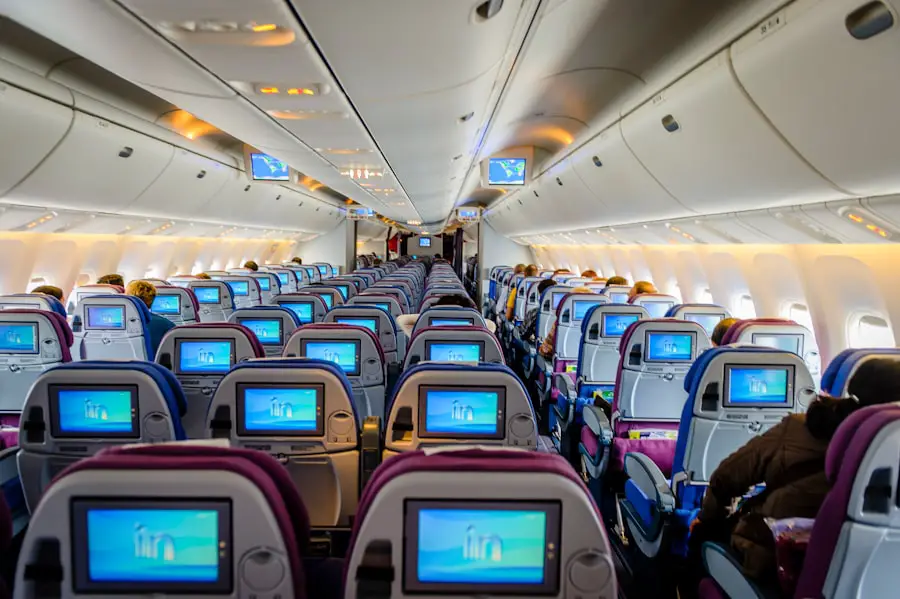
A newer fleet can improve fuel efficiency, noise levels, cabin humidity, storage space, lighting, and entertainment options. It does not automatically make an airline safer. A well-maintained older aircraft can operate safely, while a new aircraft still depends on trained crews, sound procedures, and effective maintenance.
The Airbus A350 and Boeing 787 Dreamliner are examples of newer long-haul designs built around efficient engines, lightweight materials, and cabin-comfort improvements. The actual passenger experience still depends on how the airline configures its seats, galleys, lavatories, Wi-Fi, and service.
Maintenance matters more than the average fleet age shown on a comparison site. Airlines follow scheduled inspections, component-life limits, manufacturer instructions, airworthiness directives, and regulator requirements. Many carriers also use aircraft health-monitoring data to identify problems before they cause an avoidable delay.
The best airline is the one that performs well on your route, under your fare rules, on the aircraft you will actually fly.
Customer Service and Disruption Support
Good service covers the entire journey, including booking, check-in, baggage handling, boarding, onboard care, rebooking, refunds, and follow-up support. Friendly cabin crews matter, but the real test often comes when a flight is delayed or canceled.
Singapore Airlines is known for attentive onboard service, while many other carriers compete through strong apps and self-service tools. Mobile features can help you change a booking, receive gate updates, track baggage, and contact support without waiting in a long airport line. The value of those tools depends on whether they still work during a large disruption.
| What to Check | Useful Evidence |
|---|---|
| Disruption communication | Timely app, text, email, and gate updates that explain the next step |
| Rebooking support | Published commitments to rebook you on the same airline or an eligible partner |
| Baggage handling | Recent mishandled-baggage data and a clear delayed-bag claim process |
| Complaint resolution | Accessible contact channels, written case numbers, and a clear escalation path |
What Happens When Your Plans Break?
The U.S. Airline Customer Service Dashboard compares voluntary airline commitments for controllable cancellations and significant delays. Depending on the airline, these may include free rebooking, meals, hotel accommodation, ground transportation, travel credits, or partner-airline rebooking.
If an airline cancels a covered flight or makes a significant change and you reject the alternative transportation, U.S. refund rules generally require a prompt refund. Poor service by itself does not always create a refund right after you take the flight, so read the current DOT refund guidance.
Accessibility and Family Travel
A good airline should work for passengers with disabilities, families, older travelers, and anyone who needs extra assistance. Do not judge accessibility only by a general star rating. Check the airline’s policies for wheelchairs, mobility devices, airport escorts, onboard seating, service animals, accessible communication, and complaint resolution.
The Air Carrier Access Act prohibits disability discrimination on covered U.S. airline flights. The DOT also publishes an Airline Passengers with Disabilities Bill of Rights. Travelers who need help should confirm arrangements with every operating carrier on a multi-airline itinerary.
Families should review the DOT family-seating dashboard. Some airlines commit to seating a child age 13 or younger next to an accompanying adult without an added fee when stated conditions are met, while others provide less specific assurances.
Note: On a codeshare itinerary, contact the operating airline—not only the airline that sold the ticket—to confirm wheelchair handling, special meals, seating accommodations, and airport assistance.
Route Network
A large route network can reduce connections and provide more alternatives when a flight is disrupted. Major carriers such as American Airlines and Lufthansa connect extensive domestic and international networks, but network size alone is not enough. A smaller airline with a nonstop flight may be the better choice for your trip.
Airlines expand their reach through partnerships and codeshare agreements. In a codeshare, one airline may sell the ticket while another operates the aircraft. The operating carrier normally determines the plane, crew, cabin layout, onboard service, and many day-of-travel procedures.
Delta is a member of the SkyTeam alliance. Alliance membership can make connections, mileage earning, priority services, and lounge access easier, but benefits still depend on your ticket, status, route, and operating carrier.
Note: Before booking an alliance or codeshare flight, check the words “operated by.” Baggage limits, seat selection, lounge access, upgrade eligibility, and mileage credit may differ from the marketing airline’s normal rules.
Pricing and Total Trip Value
Airlines use different pricing models. Low-cost carriers such as Ryanair and easyJet may offer a very low base fare, then charge separately for bags, larger carry-ons, advance seat assignments, food, and changes. These fares can be excellent value for travelers who need only the included service.
Full-service airlines such as British Airways may include more in some fares, but inclusions vary by route and fare family. Standard economy tickets do not usually include lounge access. Even checked baggage, meals, and advance seat selection may cost extra on the lowest fare.
Compare the final price for the same trip, not the first number shown in search results. Add every service you expect to use:
- Carry-on and checked-baggage fees
- Advance seat selection
- Family seating needs
- Meals and drinks
- Change or cancellation restrictions
- Airport check-in or boarding-pass fees
- Wi-Fi and entertainment charges
- Credit-card, loyalty, or elite-status benefits
U.S. airlines must provide baggage and optional-service fee information through their websites and booking disclosures. Review the fare conditions before payment because similarly named fares can have different restrictions.
Alliance Partnerships
Star Alliance, oneworld, and SkyTeam help member airlines connect their networks. Passengers may receive through-checked baggage, coordinated schedules, reciprocal mileage earning, priority services, and lounge access when their fare and status qualify.
United Airlines belongs to Star Alliance, alongside airlines including Lufthansa and Air Canada. That relationship can simplify an international itinerary, but it does not make every benefit automatic.
Check these details before choosing an alliance itinerary:
- Whether all flights are on one ticket
- Which carrier operates each segment
- Whether baggage is checked to the final destination
- Where you must clear immigration and collect bags
- Whether your fare earns miles or qualifying credit
- Whether your status grants lounge access on that itinerary
What In-Flight Amenities Should You Expect?
Amenities can make a long trip more comfortable, but airline-level descriptions often hide major differences between aircraft. One plane may offer seatback screens, power, Wi-Fi, and a modern cabin, while another aircraft on the same airline may not.
Emirates is known for premium long-haul cabins, lie-flat business-class seats on many aircraft, extensive entertainment, and full meal service. Singapore Airlines also offers highly regarded premium products, including the suites discussed in our Singapore Airlines Suite cost guide. However, the exact seat and service depend on the aircraft, route, and cabin.
Before booking, check:
- Aircraft type: Look at the scheduled plane and remember that substitutions can occur.
- Seat dimensions: Compare pitch, width, recline, and legroom rather than relying on a cabin name.
- Power: Confirm whether the seat has AC power, USB-A, USB-C, or no outlet.
- Wi-Fi: Check whether it is available on that aircraft, what it costs, and whether streaming is supported.
- Entertainment: Determine whether screens are built in or require your own charged device.
- Food: Check whether meals, snacks, drinks, and special meals are included.
Sustainability Efforts
Air travel produces significant emissions, so sustainability claims deserve careful review. A credible airline should publish measurable goals, progress data, and the method used to calculate emissions rather than relying only on broad environmental language.
Useful measures include newer fuel-efficient aircraft, lighter equipment, efficient flight planning, reduced ground-engine use, sustainable aviation fuel, waste reduction, and transparent emissions reporting. The airline industry has set a goal of net-zero carbon emissions by 2050, but progress depends on technology, fuel supply, infrastructure, policy, and investment.
ICAO’s Carbon Offsetting and Reduction Scheme for International Aviation provides a global framework for eligible international aviation emissions units and fuels. Offsetting does not remove the emissions produced by a flight, so it should not be presented as a complete substitute for reducing fuel use.
Sustainable aviation fuel is an important part of long-term plans, but supply remains limited. In June 2026, the International Air Transport Association estimated that SAF would account for about 0.8% of global aviation fuel use during the year.
Note: Treat claims such as “green flight,” “carbon neutral,” or “eco-friendly fare” cautiously unless the airline explains the emissions boundary, fuel used, offset standard, and independent verification.
Financial Stability
An airline needs enough liquidity and operational flexibility to pay for fuel, aircraft, maintenance, labor, airport charges, and customer obligations. Financial pressure can lead to reduced schedules, delayed investment, route closures, or difficulty recovering from disruptions.
Southwest’s point-to-point network and standardized Boeing 737 fleet show how a simpler operation may reduce some forms of complexity. That structure does not, by itself, prove that Southwest or any other airline is the financially strongest carrier at a given time.
Passengers do not need to perform a full investment analysis, but they can look for practical warning signs:
- Repeated large schedule cuts
- Reports of unpaid obligations or aircraft repossessions
- Bankruptcy or restructuring announcements
- Rapid changes to refund or credit policies
- Negative credit-rating changes
- Recent financial statements showing weak liquidity or heavy near-term debt
Financial strength also does not guarantee good service. Use it as one part of the decision, especially when booking far in advance or buying a costly nonrefundable itinerary.
How to Read Airline Reviews and Ratings
Reviews can reveal recurring problems with baggage, communication, seats, food, and disruption handling. They can also mislead when readers combine different cabins, airports, routes, aircraft, and travel dates into one star score.
Skytrax uses both airline product assessments and passenger survey programs, depending on the rating or award. Other sites may rely mainly on user reviews. A professional audit, a customer-voted award, a safety ranking, and an app-store rating measure different things and should not be treated as interchangeable.
Use reviews effectively by filtering for:
- Your departure and arrival airports
- The same cabin and fare family
- The aircraft type, when available
- Travel within the past three to six months
- Repeated patterns rather than one extreme complaint
- How the airline responded after something went wrong
Qatar Airways, Singapore Airlines, LATAM, and other major carriers have received service recognition in different regions and categories. Awards are useful context, but they do not guarantee the same experience on every flight.
How to Check an Airline’s Quality
- Confirm safety oversight. Check the airline’s regulator, any operating restrictions, and the date and method behind private safety ratings.
- Check recent route reliability. Review several months of on-time and cancellation data for the route or airports you will use.
- Calculate the final trip price. Add baggage, seats, meals, Wi-Fi, changes, cancellations, and any services your group needs.
- Review disruption commitments. Check whether the airline promises rebooking, meals, hotels, transportation, or partner-airline help for controllable problems.
- Identify the operating carrier and aircraft. Confirm who provides the plane and compare the actual seat, power, entertainment, and Wi-Fi.
- Check accessibility and family policies. Confirm wheelchair handling, seating accommodations, special assistance, and family-seating rules before payment.
- Read current, relevant reviews. Focus on your route, cabin, aircraft, and travel period rather than an airline’s lifetime average.
- Scan recent operational and financial news. Look for strikes, bankruptcies, major schedule cuts, airport disruptions, or fleet groundings that could affect your trip.
Pro Tip: Search for the airline name, route, cabin, aircraft, and current month together. “Airline + JFK to LHR + economy + 787 + July 2026” is far more useful than a general airline star rating.
Spotlight: LATAM Airlines
LATAM is a major South American airline group. Its current scale, product, and partnerships make it a useful example of why travelers should compare current facts instead of relying on an old brand summary.
What Is LATAM Airlines?
LATAM Airlines Group was created through the integration of LAN and TAM. It operates passenger and cargo services across five domestic markets—Brazil, Chile, Colombia, Ecuador, and Peru—and connects South America with destinations in North America, Europe, Oceania, Africa, and the Caribbean.
Is LATAM a Good Airline?
LATAM was certified as a 4-Star Airline by Skytrax in March 2026 for its airport, onboard product, and staff-service standards. That supports the view that LATAM offers a good overall product, particularly on many wide-body routes.
Passenger experiences can still differ. Short domestic flights, long-haul international services, basic fares, premium cabins, and partner-operated flights do not provide the same inclusions. Check recent reviews and the exact aircraft before booking.
What Destinations Does LATAM Airlines Serve?
LATAM operates an extensive South American network and international services linking the region with North America, Europe, Oceania, Africa, and the Caribbean. Exact destination totals change as seasonal routes begin, end, or move between group airlines, so use LATAM’s current booking map rather than an undated destination count.
What Is the Fleet Size of LATAM Airlines?
As of March 31, 2026, LATAM reported a total fleet of 375 aircraft. That included 355 passenger aircraft and 20 Boeing 767-300 freighters. Its passenger fleet included Airbus A319, A320, A320neo, A321, A321neo, and short-term-leased A330 aircraft, plus Boeing 767, 777, and 787 models.
The fleet changes as aircraft are delivered, leased, sold, or retired. LATAM’s Q1 2026 results are the dated source for this figure.
Does LATAM Airlines Have a Frequent-Flyer Program?
Yes. LATAM Pass lets members earn redeemable miles and work toward elite benefits. Earning rates, qualifying points, redemption prices, and partner-flight rules depend on the fare and operating airline.
Is LATAM in a Global Airline Alliance?
LATAM left the oneworld alliance on May 1, 2020. It now relies on individual airline partnerships and commercial agreements, including cooperation with Delta Air Lines. Travelers should check each partner itinerary separately because alliance-wide benefits do not automatically apply.
Frequently Asked Questions
Which airline has the best safety record in the world?
No aviation regulator officially names one airline the world’s safest. Private rankings use different methods and change each year. AirlineRatings placed Etihad first in its 2026 full-service ranking, followed by Cathay Pacific and Qantas. Use rankings as one data point alongside regulatory oversight, training, maintenance, and incident history.
How do I check if an airline is reliable before I book?
Check several recent months of on-time and cancellation data for your route or airports. Then review the airline’s disruption commitments, number of daily backup flights, baggage performance, recent reviews, and any current labor, weather, fleet, or financial problems.
What’s the difference between a full-service airline and a low-cost carrier?
A low-cost carrier usually sells a basic fare and charges separately for more services. A full-service airline may include more, especially on long-haul routes, but its lowest fares can still exclude checked bags, seat selection, changes, or meals. Compare the final price for the services you need.
Are newer aircraft safer than older ones?
Not automatically. New aircraft may include newer systems, efficient engines, and improved cabin features, but aircraft age alone does not determine safety. Maintenance quality, crew training, operating procedures, regulator oversight, and compliance with required inspections matter more.
Does a codeshare flight provide the marketing airline’s normal service?
Not necessarily. The operating carrier normally supplies the aircraft, crew, seats, meals, Wi-Fi, and day-of-travel service. Baggage, lounge, upgrade, and mileage rules may also differ, so check the “operated by” line before buying.
How recent should airline reviews be?
Prioritize reviews from the past three to six months. Filter for the same airports, route, aircraft, cabin, and fare type whenever possible. A review of long-haul business class may tell you very little about the airline’s short domestic economy service.
Sources
- Federal Aviation Administration — Air Carrier Oversight — regulatory safety oversight and carrier-system assessment
- U.S. Department of Transportation — Air Travel Consumer Reports — on-time, cancellation, baggage, wheelchair, and complaint data
- U.S. Department of Transportation — Airline Customer Service Dashboard — airline commitments during controllable disruptions
- U.S. Department of Transportation — Air Carrier Access Act Guidance — passenger accessibility rights and airline obligations
- International Civil Aviation Organization — CORSIA — international aviation emissions framework
- LATAM Airlines Group — Q1 2026 Results — current fleet, network, operations, and financial information
