
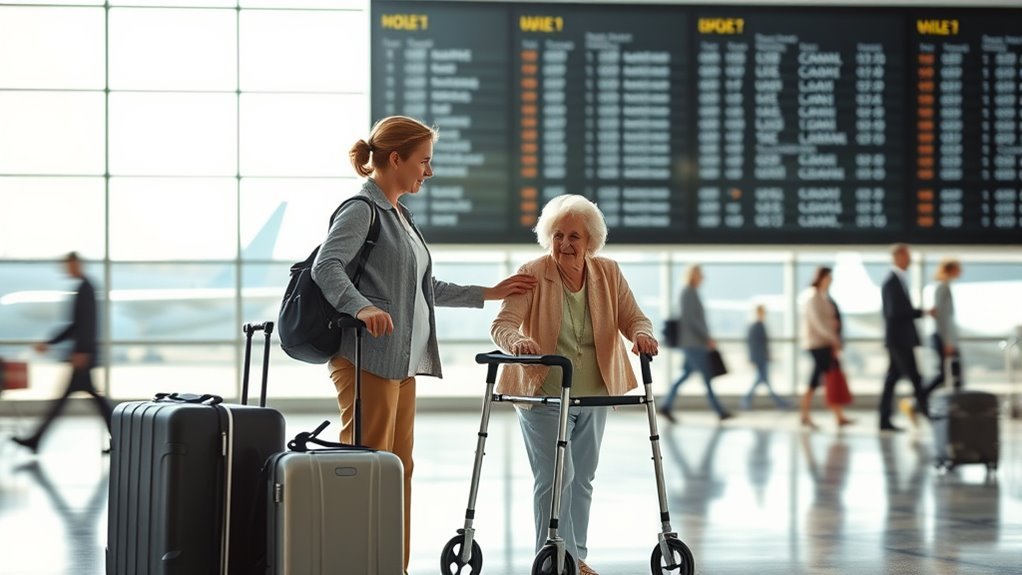
Last Updated on July 24, 2026 by Ethan Caldwell
Traveling with In-Home Supportive Services requires more than one simple rule. A short trip within California is treated differently from an extended stay in another state or a trip outside the United States. Your provider may claim only authorized services that were actually performed, and longer absences can affect your California residency or underlying benefit eligibility.
Quick Answer
An IHSS provider may be able to travel with a recipient and claim authorized services actually performed during the trip. California does not impose one blanket 30-day limit on all U.S. travel. However, 30 days outside California triggers a residency inquiry, and international absences have separate eligibility rules.
Key Takeaways
- A provider may claim only authorized IHSS services they actually perform.
- There is no blanket statewide rule limiting every U.S. trip to 30 days.
- After 30 continuous days outside California, the county must review whether the recipient still intends to remain a California resident.
- If the regular provider stays home, another properly enrolled provider may be able to provide the recipient’s authorized services.
- Being outside the United States for a full calendar month or 30 consecutive days can cause IHSS discontinuance.
- Contact your county IHSS office before an extended or international trip and request written guidance.
Note: This article provides general information, not legal advice or a county eligibility decision. IHSS cases can differ based on the recipient’s eligibility category, destination, length of absence, living arrangements, authorized tasks, and county findings.
Disclosure: As an Amazon Associate I earn from qualifying purchases. Some links on this page are affiliate links, at no extra cost to you.
What IHSS Services Continue During Travel?
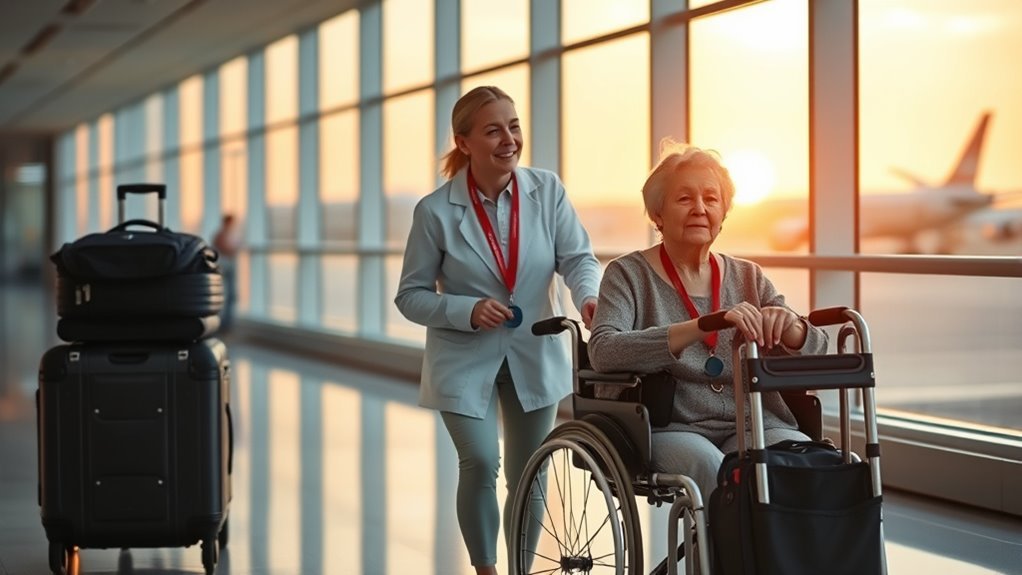
Travel does not create new IHSS services or extra hours. A provider may claim only the recipient’s existing authorized tasks, only when those tasks are needed, and only for the time the provider actually spends performing them.
For example, a provider may continue authorized personal care, meal preparation, mobility assistance, protective supervision, or another approved task when it remains necessary during the trip. The exact services depend on the recipient’s current Notice of Action and authorized service list.
Vacation companionship, sightseeing, waiting for convenience, entertainment, airfare, hotel costs, meals, and transportation by themselves are not automatically payable IHSS services. Do not assume that every hour spent near the recipient is an hour of authorized work.
The location may change during a trip, but the basic payment rule does not: the provider may report only authorized services that were actually performed.
Current California Electronic Visit Verification guidance allows non-live-in providers to identify services as being performed in the recipient’s home or in the community. EVV does not increase the recipient’s hours or change which services are authorized.
Warning: A provider must never report hours for a day when no authorized service was performed. False timesheet claims can lead to repayment demands, provider violations, fraud investigations, or loss of program eligibility.
Can You Take an IHSS Vacation in the U.S.?
You may travel within the United States, but the rules depend on whether you remain in California or leave the state. California’s statewide IHSS regulations do not establish a blanket rule saying every domestic trip must end within 30 days.
| Travel situation | General statewide rule | Recommended action |
|---|---|---|
| Temporary travel within California | No general 30-day travel limit appears in the statewide residency rule. | Contact the county if the trip changes the recipient’s address, provider arrangement, or service needs. |
| Outside California for fewer than 30 continuous days | The 30-day mandatory residency inquiry has not yet been reached, but all other eligibility and timesheet rules still apply. | Tell the county in advance and confirm how authorized services should be reported. |
| Outside California for 30 continuous days or longer | The county must inquire whether the recipient still intends to maintain California residency. | Respond by the county’s deadline with the anticipated return date, reason for the absence, location, and housing information. |
| Outside California for 60 days or longer | The absence is evidence that residency may have changed unless illness or another recognized good-cause reason prevented the recipient from returning. | Provide evidence that California remains the recipient’s residence and ask for a written county decision. |
| Outside California for more than six months | Authorization may be suspended even when services previously continued because of illness or good cause. | Contact the county immediately about reassessment and resumption requirements. |
Under California IHSS residency regulations, a county must contact a recipient who has been continuously outside California for 30 days or longer. The county may ask for a written statement describing the anticipated return date, reason for the absence, current location, and California household arrangements.
If the absence reaches 60 days, the recipient may need stronger evidence that California remains their residence. Relevant facts may include maintaining a California home, having close family in California, retaining California employment or business interests, and avoiding actions that show permanent residence in another state.
Pro Tip: Before booking a long trip, send your county social worker the dates, destination, provider arrangement, and expected return date in writing. Save the message and the county’s response.
Can Your IHSS Caregiver Travel With You?
An IHSS provider may be able to travel with the recipient and provide authorized services during a domestic trip. However, neither the recipient nor the provider should assume that every trip, expense, location, or hour is automatically covered.
The provider must continue to follow the recipient’s authorized service list, monthly hours, maximum weekly hours, overtime rules, and EVV requirements. The recipient and provider should ask the county how the trip affects payroll, residency review, service location, and any county-specific reporting procedure.
Caregiver Travel Approval and County Confirmation
Current statewide CDSS resources do not identify one universal “IHSS vacation approval form” for every trip. A county may still require local notice, written details, a residency statement, a care-plan discussion, or another document based on the circumstances.
Provide the county with:
- The recipient’s name and case number
- Departure and return dates
- Every destination
- Whether the trip remains within California
- Whether the regular provider will travel
- The name of any replacement provider
- The authorized tasks expected to be needed
- How the recipient will maintain their California residence
- A temporary mailing address and telephone number
Ask the county to confirm its instructions in writing. Written confirmation is especially important for a long out-of-state trip or any international travel.
Service Continuation Rules
| Requirement | What it means |
|---|---|
| Authorized task | The task must already be included in the recipient’s IHSS authorization. |
| Actual work | The provider may claim only the time actually spent performing the authorized service. |
| Hour limits | The trip does not increase monthly authorized hours or remove weekly-hour and overtime limits. |
| EVV | A non-live-in provider must follow check-in, checkout, and home-or-community reporting requirements. |
| Residency | Long absences outside California can trigger review, discontinuance, or suspension. |
| Trip expenses | Do not assume IHSS pays airfare, lodging, meals, mileage, or other vacation costs. |
What Happens to IHSS If the Caregiver Stays Home?
If the regular provider stays home and performs no services, that provider may not claim hours for the recipient’s travel days. However, the recipient’s entire IHSS authorization does not automatically disappear simply because one provider is unavailable.
The recipient may be able to arrange for another provider who is properly enrolled and connected to the recipient’s IHSS case. Contact the county or local Public Authority before the trip because provider enrollment and payroll setup can take time.
A provider’s vacation stops that provider from billing unworked hours. It does not necessarily cancel the recipient’s authorized need for care.
Live-in-provider status does not create an exception allowing hours to be claimed when no care was provided. A self-certified live-in provider has simplified EVV reporting, but the provider must still report only authorized hours actually worked.
If no enrolled provider performs services on a particular day, no provider should claim hours for that day. The recipient should discuss backup care with the county before departure rather than submitting inaccurate time.
How Do You Notify Your IHSS Case Manager?

Contact your assigned county IHSS social worker or case manager as early as possible. Written notice is better than relying only on a telephone conversation because it gives you a record of what you reported and what the county told you.
- Describe the trip. Give the departure date, return date, destination, and temporary contact information.
- Explain the provider arrangement. State whether the regular provider will accompany you or whether another enrolled provider will work.
- Identify expected services. Explain which existing authorized tasks will remain necessary during the trip.
- Address residency. For an out-of-state trip, explain that you intend to return to California and describe the California residence you are maintaining.
- Ask about local forms. Request the name of any county-specific notice, statement, or verification form.
- Request a written answer. Ask how timesheets, EVV, provider payment, and service authorization should be handled.
If your county later sends a residency inquiry, Notice of Action, or request for information, respond by the stated deadline. Failing to respond can cause discontinuance even when you intended to return.
What Travel Paperwork Does IHSS Need?
The required paperwork depends on the trip and the county. There does not appear to be one statewide vacation-notice form that every IHSS recipient must submit for every trip.
Travel Notice Requirements
Your written notice should include enough information for the county to evaluate service delivery and California residency. Keep copies of:
- Your written travel notice
- The county’s response
- Departure and return records
- Your temporary address
- Evidence that you maintained your California residence
- Provider schedules
- Any county-requested residency statement
- Any Notice of Action
California regulations specifically allow the county to request a written statement after a recipient has been continuously outside the state for 30 days. That statement may need to include the anticipated return date, reason for the continued absence, current location, and household arrangements.
Care Plan Updates
A vacation does not automatically change the recipient’s authorized hours or tasks. If the trip changes how a task must be performed, creates a new safety concern, or makes an existing service unavailable, discuss the issue with the county before departure.
Do not let a provider substitute an unauthorized task simply because it is convenient during travel. For example, general tourism transportation is not the same as an authorized accompaniment service.
Timesheet Documentation
Providers must report only hours actually worked. The provider should keep a private, date-specific record of:
- Start and end times
- The authorized task performed
- Where the service occurred
- Breaks or periods when no service was provided
- Any schedule change approved by the recipient
- Any county instruction related to the trip
These private notes do not replace the official timesheet or EVV submission. They can help explain the hours if the county asks questions later.
How Do You Record IHSS Timesheets During Travel?
Traveling providers use the same central rule that applies at home: claim only authorized hours actually worked and stay within the recipient’s monthly and weekly limits.
| Action | Correct treatment |
|---|---|
| Authorized service is performed | Report the actual hours worked. |
| No service is performed | Do not claim hours for that period or day. |
| Provider is merely present | Presence alone is not automatically payable work. |
| Non-live-in provider works | Use the required EVV method to check in, check out, and select home or community. |
| Self-certified live-in provider works | Report the daily hours worked under the live-in EVV rules. |
| Hours exceed an applicable limit | Do not submit excess hours without any required authorization or exemption. |
Note: Paid IHSS “travel time” normally refers to direct travel from one recipient’s service location to another recipient’s service location on the same day. It does not ordinarily mean the provider’s airfare, hotel stay, vacation driving, or commute with one recipient.
For help with the Electronic Services Portal, EVV, or timesheet submission, contact the IHSS Service Desk at 866-376-7066. Questions about whether services may be claimed during a particular trip should be directed to the recipient’s county IHSS office.
Can IHSS Continue Outside the U.S.?
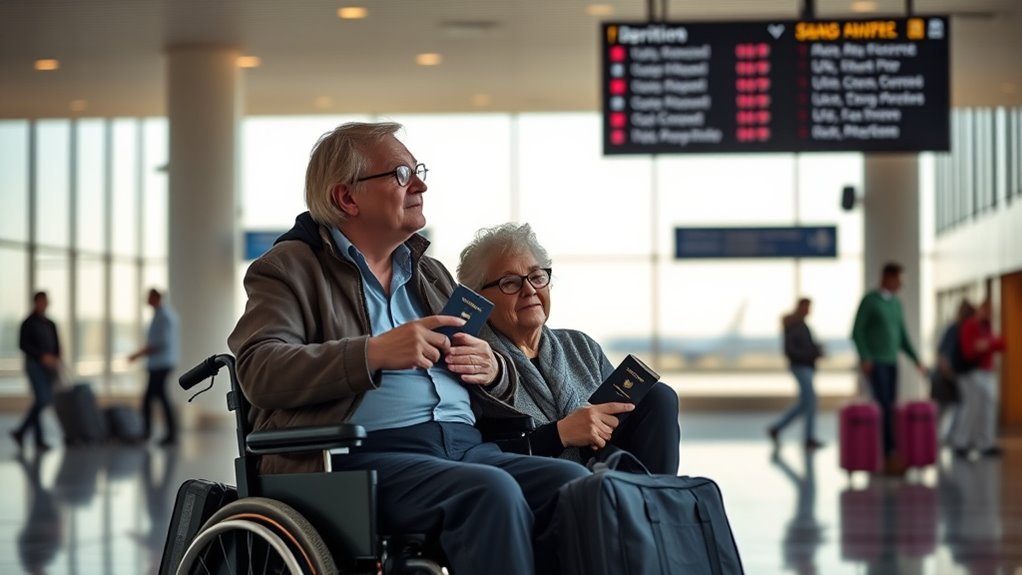
International travel has stricter rules than travel within the United States. California regulations state that IHSS must be discontinued when a recipient is outside the United States for all of a calendar month or for 30 consecutive days.
For this IHSS rule, the United States includes the 50 states, the District of Columbia, and the Northern Mariana Islands. Puerto Rico, Guam, the U.S. Virgin Islands, and American Samoa are not included in that specific regulatory definition.
A trip shorter than 30 consecutive days does not automatically meet the discontinuance threshold in this regulation. However, that does not guarantee that every provider hour performed abroad will be payable. Obtain written instructions from the county before departure.
Outside U.S. Limits
The international rule is tied partly to Supplemental Security Income and State Supplementary Payment eligibility. Under current Social Security regulations concerning absence from the United States, SSI eligibility can stop when the recipient is outside the country for a full calendar month or 30 consecutive days.
Warning: Do not plan a trip of “exactly 30 days” based on casual date counting. The rules use consecutive full days and calendar-month concepts. Confirm the departure and return calculation with the county and the Social Security Administration.
Case Manager Notification
Before international travel, give the county:
- Your departure date
- Your expected return date
- Every country or territory you will visit
- Your temporary contact information
- Your provider arrangement
- The services expected to be needed
- Whether you receive SSI or another linked benefit
Ask whether the provider may report any hours during the trip and whether the absence will cause a Notice of Action, discontinuance, reassessment, or reapplication requirement.
Why the 30-Day International Threshold Matters
If you remain outside the United States for 30 consecutive days or longer, SSI rules generally do not treat you as back in the country until you have remained in the United States for 30 consecutive days after returning.
California IHSS regulations state that after qualifying international discontinuance, a recipient may need to reestablish SSI or SSI-related eligibility, apply again for IHSS, and complete a new county eligibility determination and needs assessment.
Returning to the United States therefore does not always cause IHSS to restart on the day of arrival. Contact Social Security and your county IHSS office immediately after returning.
When Do IHSS Services Resume After Travel?
The answer depends on what happened to the case during the trip.
- The case remained active and the same provider returns to work: The provider may continue reporting authorized services actually performed.
- The regular provider was away but a replacement provider worked: Each provider reports only their own authorized hours.
- No provider worked during the trip: No hours are reported for the periods when no service was delivered.
- The county discontinued IHSS because California residency was lost: The recipient may need to reapply or request reassessment after returning.
- IHSS was discontinued after an international absence: The recipient may need to reestablish the underlying eligibility and complete a new county determination.
- Authorization was suspended after an extended out-of-state absence: Services do not resume until the required county reassessment is completed.
Notify the county of your actual return date and provide any requested proof. Do not submit hours until the provider and recipient understand whether the case remained active and which service dates are payable.
Where Can You Get Help With IHSS Travel Plans?
Start with the office that administers the recipient’s case. County staff, rather than a private home-care company or general travel website, must make the eligibility and authorization decision.
- County-specific travel and eligibility questions: Use the CDSS County IHSS Office Directory.
- Timesheet, EVV, ESP, or TTS assistance: Call the IHSS Service Desk at 866-376-7066.
- General recipient resources: Review the CDSS IHSS Recipient Resources.
- If benefits are reduced, suspended, or stopped: Read the Notice of Action and follow the appeal instructions. Information is available through California State Hearings.
Deadlines on a Notice of Action matter. Keep the notice, its envelope, your travel correspondence, proof of return, timesheets, and all documents sent to the county.
Sources
- California Department of Social Services, Manual of Policies and Procedures, Sections 30-770.42 through 30-770.47 — California residency, out-of-state absence, international absence, discontinuance, suspension, and continuation rules.
- California Department of Social Services, Electronic Visit Verification Help — live-in and non-live-in provider reporting requirements.
- California Department of Social Services, IHSS Provider Resources — provider enrollment, timesheets, authorized hours, and payroll resources.
- Social Security Administration, 20 CFR §416.1327 — SSI suspension and return-presence rules after absence from the United States.
- California Department of Social Services, County IHSS Offices — official county contact directory.
- California Department of Social Services, State Hearings — information about challenging an adverse benefits decision.
Frequently Asked Questions
Can an IHSS provider travel with a recipient?
A provider may be able to accompany the recipient and claim authorized services actually performed. The provider must remain within the authorized hours, weekly limits, overtime rules, and EVV requirements. Contact the county before an out-of-state or international trip.
Is every U.S. trip limited to 30 days?
No. California regulations do not impose one blanket 30-day limit on all domestic trips. Thirty continuous days outside California triggers a county inquiry into whether the recipient still intends to maintain California residency.
What happens if the regular IHSS provider goes on vacation?
The provider cannot claim hours for services they do not perform. The recipient may be able to use another properly enrolled provider. Contact the county or Public Authority early enough to complete any required provider enrollment or case connection.
Can a live-in provider claim hours while the recipient is away?
Live-in status does not permit billing for services that were not provided. It changes some EVV reporting fields, but the provider must still report only authorized hours actually worked for the recipient.
Can IHSS continue outside the United States?
California regulations require discontinuance when the recipient is outside the United States for all of a calendar month or for 30 consecutive days. For shorter trips, obtain written county guidance before the provider claims any hours abroad.
Does IHSS pay the provider’s airfare, hotel, meals, or vacation mileage?
Do not assume those expenses are covered. IHSS travel-time pay generally concerns direct travel between two recipients’ service locations on the same day, not the cost of accompanying one recipient on vacation.
Conclusion
An IHSS recipient can travel, and a provider may sometimes continue performing authorized services during the trip. The correct rule depends on the destination, length of absence, California residency, provider arrangement, and whether the work remains within the recipient’s authorization.
Do not rely on the common claim that every U.S. trip is limited to 30 days. Instead, remember the actual thresholds: 30 days outside California triggers a residency inquiry, 60 days raises a stronger residency issue, and international absence for a full calendar month or 30 consecutive days can cause discontinuance.
Notify your county before extended or international travel, report only hours actually worked, follow EVV rules, arrange a replacement provider when needed, and keep written records. Those steps provide the strongest protection against payment delays, inaccurate timesheets, and avoidable interruptions in care.
