
Last Updated on July 25, 2026 by Daniel Globe
Getting from London to the Cotswolds is straightforward once you decide which part of the region you want to visit. Direct trains from London Paddington reach several useful gateways, while coaches, cars, guided tours, private transfers, and cycling offer alternatives. The important part is planning your onward journey because many famous Cotswolds villages do not have a railway station.
Quick Answer
For most travelers, the easiest way to get from London to the Cotswolds is a direct train from London Paddington to a gateway such as Moreton-in-Marsh, Kemble, Stroud, or Cheltenham Spa. Choose your final village first, because destinations such as Bourton-on-the-Water, Stow-on-the-Wold, Cirencester, and Chipping Campden usually need an onward bus, taxi, or car journey.
Key Takeaways
- London Paddington is the main rail departure point for direct GWR services toward the Cotswolds.
- Moreton-in-Marsh is a useful northern gateway for Stow-on-the-Wold, Bourton-on-the-Water, Chipping Norton, and other nearby destinations.
- Kemble is useful for Cirencester, while Cheltenham Spa and Stroud serve western parts of the region.
- Driving gives you the most flexibility for several villages, but parking, narrow rural roads, London traffic, ULEZ, and the Congestion Charge may affect your plans.
- Coach travel can be cheaper, with London Victoria services reaching destinations such as Cirencester and Cheltenham, but onward transport may still be necessary.
- A guided tour is easiest for a one-day multi-stop visit, while independent public transport works best when you limit your itinerary to one part of the Cotswolds.
At a Glance
| Time Required | Roughly 1.5–2 hours by train to many rail gateways; the fastest London–Cheltenham coaches are currently about 2.5 hours. Add time for buses, taxis, parking, or village transfers. |
| Difficulty | Easy by direct train or guided tour; moderate when combining trains and local buses; driving requires confidence on narrow rural roads. |
| Tools Needed | Live journey planner, current bus timetable, payment card, and navigation app or map if driving or cycling. |
| Cost | Varies widely by date, destination, ticket type, group size, and how early you book. Check live fares instead of relying on fixed price ranges. |
Disclosure: As an Amazon Associate I earn from qualifying purchases. Some links on this page are affiliate links, at no extra cost to you.
Choose Your Cotswolds Destination Before Your Transport
The Cotswolds is a large rural region rather than a single town or station. That means the best London route depends on where you actually want to spend your time.
The key planning rule is simple: choose your Cotswolds destination first, then choose the rail station, coach stop, or road route that serves it best.
| Destination | Useful Gateway | Onward Travel |
|---|---|---|
| Moreton-in-Marsh | Moreton-in-Marsh station | You arrive in the town itself. |
| Stow-on-the-Wold | Moreton-in-Marsh | Local bus or taxi. |
| Bourton-on-the-Water | Moreton-in-Marsh | Pulhams 801 bus or taxi. |
| Chipping Campden | Moreton-in-Marsh | Local bus or taxi. |
| Cirencester | Kemble | Local bus or taxi to Cirencester. |
| Burford | Oxford is a practical interchange | Continue by bus toward Burford. |
| Western Cotswolds | Cheltenham Spa or Stroud | Local bus, taxi, or car depending on the village. |
The official Cotswolds Tourism Partnership maintains a detailed train and bus guide covering current gateway stations and onward connections.
Traveling by Train From London to the Cotswolds
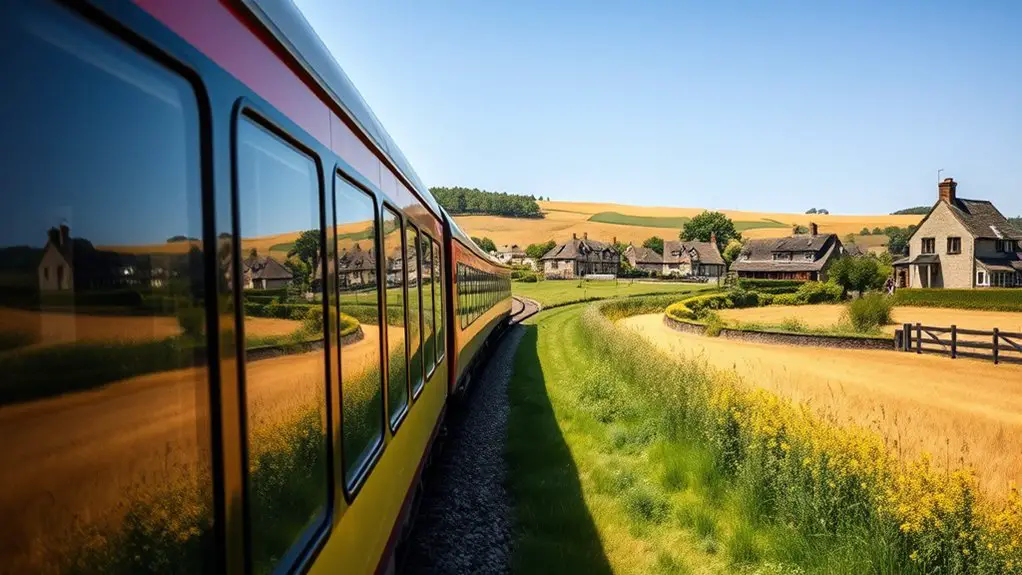
For many visitors, the train is the quickest and simplest way to leave London. The main direct services toward the Cotswolds depart from London Paddington, not King’s Cross.
Great Western Railway serves two especially useful corridors: one toward Moreton-in-Marsh through Oxford, Charlbury, and Kingham, and another toward Cheltenham through Swindon, Kemble, Stroud, Stonehouse, and Gloucester.
Which train you choose should therefore depend on your final destination rather than on a general search for “the Cotswolds.”
Best Train Stations for Popular Cotswolds Destinations
- Moreton-in-Marsh: a strong choice for the northern Cotswolds and onward buses to Stow-on-the-Wold, Bourton-on-the-Water, and Chipping Norton.
- Kingham and Charlbury: useful for parts of the Oxfordshire Cotswolds.
- Kemble: the closest rail gateway commonly used for Cirencester.
- Stroud: useful for the western and southern side of the Cotswolds.
- Cheltenham Spa: a major western gateway with onward bus connections.
Pro Tip: If you want to see Bourton-on-the-Water and Stow-on-the-Wold without driving, Moreton-in-Marsh is one of the most practical starting points because local buses connect the station area with both destinations.
Saving Money on Train Tickets
There is no dependable fixed price for a London-to-Cotswolds train ticket. Fares change according to the station, date, departure time, ticket restrictions, and availability.
Advance tickets are sold in limited numbers and can offer lower prices when available. Off-Peak tickets may also cost less than peak-time travel, while eligible Railcards can reduce many fares.
Check the exact journey before booking, particularly if your train must connect with a local bus.
Driving From London to the Cotswolds

Driving gives you the greatest freedom once you reach the Cotswolds. It is particularly useful when you want to visit several small villages, rural attractions, or accommodation that is poorly served by public transport.
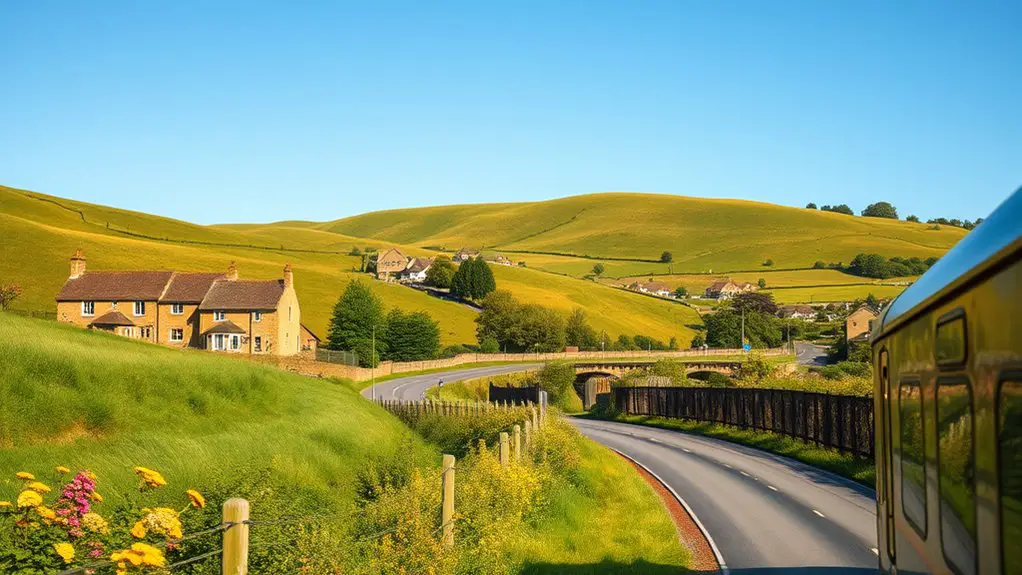
Enjoy the freedom to explore villages and countryside at your own pace, but allow extra time for traffic, parking, and narrow rural roads.
Your best road route depends on your destination. Travelers heading toward the northern Cotswolds often approach through the Oxfordshire side of the region, while western and southern destinations may be better reached by other motorway and A-road corridors.
Instead of forcing a “scenic route” into the journey, enter your actual destination into a current navigation service and allow time for congestion around London and busy Cotswolds towns.
Useful driving preparations include:
- Check the route to your exact village rather than navigating simply to “Cotswolds.”
- Plan parking before arriving at popular villages.
- Expect narrow country lanes, blind bends, cyclists, walkers, and agricultural traffic.
- Download an offline map or keep a backup route in case mobile coverage is weak.
- Leave room in your schedule for slower traffic and short stops.
Warning: If you collect or drive a car in London, check TfL’s ULEZ rules and the current Congestion Charge. Charges depend on where and when you drive and, for ULEZ, whether the vehicle meets the required emissions standard.
Taking a Bus or Coach to the Cotswolds
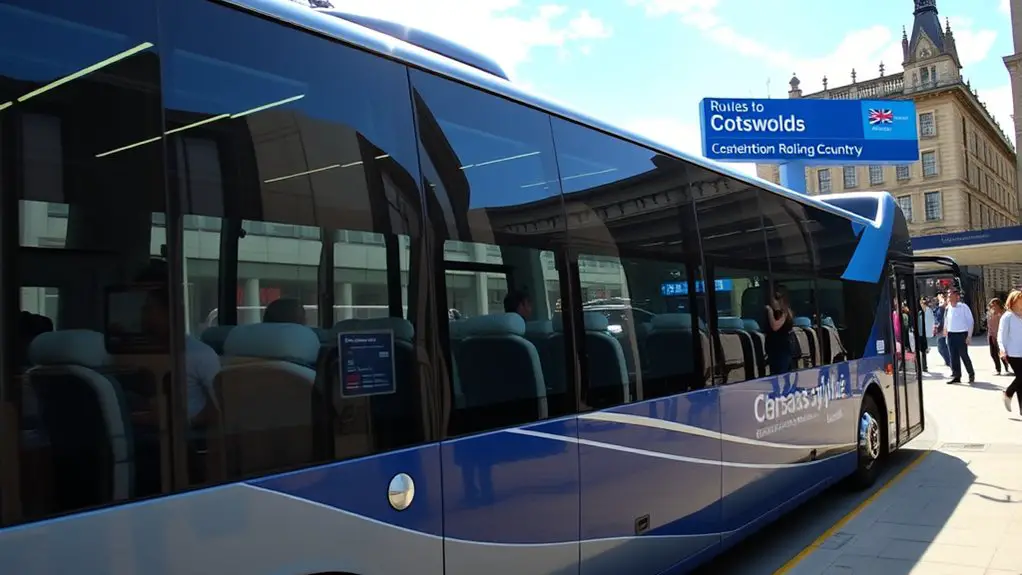
A coach can be a useful budget-friendly alternative to rail, but it helps to separate long-distance coach travel from London from the local buses used inside the Cotswolds.
For example, National Express operates services from London Victoria toward Cheltenham, with some journeys also serving Cirencester. Smaller Cotswolds villages may then require another bus or taxi.
Bus Service Options
If your destination is on a long-distance coach route, traveling from Victoria Coach Station can avoid the need to change trains in London.
For villages away from the coach network, local operators become more important. One useful example is Pulhams service 801, which links places including Moreton-in-Marsh, Stow-on-the-Wold, Bourton-on-the-Water, Cheltenham, and Chipping Norton.
Pulhams changed the 801 timetable in 2026, including later journeys, so check the current service information before relying on an old timetable.
Note: Timetables can change on Sundays, bank holidays, and during service updates. Check both the train and onward bus on the same day before building a tight connection.
Ticket Purchasing Tips
Coach prices vary too much to support a permanent “£10–£20” or “£18–£35” price range. Compare live fares for your exact travel date instead.
| Ticket Type | Best For | Price Guidance |
|---|---|---|
| Single | One-way journeys and flexible itineraries | Check the live fare; advance availability can affect price. |
| Return | Returning to London on a known date | Compare with two singles rather than assuming a return is cheaper. |
| Flexible Fare | Travelers who may need to change departure times | Usually costs more in exchange for less restrictive change conditions. |
Travel Duration Estimates
Coach journey times depend on traffic and your destination. National Express currently lists its fastest London Victoria–Cheltenham journey at about 2 hours 30 minutes, but that does not include any onward trip to a smaller village.
Allow extra time when:
- Your coach makes intermediate stops.
- You travel during busy London traffic.
- You need a local bus after reaching Cirencester or Cheltenham.
- Your local connection is infrequent.
Getting Around the Cotswolds Without a Car
You can visit the Cotswolds without driving, but a successful car-free trip usually focuses on one cluster of towns rather than trying to cross the whole region.
Official visitor information lists several useful combinations:
- Moreton-in-Marsh → Bourton-on-the-Water: train to Moreton-in-Marsh, then local bus.
- Moreton-in-Marsh → Stow-on-the-Wold: continue by local bus or taxi.
- Moreton-in-Marsh → Chipping Campden: use an onward local bus.
- Kemble → Cirencester: continue by bus or taxi.
- Oxford → Burford: connect to a local bus service.
Combined rail-and-bus tickets are available on some routes, including connections from the rail network toward Bourton-on-the-Water, Stow-on-the-Wold, and Chipping Norton. Check availability for your travel date when booking.
Pro Tip: For a car-free day trip, build the itinerary around the return train first. Then work backward and choose local buses that leave enough connection time at the station.
Joining a Guided Tour or Day Trip
A guided tour can be the easiest option when you want to see several Cotswolds villages in one day without driving or coordinating rural bus timetables.
Transport is normally included, and the fixed itinerary removes the need to plan each connection yourself. The tradeoff is less freedom over how long you spend at each stop.
Convenient Departure Locations
Guided-tour meeting points vary by operator and product. Many tours use a central London meeting point, but you should not assume that a tour leaves from Paddington, Victoria, an airport, or another station unless your booking specifically says so.
Before booking, check:
- The exact meeting-point address.
- The required check-in time.
- Whether hotel pickup is included.
- The final London drop-off point.
- How much time the itinerary gives you at each Cotswolds stop.
Guided Tour Benefits
A guided day trip removes much of the logistical work. You do not need to navigate narrow roads, find village parking, or line up several local buses.
A knowledgeable guide may also provide historical and cultural context while you travel. Tours can therefore work well for first-time visitors who have only one day.
The drawback is a fixed schedule. If you prefer photography, long walks, extended meals, or time in one specific village, independent travel may suit you better.
Included Transport Options
Most London day tours use a coach or minibus to move between their scheduled stops. Vehicle size, facilities, accessibility, and luggage rules differ by operator.
Read the booking description carefully rather than assuming every tour includes hotel pickup, luxury seating, or the same villages.
Cycling From London to the Cotswolds
Cycling all the way from London to the Cotswolds is possible for experienced riders, but it should be treated as a long-distance cycling trip rather than a simple alternative to the train.
There is no single universal signed route that makes London-to-Cotswolds cycling effortless. You need a cycle-specific route planner, realistic daily mileage, safe-road choices, repair equipment, weather preparation, and accommodation if you divide the ride across more than one day.
The official Cotswolds cycling guide lists routes within the region ranging from easier country-lane rides to hillier routes.
For many visitors, a more practical plan is to take the train from London and cycle once you reach Oxfordshire or the Cotswolds. That gives you more time on quiet country roads instead of spending much of the day riding out of London.
If you take a bicycle on a train, check the operator’s current bicycle-reservation rules before travel because space may be limited.
Arranging Private Transfers and Car Rentals
A private transfer offers door-to-door travel without the work of driving yourself. It can be attractive for families, groups with luggage, or travelers staying at rural accommodation far from a station.
Car rental gives you more freedom after arrival and can be particularly useful for multi-village itineraries.
Before renting, compare:
- Total rental cost rather than only the advertised daily rate.
- Insurance cover and excess.
- Mileage limits.
- Automatic versus manual transmission.
- Fuel or charging policy.
- One-way rental fees if returning the vehicle somewhere else.
- London ULEZ and Congestion Charge implications.
If you hold a Great Britain driving licence, a hire company may ask to see your driving record. GOV.UK explains how to generate a driving-licence check code. Requirements for overseas licences vary, so confirm the required documents directly with the rental company before collection.
Both private transfers and rentals can make a rural itinerary easier, but they solve different problems: a transfer removes driving entirely, while a rental gives you control throughout the trip.
London to Cotswolds Transportation Comparison
| Option | Best For | Main Drawback |
|---|---|---|
| Train | Fast independent trips to rail gateways | Many famous villages need onward transport. |
| Car | Several villages and rural attractions | Traffic, parking, narrow lanes, and London charges. |
| Coach | Budget travel to larger gateways | Slower and may still require a local bus. |
| Guided Tour | Seeing several highlights in one day | Fixed schedule and limited independence. |
| Private Transfer | Groups, luggage, and rural accommodation | Usually costs more than public transport. |
| Cycling | Experienced cyclists seeking an active trip | Long distance from London and substantial route planning. |
Tips for Choosing the Best Transportation Option
The best transportation choice depends on what you want to do after reaching the Cotswolds.
Selecting the best transport depends on your destination, schedule, group size, budget, and how much independence you want once you arrive.
Choose the train if you want a quick journey from London and can build your day around one rail gateway and nearby bus connections.
Choose a car if you want to visit several villages, countryside attractions, or accommodation away from public transport.
Choose a coach when price matters more than speed and your destination is conveniently served.
Choose a guided tour if you have only one day and want somebody else to handle transport between several stops.
Choose a private transfer when comfort, luggage, or door-to-door service matters more than keeping costs low.
Choose cycling when the journey itself is part of your trip and you have the fitness, equipment, and time for a long-distance ride.
Is a Cotswolds Day Trip From London Realistic?
Yes. A day trip can work very well, but trying to cover the entire Cotswolds in one day usually creates more travel time than sightseeing time.
For independent public transport, concentrate on one area. A northern Cotswolds itinerary based around Moreton-in-Marsh, Stow-on-the-Wold, and Bourton-on-the-Water is much easier to manage than trying to add distant southern or western destinations.
If you want several widely separated villages in one day, a car or organized tour is usually simpler.
Note: Always check engineering works, live train times, coach schedules, and local bus timetables shortly before travel. A connection that works on a weekday may not operate at the same time on a Sunday or bank holiday.
Frequently Asked Questions
What Is the Fastest Way to Travel From London to the Cotswolds?
For many destinations, a direct train from London Paddington is the fastest public-transport option. The exact journey depends on which gateway you use. Moreton-in-Marsh, Kemble, Stroud, and Cheltenham Spa serve different parts of the region, and smaller villages may require an onward bus or taxi.
Which London Station Do Trains to the Cotswolds Leave From?
London Paddington is the principal London station for direct Great Western Railway services toward Cotswolds gateways such as Moreton-in-Marsh, Kemble, Stroud, and Cheltenham. Check your exact destination before buying a ticket.
Are There Any Scenic Routes for Driving From London to the Cotswolds?
The most attractive driving usually begins after you enter the Cotswolds rather than on the main journey out of London. Once in the region, local A roads, B roads, and country lanes pass through rolling countryside and historic towns. Use a current navigation service and avoid unnecessary narrow lanes when a main-road route is safer and faster.
How Much Does a Train Ticket From London to the Cotswolds Cost?
There is no single fixed fare because the Cotswolds has several destination stations. Prices depend on your station, date, departure time, ticket type, and availability. Compare Advance, Off-Peak, and other eligible fares through National Rail or the train operator, and apply a Railcard discount when eligible.
Can I Combine Multiple Transportation Modes for a Flexible Trip?
Yes. Combining modes is often the best way to visit without driving from London. Popular examples include train plus local bus, train plus taxi, or train plus bicycle. Moreton-in-Marsh is particularly useful for onward bus connections to several northern Cotswolds destinations.
Can I Visit the Cotswolds From London Without a Car?
Yes. Direct trains reach several useful gateways, and local buses connect some of the best-known towns and villages. A car-free trip works best when you stay within one part of the region instead of trying to visit widely separated places in a single day.
Is One Day Enough for the Cotswolds From London?
One day is enough for a focused visit. Choose one cluster of destinations and avoid spending the day crossing the whole region. A guided tour can make several stops easier, while independent travelers should build the itinerary around train and bus departure times.
What Are the Best Times of Year to Visit the Cotswolds From London?
Spring through early autumn offers longer daylight and good conditions for walking and sightseeing, although popular villages can be busy in peak summer. Autumn brings changing foliage and generally fewer visitors. Winter can be quieter and atmospheric, but daylight is shorter and some attractions or transport services may operate reduced schedules.
Conclusion
The best way to travel from London to the Cotswolds depends less on reaching the region and more on how you plan to move around once you are there. For most independent visitors, a train from London Paddington is the simplest starting point. Moreton-in-Marsh works especially well for the northern Cotswolds, while Kemble, Stroud, and Cheltenham serve other areas.
Choose a car when you want maximum flexibility, a coach when cost is the priority, and a guided tour when you want several stops handled for you in one day. Whichever option you choose, select your final villages first and check live train, coach, and local-bus information before departure.
Sources
- Great Western Railway — Trains to the Cotswolds — rail routes and Cotswolds stations.
- Cotswolds Tourism Partnership — Getting to the Cotswolds by Train & Bus — gateway stations and onward local transport.
- National Express — London to Cheltenham — London Victoria coach services, stops, and current journey information.
- National Rail — Advance Tickets — rail-ticket availability, restrictions, and discounts.
- Pulhams Coaches — Service 801 Update — current 2026 service changes for Moreton-in-Marsh, Bourton-on-the-Water, Stow-on-the-Wold, Cheltenham, and Chipping Norton.
- Transport for London — Ultra Low Emission Zone — current London driving-zone requirements for motorists.
