

Last Updated on July 27, 2026 by Daniel Globe
The right travel data allowance depends less on the number of days you are away and more on what you do online. Messaging, email, and navigation use relatively little data, while video streaming, video calls, cloud backups, and laptop hotspots can consume several gigabytes in a short time.
Quick Answer
Plan on about 1 GB per week for light travel use, 3–5 GB per week for maps, messaging, social media, and occasional video, or 10 GB or more per week if you stream video, make frequent video calls, upload large files, or use your phone as a hotspot.
Key Takeaways
- One gigabyte may cover a week of messaging, email, maps, and light browsing if you avoid mobile video.
- A 3–5 GB weekly allowance is a safer choice for regular social-media use, music, navigation, and a small amount of video.
- Choose at least 10 GB per week for frequent video streaming, video calls, photo uploads, or hotspot use.
- Download maps and entertainment over Wi-Fi before departure and add a 20–25% buffer to your estimate.
- Confirm your phone is unlocked and compare your carrier’s roaming pass with local SIM and travel eSIM options.
At a Glance
| Time Required | About 10 minutes |
| Difficulty | Easy |
| Tools Needed | Your phone’s data-usage screen, trip length, and expected daily activities |
| Cost | Estimating is free; plan prices depend on the provider, destination, allowance, and validity period |
Disclosure: As an Amazon Associate I earn from qualifying purchases. Some links on this page are affiliate links, at no extra cost to you.
How Many Gigabytes Do You Need for Travel?
Use the following ranges as starting points. They assume that you download large files and entertainment over Wi-Fi before leaving and that you are calculating mobile data for one person.
| Usage Type | 7 Days | 14 Days | 30 Days | Typical Activities |
|---|---|---|---|---|
| Light | 1 GB | 2–3 GB | 4–6 GB | Messaging, email, maps, tickets, and light browsing |
| Moderate | 3–5 GB | 6–10 GB | 12–20 GB | Regular social feeds, navigation, music, uploads, and occasional video |
| Heavy | 10–20 GB | 20–40 GB | 40 GB or more | Daily video, video calls, frequent uploads, and some hotspot use |
| Remote work or hotspot | 20 GB or more | 40 GB or more | An unlimited or very high-cap plan | Laptop tethering, cloud files, long meetings, updates, and shared devices |
These are planning ranges rather than guarantees. Apps can change their compression, autoplay, and quality settings. Your actual use may also increase when your connection is fast enough to select higher-quality media automatically.
Pro Tip: Check the last two or three normal months in your phone or carrier app. Divide your monthly mobile data by 30, multiply it by the number of travel days, and then add 20–25%. This usually produces a better estimate than relying on a generic online calculator.
Factors That Affect Travel Data Usage
The activity itself is the biggest factor. Text messages and simple web pages use little data compared with autoplay video, video calls, cloud backups, app downloads, or high-resolution uploads.
Quality settings matter as well. Netflix reports that its service can use up to 0.3 GB per hour on Low, 0.7 GB on Medium, 1 GB for standard definition on High, 3 GB for high definition, and 7 GB for 4K. Its mobile Save Data option can provide about six hours of viewing per gigabyte. Netflix’s data-usage guidance shows why video quality must be part of your estimate.
One hour of high-quality video can use more data than several days of maps, messages, email, and light web browsing.
Other important factors include:
- Autoplay: Social and news apps may start videos without a deliberate tap.
- Uploads: Sending original-resolution photos and videos may consume more data than viewing compressed versions.
- Background activity: Photo backups, cloud synchronization, email attachments, podcasts, and app refreshes can run when the screen is off.
- Automatic updates: App and operating-system downloads can consume hundreds of megabytes or several gigabytes.
- Signal quality: Interrupted downloads may restart, while adaptive streaming can change quality as conditions improve.
- Hotspot use: A connected laptop may download updates, synchronize cloud folders, and load desktop versions of websites.
- Multiple devices: Every phone, tablet, and computer connected to the same hotspot draws from the shared allowance.
- Wi-Fi availability: Dependable accommodation Wi-Fi can reduce cellular use, but it should not be assumed before arrival.
Approximate Data Use by Activity
The following ranges are suitable for trip planning. They are not billing guarantees because each app, device, and quality setting behaves differently.
| Activity | Planning Estimate | What Raises Usage |
|---|---|---|
| Messaging and email without large attachments | Usually a few megabytes per hour of active use | Photos, videos, voice notes, GIFs, and large attachments |
| Web browsing | About 10–100 MB per hour | Video, advertisements, image-heavy pages, and repeated refreshes |
| Navigation | Often about 5–25 MB per hour after the map has loaded | Satellite imagery, new-area downloads, live traffic, and frequent searches |
| Social-media feeds | About 100–400 MB per hour | Reels, stories, live streams, autoplay, and uploads |
| Music or podcast streaming | Roughly 40–150 MB per hour | Higher audio bitrate and video podcasts |
| Voice calls through an app | About 20–60 MB per hour | Group calls and higher-quality audio |
| Video calls | About 300 MB–1.5 GB per hour | HD video, group meetings, screen sharing, and multiple video feeds |
| Video streaming | About 0.3 GB per hour at low quality to 7 GB per hour at 4K on Netflix | HD, 4K, high-bitrate content, and automatic quality selection |
| Photo and video uploads | Depends on the actual file size | Original-resolution files, 4K video, RAW images, and cloud backups |
Note: Regular carrier calls and SMS may be billed as minutes or messages rather than mobile data. Internet calling, video calling, MMS attachments, and app-based messaging use data unless you are connected to Wi-Fi.
How to Calculate Your Data Needs

Use this formula:
Total data needed = estimated daily use × number of travel days + 20–25% buffer
Step 1: List Your Daily Activities
Estimate how long you will spend on maps, messaging, browsing, music, social media, video calls, and streaming. Include any work you will do through a laptop hotspot.
Step 2: Convert Each Activity to Data
Multiply the approximate hourly amount by your planned time. For uploads, check the actual photo, video, or document size instead of using an hourly estimate.
Step 3: Multiply by the Number of Days
A single low-use travel day may require less than 100 MB, while a day with an HD movie or long video meeting can require several gigabytes.
Step 4: Add a Buffer
Add 20–25% for delays, changed plans, app refreshes, extra navigation, or a hotel Wi-Fi problem. A plan that is only barely large enough leaves no room for unexpected use.
Worked Example for a Seven-Day Trip
Suppose you expect to use the following mobile data each day:
- Maps and local searches: 25 MB
- Messaging and email: 25 MB
- Web browsing: 50 MB
- Social media: 150 MB
- Music: 50 MB
That equals approximately 300 MB per day. Over seven days, the total is about 2.1 GB. Adding a 25% buffer produces roughly 2.6 GB, so a 3 GB plan would be a reasonable minimum. A 5 GB plan would provide more flexibility for occasional video or uploads.
Choosing the Right International Data Option
Do not compare plans by gigabytes alone. Check the network coverage, validity period, activation rules, hotspot permission, speed limits, top-up process, and whether the allowance covers every country on your itinerary.
| Option | Best For | Advantages | Check Before Buying |
|---|---|---|---|
| Home-carrier roaming pass | Short trips and maximum convenience | Keeps your number and usually requires little setup | Daily charges, destination coverage, speed limits, cruise coverage, and fair-use rules |
| Travel eSIM | Travelers who want to install data before departure | No physical card swap; regional and multi-country plans may be available | Unlocked phone, eSIM support, activation date, data-only limitations, and hotspot rules |
| Local SIM or eSIM | Longer stays in one country | May include a local number and larger local allowances | Registration requirements, language support, activation, coverage, and phone compatibility |
| Pocket Wi-Fi | Families and groups sharing one connection | Connects several devices without changing their SIMs | Battery life, pickup and return arrangements, deposit, coverage, and shared data limits |
| Wi-Fi only | Travelers with very limited connectivity needs | No mobile-data plan required | Availability, reliability, emergency access, and account security |
Products Worth Considering

Enjoy seamless travel connectivity with instant eSIM activation. No physical SIM card needed—just quick, easy setup anywhere you go. Install once and stay connected globally without roaming fees or swapping SIM cards.
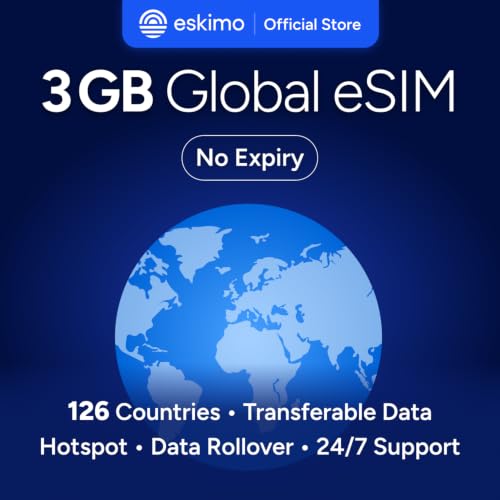
Enjoy seamless travel connectivity with instant eSIM activation. No physical SIM card needed—just quick, easy setup anywhere you go. Install once and stay connected globally without roaming fees or swapping SIM cards.

Before purchasing, ensure your phone is eSIM-compatible and unlocked to avoid any issues. This eSIM is perfect for travelers who want a seamless data solution without the hassle of physical SIM cards.
Check Whether Your Phone Is Unlocked
A phone locked to your home carrier may reject another provider’s physical SIM or eSIM. On an iPhone, open Settings > General > About. Apple states that an unlocked iPhone displays “No SIM Restrictions” beside Carrier Lock. Only the carrier can unlock a carrier-locked iPhone. See Apple’s unlocking instructions.
Consider a Travel eSIM
A compatible, unlocked phone can often store a travel eSIM alongside the home SIM. Apple explains that travelers can purchase plans from local carriers or worldwide providers and select which line supplies cellular data. The home line can remain available for calls and messages, but it may still create roaming charges if its settings are not controlled. Review Apple’s current travel eSIM guidance before departure.
Warning: Keeping a home SIM active does not automatically make it free. Turn off data roaming for the home line, select the travel SIM as the cellular-data line, and disable automatic cellular-data switching unless your carrier confirms that roaming is included.
Tips for Minimizing Data Usage While Traveling
Download Maps Before You Leave
Google Maps allows you to save an area for offline driving navigation. Download each destination while connected to dependable Wi-Fi. Offline maps have limits: public-transit, cycling, and walking directions may be unavailable, and offline driving does not include live traffic or alternate routes. See Google’s offline-map instructions.
Download Entertainment over Wi-Fi
Save permitted music, podcasts, audiobooks, and videos before departure. Check that each app is set to download over Wi-Fi only. Also test the downloads in airplane mode so you know they are available offline.
Lower Streaming Quality
Choose a data-saver or standard-definition setting instead of Auto, HD, or 4K. Adaptive streaming may increase quality when the connection becomes faster, so setting a fixed lower quality gives you more control.
Stop Automatic Backups and Updates
Pause photo backup, cloud-drive synchronization, app updates, podcast downloads, and operating-system updates until you reach trusted Wi-Fi. Review every device connected to your hotspot, not just the phone supplying the connection.
Turn Off Autoplay
Disable video autoplay in social-media, news, shopping, and browser apps. A few short clips may consume more data than the text and images in the rest of the feed.
Use Wi-Fi Calling and Messaging Carefully
Internet-based calls and messages use the Wi-Fi or mobile-data connection available to the app. A long video call placed after Wi-Fi disconnects may continue over cellular data unless the device or app prevents it.
How to Reduce Data Use on iPhone
Apple’s Low Data Mode can restrict background network activity, automatic downloads, backups, and high-quality streaming. It can be enabled separately for a cellular line or Wi-Fi network. See Apple’s Low Data Mode instructions.
- Open Settings > Cellular.
- Select the travel SIM or eSIM as the cellular-data line.
- Open the home line and turn off Data Roaming unless your carrier plan includes it.
- Open Cellular Data Options for the travel line and enable Low Data Mode when available.
- Review the app list under Cellular and turn off access for high-use apps.
- Disable automatic photo backup, app downloads, and media downloads over cellular data.
- Reset the cellular statistics at the start of the trip if you want a clean device-side total.
How to Reduce Data Use on Android
Android and Pixel devices can show per-app consumption, issue a warning, restrict background use, and set a hard data limit. Menu names may vary by phone manufacturer and Android version. Google also notes that the phone’s measurement can differ from the carrier’s billing measurement. See Google’s mobile-data management guide.
- Open Settings > Network & internet.
- Open SIMs or your mobile network settings.
- Select the travel SIM as the mobile-data SIM.
- Turn roaming off for the home SIM and enable it for the travel SIM only when the travel provider requires it.
- Turn on Data Saver.
- Open App data usage and restrict unnecessary background data.
- Set a warning below the plan limit so you have time to adjust.
- Set a hard limit only after accounting for possible differences between the phone and carrier totals.
Alternatives to Traditional Roaming Plans
A travel eSIM, local SIM, or pocket Wi-Fi router may provide more flexibility than ordinary pay-per-use roaming. The best option depends on your phone, destination, trip length, and whether you need a local number.
A pocket Wi-Fi device can be useful for a family or group because several phones and tablets can share one connection. However, all devices consume the same allowance. The group must also keep the router charged and close enough for everyone to remain connected.
Travel eSIMs are convenient for compatible phones because they can be installed without removing a physical SIM. Some plans are data-only, so ordinary cellular calls and SMS may remain tied to the home line. Confirm how calls, verification codes, and messaging will work before relying on a data-only plan.
A local SIM or eSIM can be suitable for a longer stay in one country, particularly when a local number is useful. Confirm identification requirements, activation rules, supported frequencies, top-up methods, and whether tethering is permitted.
Products Worth Considering
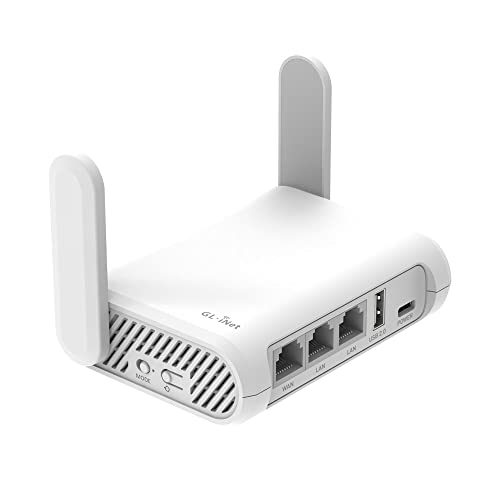
【AC1200 Dual-band Wireless Router】Simultaneous dual-band with wireless speed up to 300 Mbps (2.4GHz) + 867 Mbps (5GHz). 2.4GHz band can handles some simple tasks like emails or web browsing while bandwidth intensive tasks such as gaming or 4K video streaming can be handled by the 5GHz band.*Speed tests are conducted on a local network. Real-world speeds may differ depending on your network configuration.*

【DUAL BAND AX TRAVEL ROUTER】Products with US, UK, EU Plug; Dual band network with wireless speed 574Mbps (2.4G)+2402Mbps (5G); 2.5G Multi-gigabit WAN port and a 1G gigabit LAN port; USB 3.0 port; Wi-Fi 6 offers more than double the total Wi-Fi speed with the MT3000 VPN Router.

𝐑𝐨𝐚𝐦 𝟔 𝐀𝐗𝟏𝟓𝟎𝟎 𝐝𝐮𝐚𝐥-𝐛𝐚𝐧𝐝 𝐬𝐩𝐞𝐞𝐝𝐬 - Wi-Fi 6 Speeds up to 1,201 Mbps (5 GHz) and 300 Mbps (2.4 GHz) for up to 60 devices simultaneously. Actual Wi-Fi speeds vary based on source bandwidth, environment, distance to devices, and obstacles. ◇§
Data Roaming and Unexpected Charges
Data roaming allows a phone to use a partner network outside its home coverage area. Whether that creates an extra charge depends on the home plan, destination, partner network, and any travel pass you have purchased.
Do not assume that a travel pass covers every nearby territory. Border areas, islands, ferries, cruise ships, and aircraft can connect to a network that is priced differently from the country you intended to visit.
Warning: Shipboard and aircraft cellular networks may be excluded from ordinary international roaming packages. Use airplane mode and enable Wi-Fi manually unless your carrier confirms that the specific network and service are included.
Before leaving home:
- Read the carrier’s destination and cruise coverage pages.
- Confirm whether the plan renews daily, expires after a fixed period, or charges by use.
- Check whether incoming calls, voicemail, SMS, hotspot use, and high-speed data are included.
- Save the carrier’s support details for offline access.
- Take screenshots of the purchased plan, allowance, validity period, and activation confirmation.
Using Public Wi-Fi Safely
Public Wi-Fi can reduce mobile-data use in airports, hotels, cafés, and stations. The Federal Trade Commission explains that widespread website encryption means public Wi-Fi is usually safer than it was in the past, but travelers must still protect accounts and avoid fraudulent sites. Read the FTC’s public Wi-Fi guidance.
- Verify the official network name with the venue.
- Look for HTTPS and the lock symbol before entering sensitive information.
- Use strong, unique passwords and two-factor authentication.
- Keep the phone, browser, and security software updated.
- Avoid installing certificates, profiles, or unfamiliar apps requested by a pop-up.
- Forget the network after leaving so the phone does not reconnect automatically.
- Use cellular data for sensitive tasks when you are uncertain about the network or website.
Monitoring and Managing Data During the Trip
Check usage every day or two instead of waiting until the allowance is nearly gone. Review both the phone’s data screen and the provider’s app or account portal. The carrier’s total should be treated as the billing reference because the phone may use a different reporting period or measurement method.
When reviewing usage, look for:
- An app using data while you were not actively using it
- Photo or video backup
- A laptop or tablet connected to your hotspot
- Automatic app or operating-system updates
- Repeated media downloads
- High-quality or autoplay video
- A home SIM that accidentally used roaming data
Set a warning before the full allowance. For example, with a 5 GB plan, an alert around 4 GB leaves approximately 1 GB for maps, transport changes, emergency communication, and the trip home.
Troubleshooting a Travel SIM or eSIM
Products Worth Considering

▶ Please make sure your device is eSIM compatible and unlocked before you buy. If your device does not support eSIM function, please buy the physical version instead.

20GB High Speed Data in Europe on 4G/5G networks - Data tethering and use in hotspots allowed. See description for list of countries it can be used in. PACKAGE UPGRADED TO 20GB DESPITE ANYTHING MENTIONED ON PACKAGING.

[How to claim your eSIM] After purchasing, please go to the "Jethro Mobile" homepage & fill out a request to get your eSIM QR code by email quickly.
No Mobile Data After Arrival
- Confirm that the plan has started and that the destination is covered.
- Make sure the travel SIM or eSIM is turned on.
- Select it as the cellular-data line.
- Enable data roaming if the travel provider’s instructions require it.
- Turn airplane mode on for about 30 seconds, then turn it off.
- Restart the phone.
- Confirm that automatic network selection is enabled unless the provider specifies a network.
- Check the provider’s APN instructions and available data balance.
- Contact the provider over Wi-Fi if service still does not work.
Data Is Disappearing Too Quickly
- Sort apps by data use.
- Turn off video autoplay and reduce streaming quality.
- Pause cloud backup and synchronization.
- Disconnect hotspot users and computers.
- Confirm that app downloads are set to Wi-Fi only.
- Check whether the allowance includes a separate daily or high-speed limit.
The Phone Total Does Not Match the Provider
Confirm that the phone’s tracking period began on the same date as the travel plan. Also check whether the provider measures a gigabyte as 1,000 MB, rounds sessions, delays reporting, or separates high-speed and reduced-speed use. Use the provider’s account total when deciding how much billable data remains.
Other Offline Travel Preparation
Data planning is only one part of preparing for a connected trip. Download essential documents, tickets, addresses, and emergency contacts before departure. Offline comfort items may also reduce your need to search for entertainment late at night. Depending on your trip, you may separately consider a portable white noise machine, a carry-on suitcase with a built-in USB charger, or one of these travel pillows for long flights. These items do not replace a suitable mobile-data plan or dependable charging equipment.
Frequently Asked Questions
How much data do I need for a one-week trip?
About 1 GB may be enough for messaging, email, maps, and light browsing. Choose 3–5 GB for regular social-media use, music, uploads, and occasional video. Frequent video streaming, meetings, or hotspot use may require 10–20 GB or more.
What factors should I consider when calculating travel data?
Consider the trip length, number of users and devices, video quality, social-media habits, navigation time, uploads, video calls, hotspot use, background backups, and how often dependable Wi-Fi will be available.
How can I estimate my data before traveling?
Check your recent mobile-data history, estimate an average daily amount, multiply it by the number of travel days, and add 20–25%. Increase the result if you expect more navigation, uploads, video, or hotspot use than you normally have at home.
Is 5 GB enough for international travel?
Five gigabytes is often enough for a one-week moderate-use trip or a longer low-use trip. It may not be enough for daily HD video, long video meetings, large uploads, or laptop hotspot use.
Do Google Maps and navigation use a lot of data?
Navigation normally uses far less data than video, but searches, satellite imagery, live traffic, and downloading new map areas raise usage. Download your destination for offline use before departure, while remembering that some directions and live features will not work offline.
What international data packages do carriers offer?
Common options include daily roaming passes, fixed-duration travel packages, monthly international add-ons, included roaming in selected countries, and pay-per-use service. Coverage, speeds, hotspot access, and cruise or aircraft use vary, so verify the current terms with the carrier.
Is a travel eSIM better than roaming?
A travel eSIM may provide a larger allowance or more flexible regional coverage, while carrier roaming is usually easier and keeps your normal service arrangement. The better choice depends on price, coverage, phone compatibility, support, hotspot rules, and whether you need ordinary calls and SMS.
What happens if I do not buy enough data?
The provider may stop data, reduce the speed, require a top-up, or charge an overage rate. You could lose access to navigation, tickets, transportation apps, communication, and reservations when away from Wi-Fi. Keep an emergency buffer and know how to purchase additional data.
Sources
- Netflix Help Center: How to Control How Much Data Netflix Uses — supports the video-streaming data figures and data-saver settings.
- Google Maps Help: Download Areas and Navigate Offline — supports offline-map instructions and feature limitations.
- Apple Support: Use Low Data Mode on iPhone and iPad — supports iPhone data-saving guidance.
- Google Pixel Help: Reduce and Manage Mobile Data Usage — supports Android usage monitoring, warnings, limits, and roaming controls.
- Apple Support: Use eSIM While Traveling Internationally — supports travel eSIM, unlock, and dual-line guidance.
- Federal Trade Commission: Are Public Wi-Fi Networks Safe? — supports public Wi-Fi and account-security recommendations.
