Last Updated on July 27, 2026 by Daniel Globe
Hiking boots do not have a single expiration mileage. A well-built pair may stay useful for hundreds of trail miles and, in some cases, much longer, while lighter footwear used on sharp rock or abrasive ground may wear out sooner. How the outsole, midsole, upper, waterproofing and adhesives are holding up matters more than the number on a mileage log.
Quick Answer
A common rule of thumb puts hiking-boot life somewhere around 500 to 1,000 miles, but there is no universal replacement interval. Terrain, construction, fit, pack weight, care and even the age of the materials can change that dramatically. Replace or repair boots based mainly on tread, cushioning, structural condition and traction.
Key Takeaways
- Treat 500 to 1,000 miles as a rough planning range, not an automatic replacement rule.
- Inspect the outsole, midsole, upper, stitching and sole bond before deciding whether a boot is still trail-ready.
- Clean off abrasive dirt and grit, let wet boots dry at moderate temperatures and avoid heaters, fires and hot cars.
- Restore water repellency when water stops beading, but remember that surface wet-out does not automatically mean a waterproof membrane has failed.
- Older boots can deteriorate in storage. Some polyurethane midsoles can crack, crumble or separate as they age.
- Resoling can extend the life of suitable boots, but not every model is designed to be resoled.
Disclosure: As an Amazon Associate I earn from qualifying purchases. Some links on this page are affiliate links, at no extra cost to you.
How Long Do Hiking Boots Really Last?
You will often see hiking-boot lifespan estimates of roughly 500 to 1,000 miles. That range can be useful for planning, but it should not be treated like an odometer-based expiration date.
Hiking footwear varies too much for one mileage figure to apply to every boot. REI notes that hiking footwear ranges from relatively flexible day-hiking boots to heavier backpacking and mountaineering boots, with different materials, stiffness and durability characteristics. REI’s hiking-boot guide also recommends choosing footwear according to trip duration, terrain and load.
Several factors can shorten or lengthen useful life:
- Construction: A sturdy leather backpacking boot may age differently from a lightweight textile-and-EVA hiking shoe.
- Terrain: Sharp rock, scree and abrasive pavement can wear outsole rubber and uppers faster than softer trails.
- Pack weight and hiking style: Greater loads and hard braking on descents can place more stress on cushioning and tread.
- Fit and gait: Uneven wear can develop faster if your stride consistently loads one part of the sole.
- Moisture and dirt: Grit can abrade leather and fabric as the boot flexes, while repeatedly storing boots wet can encourage deterioration and mildew.
- Care: Appropriate cleaning, drying and material-specific treatment can help preserve the upper and water-repellent finish.
- Age: Some components continue to age even when the boots spend most of their time in a closet.
Mileage can tell you how much a boot has been used. It cannot tell you whether the tread still grips, the cushioning still works or an aging sole is beginning to separate.
Proper Care and Maintenance
Regular care can help hiking boots last longer, but the correct method depends on the boot’s materials. Always check the footwear manufacturer’s instructions before applying cleaners, conditioners or waterproofing products.
After muddy or dusty hikes, remove the laces and brush away loose debris. REI explains that dirt and grit can work deeper into leather and fabric as the boot flexes, increasing abrasion over time. For a deeper cleaning, use water and a cleaner that is suitable for your specific boot. REI’s hiking-boot cleaning guidance also advises against putting hiking boots in a washing machine.
For smooth full-grain leather that has become dry, a manufacturer-approved conditioner may help prevent drying and cracking. Suede and nubuck require different care, so do not assume a conditioner intended for smooth leather is appropriate for every leather boot.
Pro Tip: Do not over-condition leather. Too much conditioner can soften hiking-boot leather more than intended and reduce the support it provides.
Dry Wet Boots the Right Way
Remove the insoles so the inside of the boots can dry more effectively. Let the boots dry naturally at a moderate temperature in a ventilated area. A fan can speed the process.
Avoid radiators, campfires, space heaters and other strong heat sources. REI warns that high heat can weaken adhesives and prematurely age leather, while LOWA’s boot-care guidance similarly warns against direct heat and strong sunlight.
Newspaper can be placed loosely inside very wet boots to absorb moisture and speed drying. Replace it once it becomes damp rather than leaving wet paper packed inside the boot.
Maintain Water Repellency When Needed
Many waterproof hiking boots combine a waterproof/breathable membrane with a water-repellent treatment on the outer material. That surface treatment does not last forever.
When water stops beading and begins soaking into the outer material, follow the boot manufacturer’s instructions for restoring the durable water repellent, or DWR. GORE-TEX footwear-care instructions recommend cleaning the footwear first and using an appropriate water-based restorative when needed.
Note: An outer fabric that absorbs water is not proof that a waterproof membrane has failed. DWR controls surface beading, while the membrane provides the primary waterproof barrier in membrane-equipped footwear.
Choosing the Right Hiking Boots
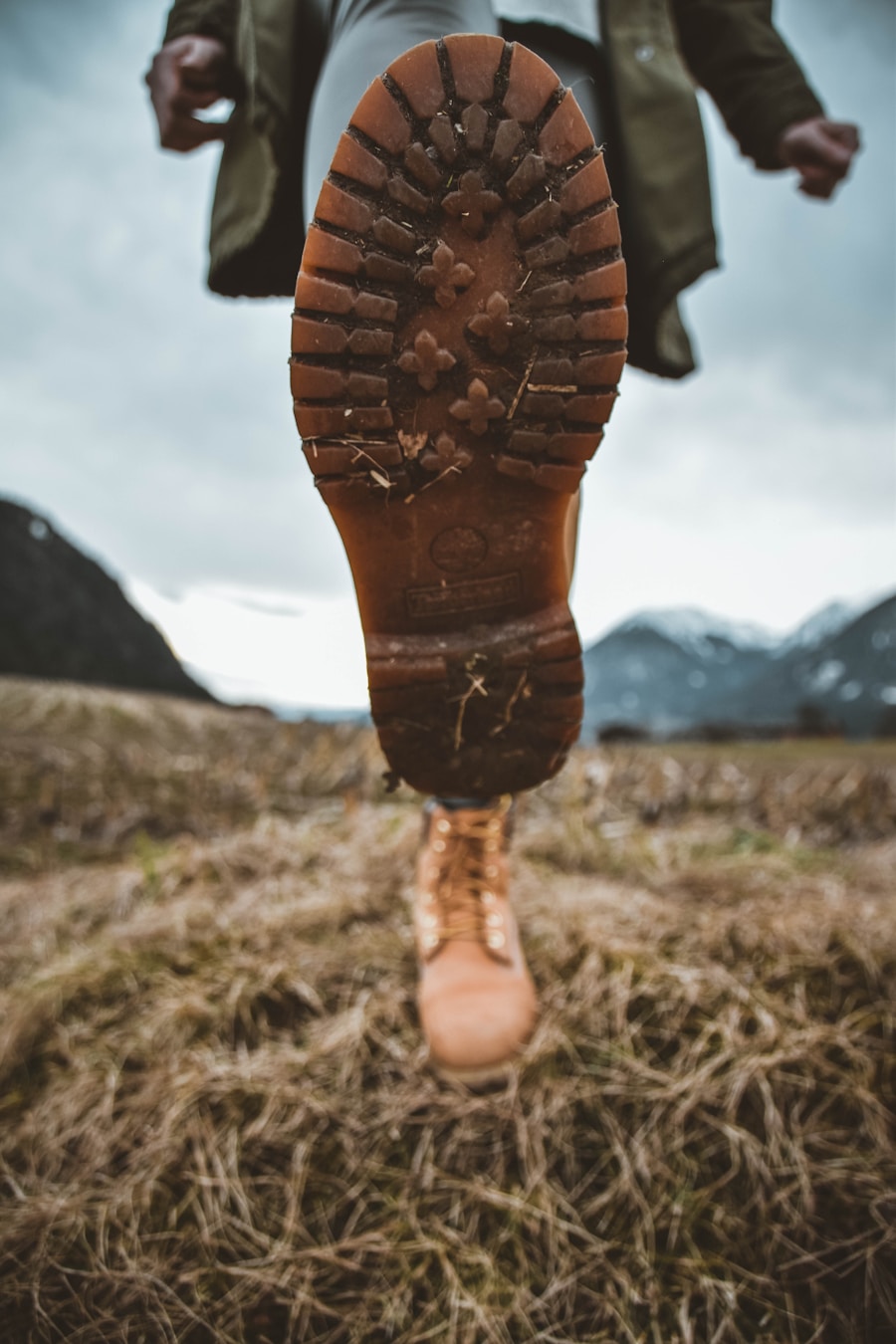
Selecting hiking boots that match your actual use can improve comfort and may also prevent premature wear caused by using footwear outside its intended role.
Hiking footwear generally ranges from lightweight hiking shoes and flexible day-hiking boots to heavier backpacking and mountaineering boots. A casual trail does not necessarily require the heaviest boot, while rugged terrain and a substantial backpack may justify more underfoot structure and protection.
Fit remains more important than buying the heaviest or most expensive option. Try boots with the type of socks you intend to hike in. Your heel should feel secure rather than sliding noticeably, while your toes need enough room that they are not repeatedly striking the front of the boot on descents.
Consider:
- the terrain you hike most often;
- the weight you normally carry;
- whether you need a waterproof membrane;
- how much breathability you want in warm conditions;
- outsole traction;
- midsole support and cushioning; and
- whether repairability or resoling is important to you.
Rotating Your Hiking Boots
Owning more than one pair can be convenient for frequent hikers. Rotation gives a wet or muddy pair time to be cleaned and dried while another pair is used, and it lets you select different footwear for different conditions.
However, rotation should not be treated as a proven way to multiply the total mileage of each pair. If you hike 600 miles divided evenly between two pairs, each pair has simply accumulated fewer miles. The practical benefit is that neither pair must be worn while still wet or used for terrain it is poorly suited to.
For example, a lighter pair may work well for maintained day-hiking trails, while a more supportive boot may be preferable for a rocky backpacking trip.
Some older models are still common in hikers’ closets and on remaining retail stock. The table below updates the original comparison so legacy footwear is not presented as current inventory at a fixed price.
| Brand | Model | Weight (men’s pair) | Waterproof | 2026 Status |
| Salomon | X Ultra 3 Mid GTX | 1 lb 15.6 oz | Yes | Legacy model; newer X Ultra generations are available |
| Merrell | Moab 2 Mid Waterproof | 2 lbs 4 oz | Yes | Legacy model; Moab 3 is a later generation |
| KEEN | Targhee II Mid Waterproof | 2 lbs 2 oz | Yes | Current model; retail pricing varies |
Protecting Boots From Harsh Conditions
Hiking boots are made to encounter dirt, mud, rocks and rain. You do not need to avoid a muddy trail simply to protect your footwear. Instead, use boots appropriate for the conditions and care for them afterward.
One of the most avoidable sources of damage is excessive heat. Do not leave wet boots beside a fire, directly on a heater or for long periods in a hot vehicle. Strong heat can age leather and adhesives and may deform footwear components.
Long periods of wet storage are also harmful. After a wet hike, remove the insoles, clean off mud and allow the boots to dry thoroughly before storing them.
If you expect deep mud, heavy vegetation or repeated shallow water crossings, gaiters can help keep debris and some water from entering over the boot collar. They do not make an unsafe water crossing safe, however.
Warning: Do not rely on old boots simply because the uppers still look good. A separating or crumbling sole can fail suddenly on the trail. Inspect older footwear before remote or demanding hikes.
Boot Age Matters Even If You Rarely Hike
Boots can deteriorate while sitting in storage. This is especially relevant to footwear that uses polyurethane, or PU, in the midsole.
LOWA explains that hydrolysis is a natural aging process that can affect PU midsoles. Moisture in the air contributes to deterioration over time, potentially causing cracking, crumbling or separation of the sole unit.
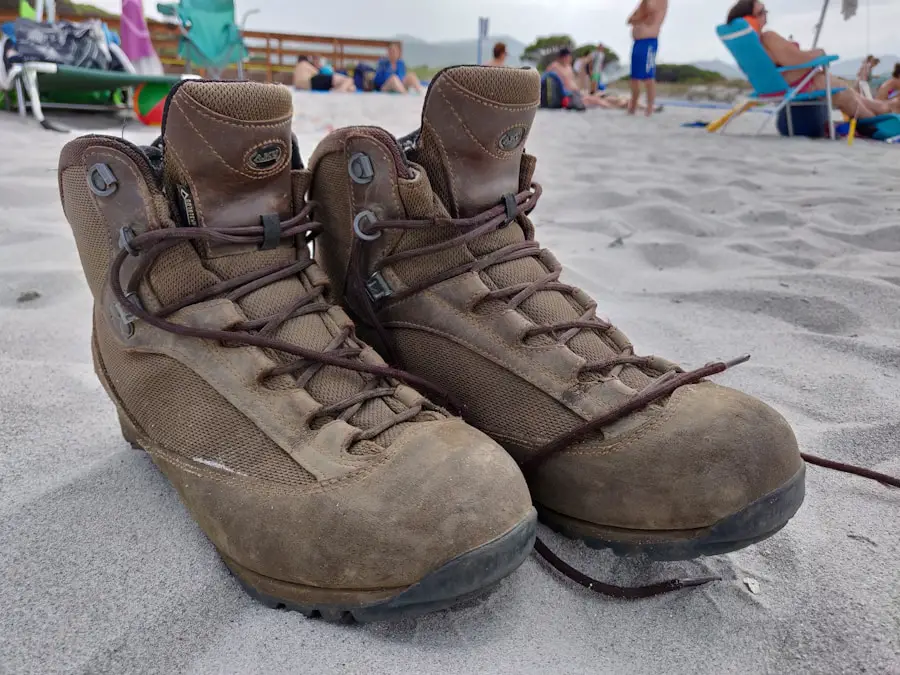
This is why a ten-year-old pair with relatively few trail miles is not automatically safer than a newer pair with more use. Before taking older boots on a serious trip, bend and inspect both soles and look closely for:
- cracks around the midsole;
- crumbly or powdery foam;
- gaps between the sole and upper;
- rubber that has become unusually hard or slick; and
- sections of outsole beginning to peel away.
If a stored boot shows any sign of structural separation, have it evaluated before hiking in it.
Repairing and Resoling Hiking Boots

Normal wear does not always mean you need an entirely new pair. Laces, some hardware and minor stitching problems may be repairable, and some hiking boots are designed to accept a new sole.
Resoling can make particular sense when the upper remains sound and the boot was built for repair. However, not every lightweight or cemented hiking boot can be economically or technically resoled.
Danner’s recrafting program, for example, offers resoling and rebuilding for qualifying models but specifically notes that not all boots are eligible.
Repair or Replace?
Consider a repair when the problem is limited to replaceable laces, eligible hardware, minor stitching or a worn outsole on a boot specifically designed for resoling.
Consider replacement when the upper is badly cracked or torn, the structure is permanently deformed, cushioning and stability have collapsed, a non-repairable sole is separating, or multiple major components are failing at once.
Pro Tip: Ask the boot manufacturer or an experienced outdoor-footwear cobbler whether your exact model can be resoled before applying heavy waxes, glues or do-it-yourself repair products that could interfere with professional work.
Storing Hiking Boots Properly
After cleaning and drying your boots, store them in a cool, dry and ventilated location with relatively stable temperatures. Avoid damp basements, hot attics, car trunks and direct sunlight.
Do not seal damp boots inside an airtight plastic container. Moisture trapped inside can encourage odor and mildew and keep the footwear wet longer than necessary.
If the boots need help holding their shape, they can be loosely stuffed after cleaning. Newspaper is especially useful during the drying stage because it absorbs moisture, but damp paper should be replaced frequently.
For long-term storage, make sure the boots are fully dry first. Keep them somewhere you can inspect them periodically rather than forgetting them for years in a hot or humid space.
How to Inspect Hiking Boots Before a Trip
A quick inspection is more useful than relying on mileage alone. Before an important hike, especially when the boots have been stored for months, check both boots under good light.
- Look at the tread. Deep lugs should still have usable edges and should not be worn smooth in major contact areas.
- Check the sole bond. Look for gaps, peeling or separation where the outsole and midsole meet the upper.
- Inspect the midsole. Watch for cracking, crumbling, major compression or a boot that sits noticeably crooked.
- Check the upper. Small scuffs are normal, but holes, deep leather cracks and torn fabric may affect protection or structure.
- Inspect stitching and hardware. Replace damaged laces and address loose eyelets, hooks or structural stitching.
- Remove the insole. A worn removable insole may be replaceable without retiring the entire boot. Damage beneath it can indicate a larger problem.
- Test the boots locally. Wear older or recently repaired boots on a short walk before depending on them in remote terrain.
Knowing When It’s Time to Replace Hiking Boots
Do not wait for a boot to fall apart completely. The most important replacement signs are functional rather than cosmetic.
It may be time to retire or professionally evaluate your boots when you see:
- major tread loss that noticeably reduces grip;
- midsole cracking, crumbling or serious compression;
- sole separation;
- structural deformation;
- deep cracks, holes or tears in the upper;
- repeated instability or loss of the support the boot previously provided; or
- a confirmed waterproof membrane or structural seam failure that cannot be repaired.
New discomfort can also be a warning sign, but it does not automatically prove the boot is worn out. First check your socks, lacing, removable insole and fit. Feet can also change over time.
What If Waterproof Boots Start Feeling Wet?
First determine where the moisture is coming from. Water can enter over the collar, while sweat can make socks feel damp even when the waterproof membrane is intact.
If the outer leather or fabric has stopped beading water, clean the boot and restore its DWR according to the manufacturer’s directions. If water is actually passing through a damaged upper, seam or membrane after proper care, contact the manufacturer or consider replacement if waterproof performance is important to you.
If you’re looking for durable footwear for outdoor adventures beyond traditional boots, you may also be interested in the best waterproof sneakers for travel. Waterproof sneakers can be useful for travel and lighter walking, although they are not automatically a substitute for hiking boots on rugged terrain or under heavier loads.
Love travel? Join Our Facebook Community For More Tips.
Frequently Asked Questions
How long do hiking boots typically last?
A commonly cited planning range is roughly 500 to 1,000 miles, but hiking boots do not have a universal mileage-based expiration point. Construction, terrain, hiking load, maintenance and material age all matter. Inspect tread, cushioning, the upper and the sole bond rather than replacing boots solely because they have reached a particular mileage.
What factors can affect the lifespan of hiking boots?
Boot construction, outsole compound, midsole material, terrain, frequency of use, pack weight, gait, moisture, dirt, cleaning, drying practices and storage conditions can all affect lifespan. Age also matters because certain midsoles and adhesives can deteriorate even when the boots are not used frequently.
How can I extend the lifespan of my hiking boots?
Brush away dirt and grit, clean the boots with products suitable for their materials, remove insoles when drying, avoid strong heat and store the boots dry in a ventilated location. Restore DWR when needed and use leather conditioner only when appropriate for the specific leather and manufacturer instructions.
When should I replace my hiking boots?
Replace or professionally evaluate boots when significant tread loss reduces traction, cushioning or structure has failed, the midsole is cracking or crumbling, the sole is separating, the upper has major structural damage or an important waterproof or structural component can no longer be repaired.
What are some signs that my hiking boots need to be replaced?
Warning signs include smooth or badly worn tread, sole separation, crumbling midsole material, deep upper cracks, structural deformation and persistent loss of support. Frayed laces alone normally call for new laces rather than an entirely new pair of boots.
Can hiking boots wear out while sitting in storage?
Yes. Materials and adhesives age even without heavy trail mileage. In particular, polyurethane midsoles can deteriorate through hydrolysis over time, which may cause cracking, crumbling or sole separation. Inspect older stored boots before relying on them for a demanding hike.
Can all hiking boots be resoled?
No. Repairability depends on the model, construction and condition of the upper. Some manufacturers offer factory or authorized resoling for qualifying boots, while many lightweight models are not designed for economical resoling. Check with the manufacturer or a specialist cobbler before assuming a boot can be rebuilt.
Sources
- REI — How to Choose Hiking Boots and Shoes — footwear types, materials, fit and intended use.
- REI — How to Clean Hiking Boots — cleaning, drying, storage and leather-care guidance.
- GORE-TEX — Footwear Care Instructions — membrane footwear cleaning, drying and DWR restoration.
- LOWA — Boot Care Guide — cleaning, leather treatment, waterproofing, drying and storage.
- LOWA — Warranty and Hydrolysis Guidance — natural aging and polyurethane-midsole deterioration.
- Danner — Boot Recrafting — resoling, rebuilding and limits on which boots can be repaired.