
Last Updated on July 28, 2026 by Daniel Globe
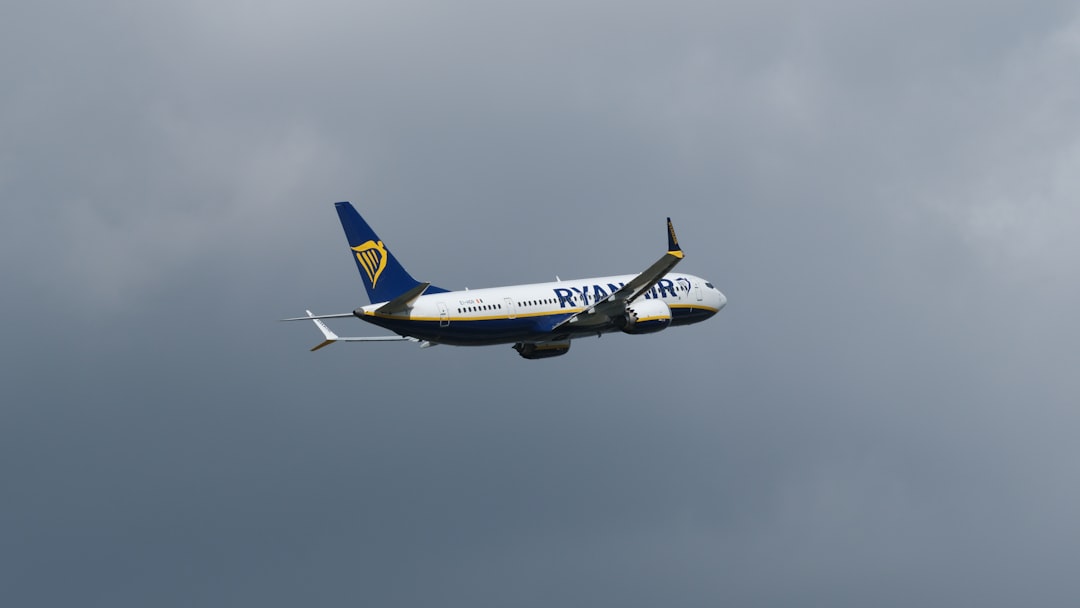
Most commercial passenger jets cruise at about Mach 0.78 to Mach 0.85, which is commonly around 450 to 500 knots true airspeed, or roughly 520 to 575 mph at normal cruising altitude. The exact number changes with the aircraft, altitude, temperature, weight, route, and wind.
Quick Answer
A modern commercial jet normally cruises near Mach 0.78–0.85, or about 450–500 knots true airspeed. That is roughly 520–575 mph under typical high-altitude conditions. Regional turboprops are slower, often near 250–300 knots, while the retired Concorde cruised at more than twice the speed of sound.
Key Takeaways
- Most current passenger jets cruise at Mach 0.78–0.85, commonly about 450–500 knots true airspeed.
- The speed shown on a passenger screen or flight-tracking app is usually ground speed, which rises with a tailwind and falls with a headwind.
- Takeoff and landing speeds are not fixed; they depend on aircraft type, weight, flap setting, runway conditions, temperature, and wind.
- Concorde remains the fastest airliner to have carried passengers in scheduled service, cruising at about Mach 2.04.
- Airlines normally choose an economical cruise speed rather than flying as close as possible to the aircraft’s maximum operating limit.
Disclosure: As an Amazon Associate I earn from qualifying purchases. Some links on this page are affiliate links, at no extra cost to you.
How Airliner Speed Is Measured
Airliner speed can be confusing because several measurements may describe the same flight. A jet can have a normal airspeed while showing an unusually high ground speed on the passenger information screen.
| Speed term | What it means | Why it matters |
|---|---|---|
| Indicated airspeed | The speed shown on the primary airspeed display before all altitude and temperature corrections. | Pilots use it for many takeoff, climb, approach, landing, and structural limits. |
| True airspeed | The aircraft’s actual speed relative to the surrounding air mass. | This is the most useful speed for comparing how quickly aircraft move through the air. |
| Ground speed | True airspeed adjusted for the wind component. | It determines how quickly the aircraft covers the route and is often shown to passengers. |
| Mach number | Aircraft speed divided by the local speed of sound. | High-altitude jets normally use Mach because the speed of sound changes with air temperature. |
The FAA’s Pilot’s Handbook of Aeronautical Knowledge defines ground speed as true airspeed adjusted for wind. One knot equals one nautical mile per hour, or approximately 1.151 mph and 1.852 km/h.
Note: A flight-tracking display may show a jet traveling at more than 700 or even 800 mph over the ground during an exceptional tailwind. The aircraft can still be moving through the surrounding air at a normal subsonic Mach number.
Typical Airliner Speeds by Flight Phase
An airliner does not maintain one speed from the gate to the destination. Pilots and flight computers use different target speeds during taxi, takeoff, climb, cruise, descent, approach, and landing.
| Flight phase | Common speed range | Important context |
|---|---|---|
| Taxi | Usually in the low tens of knots | Aircraft slow further for turns, congestion, wet surfaces, ramps, and gate areas. |
| Takeoff | Often about 130–180 knots indicated | The calculated speeds depend on model, weight, runway, wind, temperature, elevation, and flap setting. |
| Climb below 10,000 feet | Up to 250 knots indicated in normal U.S. operations | Exceptions and specific air-traffic-control authorizations may apply. |
| Cruise | Mach 0.78–0.85; commonly 450–500 KTAS | Long-range aircraft often operate toward the upper part of this range. |
| Final approach | Often about 120–160 knots indicated | The exact reference speed changes with landing weight, configuration, wind, and aircraft type. |
These figures are representative rather than universal. Flight crews use aircraft-specific performance calculations for every departure and arrival instead of relying on a single speed for a model.
The Fastest Commercial Airliners in the World
Concorde remains the fastest passenger airliner to have operated scheduled commercial flights. It normally cruised near Mach 2.04, or about 1,354 mph, and could cross the Atlantic in roughly half the time required by a conventional subsonic jet. Concorde service ended in 2003 after 27 years of passenger operation.
Concorde cruised at more than twice the speed of sound, while today’s conventional passenger jets normally cruise at about 80% to 85% of the local speed of sound.
Among current subsonic passenger aircraft, there is no completely universal “fastest” title because manufacturers publish different figures, including normal cruise Mach, maximum operating Mach, and maximum demonstrated speeds. The Boeing 747-8 Intercontinental is among the fastest by normal published cruise speed at approximately Mach 0.855. The Boeing 787 and Airbus A350 normally cruise around Mach 0.85.
The 747-8 is also notable for its size and range, but the original claim that it carries 660 passengers was incorrect. Boeing described a typical three-class layout with 467 passengers. Its maximum takeoff weight is approximately 987,000 pounds, although airline layouts and operating weights vary.
The Airbus A380 is the world’s largest passenger airliner and is certified for a maximum of 853 passengers, though normal airline layouts use far fewer seats. Its size does not make it dramatically faster than other long-haul jets; it operates in a similar high-subsonic speed range.
Factors Affecting Airliner Speeds
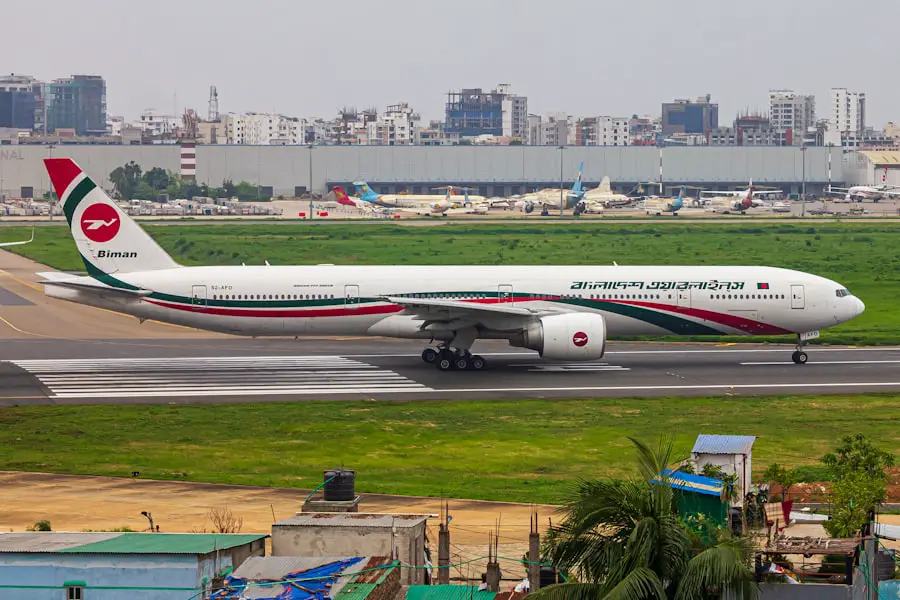
Aircraft design has a major effect on speed. Wing sweep, wing area, fuselage shape, engine installation, weight, and control-surface design all influence how efficiently an aircraft moves through the air.
NASA’s drag equation shows that aerodynamic drag depends on air density, aircraft shape and area, and the square of velocity. This means that increasing speed can create a steep drag and fuel-burn penalty. Designers therefore seek a balance between speed, range, structural weight, noise, and operating cost.
Altitude and temperature also matter. The air becomes less dense as an aircraft climbs, reducing some forms of drag and allowing a higher true airspeed for a given indicated speed. However, engines produce different thrust at altitude, and the aircraft must remain inside strict low-speed and high-speed limits.
Aircraft weight affects takeoff, climb, approach, and landing speeds. A heavier aircraft generally needs more lift and therefore a higher calculated speed than the same aircraft at a lighter weight. Flap position, runway length, runway slope, surface condition, wind, elevation, and temperature also affect the performance calculation.
Air traffic control may assign speeds, altitudes, or routes to maintain safe spacing. During busy operations, a jet may be asked to slow down, speed up within its approved range, level temporarily, or follow a longer path.
Pro Tip: When comparing aircraft, use normal cruise Mach or true airspeed from the manufacturer. A ground-speed number from one flight may mostly reflect that day’s wind rather than the aircraft’s normal performance.
The Role of Jet Engines in Airliner Speeds
| Propulsion and aircraft category | Representative use | Representative cruise performance |
|---|---|---|
| Turbojet | Early jetliners and historical supersonic aircraft such as Concorde | Varied widely; Concorde cruised near Mach 2.04 |
| High-bypass turbofan | Most current narrow-body and wide-body passenger jets | Usually Mach 0.78–0.85 |
| Turboprop | Short regional routes and airports with shorter runways | Often about 250–300 KTAS; the ATR 72-600 lists 275 KTAS maximum cruise |
Most modern commercial jets use high-bypass turbofan engines. A large fan accelerates a substantial mass of air around the engine core, producing efficient thrust for subsonic flight while lowering fuel consumption and noise compared with many earlier engine designs.
The Pratt & Whitney GTF is one example of modern geared-turbofan technology. Its reduction gearbox allows the large fan and the engine’s low-pressure components to turn at different, more efficient speeds. According to Pratt & Whitney, the system can reduce fuel use and noise compared with previous-generation engines.
The gearbox does not simply make the aircraft fly faster. Its main benefits are efficiency, available thrust, range, payload performance, and noise reduction. The aircraft’s certified speed limits still depend on the complete airframe-and-engine design.
The Impact of Weather on Airliner Speeds
Wind has the clearest effect on the speed passengers see. A tailwind increases ground speed, while a headwind reduces it. Neither one directly changes the aircraft’s speed relative to the air unless the crew also changes the selected Mach or airspeed.
For example, a jet flying at 480 knots true airspeed with a 120-knot tailwind could have a ground speed near 600 knots. The same aircraft facing a 120-knot headwind could have a ground speed near 360 knots while maintaining the same true airspeed.
Thunderstorms, turbulence, icing, and strong winds can also force a change in route, altitude, or selected speed. Pilots may deviate around a storm, descend to smoother air, or use a recommended turbulence speed. These changes can increase flight time even when the aircraft itself remains capable of its normal cruise performance.
Temperature affects air density and the local speed of sound. This is one reason that a Mach number should not be converted into one universal mph figure without specifying the atmospheric conditions.
The Fastest Speeds Achieved by Commercial Airliners
Airspeed Records Versus Ground-Speed Records
Concorde’s normal Mach 2 cruise makes it the clear historical leader among scheduled passenger airliners. Its speed was measured relative to the surrounding air, not merely relative to the ground.
Subsonic passenger jets can occasionally show ground speeds above 700 or 800 mph while riding a powerful jet-stream tailwind. That does not mean the aircraft has exceeded its certified airspeed or broken the sound barrier. The air mass itself is moving rapidly in the same direction as the aircraft.
Test-Flight Speeds
Manufacturers test aircraft across a carefully controlled flight envelope, including speeds beyond normal airline cruise settings. These flights establish handling qualities, structural margins, flutter margins, system behavior, and operating limitations. A test-flight result should not be presented as a normal passenger-service speed.
Operational Realities
Airlines prioritize safety, fuel efficiency, schedule reliability, engine life, ride quality, and arrival sequencing. The fastest possible setting is rarely the most economical one. Flying faster increases drag, and the additional fuel burned may save only a modest amount of time.
The Average Cruising Speed of Commercial Airliners
Most current passenger jets cruise between Mach 0.78 and Mach 0.85. Under typical high-altitude conditions, that is commonly around 450–500 knots true airspeed, or approximately 520–575 mph.
A Boeing 737-family aircraft commonly operates near the lower or middle part of that Mach range, depending on the model and airline settings. Long-haul aircraft such as the Boeing 787, Boeing 777, Airbus A330, and Airbus A350 often cruise around Mach 0.84–0.85. Airbus lists a cruise Mach of 0.85 for the A350-900, while Boeing also publishes Mach 0.85 for the 787 family.
Regional turboprops are slower but can be efficient on short routes. The ATR 72-600, for example, has a published maximum cruise speed of 275 KTAS, approximately 316 mph.
The selected cruise speed may change during the flight. As fuel burns and the aircraft becomes lighter, it may climb to a higher flight level. Dispatchers and flight-management computers also consider winds, turbulence, arrival restrictions, and the airline’s cost index, which balances time-related costs against fuel use.
The Slowest Speeds of Commercial Airliners
Commercial aircraft operate much more slowly during taxi, takeoff, approach, and landing than during cruise. However, there is no single stall, rotation, or landing speed for an entire aircraft family.
For a large passenger jet, calculated takeoff speeds often fall between approximately 130 and 180 knots indicated. Final-approach speeds are commonly around 120–160 knots indicated. The precise figure depends on aircraft model, weight, flap configuration, wind correction, runway condition, and company procedures.
A stall speed is tied to a specific aircraft configuration and loading condition. It should not be presented as a universal figure such as “a Boeing 737 stalls at 120 knots.” The same aircraft can have different stall and approach speeds on different flights.
During taxi, airliners normally move in the low tens of knots and slow further near gates, sharp turns, congested intersections, or slippery surfaces. Ground crews, pilots, and air traffic controllers coordinate these movements to maintain safe separation.
Warning: Published speed ranges are educational examples only. Flight crews must use approved aircraft performance data and the calculated speeds for the exact aircraft, weight, runway, weather, and configuration.
The Future of Airliner Speeds
Supersonic passenger travel remains the most visible attempt to shorten long-distance flight times. Boom Supersonic is developing Overture with a stated target cruise speed of Mach 1.7 and a planned capacity of 64–80 passengers. Those are development targets; Overture is not yet a certified passenger airliner or in scheduled airline service.
Boom’s smaller XB-1 demonstrator completed its first supersonic flight in January 2025, reaching Mach 1.122. The demonstrator has helped the company test aerodynamic, intake, material, and flight-control concepts intended to inform the Overture program.
Regulation remains a major issue. As of July 2026, 14 CFR §91.817 still requires authorization for civil aircraft to operate above Mach 1 in the United States. The FAA has proposed changes intended to allow certain overland supersonic operations under new noise and performance limits, but proposed rules are not the same as final approval for unrestricted commercial service.
Electric and hybrid-electric propulsion may improve efficiency and emissions on shorter routes, but battery weight and energy density remain major limits for large, fast, long-range passenger aircraft. Near-term advances are more likely to focus on aerodynamic efficiency, lighter materials, improved engines, sustainable aviation fuel compatibility, smarter routing, and better flight-management systems.
Safety Considerations for High-Speed Airliners
Every airliner has a certified operating envelope. The limits protect the aircraft from excessive aerodynamic loads, buffet, loss of control margin, flutter, engine limitations, and other hazards.
At high altitude, the usable range between the low-speed limit and the maximum operating Mach can narrow. Pilots and automatic flight systems must maintain adequate margins on both sides while accounting for turbulence, temperature, aircraft weight, and bank angle.
Higher-speed aircraft also require structures, control systems, engines, inlets, thermal protection, and emergency procedures designed for their operating environment. Supersonic aircraft face added challenges such as wave drag, heating, sonic-boom effects, inlet control, noise, and limited diversion options.
Certification authorities, including the FAA and European Union Aviation Safety Agency, evaluate aircraft design, flight-test evidence, operating limitations, maintenance programs, and crew procedures before an aircraft can enter commercial service.
The Importance of Airliner Speeds in Modern Aviation
Airliner speed affects flight time, fuel consumption, route planning, crew scheduling, maintenance cost, passenger connections, and airport sequencing. However, the highest possible speed is rarely the best operating speed.
Modern airlines aim for the best balance of time, safety, fuel, weather, airspace restrictions, passenger comfort, and aircraft life. This is why most present-day jets cluster around Mach 0.78–0.85 despite major differences in size, range, and cabin capacity.
The most useful way to read an airliner speed is to ask three questions: Is it airspeed or ground speed? Is it a normal cruise figure or an operating limit? What atmospheric and wind conditions apply? Once those points are clear, aircraft comparisons become much more meaningful.
For a separate travel-planning resource, see this guide to choosing the best lightweight laptop for travel.
Frequently Asked Questions
What is the average speed of a commercial airliner?
Most current passenger jets cruise at Mach 0.78–0.85, commonly about 450–500 knots true airspeed. This is roughly 520–575 mph under typical high-altitude conditions, but the mph value changes with temperature and altitude.
What is the fastest commercial airliner ever operated?
Concorde remains the fastest airliner used in scheduled passenger service. It normally cruised near Mach 2.04, approximately 1,354 mph, and ended commercial service in 2003.
Can a passenger jet show more than 700 mph without going supersonic?
Yes. A strong tailwind can push the aircraft’s ground speed above 700 or even 800 mph while its true airspeed remains at a normal subsonic Mach number. Supersonic flight is determined by speed relative to the surrounding air, not the ground.
What factors affect an airliner’s speed?
Important factors include aircraft design, weight, altitude, temperature, wind, turbulence, route, air-traffic-control instructions, flap configuration, engine performance, and the airline’s balance between fuel cost and flight time.
How fast do airliners travel during takeoff and landing?
Large passenger jets often take off at calculated speeds in the approximate 130–180-knot range and approach at about 120–160 knots indicated. Exact speeds vary with model, weight, runway, weather, wind, and flap setting.
Why do airlines not fly every trip at maximum speed?
Flying faster creates more drag and usually burns more fuel. Airlines select an economical cruise setting that balances fuel cost, flight time, weather, engine life, schedule needs, ride quality, and air-traffic-control restrictions.
How does airliner speed compare with cars, trains, and ships?
At cruise, a passenger jet commonly travels more than 500 mph through the air, making it much faster than normal road vehicles, conventional passenger trains, and ships. High-speed rail can compete well on shorter city-to-city trips because travelers spend less time reaching airports and completing airport procedures.
What is the speed of sound, and how does it relate to airliner speed?
The speed of sound changes mainly with air temperature. Mach 1 means the aircraft is moving at the local speed of sound. Conventional airliners normally remain below Mach 1, while Concorde cruised at more than Mach 2.
Sources
- FAA Pilot’s Handbook of Aeronautical Knowledge, Chapter 8 — indicated airspeed, true airspeed, Mach, and ground-speed terminology
- NASA Glenn Research Center: Drag Equation — effects of velocity, air density, area, and aircraft shape on drag
- Boeing 747-8 Airplane Characteristics — 747-8 performance and planning specifications
- Airbus A350-900 Specifications — published Mach 0.85 cruise performance
- The Museum of Flight: Concorde — Concorde cruise speed, operating history, and retirement
- 14 CFR §91.817 — current U.S. requirements for civil aircraft operating above Mach 1
