
Last Updated on July 28, 2026 by Daniel Globe
The .30-06 Springfield cartridge (pronounced “thirty-ought-six”), officially adopted by the United States Army in 1906, stands as one of the most iconic rifle cartridges in firearm history. Renowned for its balance of heavy kinetic energy, manageable recoil, and exceptional trajectory stability, the .30-06 remains a benchmark caliber for big game hunting, target marksmanship, and military historical study across North America and worldwide.
Quick Answer
Under ideal atmospheric conditions when fired at an optimal elevation angle (~30° to 35°), a standard .30-06 Springfield bullet can travel a maximum distance of 4,500 to 5,500 yards (approx. 2.5 to 3.1 miles / 4.1 to 5.0 km). However, its maximum effective hunting range is typically 300 to 500 yards, while skilled target marksmen using precision optics can engage targets out to 1,000+ yards.
Key Takeaways
- Absolute Maximum Flight: A .30-06 bullet retains lethality over extreme distances and can travel up to 3 miles if fired into open air without a backstop.
- Effective Hunting Range: Delivers sufficient terminal kinetic energy (over 1,000 ft-lbs) to ethically harvest big game such as deer, elk, and moose between 300 and 500 yards.
- Long-Range Target Capability: Precision match loads and high Ballistic Coefficient (BC) projectiles allow competitive shooters to hit targets up to 1,000 yards.
- Ballistic Velocity: Factory loads generally fire 150-grain to 220-grain bullets at muzzle velocities ranging from 2,700 to 3,000 feet per second (fps).
- Mandatory Safety: Because downrange energy remains dangerous for miles, establishing a secure natural backstop is required for every shot.
Disclosure: As an Amazon Associate I earn from qualifying purchases. Some links on this page are affiliate links, at no extra cost to you.
Factors Affecting the Distance a .30-06 Bullet Can Travel
Several physical, environmental, and mechanical variables influence how far a .30-06 bullet can travel through the air. Understanding these principles allows shooters to predict trajectory, adjust for bullet drop, and maintain safety downrange.
Atmospheric & Environmental Conditions
Air density directly impacts aerodynamic drag on a bullet in flight. Warmer air is less dense than cooler air, allowing projectiles to retain velocity longer and travel farther. Similarly, firing at higher altitudes where atmospheric pressure is lower reduces air resistance, yielding flatter trajectories over extended distances. Crosswinds, barometric pressure, and ambient temperature must all be accounted for when shooting over 300 yards.
Bullet Weight & Ballistic Coefficient (BC)
The .30-06 Springfield typically chamber bullet weights ranging from 150 to 220 grains, with 165-grain and 180-grain options being the most common for hunting. The Ballistic Coefficient (BC) measures a projectile’s ability to overcome air resistance during flight.
- High BC Projectiles: Sleek, streamlined boat-tail bullets (e.g., polymer-tipped or match-grade hollow points) maintain velocity longer, resist wind drift, and extend total flight distance.
- Low BC Projectiles: Round-nosed or flat-point soft-head bullets lose velocity rapidly, making them suitable for short-range brush hunting rather than long-range distance shooting.
Pro Tip: For extreme long-range shooting beyond 500 yards, select match-grade bullets with a G1 Ballistic Coefficient greater than 0.500. High-BC bullets conserve kinetic energy and minimize horizontal wind drift dramatically.
Maximum Effective Range of a .30-06 Bullet
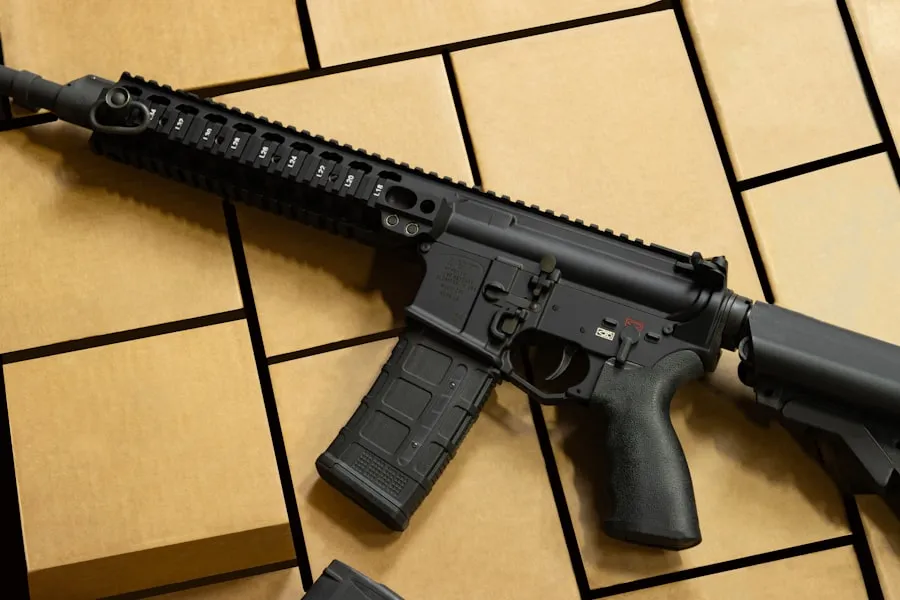
There is an important distinction between maximum aerodynamic distance (how far a bullet physically travels before striking the ground) and maximum effective range (the maximum distance at which a bullet can hit a target accurately and deliver sufficient kinetic energy for its intended purpose).
Hunting Effective Range (300 to 500 Yards)
For ethical big game hunting, a cartridge must deliver adequate terminal kinetic energy—generally recognized as at least 1,000 ft-lbs for medium-to-large game like elk, deer, and black bear. Within 300 to 400 yards, standard .30-06 factory ammunition easily surpasses this threshold, providing rapid expansion and deep tissue penetration.
Target & Competition Range (800 to 1,000+ Yards)
For target shooting or competitive long-range marksmanship (such as High-Power or Palma matches), kinetic energy at impact is secondary to trajectory predictability and accuracy. Skilled marksmen utilizing custom handloads, match-grade barrels, and high-magnification riflescopes regularly achieve consistent target hits past 1,000 yards.
Long Range Shooting & Ballistics Performance
The table below illustrates a representative ballistic profile for a popular .30-06 Springfield load (180-grain bullet, muzzle velocity of approximately 2,700 fps, zeroed at 100 yards):
| Distance (Yards) | Bullet Drop (Inches) | Wind Drift 10mph (Inches) | Kinetic Energy (ft-lbs) |
|---|---|---|---|
| 100 | 0.0 | 0.0 | 2,913 |
| 200 | -2.5 | 1.3 | 2,648 |
| 300 | -10.9 | 4.8 | 2,403 |
| 400 | -24.3 | 10.7 | 2,176 |
| 500 | -44.3 | 19.6 | 1,966 |
“Understanding bullet drop and velocity decay is essential for long-range precision. Beyond 300 yards, even minor errors in range estimation or wind calculation can result in missing the vital target area entirely.”
Safety Considerations when Shooting a .30-06 Bullet
Safety is the single most important element when handling high-power centerfire cartridges like the .30-06 Springfield.
Warning: Never shoot over a ridge, horizon, or open water. Because a .30-06 bullet retains lethal velocity up to 3 miles (5,000 yards) downrange, you must always ensure a positive target identification and a safe, solid earthen backstop before firing.
Ammunition & Chambering Verification
Always verify that the caliber stamped on your rifle’s barrel matches your cartridge headstamp exactly. Loading incorrect or over-pressured ammunition into a rifle can result in catastrophic chamber failure, serious injury, or firearm damage.
Note for Vintage Military Rifles: If shooting a military surplus M1 Garand, avoid modern high-energy commercial .30-06 hunting loads. Modern commercial pressures (up to 60,000 PSI SAAMI limit) can bend the operating rod. Use M2 Ball specification ammo or install an adjustable gas plug.
Legal & Regulatory Considerations
Hunting Regulations & Game Caliber Limits
State and regional wildlife agencies maintain strict rules regarding allowable rifle calibers, magazine capacities, and bullet types (such as mandatory lead-free expansion bullets in designated zones). Always consult local fish and game authorities prior to hunting.
Public Ranges & Property Boundaries
Shooting facilities often restrict maximum caliber sizes, steel-core ammunition, or long-distance target placements. On public lands (e.g., BLM or national forest areas), shooters must adhere to local shooting distance rules relative to roads, dwellings, and campsites.
Tips for Long-Distance Shooting Accuracy
- Use Ballistic Calculators: Inputs like ambient temperature, barometric pressure, altitude, and sight height allow modern mobile ballistic apps to deliver exact turret adjustment clicks.
- Master Breathing & Trigger Control: Press the trigger smoothly at natural respiratory pause to prevent disturbing your sight picture.
- Invest in Quality Optics: Use high-grade optics with clear glass and reticles featuring MOA or MRAD holdover marks for fast windage and elevation adjustments.
- Maintain a Shooting Logbook: Record atmospheric conditions, muzzle velocities, group sizes, and zero offsets to identify performance trends across different range outings.
Conclusion and Final Thoughts on the Distance a .30-06 Bullet Can Travel
The .30-06 Springfield cartridge remains a benchmark for power, reliability, and versatility in the shooting world. With an absolute maximum travel distance exceeding 3 miles (5,000 yards) and an effective hunting range of 300 to 500 yards, it delivers impressive long-range capability. By mastering ballistics, selecting appropriate projectiles, and adhering strictly to safety and marksmanship fundamentals, shooters can maximize the full potential of this legendary American rifle cartridge.
Frequently Asked Questions
What is the effective range of a .30-06 bullet?
The effective range of a .30-06 bullet depends on the application. For ethical big game hunting (elk, deer, moose), the maximum effective range is typically 300 to 500 yards, where the bullet maintains over 1,000 ft-lbs of kinetic energy. For target shooting, experienced marksmen using match ammunition can engage targets accurately at distances of 800 to 1,000+ yards.
How far can a .30-06 bullet travel in ideal conditions?
When fired into open air at an optimal elevation angle of approximately 30 to 35 degrees, a .30-06 bullet can travel over 3 miles (approximately 4,500 to 5,500 yards) before coming to rest.
What factors affect the distance a .30-06 bullet travels?
Key factors include bullet weight and Ballistic Coefficient (BC), muzzle velocity, elevation angle, air temperature, altitude, barometric pressure, humidity, and crosswind strength.
Is it safe to shoot a .30-06 bullet over long distances?
Shooting over long distances is safe only when conducted at designated firing ranges or locations with an established, solid natural backstop (such as an earthen hill). Because the projectile retains lethal velocity miles downrange, shooting blindly over horizons or open terrain is extremely hazardous.
Sources
- Sporting Arms and Ammunition Manufacturers’ Institute (SAAMI) — Technical Cartridge Standards and Pressure Limits
- Hornady Ballistics Resource — Ballistic Coefficients, Velocity Decay, and Trajectory Tables
- Civilian Marksmanship Program (CMP) — M1 Garand .30-06 Pressure & Safety Guidelines
- NRA American Rifleman — Historical Development & Ballistic Performance of the .30-06 Springfield