
Last Updated on July 31, 2026 by Daniel Globe
“Hotel California” is one of the Eagles’ best-known recordings, but its familiar title hides a much darker story. First heard on the band’s 1976 album and released as a single in 1977, the song uses a mysterious hotel to explore temptation, excess, disillusionment, and the cost of chasing the American dream.
Quick Answer
“Hotel California” is about seduction, excess, and the darker side of the American dream. Don Felder developed the core music, while Don Henley and Glenn Frey helped shape the lyrics and story. The hotel is mainly symbolic, and the narrator’s journey moves from fascination and comfort to fear and entrapment.
Key Takeaways
- The Hotel California album was released on December 8, 1976; the title track followed as a single on February 22, 1977.
- Don Felder, Don Henley, and Glenn Frey share the official songwriting credit.
- The hotel is best understood as a metaphor for temptation, excess, fame, and the darker side of success.
- The recording is known for its 12-string opening and extended dual-guitar ending by Felder and Joe Walsh.
- The song reached No. 1 on the Billboard Hot 100 and won the 1978 Grammy Award for Record of the Year.
- The album was recertified 28× Platinum in the United States in January 2026.
How “Hotel California” Was Written and Released
The Eagles formed in Los Angeles in 1971 and soon became leaders of the country-rock and soft-rock sound. Songs such as “Take It Easy” and “Desperado” built their reputation, but “Hotel California” marked a shift toward a heavier, more mysterious style.
The Hotel California album was released on December 8, 1976. The title track was part of that album from the beginning, but it was not issued as a single until February 22, 1977. Keeping those dates separate avoids the common claim that the song and album were both first released in 1977.
Don Felder, Don Henley, and Glenn Frey received the official songwriting credit. Felder developed the core music and distinctive guitar framework. Henley and Frey helped turn that musical idea into a cinematic story about a traveler entering an attractive but increasingly disturbing place.
That division of work matters because the original article’s meaning did not come from one person alone. The final recording combined Felder’s musical foundation, Henley and Frey’s narrative ideas, the band’s arrangement, and producer Bill Szymczyk’s studio work.
The Lyrics and Meaning of “Hotel California”
The song begins with a traveler driving along a dark desert road. He sees a distant light, stops for the night, and enters a luxurious setting filled with strange people, voices, and rituals. What first appears inviting gradually becomes threatening.
The hotel therefore works as more than a physical building. It represents an experience that promises pleasure and freedom but slowly takes control of the person who enters it. The closing idea—that the guest may check out without truly escaping—completes the movement from attraction to entrapment.
Don Henley has described the song as “a journey from innocence to experience” and an examination of the darker side of the American dream. He has connected it with excess, narcissism, the music business, and American culture rather than one literal hotel or secret organization.
That explanation supports several related interpretations. The hotel can stand for fame, addiction, consumer culture, wealth, the entertainment industry, or any tempting environment that becomes difficult to leave. These readings are not mutually exclusive because the song was written as a broad symbolic narrative.
Note: There is no single line-by-line explanation approved by all three writers. Henley’s comments establish the broad themes, while individual images remain open to reasonable interpretation.
Is Hotel California a Real Hotel?
The song is not a confirmed account of a specific hotel where the events in the lyrics took place. Although the Beverly Hills Hotel appears on the album cover and helped connect the record with Los Angeles luxury, the hotel inside the song is primarily symbolic.
Over the years, real properties have sometimes promoted themselves through an association with the title. Those claims should not be confused with the writers’ documented explanation. The song’s hotel represents a seductive world of status, pleasure, and excess rather than a verified lodging address.
The Music and Instrumentation

The recording is as important musically as it is lyrically. It opens with a layered 12-string guitar figure that creates a calm but slightly uneasy mood. Bass, drums, electric guitars, vocals, and additional guitar textures then enter gradually rather than arriving all at once.
At roughly six and a half minutes, the original recording was unusually long for a major pop single of its era. Don Felder later recalled that he initially doubted radio would embrace a track with a long introduction, a break in the percussion, and an extended guitar ending. The song nevertheless became a major hit.
The arrangement also avoids a conventional pop structure. It has recurring melodic and lyrical patterns, but it does not rely on a short, clearly repeated chorus. Instead, each verse pushes the story further into the hotel, making the recording feel like a continuous scene.
The best-known instrumental moment arrives near the end. Felder and Joe Walsh trade lead-guitar phrases before joining in a harmonized coda. The two parts interact like a conversation: one guitar introduces a phrase, the other answers, and both eventually move together toward the fade-out.
Pro Tip: Listen once for the story and then a second time for the arrangement. Notice how the guitars, rhythm section, and backing vocals become denser as the narrator loses control of the situation.
Products Worth Considering

Brand New in box. The product ships with all relevant accessories

Take It Easy
The Commercial Success of the Song and Album
“Hotel California” at a Glance
| Album Release | December 8, 1976 |
| Single Release | February 22, 1977 |
| Billboard Hot 100 Peak | No. 1 for the week of May 7, 1977 |
| Major Grammy | Record of the Year at the 1978 Grammy Awards |
| Current U.S. Certification | Album recertified 28× Platinum in January 2026 |
The title track reached No. 1 on the Billboard Hot 100 for the week of May 7, 1977. The album was also a major chart success, reaching the top of the Billboard 200 during several separate runs in 1977.
The Grammy results require careful wording. “Hotel California” won Record of the Year at the 20th Annual Grammy Awards. The album was nominated for Album of the Year but lost to Fleetwood Mac’s Rumours. Another song from the Eagles’ album, “New Kid in Town,” won the award then known as Best Arrangement for Voices.
In January 2026, the Eagles announced that Hotel California had been recertified 28× Platinum by the RIAA, keeping it among the highest-certified albums in United States history.
The 2026 certification is more useful than an undated estimate of worldwide sales. RIAA awards represent certified United States album units and may include qualifying physical sales, digital sales, and streaming equivalents under the organization’s rules.
The Impact and Legacy of “Hotel California”
The song’s lasting reputation comes from the way its words and music reinforce each other. The lyrics present beauty that slowly turns threatening, while the arrangement moves from a spacious guitar opening to a dense, carefully controlled ending.
Its official recognition also extends beyond its original chart run. According to the Recording Academy, the song entered the Grammy Hall of Fame in 2003, and the album followed in 2008.
Musicians continue to study the recording’s guitar parts, vocal arrangement, pacing, and storytelling. Covers range from close recreations to acoustic, jazz, flamenco, reggae, and orchestral versions. Each approach emphasizes a different quality: the chord progression, the mystery of the words, the melody, or the guitar coda.
The song has also become a common cultural reference for situations that are attractive on the surface but difficult to escape. That meaning can be applied to fame, wealth, addiction, institutions, unhealthy relationships, or consumer culture without requiring the hotel to represent only one of them.
Controversies and Misinterpretations
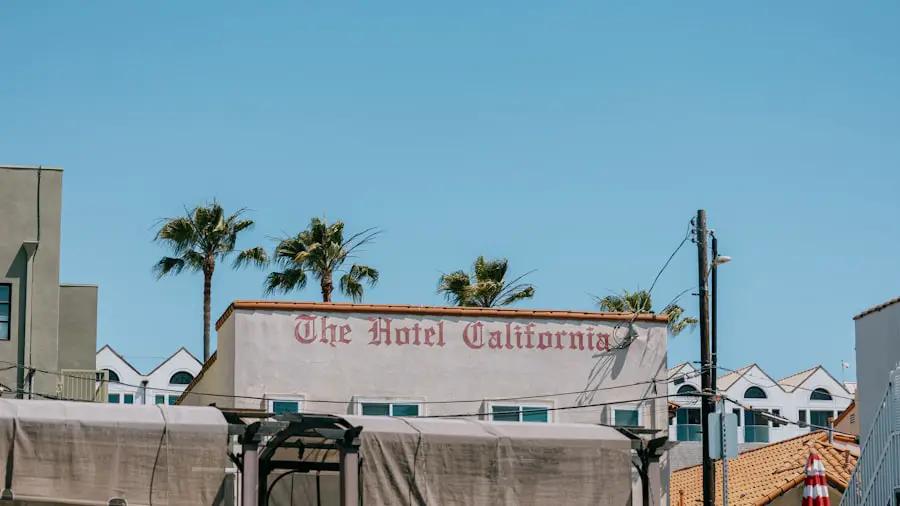
The song’s surreal images have encouraged conspiracy theories for decades. Some listeners have claimed that it contains coded references to Satanism, a cult, a psychiatric hospital, or a particular hotel with a hidden history.
Those theories are not supported by the writers’ documented explanations. Henley has repeatedly framed the song in terms of innocence, experience, American excess, narcissism, and the music business. The strange setting is part of the song’s storytelling method, not proof of a secret organization or supernatural message.
Other interpretations—such as addiction, greed, artistic burnout, or loss of identity—fit more closely with the stated themes. They should still be described as interpretations rather than literal facts established by every lyric.
Warning: Articles that present satanic, cult, or real-hotel theories as confirmed facts are repeating speculation. Separate fan theories from explanations attributed directly to the songwriters.
Products Worth Considering

Retro Road Trip California Artwork: Showcasing a classic vintage car cruising along a winding desert highway toward a softly glowing hotel, this design captures the spirit of open-road freedom, late-night drives, and the timeless nostalgia of classic American road trips through the California desert

Officially licensed Eagles apparel

Material: The los angeles t shirt, california t shirts for men are breathability and comfort, 1989 shirt, palm tree shirt, mens beach shirts are suitable for daily outdoor wear or as birthday gifts, mens streetwear
Live Performances and Covers
“Hotel California” became a centerpiece of Eagles concerts soon after its release. Historical performances often highlighted the interaction between Don Felder and Joe Walsh, extending the final guitar passage while preserving the recognizable harmonized lines from the studio recording.
The personnel changed over the decades, but the song remained central to the band’s live identity. In July 2026, the Eagles’ official site listed additional Sphere performances for September through December 2026, showing that the recording still anchors the group’s farewell-era concerts.
Other performers have approached the song in very different ways. Chris Cornell’s stripped-back live renditions emphasized the melody and lyrics, while other artists have adapted the piece into flamenco-influenced, jazz, reggae, and instrumental arrangements.
These versions demonstrate that the song does not depend on one production style. Its chord movement, melody, narrative, and central tension remain recognizable even when the original guitar arrangement is removed.
Products Worth Considering


The Eagles and “Hotel California”: Then and Now
When the album appeared in 1976, the Eagles were moving beyond the lighter country-rock sound associated with their early career. Joe Walsh’s arrival added a harder guitar edge, and the band used the album to explore ambition, luxury, pressure, and disillusionment.
Over time, “Hotel California” became both a career-defining achievement and an unavoidable expectation. Audiences want to hear it at nearly every Eagles performance, and new generations often discover the band through the title track before exploring “Take It Easy,” “Desperado,” “New Kid in Town,” or “Life in the Fast Lane.”
Its commercial position also continues to change as certifications are updated. In January 2026, the Eagles announced the album’s 28× Platinum RIAA recertification. The touring group identified by the band at that time included Don Henley, Joe Walsh, and Timothy B. Schmit, joined by Vince Gill and Deacon Frey.
Nearly five decades after its release, the song still works because it does not offer a simple moral or a single villain. Its traveler is drawn willingly toward comfort and excitement, then realizes that entering was easier than leaving. That tension remains understandable wherever pleasure, ambition, or status begins to limit personal freedom.
The song’s desert-road imagery has also become closely connected with travel culture. For practical trip-planning research, see this guide on how to choose the best travel guidebook for your next trip.
Frequently Asked Questions
Who wrote “Hotel California”?
Don Felder, Don Henley, and Glenn Frey share the official songwriting credit. Felder developed the core music, while the three writers collaborated on the finished song and its concept.
When was “Hotel California” released?
The song first appeared on the Hotel California album, released December 8, 1976. It was released as a single on February 22, 1977.
What is the meaning behind “Hotel California”?
The song uses a luxurious but inescapable hotel as a metaphor for temptation, excess, lost innocence, fame, narcissism, and the darker side of the American dream.
Is Hotel California a real hotel?
The events in the song are not a confirmed account of a specific hotel. The hotel is mainly symbolic, although the Beverly Hills Hotel appears on the album cover and contributed to the record’s Los Angeles imagery.
Did “Hotel California” win a Grammy?
Yes. The recording won Record of the Year at the 20th Annual Grammy Awards in 1978. The album was nominated for Album of the Year but lost to Fleetwood Mac’s Rumours.
Who plays the guitar solo in “Hotel California”?
Don Felder and Joe Walsh perform the famous closing guitar section. They trade individual phrases and then play harmonized lines together during the extended fade-out.
Why does “Hotel California” sound different from a typical pop song?
The recording is approximately six and a half minutes long, opens with an extended guitar passage, has no short conventional repeated chorus, pauses its rhythmic momentum during the story, and ends with a lengthy dual-guitar coda.
Sources
- Rhino: Inside the Eagles’ Hotel California — album and single release dates, chart history, and Grammy context.
- Recording Academy: 20th Annual Grammy Awards — songwriting credits, nominations, and Record of the Year result.
- Recording Academy: Don Felder Hall of Fame interview — Felder’s musical role, recording length, and Hall of Fame recognition.
- CBS News: Don Henley on the song’s meaning — Henley’s explanation of innocence, excess, America, and the music business.
- Eagles official site: January 2026 RIAA announcement — 28× Platinum recertification and current touring lineup.
- Eagles official site: 2026 Sphere dates — current performance schedule through December 2026.
