
Last Updated on August 29, 2026 by Caleb Warren
Disclosure: As an Amazon Associate, we earn from qualifying purchases. If you click a link on this page and make a purchase, we may receive a small commission at no extra cost to you.
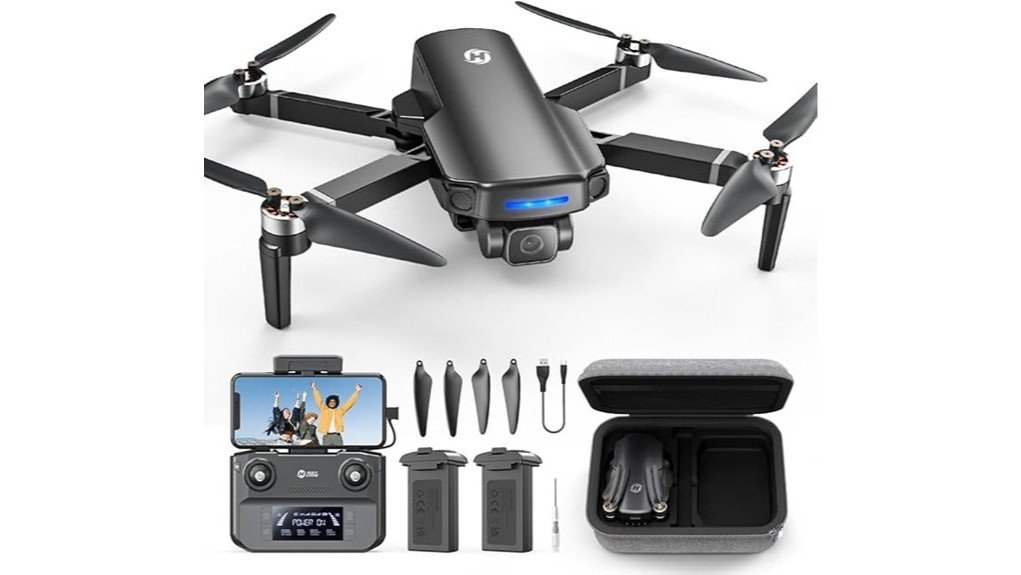
Choosing an affordable GPS drone can be difficult when camera resolution, flight range, and beginner features look similar on paper. The Holy Stone HS360S combines a lightweight 249 g folding design, GPS-assisted flight, a 4K-capable camera, and a rated flight time of up to 20 minutes per battery. Its biggest compromise is camera stabilization, because you do not get electronic stabilization or a mechanical gimbal. This review explains where the HS360S performs well, where its limits matter, and whether it fits the way you plan to fly.
Quick Verdict
Rating: 7.5/10, Recommended with caveats
Best For: Beginners who want GPS assistance, a sub-250 g folding drone, long-range capability, and basic 4K recording without moving into a higher-end stabilized camera drone.
Bottom Line: The HS360S gives you useful GPS flight functions, a compact 249 g body, and 4K recording to a TF card. Its unstabilized 4K/20 fps camera is better suited to casual aerial footage than smooth cinematic video.
Holy Stone HS360S Specifications
| Specification | Detail |
|---|---|
| Brand | Holy Stone |
| Model | HS360S |
| Product Type | Foldable GPS camera drone |
| Weight | 249 g / 8.78 oz |
| Folded Size | 141 × 94 × 56 mm |
| Unfolded Size | 297 × 215 × 56 mm |
| Maximum Rated Flight Time | Up to 20 minutes per battery |
| Drone Battery | 1500mAh, 7.4V lithium-ion polymer, 11.1Wh |
| Battery Charging Time | About 3 hours |
| Maximum Flight Distance | Up to 9,842 ft outdoors in unobstructed conditions |
| Maximum Photo Resolution | 3840 × 2160 |
| Maximum Video Resolution | 3840 × 2160 at 20 fps when recording to TF card |
| Mobile Video Resolution | Up to 1280 × 720 at 20 fps |
| Camera Field of View | 85° |
| Camera Tilt | Adjustable up to 90° |
| Stabilization | No electronic stabilization or mechanical gimbal |
| Storage | Class 10 or faster TF card, up to 128 GB, not included |
| Key Flight Features | GPS Return to Home, GPS Follow, Point of Interest, Tap Fly and smart shooting modes |
| App Support | HS FLY app for supported iOS and Android devices |
What Is the Holy Stone HS360S?
The Holy Stone HS360S is a foldable GPS camera drone aimed mainly at new and casual pilots. At 249 g, it stays compact enough for a small travel setup while giving you more flight assistance than a basic toy-class quadcopter.
The main attractions are GPS positioning, automated Return to Home functions, a camera capable of recording 3840 × 2160 video at 20 fps to a compatible TF card, and a maximum published open-area flight distance of 9,842 ft. You also get intelligent flight functions that can automate certain movements and shooting patterns.
It is important to separate resolution from stabilization, however. The HS360S can record a 4K-resolution file, but the camera does not use electronic image stabilization or a mechanical gimbal. Aircraft movement and wind corrections can therefore remain visible in your footage.
Who Should Buy It?
Best For
- First-time pilots who want GPS positioning and automatic Return to Home.
- Travelers who prefer a lightweight 249 g folding drone.
- Casual photographers who value 4K resolution more than professional video stabilization.
Skip If
- You need smooth cinematic video from a mechanically stabilized camera.
- You regularly need more than 20 minutes of rated flight time from one battery.
- You want 4K recording at a conventional 30 fps or higher frame rate.
Before You Buy: Do not assume the 4K label means stabilized cinematic footage. The HS360S records up to 4K at 20 fps to a compatible TF card, but it does not have EIS or a mechanical camera gimbal.
Camera Quality and Features
The HS360S uses a 1/3-inch CMOS GalaxyCore sensor with an 85° field of view. Maximum still-photo resolution is 3840 × 2160, and the camera can be tilted remotely through a range of up to 90°, which helps you change between forward-looking and more downward-facing compositions.
For video, the distinction between onboard recording and your phone feed matters. A compatible TF card can store video at up to 3840 × 2160 at 20 fps, while video saved or viewed through the mobile side of the system is limited to a lower resolution.
The biggest imaging limitation is stabilization. With no electronic image stabilization and no mechanical gimbal, abrupt stick movements, wind, and aircraft corrections can appear in the recording. You can improve results by flying smoothly, avoiding strong wind, and using slower camera movements.
Pro Tip: Install a Class 10 or faster TF card before an important flight if you want the drone’s highest supported recording resolution. Frame your shot slowly and avoid sudden turns to reduce visible camera shake.
Flight Performance and GPS Safety
The manufacturer rates the HS360S for up to 20 minutes of flight per battery. Real flight time can be lower because wind, temperature, aggressive flying, battery condition, and the Return to Home reserve all affect how long you actually remain airborne.
Maximum published flight distance is 9,842 ft in outdoor, unobstructed conditions. That number should be treated as a technical maximum rather than a target for routine flying. Obstacles, radio interference, local flight rules, weather, and your ability to maintain safe control can all reduce usable distance.
GPS is one of the strongest reasons to choose this model over a basic non-GPS drone. The HS360S supports automatic Return to Home behavior when the battery becomes low or the signal is lost, provided the system has the positioning information needed to return correctly.
You should still treat Return to Home as a backup rather than a substitute for active piloting. Verify that the home point has been recorded, maintain a clear flight path, and follow local aviation rules for altitude, distance, restricted areas, and visual-line-of-sight operation.
Controls, App, and Smart Flight Modes
The HS360S works with the HS FLY mobile app and supports both iOS and Android versions. Holy Stone also uses a wired phone connection through the controller on this model, reducing the need for a separate Wi-Fi pairing step during setup.
Its intelligent modes go beyond simple hovering. GPS Follow lets the aircraft follow the GPS position of the paired phone, while Point of Interest allows the drone to circle a selected location. Tap Fly lets you create a route through points selected in the app.
Additional shooting functions include Catapult, One-Key Ascension, Gesture Selfie, Spiral Up, and other automated movements. These modes can simplify basic aerial shots, but you still need to check the surrounding airspace for trees, wires, buildings, people, animals, and other obstacles before starting an automated path.
How It Performs in Real Use
For Learning GPS Drone Flight
The combination of GPS positioning, Beginner Mode, Return to Home, and straightforward controls makes the HS360S easier to approach than a completely manual drone. New pilots can focus on orientation, takeoff, landing, and smooth stick movements before experimenting with automated shooting modes.
For Casual Aerial Photography
The 3840 × 2160 still-photo capability and adjustable camera angle give you useful flexibility for landscapes, property views, parks, and travel scenes. The camera is most convincing when you keep the aircraft steady and use it for casual stills or slower video movements.
For Travel
At 249 g and 141 × 94 × 56 mm when folded, the drone is compact enough to fit into a modest gear bag. Battery and aviation rules still vary by airline, country, and destination, so check the applicable requirements before packing it for a trip.
For Longer Flying Sessions
A single battery is rated for 20 minutes, so buyers planning a full afternoon of flying should pay attention to the exact bundle being sold. Holy Stone lists configurations that may differ by purchase channel, including packages with different battery counts and accessories.
Setup Tips Before Your First Flight
Charge the aircraft and controller fully, install the HS FLY app, and read the current manual before flying. If you plan to record maximum-resolution video, use a compatible Class 10 or faster TF card with capacity within the supported limit.
Start in a large, open outdoor area with minimal interference and few obstacles. Allow the GPS system to establish the required positioning and confirm the home point before relying on Return to Home.
Use gentle stick inputs when recording video. The lack of camera stabilization means smooth flying technique has a direct effect on how stable your footage appears.
Before using Follow, Point of Interest, Tap Fly, Spiral Up, or another automated route, examine the entire expected flight path. Automated movement does not replace obstacle awareness.
Compatibility and Safety
The HS360S combines GPS and optical-flow-related positioning features, but no positioning system makes a drone collision-proof. Thin branches, power lines, transparent surfaces, moving objects, and poor GPS conditions can still create hazards.
Indoor flight is not the HS360S’s strongest use case. GPS-dependent features may not work as expected without a reliable satellite signal, and confined rooms give you much less room to recover from an error.
The 249 g weight can affect regulatory requirements in some jurisdictions, but weight alone does not exempt you from every drone rule. Flight location, purpose, altitude, local registration requirements, remote identification rules, and operational restrictions can still apply. Check current rules where you intend to fly.
Pros and Cons
Pros
- 249 g folding design is compact for travel and storage.
- GPS positioning and automatic Return to Home add useful safeguards for newer pilots.
- Records up to 3840 × 2160 video to a compatible TF card.
- Published open-area flight and transmission distance reaches 9,842 ft.
- Includes useful smart modes such as GPS Follow, Point of Interest and Tap Fly.
Cons
- No electronic image stabilization or mechanical camera gimbal.
- Maximum 4K recording is limited to 20 fps.
- The 20-minute rated battery life is shorter than some competing sub-250 g drones.
User Experience and Support
Holy Stone positions the HS360S as a beginner-friendly GPS model and provides dedicated HS360S support pages, app downloads, manuals, tutorials, specification information, and customer-support channels.
The wired phone connection is also useful during setup because your phone connects directly to the controller with a data cable instead of depending only on a separate Wi-Fi pairing process. That can reduce one common setup step for new pilots.
There is still a learning curve. You need to understand GPS status, the home point, battery warnings, Return to Home behavior, camera storage, automated flight modes, and local flight rules before pushing the aircraft toward its published limits.
Is It Worth the Price?
The HS360S makes the most sense as an affordable entry into GPS-assisted camera drones. You receive a 249 g folding airframe, 4K-capable onboard recording, automated Return to Home, a long published control range, and several intelligent flight modes without moving directly into a more advanced stabilized camera platform.
The value changes if video quality is your top priority. Buyers who expect fluid 4K/30 fps footage with strong stabilization may get more value from spending more on a drone with EIS or a mechanical gimbal.
It is therefore worth considering if your priorities are beginner-friendly GPS flight, portability, and casual aerial imaging. It is less compelling if smooth cinematic video or much longer single-battery flight time is essential.
How It Compares to Alternatives
The Potensic ATOM SE is a relevant step-up option if you care more about video performance. It remains under 249 g but supports 4K recording at 30 fps, electronic image stabilization, and a longer rated flight time of up to 31 minutes.
The Potensic ATOM moves further toward aerial photography with a three-axis mechanical gimbal, 4K/30 fps video, and a rated flight time of up to 32 minutes. The HS360S makes more sense when you want a simpler GPS drone and can accept its unstabilized 20 fps 4K recording.
Frequently Asked Questions
Is the Holy Stone HS360S suitable for beginners?
Yes. GPS positioning, Beginner Mode, optical-flow-related positioning, straightforward controls, and Return to Home functions make it more approachable than a basic manual drone. You should still learn the manual, GPS indicators, and Return to Home behavior before flying farther away.
Does the HS360S really record 4K video?
Yes. Its supported maximum recording resolution is 3840 × 2160 at 20 fps when video is stored to a compatible TF card. The mobile-side video resolution is lower, so you should not assume the live phone feed represents the quality of the onboard recording.
Does the Holy Stone HS360S have image stabilization?
No mechanical gimbal or electronic image stabilization is provided on the HS360S. Smooth stick movements and calmer weather therefore matter more when you want steady-looking video.
How long does the HS360S fly on one battery?
Holy Stone rates maximum flight time at up to 20 minutes per battery. Actual time can be shorter depending on wind, temperature, flight style, battery condition, and when the aircraft begins its low-battery return procedure.
What memory card does the HS360S support?
The manufacturer specifies a Class 10 or faster TF card with storage capacity up to 128 GB. The card is not listed as part of the standard specification, so check the current package before assuming one is included.
Can you fly the Holy Stone HS360S indoors?
It can physically operate indoors, but confined spaces are not its ideal environment. GPS-dependent functions may be unavailable or less useful without a reliable satellite signal, and the limited space increases the consequences of a piloting mistake.
Who should skip the HS360S?
Skip it if your main goal is smooth cinematic footage, because the camera lacks EIS and a mechanical gimbal. It is also less attractive if you need 4K/30 fps recording or substantially more than 20 minutes of rated flight time from each battery.
The Bottom Line
The Holy Stone HS360S is a practical choice for beginners who value GPS assistance, a compact 249 g design, smart flight modes, and basic 4K aerial recording. Its main weakness is the unstabilized 4K/20 fps camera, so buyers focused on smooth cinematic video should consider a stabilized alternative instead.
For learning GPS-assisted flying, casual outdoor photography, and portable recreational use, the HS360S offers a useful balance of features without pretending to be a professional camera drone.
Ready to Buy?
Check the latest price, battery configuration, and package contents before you decide.
