
Last Updated on July 22, 2026 by Daniel Globe
The Golden Horn is the crescent-shaped natural harbor that has shaped Istanbul’s fortunes for more than two thousand years. Formed by ancient tectonic activity and sediment deposition where the Alibey and Kağıthane streams meet the Bosphorus, this sheltered inlet became a magnet for seafarers, merchants, and empires. From its role as a Byzantine trading artery to its status as an Ottoman naval stronghold, and now as a site of modern urban renewal, the Golden Horn’s story mirrors the story of Istanbul itself.
Quick Answer
The Golden Horn is a natural harbor in Istanbul that served as a key trading port and naval base during the Byzantine and Ottoman empires. Its narrow entrance, once protected by a defensive chain, made it central to the 1453 conquest of Constantinople. Today it blends historic landmarks with modern parks and cultural venues.
Key Takeaways
- The Golden Horn formed through natural geological processes, then developed into a major harbor through centuries of human use.
- During the Byzantine era it linked European and Asian trade routes and anchored Constantinople’s naval defenses.
- In 1453, Ottoman forces famously hauled ships overland to bypass the harbor’s defensive chain, a turning point in the siege of Constantinople.
- The Ottomans later turned the Horn into a major shipyard and commercial center connecting Europe, Asia, and the Black Sea.
- Modern projects like the Haliç Metro Bridge (2014) and Galataport (2021–2022) have reshaped the waterfront for transit, culture, and tourism.
- Pollution from 20th-century industrialization prompted major cleanup and habitat-restoration efforts starting in the 1990s.
Disclosure: As an Amazon Associate I earn from qualifying purchases. Some links on this page are affiliate links, at no extra cost to you.
Etymology and Geography
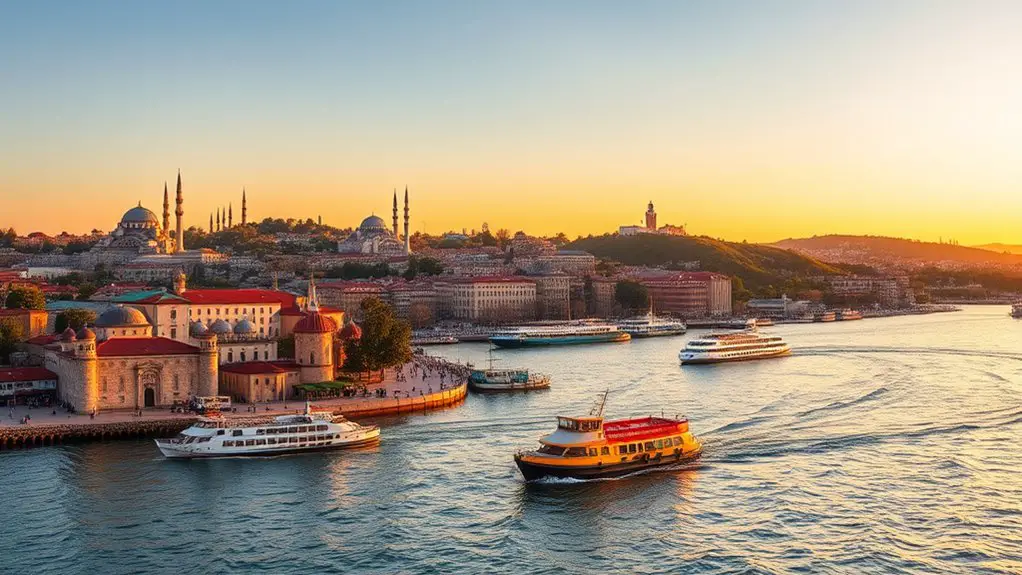
The name “Golden Horn” (Turkish: Haliç) refers to the inlet’s curved, horn-like shape and the golden glow it reportedly takes on at sunset. The harbor stretches roughly 7.5 kilometers into the European side of Istanbul, fed by two small streams, and separates the historic peninsula from the districts of Beyoğlu and Şişli. Its narrow mouth and sheltered waters made it naturally resistant to storms and, historically, to naval attack.
The Birth of a Natural Harbor
The Golden Horn’s origins trace back to tectonic shifts and sediment deposition that carved out a deep, sheltered inlet. Its depth and shape offered ideal protection for early seafarers, encouraging settlement and trade along its banks well before Constantinople rose to prominence.
Over the following centuries, human activity reinforced what geology had started. Communities recognized the harbor’s strategic value and gradually expanded its capacity to handle growing maritime traffic, laying the groundwork for the pivotal role it would later play in regional history.
Byzantine Era: A Thriving Port
During the Byzantine era, the Golden Horn became an essential hub thanks to its position along trade routes linking Europe and Asia. The harbor offered both a naval defensive advantage, shielding Constantinople from seaborne threats, and a setting for cultural exchange, where goods and ideas from different civilizations mingled.
Strategic Trading Location
The Golden Horn anchored much of Constantinople’s economic strength. Positioned at the crossroads of major trade routes, it gave merchants access to both the Black Sea and the Mediterranean, supporting an efficient flow of goods. Its natural depth accommodated large ships, making it a practical and popular docking site.
Warehouses lined the waterfront, storing spices, silks, and grain, and traders came from across the region to do business there, reinforcing Constantinople’s role as an economic and cultural center.
Naval Defensive Advantage
Beyond trade, the Golden Horn served as a key naval defensive position. Its natural harbor was well suited for anchoring fleets, and the Byzantines reinforced this advantage with sea walls lining the inlet. A large defensive chain (or boom) could be stretched across the harbor mouth to block enemy ships from entering — a tactic later famously circumvented by the Ottomans in 1453.
Cultural Exchange Hub
The constant flow of merchants and travelers through the Golden Horn introduced new ideas, goods, and traditions to Constantinople. Byzantine art and architecture absorbed influences from neighboring regions, and as trade networks expanded, this exchange extended into literature, cuisine, and music.
The Golden Horn in the Ottoman Empire
Under the Ottomans, the Golden Horn’s strategic importance evolved from its Byzantine roots. It became a fortified naval base that helped protect Istanbul from seaborne threats, while continuing to flourish as a commercial hub connecting East and West.
Strategic Military Significance
The Golden Horn played a central role in Ottoman defense and expansion. Its most famous moment came during the 1453 siege of Constantinople: after Byzantine forces blocked the harbor entrance with a heavy chain, Ottoman troops under Mehmed II hauled dozens of ships overland on greased logs to bypass the barrier and enter the Horn — a maneuver that helped seal the city’s fall and remains one of the most cited feats of the siege.
In 1453, Ottoman forces hauled ships overland at night to bypass the Golden Horn’s defensive chain — a maneuver still studied as one of history’s boldest naval improvisations.
Economic Trade Hub
Beyond its military role, the Golden Horn grew into a thriving Ottoman trade hub thanks to its position on key regional routes:
- 15th century: It became a vital link for goods moving between Europe and Asia, contributing to the empire’s wealth.
- 16th century: Growing maritime trade brought bustling markets and docks that drew merchants from across the region.
- 17th century: Advances in shipbuilding and navigation reinforced its status as a shipping and trade center, including the establishment of the Ottoman naval shipyards (Tersane-i Amire) along its shores.
- 18th century: A wider range of traded goods, including textiles and metals, added to the area’s commercial importance.
Naval Battles and Strategic Importance
The Golden Horn’s unique geography made it a focal point for military strategy across centuries:
- Byzantine naval strategy: The Horn’s sheltered harbor protected fleets and supported effective naval defense against invaders.
- The 1453 conquest: The Ottoman overland ship-hauling maneuver bypassed the chain defense, marking a decisive moment in the siege of Constantinople.
- Control of the Horn: Whoever controlled the Golden Horn had significant influence over Constantinople and access to eastern trade routes.
- Later use: The Ottomans expanded their naval shipyards along the Horn, and the harbor remained militarily significant into the modern era.
Cultural and Architectural Landmarks
The Golden Horn’s shores carry layers of architectural history spanning multiple eras. Byzantine-era churches once stood along its banks as symbols of the city’s early Christian heritage. The Ottoman period added mosques, shipyards, and commercial buildings reflecting Islamic and imperial architectural traditions. In the 19th century, European influence arrived with structures such as the Bulgarian St. Stephen Church, a notable cast-iron church built directly on the Golden Horn’s shore in the Balat neighborhood — a striking example of prefabricated iron architecture from that period.
Today, the historic Galata Bridge — connecting the Eminönü and Karaköy districts across the mouth of the Golden Horn — remains one of the most recognizable landmarks associated with the harbor, lined with fishermen and restaurants.
Modern Transformations and Developments
Rapid urbanization has brought major redevelopment to the Golden Horn’s waterfront since the early 2000s. Key projects include:
Urban development since the early 2000s has focused on revitalizing Istanbul’s waterfront with transformative projects.
- Haliç Metro Bridge: Opened on February 15, 2014, this cable-stayed bridge carries the M2 metro line across the Golden Horn and connects the city’s rail network.
- Haliç Shipyard restoration: Ongoing efforts aim to preserve the historic Ottoman-era shipyards while adapting them for modern cultural and commercial use.
- Golden Horn parks: Green spaces and waterfront promenades now line long stretches of the harbor, offering recreation for residents and visitors.
- Galataport: This major waterfront redevelopment at Karaköy partially opened in 2021 and was substantially complete by 2022, adding a cruise terminal, museums (including a new home for Istanbul Modern), shops, and public promenades to a previously closed-off industrial stretch of coastline.
Environmental Challenges and Conservation Efforts
Despite these developments, the Golden Horn faces ongoing environmental challenges. Industrial waste accumulated heavily through the 20th century, degrading water quality and harming local biodiversity. Conservation efforts have since shifted from reactive cleanup to proactive management:
| Year | Initiative |
|---|---|
| 1990s | Industrial waste reduction |
| 2000s | Sewage treatment upgrades |
| 2010s | Habitat restoration projects |
These combined efforts, paired with the pollution-control measures introduced since the 1990s, have improved water quality and helped native species return to parts of the harbor.
The Golden Horn in Contemporary Istanbul
Today, the Golden Horn is woven into Istanbul’s everyday urban life while retaining its historical character. Restoration of historic neighborhoods along its shores has brought new life to old streets, and a growing number of art galleries, cafes, and cultural centers now draw both locals and visitors.
- Infrastructure improvements: Modern bridges and roads connect the Golden Horn to the rest of the city.
- Historic preservation: Restoration efforts aim to protect architectural heritage while meeting current urban needs.
- Cultural venues: Museums and performance spaces have expanded the area’s cultural offerings.
- Green spaces: Waterfront parks and walking paths provide recreational areas with views across the harbor.
Frequently Asked Questions
What legends are associated with the Golden Horn’s name?
Local tradition offers several explanations for the name “Golden Horn,” including the shape of the inlet resembling a curved horn and the golden light it reflects at sunset. Some folk stories also link the name to treasure or wealth associated with the harbor across the Byzantine and Ottoman periods, though these remain legends rather than documented history.
How did the Golden Horn influence Istanbul’s cuisine?
The Golden Horn’s waters historically supported active fishing, contributing to Istanbul’s strong seafood traditions. Combined with centuries of trade bringing spices and ingredients from across Europe and Asia, the harbor helped shape a cuisine that blends local and international influences.
Are there any famous myths linked to the Golden Horn?
In classical mythology, the wider Bosphorus region — including the area around the Golden Horn — appears in tales connected to Greek heroes and gods, including stories associated with Hercules’ travels through the region. These are traditional legends rather than verified historical events, but they remain part of local folklore.
What wildlife can be found in the Golden Horn today?
Following decades of pollution-control and habitat-restoration efforts, the Golden Horn today supports bird species such as cormorants and herons, along with aquatic life including mullet and sea bass, reflecting a gradually recovering ecosystem.
How did the Golden Horn impact local folklore and storytelling?
As a working harbor for over two thousand years, the Golden Horn has inspired generations of stories — from ancient myths to medieval legends to modern accounts — that reflect the long relationship between Istanbul’s residents and this iconic waterway.
Conclusion
The Golden Horn’s story spans from a naturally formed harbor to a Byzantine trading and defensive stronghold, and on to an Ottoman commercial and naval center that helped shape Istanbul’s fortunes for centuries. Today, ongoing modernization and conservation efforts aim to preserve that legacy while balancing new development with environmental care. The Golden Horn remains a living reflection of Istanbul’s layered past and its continuing growth.
Sources
- Golden Horn Metro Bridge — Wikipedia — construction and opening date of the Haliç Metro Bridge
- Galataport — Wikipedia — Galataport project timeline and development details
- Railway Gazette International — official opening details of the Golden Horn metro bridge extension
- Encyclopaedia Britannica — Golden Horn — general history and geography of the Golden Horn
- Fall of Constantinople — Wikipedia — background on the 1453 siege and the overland ship-hauling maneuver
