
Last Updated on July 25, 2026 by Daniel Globe
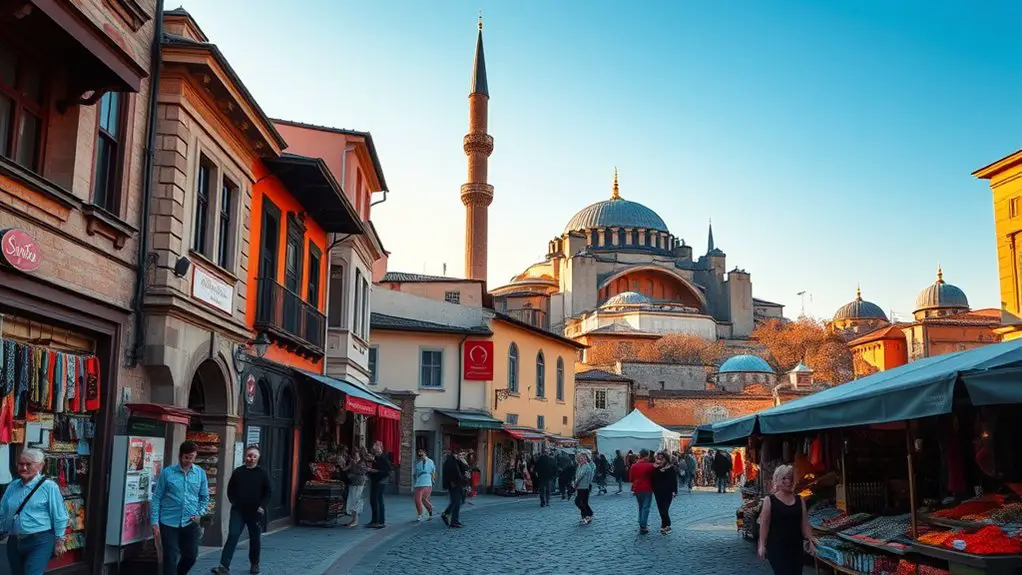
Fatih brings together some of Istanbul’s deepest layers of history in one district. Much of the Historic Peninsula lies within its boundaries, so a walk through Fatih can take you from traces of ancient Constantinople to Byzantine churches and cisterns, Ottoman mosques and palaces, centuries-old markets, and busy modern neighborhoods. Understanding that timeline makes landmarks such as Hagia Sophia, Topkapı Palace, Süleymaniye Mosque, and Kariye far more meaningful.
Quick Answer
Fatih is the historic core of Istanbul, shaped first by ancient Byzantion and Constantinople and later by nearly five centuries of Ottoman rule. Its major sights include Hagia Sophia, Topkapı Palace, Süleymaniye Mosque, the Hippodrome area, Kariye Mosque, the Grand Bazaar, Byzantine cisterns, and sections of the old land walls.
Key Takeaways
- Much of modern Fatih occupies Istanbul’s Historic Peninsula, where Byzantion and Constantinople developed.
- The district preserves major Byzantine works, including Hagia Sophia, Kariye, cisterns, the Hippodrome area, and the Theodosian land walls.
- After the Ottoman conquest of 1453, Mehmed II and later sultans reshaped the city with palaces, mosques, markets, schools, baths, and charitable complexes.
- Hagia Sophia and Kariye are active mosques today, so their present-day visitor arrangements differ from their former museum use.
- Fatih is easiest to explore by grouping sights by neighborhood and using the T1 tram, T5 tram, Marmaray, buses, and ferry connections where useful.
Disclosure: As an Amazon Associate I earn from qualifying purchases. Some links on this page are affiliate links, at no extra cost to you.
Fatih’s History in Context: From Byzantion to Constantinople
The story of Fatih begins long before the Byzantine period. Archaeological discoveries around Yenikapı show that settlement on the Historic Peninsula reaches back thousands of years. The area later became part of ancient Byzantion, a trading settlement positioned beside the Bosphorus and Golden Horn.
In the fourth century, Emperor Constantine I dramatically expanded the city and made it an imperial capital. Constantinople then became the political and religious center of the Eastern Roman Empire. As the city grew, its streets, forums, churches, palaces, aqueducts, harbors, and defensive systems transformed the peninsula.
The UNESCO World Heritage Centre notes that the Historic Peninsula was enclosed by ancient defenses, including the land walls developed under Theodosius II in the early fifth century. Those walls became one of the most influential systems of military architecture of their era.
Constantinople suffered a major rupture in 1204 when forces of the Fourth Crusade captured the city. Byzantine rule was restored in 1261, but the city never fully recovered its earlier political and economic strength before the Ottoman conquest in 1453.
The Byzantine Era: Foundations of Fatih
As you wander through Fatih today, you are walking across much of the former urban core of Constantinople. The surviving monuments show how important the city was to Eastern Roman government, Christianity, commerce, engineering, and art.
The best-known example is Hagia Sophia. Built under Emperor Justinian I between 532 and 537, it became one of the defining achievements of Byzantine architecture. Its enormous dome, galleries, marble surfaces, and surviving mosaics influenced religious architecture far beyond Constantinople.
Its later history is just as important. After the Ottoman conquest in 1453, Hagia Sophia was converted into a mosque. It became a museum in the 20th century and returned to mosque status in 2020. The current building therefore contains visible layers of both Byzantine Christian and Ottoman Islamic history. You can read more about its chronology on the Fatih Municipality’s Hagia Sophia history page.
Hagia Sophia is only part of Fatih’s Byzantine heritage. Near Sultanahmet, the ancient Hippodrome of Constantinople once hosted imperial ceremonies and chariot races. The surviving monuments around today’s Sultanahmet Square help reveal the scale of the former ceremonial center.
Below ground, Byzantine water infrastructure is represented by monumental reservoirs such as the Basilica Cistern. Its forest of columns illustrates the engineering needed to supply the imperial capital with water. Because maintenance and temporary closures can affect access, check the official Basilica Cistern website before making a special trip.
Farther west, the Theodosian Land Walls preserve another side of Constantinople. Their long defensive line protected the city for centuries and remains one of the Historic Areas of Istanbul recognized by UNESCO.
Another exceptional Byzantine monument is the former Chora Church, now known as Kariye Mosque. It is especially famous for mosaics and frescoes illustrating Christian scenes. The building passed through several identities over the centuries and was reopened for worship as a mosque in May 2024 after restoration.
UNESCO describes Istanbul’s Historic Areas as a place shaped by major political, religious, and artistic events for more than 2,000 years, with Byzantine and Ottoman monuments together forming its distinctive character.
Ottoman Influence: A Transformative Period
The Ottoman conquest of Constantinople in 1453 ended Byzantine rule of the city and began another major period of transformation. Sultan Mehmed II, known as Mehmed the Conqueror, repaired infrastructure, repopulated neighborhoods, converted or adapted existing buildings, and commissioned new institutions for the Ottoman capital.
The rebuilding program included a mosque and social complex bearing Mehmed’s name. The original Fatih Mosque and Complex was constructed between 1462 and 1469 and included educational, charitable, medical, and religious facilities. It became one of the defining institutions of the post-conquest city.
Mehmed II also commissioned Topkapı Palace. According to Türkiye’s National Palaces administration, construction took place between 1460 and 1478. The palace later developed into a vast complex of courtyards, government rooms, educational spaces, treasuries, gardens, and the imperial Harem.
Commercial life expanded as well. Markets and workshops grew around the Historic Peninsula, including the network that became the Grand Bazaar. Religious and civic complexes helped organize neighborhoods around mosques, schools, fountains, baths, kitchens, and shops.
| Architectural Element | Role in Ottoman Fatih |
|---|---|
| Mosques and complexes | Places of worship surrounded by schools, kitchens, libraries, baths, tombs, and charitable services. |
| Palaces | Centers of imperial residence, government, ceremony, education, and administration. |
| Public baths | Important facilities for bathing as well as neighborhood social life. |
| Markets | Commercial centers connecting merchants, craftspeople, residents, and international trade. |
Ottoman monumental architecture reached another high point in the 16th century. The Süleymaniye Mosque and Complex, designed by Mimar Sinan for Sultan Süleyman the Magnificent and completed in 1557, included much more than a prayer hall. Schools, charitable facilities, a bath, tombs, and other buildings formed a complete social and religious complex overlooking the Golden Horn.
Later Ottoman buildings continued to reshape Fatih, including the Sultan Ahmed Mosque, the New Mosque in Eminönü, fountains, caravanserais, baths, schools, and neighborhood mosques. These additions explain why the district cannot be understood as simply “Byzantine” or “Ottoman”; the two legacies overlap throughout the Historic Peninsula.
The Republican Era and World Heritage Status
Fatih continued changing after the establishment of the Republic of Türkiye in 1923. Some former imperial buildings became museums, while expanding roads, population growth, fires, earthquakes, restoration projects, and modern infrastructure altered older neighborhoods.
Topkapı Palace became a museum in 1924. Hagia Sophia served as a museum from 1935 until its return to mosque status in 2020. Kariye likewise spent decades as a museum before being returned to mosque status and reopened for worship in 2024.
International recognition of the peninsula’s heritage came in 1985, when the Historic Areas of Istanbul were inscribed on the UNESCO World Heritage List. The protected property includes four component areas: Sultanahmet’s archaeological zone, the Süleymaniye area, Zeyrek, and the land walls.
This UNESCO designation is important because Fatih’s value does not come from one isolated monument. Its streets, religious buildings, fortifications, palaces, cisterns, houses, markets, and neighborhood patterns together show how Constantinople and Ottoman Istanbul evolved across centuries.
Key Historical Landmarks to Explore
Fatih contains enough major sights to fill several days. These landmarks give the clearest overview of its Byzantine and Ottoman layers:
- Hagia Sophia: A sixth-century Byzantine cathedral later converted into an Ottoman mosque, used as a museum in the 20th century, and returned to mosque status in 2020. Its architecture preserves elements from several periods.
- Topkapı Palace: The Ottoman imperial palace built under Mehmed II and expanded by later sultans. Its courtyards, Harem, treasury spaces, pavilions, and collections explain how the Ottoman court functioned.
- Süleymaniye Mosque: One of Mimar Sinan’s defining works and a major example of classical Ottoman architecture, with commanding views toward the Golden Horn.
- Sultan Ahmed Mosque: The early-17th-century imperial mosque commonly called the Blue Mosque, located beside the former Byzantine Hippodrome.
- Hippodrome and Sultanahmet Square: The ceremonial center of Byzantine Constantinople, where several ancient monuments remain visible in the modern public square.
- Basilica Cistern: A monumental Byzantine underground water reservoir near Hagia Sophia that demonstrates the engineering infrastructure behind imperial Constantinople.
- Kariye Mosque: Formerly known internationally as the Chora Church and later the Chora Museum, this building is celebrated for its Byzantine mosaics and frescoes. It reopened as a mosque in 2024. Official information about that reopening is available from the Presidency of Türkiye’s Directorate of Communications.
- Fatih Mosque and Complex: A major post-conquest foundation associated directly with Mehmed II and an essential stop for understanding the Ottoman rebuilding of Istanbul.
- Theodosian Land Walls: The surviving western defenses of Constantinople and one of the four UNESCO component areas within Historic Istanbul.
- Grand Bazaar: A vast commercial district whose development reflects the central role trade played in Ottoman Istanbul.
Note: Hagia Sophia and Kariye are active mosques, not conventional museums. Tourist entrances, ticketing arrangements, worship areas, restoration work, and temporary closures can change. Check official information shortly before your visit rather than relying on an old guidebook or social-media post.
Cultural Significance and Local Traditions
Fatih’s culture is not limited to monuments. The district is made up of many neighborhoods with different histories and everyday rhythms. Sultanahmet is dominated by major visitor attractions, while Eminönü is closely tied to commerce and transport. Fener, Balat, Zeyrek, Aksaray, Laleli, and other areas reveal different sides of residential, religious, and commercial Istanbul.
Religious traditions remain highly visible. During Ramadan, mosques and surrounding squares can become especially active in the evenings. Visitors should remember that these are living places of worship rather than historic monuments frozen in the past.
Hıdırellez, a traditional spring celebration observed in Türkiye and elsewhere in the region, has also been celebrated at different locations in and around Fatih, including Ahırkapı and Topkapı. However, event programs, venues, and organizers change from year to year, so it is better to consult current municipal listings than assume a specific annual festival will take place.
Food is another important part of the district’s character. As you walk between markets and monuments, you will encounter simit, kebabs, döner, mezes, börek, baklava, Turkish delight, tea, and many other familiar Turkish dishes. Rather than treating one dish as uniquely “Fatih,” explore neighborhood bakeries, lokantas, grills, dessert shops, and market stalls.
Commerce also remains part of the area’s identity. The Grand Bazaar, streets around Eminönü, smaller neighborhood markets, textile shops, spice sellers, and workshops continue a tradition of trade that stretches back centuries.
Tips for Visiting Fatih: What to Expect
Fatih is dense with attractions, but trying to cross the entire district on foot in one sightseeing session can be tiring. A better approach is to group nearby places together.
- Sultanahmet: Combine Hagia Sophia, Sultan Ahmed Mosque, the Hippodrome area, Basilica Cistern, and Topkapı Palace.
- Beyazıt and Süleymaniye: Pair the Grand Bazaar, Beyazıt area, Süleymaniye Mosque, and nearby historic streets.
- Fener, Balat, and the Golden Horn: Allow a separate block of time for neighborhood streets, churches, mosques, waterfront areas, and local cafés.
- Edirnekapı and Kariye: Combine Kariye Mosque with sections of the land walls and nearby historic neighborhoods.
Public transport can save considerable walking. Metro Istanbul’s T1 Kabataş–Bağcılar tram serves important Fatih stops including Eminönü, Sirkeci, Gülhane, Sultanahmet, Çemberlitaş, Beyazıt–Kapalıçarşı, Laleli, and Aksaray. The line uses low-floor trams, and Metro Istanbul states that stations are designed with ramps suitable for disabled access.
The T5 tram serves the Golden Horn side, including Fener and Balat, while Marmaray connections at Sirkeci and Yenikapı make longer cross-city journeys easier. Ferries from Eminönü also connect the Historic Peninsula with other waterfront districts.
Pro Tip: Plan Fatih by neighborhood rather than by a long list of individual attractions. You will spend less time backtracking and more time noticing the streets, markets, smaller monuments, and viewpoints between the famous sights.
Wear comfortable shoes. Many historic streets have uneven surfaces, slopes, steps, and crowded pavements. Even though parts of the rail network are designed for accessible boarding, the historic urban environment and individual monuments can still present difficulties for travelers with limited mobility.
When entering active mosques, dress respectfully, follow posted instructions, keep voices low, and avoid entering restricted prayer areas. Visitor access may pause around worship times.
Opening days can also change. As of July 2026, the National Palaces administration lists Tuesday as Topkapı Palace’s regular closed day. Because restoration work, holidays, and special events can affect schedules, verify current hours before setting out.
Finally, leave room for food and ordinary street life. Fatih is not merely a collection of ticketed monuments. Markets, bakeries, mosques, residential streets, cafés, ferry approaches, and neighborhood squares are part of what connects its history with the city people experience today.
Frequently Asked Questions
What Is the Best Time to Visit Fatih?
Spring and autumn are popular choices because sightseeing conditions are often milder than during the hottest part of summer. Summer offers long daylight hours but larger crowds, while winter can be quieter and cooler. The best season ultimately depends on whether you value comfortable walking weather, smaller crowds, or longer days.
Are There Guided Tours Available in Fatih?
Yes. Guided walking and museum tours are widely available around Sultanahmet and other historic parts of Fatih. A knowledgeable licensed guide can be especially useful at sites such as Topkapı Palace, Hagia Sophia, the Hippodrome area, and Byzantine monuments where several historical periods overlap.
What Local Dishes Should I Try in Fatih?
Look for simit, kebabs, döner, pide, börek, mezes, soups, baklava, Turkish delight, tea, and ayran. Fatih contains many different neighborhoods, so the best experience is to sample bakeries, grills, lokantas, dessert shops, and market stalls rather than search for one single “signature” dish.
Is Public Transportation Accessible in Fatih?
Several major rail services are designed with accessibility in mind. Metro Istanbul states that the T1 tram uses low-floor vehicles and stations with accessible ramps. However, Fatih’s hills, cobblestones, crowded sidewalks, steps, and historic buildings can still create barriers, so check the accessibility of individual attractions as well as the transport route.
Are There Any Annual Festivals in Fatih?
Fatih hosts religious, cultural, municipal, and neighborhood events throughout the year, but the exact calendar changes. Ramadan programs and Hıdırellez celebrations are examples of events that may take place in or around the district. Check current Fatih Municipality and Istanbul Metropolitan Municipality event listings before planning a trip around a particular festival.
How Much Time Do You Need to Explore Fatih?
One full day is enough for a concentrated Sultanahmet visit, but two or three days give you a much better sense of Fatih. Extra time lets you add Süleymaniye, the Grand Bazaar, Fener and Balat, Kariye, the land walls, local markets, and less crowded neighborhood streets.
Is Fatih Walkable?
Individual areas such as Sultanahmet are very walkable, and many major sights sit close together. The district as a whole is much larger, with hills and long distances between some attractions. Combining walking with trams, Marmaray, buses, or ferries is usually more practical than trying to cover everything on foot.
Sources
- UNESCO World Heritage Centre — Historic Areas of Istanbul — Byzantine and Ottoman heritage, land walls, Hagia Sophia, Süleymaniye, Zeyrek, and World Heritage context.
- Fatih Municipality — Fatih in History — early settlement, Constantinople, the 1204 occupation, 1453 conquest, Ottoman rebuilding, and neighborhood history.
- Fatih Municipality — Hagia Sophia Grand Mosque — Hagia Sophia’s construction, Ottoman conversion, museum period, and return to mosque status.
- Türkiye National Palaces — Topkapı Palace — palace construction dates, historical role, collections, and current visitor information.
- Presidency of Türkiye Directorate of Communications — Kariye Mosque — restoration and reopening for worship in May 2024.
- Metro Istanbul — T1 Kabataş–Bağcılar Tram Line — Fatih tram stops, integrations, low-floor vehicles, and accessibility provisions.
