
Last Updated on July 25, 2026 by Daniel Globe
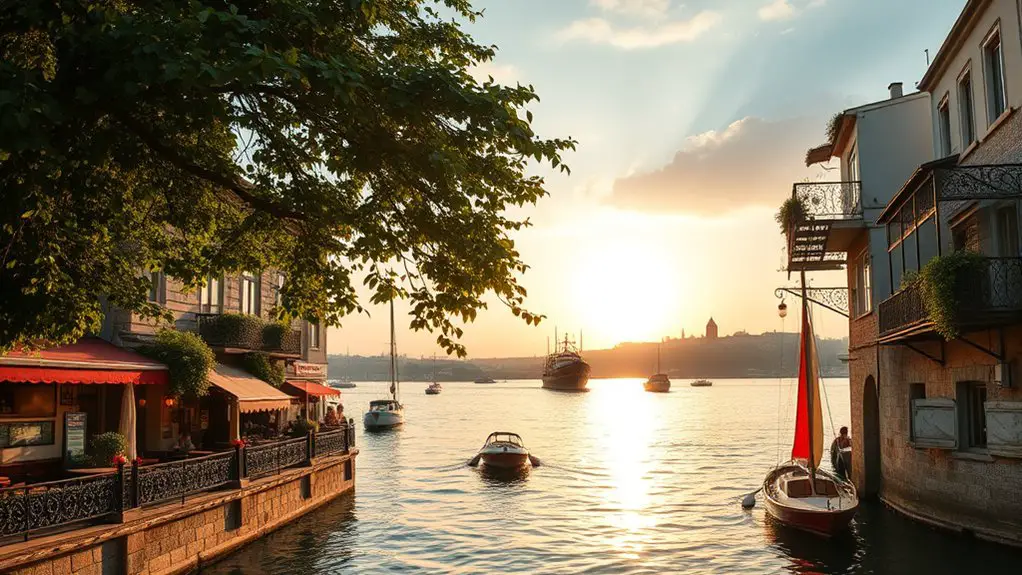
The Golden Horn rewards travelers who look beyond Istanbul’s biggest headline sights. Along its shores, you can explore the layered streets of Fener and Balat, historic Hasköy, waterfront museums, religious landmarks, quieter Ottoman heritage sites, and elevated viewpoints. Some stops below are genuine lesser-known finds, while others are famous landmarks that work well as anchors for a Golden Horn day.
Quick Answer
The best Golden Horn hidden gems include the historic lanes and religious heritage of Fener and Balat, Aynalıkavak Pavilion in Hasköy, the Rahmi M. Koç Museum, and quieter waterfront corners between the main sights. Pierre Loti Hill, Eyüp Sultan Mosque, Miniatürk, and the Spice Bazaar are better-known attractions worth combining with them.
Key Takeaways
- Use the T5 Eminönü–Alibeyköy tram for an easy route through Fener, Balat, Feshane, and Eyüpsultan.
- Fener and Balat are most rewarding when you look beyond colorful houses to their Greek Orthodox, Bulgarian, Jewish, and Ottoman heritage.
- Hasköy is not reliably an “artisan district”; its stronger attractions are industrial heritage, the waterfront, and Aynalıkavak Pavilion.
- Pierre Loti Hill and Eyüp Sultan Mosque are popular rather than secret, but both fit naturally into a Golden Horn itinerary.
- Allow a full day if you want to combine neighborhood walking, a museum, Eyüpsultan, and a ferry or hilltop stop without rushing.
Disclosure: As an Amazon Associate I earn from qualifying purchases. Some links on this page are affiliate links, at no extra cost to you.
How to Explore the Golden Horn
The easiest way to organize a day here is to move roughly along the shoreline rather than treating each attraction as a separate trip. The T5 Eminönü–Alibeyköy tram follows much of the southern Golden Horn and stops at places including Fener, Balat, Feshane, and Eyüpsultan Teleferik.
Ferries provide a more scenic option. Current Şehir Hatları Golden Horn services use several piers around the inlet, including Fener, Balat, Hasköy, Sütlüce, Ayvansaray, and Eyüpsultan on applicable routes. Timetables vary by day, so check the official schedule before relying on a particular sailing.
For Pierre Loti Hill, the TF2 Eyüp–Piyer Loti cable car connects the Eyüp area with the hilltop viewpoint.
Pro Tip: Use the tram for efficiency and a ferry for atmosphere. Walking every stretch of the Golden Horn can consume more time than expected because the attractions spread across both sides of the water.
Fener and Balat: Colorful Streets With Deeper History
Fener and Balat are among the Golden Horn’s most rewarding neighborhoods, but their significance goes far beyond photogenic houses. Their streets preserve layers of Greek Orthodox, Jewish, Bulgarian, Muslim, and wider Ottoman history.
The painted facades and steep lanes are easy to notice first. Look more closely, though, and the neighborhood becomes a collection of religious buildings, schools, local businesses, traditional streetscapes, and traces of communities that shaped Istanbul over centuries.
Modern cafés, galleries, antique shops, and street art now sit beside much older landmarks. That contrast between everyday neighborhood life and historic architecture is what makes wandering here more interesting than simply finding one famous photo street.
See the Bulgarian St. Stephen Church
One of the most distinctive waterfront landmarks is the Bulgarian St. Stephen Church, commonly called the Iron Church. The present church opened in 1898 and is notable for its iron construction and prominent location beside the Golden Horn.
Its detailed exterior makes it easy to appreciate from the waterfront, while the interior adds another layer to the religious and cultural history of the district.
Explore Fener’s Greek Orthodox Heritage
Fener is also home to the Ecumenical Patriarchate and the Patriarchal Church of St. George. Nearby, the large red-brick Fener Greek High School is one of the neighborhood’s most recognizable structures when viewed from the Golden Horn.
Balat’s Ahrida Synagogue adds another important historical layer, although access to active religious sites can be subject to security procedures, services, and visitor rules. Check current arrangements before planning a visit inside.
The real appeal of Fener and Balat is not one colorful street: it is the concentration of religious, architectural, and neighborhood history within a walkable area.
Pierre Loti Hill: A Golden Horn Viewpoint
Pierre Loti Hill is no longer a secret, but its elevated outlook makes it one of the Golden Horn’s classic stops. From the Eyüpsultan side, the hill gives you a broad view across the inlet and surrounding neighborhoods.
Go for the Views
The viewpoint is especially appealing when visibility is clear and the lower sun adds definition to the waterfront. There are cafés near the top, so the hill works well as a slower stop after walking through Eyüpsultan.
Photography is usually best when you give yourself time rather than arriving only for a quick picture. Haze, weather, and crowds can change the experience significantly from one day to another.
Take the Cable Car or Walk
The official TF2 cable-car line connects Eyüp with Piyer Loti. The ride itself is short, but it avoids the uphill climb and is convenient when combining the viewpoint with Eyüp Sultan Mosque.
You can also reach the hill on foot if you are comfortable with slopes. The surrounding cemetery and religious landscape call for respectful behavior as you walk through the area.
Use It as a Rest Stop
Pierre Loti Hill can also serve as a break between sightseeing stops. Rather than carrying an elaborate picnic, consider bringing water and a small snack or stopping for tea while enjoying the view.
- Bring water in warm weather.
- Allow extra time around sunset, when the viewpoint can be busier.
- Wear shoes suitable for slopes if you plan to walk rather than use the cable car.
- Keep cemetery paths clear and treat gravesites respectfully.
Rahmi M. Koç Museum: Industrial History in Hasköy
On the Hasköy shore of the Golden Horn, the Rahmi M. Koç Museum is one of the strongest attractions in the area for families, engineering enthusiasts, transport fans, and anyone interested in how machines changed daily life.
The museum’s collections cover transportation, communication, maritime history, engineering, railways, and other branches of industrial heritage. Displays include full-size vehicles, machinery, boats, historic transport objects, and smaller technical exhibits.
One of the memorable experiences associated with the museum is the opportunity to encounter the interior of a real submarine. The museum complex itself also contributes to the experience because historic industrial buildings and dockyard spaces form part of the setting.
This is not a quick display room. If transport or engineering interests you, it can easily become one of the longest stops of the day.
Note: The museum currently lists Monday as its regular closed day. Opening times, holiday closures, activity schedules, and ticket prices can change, so check the official site before setting out.
Hasköy: A Layered Golden Horn Neighborhood
Hasköy is better understood as a historic Golden Horn neighborhood than as a dedicated artisan district. Its identity has developed through residential life, religious communities, industry, shipbuilding, waterfront activity, and later cultural reuse.
Istanbul Metropolitan Municipality heritage material traces the neighborhood’s history back to the Byzantine period. Today, one of the best ways to experience Hasköy is to combine its streets and waterfront with the Rahmi M. Koç Museum and nearby heritage sites.
Small businesses and workshops naturally exist in a neighborhood of this age and size, but visitors should not arrive expecting a concentrated pottery, textile, or woodworking quarter. Hasköy’s appeal is subtler: it is a lived-in district where Istanbul’s industrial, residential, and multicultural history overlap.
Aynalıkavak Pavilion: A Quieter Ottoman Stop
For a genuine lesser-visited attraction, consider Aynalıkavak Pavilion. According to Türkiye’s National Palaces administration, it is the surviving structure from the former Tersane Palace complex that once extended through this part of the Golden Horn.
The pavilion’s present appearance reflects several periods of Ottoman use and restoration, including the era of Sultan Selim III. Compared with Istanbul’s largest imperial palaces, its scale is more intimate, making it a rewarding stop for travelers interested in architecture and court history without the atmosphere of a major palace complex.
Molla Gürani Mosque: An Optional Inland Detour in Vefa
Molla Gürani Mosque is historically fascinating, but it needs one important clarification: it is not on the Golden Horn waterfront. The building stands in Vefa in the Fatih district, so treat it as an inland detour rather than a stop directly along the shoreline.
Also known as Vefa Kilise Camii, the building began as a Byzantine church and was converted into a mosque after the Ottoman conquest. The Columbia University Istanbul Documentation Project identifies it as a Middle Byzantine structure whose exact early history remains partly uncertain.
That layered past is precisely what makes it interesting. Byzantine architectural elements and later Ottoman adaptations coexist in one building, providing a much more specific reason to visit than the generic promise of a “peaceful mosque.”
Because it remains a mosque, visitors should treat worship as the building’s primary function rather than approaching it only as an architectural exhibit.
Note: At active mosques, dress modestly, keep voices low, remove shoes where required, avoid disrupting prayers, and follow instructions from mosque staff. Access for sightseeing may be limited during worship.
Miniatürk: Türkiye in Miniature
Miniatürk is another well-known attraction rather than a secret find, but its Golden Horn setting makes it easy to combine with nearby stops. The park brings together miniature representations of architectural works connected with Istanbul, Anatolia, and the wider historical Ottoman geography.
According to the official Miniatürk site, the models are built at a 1:25 scale. The collection spans landmarks from different periods and regions, giving visitors a rapid visual introduction to architectural history.
Examples represented in the official collection include Rumeli Fortress and landmarks connected with Ephesus, alongside mosques, towers, palaces, civic buildings, and religious heritage from Istanbul and elsewhere.
The attraction is particularly useful for families and first-time visitors because the models help put places from across Türkiye into geographic and historical context.
Note: Miniatürk currently lists Monday as its regular closed day. Seasonal hours and admission rules can change, so confirm details on its official visitor page before traveling.
Eyüp Sultan Mosque: One of the Golden Horn’s Most Important Religious Sites
Eyüp Sultan Mosque is not a hidden gem in the usual sense. It is one of the most important religious destinations around the Golden Horn and a major reason to spend time in Eyüpsultan.
The mosque complex is associated with Abu Ayyub al-Ansari, a companion of the Prophet Muhammad whose tomb is beside the mosque. Eyüpsultan Municipality’s historical account records that the first mosque at the site was built in 1458 after the Ottoman conquest.
The building seen today is not simply the untouched 15th-century mosque. The earlier structure suffered severe earthquake damage, and construction of the replacement began in 1798. The rebuilt mosque opened in 1800 during the reign of Sultan Selim III.
The courtyard, mosque, tomb, and surrounding cemetery form a living religious landscape rather than an ordinary sightseeing complex. Even when the area is busy, slowing down and observing local customs can make the visit more meaningful.
Warning: Do not walk through active prayer areas simply to take photographs. Respect barriers, dress requirements, worshippers, and any temporary access restrictions.
The Spice Bazaar: A Famous Bonus Stop at the Golden Horn Entrance
The Spice Bazaar is not a hidden gem, but its Eminönü location near the mouth of the Golden Horn makes it a convenient start or finish for the route.
The historic covered market stands behind the New Mosque and remains known for spices, dried fruit, nuts, sweets, teas, and other food products. Its aisles are intensely sensory, but this is also a heavily visited commercial attraction, so prices and product quality can vary between stalls.
- Look for Turkish spices such as sumac and pul biber.
- Compare prices before making larger purchases.
- Try dried fruit, nuts, or Turkish delight in small quantities before buying.
- Remember that “saffron” products vary greatly in quality; exceptionally cheap material should not automatically be assumed to be high-grade saffron.
The official Istanbul destination guide places the bazaar in Eminönü beside the New Mosque. From there, the T5 line gives you a straightforward way to continue deeper along the Golden Horn.
A One-Day Golden Horn Route
For a practical full-day outing, start around Eminönü and move outward instead of doubling back across the city.
Morning: Fener and Balat
Take the T5 from Eminönü toward Fener or Balat. Spend the morning walking the neighborhood streets and visiting the waterfront Bulgarian St. Stephen Church and Fener’s major religious landmarks. Give yourself time to move beyond the busiest photo locations.
Midday: Hasköy
Cross or continue toward Hasköy for the Rahmi M. Koç Museum. Travelers more interested in Ottoman architecture than machinery can prioritize Aynalıkavak Pavilion instead. Trying to explore both in depth may require a generous schedule.
Afternoon: Eyüpsultan
Continue toward Eyüpsultan for Eyüp Sultan Mosque and the surrounding historic district. From there, take the TF2 cable car up to Pierre Loti Hill.
Evening: Return by Tram or Ferry
Return toward central Istanbul by T5, or use a scheduled ferry when the current timetable works for your route. A ferry is especially enjoyable after a day of walking because it turns the journey back into part of the sightseeing.
Frequently Asked Questions
What is the best time to visit the Golden Horn?
Spring and autumn are comfortable choices for long neighborhood walks because temperatures are generally milder than in peak summer. Early morning is useful for quieter streets, while late afternoon can give Pierre Loti Hill and the waterfront attractive light. Weather varies, so check the forecast before building a day around outdoor walking.
Are guided tours available around the Golden Horn?
Yes. Walking, private, food, neighborhood, and boat tours are commonly offered in Istanbul, including tours focused on Fener and Balat. Before booking, compare the exact itinerary rather than choosing only by the words “Golden Horn,” because some tours cover only one neighborhood or pass the shoreline without visiting its major heritage sites.
How do I get to the Golden Horn from central Istanbul?
Eminönü is one of the easiest starting points. From there, the T5 Eminönü–Alibeyköy tram serves Fener, Balat, Feshane, and Eyüpsultan Teleferik. Ferries also serve several Golden Horn piers, while the TF2 cable car connects Eyüp with Pierre Loti Hill. Check current Metro Istanbul and Şehir Hatları schedules before departure.
Is it safe to explore neighborhoods around the Golden Horn?
Use the same precautions you would in other busy parts of a large city. Keep valuables secure on crowded public transport, pay attention while crossing roads, stay aware of your surroundings after dark, and use well-traveled routes. Conditions can change, so consult current local information and your government’s travel advice when planning a trip.
What local dishes should I try while visiting?
Good choices include lentil soup, gözleme, grilled or fried fish, meze, simit, börek, Turkish coffee, and tea. Around Eminönü you will also find plenty of fish-focused food, while Fener, Balat, and Eyüpsultan have cafés, bakeries, and casual restaurants suited to breaks between sightseeing stops.
Can I walk the entire Golden Horn sightseeing route?
You can cover substantial sections on foot, but the attractions are spread over a large area and across both shores. Combining walking with the T5 tram and ferries usually gives you more time inside neighborhoods, museums, and religious sites instead of spending most of the day simply covering distance.
Which Golden Horn attractions are free to see?
Walking through Fener, Balat, Hasköy, and the waterfront is free, as is enjoying public viewpoints and streetscapes. Active religious buildings may allow respectful visitors without a sightseeing ticket, subject to worship schedules and access rules. Museums, palaces, Miniatürk, transportation, and special attractions can require paid admission or fares.
Conclusion
The Golden Horn is most rewarding when you treat it as a chain of neighborhoods rather than a checklist of isolated attractions. Fener and Balat reveal Istanbul’s multicultural heritage, Hasköy connects waterfront life with industry and Ottoman palace history, and Eyüpsultan combines one of the city’s major religious sites with the views from Pierre Loti Hill.
Not everything here is truly hidden. The Spice Bazaar, Miniatürk, Eyüp Sultan Mosque, and Pierre Loti Hill are well established on Istanbul itineraries. Pairing those famous anchors with quieter places such as Aynalıkavak Pavilion, side streets in Hasköy, and the deeper heritage of Fener and Balat creates a richer Golden Horn experience.
Sources
- Metro Istanbul — T5 Eminönü–Alibeyköy Tram Line — current Golden Horn tram stations and route.
- Şehir Hatları — Golden Horn Ferry Services — current Golden Horn pier connections and schedules.
- Rahmi M. Koç Museum — official museum collections, location, opening information, and visitor planning.
- Miniatürk — official information on its miniature collection and scope.
- Türkiye National Palaces — Aynalıkavak Pavilion — history of the pavilion and former Tersane Palace complex.
- Visit Istanbul — Balat — Fener/Balat religious and cultural heritage landmarks.
