
Last Updated on July 27, 2026 by Daniel Globe
A good hiking pace is not about walking as fast as possible. It is the speed you can maintain safely for the route in front of you while leaving enough energy for climbs, descents, changing weather, and the return trip. Your ideal pace will change with fitness, elevation gain, trail conditions, pack weight, altitude, and the people hiking with you.
Quick Answer
A good hiking pace is the fastest speed you can sustain comfortably and safely for the whole route, not a fixed number. For general planning, the National Park Service suggests allowing about 2 mph for an average hiker on some trails, excluding stops. Adjust for elevation, footing, pack weight, weather, altitude, and group ability.
Key Takeaways
- About 2 mph can be a useful conservative planning benchmark, but your own measured trail pace is more valuable than a universal average.
- Calculate moving pace separately from total-trip pace because rest, photos, navigation, food, and water stops all add time.
- Elevation gain, technical footing, pack weight, heat, altitude, fatigue, and group size can slow you considerably.
- At a sustainable moderate effort, you should generally be able to speak in sentences even though your breathing is faster.
- Improve pace gradually with regular hiking, aerobic conditioning, strength work, hills, and optional interval sessions rather than racing every hike.
At a Glance
| Time Required | 30–60 minutes for a useful benchmark walk or hike, or use data from a recent representative hike |
| Difficulty | Easy |
| Tools Needed | Known distance plus a watch, phone, GPS watch, or hiking app to measure time |
| Cost | $0 if you already have a watch or phone |
Disclosure: As an Amazon Associate I earn from qualifying purchases. Some links on this page are affiliate links, at no extra cost to you.
How to Determine Your Hiking Pace
The most useful hiking pace is your own pace on terrain similar to the hike you are planning. A fast sidewalk walking speed does not tell you how quickly you will move up a rocky trail with 2,000 feet of climbing.
Start with a known trail distance and record how long you are actually moving. Your basic hiking-speed calculation is:
Hiking speed = distance ÷ moving time
For example, if you cover 6 miles in 3 hours of actual movement, your moving speed is 2 mph. If the same trip takes 4 hours from trailhead to trailhead because you stop for food, photos, navigation, and rest, your overall trip speed is 1.5 mph.
Note: Moving pace and total-trip pace answer different questions. Moving pace is useful for comparing fitness and terrain. Total-trip pace is more useful when deciding when to start, when to turn around, and whether you can finish before dark.
For trip planning, the National Park Service at Point Reyes advises allowing about 2 miles per hour for an average hiker, not including stops.
That 2 mph figure is a planning reference, not a performance target. A smooth, nearly level trail may allow a faster pace. A steep, loose, snowy, muddy, or highly technical route can reduce your pace substantially. Use your own recorded hikes to refine future estimates.
Assess Your Baseline Without Overdoing It
You do not need to run an all-out mile to find your hiking pace. A better test is a 30- to 60-minute walk or hike on representative terrain. Start comfortably, settle into a rhythm, and note your distance, moving time, elevation gain, and how hard the effort felt.
The CDC talk test is a simple way to judge effort. At moderate intensity, you should generally be able to talk but not sing. If you can only say a few words before pausing for breath, the effort is vigorous.
For most recreational hikes, starting at an effort you can sustain is more useful than chasing a particular number on your watch.
Setting Realistic Hiking Pace Goals
Once you know your baseline, set a specific hiking goal instead of simply trying to “get faster.” The goal should relate to the hikes you actually want to do.
Examples include:
- Complete a familiar 5-mile trail with less fatigue.
- Maintain a steady effort on a 1,000-foot climb without repeated long stops.
- Increase your sustainable moving speed slightly on moderate terrain.
- Finish an 8-mile hike with enough energy left for the final descent.
- Carry your normal day-hiking pack comfortably for a longer distance.
Break a large objective into smaller steps. Instead of trying to slash an hour from a hike immediately, work on consistency, climbing strength, fewer unnecessary stops, and a small improvement in sustainable pace.
Pro Tip: Compare pace only on similar routes. A 2.5 mph hike on a smooth rail trail and a 1.5 mph hike on a steep rocky trail do not show that your fitness suddenly became worse.
Listening to Your Body
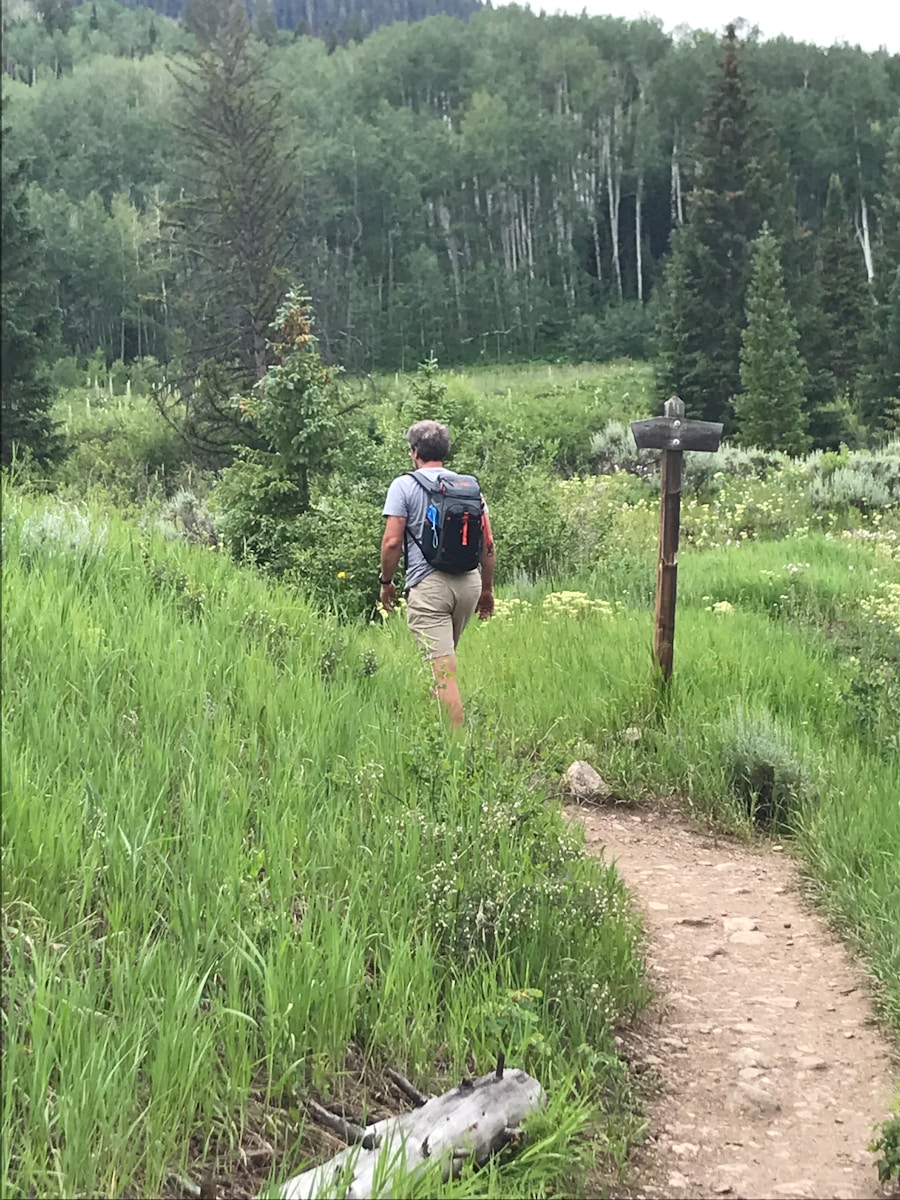
Your body provides important information that a GPS pace number cannot. Heavy breathing on a steep climb can be normal, but your effort should still make sense for the length and difficulty of the route.
Persistent pain, unusual weakness, dizziness, worsening coordination, or an effort level you cannot recover from after slowing down are reasons to reassess the hike. Fatigue also affects footing and decision-making, so there is little benefit in forcing a target pace after your movement becomes sloppy.
Warning: Stop strenuous activity if you develop concerning symptoms such as chest pressure or pain, unusual or extreme shortness of breath, dizziness, confusion, or an abnormal level of exhaustion. The American Heart Association recommends seeking appropriate medical help for warning signs during or after exercise.
If you have a heart or lung condition, significant joint problems, another condition that affects exercise tolerance, or concerns about starting a strenuous training program, discuss your plans with a qualified healthcare professional.
Utilizing Proper Gear
| Gear Factor | How It Can Affect Your Pace | Practical Approach |
|---|---|---|
| Footwear | Poor fit, inadequate traction, or footwear unsuited to conditions can make walking uncomfortable or less secure. | Choose comfortable footwear with traction appropriate to the trail and conditions. |
| Backpack load | More carried mass increases the energy cost of walking and can reduce sustainable speed. | Carry what you need for safety, but avoid unnecessary weight and train with the load you expect to carry. |
| Clothing and weather protection | Heat, cold, rain, wind, and wet clothing can change both comfort and safe travel speed. | Check conditions and carry layers appropriate to the environment. |
Footwear matters, but avoid the simplistic idea that one shoe category automatically prevents injuries. The National Park Service Hike Smart guidance recommends proper walking footwear suited to the route. Comfort, fit, traction, trail conditions, weather, and the load you are carrying all matter.
Pack weight matters as well. Research on loaded walking shows that the metabolic cost of walking rises as carried load increases. That does not translate into one universal “seconds per mile per pound” rule, so the most reliable method is to practice with approximately the load you will use on the real hike.
Moisture-managing clothing, sun protection, rain layers, trekking poles where appropriate, and adequate food and water can also make it easier to maintain a safe, steady rhythm.
Practicing Breathing Techniques
You do not need to force a fixed breathing pattern such as inhaling for exactly three steps and exhaling for two. Your breathing will naturally change with slope, speed, altitude, temperature, and fatigue.
Instead, aim for relaxed, continuous breathing and use it as an effort gauge. On a moderate climb, you may be breathing noticeably harder but should generally still be able to speak. If you cannot get out more than a few words, you have moved into a more vigorous effort and may need to slow down if the climb is long.
On steep sections, shortening your stride often helps more than trying to preserve your flat-ground speed. A slower but continuous climbing rhythm can be more sustainable than repeatedly surging and stopping.
Finding the Right Terrain

Terrain is one of the biggest reasons hiking speeds vary. Do not judge difficulty by mileage alone.
A trail can slow you because of:
- Elevation gain: Climbing requires more work than level walking.
- Steep descents: Downhill travel may be faster on easy ground but can become slow when footing is loose, wet, rocky, icy, or exposed.
- Roots and rocks: Technical terrain requires shorter steps and more attention to foot placement.
- Mud, sand, snow, or scree: Unstable footing can increase effort while reducing speed.
- Route finding: Junctions, faint trails, and off-trail navigation add nonwalking time.
- Stream crossings or obstacles: These can add substantial delays that an average mph estimate will miss.
This is why a flat training walk should not be used by itself to predict the time needed for a mountain route.
Altitude Can Change Your Sustainable Pace
At high elevation, lower oxygen availability can reduce exercise performance. The CDC Yellow Book notes that acute acclimatization takes time and that maximum exercise performance remains lower at high altitude than at low altitude.
Any unacclimatized traveler sleeping at roughly 8,000 feet or higher can be at risk for altitude illness. Headache, nausea, unusual fatigue, dizziness, and worsening symptoms deserve attention rather than an attempt to maintain your normal low-elevation pace.
Warning: Do not continue ascending to a higher sleeping elevation when symptoms of altitude illness are present. CDC guidance recommends descent if symptoms worsen despite rest at the same elevation.
Estimating How Long a Hike Will Take
Start with your personal moving pace from similar terrain:
Estimated moving time = route distance ÷ expected moving speed
If you normally hike comparable terrain at 2 mph and the route is 8 miles, the simplest starting estimate is 4 hours of movement.
Then add time for factors the basic calculation cannot capture:
- significant climbing;
- slow or technical descents;
- food and water stops;
- navigation;
- photos and viewpoints;
- group regrouping;
- weather;
- stream crossings or other obstacles.
The National Park Service advises hikers to track both time and distance and notes that an uphill direction may take at least twice as long as the downhill direction on some hikes.
Always build in a buffer rather than planning around the fastest time you have ever recorded.
Pro Tip: Set a turnaround time before you start. If you are behind schedule when that time arrives, turning around is usually smarter than trying to “make up” time by rushing difficult terrain.
Incorporating Interval Training
Interval training can improve cardiovascular fitness, but you do not need to turn every hike into a high-intensity workout. Build a basic activity habit first, then add harder efforts gradually.
A simple hiking-specific session might alternate a short brisk uphill effort with an easier walking recovery. Keep the harder section controlled enough that your form remains good, recover before repeating it, and avoid making every training day intense.
For general health and fitness, current U.S. physical activity guidance recommends that adults work toward 150 to 300 minutes of moderate-intensity aerobic activity each week plus muscle-strengthening activity on at least two days per week.
Hiking itself can contribute to aerobic activity. Strength work for the legs, hips, and trunk can help prepare you for climbing, descending, and carrying a pack.
Useful Strength Exercises for Hikers
- Squats or sit-to-stands.
- Step-ups.
- Split squats or lunges if comfortable.
- Calf raises.
- Hip-hinge exercises.
- Rows and loaded carries for pack-supporting strength.
- Core stability exercises.
Progress resistance and hiking volume gradually rather than making large jumps in distance, climbing, load, and intensity at the same time.
Maintaining a Consistent Routine
Consistency usually improves hiking performance more reliably than occasional extreme workouts. Train often enough that walking, climbing, and carrying a pack feel familiar.
A simple week might include:
- One longer easy walk or hike: Build time on your feet.
- One hill-focused session: Practice steady climbing without racing.
- Two strength sessions: Train major muscle groups, especially legs and hips.
- Easy movement or recovery: Walk, cycle, swim, or use another activity you enjoy.
As your fitness improves, repeat a familiar benchmark trail occasionally. Look at moving time, total time, elevation, perceived effort, and how you feel afterward. A successful improvement may mean completing the same trail with less effort even before the GPS shows a dramatic speed increase.
Trip timing matters beyond your raw walking speed. Weather, daylight, season, and destination conditions can change how ambitious a hiking day should be. If your hikes are part of a larger island trip, this existing guide to the best time to travel to Hawaii can help with broader seasonal planning.
Hiking Pace Safety: Weather, Heat, Groups, and Turnaround Time
A pace that feels comfortable in cool weather may be too aggressive in heat, direct sun, or high humidity. Slow down when conditions increase physiological strain, and carry enough water and food for the route and environment.
Water needs are not identical on every hike. As an example of how conditions matter, Saguaro National Park advises hikers in its hot, dry desert conditions to drink about one quart of water per hour of hiking. That is location-specific guidance, not a universal prescription for every climate.
When hiking with other people, pace should also reflect the group. The National Park Service recommends letting the slowest hiker set the pace and keeping the group together.
Before leaving the trailhead:
- Check weather and current trail conditions.
- Know the route distance and elevation profile.
- Tell someone where you are going and when you expect to return when appropriate.
- Know when darkness is expected.
- Set a turnaround time.
- Carry equipment appropriate to the conditions.
Your best hiking pace is ultimately the one that gets you through the entire route with enough energy, daylight, water, concentration, and safety margin to finish well.
Frequently Asked Questions
What is a good hiking pace?
A good hiking pace is a speed you can maintain safely and comfortably for the full route. It should leave enough energy for later climbs, descents, changing conditions, and the return trip rather than forcing you to stop repeatedly because you started too fast.
How do I determine my hiking pace?
Measure the distance and moving time on a representative hike, then divide distance by moving time. For example, 6 miles covered in 3 hours of movement equals a 2 mph moving pace. Also record total elapsed time so you know how much rest and other stops add to your trip.
What factors can affect my hiking pace?
Important factors include elevation gain, steep descents, rocks and roots, mud or snow, pack weight, fitness, fatigue, heat, altitude, navigation, weather, group ability, and the number and length of your stops.
What is a recommended average hiking pace?
There is no single correct average for every trail. For planning purposes, the National Park Service at Point Reyes advises allowing about 2 mph for an average hiker, excluding stops. Use a slower estimate for steep, technical, high-altitude, or heavily loaded hikes and refine the number using your own trail history.
How can I improve my hiking pace?
Hike or walk consistently, build your aerobic base, strengthen your legs and hips, practice hills, train with the pack you expect to carry, and add controlled intervals only after you have a basic fitness foundation. Increase training gradually rather than trying to hike every route at maximum effort.
Does elevation gain affect hiking speed?
Yes. Climbing increases the physical work required and normally reduces horizontal speed. Steep or technical descents can also be slow, so distance alone is not enough to predict how long a mountain hike will take.
What is the difference between moving pace and overall hiking pace?
Moving pace uses only the time you are actually walking. Overall pace uses the full time from start to finish, including rest, food, photos, navigation, and other stops. Overall pace is usually the better figure for planning daylight and turnaround times.
Sources
- National Park Service — Point Reyes Hiking — average-hiker planning pace and trail-safety guidance.
- National Park Service — Hike Smart — group pace, time, distance, turnaround planning, footwear, and hiking preparation.
- CDC — Measuring Physical Activity Intensity — talk test and moderate-versus-vigorous exercise intensity.
- U.S. Department of Health and Human Services — Physical Activity Guidelines — current aerobic and muscle-strengthening recommendations.
- CDC Yellow Book — High-Altitude Travel and Altitude Illness — acclimatization, altitude performance, symptoms, and descent guidance.
- Bastien et al., European Journal of Applied Physiology — effect of carried load and walking speed on energy cost.

