
Last Updated on September 10, 2026 by Daniel Globe
Hiking combines exercise, time outdoors, and exploration in one simple activity. A walk on a gentle nature trail can be accessible to a beginner, while steep mountain routes can challenge experienced hikers for hours or days. The benefits can include better cardiovascular fitness, stronger muscles, improved balance, stress relief, social connection, and more time engaged with the natural world.
Quick Answer
Hiking can improve cardiovascular fitness, strengthen the legs and core, support bone health and balance, and help with weight management. Time spent walking in nature may also reduce stress and support mood. Group hikes can build social connections, while responsible hiking encourages greater awareness of trails, wildlife, and conservation.
Key Takeaways
- Hiking is an aerobic activity that can support heart health, endurance, balance, bone health, and muscular fitness.
- Hiking intensity changes with pace, elevation, terrain, pack weight, and personal fitness, so calorie-burn estimates are only estimates.
- Physical activity and time in nature can support mood and reduce feelings of stress and anxiety, although hiking is not a substitute for professional mental-health care.
- Hiking with friends, family, clubs, or community groups can create opportunities for conversation, cooperation, and stronger relationships.
- Hiking is not automatically environmentally beneficial. Staying on durable trails, packing out waste, respecting wildlife, and choosing lower-impact transportation when practical can reduce your impact.
- Safe hiking starts with the right trail, current weather and closure information, a trip plan, proper equipment, and a willingness to turn around when conditions are unsafe.
The Physical Health Benefits of Hiking
Hiking is primarily an aerobic activity, but uneven terrain and elevation changes make it different from walking on a flat sidewalk or treadmill. Hills make the legs work harder, while rocks, roots, and changing surfaces challenge balance and coordination. Carrying a pack or using trekking poles can involve additional muscle groups.
The Centers for Disease Control and Prevention reports that regular physical activity can improve heart health, bone health, balance, sleep, and weight management while lowering the long-term risk of several chronic diseases.
Cardiovascular Fitness and Endurance
Walking uphill raises your heart rate and breathing rate. Over time, regular aerobic activity can improve endurance and make everyday activities such as climbing stairs or walking longer distances feel easier.
For adults, the U.S. Physical Activity Guidelines recommend at least 150 to 300 minutes of moderate-intensity aerobic activity each week, or 75 to 150 minutes of vigorous activity, plus muscle-strengthening activity on at least two days. A hike can count toward the aerobic portion when its intensity is high enough.
Adults can work toward at least 150 minutes of moderate-intensity aerobic activity each week, and hiking can be one enjoyable way to accumulate that activity.
Muscle Strength, Balance, and Coordination
Hiking works the calves, quadriceps, hamstrings, glutes, hips, and core. Climbing places greater demand on the legs, while descending requires controlled braking from many of the same muscles. Uneven ground also forces the body to make frequent small balance corrections.
That does not mean hiking replaces a complete strength program. Hiking can build muscular endurance and functional strength, but dedicated resistance training is still useful for working major muscle groups through a wider range of movements.
Bone Health
Walking and hiking are weight-bearing activities. Regular physical activity supports bone health, and federal guidance notes that staying active can help slow the decline in bone health that often occurs with age. Hiking should not, however, be treated as a guaranteed way to increase bone-mineral density or as a replacement for osteoporosis treatment.
Calories and Weight Management
Hiking can contribute to energy expenditure, but there is no single accurate “calories burned per hour” number for everyone. Body weight, speed, elevation, surface, temperature, pack weight, and fitness all change the result.
The 2024 Compendium of Physical Activities illustrates the difference. Slow hiking through fields and hillsides is listed at a lower metabolic intensity than normal-paced hiking, cross-country hiking, steep hill climbing, or hiking with a daypack.
Note: Fitness watches and online calorie calculators are useful for rough comparisons, but their numbers should not be treated as exact measurements of energy expenditure.
The Mental Health Benefits of Hiking
Hiking combines two activities that can support mental well-being: physical movement and time outdoors. The benefit will not feel identical for everyone, but both exercise and nature exposure have been studied for their effects on mood, anxiety, attention, and stress.
Disconnecting from Daily Life
A trail can give the mind a break from traffic, screens, work notifications, and everyday routines. Natural sounds, changing scenery, and the need to pay attention to the path can shift attention toward the present moment.
Physical activity itself can reduce short-term feelings of anxiety, according to the CDC. Nature exposure may add another restorative element, although the size of that effect varies between individuals and studies.
Improved Mood and Well-Being
One frequently cited controlled study published in the Proceedings of the National Academy of Sciences compared a 90-minute walk in a natural environment with a walk in an urban environment. Participants in the nature-walk group reported less rumination, meaning repetitive negative thought.
That finding does not mean every hike treats depression or anxiety. Hiking can be a useful part of a healthy routine, but persistent or severe mental-health symptoms deserve appropriate professional care.
Mindfulness, Creativity, and Emotional Resilience
Walking has a steady rhythm that many people find calming. On a trail, attention moves between breathing, footsteps, terrain, weather, wildlife, and scenery. That can make hiking feel similar to a moving mindfulness practice.
Some hikers also find that stepping away from familiar surroundings gives them space to think through problems or return to work with a clearer perspective. Those experiences are personal rather than guaranteed outcomes, but they help explain why many people value hiking for more than exercise.
Pro Tip: For a more restorative hike, put unnecessary notifications on silent and spend part of the walk paying attention to sounds, smells, temperature, plants, and the feel of the trail underfoot.
The Social Benefits of Hiking
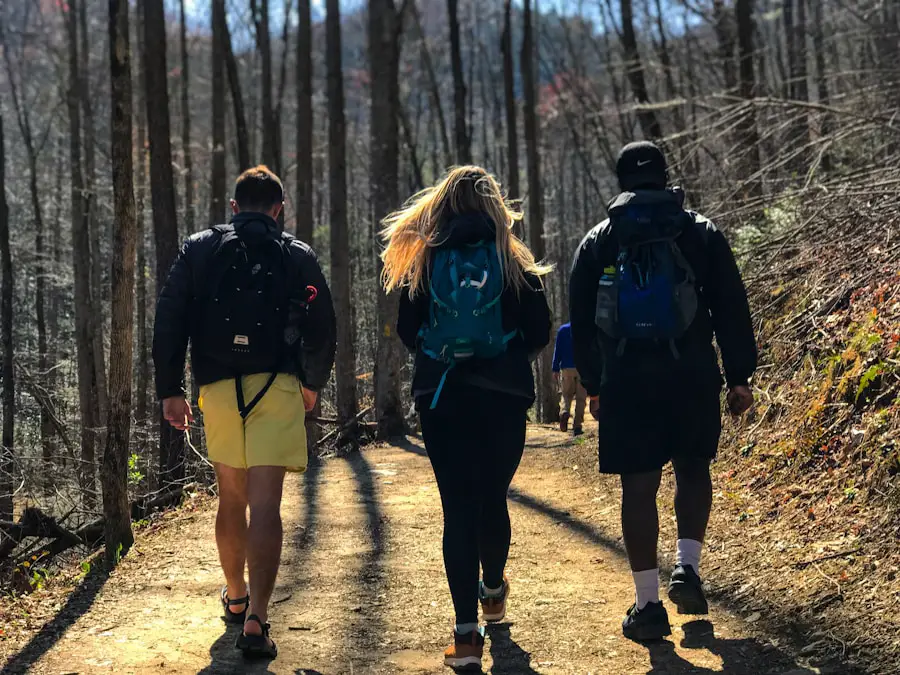
Hiking can be an individual activity, but it also provides an easy setting for social connection. Friends and family can spend several hours together without many of the distractions that compete for attention at home.
Group hikes encourage conversation, shared decision-making, and cooperation. Hikers may help one another navigate, set a comfortable pace, cross difficult terrain, or decide when conditions justify turning around.
Hiking clubs, guided walks, volunteer trail groups, and local outdoor organizations can also help people meet others who share an interest in nature and physical activity. A recent research review of outdoor hiking literature reported benefits related to social interaction and community cohesion.
Companions can add a layer of practical support as well. If someone becomes injured, ill, lost, or exhausted, another person may be able to assist or seek help. That does not eliminate risk, so every member of a group should still understand the route and basic emergency plan.
The Environmental Benefits and Impacts of Hiking
Hiking can deepen a person’s appreciation for natural places, but hiking itself is not automatically good for the environment. Driving long distances to a trailhead creates emissions, and poorly managed recreation can damage vegetation, widen trails, disturb wildlife, contaminate water, and leave waste behind.
| Environmental Topic | What Responsible Hiking Can Do |
| Transportation and Emissions | Walking the trail itself has little direct fuel use, but travel to the trailhead still matters. Local hikes, carpooling, public transportation, or biking to a trailhead can reduce trip-related emissions when those options are practical. |
| Natural Habitats | Using established trails and durable surfaces helps concentrate foot traffic instead of spreading trampling across vegetation and sensitive habitat. |
| Water Protection | Hiking does not inherently conserve water, but proper sanitation, waste disposal, and campsite practices can reduce contamination of streams, lakes, and watersheds. |
| Air Quality | A hike does not directly improve regional air quality. Choosing lower-emission transportation to recreation areas can reduce the transportation impact of an outing. |
| Waste | Packing out food wrappers, tissues, hygiene products, and other trash prevents litter and supports cleaner recreation areas. |
How Hiking Can Encourage Stewardship
Spending time in forests, deserts, mountains, wetlands, and other natural areas can make environmental issues feel more immediate. Hikers see erosion, damaged vegetation, litter, drought effects, invasive species, wildfire damage, and habitat restoration firsthand.
That experience may motivate some people to volunteer for trail work, donate to conservation organizations, participate in cleanups, or support responsible land management. These benefits come from the choices people make because of their outdoor experiences rather than from hiking automatically improving the environment.
Follow Leave No Trace Principles
The National Park Service’s Leave No Trace guidance summarizes seven practices that help visitors minimize their impact:
- Plan ahead and prepare.
- Travel and camp on durable surfaces.
- Dispose of waste properly.
- Leave what you find.
- Minimize campfire impacts.
- Respect wildlife.
- Be considerate of other visitors.
Note: Rules differ by park, forest, wilderness area, season, and ecosystem. Always follow local regulations even when they are stricter than general Leave No Trace guidance.
The Spiritual and Personal Benefits of Hiking
For some people, hiking has a personal or spiritual value that goes beyond exercise. A quiet forest, broad mountain view, desert sunrise, or remote coastline can create a strong sense of awe and perspective.
Time away from daily distractions may also encourage self-reflection. Solo hikers often use that quiet time to think about goals, relationships, beliefs, or important decisions. Others experience the same feeling while hiking with friends or family.
These experiences are subjective. Hiking does not produce a spiritual response in everyone, and no particular belief system is required. For some hikers, the benefit is simply having uninterrupted time to think. For others, time in nature becomes part of a personal spiritual practice or meaningful tradition.
Tips for a Safe and Enjoyable Hiking Experience
The benefits of hiking are easier to enjoy when the trip matches your experience, fitness, equipment, and current conditions. Even a short day hike can become serious when someone gets lost, weather changes quickly, daylight runs out, or an injury slows the group.
Products Worth Considering

BE PREPARED FOR THE WILD - 4 camping gear must-haves in just one bracelet with the fire starter (striker and ferro rod), compass, loud emergency whistle, and 12 feet of military-grade paracord

COMPLETE 100-PIECE EMERGENCY KIT: Stay prepared for cuts, scrapes, burns, sprains, and outdoor emergencies with essential medical supplies packed into one compact first aid kit for home, travel, camping, hiking, and boating.

VERSATILE ESSENTIALS: Packed with commonly used first aid supplies like latex-free bandages, antibiotic ointment, and antiseptic wipes, this first aid tin is ideal for quick, on-the-go care during emergencies
Choosing the Right Trail
Beginners should start with a short, well-marked route with modest elevation gain and an easy way to turn around. Look at more than mileage. A three-mile mountain trail with steep climbing, loose rock, heat, or high altitude can be harder than a much longer paved path.
Check the managing park or land agency’s description for distance, elevation, trail surface, seasonal conditions, permits, water availability, and current closures.
Build Up Gradually
There is no need to begin with an all-day mountain hike. Start with a distance you can comfortably walk, then gradually add time, elevation, or more difficult terrain. Increasing every factor at once makes fatigue and overuse problems more likely.
People who have been inactive or who have chronic medical conditions may benefit from discussing strenuous exercise plans with a qualified healthcare professional.
Pre-Hike Checks
Before leaving, check the weather forecast and current trail or park alerts. Consider temperature, thunderstorms, flooding, snow, ice, wildfire conditions, extreme heat, and how much daylight remains.
Tell a trusted person where you are going, your planned route, who is with you, where your vehicle will be, and when you expect to return. The National Park Service recommends leaving a trip plan because it can provide useful information to rescuers if something goes wrong.
Carry the Ten Essentials
The exact gear should match the trail and conditions, but the National Park Service groups basic emergency equipment into the following Ten Essentials:
- Navigation: map, compass, GPS, or another appropriate navigation system.
- Sun protection: sunglasses, sunscreen, and protective clothing or a hat.
- Insulation: extra clothing for changing temperatures and weather.
- Illumination: headlamp or flashlight, ideally with backup power.
- First aid: supplies appropriate for the group and trip.
- Fire: a safe emergency fire-starting method where fires are legal and appropriate.
- Repair kit and tools: items suited to your gear and route.
- Nutrition: enough food plus extra for unexpected delays.
- Hydration: adequate water and, when necessary, a way to treat additional water.
- Emergency shelter: protection appropriate for an unexpected delay or night outside.
Do Not Depend Only on Cell Service
Remote trails may have weak or nonexistent cellular coverage. Downloading an offline map can help, but electronics can fail or run out of power. For backcountry travel, carry navigation appropriate for the route and know how to use it.
Satellite communication or a personal locator device may add another layer of protection on remote trips, but it does not replace preparation or guarantee immediate rescue.
Water and Food
Bring enough drinking water for the planned conditions and enough food to maintain energy. Hot weather, altitude, long climbs, and long outings can increase fluid needs.
Do not assume a clear mountain stream is safe to drink. If your trip depends on natural water sources, research those sources before leaving and use an appropriate treatment method.
Know When to Turn Around
A summit, waterfall, overlook, or mileage goal is never more important than getting home safely. Turn around when weather deteriorates, someone becomes unusually exhausted or ill, navigation becomes uncertain, the trail exceeds the group’s skill level, or reaching the destination would leave too little daylight for a safe return.
Warning: Hiking conditions can change quickly. Check official local alerts and weather before every trip, obey closures, and do not continue into conditions that exceed your experience or equipment. Do not rely on this general guide for trail-specific avalanche, wildfire, flood, lightning, wildlife, or medical advice.
Hiking Gear Essentials
Good hiking gear does not have to be expensive or highly technical. It does need to fit properly and match the conditions.
Products Worth Considering

EVERYDAY PERFORMANCE: With a fabric weight of 170 GSM, this active base layer set is built for breathable performance. It’s a sleek, streamlined alternative to our heavyweight winter fleece thermal set - ideal for active days and milder conditions. Lightweight and breathable, the soft inside feel and smooth exterior finish keeps you comfortable and polished from morning to night.

【Compression Support & Comfort】- This men compression base layer feature delivers a comfortable,locked-in feel that wrap your body for elbow and arm,hip,knee and lower leg muscles support.The pressure without restriction cuts down on muscle vibration,boost blood circulation to your hard-working muscles, helping reduce muscle fatigue.

[Stay Warm All Day] Our men's thermal underwear features excellent heat retention. The fleece lining creates an insulating barrier that traps heat and blocks cold, keeping you warm and comfortable even in cold weather—your soft, warm base layer.
Footwear and Socks
Wear hiking shoes, trail shoes, or boots that fit well and provide suitable traction for the terrain. Heavy boots are not necessary for every hike. A maintained, dry day trail may be comfortable in lightweight hiking or trail-running shoes, while rough terrain, snow, mud, cold, or a heavy load may justify more protective footwear.
Wear socks that manage moisture and fit without bunching. Poor fit, friction, trapped moisture, and long descents can all contribute to blisters.
Layered Clothing
Layers make it easier to adjust as you warm up, cool down, gain elevation, or encounter wind and rain. A basic system may include a moisture-managing base layer, an insulating layer when needed, and weather protection appropriate for the forecast.
Avoid choosing clothing only for the temperature at the trailhead. Conditions can be much colder or windier at higher elevations.
Backpack and Navigation
Use a pack that comfortably holds water, food, emergency items, clothing, navigation tools, and other equipment without excessive bouncing or pressure points.
A smartphone GPS app can be convenient, but carry enough battery and an appropriate backup for routes where getting lost would have serious consequences.
Sun Protection
Bring sunscreen, sunglasses, and a hat or other protective clothing when UV exposure is significant. Sun exposure can be strong even when the air feels cool, particularly at elevation or around snow and water.
Trekking Poles
Trekking poles are optional, but some hikers find them helpful for balance, steep climbs, descents, stream crossings, or reducing the effort of carrying a pack. They should be adjusted and used properly rather than treated as a substitute for careful foot placement.
Exploring Different Types of Hiking Trails
Hiking includes far more than steep mountain routes. Choosing the right type of trail is one of the easiest ways to make an outing safe, comfortable, and enjoyable.
Products Worth Considering

【 CUTE SIGNS 】 Size: 4" W X 16" L / 10cm x 40cm. Material:High-quality metal tin.

Pocket Naturalist Animal Tracks by James Kavanagh - 1583550720

Large Amount for You to Use: you will receive 40 pieces of trail markers in 4 colors, 10 each in blue, red, green, and yellow, which can make different signs on different roads
Easy and Family-Friendly Trails
Short loops, paved paths, boardwalks, and relatively flat nature trails are useful for beginners, families, older adults, and anyone who wants a less strenuous outing. Some parks also provide accessible trails designed for wheelchairs or other mobility devices.
Nature and Interpretive Trails
Interpretive trails often include signs explaining geology, plants, wildlife, local history, or cultural resources. They are a good choice for hikers who want to learn about an area rather than focus primarily on distance or elevation.
Mountain and Rugged Day Hikes
Mountain trails can include steep climbing, rocky footing, exposure, rapid weather changes, and significant elevation gain. Some routes remain ordinary hiking trails, while others cross into scrambling or technical terrain that requires additional skills and equipment. Read the actual route description rather than judging difficulty from mileage alone.
Backcountry Trails
Backcountry routes travel farther from roads, buildings, and immediate assistance. They may require stronger navigation skills, more emergency equipment, water treatment, and greater self-sufficiency. Cell service should never be assumed.
Long-Distance Trails
Routes such as the Appalachian Trail and Pacific Crest Trail allow hikers to travel for days, weeks, or months. They can also be enjoyed in shorter sections. Multi-day hiking requires additional planning for food, shelter, water, weather, permits, resupply, foot care, and overnight regulations.
Each type of trail offers different challenges and rewards. Matching the route to your ability is more important than choosing the longest, steepest, or most famous trail.
If you enjoy hiking, you may also be interested in exploring the world with a travel scooter. Check out this article on the best travel scooters for convenient and comfortable travel experiences. Whether you’re visiting trails with accessible viewpoints or exploring a new city, the right mobility option can make travel more comfortable.
Love travel? Join Our Facebook Community
Frequently Asked Questions
What is hiking?
Hiking is recreational walking outdoors, usually on trails or routes through natural areas. It can range from a short, flat nature walk to a strenuous backcountry or mountain trip lasting several days.
What are the benefits of hiking?
Hiking can improve cardiovascular fitness, muscular endurance, balance, coordination, and bone health. It can also support weight management and provide opportunities for stress relief, time in nature, social connection, and personal reflection.
Does hiking count as cardio?
Yes. Hiking can count as aerobic activity when it raises your heart and breathing rate. The intensity depends on your pace, fitness, terrain, elevation, and pack weight. Steep or fast hiking can be considerably more strenuous than an easy walk.
What equipment do I need for hiking?
Basic equipment includes suitable footwear, weather-appropriate clothing, water, food, navigation, sun protection, first-aid supplies, illumination, and emergency items appropriate for the trail. The National Park Service recommends carrying the Ten Essentials and adjusting your gear for the route and conditions.
How do I prepare for a hike?
Research the route, distance, elevation, terrain, current closures, weather, water availability, and daylight. Pack the required supplies, leave your route and expected return time with someone you trust, and choose a trail that fits the least-experienced member of your group.
How often should I hike?
There is no required number of hikes per week. Hiking can contribute toward the general adult goal of at least 150 minutes of moderate-intensity aerobic activity per week. Beginners can start with shorter outings and gradually increase distance, elevation, or difficulty as fitness improves.
What are some popular hiking destinations?
Popular destinations include national and state parks, mountain ranges, forests, deserts, and coastal areas. Well-known examples include trails in Yosemite National Park and Grand Canyon National Park, along with long-distance routes such as the Appalachian Trail and Pacific Crest Trail. The Swiss Alps also offer an extensive network of hiking routes.
Is hiking safe for beginners?
Hiking can be a good activity for beginners when the trail matches their fitness and experience. Start with a short, well-marked route, check conditions, carry essential supplies, tell someone your plan, and turn around if weather, fatigue, navigation, or terrain becomes unsafe.
Sources
- Centers for Disease Control and Prevention — Health Benefits of Physical Activity for Adults — cardiovascular, bone, balance, weight, and mental-health benefits of regular physical activity.
- U.S. Office of Disease Prevention and Health Promotion — Move Your Way Activity Planner — current adult aerobic and muscle-strengthening activity targets.
- 2024 Compendium of Physical Activities — Walking and Hiking — metabolic intensity estimates for hiking, hill climbing, backpacking, and walking.
- Bratman et al., Proceedings of the National Academy of Sciences — controlled research on nature walking and rumination.
- U.S. National Park Service — Hike Smart — trip planning, emergency preparation, communication, weather, and hiking safety.
- U.S. National Park Service — Leave No Trace Seven Principles — minimizing recreation impacts on natural areas.
