

Last Updated on July 27, 2026 by Daniel Globe
A notarized travel letter is a formal document often required when a minor child travels internationally or domestically without one or both parents or legal guardians. This letter serves as an official declaration of consent, confirming that the accompanying adult has permission to transport the child across state or international borders and make decisions regarding their welfare during the trip.
Quick Answer
A notarized travel letter (or child travel consent form) grants permission for a minor to travel without one or both legal parents or guardians. While not strictly mandatory for all domestic flights, border control agencies like U.S. Customs and Border Protection (CBP) strongly recommend it for international travel to prevent international child abduction and custody disputes.
Key Takeaways
- A notarized travel letter verifies parental consent when a minor travels alone, with one parent, or with a third-party adult (such as a relative or teacher).
- Border officials, cruise lines, and airlines can demand proof of consent and deny entry or boarding if proper documentation is absent.
- Essential details include child identification, travel itinerary, accompanying adult details, emergency contact info, and medical authorization.
- Both non-accompanying parents or guardians should sign the document in front of a licensed notary public (in-person or via legal Remote Online Notarization).
At a Glance
| Time Required | 15 to 30 minutes (Drafting & Notarization) |
| Difficulty | Easy |
| Tools Needed | Consent Form Template, Government ID, Notary Public |
| Cost | $5 – $25 (Standard notary fee) |
The notarization process involves a official notary public who verifies the identities of the signatories and ensures that the document is executed voluntarily and without coercion. This adds an essential layer of authenticity and legal authority to the letter, making it far more likely to be accepted by commercial airlines, border control officers, and international immigration authorities.
A typical travel consent letter includes key particulars such as the minor’s legal name, birth date, passport number, and complete travel itinerary. By having this document notarized in advance, parents proactively eliminate administrative complications, custody inquiries, or border delays during transit.
Disclosure: As an Amazon Associate I earn from qualifying purchases. Some links on this page are affiliate links, at no extra cost to you.
When is a Notarized Travel Letter Necessary?
A notarized travel letter becomes critical in several travel scenarios involving minors under the age of 18. According to guidelines set by U.S. Customs and Border Protection (CBP), border officers have full authority to request written consent from non-traveling parents when a child enters or leaves the country.
Warning: Border officials and cruise personnel are strictly trained to identify potential child abduction or custody violations. Traveling internationally without a notarized travel letter when accompanied by only one parent or a third party can lead to border detention or refused entry.
Common scenarios requiring a notarized consent form include:
- Travel with One Parent: If parents are married, separated, or divorced, and only one parent accompanies the minor.
- Travel with Grandparents or Relatives: When a minor travels with non-guardian family members.
- Group, School, or Religious Trips: When a minor travels with teachers, coaches, or group leaders.
- Unaccompanied Minor Travel: When a child flies solo using airline unaccompanied minor services.
Products Worth Considering
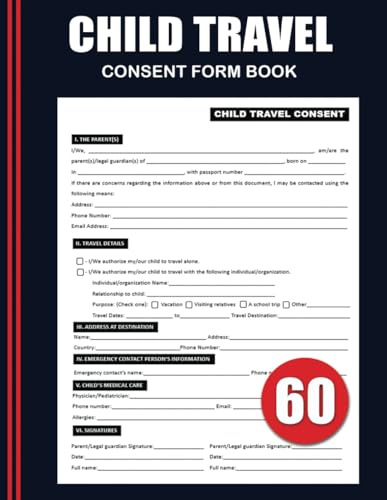

Personalized Child ID is made to order. Made of durable plastic (PVC) material with full color print on the front side and black color on the back side. Will not fade or crack
Special Custody Circumstances & Sole Custody
If one parent has sole legal custody, the other parent is deceased, or one parent’s legal rights have been terminated, standard consent letters may not apply. In these situations, the traveling parent should carry legal supporting documentation alongside or in place of a second parent’s signature:
- A court order granting sole legal custody.
- A certified copy of the child’s birth certificate listing only one parent.
- A certified copy of the deceased parent’s death certificate.
- A judicial order permitting international travel with the minor.
Who Should Write the Notarized Travel Letter?

The legal responsibility of drafting and executing a notarized travel letter falls on the parent(s) or legal guardian(s) who are not physically accompanying the child on the trip. This document must clearly define their explicit permission for the minor to travel under specified conditions.
If both parents share joint custody, both should sign the document in the presence of a notary public, even if one parent is accompanying the minor on the journey. This joint authorization mitigates potential disputes at immigration enforcement counters.
When a child travels with extended family members, friends, or educational organizations, both primary parents or legal guardians should execute the letter. Furthermore, if stepparents or court-appointed guardians share legal authority, including their clear consent provides comprehensive legal coverage.
What Information Should be Included in the Notarized Travel Letter?
To satisfy international border standards, a consent form must contain specific legal and logistical details. Below is an overview of essential document fields:
| Information | Description |
|---|---|
| Traveler’s Full Name | The full legal name of the child as rendered on their passport or birth certificate. |
| Traveler’s Date of Birth | The exact date and place of birth of the minor child. |
| Travel Dates & Itinerary | Departure date, return date, flight/vessel numbers, and hotel/destination addresses. |
| Accompanying Adult | Full legal name, relationship to child, and passport details of the traveling adult. |
| Parental Contact Info | 24/7 phone numbers and physical address of the non-traveling parent(s). |
| Notary Public Block | Official notary signature, state seal, registration number, and commission expiration date. |
Pro Tip: Always include an explicit Emergency Medical Consent Clause in the letter. This grants the accompanying adult legal authority to authorize emergency medical care, blood transfusions, or surgical interventions if parents cannot be reached immediately.
How to Get a Notarized Travel Letter?
Executing a legally valid minor travel consent form involves a straightforward multi-step process:
- Draft the Document: Use an established legal template or draft a clear statement identifying the minor, accompanying parties, travel dates, and destination details.
- Review for Accuracy: Ensure the minor’s name and passport number match their official passport page exactly.
- Locate a Notary Public: Notaries are accessible at local bank branches, public libraries, UPS shipping stores, real estate agencies, or via certified Remote Online Notarization (RON) platforms certified by the National Notary Association.
- Sign in Person (or via Verified Online Session): Both non-traveling parents must appear before the notary, present valid government-issued photo IDs (passports or driver’s licenses), and sign the document.
- Affix Notarial Stamp: The notary verifies signatures, affixes their official seal or stamp, and enters the act into their official journal.
What to Do if Traveling Internationally with a Notarized Travel Letter?

Required Documents
Beyond carrying the physical notarized consent form, traveling parents or guardians should carry a dedicated travel binder containing physical duplicates of all key identity documents:
- Original valid passport of the minor (and required transit/destination visas).
- Certified copy of the child’s official birth certificate.
- Photocopies of the non-traveling parent’s government-issued driver’s license or passport.
Researching Entry Requirements
International rules vary widely. Certain sovereign nations enforce strict entry and exit conditions for minors traveling with a single parent or non-parent legal guardian. Consult foreign consulate websites or the U.S. Department of State International Travel Portal prior to departure.
Note: Countries such as Mexico, South Africa, and several South American nations may require sworn consent forms translated into their official national language or stamped with an legal Hague Apostille certificate.
Avoiding Delays and Complications
Keep consent documents stored in your carry-on bag rather than checked luggage. Presenting notarized paperwork immediately upon request at customs counter checkpoints prevents unnecessary questioning, room transfers, or missed connecting flights.
What are the Risks of Not Having a Notarized Travel Letter?
Traveling internationally without an executed consent letter exposes families to significant logistical, financial, and legal risks:
“Failure to present adequate parental consent documentation at international departure or entry gates is one of the top administrative reasons families are denied boarding or held at border checkpoints.”
- Denied Flight Boarding: Commercial airlines strictly enforce international child safety regulations and can refuse ticketed boarding without consent forms.
- Customs Detention: Foreign border agents may hold the traveling adult and minor in immigration holding areas while attempting to contact non-present parents.
- Missed Connections & Financial Loss: Flight delays caused by document verification can result in missed connections, non-refundable hotel losses, and added emergency accommodation expenses.
Frequently Asked Questions about Notarized Travel Letters
What is a notarized letter for a child to travel?
A notarized letter for a child to travel is an official legal statement signed by a minor’s non-traveling parent(s) or legal guardian(s). It authorizes the child to travel with a specified adult, alone, or with an organization, and is authenticated by a certified notary public.
When is a notarized letter required for a child to travel?
A notarized travel consent letter is typically required when a minor travels internationally without both legal parents or guardians present. This applies to single-parent travel, trips with relatives, school trips, or solo travel using airline unaccompanied minor programs.
What information should be included in a notarized travel letter?
The letter must include the child’s legal name, date of birth, passport details, accompanying adult information, complete travel dates, destination addresses, emergency parent contact details, an emergency medical consent authorization, and an official notary seal block.
Is a notarized letter always required for domestic child travel?
Domestic flights within the United States generally do not mandate a notarized letter for minor internal travel. However, carrying one remains highly recommended to prevent delays during security checks, medical emergencies, or domestic custody questions.
What additional documents should accompany a travel consent letter?
Accompanying documentation includes a certified copy of the minor’s birth certificate, valid passports, required visas, photocopies of non-traveling parents’ IDs, and relevant court custody orders or death certificates if applicable.
In conclusion, understanding what a notarized travel letter entails and its significance in various travel scenarios can help parents navigate potential challenges when traveling with minors. By ensuring that all necessary documentation is prepared and properly executed, families can enjoy smoother travels while prioritizing safety and compliance with legal requirements.
If you are planning a family trip and wondering if your child needs a notarized letter to travel, you may also be interested in reading about the best travel scooter for easy transportation during your adventures. Check out this article on the best travel scooter to ensure smooth and convenient travel for your family.
Sources
- U.S. Customs and Border Protection (CBP) — Official travel documentation requirements for minors traveling with one parent or non-parents.
- U.S. Department of State – Children & Family Travel Guidelines — Federal regulations on passport issuance and parental consent.
- National Notary Association (NNA) — Standard legal notarization procedures, identification standards, and Remote Online Notarization rules.
