

Last Updated on July 27, 2026 by Daniel Globe
Korean Air has offered in-flight WiFi since June 2023, but availability still depends on the aircraft operating your flight. The airline currently lists several WiFi-capable aircraft types and sells separate internet and messaging plans, with prices varying by flight length. A much bigger change is now underway: Korean Air has started installing Starlink equipment, with fleetwide installation targeted for the end of 2027.
Quick Answer
Yes. Korean Air currently offers paid WiFi on select aircraft, with internet passes ranging from $4.95 on domestic flights to $20.95 for a full long-haul flight. Starlink installation began in July 2026, but Korean Air had not yet announced the exact date when passengers would start using the new service.
Disclosure: As an Amazon Associate I earn from qualifying purchases. Some links on this page are affiliate links, at no extra cost to you.
Key Takeaways
Key Takeaways
- Korean Air launched in-flight WiFi on June 1, 2023, beginning with Boeing 737-8 international flights.
- Korean Air currently identifies the Boeing 737-8, 737-900ER, 787-10, Airbus A321neo, and A350-900 among aircraft types offering its existing WiFi service.
- A full-flight internet pass costs up to $20.95 on long-haul routes, while messaging-only passes start at $3.95 on Korean domestic flights.
- The current internet plan supports browsing, email, music, messaging, and video up to 480p, but video/audio calls and cloud services are restricted.
- Korean Air began installing Starlink equipment on A350-900 aircraft in July 2026, according to July 21 reporting.
- Korean Air and Asiana plan to prioritize the A350-900 and Boeing 777-300ER for Starlink and target fleetwide installation by the end of 2027.
Why In-Flight WiFi Matters
In-flight WiFi is especially useful on Korean Air’s long international flights. It can let you message family, check email, follow travel updates, or look up transportation and booking information before landing.
It can also matter when choosing between flights, but Korean Air passengers should not assume connectivity is guaranteed simply because a route normally uses a WiFi-equipped aircraft. Aircraft assignments can change, and the airline says service may sometimes be unavailable because of satellite communication problems, weather, or other operating conditions.
When Korean Air Launched In-Flight WiFi (And Which Flights Have It)

Korean Air launched its in-flight WiFi service on June 1, 2023. The first rollout covered international routes operated by Boeing 737-8 aircraft, including Gimpo–Osaka, Incheon–Fukuoka, and Incheon–Osaka. The airline said at the time that it would gradually expand connectivity to additional aircraft.
That expansion has continued. According to Korean Air’s official in-flight WiFi page, its current service is available on routes operated by aircraft such as the Boeing 737-8, Boeing 737-900ER, Boeing 787-10, Airbus A321neo, and Airbus A350-900.
That list is more useful than older information that mentions the 787-9 or suggests that all Korean Air A350 flights lack connectivity. However, aircraft type alone is not a guarantee. Korean Air recommends entering your departure and arrival cities or flight number on its WiFi page to check your flight.
Note: Korean Air was a late adopter of in-flight internet. In a 2016 APEX interview, a Korean Air technology manager said older satellite-based internet would have fallen short of the connectivity expectations of passengers accustomed to fast internet in South Korea. The airline eventually launched WiFi in 2023 as onboard technology improved.
Cost of In-Flight WiFi on Korean Air
Korean Air divides its current paid service into an Internet plan and a lower-cost Messages Only plan. Internet pricing depends on flight length, while the messaging plan is sold for the full flight.
Current Korean Air Internet Prices
| Flight Type | Full Flight | 2 Hours |
| International short-haul, 2 hours or less | $5.95 | Not listed |
| International short-haul, over 2 hours | $11.95 | Not listed |
| International medium-haul | $13.95 | $10.95 |
| International long-haul | $20.95 | $10.95 |
| Korean domestic | $4.95 | Not listed |
Messages-Only Prices
The messaging plan is intended for text messages through compatible chat apps rather than normal web browsing. Current full-flight prices are $4.95 on short- and medium-haul international flights, $5.95 on long-haul international flights, and $3.95 on Korean domestic flights. Video and photo transfers are restricted on the messaging plan.
Pro Tip: Choose the messages-only plan if you mainly need text chat. On a long-haul flight it costs $5.95 for the full flight, compared with $20.95 for the full internet plan.
Warning: Korean Air says a two-hour internet pass starts immediately after payment. The timer does not pause if you disconnect, so buy it when you are ready to use it.
Speed and Reliability of Korean Air’s Current WiFi
Korean Air does not publish a guaranteed per-passenger speed for its existing paid WiFi. A better way to judge the service is by what the airline officially allows.
The current internet plan supports web browsing, email, music, messaging, and video up to 480p. Korean Air lists video calls, audio calls, and cloud services as restricted. That makes the current system suitable for lighter internet use, but it should not be treated as a guaranteed replacement for a normal office or home broadband connection.
Korean Air also warns that WiFi may become unavailable because of satellite communication problems, bad weather, or other unexpected circumstances. Service is restricted above Syria, Israel, Cuba, and India, as well as on the North Pole route.
Note: If you must be online for time-sensitive work, download essential files before boarding. Even a WiFi-equipped aircraft can experience an outage or coverage restriction.
Korean Air’s Switch to Free Starlink WiFi
Korean Air’s next major connectivity upgrade is Starlink, SpaceX’s low-Earth-orbit satellite internet system. Korean Air announced in December 2025 that it and four other Hanjin Group airlines—Asiana Airlines, Jin Air, Air Busan, and Air Seoul—would progressively install Starlink across their fleets.
The original plan called for preparation and testing to begin in late 2025, with passenger service possible from the third quarter of 2026. Korean Air and Asiana said they would prioritize long-haul Boeing 777-300ER and Airbus A350-900 aircraft, with fleetwide installation targeted for completion by the end of 2027.
The project has now moved beyond the announcement stage. Reporting published on July 21, 2026 said Korean Air began installing Starlink equipment on its A350-900 aircraft on July 8, 2026. The same report said Korean Air and Asiana intend to provide Starlink internet to passengers free of charge.
However, installation does not mean the service is already live for passengers. A Korean Air official said the exact service start date would be announced after stabilization and other preparations. As of July 27, 2026, travelers should therefore treat Starlink as an active rollout rather than assume their next Korean Air flight will already have free Starlink.
Korean Air’s Starlink announcement describes system capability of up to 500 Mbps and says the new technology is intended to support much heavier uses than its existing service, including streaming, online gaming, large-file transfers, and cloud-based collaboration. That figure is a system capability, not a guaranteed individual download speed for every passenger.
Starlink installation is now underway on Korean Air aircraft, but the exact date when passengers will begin receiving the new service has not yet been announced.
Compatibility of Devices with Korean Air’s WiFi
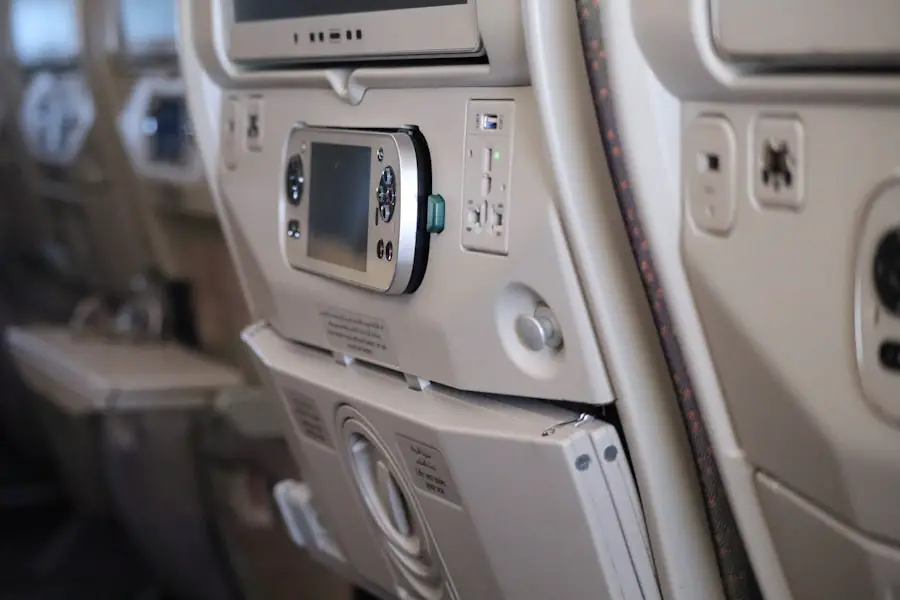
Korean Air’s current WiFi works through the normal WiFi and web-browser functions on personal devices such as smartphones, tablets, and laptops. You do not need to install special software just to reach the purchase portal.
How to Connect to Korean Air WiFi
- Put your device in airplane mode.
- Turn WiFi back on.
- Select the network named Korean Air In-Flight.
- Open your browser and go to wifi.koreanair.com.
- Select either an internet or messaging plan and complete payment.
Korean Air says its existing in-flight WiFi can be used once the aircraft reaches 10,000 feet. Its own website and mobile app can be accessed without buying an internet plan.
Important Purchase Rules
- WiFi is purchased onboard on the day of travel; advance purchases are not available.
- Charges are billed in U.S. dollars.
- International credit and debit cards can be used for payment.
- A purchased plan applies only to that flight.
- If you connect to another Korean Air flight, you must purchase a new plan where applicable.
- The two-hour internet timer starts immediately after payment and does not pause when you disconnect.
Entertainment Options Alongside WiFi
Korean Air’s seatback entertainment works separately from the internet service, so you do not need to buy WiFi to use the aircraft’s built-in movies, television programs, music, and other entertainment.
On aircraft with the current internet service, Korean Air allows video streaming at resolutions up to 480p. Travelers who want higher-quality entertainment or who are flying on an aircraft without WiFi should still download movies, shows, podcasts, music, books, and other content before departure.
Customer Experience with Korean Air’s WiFi
The experience can vary because Korean Air is operating a mixed fleet and connectivity is still not universal. For travelers, the practical issue is less about an average review score and more about whether the assigned aircraft offers WiFi and whether its operating conditions allow the connection to remain available.
The existing system is best suited to messaging, email, browsing, music, and limited video. It is not designed around unrestricted video calling or cloud-based work. If the service fails after purchase, Korean Air directs passengers to the WiFi provider’s customer-support details shown on the purchase receipt.
The Starlink rollout should eventually change the capabilities available onboard, but passengers should check current information rather than assuming a Starlink installation or free-service launch has reached a particular flight.
Alternatives to In-Flight WiFi
Until Starlink becomes widely available, it is smart to prepare for a flight without reliable internet. Download entertainment, travel confirmations, destination maps, hotel details, important emails, and any files you need before boarding.
You can also install and prepare an eSIM before departure if you want mobile data soon after landing. An eSIM or local SIM will not replace in-flight WiFi while airborne, but it can remove the need to search for connectivity after arrival.
Conclusion and Recommendations
Korean Air does offer in-flight WiFi, but the answer is still aircraft-specific rather than fleetwide. Its current paid service is listed on the Boeing 737-8, 737-900ER, 787-10, Airbus A321neo, and A350-900, with full-flight internet prices ranging from $4.95 on Korean domestic flights to $20.95 on long-haul international flights.
The most important 2026 development is Starlink. Installation work reportedly began on Korean Air A350-900s in July, and the airline still targets a broader rollout through the end of 2027. Free passenger access is planned, but Korean Air had not announced the exact live-service date as of July 27, 2026.
For now, check your flight through Korean Air’s official WiFi page before departure, do not assume that every aircraft on a route will be connected, and download anything essential before boarding.
Sources
- Korean Air — current aircraft eligibility, connection instructions, pricing, plan restrictions, purchase rules, and coverage notices
- KED Global — Korean Air’s June 2023 WiFi launch routes and initial aircraft rollout
- The Korea Herald — Korean Air WiFi pricing and original service details
- World Aviation Festival — Starlink adoption and rollout timeline
- Executive Traveller — Starlink fleet priorities and fleetwide installation target
Frequently Asked Questions
Does Korean Air offer in-flight WiFi?
Yes. Korean Air has offered paid in-flight WiFi since June 2023. It is available only on eligible aircraft rather than automatically on every Korean Air flight.
Which Korean Air planes currently have WiFi?
Korean Air’s current WiFi page lists routes operated by aircraft such as the Boeing 737-8, Boeing 737-900ER, Boeing 787-10, Airbus A321neo, and Airbus A350-900. Actual availability can still vary by flight and aircraft assignment.
Is WiFi available on all Korean Air flights?
No. WiFi is not yet fleetwide. Check your departure and arrival cities or flight number on Korean Air’s official WiFi page because aircraft assignments and service availability can change.
How can I access WiFi on Korean Air?
Put your device in airplane mode, turn WiFi on, select “Korean Air In-Flight,” and open wifi.koreanair.com in your browser. Choose an internet or messaging plan and pay onboard. Korean Air says the existing service can be used after the aircraft reaches 10,000 feet.
Can I buy Korean Air WiFi before my flight?
No. Korean Air says the current service must be purchased onboard on the day of the flight. Advance purchases are not available.
What does Korean Air WiFi cost?
Internet prices currently range from $4.95 for a full Korean domestic flight to $20.95 for a full long-haul international flight. A two-hour internet pass costs $10.95 on medium- and long-haul flights. Full-flight messaging plans cost $3.95 to $5.95 depending on the route.
Can I stream video or make calls on Korean Air WiFi?
The current internet plan supports video up to 480p, along with browsing, email, music, and messaging. Korean Air lists video calls, audio calls, and cloud services as restricted.
Is Korean Air getting free Starlink WiFi?
Yes, free Starlink access is planned. Korean Air began installing Starlink equipment on A350-900 aircraft in July 2026, according to recent reporting, but the airline had not yet announced the exact passenger-service start date as of July 27, 2026.
When will every Korean Air aircraft have Starlink?
Korean Air and Asiana are targeting completion of their fleetwide Starlink installation by the end of 2027. That is a rollout target rather than a guarantee that every aircraft will be equipped before that date.
