
Last Updated on September 11, 2026 by Daniel Globe
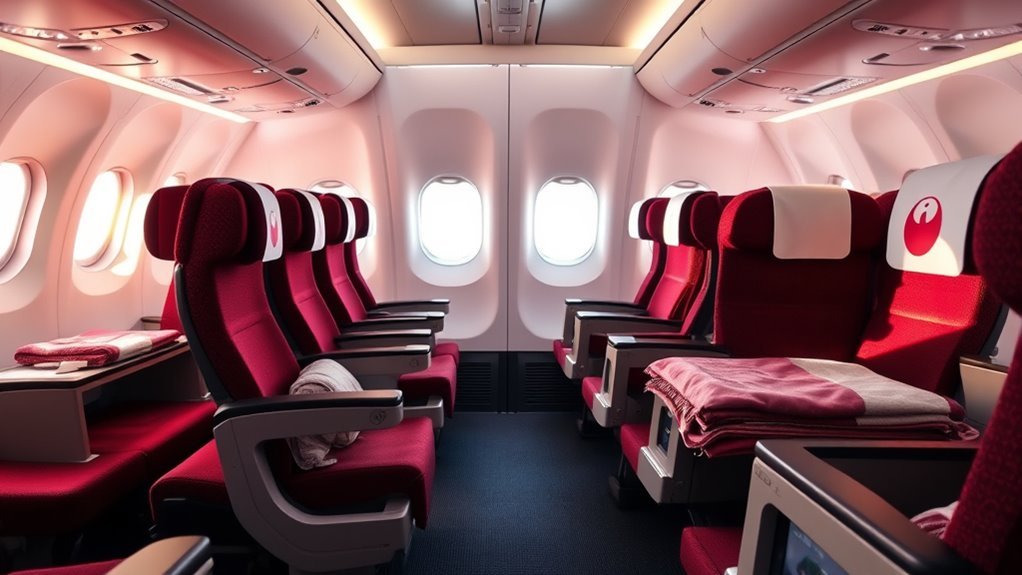
Japan Airlines Premium Economy is not a standard Economy seat with a different label. On JAL-operated international flights that offer the cabin, you get a dedicated seat, about 42 inches of pitch, a legrest or footrest, larger entertainment equipment, and airport-priority benefits. The exact layout and features depend on the aircraft assigned to your flight.
Quick Answer
No. JAL Premium Economy uses dedicated seats rather than standard Economy seats. Current long-haul products offer about 42 inches of pitch, shell-style reclining, leg support, and either a 2-4-2 or 2-3-2 layout. Airport perks are stronger, but the standard checked-baggage allowance is usually the same as JAL Economy.
Key Takeaways
- JAL Premium Economy has a separate cabin and purpose-built seats on eligible international flights.
- The published seat pitch is about 107 cm, or 42.1 inches, on the A350-1000 and JAL SKY PREMIUM aircraft.
- Layouts vary: the A350-1000 and 777-300ER use 2-4-2, while the 787-9 uses 2-3-2.
- Premium Economy and Economy normally share the same free checked-baggage allowance of two 23 kg bags.
- Aircraft swaps, codeshares, route-specific meals, lounge rules, and amenity availability can change the experience.
Does JAL Use Economy Seats for Premium Economy?
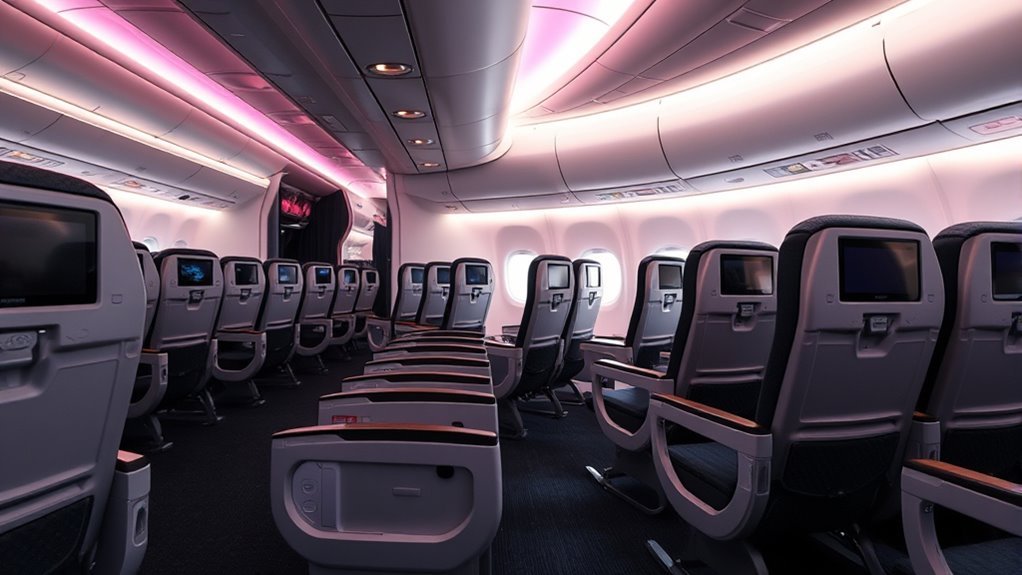
No. On JAL-operated international flights that sell Premium Economy, the cabin uses dedicated Premium Economy seats. These are not regular Economy seats placed in a preferred row.
The clearest difference is the space between rows. JAL publishes a pitch of about 107 cm, or 42.1 inches, for its current A350-1000 Premium Economy seat and JAL SKY PREMIUM seat. Common JAL long-haul Economy products are closer to 84 to 86 cm, or about 33 to 34 inches.
The Premium Economy seat also uses a shell-style design. The seat moves within its own space instead of pushing the seatback far into the passenger behind you. You also receive leg support, a larger screen, dedicated armrests, and airport-priority services.
| Feature | JAL Premium Economy | JAL Economy on Common Long-Haul Aircraft |
|---|---|---|
| Seat pitch | About 107 cm / 42.1 in | About 84 to 86 cm / 33 to 34 in |
| Typical layout | 2-4-2 or 2-3-2 | Varies by aircraft, commonly 3-3-3 or 2-4-2 |
| Recline | Shell-style movement within the seat’s space | Traditional seatback recline |
| Airport priority | Priority check-in, boarding, and baggage delivery on eligible JAL flights | Usually standard processing unless status or another benefit applies |
| Free checked baggage | Normally 2 bags, up to 23 kg each | Normally 2 bags, up to 23 kg each |
What JAL Premium Economy Seating Is Like
JAL Premium Economy is designed for travelers who want more personal space than Economy without paying for Business Class. The experience is strongest on long flights, where extra pitch, leg support, and a more private seat shell can make it easier to change position and rest.
Premium Economy Seat Pitch
JAL’s published Premium Economy pitch is about 107 cm, equal to roughly 42.1 inches, on the A350-1000 Premium Economy seat and the JAL SKY PREMIUM seat.
Pitch measures the distance from one point on a seat to the same point on the seat in front. It does not equal usable legroom in every row, because bulkheads, equipment boxes, seat frames, and cabin dividers can affect the space around your feet.
JAL publishes about 107 cm, or 42.1 inches, of pitch for its current international Premium Economy seats.
Legroom and Recline
The extra pitch gives you more room for your knees and lets you change position more easily. JAL’s shell-style seats recline by moving within a fixed seat structure, so the passenger in front does not push a seatback deep into your space.
The A350-1000 adds motorized seat controls and a motorized legrest that can rise to support different resting positions. JAL SKY PREMIUM seats on the 787-9 and 777-300ER use a large legrest and an adjustable footrest.
This is still an upright airline seat, not a lie-flat bed. Travelers who need a flat sleeping surface, direct aisle access from every seat, or full Business Class service should compare the upgrade cost before booking.
Seat Amenities and Extras
The A350-1000 has a 16-inch 4K personal screen, AC power, USB Type-A and Type-C ports, and support for Bluetooth headphones. JAL SKY PREMIUM seats have a 12.1-inch screen, a laptop power outlet, USB connectivity, a large tray table, and a privacy divider.
JAL provides noise-canceling headphones in Premium Economy. Current JAL international Wi-Fi rules give Economy and Premium Economy passengers the first hour free where the service is available; First and Business Class receive unlimited free access.
Amenity availability depends on the route. JAL lists slippers on all Premium Economy routes, while the amenity kit with an eye mask, earplugs, a toothbrush set, and a moisturizing mask is limited to specified long-haul regions and can change without notice.
What You Get in JAL Premium Economy
The main value comes from the seat and airport experience, not from a Business Class-style meal or a larger standard baggage allowance. Knowing the exact benefits helps you judge whether the fare difference is worthwhile.
Seat and Legroom
Seat width is about 48 cm on the A350-1000 and 777-300ER, and about 49 cm on the 787-9, with some seats varying. The 787-9’s 2-3-2 layout is especially useful for couples because the two-seat side pairs avoid a third passenger.
- The 42.1-inch pitch provides substantially more row spacing than standard JAL Economy.
- The seat shell protects your space from the person in front when they recline.
- Legrests, footrests, larger screens, power, and dedicated armrests make long flights easier to manage.
Meals and Baggage
JAL Premium Economy does not automatically receive a Business Class meal. JAL describes the standard service as the normal Economy Class menu plus additional snack service, including cup noodles on eligible routes. A paid meal upgrade may be available for the first meal on selected flights departing Japan.
The beverage list can include wine, prosecco, beer, spirits, soft drinks, tea, and coffee, although the exact selection varies by route and date.
The standard international checked-baggage allowance is normally two bags weighing up to 23 kg each. That is generous, but it is also JAL’s normal Economy allowance, so it should not be treated as a Premium Economy-only upgrade.
Note: Codeshare flights follow the operating airline’s seat, meal, baggage, and airport-service rules. A ticket sold with a JAL flight number does not always mean the aircraft or cabin is operated by JAL.
When JAL Premium Economy Seats Vary by Aircraft
JAL currently highlights three international Premium Economy products: the A350-1000 seat and JAL SKY PREMIUM on the 787-9 and 777-300ER. They share the same published pitch, but their layout, screen size, seat count, controls, and privacy features differ.
| Aircraft | Layout | Seats | Width | Pitch | Screen |
|---|---|---|---|---|---|
| Airbus A350-1000 | 2-4-2 | 24 | About 48 cm | About 107 cm | 16 in, 4K |
| Boeing 787-9 | 2-3-2 | 35 | About 49 cm | About 107 cm | 12.1 in |
| Boeing 777-300ER | 2-4-2 | 40 | About 48 cm | About 107 cm | 12.1 in |
These figures are published specifications, and some individual seats can vary. JAL may also substitute aircraft for operational reasons. Always check the operating carrier, aircraft type, and live seat map for your exact flight.
How to Pick the Best JAL Premium Economy Seat
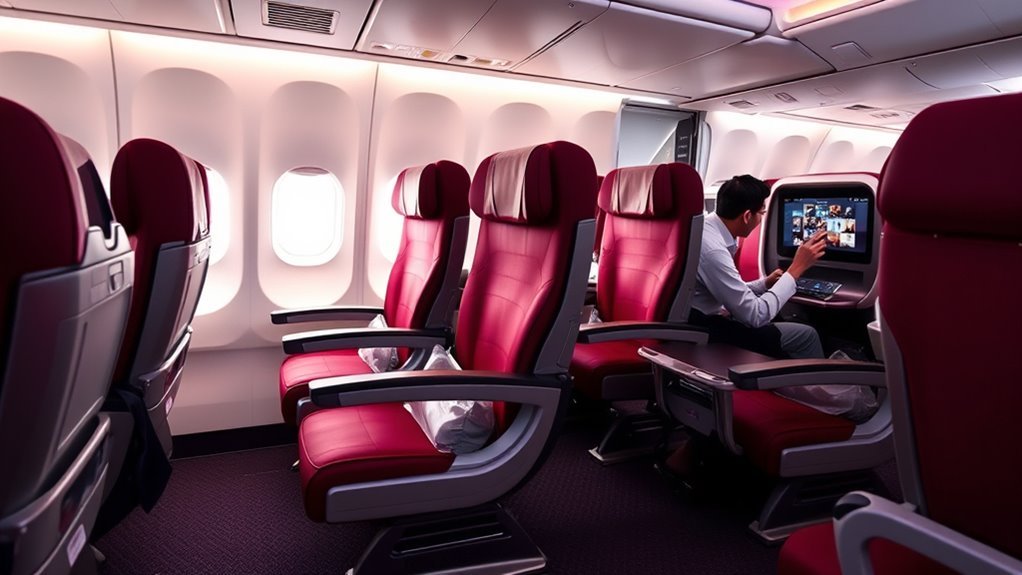
The best seat depends on whether you value quiet, easy aisle access, a view, or space for a companion. Start with the aircraft layout because the 787-9’s 2-3-2 arrangement creates different choices from the 2-4-2 A350-1000 and 777-300ER.
- Window seat: Best for a view, wall support, and fewer interruptions, but you may need to step past one person.
- Aisle seat: Best for frequent movement, restroom visits, and stretching during a long flight.
- Two-seat side pair: A strong option for couples on every listed aircraft.
- Center block: Useful for families or groups, but the middle seat in the 787-9’s three-seat center section has no direct aisle access.
- Front or bulkhead row: It may feel open, but tray tables and screens can be stored in the armrest, floor storage may be restricted during takeoff and landing, and bassinets or galleys can add activity.
- Last row: The shell seat protects the recline space, but nearby lavatories, galleys, and passenger traffic can make the area busier.
Pro Tip: Check the seat map when booking, after any schedule change, and again shortly before departure. An aircraft swap can change the layout and your selected seat number.
Baggage, Meals, and Boarding Perks
JAL Premium Economy includes several useful airport benefits, but not every perk applies at every airport or on every codeshare.
| Benefit | What to Expect |
|---|---|
| Check-in | Dedicated Premium Economy counters at Haneda, Narita, Kansai, and Chubu when open; Business Class counters are generally used at other airports, with stated exceptions. |
| Boarding | Priority Boarding Group 3, after First and Business Class groups. |
| Checked baggage | Two pieces up to 23 kg each, normally the same as JAL Economy. |
| Baggage delivery | Priority return after First and Business Class baggage on eligible JAL flights. |
| Meals | The standard Economy menu plus route-dependent snacks and a broader beverage selection; paid meal upgrades may be offered on eligible departures from Japan. |
| Lounge | Available at many eligible departure airports, but the lounge, fare, operating carrier, and airport-upgrade rules must be checked in advance. |
Special meals for allergies, health needs, or religious requirements must be ordered in advance. Meal content and service timing can change, and JAL warns that it cannot guarantee an allergen-free cabin or food environment.
Who Should Book JAL Premium Economy
JAL Premium Economy makes the most sense when the seat and airport experience solve a real problem for you. It is less compelling when the fare approaches Business Class or when you mainly want extra baggage.
| Best for | Why It Helps |
|---|---|
| Long-haul travelers | About 42 inches of pitch, leg support, and protected recline space |
| Tall passengers | More knee room and easier position changes |
| Couples | Two-seat side pairs on the A350-1000, 787-9, and 777-300ER |
| Travelers who value airport speed | Priority check-in, boarding, and baggage delivery on eligible flights |
| Travelers who cannot justify Business Class | A meaningful seat upgrade without paying for a lie-flat product |
You may want to stay in Economy when the flight is short, the fare gap is large, or JAL’s relatively spacious long-haul Economy seat already meets your needs. You may prefer Business Class when sleep is the main goal and the price difference is manageable.
How to Check Your JAL Aircraft Layout
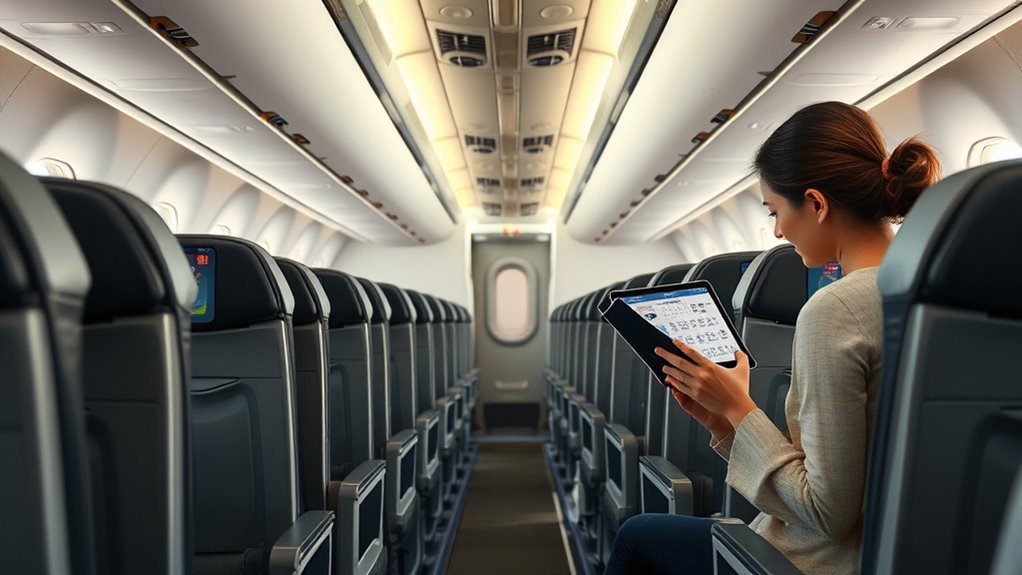
Use JAL’s booking tools and aircraft pages together. The seat map in your reservation is the most relevant source for your assigned flight, while the aircraft page explains the seat product and published specifications.
- Open your booking on the JAL website or app.
- Confirm the operating carrier, not only the marketing flight number.
- Find the aircraft type and open the live seat-selection map.
- Compare the layout with JAL’s official Premium Economy aircraft pages.
- Check for galleys, lavatories, bassinets, bulkheads, and seats with special restrictions.
- Review lounge, meal, amenity, and baggage details for your route.
- Recheck after schedule changes and shortly before departure because aircraft assignments can change.
Warning: Do not rely on a third-party seat map alone. Aircraft substitutions and codeshare operations can change the cabin, layout, and service package even after you select a seat.
Is JAL Premium Economy Worth It?
It can be worth it on a long flight when the added cost buys you a 42-inch-pitch seat, better leg support, a smaller cabin, and airport-priority services. The 787-9 is attractive for couples because of its 2-3-2 layout, while the A350-1000 offers the newest screen and motorized seat features.
Value depends on the price gap. Compare the Premium Economy fare with both Economy and Business Class for the same dates. Also compare the exact aircraft, because the A350-1000 product is newer than JAL SKY PREMIUM even though both publish the same pitch.
Do not pay extra solely for baggage or a Business Class meal. The standard checked allowance is normally the same as Economy, and the included meal is based on the Economy menu with added snacks and beverages.
Frequently Asked Questions
What Is the Infant Policy for Japan Airlines?
On JAL international flights, a child under 2 who does not use a seat normally travels on an infant fare equal to 10% of the adult fare, although some fares differ. A child using a seat normally needs a child fare and an approved child seat. Infants must be at least 8 days old. Bassinets are available by advance reservation for infants under 2 weighing up to 10.5 kg, subject to availability and aircraft limits.
Are Japan Airlines Economy Seats Comfortable?
JAL’s common long-haul Economy seats are relatively spacious, with published pitch of about 84 to 86 cm, or 33 to 34 inches, and width that varies by aircraft. Comfort still depends on your height, seat location, flight length, and aircraft. Premium Economy increases the pitch to about 107 cm and adds leg support and a shell-style seat.
How Strict Is Japan With a Child Seat?
For road travel, Japan generally requires a child restraint for children under 6 in private vehicles. Standard buses and taxis are exempt from the legal requirement, but that exemption does not remove the safety benefit of a properly fitted seat. On an aircraft, JAL applies separate approval, size, installation, and reservation rules for child seats.
Does JAL Allow Toddler Beds?
JAL does not supply a toddler bed, but it may allow commercial footrests and child travel beds such as JetKids or BedBox when they do not damage equipment, block another passenger, interfere with correct seat-belt use, or reduce safety. They cannot be used when the seat-belt sign is on, and the crew has final authority. Check JAL’s portable child-bed conditions before travel.
Does JAL Premium Economy Include Lounge Access?
Lounge access is available at many eligible departure airports for passengers ticketed in Premium Economy on qualifying JAL flights. The exact lounge and eligibility vary by airport, operating carrier, fare, and connection. An upgrade purchased at the airport may not include lounge access, so check the airport-specific rules before departure.
Does JAL Premium Economy Get More Checked Baggage Than Economy?
Usually no. JAL’s standard international allowance for both Premium Economy and Economy is two checked bags weighing up to 23 kg each, with size limits. Premium Economy does normally receive priority baggage delivery on eligible JAL-operated flights, which can reduce waiting time at arrival.
Sources
- Japan Airlines Premium Economy seats — current aircraft products and seat-map guidance
- Japan Airlines Premium Economy airport and lounge services — check-in, boarding, lounge, and priority baggage details
- Japan Airlines international checked baggage — piece, weight, size, and infant allowances
- Japan Airlines Premium Economy dining — included meals, snacks, special meals, and paid meal upgrades
- Japan Airlines services for babies and small children — bassinets, age limits, reservations, and family support
- Kanagawa Prefectural Police child-seat guidance — Japan’s under-6 rule and the bus and taxi exemption
Conclusion
JAL does not use ordinary Economy seats as its Premium Economy product. You get a separate cabin with about 42 inches of pitch, a shell-style seat, leg support, larger entertainment equipment, and airport-priority services. The A350-1000, 787-9, and 777-300ER differ in layout and features, so check the exact aircraft before paying more.
Judge the upgrade mainly by seat comfort, flight length, aircraft type, and fare difference. Do not assume you will receive extra checked baggage or a Business Class meal. When the price is reasonable and the flight is long, JAL Premium Economy can be a practical middle ground between Economy and Business Class.
