
Last Updated on July 27, 2026 by Daniel Globe
Hiking can burn a substantial amount of energy, but there is no single calorie number that applies to every hike. Your body weight, walking speed, elevation gain, trail surface, pack weight, and total time on the trail all affect energy use. A relaxed walk on rolling terrain can differ greatly from a steep climb with a loaded backpack.
Quick Answer
A 155-pound person may burn roughly 280 calories per hour while hiking slowly, about 390 during normal hiking over fields and hills, around 440 during cross-country hiking, and about 575 while hiking or backpacking with a daypack. Actual calorie burn changes with pace, grade, terrain, pack weight, fitness, and rest stops.
Key Takeaways
- Hiking calorie burn varies widely; a single 400–700 calorie estimate is too broad to use as a personal prediction.
- Body weight, pace, elevation, terrain, pack load, and hiking duration are the biggest practical factors.
- Normal trail hiking generally uses more energy than easy level walking but less than faster running or vigorous cycling.
- Steeper terrain and a necessary backpack can increase energy use, but adding excessive weight just to burn calories is unnecessary and may increase fatigue or injury risk.
- Fitness watches and hiking apps are useful for comparing your own hikes, but their calorie numbers should be treated as estimates rather than exact measurements.
Disclosure: As an Amazon Associate I earn from qualifying purchases. Some links on this page are affiliate links, at no extra cost to you.
How Many Calories Does Hiking Burn?
The 2024 Adult Compendium of Physical Activities assigns different metabolic equivalent, or MET, values to different types of hiking. Slow hiking through fields and hills is listed at 3.8 MET, normal hiking at 5.3 MET, cross-country hiking at 6.0 MET, and hiking or backpacking with a daypack at 7.8 MET.
Using the standard MET calorie equation, the following table gives useful estimates. These numbers are not guarantees; they are starting points for understanding how body weight and hiking intensity interact.
| Hiking Style | MET | 130 lb | 155 lb | 200 lb |
|---|---|---|---|---|
| Slow hiking through fields/hills | 3.8 | ≈235 cal/hr | ≈281 cal/hr | ≈362 cal/hr |
| Normal hiking through fields/hills | 5.3 | ≈328 cal/hr | ≈391 cal/hr | ≈505 cal/hr |
| Cross-country hiking | 6.0 | ≈371 cal/hr | ≈443 cal/hr | ≈572 cal/hr |
| Hiking/backpacking with daypack | 7.8 | ≈483 cal/hr | ≈576 cal/hr | ≈743 cal/hr |
For a 155-pound hiker, current MET values put slow hiking near 280 calories per hour and loaded hiking with a daypack near 575 calories per hour. The trail and the way you hike it matter as much as the activity label.
How Hiking Calorie Estimates Work
A MET compares the energy cost of an activity with resting energy expenditure. The Compendium of Physical Activities uses standardized MET values so different physical activities can be compared consistently.
A commonly used estimate is:
Calories per minute ≈ MET × 3.5 × body weight in kilograms ÷ 200
Multiply the result by the number of minutes you hike. Because MET values represent standardized averages rather than measurements of your individual metabolism, the answer should always be treated as an estimate.
Note: A watch may show “active calories” rather than total or gross calories. Active calories generally exclude some of the energy your body would have used at rest, so a watch and a MET calculator can produce different numbers even when both are working as designed.
Factors That Affect Calorie Burn While Hiking
Body Weight
Body weight has a large effect because moving a heavier mass generally requires more energy. At the same 5.3-MET hiking intensity, the standard equation estimates roughly 328 calories per hour for a 130-pound person, 391 for a 155-pound person, and 505 for a 200-pound person.
These are population-based estimates. Individual metabolism, movement economy, fitness, and trail conditions can move the real number higher or lower.
Pace and Hiking Intensity
A faster pace usually increases energy demand as long as the terrain is similar. The CDC describes activities at 3.0–5.9 MET as moderate intensity and activities at 6.0 MET or higher as vigorous intensity.
A useful field check is the talk test. During moderate activity you can usually talk but not sing comfortably. During vigorous activity, speaking more than a few words at a time becomes difficult.
Terrain and Elevation
Steep climbs can raise energy expenditure substantially because your muscles must lift your body against gravity. There is no universal “50% more calories” rule, however. The Compendium lists hill climbing at 5.3 MET for a 1–5% grade at a moderate-to-brisk pace, 7.0 MET at a 6–10% grade, and 8.8 MET at an 11–20% grade at a slow-to-moderate pace.
Rocky, sandy, muddy, or uneven trails may also require more stabilizing work than a smooth path. Downhill hiking still uses energy and places considerable eccentric demand on the leg muscles, but calorie expenditure can be lower than on a comparable uphill section.
Pack Weight
A backpack increases the mass you must move. The Compendium therefore lists higher energy costs for many loaded walking and hiking activities. The exact increase depends on the load, hill grade, pace, terrain, and how efficiently the pack fits.
There is no dependable rule that a heavy pack automatically adds exactly 100–200 calories per hour, nor does carrying 10% of your body weight produce the same increase for every hiker.
Fitness Level
Two hikers of the same weight can use energy differently. A trained hiker may move more efficiently and maintain a higher speed with less perceived effort. A newer hiker may have a higher heart rate at the same pace. This is one reason individual calorie estimates cannot be perfectly predicted from weight and distance alone.
Weather and Temperature
Heat, humidity, cold, wind, and altitude can change perceived effort and affect performance. Hot weather is especially important from a safety standpoint. The CDC warns that exercising in heat raises the risk of dehydration and heat-related illness.
Warning: Do not hike in extreme heat or deliberately carry excessive weight just to increase calorie burn. Slow down when conditions demand it, drink fluids, take breaks, and stop if you feel faint or weak. Calorie goals should never take priority over trail safety.
Comparing Hiking to Other Forms of Exercise for Calorie Burn
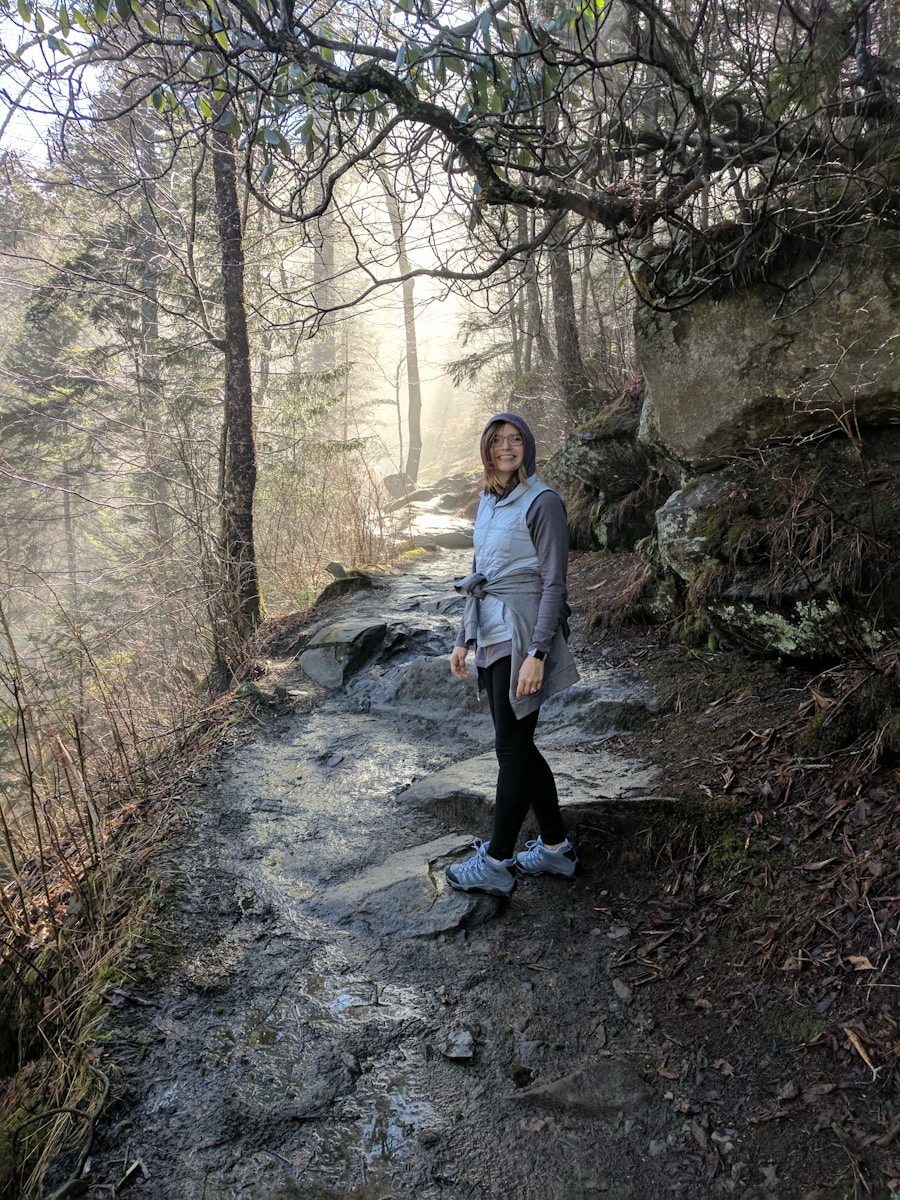
Hiking can use more energy than easy walking or many forms of yoga, but the comparison changes with intensity. The 2024 Compendium lists normal hillside hiking at 5.3 MET, cross-country hiking at 6.0 MET, Hatha yoga at 2.3 MET, moderate cycling at 12–13.9 mph at 8.0 MET, and running at 6–6.3 mph at 9.3 MET.
| Activity | MET | Estimated Calories/Hour at 155 lb |
|---|---|---|
| Hatha yoga | 2.3 | ≈170 |
| Level walking, 2.8–3.4 mph | 3.8 | ≈281 |
| Normal hillside hiking | 5.3 | ≈391 |
| Cross-country hiking | 6.0 | ≈443 |
| Cycling, 12–13.9 mph | 8.0 | ≈591 |
| Running, 6–6.3 mph | 9.3 | ≈687 |
Running therefore tends to burn more calories per minute than moderate hiking, while cycling can fall below, near, or above hiking depending on speed and resistance. Hiking has a different advantage: it combines sustained aerobic work with balance, coordination, climbing, and uneven terrain.
For people who do not enjoy running, hiking can provide a lower-impact alternative, although steep descents and technical terrain can still place significant demands on the knees and other joints. Outdoor activity may also provide psychological benefits beyond calorie expenditure. Research comparing outdoor and indoor exercise has examined potential benefits for mood and well-being, and Harvard Health notes hiking’s benefits for endurance, strength, coordination, and mood.
How to Maximize Calorie Burn While Hiking
| Factor | Effect on Hiking Energy Use |
|---|---|
| Body Weight | A heavier body generally requires more energy to move at the same pace and intensity. |
| Intensity of Hike | A sustained brisk or vigorous effort raises energy expenditure compared with easy hiking. |
| Terrain | Steep, soft, rocky, or uneven terrain can require more work than a smooth, level path. |
| Pack Weight | Necessary pack weight raises the mass being moved, but the calorie increase is not a fixed number. |
| Speed | Increasing speed generally raises intensity when other trail conditions remain similar. |
The safest way to increase hiking energy expenditure is usually to hike longer, choose a route with appropriate elevation, or gradually increase your sustainable pace. Experienced hikers can also alternate easier and harder sections when the trail is safe enough for faster movement.
For example, you might walk briskly on a smooth climb, return to an easier pace for recovery, and repeat. Do not jog on loose rock, crowded trails, exposed ridges, or other terrain where extra speed makes a fall more likely.
Carrying required food, water, clothing, and safety equipment will naturally add some load. A weighted vest or deliberately overloaded pack is not required for a good workout. People training specifically for backpacking can progressively practice with their expected trip load rather than suddenly adding a heavy pack.
Trekking poles can improve stability and involve the arms during hiking. Pole use does not guarantee a particular calorie increase, but it can help some hikers maintain rhythm and control on uneven or steep terrain.
Pro Tip: Instead of chasing the highest calorie number, track the same route several times. Compare your time, heart rate, perceived effort, and recovery. That gives you a much more useful picture of improving hiking fitness.
The Importance of Proper Nutrition for Hiking and Calorie Burn
Food and hydration support hiking performance; they should not be viewed simply as ways to manipulate the calorie deficit from a hike. Carbohydrates are an important exercise fuel, especially as intensity and duration rise. Whole grains, fruit, potatoes, rice, oats, and other carbohydrate-rich foods can help supply energy before a demanding hike.
For a short, easy hike, a normal balanced meal and water may be enough. Longer hikes usually call for portable food such as fruit, sandwiches, bars, nuts, dried fruit, or trail mix. Trail mix is calorie-dense and convenient, but it does not replace drinking water.
Fluid needs vary with body size, temperature, humidity, altitude, pace, and sweat rate. The National Park Service recommends planning water and food needs before a hike and carrying extra supplies appropriate for the route. During long, hot, or particularly sweaty outings, foods or drinks containing electrolytes may also be useful.
After a demanding hike, a meal or snack containing both carbohydrate and protein supports recovery. Carbohydrate helps restore glycogen, while protein supplies amino acids used in muscle repair. Healthy fats can remain part of a balanced diet but do not need to be consumed specifically to “replace” calories burned on the trail.
Note: Hiking can support weight management, but smartwatch calorie estimates should not be treated as an exact amount of extra food you can eat. Long-term weight change depends on overall energy intake and expenditure, not one workout reading.
Tips for Tracking Calorie Burn During Hiking
Fitness trackers, smartwatches, and hiking apps can record valuable information such as duration, distance, pace, heart rate, and elevation gain. Their calorie values, however, are calculated estimates rather than direct measurements of your energy expenditure.
A systematic review of commercial wearables found that energy-expenditure estimates were less accurate than many step-count and heart-rate measurements. A later umbrella review likewise found substantial variation across devices and validation studies. For that reason, a watch is best used to compare trends in your own hikes rather than to determine exactly how many calories you burned.
For a second estimate, use the MET method. Choose the activity that most closely matches your hike, enter your body weight, and multiply by the time spent moving. Remember that an average trail containing climbs, descents, pauses, and flat sections cannot be perfectly represented by one MET value.
A simple hiking log can also be useful. Record:
- Distance and moving time
- Elevation gain and loss
- Trail surface and difficulty
- Approximate pack weight
- Average or typical heart rate, if available
- Perceived effort
- Weather conditions
Over several hikes, these measurements are often more useful for assessing fitness progress than trying to determine whether one outing burned 487 or 527 calories.
The Psychological Benefits of Hiking
Hiking is valuable for more than energy expenditure. Physical activity itself has immediate and long-term health benefits. The CDC reports benefits including improved sleep, reduced short-term anxiety, improved cardiovascular health, better bone health, and healthier weight management.
Being active in natural environments may add another enjoyable dimension. Research on outdoor exercise and nature exposure suggests possible benefits for mood and psychological well-being. The experience varies from person to person, so hiking should not be presented as a substitute for professional mental-health care when that care is needed.
Hiking can also build confidence as people gradually complete longer routes, steeper climbs, or more technical trails. Hiking with friends or organized groups adds a social component that may make regular physical activity easier to maintain.
Hiking as an Effective Way to Burn Calories
Hiking is an effective form of physical activity because it can range from an easy walk to vigorous climbing. A normal trail hike may burn several hundred calories per hour, while steep or loaded hiking may use considerably more energy. The most accurate estimate depends on your weight and the actual demands of the route.
The biggest mistake is treating one number such as “400–700 calories per hour” as universal. Use a range based on hiking intensity, consider your pack and terrain, and treat watch readings as approximations.
For overall health, consistency matters more than maximizing the calorie total of one hike. Choose trails appropriate for your current ability, progress gradually, and bring the essentials needed for changing weather or unexpected delays. The National Park Service’s Ten Essentials guidance includes navigation, sun protection, insulation, illumination, first aid, fire, repair tools, nutrition, hydration, and emergency shelter.
If you’re looking to stay active while traveling, hiking is a practical way to combine exercise and outdoor exploration. Planning adequate water is part of that preparation; this guide to portable water bottles for travel and outdoor adventures covers several options for carrying fluids on the go.
Safety Note: This article provides general fitness information, not individualized medical advice. If you have a cardiovascular, metabolic, balance, or joint condition, have been inactive for a long time, or plan to begin vigorous or heavily loaded hiking, ask a qualified healthcare professional what level of activity is appropriate for you.
Frequently Asked Questions
What is hiking?
Hiking is outdoor walking on trails, paths, or natural terrain. It can range from easy walks on maintained routes to steep, rugged, cross-country, or backpacking trips.
Does hiking burn calories?
Yes. Hiking requires energy to move your body, climb hills, stabilize yourself on uneven terrain, and carry any gear. The amount depends on your weight, hiking speed, trail grade, terrain, pack weight, and duration.
How many calories can you burn while hiking?
For a 155-pound person, current standardized MET values produce estimates of roughly 281 calories per hour for slow hillside hiking, 391 for normal hiking, 443 for cross-country hiking, and 576 for hiking or backpacking with a daypack. Steeper or faster climbing can be higher.
Does hiking uphill burn more calories?
Usually, yes. Climbing requires additional work against gravity. How much more depends on the slope, your speed, the length of the climb, and whether you are carrying a pack, so there is no single percentage that applies to every hill.
How accurate are hiking calorie calculators and smartwatches?
They provide estimates rather than exact measurements. Watches and apps can be useful for comparing your own workouts, but research shows energy-expenditure estimates can contain substantial error. Route duration, elevation, heart rate, pace, and perceived effort are useful additional measures.
What are the health benefits of hiking?
Hiking provides aerobic physical activity and can challenge endurance, leg strength, balance, and coordination. Regular physical activity is associated with benefits for cardiovascular health, sleep, bone health, mood, and healthy weight management.
Is hiking suitable for all fitness levels?
Hiking can be adapted to many fitness levels by changing the distance, terrain, elevation, pace, and pack weight. Beginners should start with shorter, easier routes and progress gradually rather than choosing a difficult trail based only on its calorie-burning potential.
What should I bring on a hike?
Bring water, appropriate food, suitable footwear and clothing, navigation tools, sun protection, first-aid supplies, and other equipment required by the route and weather. Tell someone your planned route and expected return time, especially when hiking in remote areas.
Sources
- 2024 Adult Compendium of Physical Activities — Walking — MET values for hiking, hill climbing, walking, backpacking, and load carriage.
- Centers for Disease Control and Prevention — Measuring Physical Activity Intensity — moderate/vigorous intensity definitions and the talk test.
- Centers for Disease Control and Prevention — Heat and Athletes — dehydration and heat-illness safety during outdoor exercise.
- U.S. National Park Service — Hike Smart — hiking preparation, water, food, equipment, and trail safety guidance.
- Keeping Pace with Wearables: A Living Umbrella Review — evidence on the accuracy and limitations of consumer wearable measurements.
- Outdoor Versus Indoor Exercise Systematic Review — research on psychological, physical, and behavioral outcomes associated with outdoor exercise.

