
Last Updated on September 11, 2026 by Daniel Globe
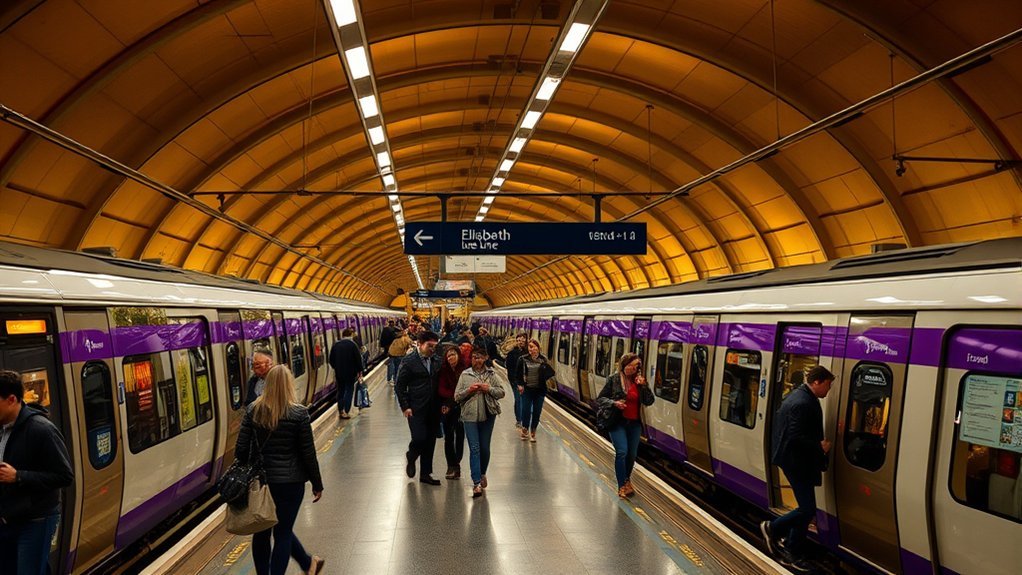
The Elizabeth line makes it easier to cross London without changing trains in the city center. It links Reading and Heathrow in the west with Shenfield and Abbey Wood in the east, stopping at major interchanges such as Paddington, Bond Street, Farringdon, Liverpool Street, and Canary Wharf. However, fares, destinations, and accessibility arrangements can vary by journey.
Quick Answer
Yes, the Elizabeth line connects central London with Heathrow Airport, Reading, Shenfield, and Abbey Wood through a 41-station railway. It is not technically a Tube line. You can usually pay with contactless or Oyster, although Oyster is not valid between West Drayton and Reading. Check your train’s destination before boarding.
Key Takeaways
- The correct name is the Elizabeth line, not the Elizabeth Tube Line.
- Its 41 stations connect Reading, Heathrow, Shenfield, and Abbey Wood through central London.
- Not every train serves every branch, so check the destination board before boarding.
- All 41 stations are step-free from street to platform, but level boarding is not available at every station.
- Fares vary by route, time, and payment method, and Oyster is not valid between West Drayton and Reading.
Disclosure: As an Amazon Associate I earn from qualifying purchases. Some links on this page are affiliate links, at no extra cost to you.
What Is the Elizabeth Line and Where Does It Go?
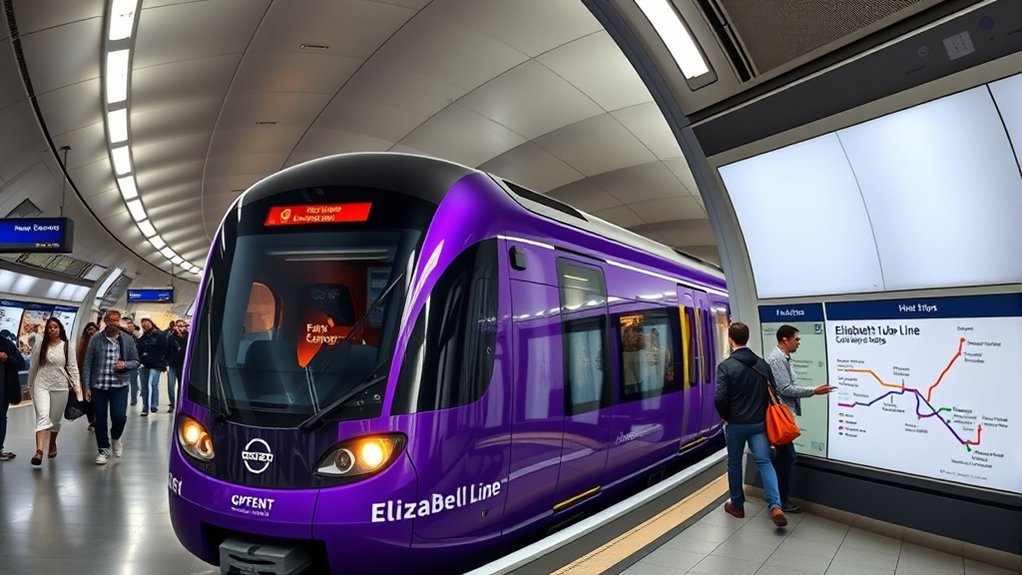
The Elizabeth line is a cross-London railway managed as a separate Transport for London service. It appears on the TfL map and connects with many Underground stations, but it is not one of the London Underground’s Tube lines.
The central section opened to passengers on May 24, 2022. Through services were introduced in stages, and the final service pattern linking eastern and western branches through central London began in May 2023. The railway now serves 41 stations across the Elizabeth line route, including 10 stations built as part of the Crossrail project.
Note: Travelers often call it the “Elizabeth Tube Line” because it appears alongside Tube lines on TfL maps. The official name is simply the “Elizabeth line.”
Elizabeth Line Route and Branches
The railway has a central core and four main endpoint areas. The exact through service you receive depends on the time and timetable.
| Part of the Route | Important Stations | What to Know |
|---|---|---|
| Reading branch | Reading, Twyford, Maidenhead, Slough, West Drayton, Ealing Broadway | Some trains do not stop at every station. Oyster is not valid between West Drayton and Reading. |
| Heathrow branch | Heathrow Terminals 2 & 3, Terminal 4, Terminal 5, Hayes & Harlington | Check the destination because Terminal 4 and Terminal 5 are served by different trains. |
| Central section | Paddington, Bond Street, Tottenham Court Road, Farringdon, Liverpool Street, Whitechapel | This is the busiest section and offers connections with numerous Tube and National Rail services. |
| Shenfield branch | Stratford, Ilford, Romford, Brentwood, Shenfield | This northeastern branch shares parts of the national rail network. |
| Abbey Wood branch | Canary Wharf, Custom House, Woolwich, Abbey Wood | Useful for Canary Wharf, ExCeL London via Custom House, and southeast London. |
Not every possible east-to-west journey is provided by one direct train throughout the day. You may need to change in the central section, often on the same platform. Always read the train’s destination and calling pattern rather than assuming it serves every station.
Key Elizabeth Line Stations and Interchanges
The best station for your journey depends on your destination and the connection you need. These are some of the most useful interchanges:
- Paddington: Connects with National Rail, Heathrow Express, and the Bakerloo, Circle, District, and Hammersmith & City lines.
- Bond Street: Useful for the West End, Oxford Street, and connections with the Central and Jubilee lines.
- Tottenham Court Road: Connects with the Central and Northern lines and provides access to Soho and the eastern West End.
- Farringdon: Connects with Thameslink and the Circle, Hammersmith & City, and Metropolitan lines.
- Liverpool Street: Connects with National Rail, London Overground, and several Underground lines.
- Whitechapel: Connects with the District and Hammersmith & City lines and London Overground.
- Canary Wharf: Provides access to the Canary Wharf business district and connections with the Jubilee line and DLR.
- Custom House: Connects with the DLR and is the closest Elizabeth line station to ExCeL London.
- Heathrow Terminals 2 & 3: Serves the main Heathrow rail interchange and connects with the Piccadilly line.
- Reading: Connects with National Rail services to destinations across southern and western England.
How to Pay and What Elizabeth Line Fares Cost
You can pay for most Elizabeth line journeys with a contactless bank card or device, Oyster pay as you go, a Travelcard covering the required zones, or a valid paper rail ticket. Touch in at the start and touch out at the end of your journey when using contactless or Oyster.
There is no single Elizabeth line ticket price. Your fare can depend on:
- Your starting and destination stations
- Whether you travel during peak or off-peak hours
- The route taken through the network
- Whether your journey includes Heathrow Airport
- Your ticket type, Railcard, or other discount entitlement
Because fares can change, use the official TfL Single Fare Finder before traveling rather than relying on an old fixed price.
Can You Use Oyster on the Whole Elizabeth Line?
No. Oyster works on most of the Elizabeth line, including journeys to Heathrow, but it is not valid between West Drayton and Reading. This restriction affects stations such as Iver, Langley, Slough, Burnham, Taplow, Maidenhead, Twyford, and Reading.
For journeys in that western section, check whether contactless pay as you go is suitable for your trip or buy a valid rail ticket. TfL’s visitor payment guide explains the available options.
Warning: Use the same physical card or the same mobile device to touch in and out. Tapping in with a bank card and tapping out with a phone or watch can create two incomplete journeys and result in maximum fares.
Pro Tip: Each traveler aged 11 or older normally needs a separate contactless card, device, Oyster card, or ticket. Two adults cannot use the same contactless card for the same journey.
Elizabeth Line Frequency and Timetables
Elizabeth line trains run frequently through central London, with up to 24 trains per hour in the busiest part of the central section during peak periods. Service is less frequent on the outer Reading, Heathrow, Shenfield, and Abbey Wood branches.
The current published timetable covers May 17 to December 12, 2026. Check the official Elizabeth line timetable or TfL Journey Planner for your exact departure, especially when:
- You are traveling early in the morning or late at night.
- You need Heathrow Terminal 4 or Terminal 5.
- You are traveling to Reading or another western station.
- You need the last train after an event.
- Engineering work is planned for a weekend.
The Elizabeth line is not a 24-hour service. First and last trains vary by station, day, and branch.
The nine-car Class 345 trains were designed to carry up to about 1,500 passengers, with walk-through carriages, air conditioning, wheelchair spaces, and multi-use areas for luggage and buggies.
Is the Elizabeth Line the Same as the Tube?
No. The Elizabeth line connects with the Tube and uses underground tunnels through central London, but it is a separate railway service. Its trains are longer and wider than typical Tube trains, and the outer sections operate on parts of the national rail network.
| Service | Best For | Main Difference |
|---|---|---|
| Elizabeth line | Cross-London journeys, Heathrow, Reading, Canary Wharf, and major rail interchanges | Long mainline-style trains and fewer central stops than many Tube routes |
| London Underground | Local journeys and destinations served by London’s wider Tube network | More lines and local stations, usually with smaller trains |
| Heathrow Express | Fast direct travel between Heathrow and Paddington | Fewer stops and a separate fare structure, but no through service beyond Paddington |
Accessibility on the Elizabeth Line
All 41 Elizabeth line stations are step-free from street to platform. This means you can reach the platform without using stairs. However, step-free access does not always mean there is level access between the platform and the train.
Level Boarding and Boarding Ramps
The central stations between Paddington and Woolwich, as well as Heathrow stations, generally provide level access from the platform to Elizabeth line trains. At Custom House, use carriage 5 for the designated level boarding point.
At many stations outside the central section, there may be a step or gap between the platform and train. Staff can deploy a boarding ramp for passengers who need one. TfL recommends carriage 5 because it contains dedicated wheelchair spaces and usually stops near the middle of the platform.
Assistance for Disabled Passengers
Accessibility features vary by station but may include:
- Lifts or ramps between the street and platform
- Tactile paving
- Accessible toilets at selected stations
- Help points and staff assistance
- Boarding ramps
- Wheelchair spaces on Class 345 trains
- Visual and audio travel information
Lift availability can change because of faults or maintenance. Check the TfL Go app, Journey Planner, or station status before leaving home when step-free access is essential.
Tips for Traveling to Heathrow With Luggage
The Elizabeth line is useful for airport journeys because trains serve central London stations beyond Paddington. This can reduce the number of changes needed when traveling from places such as Bond Street, Tottenham Court Road, Farringdon, Liverpool Street, or Canary Wharf.
- Check whether your train serves Terminal 4 or Terminal 5 before boarding.
- Use the multi-use areas rather than blocking doors or wheelchair spaces with luggage.
- Allow extra time during weekday peak periods when central trains can be crowded.
- Keep your payment card or ticket available until you have left the destination station.
- Check your airline’s terminal before starting the rail journey.
- Do not assume every westbound train goes to Heathrow; some travel toward Reading or terminate earlier.
Note: Heathrow travel may have a different fare from an ordinary journey covering the same numbered zones. Confirm the current fare with TfL before traveling.
What to Check Before Your Elizabeth Line Journey
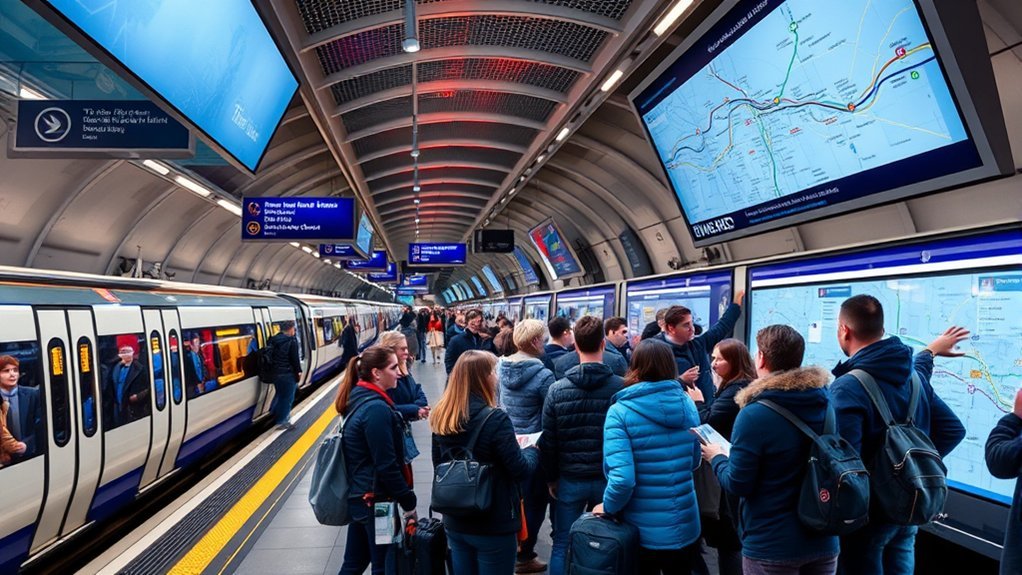
A quick check before leaving can prevent missed trains, incorrect fares, and unnecessary changes. Review these details:
- Destination: Confirm the endpoint shown on the train and platform display.
- Calling pattern: Check that the train stops at your station.
- Terminal: Confirm the correct Heathrow terminal when flying.
- Payment: Make sure your Oyster, contactless method, Travelcard, or paper ticket is valid for the entire route.
- Accessibility: Check lift status and whether a boarding ramp may be required.
- Service status: Look for delays, closures, and weekend engineering work.
- Last train: Confirm the final service if traveling late.
What’s Next for the Elizabeth Line?
The most important confirmed future development is Old Oak Common, a major interchange being built in west London. It is planned to connect HS2, the Elizabeth line, Great Western Railway, and Heathrow Express services. Current public planning information estimates that the station could open between 2029 and 2033, although major-project dates can change.
Transport for London has also ordered 10 additional Class 345 trains. Official updates state that the trains are due for delivery during 2026 and 2027. They are intended to support passenger growth, possible timetable improvements, and service at Old Oak Common when the station opens.
The exact future timetable has not yet been confirmed. TfL must coordinate with Network Rail, Heathrow Airport, passenger operators, and freight operators because the Elizabeth line shares infrastructure outside its central tunnels.
Ideas for extensions or new direct links are sometimes discussed publicly, but travelers should not treat destinations such as Ebbsfleet, Milton Keynes, Staines, or Southend Airport as confirmed Elizabeth line projects unless TfL or the government formally approves them.
Frequently Asked Questions
Is the Elizabeth line a Tube line?
No. It is a separate railway service managed within the TfL network. It connects with many Tube lines and runs underground through central London, which is why travelers sometimes mistake it for a London Underground line.
Does the Elizabeth line go to Heathrow Airport?
Yes. Elizabeth line trains serve Heathrow Terminals 2 & 3, Terminal 4, and Terminal 5. Terminal 4 and Terminal 5 use different service patterns, so check the destination before boarding.
Do all Elizabeth line trains stop at every station?
No. Trains serve different branches and destinations, and some western services have different calling patterns. Check the platform display, train destination, and current timetable for your station.
Can you use Oyster on the Elizabeth line?
You can use Oyster on most of the Elizabeth line, including Heathrow journeys. However, Oyster is not valid between West Drayton and Reading. Check the correct contactless or ticket option when traveling to stations in that section.
Are Elizabeth line fares the same as Tube fares?
Some journeys use TfL’s zonal pay-as-you-go system, but fares can differ according to the route, time, destination, and whether Heathrow or stations beyond the Oyster area are involved. Use TfL’s Single Fare Finder for the current price.
Are all Elizabeth line stations step-free?
Yes. All 41 stations are step-free from street to platform. However, not every station has level access from the platform to the train. Staff can provide boarding ramps at stations where a step or gap remains.
Does the Elizabeth line run all night?
No. The Elizabeth line is not a 24-hour service. First and last train times vary by station, branch, and day, so check the current TfL timetable when traveling early or late.
Conclusion
The Elizabeth line provides fast cross-London connections between Reading, Heathrow, Shenfield, Abbey Wood, and major central stations. Its long trains, useful interchanges, and step-free stations make it a practical choice for commuters, visitors, and airport passengers.
Before traveling, check the destination shown on the train, confirm your payment method is valid for the entire route, and review the current timetable. This is especially important for Heathrow terminals, journeys west of West Drayton, accessible travel, and late-night departures.
Sources
- Transport for London: Elizabeth line route — official stations, branches, destinations, and interchanges
- Transport for London: Elizabeth line timetables — current service and timetable information
- Transport for London: Single Fare Finder — current fares for individual journeys
- Transport for London: Best ways for visitors to pay — Oyster, contactless, Travelcard, and western-route limitations
- Transport for London: Step-free access — accessibility at all 41 stations and level-boarding information
- London City Hall: Additional Elizabeth line trains — delivery timing and plans for passenger growth and Old Oak Common
