
Last Updated on July 31, 2026 by Caleb Warren
Disclosure: As an Amazon Associate, we earn from qualifying purchases. If you click a link on this page and make a purchase, we may receive a small commission at no extra cost to you.
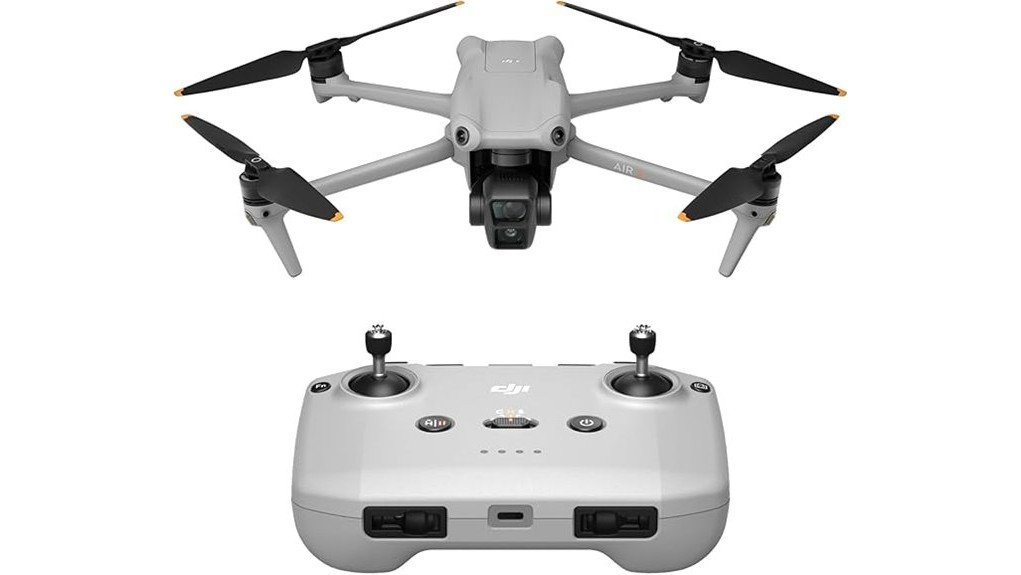
Choosing a camera drone often means balancing image quality, flight time, safety features, and portability. The DJI Air 3 aims for a practical middle ground with two 48MP cameras, up to 46 minutes of rated flight time, and omnidirectional obstacle sensing. It is easier to travel with than DJI’s larger flagship drones, but its 720 g takeoff weight and premium price make it a more serious purchase than a sub-250 g mini drone. This review explains where the Air 3 performs well, where it falls short, and which buyers will get the most value from it.
Quick Verdict
Rating: 8.5/10, Recommended with caveats
Best For: Travel creators, hobbyists, and aerial photographers who want wide and medium-telephoto views in one compact folding drone
Bottom Line: The DJI Air 3 delivers a flexible dual-camera system, long rated flight time, and strong safety tools. Its main tradeoffs are the registration burden, the phone-based RC-N2 controller in the linked version, and smaller sensors than newer premium alternatives.
| Specification | Detail |
|---|---|
| Brand | DJI |
| Model | DJI Air 3, linked version with DJI RC-N2 |
| Product type | Foldable dual-camera consumer drone |
| Takeoff weight | 720 g |
| Folded dimensions | 207 × 100.5 × 91.1 mm, without propellers |
| Cameras | 24 mm-equivalent wide camera and 70 mm-equivalent medium tele camera |
| Image sensors | Dual 1/1.3-inch CMOS sensors, 48MP effective pixels each |
| Video | Up to 4K/60fps HDR; 4K/100fps slow-motion recording; 10-bit D-Log M and HLG |
| Vertical video | Up to 2.7K/60fps on both cameras |
| Rated max flight time | Up to 46 minutes under DJI test conditions |
| Battery | 4,241 mAh, 62.6 Wh Li-ion 4S Intelligent Flight Battery |
| Charging time | About 80 minutes with DJI 65W charger, or about 60 minutes with DJI 100W adapter and charging hub |
| Transmission | DJI O4, up to 1080p/60fps live view and 20 km rated FCC range in ideal conditions |
| Obstacle sensing | Omnidirectional binocular vision system plus a downward infrared sensor |
| Internal storage | 8 GB, with microSD expansion supported |
| App | DJI Fly |
| Operating temperature | 14° to 104° F (-10° to 40° C) |
What Is the DJI Air 3?
The DJI Air 3 is a folding camera drone positioned between DJI’s lighter Mini series and its larger Mavic models. Its main selling point is the dual-camera module. The 24 mm-equivalent wide camera handles landscapes, buildings, and establishing shots, while the 70 mm-equivalent medium tele camera gives you a tighter view without moving the aircraft as close to the subject.
Both cameras use 1/1.3-inch CMOS sensors and capture 48MP stills, 4K/60fps HDR video, and 10-bit D-Log M or HLG footage. You also get a three-axis gimbal, intelligent flight modes, 8 GB of internal storage, and microSD support.
Who Should Buy It?
Best For
- Travel creators who want both wide establishing shots and compressed 70 mm views
- Hobbyists moving up from a basic or single-camera drone
- Photographers who value long rated flight time, RAW photos, and 10-bit video
Skip If
- You need a sub-250 g drone for easier travel and fewer registration concerns
- You want the strongest available low-light wide camera and can pay for a newer model
- You prefer a controller with a built-in screen rather than the linked RC-N2 phone controller
Before You Buy: The linked Amazon version is identified as the DJI Air 3 with the RC-N2 controller. It requires a compatible phone for the live view, and bundle contents can differ, so confirm the controller, battery count, charger, and accessories shown on the listing before ordering.
Camera Features and Image Quality
Wide Camera for Landscapes and General Shooting
The 24 mm-equivalent wide camera uses a 1/1.3-inch sensor and an f/1.7 aperture. It suits landscapes, property views, and scenes where context matters. You can shoot 12MP or 48MP stills in JPEG or DNG RAW for more editing control.
It records up to 4K/60fps HDR with 10-bit D-Log M and HLG. The three-axis gimbal stabilizes normal flight, though strong wind and abrupt controls can still affect footage.
70 mm Medium Tele Camera for Compression
The 70 mm-equivalent medium tele camera is the Air 3’s main advantage over single-camera drones. It frames distant details with stronger background compression and can reduce the need to fly close to a subject.
Its 1/1.3-inch 48MP sensor and f/2.8 lens perform best in good light. Dim scenes can show more noise and less shadow detail than footage from a larger 1-inch or Four Thirds sensor.
Vertical Video and Intelligent Shooting
Both cameras support cropped 9:16 vertical video up to 2.7K/60fps. The Air 3 also offers MasterShots, QuickShots, Waypoint Flight, Cruise Control, and ActiveShots 360°, depending on firmware and controller setup.
Flight Performance and Battery Life
DJI rates the Air 3 for up to 46 minutes of flight and 42 minutes of hovering under controlled conditions. Wind, temperature, filming, maneuvering, and your landing reserve reduce real flight time, so treat 46 minutes as a laboratory maximum.
O4 transmission provides up to a 1080p/60fps live feed and a rated 20 km FCC range in ideal conditions. This is a radio-link specification, not permission to fly beyond visual line of sight.
DJI lists about 80 minutes to charge with its 65W charger, or about 60 minutes through the compatible hub with a 100W adapter. The hub charges up to three batteries in sequence.
Pro Tip: Plan to land with a healthy battery reserve instead of chasing the maximum flight-time claim. Wind on the return leg can increase power use quickly, so start your return earlier when flying downwind from the takeoff point.
Safety and Obstacle Sensing
The Air 3 uses omnidirectional binocular vision sensors and a downward infrared sensor. In supported modes, obstacle behavior can brake or bypass, while Advanced Return to Home can plan a route when conditions allow.
The drone is not collision-proof. Vision sensors need adequate light and visible surface patterns, and thin branches, wires, reflective surfaces, water, or low-contrast objects may be missed. Vision Assist can help check blind areas, but it does not replace direct observation.
How It Performs in Real Use
For Travel Landscapes
The folding body and dual focal lengths suit travel when you can carry more than a mini drone. The wide camera establishes the scene, while the 70 mm camera isolates distant details. The 720 g body is less convenient for ultralight packing.
For Portraits and Subject Separation
The medium tele camera creates a compressed perspective and can fill the frame from farther away. Obtain permission, avoid crowds, and follow rules for operating near people.
For Tracking and Solo Filming
ActiveShots 360° can help frame a moving subject. Use it in open areas with clear contrast because trees, poles, cables, and sudden direction changes still require close attention.
For Longer Shooting Sessions
One battery can cover a short session, but multiple batteries are more practical for a full day. Let batteries cool before charging and inspect them for damage. Use a supported V30 microSD card for regular 4K recording.
Setup Tips Before Your First Flight
- Confirm the bundle: Check the battery count, charger, case, and included controller.
- Install the official app: Use the latest DJI Fly version from DJI’s official download page.
- Update firmware: Update the aircraft, controller, and each battery before your first important shoot.
- Use suitable storage: Install a supported V30 microSD card and format it in the aircraft before recording critical footage.
- Inspect the aircraft: Check propellers, arms, gimbal cover removal, battery seating, and the takeoff area before every flight.
- Set Return to Home carefully: Choose a height that clears nearby obstacles without exceeding local altitude limits.
- Practice in an open area: Learn braking, obstacle behavior, camera switching, and emergency controls.
Compliance and Registration
At 720 g, the DJI Air 3 is above the 250 g threshold used for the recreational registration exception in the United States. Recreational pilots should register it through FAA DroneZone, complete the free TRUST safety test, display the registration number as required, and add the aircraft’s Standard Remote ID serial number to their inventory. Commercial operations generally fall under Part 107 requirements.
Check controlled airspace, temporary flight restrictions, local takeoff and landing rules, and site restrictions before flying. Stay within visual line of sight, yield to crewed aircraft, and use a visual observer for FPV operations when required. Obstacle sensing and Remote ID do not replace pilot responsibility.
User Experience and Accessories
The linked RC-N2 version uses your phone as the display through DJI Fly. Phone brightness, battery life, and compatibility affect the experience, so compare the DJI RC 2 bundle if you want an integrated screen.
The Air 3 supports DJI Goggles 2, Goggles Integra, Goggles 3, RC Motion 2, and RC Motion 3 with required firmware. Functions can be limited in goggles setups, so check DJI’s current compatibility chart.
Useful accessories include extra batteries, the charging hub, ND filters, spare propellers, a case, and a V30 microSD card. Buy only what fits your normal shooting pattern.
Pros and Cons
Pros
- Wide and 70 mm-equivalent cameras cover two useful perspectives
- Both cameras support 48MP photos and 4K/60fps HDR video
- Up to 46 minutes of rated flight time under DJI test conditions
- Omnidirectional sensing, Advanced RTH, and Vision Assist add useful safety layers
- 10-bit D-Log M, HLG, RAW photos, and vertical video support serious editing
Cons
- 720 g weight creates more registration and travel friction than a sub-250 g drone
- Dual 1/1.3-inch sensors are less capable in difficult light than larger-sensor alternatives
- The linked RC-N2 version needs a compatible phone, and bundle contents require careful checking
Is It Worth the Price?
The DJI Air 3 sits in the premium consumer-drone tier. Its value comes from two useful focal lengths, long rated endurance, obstacle sensing, and advanced video options in one folding aircraft. It makes the most sense when you will use the 70 mm camera and need more capability than a mini drone provides.
It is less compelling when low weight, a built-in screen, or the best low-light wide camera matters most. Check the exact bundle because batteries, the hub, filters, and controller choice can change the total cost.
How It Compares to Alternatives
The DJI Mini 4 Pro is better when sub-250 g portability matters most. It has one 1/1.3-inch camera and omnidirectional sensing, but no true 70 mm-equivalent camera.
The newer DJI Air 3S adds a 1-inch wide camera while keeping a 70 mm tele camera. The DJI Mavic 3 Classic offers a Four Thirds Hasselblad camera and 5.1K video, but no dedicated medium tele camera. The Air 3 fits buyers who want dual focal lengths without a larger flagship body.
Frequently Asked Questions
How much does the DJI Air 3 weigh?
The DJI Air 3 has a listed takeoff weight of 720 g. That is well above 250 g, so U.S. recreational pilots generally need to register it with the FAA and follow Remote ID requirements.
Is the DJI Air 3 suitable for beginners?
Yes, a careful beginner can learn with the Air 3 because DJI Fly includes guided controls and the aircraft has omnidirectional sensing. It is still a fast, relatively heavy aircraft, so your first flights should be in an open area with conservative settings.
Can the DJI Air 3 be flown in rain?
You should not fly the Air 3 in rain or other bad weather. Water can damage the aircraft, and DJI’s standard warranty policies exclude damage caused by operation in conditions such as rain, strong wind, or sand and dust storms.
What is the difference between the two cameras?
The wide camera has a 24 mm-equivalent f/1.7 lens for landscapes and general filming. The medium tele camera has a 70 mm-equivalent f/2.8 lens for tighter framing and stronger background compression.
Will you get 46 minutes of real flight time?
Usually not. The 46-minute figure comes from controlled testing, while wind, temperature, maneuvers, filming, obstacle sensing, and your landing reserve reduce practical time.
Does the linked DJI Air 3 include a screen controller?
The linked ASIN is identified as the DJI Air 3 with the RC-N2 controller, which uses a compatible phone as its screen. Review the current listing carefully because sellers and bundles may differ in battery count, charger, case, and accessories.
Which goggles and motion controllers are compatible?
DJI lists compatibility with Goggles 2, Goggles Integra, Goggles 3, RC Motion 2, and RC Motion 3 when supported firmware is installed. Some camera controls and intelligent modes are limited in goggles configurations, so check DJI’s current compatibility table before buying.
How does DJI warranty coverage work?
DJI’s standard warranty applies to qualifying performance failures during the applicable coverage period and requires proof of purchase and proper use. Accidental damage, crashes caused by non-manufacturing factors, and bad-weather damage are not standard warranty claims; DJI Care Refresh is a separate service plan with its own terms.
The Bottom Line
The DJI Air 3 is a strong choice for creators who will use its 24 mm and 70 mm cameras, long rated endurance, and advanced flight tools. Choose a Mini model instead when low weight matters most, or compare the Air 3S and Mavic 3 Classic when larger-sensor image quality is worth the added cost. For the right buyer, the Air 3 offers a balanced mix of camera flexibility, flight performance, and safety features, with the RC-N2 bundle and 720 g weight as the main caveats.
Ready to Buy?
Check the latest price, controller type, battery count, and product details before you decide.
