
Last Updated on July 27, 2026 by Daniel Globe
Andorra la Vella packs an unusual mix of medieval lanes, mountain scenery, low-tax shopping, museums, restaurants, and easy access to the wider Pyrenees into a compact capital. The best visit combines the historic centre and Casa de la Vall with a short nature walk, local food, shopping, and—if time allows—a trip to nearby Caldea or the cultural sites of Santa Coloma.
Quick Answer
The best things to do in Andorra la Vella are exploring the historic Old Town, visiting Casa de la Vall and Sant Esteve Church, walking the Rec del Solà, shopping along Avinguda Meritxell, discovering Romanesque art at Espai Columba, enjoying Andorran food, and relaxing at nearby Caldea in Escaldes-Engordany.
Key Takeaways
- The historic centre is compact enough to explore on foot and includes Sant Esteve Church and Casa de la Vall.
- Casa de la Vall was built for the Busquets family in 1580 and served as Andorra’s parliamentary seat from 1702 to 2011.
- For an easy nature break close to the city, Rec del Solà is more practical than a high-mountain summit hike.
- Andorra offers low taxes, but purchases taken back into the European Union are still subject to customs allowances.
- Caldea is in neighboring Escaldes-Engordany, while major ski areas such as Grandvalira, Pal Arinsal, and Ordino Arcalís require a trip outside the capital.
Disclosure: As an Amazon Associate I earn from qualifying purchases. Some links on this page are affiliate links, at no extra cost to you.
Explore Andorra la Vella’s Historic Old Town
Andorra la Vella’s historic centre is the original core of the capital. According to Andorra Tourism, its development can be traced back to around the 11th century, with narrow lanes and granite buildings shaped by the steep Pyrenean terrain. The buildings visitors see today come from several periods rather than all being medieval.
Walking is the best way to appreciate this part of the city. The lanes around Carrer de la Vall, Plaça del Poble, Sant Esteve Church, and Casa de la Vall offer a sharp contrast to the modern commercial avenues below. Cafes and small shops make it easy to combine sightseeing with a slower break.
See the Church of Sant Esteve
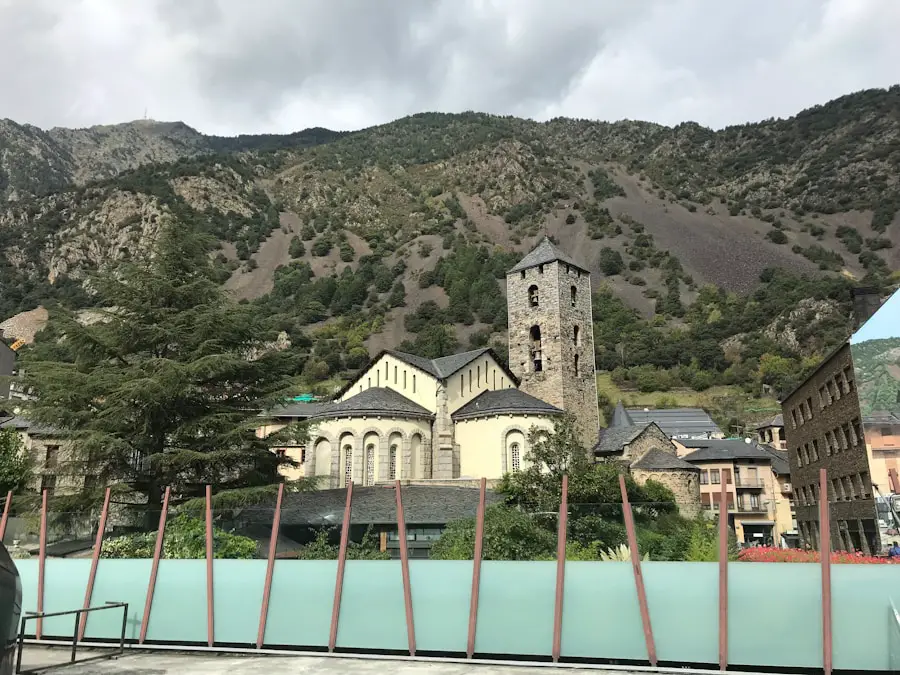
The Church of Sant Esteve is one of the historic centre’s key landmarks. Its Romanesque origins date to the 12th century, although the building was altered substantially over later centuries. Surviving Romanesque elements include the apse and bell-tower structure, while later additions reflect the church’s long history.
Important medieval mural fragments once associated with Sant Esteve are now displayed at Espai Columba in Santa Coloma. Seeing both sites gives a fuller picture than viewing the church alone.
Pro Tip: Explore the historic centre early in the day, then continue downhill toward Avinguda Meritxell for shopping and lunch. The old quarter is more enjoyable before the busiest shopping hours.
Visit the Iconic Casa de la Vall
Casa de la Vall is one of Andorra’s most important political and architectural landmarks. It was built in 1580 as a manor house for the Busquets family—not as a purpose-built parliament. The Consell General acquired the property in 1702, and it remained Andorra’s parliamentary seat until the new General Council building opened next door in 2011.
The stone walls, slate roof, coats of arms, old council chamber, carved woodwork, and defensive architectural details make the house a strong example of traditional Pyrenean and Catalan manor-house architecture. It also helps explain Andorra’s unusual political development as a co-principality.
Casa de la Vall underwent major restoration work in 2025 and reopened to visitors in December of that year, with further conservation work continuing in 2026. Current admission details, opening hours, guided-tour arrangements, and possible changes for official events are available from Museus d’Andorra.
Inside, visitors can see spaces tied to Andorra’s former parliamentary and judicial life, including the old meeting room of the Consell General. Rather than functioning only as a static museum, Casa de la Vall remains an important national symbol and is still used for selected protocol events.
Enjoy Outdoor Activities in and Around Andorra la Vella
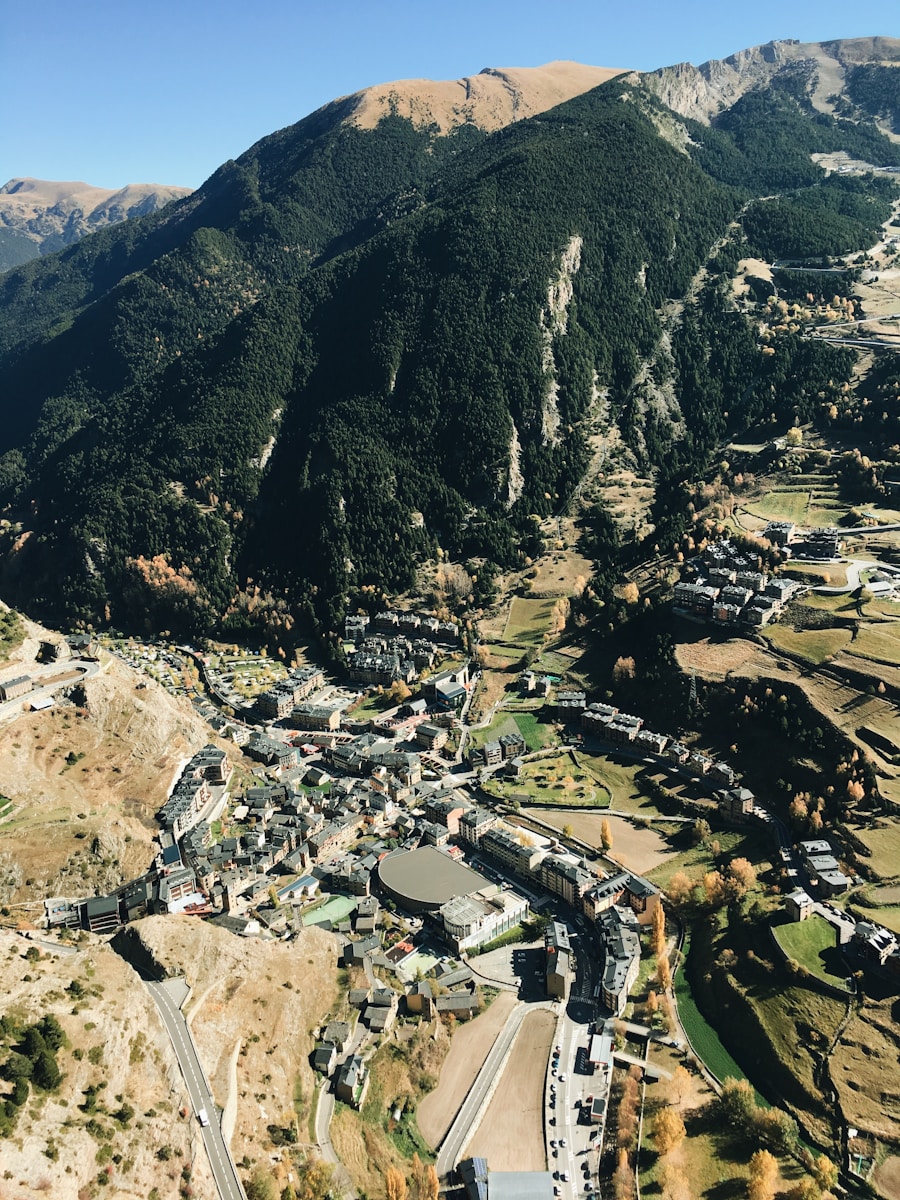
Andorra la Vella sits deep in the Pyrenees, so mountain activities are never far away. Hiking, trail running, cycling, mountain biking, skiing, snowshoeing, and other outdoor sports are available across Andorra, but not every route begins in the capital itself.
Walk the Rec del Solà
For an easy outing close to the city, the Rec del Solà is one of the most useful choices. The official route is about 5.13 km with almost no elevation change along the canal itself. It provides viewpoints over the Andorra la Vella valley while passing gardens and interpretive panels.
This walk works particularly well for visitors who want mountain views without committing to a full high-altitude excursion.
Go Skiing or Mountain Biking
In winter, Andorra’s major ski areas are Grandvalira, Pal Arinsal, and Ordino Arcalís. They are now marketed together through Grandvalira Resorts. The old “Vallnord” label should not be used as though it were the current umbrella resort name.
In warmer months, the same mountain areas offer hiking, lift-assisted sightseeing, cycling, and mountain-bike activities. Pal Arinsal in particular has an extensive bike park, while Grandvalira offers a growing range of summer mountain activities.
Climb Pic de Comapedrosa Only If You Are Prepared
Pic de Comapedrosa is Andorra’s highest summit at 2,942 metres, but it is not a casual walk from Andorra la Vella. The summit route starts near Arinsal in the parish of La Massana. The official route is approximately 15.4 km with about 1,372 metres of climbing and is rated difficult.
Warning: High Pyrenean routes can retain snow well into summer, and weather can change quickly. Andorra Tourism recommends the safest general season for routes above 1,700 metres from late June through late September, subject to actual weather and trail conditions. Check the forecast, carry suitable layers and water, and turn back when conditions deteriorate.
Shop and Dine in the City Center
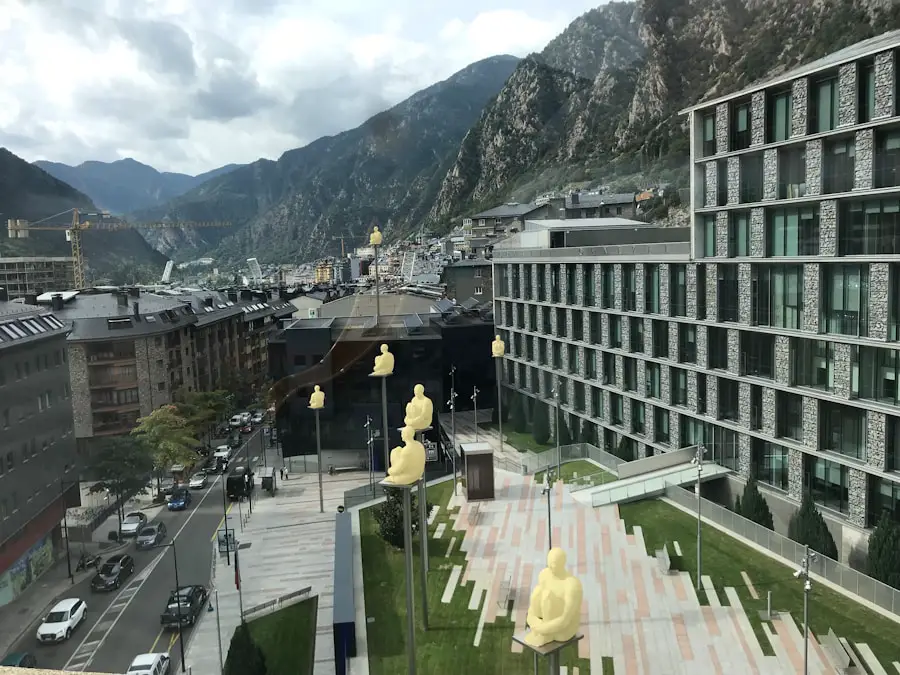
The modern centre of Andorra la Vella is one of the country’s main shopping areas. Avinguda Meritxell forms part of the Shopping Mile, a roughly 1.5 km commercial corridor that continues through Fener Boulevard, Vivand, and Avinguda Carlemany into neighboring Escaldes-Engordany.
Shopping Facts at a Glance
| Shopping Mile | About 1.5 km across Andorra la Vella and Escaldes-Engordany |
| General IGI Tax Rate | 4.5% for goods and services subject to the general rate |
| Currency | Euro (€); major bank cards are widely accepted |
| Typical Shop Hours | Many shops operate roughly 9 a.m.–8 p.m. Sunday–Thursday and until about 9 p.m. Friday–Saturday; individual businesses vary |
| EU Customs Allowance for Most Other Industrial Goods | Up to €900 per adult; lower limits apply to younger travelers and separate quantity limits cover products such as alcohol, tobacco, perfume, and some foods |
Andorra’s relatively low taxes can make fashion, cosmetics, electronics, sports equipment, and other goods attractive to shoppers. However, “duty-free” should not be interpreted as unlimited tax-free importing into another country. When you return to the European Union, customs allowances still apply.
Note: Keep receipts for expensive purchases and check the current Govern d’Andorra customs allowances before crossing into Spain or France.
For a less mall-like experience, explore the independent shops of Riberaygua i Travesseres or return to the historic centre for smaller businesses and souvenirs.
Dining options range from casual cafes and tapas bars to contemporary restaurants. Traditional mountain cooking is worth seeking out, particularly dishes such as trinxat, made with potato and cabbage, along with grilled meats, stews, cheeses, and Catalan-influenced dishes. Canelons also appear on local menus, especially around festive periods.
The Shopping Mile stretches about 1.5 km through the main commercial areas of Andorra la Vella and neighboring Escaldes-Engordany.
Discover Andorra’s Cultural Heritage at Espai Columba
For a deeper look at Andorra’s medieval heritage, visit Espai Columba in Santa Coloma, within the parish of Andorra la Vella. The museum focuses on Romanesque art and displays original mural paintings from the Church of Santa Coloma along with important fragments from Sant Esteve in Andorra la Vella.
The Santa Coloma murals date from the 12th century. Espai Columba also explains the techniques used to create Romanesque wall paintings and places the works within the religious and artistic life of medieval Andorra.
The museum can be combined with the nearby Church of Santa Coloma, one of Andorra’s most distinctive early medieval churches. Its round Lombard-style bell tower is particularly unusual, and a video-mapping presentation helps recreate the appearance of the murals that once decorated the apse.
Do not confuse Espai Columba with the Museu Nacional de l’Automòbil. The latter is the National Automobile Museum in Encamp and focuses on the history and technological development of automobiles, motorcycles, and bicycles rather than serving as a general national-history museum.
Relax at Caldea Spa Complex
Caldea is one of the best-known wellness attractions in Andorra. It is located in Escaldes-Engordany, the parish immediately beside Andorra la Vella, so it is easily combined with a day in the capital.
Relaxation and Thermal Pools
Caldea offers indoor and outdoor thermal-water areas, hydrotherapy features, saunas, hammam-style spaces, relaxation areas, and bookable treatments. The exact facilities included depend on the admission type, so check the current timetable and ticket description before booking.
Wellness Treatments
Massages and other wellness treatments can be added to a visit, depending on availability. Because treatment menus and packages change, it is better to choose from Caldea’s current booking options rather than relying on an old list of therapies.
Premium Adult-Only Experience
The area traditionally associated with the Inúu name is currently offered through Caldea’s Premium experience. Premium access is restricted to visitors aged 16 and over and includes the adult-focused thermal areas as well as access to other included facilities according to the ticket purchased.
Note: Caldea’s hours, operating areas, age rules, and maintenance closures can vary by date. Check the official Caldea calendar before making plans. Premium is for ages 16+, while younger visitors have different permitted areas.
Explore the Natural Beauty Beyond the City
One advantage of staying in Andorra la Vella is that urban sightseeing and mountain scenery are close together. You can spend the morning among shops and historic buildings, then reach a hiking area or mountain village later the same day.
Visit Santa Coloma and Pont de la Margineda
South of the city centre, Santa Coloma offers one of the parish’s most rewarding heritage clusters. Along with the church and Espai Columba, visitors can continue toward the historic Pont de la Margineda. The stone bridge spans the Gran Valira and is the largest preserved historic bridge in Andorra.
An easy walking route connects Santa Coloma with La Margineda, making this a good option for travelers who want heritage and light outdoor activity without tackling a mountain summit.
Make a Day Trip to La Massana or Ordino
For higher mountain scenery, travel toward La Massana, Arinsal, or Ordino. The Comapedrosa Natural Park contains Andorra’s highest peak, forests, streams, lakes, viewpoints, and routes ranging from family-friendly interpretive walks to demanding summit hikes.
Ordino and the surrounding valleys offer another quieter side of the country, with traditional villages and access to mountain trails. These destinations are better treated as excursions from Andorra la Vella rather than attractions within the city itself.
Experience Andorra la Vella’s Nightlife
Andorra la Vella remains active after the shops close. Andorra Tourism’s current bar guide lists more than 50 bars in the capital, ranging from casual places for a drink to lounges and late-evening venues.
Wine bars and small restaurants are good choices for a relaxed evening, while larger leisure venues and seasonal events offer music and entertainment. Opening times vary widely by venue and season, so do not assume that every bar or club remains open until dawn.
Summer events, festivals, concerts, and outdoor terraces can add more activity to the evening. Checking the current Andorra Tourism events calendar is worthwhile, especially during July and August and around major winter holiday periods.
Plan Your Visit to Andorra la Vella
How to Get There
Andorra does not have an airport or a national railway station, so the final part of virtually every journey is by road. International buses connect Andorra with destinations including Barcelona and Toulouse, while drivers enter from Spain via the N-145 or from France via the roads approaching Pas de la Casa.
The nearest airport carrying Andorra’s name is Andorra-La Seu Airport in Spain, near La Seu d’Urgell. Larger international airports such as Barcelona and Toulouse are commonly used for onward road or bus connections.
Documents, Currency, and Mobile Service
Andorra uses the euro, and payment cards are widely accepted. Catalan is the country’s official language, while Spanish and French are also commonly heard.
Andorra is neither a member of the European Union nor part of the Schengen Area. It does not issue its own tourist visa, but travelers normally reach it through Spain or France. Non-EU travelers who require a Schengen visa should make sure their visa permits the necessary exit and re-entry through the Schengen Area. Check current official entry guidance before departure.
Note: Do not assume your normal EU mobile-roaming package covers Andorra. Check your carrier’s Andorra data and call rates before crossing the border or use Wi-Fi where practical.
When Is the Best Time to Visit?
The best season depends on what you want to do. Winter is the obvious choice for skiing and snow activities. Late spring through early autumn is better for city walking, cycling, and lower-elevation hikes, while high-mountain trails are generally safest once lingering snow has cleared.
July and August provide the broadest range of summer mountain activities but can also be busy. Spring and autumn are useful for sightseeing and lower-level walks, although high routes may be affected by snow, ice, or rapidly changing weather.
A Simple One-Day Itinerary
Morning: Start in the historic centre with Sant Esteve Church and Casa de la Vall. Allow time to wander Carrer de la Vall and the neighboring lanes.
Late morning and lunch: Walk toward Avinguda Meritxell and explore the main shopping district before stopping for a lunch featuring Andorran or Catalan-inspired dishes.
Afternoon: Choose between the easy Rec del Solà for views over the capital or a trip to Santa Coloma for Espai Columba, Santa Coloma Church, and the route toward Pont de la Margineda.
Evening: Have dinner in central Andorra la Vella, explore a bar or terrace, or reserve a session at Caldea in neighboring Escaldes-Engordany.
Pro Tip: Save the high mountains for a separate day. Trying to combine Casa de la Vall, shopping, Caldea, and a serious summit such as Comapedrosa in one day creates unnecessary rushing and can compromise mountain safety.
Useful Travel Gadgets for Andorra
If you’re planning a trip to Andorra la Vella, a compact power setup can be useful during long sightseeing or hiking days. For multi-day outdoor trips, see this guide to the best solar charger for backpacking. For ordinary city sightseeing, one of these portable phone chargers for travel will usually be more convenient than a solar panel.
A scarf with a hidden travel pocket can also provide an extra place for small essentials. Whatever you carry, keep passports, payment cards, and expensive electronics secure, particularly during border transfers and in busy shopping areas.
Frequently Asked Questions
What are the top things to do in Andorra la Vella?
Top things to do include exploring the historic Old Town, visiting Casa de la Vall and Sant Esteve Church, walking the Rec del Solà, shopping along Avinguda Meritxell, eating Andorran food, visiting Santa Coloma and Espai Columba, and relaxing at nearby Caldea.
What is Casa de la Vall?
Casa de la Vall is a historic manor house built for the Busquets family in 1580. The Consell General acquired it in 1702, and it served as Andorra’s parliamentary seat until 2011. Today it can be visited as one of the country’s most important political and cultural monuments.
What can I do in Andorra la Vella’s Old Town?
Walk the narrow historic streets, visit Sant Esteve Church and Casa de la Vall, admire the granite architecture, stop at cafes, and explore viewpoints and public spaces around the General Council. The historic core is compact enough to combine with the modern shopping district on foot.
What is the commercial center in Andorra la Vella known for?
The capital is known for fashion, cosmetics, electronics, sports equipment, and other shopping along Avinguda Meritxell and the wider Shopping Mile. Andorra has a relatively low general IGI tax rate, but customs allowances apply when travelers take purchases back into the European Union.
What outdoor activities are available in Andorra la Vella?
Close to the capital, visitors can walk routes such as Rec del Solà and enjoy cycling and valley viewpoints. Elsewhere in Andorra, hiking, mountain biking, skiing, snowshoeing, and trail running are widely available. High-altitude routes such as Pic de Comapedrosa require proper preparation and a trip to Arinsal.
Is Caldea in Andorra la Vella?
Caldea is in Escaldes-Engordany, the neighboring parish directly beside Andorra la Vella. It is close enough to combine with sightseeing in the capital. Its Premium spa experience is restricted to visitors aged 16 and over.
How many days do you need in Andorra la Vella?
One full day is enough for the historic centre, Casa de la Vall, shopping, and either a short walk or Caldea. Two or three days are better if you also want Santa Coloma, mountain villages, skiing, cycling, or a substantial hike elsewhere in Andorra.
Sources
- Andorra Tourism — Must-visit spots in Andorra la Vella — historic centre, Casa de la Vall, Espai Columba, Santa Coloma, and other cultural attractions.
- Museus d’Andorra — Casa de la Vall — parliamentary history, visitor information, and building details.
- Andorra Tourism — How to Get Here — road, bus, rail-connection, and airport information.
- Grandvalira Resorts — current Grandvalira, Pal Arinsal, and Ordino Arcalís resort structure.
- Caldea — Plan Your Visit — current spa facilities, admission planning, age guidance, and location.
- Govern d’Andorra — Customs Allowances — current limits for purchases taken from Andorra into the European Union.
