
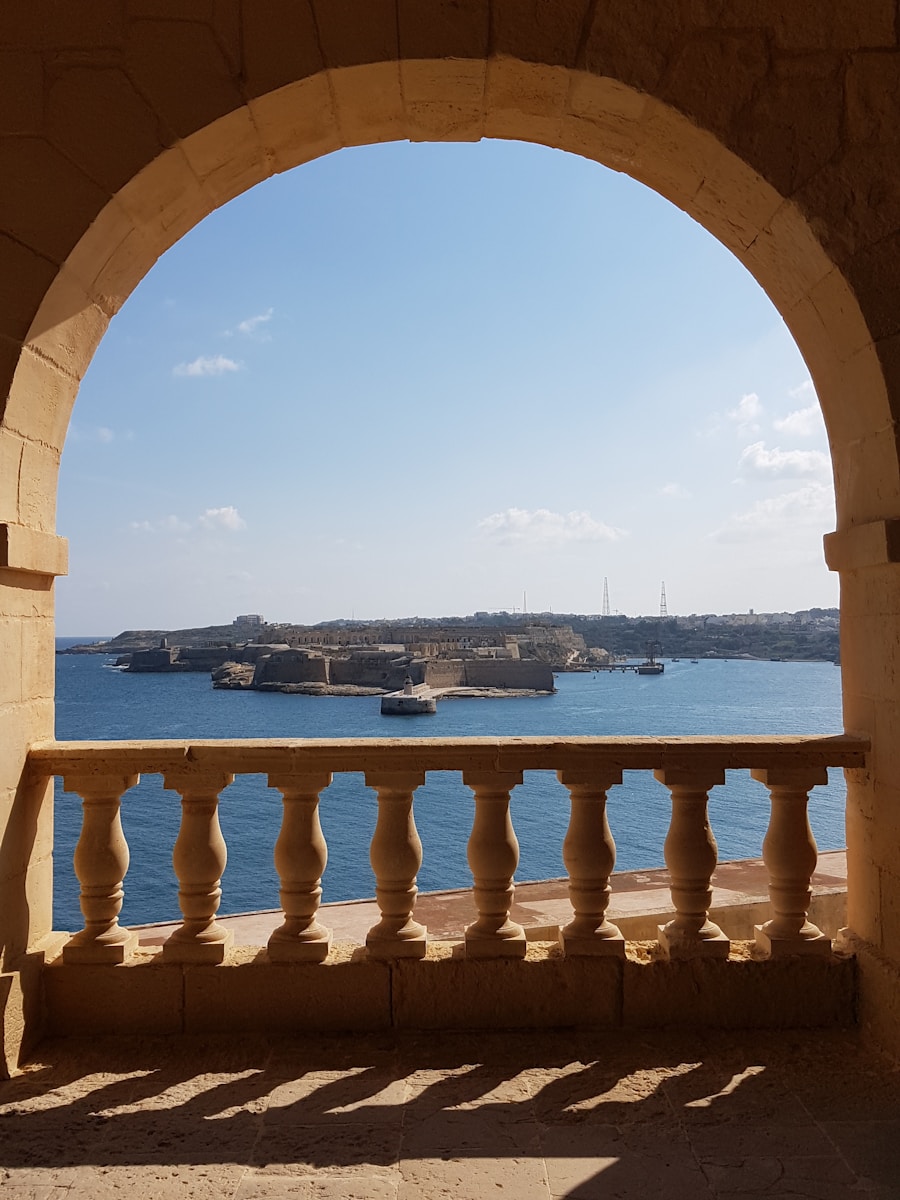
Last Updated on July 27, 2026 by Daniel Globe
Valletta packs an unusual amount of history, art, food, and harbor scenery into a small fortified capital. Founded by the Knights of St. John in 1566, the city is compact enough to explore largely on foot, yet its churches, palaces, museums, gardens, steep streets, and waterfront views can easily fill one or two days.
Quick Answer
Valletta is best explored on foot, with a day centered on St. John’s Co-Cathedral, the Grand Master’s Palace, Upper Barrakka Gardens, Fort St Elmo, and the city’s compact streets. Add Maltese food, a harbor ferry, and an evening on Strait Street; two days gives more time for museums and nearby Three Cities.
Key Takeaways
- Start with St. John’s Co-Cathedral and the Grand Master’s Palace for the clearest introduction to the Knights of St. John and Valletta’s history.
- Upper Barrakka Gardens offers one of the easiest panoramic views across the Grand Harbour toward the Three Cities and Fort St Angelo.
- Fort St Elmo and the National War Museum add essential context about the Great Siege, British rule, and Malta during World War II.
- Try Maltese specialties such as pastizzi and rabbit, and look for wines made with indigenous Ġellewża or Girgentina grapes.
- Valletta is compact but hilly, so comfortable walking shoes matter more than the short distances suggest.
- Check official attraction notices before visiting because restoration work and state functions can temporarily close parts of major sites.
Disclosure: As an Amazon Associate I earn from qualifying purchases. Some links on this page are affiliate links, at no extra cost to you.
Explore Valletta’s Historic Core
Valletta’s story begins after the Great Siege of 1565. The Knights of St. John founded the new fortified city in 1566, and UNESCO inscribed the City of Valletta on the World Heritage List in 1980. Its grid of limestone streets preserves an unusually dense concentration of religious, military, civic, and residential monuments.
UNESCO describes Valletta as a compact ensemble containing about 320 monuments, reflecting the civil, religious, artistic, and military life of the Knights of St. John.
St. John’s Co-Cathedral
St. John’s Co-Cathedral is one of Valletta’s essential stops. Its restrained exterior gives little warning of the richly decorated Baroque interior, where gilded carving, side chapels, and the painted vault by Mattia Preti surround visitors.
The cathedral also holds two works by Caravaggio: The Beheading of St John the Baptist and St Jerome Writing. According to the St. John’s Co-Cathedral Foundation, the Beheading is Caravaggio’s largest and only signed painting. The church floor is covered with elaborate marble tombstones commemorating prominent members of the Order.
Note: St. John’s is an active church. Current visitor rules require appropriate dress, prohibit stiletto or narrow heels, and restrict access to some areas for visitors with mobility issues. Its museum is currently closed for extension and refurbishment, so check the official visitor page before your trip.
Grand Master’s Palace
A short walk away, the Grand Master’s Palace stands on St George’s Square. It served the Grand Masters of the Order, later became the British Governor’s Palace, and eventually housed Malta’s Parliament.
Today, however, the palace is the official seat of the President of Malta. Parliament moved to the purpose-built Parliament House near City Gate in 2015. Visitors can explore restored State Rooms and the Palace Armoury when areas are open to the public.
Note: As of July 2026, Heritage Malta lists the Palace Throne Room as closed until further notice. The palace can also close for state functions, so check current notices before planning your visit.
Visit Fort St Elmo and the National War Museum
Fort St Elmo sits at the tip of the Valletta peninsula between Grand Harbour and Marsamxett Harbour. The fort existed before Valletta itself and played a central role in the Great Siege of 1565, when its defenders resisted Ottoman forces for about a month.
Today, Fort St Elmo and the National War Museum cover thousands of years of Maltese military history. Exhibits place particular emphasis on the Knights, the Great Siege, and Malta’s role during World War II. Notable objects include the George Cross awarded to Malta, the Gloster Sea Gladiator known as Faith, and President Franklin D. Roosevelt’s Jeep “Husky.”
The fort is also worth visiting for its views toward the entrances of both major harbors. Heritage Malta recommends allowing at least about 1.5 hours for a useful visit.
Note: Parts of Fort St Elmo and the National War Museum are temporarily affected by exhibition closures in 2026. Check Heritage Malta’s current notice before visiting.
See the National Museum of Archaeology
Valletta is also a good place to understand Malta long before the Knights arrived. The National Museum of Archaeology occupies the historic Auberge de Provence on Republic Street and displays material from Malta’s Neolithic, Bronze Age, and Phoenician periods.
Highlights include the Sleeping Lady, the Venus of Malta, prehistoric objects from Malta’s megalithic sites, and the Cippus of Malta. It is a useful first stop if your Malta itinerary also includes Ħaġar Qim, Mnajdra, Tarxien, or the Ħal Saflieni Hypogeum.
Sampling Maltese Cuisine and Wines
Maltese food reflects the islands’ position between southern Europe and North Africa. Italian and especially Sicilian influence is easy to spot, but local dishes have developed their own character through centuries of Maltese cooking.
One traditional main course is rabbit, or fenek. Preparations vary, but rabbit is often braised or stewed with wine, herbs, garlic, and other savory ingredients. It is a filling meal, so it works especially well after a long day of walking.
For a much quicker bite, try pastizzi. These flaky pastries are most commonly filled with ricotta or a seasoned pea mixture and are sold throughout Malta. Another useful local snack is ftira, Malta’s traditional ring-shaped bread, which can be filled with ingredients such as tomatoes, tuna, olives, capers, and olive oil.
Malta also produces its own wines. When reading a wine list, look for indigenous grape varieties such as red-skinned Ġellewża and white Girgentina. Both are recognized by the official Wines of Malta certification system alongside international varieties.
Pro Tip: Instead of planning every meal around a formal restaurant, leave room for a bakery stop or quick pastizzi break. Valletta is compact enough that a snack between museums can save time without sacrificing the local-food experience.
Enjoying the Stunning Views of Valletta’s Harbor
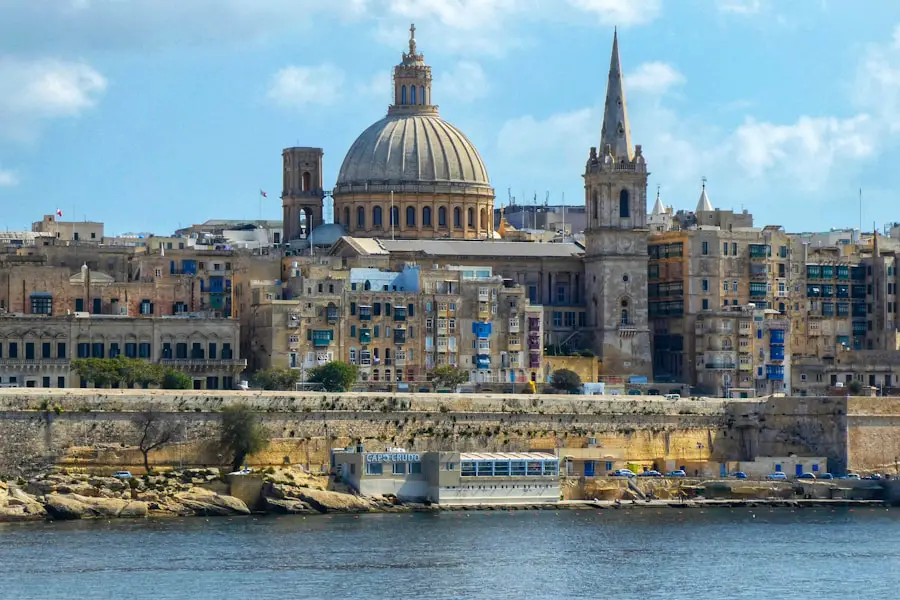
The Grand Harbour is part of Valletta’s appeal rather than simply a backdrop. Fortifications line the water, Fort St Angelo rises opposite in Birgu, and ferries and traditional boats move between the old harbor communities.
Upper Barrakka Gardens is the classic viewpoint. From its terrace, you can look across Grand Harbour toward the Three Cities and Fort St Angelo. Below the gardens sits the Saluting Battery, while the Barrakka Lift connects the upper city with the waterfront area near the ferry landing.
A harbor crossing also gives you a different view of Valletta’s fortifications. Transport Malta’s scheduled harbor ferries link Valletta with the Three Cities and with Sliema. The service is practical transport as well as an inexpensive way to see the city from water level.
Pro Tip: Combine Upper Barrakka Gardens with the Valletta–Three Cities ferry. You get the elevated panorama first, then a water-level view of the same fortifications without committing to a lengthy harbor cruise.
Discovering Valletta’s Art and Culture Scene
| Cultural Stop | What to Know |
| MUŻA | Succeeded the former National Museum of Fine Arts in 2018; Heritage Malta currently lists MUŻA as temporarily closed. |
| Teatru Manoel | Malta’s National Theatre and one of Europe’s oldest working theatres; performances and visitor tours are offered according to schedule. |
| National Museum of Archaeology | Best for Malta’s prehistoric, Bronze Age, and Phoenician collections. |
| Valletta Contemporary | Independent exhibition space showing contemporary Maltese and international artists. |
| MICAS | Contemporary-art institution opened in late 2024 in neighboring Floriana, within walking distance of Valletta’s entrance. |
Valletta’s cultural scene extends well beyond historic churches. Teatru Manoel, built in the 18th century, remains Malta’s National Theatre and is reputed to be Europe’s third-oldest working theatre. Depending on the schedule, visitors can attend a performance or take a daytime visit through its Baroque auditorium.
The former National Museum of Fine Arts should no longer be listed as a current attraction under that name. It was succeeded in 2018 by MUŻA – The National Community Art Museum at Auberge d’Italie. As of July 2026, however, Heritage Malta lists MUŻA as temporarily closed.
Contemporary-art visitors still have alternatives. Valletta Contemporary operates within the city, while MICAS, Malta International Contemporary Art Space, opened in neighboring Floriana in late 2024 and runs exhibitions, tours, workshops, and cultural events.
Taking a Stroll Through Valletta’s Charming Streets
Walking is one of the simplest pleasures in Valletta. The city was planned on a grid, so navigation is easier than in many older European centers, although the peninsula’s slopes mean that a short distance can still involve steep streets or stairs.
Enter through City Gate and pause to see the modern Parliament House designed by Renzo Piano. This is Malta’s current parliamentary building, replacing the former parliamentary chambers inside the Grand Master’s Palace in 2015.
Republic Street forms the main sightseeing spine, while parallel Merchants Street is useful for shops, cafés, and market activity. Side streets reveal enclosed wooden balconies, limestone facades, small churches, stairways, and glimpses of the water at the ends of steep streets.
Strait Street deserves a walk even before evening. Once associated with sailors, bars, and entertainment around the harbor, it has been revived with restaurants, wine bars, and nightlife venues while retaining its narrow historic streetscape.
Caution: Valletta’s distances are short, but its hills, stairs, exposed bastions, and summer sun can make a walking day tiring. Carry water, use sun protection in hot weather, and wear shoes with reliable grip on polished limestone.
Visiting Valletta’s Iconic Churches and Cathedrals
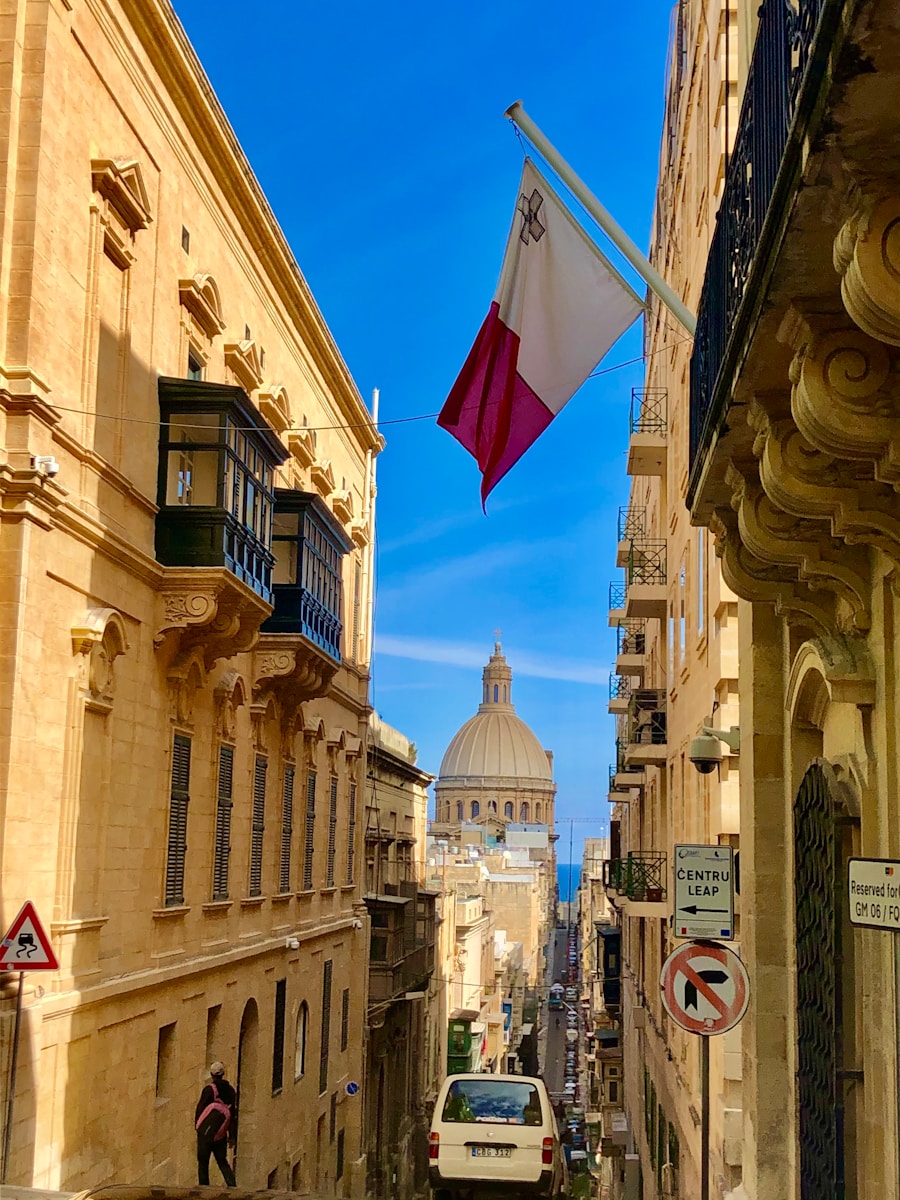
St. John’s Co-Cathedral is the headline religious attraction, but Valletta contains many other churches that reveal different periods in the city’s development.
Church of Our Lady of Victory
The Church of Our Lady of Victory is closely tied to Valletta’s founding. It was commissioned by Grand Master Jean Parisot de Valette in thanksgiving for the Order’s victory in the Great Siege of 1565 and is traditionally associated with the site where the foundation stone of Valletta was laid in 1566.
Din l-Art Ħelwa, Malta’s National Trust, describes it as Valletta’s first church and probably its first building. Jean de Valette was initially buried there before his remains were later transferred to St. John’s.
Basilica of Our Lady of Mount Carmel
The large dome of the Basilica of Our Lady of Mount Carmel is one of the easiest features to recognize in Valletta’s skyline. The present church largely reflects postwar rebuilding after the earlier structure was badly damaged during World War II.
St. Paul’s Pro-Cathedral
St. Paul’s Pro-Cathedral adds a different layer to Valletta’s religious history. Built during the British period, it is an Anglican pro-cathedral whose spire remains a prominent part of the city skyline. The cathedral is an active place of worship and also welcomes visitors. Current information is available from St. Paul’s Pro-Cathedral.
Exploring Valletta’s Hidden Gems and Local Markets
For a quieter break, walk to Lower Barrakka Gardens near the eastern end of the peninsula. The gardens are smaller and generally feel more removed from the central shopping streets, with views toward the Grand Harbour entrance and the Siege Bell Memorial area.
Merchants Street also hosts Valletta’s licensed open-air market. Malta’s Commerce Department continues to recognize the Merchants Street open-air market under its market-hawker licensing system.
Set expectations correctly, however: the street market should not be presented as a dedicated handmade-craft or farmers market. For food, you can also browse Is-Suq Tal-Belt, the restored covered market in central Valletta, or stop at independent bakeries, food shops, and cafés throughout the surrounding streets.
Small galleries and shops can be more rewarding for distinctive souvenirs than generic stalls. Look for Maltese ceramics, local art, food products, glass, lace, and other items whose maker or origin is clearly identified.
Experiencing Valletta’s Vibrant Nightlife
Valletta becomes noticeably different after the major attractions close. Strait Street is the best-known nightlife strip, with wine bars, cocktail spots, restaurants, and venues occupying buildings along the narrow former entertainment district.
The city is generally better suited to dinner, drinks, live performances, and bar-hopping than to the large-club scene associated with Paceville in St. Julian’s. That makes Valletta an easy place to extend a sightseeing day without traveling elsewhere for the evening.
Rooftop and terrace venues can add harbor or skyline views, while Teatru Manoel and other cultural venues provide alternatives for visitors who prefer a performance to bars. Check event schedules before arrival because Malta’s arts calendar changes through the year.
How to Spend One Day in Valletta
You can see Valletta’s main highlights in one full day, although two days are better if you enjoy museums, churches, or slower meals.
- Morning: Enter through City Gate, see Parliament House, then visit St. John’s Co-Cathedral before the middle of the day.
- Late morning: Walk to St George’s Square for the Grand Master’s Palace.
- Lunch: Try a Maltese restaurant, bakery, or pastizzi stop around Republic Street or Merchants Street.
- Early afternoon: Walk to Upper Barrakka Gardens for the Grand Harbour panorama.
- Afternoon: Choose Fort St Elmo and the National War Museum, or the National Museum of Archaeology if prehistoric Malta interests you more.
- Late afternoon: Continue through Lower Barrakka Gardens and the quieter eastern streets.
- Evening: Return toward central Valletta for dinner and drinks around Strait Street, or take a harbor ferry if the operating schedule suits your plans.
Note: Opening days, state functions, religious services, restoration projects, and seasonal schedules can change this route. Check the official website for each paid attraction shortly before visiting rather than relying on an old printed timetable.
Easy Day Trips and Excursions from Valletta
Valletta also works well as a base for exploring other parts of Malta. The easiest extension is the Three Cities—Vittoriosa (Birgu), Senglea, and Cospicua—across the Grand Harbour. The scheduled ferry makes this a practical half-day trip, and Birgu is home to Fort St Angelo.
Mdina offers a very different atmosphere: a compact fortified city with medieval streets and broad views over Malta. It pairs well with nearby Rabat for a fuller day.
Gozo requires more travel time and deserves a full day rather than being squeezed into a few free hours. The Blue Grotto and Malta’s prehistoric temple sites are other worthwhile choices when your itinerary extends beyond the capital.
For walking days in Valletta, footwear matters because the city’s limestone streets can be steep and may become slick when wet. This guide to waterproof travel sneakers may be useful when rain is in the forecast.
Frequently Asked Questions
What are the top things to do in Valletta, Malta?
Top Valletta attractions include St. John’s Co-Cathedral, the Grand Master’s Palace, Upper Barrakka Gardens, Fort St Elmo and the National War Museum, the National Museum of Archaeology, City Gate, Parliament House, Lower Barrakka Gardens, and the historic streets around Republic Street and Strait Street.
What is the best way to explore Valletta?
Walking is the best way to explore the historic center because most major sights are close together. Valletta is hilly, however, so comfortable footwear helps. Harbor ferries are useful when combining Valletta with Sliema or the Three Cities.
Is one day enough for Valletta?
One full day is enough for Valletta’s main highlights if you start early and limit the number of museums. Two days are better if you want to explore several interiors, attend a performance, take a harbor crossing, or enjoy long meals without rushing.
What are the must-see historical sites in Valletta?
St. John’s Co-Cathedral, the Grand Master’s Palace, Fort St Elmo, the National War Museum, the Church of Our Lady of Victory, and the city’s fortifications are among the strongest historical stops. Casa Rocca Piccola is another option for visitors interested in a historic private residence.
What cultural experiences are worth adding in Valletta?
Consider a performance or tour at Teatru Manoel, the National Museum of Archaeology, a temporary exhibition at Valletta Contemporary, or MICAS in neighboring Floriana. MUŻA normally covers Malta’s national art collection but is temporarily closed at the time of this July 2026 update.
Do I need to follow a dress code at St. John’s Co-Cathedral?
Yes. St. John’s Co-Cathedral asks visitors to dress appropriately for a church. Its current visitor policy also prohibits stiletto and narrow heels because of the historic marble floor. Check the cathedral’s official visitor information before arrival for any updated rules.
Is Valletta accessible for visitors with limited mobility?
Many major attractions provide accessible facilities, but Valletta itself includes steep streets, stairs, uneven historic surfaces, and sloped routes. Individual historic sites may also have sections that cannot be reached without steps, so checking each attraction’s accessibility statement in advance is worthwhile.
What are the best day trips from Valletta?
The Three Cities are the easiest excursion because they sit directly across Grand Harbour and are served by ferry. Mdina and Rabat make another strong day trip, while Gozo deserves a full day. The Blue Grotto and Malta’s prehistoric temple sites are also popular options.
Sources
- UNESCO World Heritage Centre — City of Valletta — Valletta’s foundation, World Heritage status, urban plan, and concentration of monuments.
- Heritage Malta — Grand Master’s Palace — present use, visitor areas, historical role, and Palace Armoury.
- St. John’s Co-Cathedral Foundation — Visitor Information — access, dress rules, visiting guidance, and current refurbishment notice.
- Heritage Malta — Fort St Elmo and National War Museum — fort history, collections, accessibility, and current visitor information.
- Heritage Malta — National Museum of Archaeology — prehistoric and Phoenician collections in Valletta.
- Transport Malta — Harbour Ferry Services — scheduled connections between Valletta, Sliema, and the Three Cities.
