
Last Updated on July 27, 2026 by Daniel Globe
Luxembourg City packs centuries of history, dramatic viewpoints, green valleys, museums, and lively neighborhoods into a compact capital. Many of its best sights sit within or beside the UNESCO-listed Old Quarters and Fortifications, so you can combine the Bock Casemates, Grand Ducal Palace, Corniche, cathedral, museums, and Grund in a rewarding day of sightseeing.
Quick Answer
The best things to do in Luxembourg City include exploring the Bock Casemates, walking the UNESCO-listed Old Town and Corniche, seeing the Grand Ducal Palace and Notre-Dame Cathedral, visiting Nationalmusée um Fëschmaart, strolling through the Pétrusse Valley, and spending an evening among the riverside restaurants and pubs of the Grund.
Key Takeaways
- The Bock Casemates and surrounding fortifications reveal why Luxembourg was once one of Europe’s most important fortified cities.
- The UNESCO-listed Old Town, Grand Ducal Palace, Notre-Dame Cathedral, and Corniche are close enough to combine on foot.
- Nationalmusée um Fëschmaart is one of the best stops for understanding Luxembourg’s archaeology, history, fine art, and decorative arts.
- The Pétrusse Valley and Grund provide greener, quieter contrasts to the Upper Town.
- Public buses, trams, and second-class trains within Luxembourg are fare-free, which makes it easy to save your energy when the city’s hills become tiring.
Disclosure: As an Amazon Associate I earn from qualifying purchases. Some links on this page are affiliate links, at no extra cost to you.
Explore the Bock Casemates
The Bock Casemates are part of the historic fortifications included in Luxembourg City’s UNESCO World Heritage property. Their history is more complex than simply being a Spanish construction. The first casemates in Luxembourg were built in 1644 under Spanish rule, while the defensive galleries on the Bock were developed principally by Austrian engineers beginning in 1745.
The city’s wider underground defensive system eventually extended for about 23 kilometers. After the 1867 Treaty of London ordered the fortress dismantled, parts of the network were destroyed, while substantial underground sections survived because removing them would have threatened buildings above. Today, visitors can enter the Bock and see gun chambers, galleries, loopholes, and views over the lower town. You can read the current visitor information on the official Bock Casemates page.
The experience is more than a walk through dark tunnels. Openings in the fortifications frame views toward the Alzette valley and the historic lower districts, helping you understand how Luxembourg’s steep terrain became part of its defenses. The archaeological crypt also introduces the site of the early castle built on the Bock promontory, where Luxembourg City’s story began.
Warning: The Bock Casemates are not suitable for every mobility level. The Luxembourg City Tourist Office advises visitors with special needs to contact its staff before buying a ticket. Check the official access and safety information before your visit.
Pro Tip: Visit the Bock first and continue directly onto the nearby Corniche. The two attractions make a natural pair and provide both underground history and some of the city’s best open-air views.
Visit the Grand Ducal Palace
The Grand Ducal Palace stands in the heart of the Old Town and is one of Luxembourg’s most important civic buildings. The palace is used by the Grand Duke for official duties; the Grand Ducal family lives at Berg Castle rather than in the city palace. Its ornate historic façade makes it an easy landmark to admire while exploring Rue du Marché-aux-Herbes and the surrounding pedestrian streets.
During the annual public opening period, guided tours allow visitors to see ceremonial and working rooms inside the palace. Current official tour descriptions include areas such as the Grand Duke’s office, dining room, and Salon des Rois. For 2026, public visits are scheduled from July 18 through August 30, but future dates can change, so check the official Grand Ducal Palace visitor page before planning around an interior tour.
The palace is still worth seeing when tours are unavailable. Its central location puts it within an easy walk of Place Guillaume II, Place d’Armes, Notre-Dame Cathedral, and the Corniche. A solemn changing-of-the-guard ceremony is held on selected scheduled dates rather than as a daily tourist attraction, so confirm the current events calendar if you hope to see one.
Note: Palace interior access is seasonal. Do not build an itinerary around a palace tour until you have checked the current opening period and ticket availability.
Wander through the Old Town
Old Town at a Glance
| UNESCO Status | Part of the City of Luxembourg: its Old Quarters and Fortifications, inscribed in 1994 |
| Key Stops | Grand Ducal Palace, Place d’Armes, Place Guillaume II, St. Michael’s Church, Corniche |
| Suggested Time | About 2–3 hours when combined with nearby viewpoints and major landmarks |
| Best For | Architecture, history, cafés, photography, and easy access to major sights |
| Terrain | Mostly walkable but includes cobblestones, slopes, stairs, and elevation changes near the lower districts |
Luxembourg City’s historic center is a maze of narrow streets, squares, civic buildings, churches, shops, and cafés. Together with the surviving fortifications, the Old Quarters were added to the UNESCO World Heritage List in 1994. UNESCO recognizes the city for the exceptional surviving evidence of a fortified European stronghold that developed over centuries.
As you walk through the Upper Town, look for the Grand Ducal Palace, Place d’Armes, Place Guillaume II, and St. Michael’s Church. The streets reflect different phases of the city’s development rather than one uniform architectural period, which is part of what makes an unhurried walk worthwhile.
The Old Town is also a living city center. Cafés, restaurants, shops, and terraces occupy many of the historic streets, while Place d’Armes remains one of the natural gathering points. Instead of racing from landmark to landmark, leave time to sit down for coffee or a meal and watch the city around you.
Luxembourg City’s Old Quarters and Fortifications have been on the UNESCO World Heritage List since 1994.
Admire the Views from the Corniche
The Chemin de la Corniche is one of Luxembourg City’s signature walks. Often called “Europe’s most beautiful balcony,” the promenade follows the old ramparts above the Alzette valley and offers broad views over the Grund, the river, historic roofs, and the Rham Plateau.
The official route runs for roughly 600 meters between the area of the Bock Casemates and the Holy Ghost Citadel. Much of the present panoramic character became possible after parts of the fortress walls were removed during the dismantling of Luxembourg’s defenses in the 19th century. You can find the route and current information on the Luxembourg City Tourist Office’s Corniche page.
The Corniche is particularly rewarding for photographers because the viewpoint combines cliffs, fortifications, the lower town, and the Alzette valley in one scene. Morning can be quieter, while late-afternoon light often brings out the texture of the historic buildings. Benches and nearby streets make it easy to pause before continuing downhill toward the Grund.
Discover Luxembourg’s History at Nationalmusée um Fëschmaart
The museum previously widely known in English as the National Museum of History and Art is now part of the Musée national d’archéologie, d’histoire et d’art (MNAHA). Its central museum site, Nationalmusée um Fëschmaart, sits in the historic city center and presents national collections across more than 6,000 square meters.
The displays are organized around archaeology, coins and medals, decorative arts, and fine arts. Together they provide a broader view of Luxembourg than sightseeing alone can offer, covering human settlement, material culture, artistic production, and the country’s connections with wider European history.
Art lovers can also encounter Luxembourgish artists such as Joseph Kutter, one of the country’s best-known 20th-century painters. The museum regularly organizes temporary exhibitions alongside its permanent collections, so the exact experience changes throughout the year.
This is an especially useful stop in poor weather or when you want more context for the fortifications, churches, and historic streets you have already seen outside. Check the museum’s official site for the current exhibition program and opening hours before visiting.
Stroll through the Beautiful Pétrusse Valley
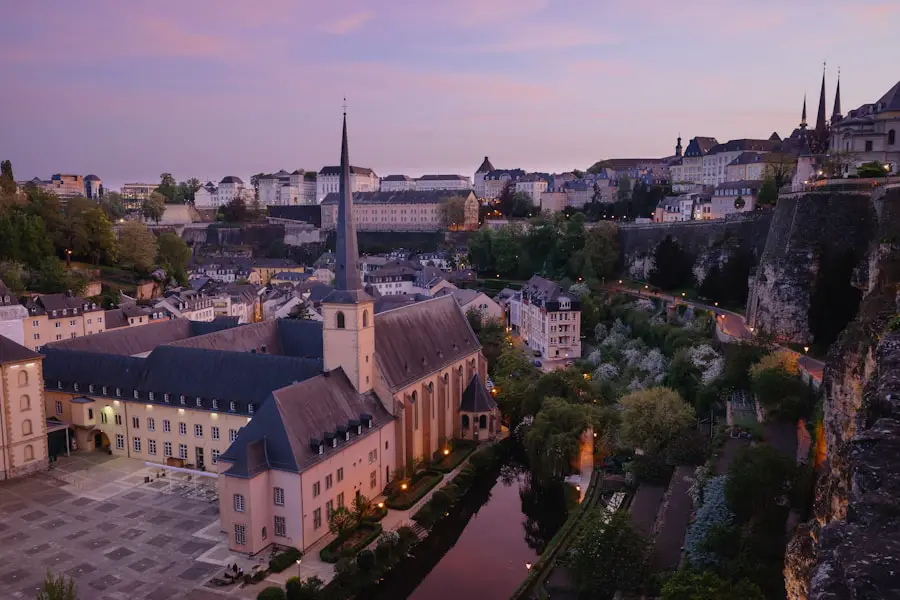
The Pétrusse Valley offers a green break directly below the busy Upper Town. Its stream, cliffs, paths, trees, historic bridges, and surviving fortifications create one of the most attractive urban landscapes in Luxembourg City.
Walking paths wind through the valley beneath landmarks such as the Adolphe Bridge and the Passerelle. You can also see remains connected with Luxembourg’s former defenses, including bastions and the Pétrusse Casemates. The official Pétrusse Valley guide also highlights jogging and cycling paths, picnic areas, play spaces, outdoor fitness facilities, and the valley’s skatepark.
The valley works well when you need a slower part of the day. Follow one of the shaded paths, stop on a lawn, or use the route to appreciate how sharply Luxembourg’s upper and lower districts differ in elevation. The steep cliffs and bridges also make the valley a useful place to understand why the site was so defensible.
Visit Notre-Dame Cathedral
Notre-Dame Cathedral is one of Luxembourg City’s key religious and historic landmarks. The church was built by the Jesuits between 1613 and 1621 to serve their college. It became a cathedral in 1870 and was substantially enlarged between 1935 and 1938.
Inside, visitors can see stained glass, sculptural work, an ornate choir screen, confessionals, and architectural details from several periods. Rather than being purely Gothic, the building reflects a mixture of styles created through its long history and later alterations. Current visitor details are available from Visit Luxembourg’s official cathedral page.
The crypt adds another layer of historical significance. It contains the tomb of John the Blind, King of Bohemia and Count of Luxembourg, as well as the resting places of deceased members of the Grand Ducal family.
The cathedral remains an active place of worship, so sightseeing should be quiet and respectful. Services and special religious events can affect tourist access, making it wise to check current opening information before your visit.
Experience the Nightlife in the Grund District
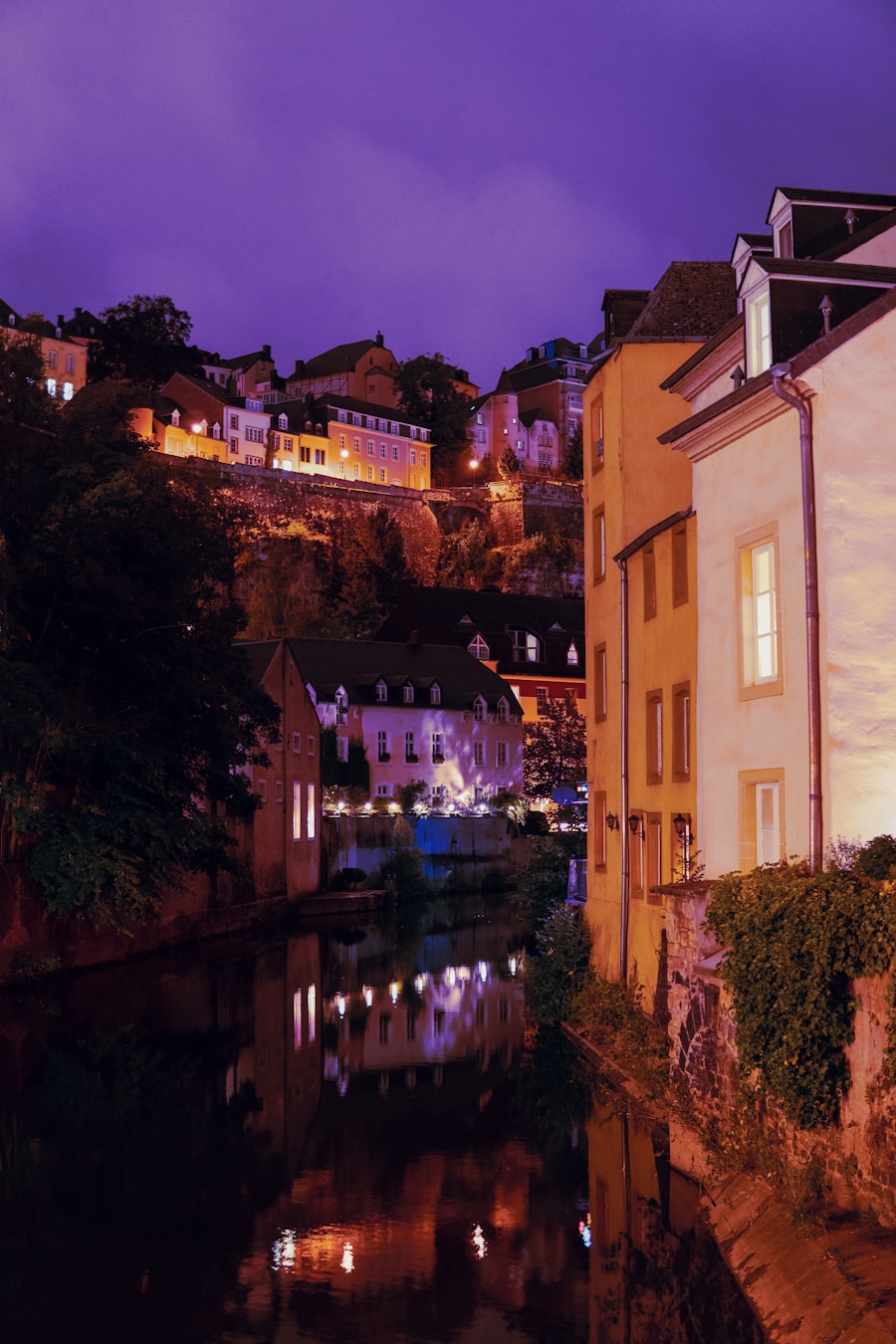
After dark, the Grund offers a relaxed alternative to the streets of the Upper Town. This historic lower district sits beside the Alzette River and combines old buildings, waterside views, restaurants, pubs, and bars in a compact setting.
The Grund’s evening atmosphere tends to suit dinner, drinks, terraces, and casual pub nights more than large-scale clubbing. For travelers looking for a stronger nightclub scene, nearby Clausen is one of Luxembourg City’s better-known late-night areas. The Luxembourg City Tourist Office’s official nightlife guide distinguishes Grund’s pubs and restaurants from the club-oriented options found in Clausen.
One practical advantage is that you do not always have to climb all the way back to the Upper Town on foot. A public elevator connects the Grund with the Saint-Esprit Plateau, making the elevation change considerably easier after a long day of sightseeing.
How to See Luxembourg City in One Day
If you have only one full day, concentrate on the historic center instead of trying to cover every neighborhood. Luxembourg City’s compact layout allows many of its major sights to be linked into one walking route.
Morning: Start at the Bock Casemates, then walk the Corniche while the historic center is relatively quiet. Continue through the Old Town toward the Grand Ducal Palace and Place Guillaume II.
Midday: Visit Notre-Dame Cathedral and stop for lunch in or near the Old Town. If the Grand Ducal Palace is open for seasonal tours and you have a reservation, build the tour into this part of the day.
Afternoon: Spend time at Nationalmusée um Fëschmaart, then walk toward the Pétrusse Valley. Travelers who prefer viewpoints to museums can instead spend longer exploring the valley and nearby bridges.
Evening: Finish in the Grund for dinner and drinks along the lower town streets. Use the public elevator if you do not want to tackle another steep uphill walk afterward.
Pro Tip: One day is enough for the main historic sights, but two days give you time to visit museums at a relaxed pace, explore additional districts, and enjoy the valleys without constantly watching the clock.
Getting Around Luxembourg City
Walking is often the best way to experience the Old Town because many of the major attractions are close together. The challenge is elevation rather than distance: Luxembourg City’s upper districts, valleys, bridges, stairways, and cobbled streets can make a short route feel longer than it looks on a map.
Public transportation makes those hills easier to manage. Luxembourg provides fare-free second-class travel on domestic buses, trams, and trains. First-class train travel is not included. Current network information is available through Visit Luxembourg’s transportation guide.
Comfortable walking shoes are worth packing even for a short visit. Cobblestones, slopes, and stairs occur around the historic center and lower districts, and conditions inside historic fortifications differ from modern paved streets.
Practical Tips Before You Visit
Check seasonal attractions: The Grand Ducal Palace does not offer public interior tours all year. Verify the current public-opening period before arranging your day around it.
Reserve timed attractions when needed: The Bock Casemates use scheduled entry periods, and seasonal palace tours can sell out. Booking ahead is sensible during busy travel periods.
Allow for hills: The Old Town is compact, but the Grund, Pétrusse Valley, and other lower districts sit well below the Upper Town. Elevators and public transportation can save energy.
Respect active religious sites: Notre-Dame Cathedral is not simply a tourist attraction. Services and ceremonies take priority over sightseeing.
Check hours on official sites: Museum, cathedral, palace, and attraction hours can change because of holidays, events, maintenance, or seasonal schedules.
Optional sightseeing gear can also be useful. A pair of compact binoculars for hiking can help you pick out architectural details from the Corniche and other viewpoints, although they are not essential. Practical travel gifts such as a small umbrella, comfortable day bag, or reusable bottle can also be useful for a full sightseeing day. A travel scooter may help some travelers on smoother routes, but Luxembourg City’s cobblestones, gradients, steps, and historic underground spaces mean that accessibility should be checked attraction by attraction.
Frequently Asked Questions
What are the top things to do in Luxembourg City?
Top attractions include the Bock Casemates, UNESCO-listed Old Town, Chemin de la Corniche, Grand Ducal Palace, Notre-Dame Cathedral, Nationalmusée um Fëschmaart, Pétrusse Valley, and the Grund district.
What are the Bock Casemates?
The Bock Casemates are underground defensive galleries built into the Bock promontory. They form part of Luxembourg City’s historic fortress remains and help explain the city’s former importance as a heavily fortified European stronghold.
What is the Grund district known for?
The Grund is known for its picturesque location beside the Alzette River, historic streets, views of the fortified upper city, restaurants, pubs, and relaxed evening atmosphere. A public elevator connects it with the Saint-Esprit Plateau.
Can visitors go inside the Grand Ducal Palace?
Yes, but public tours are seasonal rather than year-round. For 2026, the official public-opening period runs from July 18 through August 30. Check the official palace website for current dates and ticket availability before visiting.
What is the Pétrusse Valley?
The Pétrusse Valley is a green corridor below Luxembourg City’s Upper Town. Its walking paths pass cliffs, trees, historic fortifications, and views of major bridges including the Adolphe Bridge and Passerelle.
Can you see Luxembourg City in one day?
Yes. One full day is enough to see the Bock Casemates, Corniche, Old Town, Grand Ducal Palace exterior, Notre-Dame Cathedral, and Grund if you plan an efficient route. Two days are better if you also want museums and a slower visit to the valleys.
Is public transportation free in Luxembourg City?
Yes. Domestic buses, trams, and second-class trains are fare-free in Luxembourg. First-class train travel is an exception and still requires a valid ticket.
Sources
- UNESCO World Heritage Centre — City of Luxembourg: its Old Quarters and Fortifications — UNESCO status and fortress history.
- Luxembourg City Tourist Office — Bock Casemates — construction, visitor information, and access guidance.
- Cour grand-ducale — Visit the Grand Ducal Palace — seasonal public tours and official visitor information.
- Musée national d’archéologie, d’histoire et d’art — current museum name, collections, and Nationalmusée um Fëschmaart.
- Visit Luxembourg — Notre-Dame Cathedral — construction history, cathedral status, and crypt.
- Visit Luxembourg — Getting Around — fare-free public transportation information.
