
Last Updated on July 31, 2026 by Daniel Globe
Minsk is known for monumental postwar avenues, reconstructed historic quarters, major museums, Belarusian food, green parks, and UNESCO-listed destinations within reach of the capital. However, planning a visit now requires more than choosing attractions. Travelers should first review current government warnings, entry rules, border conditions, insurance coverage, and local laws.
Quick Answer
Minsk’s main attractions include Upper Town, Trinity Suburb, Independence Avenue, national museums, the Bolshoi Theatre, Gorky Park, Victory Park, and restaurants serving draniki and machanka. Before booking, check official guidance: the United States and United Kingdom currently advise against travel to Belarus because of serious security and detention risks.
Warning: As of July 31, 2026, the U.S. Department of State lists Belarus at Level 4: Do Not Travel. The UK Foreign, Commonwealth & Development Office also advises against all travel. Risks include arrest, detention, limited consular support, sudden border disruption, and possible invalidation of travel insurance.
Key Takeaways
- Review current government advice before making nonrefundable bookings.
- Minsk’s strongest sightseeing areas are Upper Town, Trinity Suburb, Independence Avenue, and the central museum district.
- Try savory Belarusian dishes such as draniki, machanka, babka, and kalduny.
- Use the metro and surface transport for longer distances, but explore the compact center on foot.
- Mir Castle is a practical excursion; Brest and Białowieża/Belovezhskaya Pushcha usually require much more time.
- Verify opening hours, ticket rules, event schedules, and border conditions immediately before any visit.
Minsk at a Glance
| Typical Sightseeing Time | Two full days for central attractions; more time for distant excursions |
| Planning Difficulty | High because of current advisories, entry rules, insurance limits, and border uncertainty |
| Getting Around | Walking, metro, buses, trolleybuses, trams, and licensed taxis |
| Essential Checks | Travel advisory, visa eligibility, route restrictions, medical insurance, accommodation registration, and payment access |
Disclosure: As an Amazon Associate I earn from qualifying purchases. Some links on this page are affiliate links, at no extra cost to you.
Before You Plan a Trip to Minsk
A visa or e-visa does not remove the security risks described by foreign governments. Travelers should make a separate decision about personal safety before checking whether they qualify to enter Belarus.
Check Entry and E-Visa Rules
Entry requirements depend on nationality, passport type, travel route, purpose, and length of stay. The Belarusian Ministry of Foreign Affairs states that eligible ordinary-passport holders from 67 countries may apply for a single-entry e-visa for a stay of up to 30 days. Applications are normally considered within seven calendar days.
The e-visa has important route restrictions. It may be used at international checkpoints listed by the Belarusian authorities, but it cannot currently be used for direct entry from Russia. Rules governing travel between Belarus and Russia or neighboring European countries may change with little warning.
Confirm whether your accommodation will complete any required visitor registration. Hotels often handle registration, while travelers using private accommodation may have additional responsibilities. Carry the identification required by local law and retain copies of insurance, visa, accommodation, and onward-travel documents.
Plan for Insurance and Payment Problems
Visitors may need proof of medical insurance that is valid in Belarus. Traveling against an official government advisory may invalidate a normal policy, so obtain written confirmation from the insurer rather than assuming the trip is covered.
The Belarusian ruble is the official currency. Cards are accepted by many urban businesses, but some Western cards may fail because of banking restrictions or sanctions. Confirm access with your bank and carry a lawful backup payment method. Exchange money only through authorized banks or exchange offices.
Understand Local-Law and Photography Risks
Avoid demonstrations and political gatherings. Do not photograph military, security, border, or sensitive government facilities. Restricted locations are not always clearly marked, and authorities may interpret photography rules broadly. Travelers should also assume that electronic communications may be monitored and avoid carrying unnecessary sensitive data.
Note: Opening hours and event calendars can change. Check each attraction’s official schedule shortly before visiting rather than relying on an undated travel guide.
Explore Minsk’s History and Historic Center
Minsk was first mentioned in 1067, according to the Minsk City Executive Committee. The city later formed part of several states and political unions, including the Grand Duchy of Lithuania and the Russian Empire, before becoming the capital of Soviet Belarus and then independent Belarus.
World War II devastated Minsk and transformed its population and built environment. Postwar planners rebuilt much of the center on a monumental scale. As a result, visitors encounter reconstructed historic quarters beside broad avenues, formal squares, Soviet classicism, late-Soviet modernism, and newer developments.
First mentioned in 1067, Minsk presents nearly a thousand years of history through a cityscape that was largely reshaped after World War II.
Upper Town and Freedom Square
Upper Town is one of the easiest places to begin a central walking route. Around Freedom Square, visitors can see the reconstructed Town Hall, religious buildings, pedestrian areas, and streets that recall the older urban plan. The district is atmospheric, but much of what appears historic has been restored or reconstructed rather than surviving unchanged from the medieval period.
Trinity Suburb and the Svislach River
Trinity Suburb, sometimes called Trinity Hill, is a compact riverside quarter known for colorful low-rise buildings and views across the Svislach River. It is a pleasant photography and walking stop near the Island of Tears memorial. Treat it as a restored historic district rather than an untouched medieval neighborhood.
National History Museum
The National History Museum of Belarus introduces the country’s archaeology, statehood, material culture, warfare, religion, and everyday life. Exhibition arrangements can change, so review the museum’s current program before choosing how much time to reserve.
Enjoying Minsk’s Cultural Scene
Minsk’s major cultural institutions include opera, ballet, drama, fine art, film, and historical museums. The National Academic Bolshoi Opera and Ballet Theatre is one of the city’s best-known performance venues. Its schedule may include Belarusian, Russian, and international works, but ticket availability and performance dates should be verified directly.
The National Art Museum is a stronger choice for visual art than relying on a generic “Museum of Modern Art” label. Its collections include Belarusian art as well as works associated with the wider region. The Yanka Kupala National Theatre is an important dramatic institution, although visitors should not assume that English surtitles or tours will be available.
Minsk has hosted the Listapad international film festival and other cultural events. Festival dates, organizers, admission rules, and programs can change from year to year. Search for current listings only after confirming that travel remains appropriate.
Pro Tip: Reserve indoor attractions for the coldest or wettest part of the day. Group the National Art Museum, central theatres, Independence Avenue, and Upper Town to reduce unnecessary transport time.
Indulging in Minsk’s Cuisine
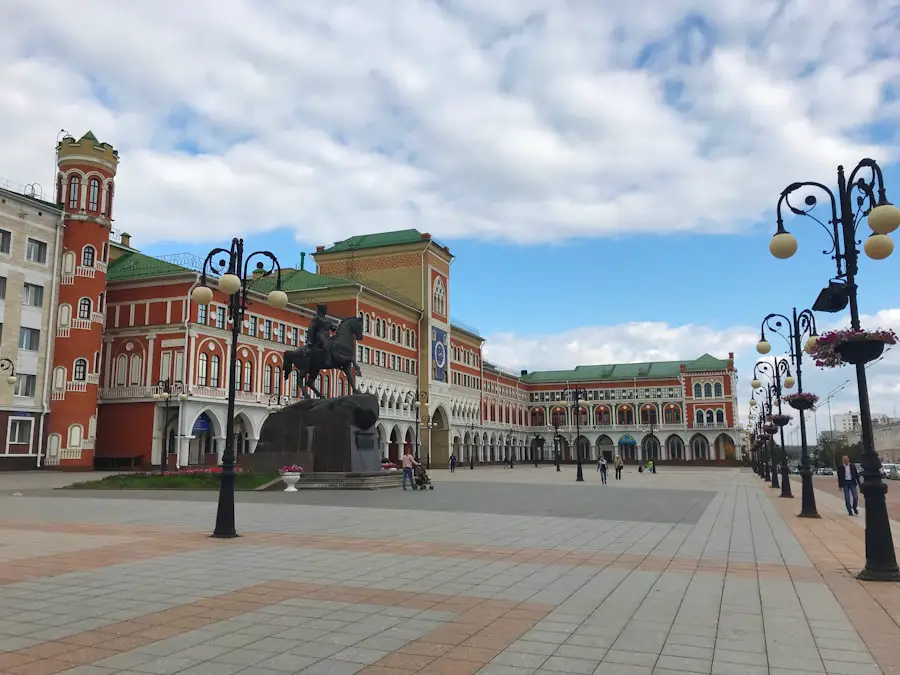
Image accuracy note: The retained source image shows Obolensky-Nogotkov Square in Yoshkar-Ola, Russia, not Minsk.
Belarusian cooking traditionally makes generous use of potatoes, pork, mushrooms, grains, dairy products, cabbage, beets, and seasonal berries. In Minsk, traditional restaurants may serve these dishes alongside Russian, Ukrainian, Polish, Lithuanian, Georgian, and modern international food.
Draniki
Draniki are grated potato pancakes fried until their edges are crisp. They are commonly served with sour cream, mushroom sauce, or a meat accompaniment. Portions can be filling, so one order may be enough when combined with soup or a salad.
Machanka
Machanka is a rich meat-based sauce or stew traditionally eaten with pancakes. Recipes vary, but pork, sausage, stock, flour, onions, and sour cream are common components. The pancakes are dipped into the sauce rather than treated as a separate sweet course.
Kalduny, Babka, and Other Savory Dishes
Kalduny are savory filled dumplings or potato preparations, often containing meat or mushrooms. They should not be described mainly as fruit- or sweet-cheese-filled desserts. Potato babka, a baked grated-potato dish, is another hearty option. Cold beet soup, mushroom dishes, and buckwheat-based sides may also appear on traditional menus.
Belarusian Desserts
For dessert, look for kulaga, a thick berry preparation, or nalistniki, thin pancakes that may be served with sweet cheese, berries, jam, or sour cream. Menus and transliterations vary, so ask what is inside a dumpling or pancake before ordering if you have allergies or dietary restrictions.
Discovering Minsk’s Architecture
| Area or Landmark | What to Notice |
| Independence Avenue | Broad postwar planning, monumental facades, formal public spaces, and Soviet classicist details |
| Upper Town | Restored religious and civic buildings arranged around the older street plan |
| Trinity Suburb | A reconstructed low-rise riverside quarter with colorful facades and pedestrian views |
| National Library | A large geometric form often described as a rhombicuboctahedron; verify current observation-deck access |
Independence Avenue provides the clearest introduction to Minsk’s postwar city planning. Its long sight lines, large public buildings, apartment blocks, plazas, and decorative details were designed to present the capital on a monumental scale.
The Church of Saints Simon and Helena, commonly called the Red Church, is one of the most recognizable religious buildings near Independence Square. Upper Town offers a different scale, with restored churches and civic buildings arranged around smaller streets and squares.
The National Library of Belarus represents a later architectural period. Its faceted geometric form has become one of modern Minsk’s most recognizable silhouettes. Confirm observation-deck hours and entry procedures before traveling across the city specifically for the view.
Experiencing Minsk’s Nightlife
Minsk has bars, restaurants, theatres, concert halls, and late cultural events, particularly around the center. However, nightlife information ages quickly. A venue named in an older guide may have closed, changed ownership, moved, or altered its admission policy.
Check listings during the same week as the proposed outing. Choose established venues, use licensed transportation, keep identification available, and avoid political gatherings or demonstrations. Do not photograph police, security personnel, military facilities, or sensitive government buildings during an evening walk.
Alcohol can reduce awareness in an environment where foreign governments warn of detention and limited consular help. Travelers who proceed despite official advice should keep their plans conservative, share their itinerary with a trusted contact, and arrange a safe return to their accommodation.
Exploring Minsk’s Parks and Gardens
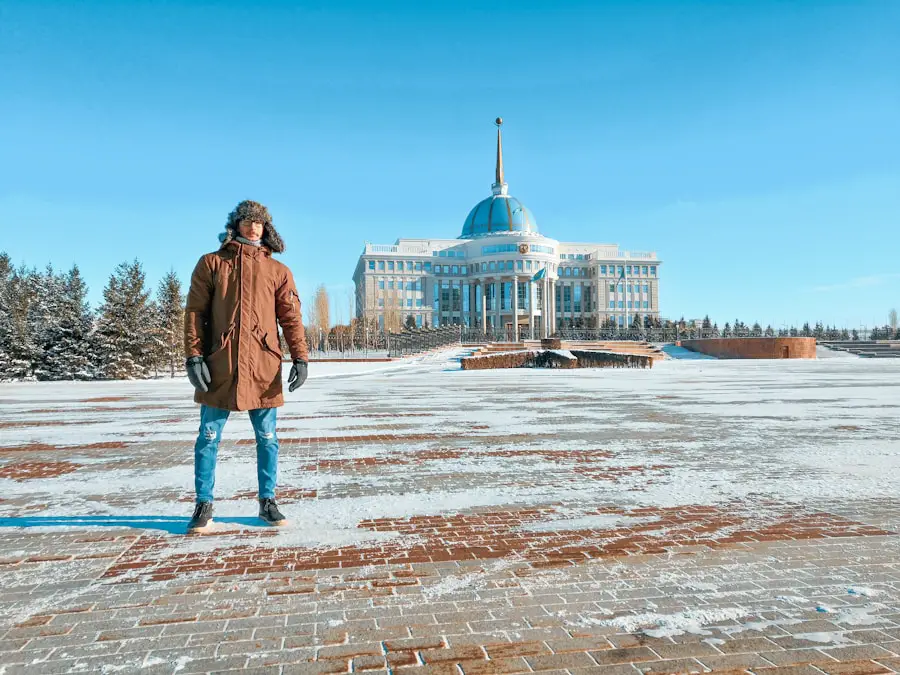
Image accuracy note: The retained source image shows the Ak Orda presidential residence in Astana, Kazakhstan, not a park in Minsk.
Minsk has several large green spaces that provide relief from its broad roads and dense central districts. Conditions vary sharply by season: summer supports long walks and outdoor events, while winter may bring snow, ice, wind, and short daylight hours.
Gorky Park
Gorky Park is a central recreational area with walking paths, trees, family facilities, and seasonal activities. It is convenient to combine with the Svislach River and nearby central attractions. Rides, kiosks, and entertainment facilities may operate seasonally.
Victory Park
Victory Park combines open landscape, water, walking routes, and memorial features connected with World War II. It can be paired with the Belarusian Great Patriotic War Museum when both are open. Allow time to view the memorial setting respectfully rather than treating it only as a recreational park.
Central Botanical Garden
The Central Botanical Garden offers a more plant-focused visit, with collections that change through the seasons. Spring and early summer usually provide greater outdoor variety, while conservatories or indoor displays may be more useful during colder weather. Verify opening days before making the trip.
Shopping in Minsk’s Markets and Boutiques
Komarovsky Market is one of Minsk’s best-known food markets. Visitors may find fruit, vegetables, dairy products, meat, baked goods, honey, preserves, and other regional products. It is better for observing daily food culture than for buying generic tourist souvenirs.
For crafts and gifts, look for officially operated shops, museum stores, bookshops, and temporary stalls in central cultural areas. Product origin should be checked carefully; an item decorated with Belarusian motifs is not necessarily handmade in Belarus.
Larger shopping centers provide weather protection, fixed-price retail, restaurants, and familiar services. Payment acceptance can vary, especially for cards issued by Western banks, so confirm a transaction method before making a large purchase.
Getting Around Minsk
Central Minsk is partly walkable, but the city’s long avenues and widely spaced landmarks make public transport useful. The network includes a metro, buses, trolleybuses, and trams. Service changes, ticket systems, and station access should be checked through current local transport information.
Metro and Surface Transport
The metro is useful for crossing the city quickly. Buses, trolleybuses, and trams cover areas beyond the central stations. Keep tickets or proof of payment until the journey ends and follow posted validation rules.
Taxis and Ride Services
Use licensed taxis or established booking services rather than accepting an unsolicited ride. Confirm the destination and estimated fare before departure. Save the accommodation address in both Latin and Cyrillic characters in case the driver does not speak English.
Language and Navigation
Belarusian and Russian are official languages, with Russian widely used in daily city life. English cannot be assumed. Download an offline map and translation package before arrival, but remember that foreign-government guidance warns travelers to consider device and communication security.
Accessibility
Some metro stations, sidewalks, historic buildings, and older public facilities may be difficult for travelers with mobility needs. Contact accommodation and attractions directly to verify step-free entry, elevators, accessible bathrooms, and adapted transportation.
What to Pack for Minsk
Pack for the actual season rather than relying on a general Eastern Europe checklist. Winter calls for insulated layers, gloves, a warm hat, waterproof footwear, and traction suitable for icy pavements. Summer may require light clothing, rain protection, insect repellent for green areas, and sun protection.
Comfortable walking shoes, a compact umbrella, copies of important documents, prescribed medication in its original packaging, and an offline translation tool are practical in any season.
A sleeping bag for backpacking travel is unnecessary for a normal city stay but may be relevant for a separately organized camping itinerary. A compact travel toothbrush is useful for overnight rail or road journeys, while hardside carry-on luggage with spinner wheels may suit travelers moving mainly through airports, stations, hotels, and paved city streets.
Day Trips and Excursions from Minsk
Mir Castle
Mir Castle is one of the most practical major heritage excursions from Minsk. The UNESCO-listed Mir Castle Complex reflects Gothic, Renaissance, and Baroque influences. Visitors can explore the castle, grounds, exhibitions, and surrounding settlement, subject to current access rules.
Nesvizh
Nesvizh is frequently combined with Mir because the two destinations lie in the same broad direction from Minsk. Its palace complex, historic center, churches, and landscaped grounds can fill the remainder of a long organized excursion. Confirm transport connections and admission times before attempting both independently in one day.
Brest Fortress
Brest Hero-Fortress commemorates resistance during World War II and is one of Belarus’s most important memorial complexes. Because Brest is roughly 350 kilometers from Minsk, it is a demanding day trip. An overnight stay normally allows more time for the fortress, city, delays, meals, and transportation changes.
Białowieża Forest and Belovezhskaya Pushcha
The UNESCO-listed Białowieża Forest extends across Belarus and Poland. It protects a large primary and old-growth forest landscape known for biodiversity and European bison. It is not simply a nearby Minsk park and is better planned as a long excursion or overnight visit.
Border-zone permits, road access, tour availability, and international crossing rules can change. Confirm the exact Belarusian destination and route before departure, and do not assume that movement across the Poland-Belarus border will be possible.
Sample Two-Day Minsk Itinerary
Day One: Historic Center and Central Culture
- Begin at Independence Square and view the Red Church from the appropriate public area.
- Walk part of Independence Avenue to understand the scale of postwar Minsk.
- Visit the National History Museum or National Art Museum.
- Continue to Upper Town and Freedom Square.
- Walk toward Trinity Suburb and the Island of Tears.
- Finish with a traditional Belarusian meal or a verified theatre performance.
Day Two: Museums, Parks, and Modern Minsk
- Visit the Belarusian Great Patriotic War Museum and Victory Park.
- Choose Gorky Park or the Central Botanical Garden according to the season.
- Explore Komarovsky Market for local food products.
- Take the metro toward the National Library if its public areas or observation deck are open.
- Return to the center for dinner and a confirmed cultural event.
Pro Tip: Do not prepay a tightly timed itinerary until entry permission, insurance coverage, transportation, attraction hours, and current government guidance have all been checked.
Frequently Asked Questions
What are the top things to do in Minsk, Belarus?
Top attractions include Upper Town, Trinity Suburb, Independence Avenue, the National History Museum, the National Art Museum, the Bolshoi Theatre, Victory Park, Gorky Park, Komarovsky Market, and the National Library. Current travel warnings should be reviewed before planning any visit.
Is Minsk safe to visit now?
Major foreign governments currently advise against travel to Belarus. The United States lists Belarus at Level 4, while the United Kingdom advises against all travel. Reported concerns include arrest, detention, limited consular support, border disruption, and risks connected with the regional security situation.
Do visitors need a visa for Belarus?
Requirements depend on nationality, passport, route, and length of stay. Belarus offers an e-visa to eligible ordinary-passport holders from specified countries, but it is single-entry, limited to 30 days, and subject to route restrictions. Check the Belarusian Ministry of Foreign Affairs and your own government before travel.
How many days do you need in Minsk?
Two full sightseeing days cover the main central districts, one or two museums, a park, a market, and the National Library area. Add another day for Mir and Nesvizh. Brest and Białowieża/Belovezhskaya Pushcha are more comfortable as overnight excursions.
What cultural attractions are popular in Minsk?
Major choices include the National Art Museum, National History Museum, Belarusian Great Patriotic War Museum, National Academic Bolshoi Opera and Ballet Theatre, and Yanka Kupala National Theatre. Verify current exhibitions, performance schedules, language access, and ticket rules.
What outdoor activities are available in Minsk?
Visitors can walk beside the Svislach River, explore Gorky Park and Victory Park, visit the Central Botanical Garden, and walk between Upper Town and Trinity Suburb. Weather and daylight vary sharply by season.
What foods should you try in Minsk?
Try draniki, machanka with pancakes, savory kalduny, potato babka, mushroom dishes, cold beet soup in warm weather, and kulaga or sweet nalistniki for dessert. Ask about ingredients when managing allergies or dietary restrictions.
Which day trips from Minsk are worth taking?
Mir Castle and Nesvizh are the most practical major heritage excursions. Brest Fortress is much farther away and is better with an overnight stay. Białowieża/Belovezhskaya Pushcha also requires substantial travel time and careful route planning.
Sources
- U.S. Department of State: Belarus Travel Advisory — current safety, entry, consular, payment, photography, and transportation guidance.
- UK Foreign Travel Advice for Belarus — current advice against all travel and insurance implications.
- Ministry of Foreign Affairs of Belarus: E-Visa — eligibility, duration, processing, checkpoints, and route restrictions.
- Minsk City Executive Committee — official city history and landmark overview.
- UNESCO: Mir Castle Complex — World Heritage status and architectural significance.
- UNESCO: Białowieża Forest — forest area, biodiversity, old-growth value, and transboundary status.
